The Anatomy of a Functional Workspace
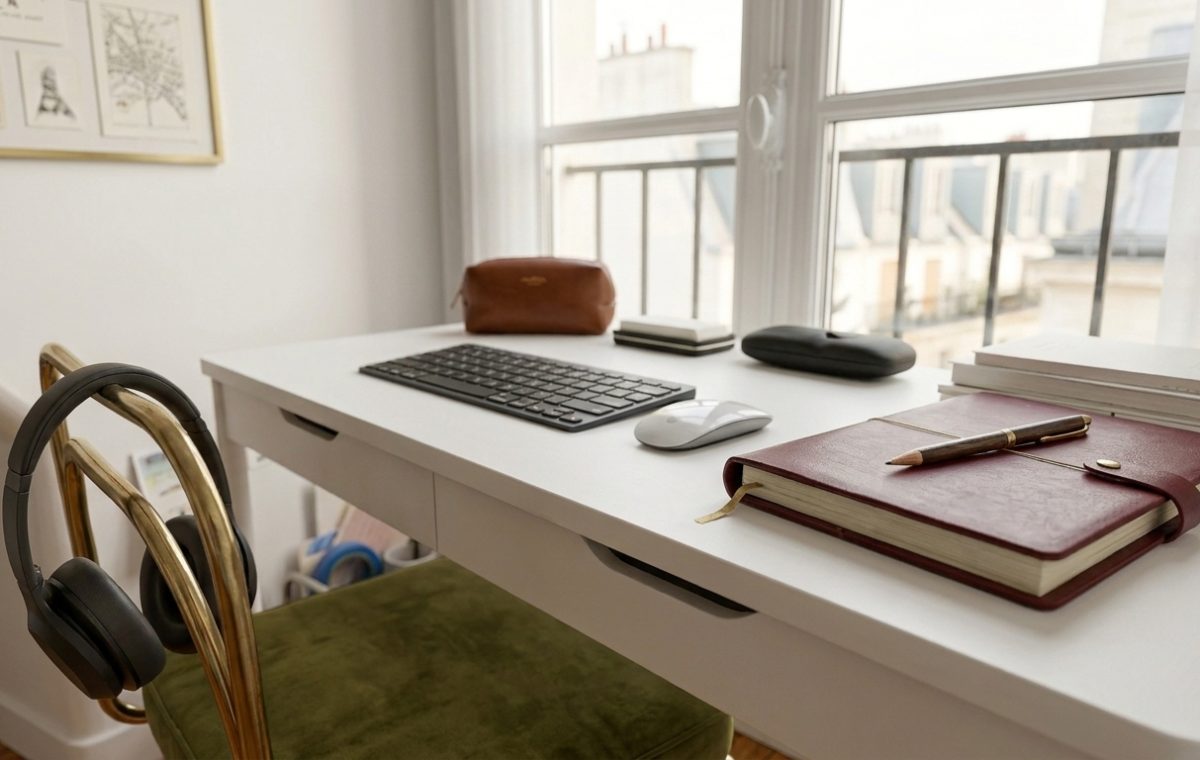
Clutter destroys focus. When your field of vision contains stray cables, random wrappers, and random stacks of paper, your brain spends energy filtering out visual noise. A clean surface changes everything. Consider a simple white writing desk positioned directly beneath a window. Natural light lifts your mood, but keeping the desktop free of bulky monitors lets you maintain an uninterrupted connection to the outside world.
Notice how deliberate placement makes a tight area feel expansive. A wireless slim keyboard paired with a low-profile mouse leaves plenty of open surface area. You do not need a massive sprawling fortress of mahogany to get things done. You just need intention.
Tactile Materials and Everyday Carry
Cold, sterile corporate cubicles drain creativity. Combat this by introducing tactile, organic materials into your daily rotation. A deep burgundy leather journal paired with a handsome wooden pen invites you to write by hand. Digital tools have their place, but physical paper grounds your thoughts.
Storage matters, yet it should never look like an industrial filing cabinet. A compact leather pouch tucked neatly near the back of the work surface holds small essentials out of sight. Meanwhile, stack a few reference books neatly against the window frame. They act as architectural weight, anchoring the corner so the room feels intentional rather than temporary.
Seating That Balances Comfort and Aesthetics
Office chairs often commit aesthetic crimes against good interior design. Bulky plastic wheels and neon mesh backs ruin a quiet corner. Instead, opt for a sophisticated seat upholstered in rich olive green velvet, supported by a curved metallic frame. When you step away from the keyboard, drape your wireless over-ear headphones directly over the chair back. They stay accessible without creating desktop clutter.
Upkeep requires discipline. At the end of every workday, return the pen to the journal strap and slide stray notebooks back into alignment. Maintaining a tidy workstation takes less than two minutes, yet it pays massive dividends the next morning when you sit down with your coffee.
How many minutes do you waste each morning clearing yesterday’s debris off your workspace?
Editorial Silo • Recommended Architecture Studies
- The Engineering of Ease: How to Make Contemporary Furniture for High-Performance Urban Living”, description: “Modern living demands a departure from static design; to make contemporary furniture today is to engineer kinetic, multifunctional solutions. This guide introduces the ‘2:1 Rule’ of spatial density—balancing two parts low-profile furniture with one part uninterrupted breathing room. We analyze the ergonomics of ‘cognitive stability,’ integrating hidden power hubs, wireless charging surfaces, and modular footprints that allow a single piece to pivot between a high-focus workspace and a serene sanctuary. — Archival Design Case Study
- Grand Closet home office aesthetic styling trends — Archival Design Case Study
Curated Lookbooks & Architectural Studies
- The Geometry of Expansion: Architectural Blueprinting for High-Performance Tiny Bathroom Design
- Styling With Vintage Transferware Plates in Modern Homes
- The Passive Engine: Engineering Structural Autonomy in Self Sustaining Homes
- How to Style a Wooden Candle Holder for Timeless Warmth
- Cozy Living Room Decor Ideas That Actually Work
- Comfortable Kitchen cabinets designs for small kitchens save
Curated Visual Lookbook
Design Gallery & Spatial Studies
A visual curation of architectural arrangements, lighting concepts, and material palettes featured in this space.