The Dynamics of Wood and Textile
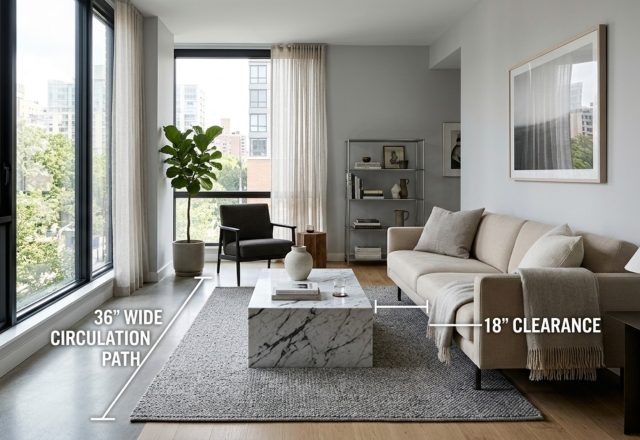
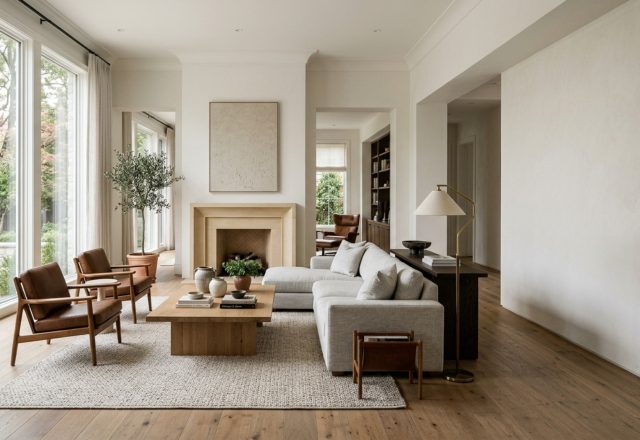
Laying textiles over historic wooden parquet changes the entire acoustic and visual weight of a space. It is never just about filling a bare patch. Hardwood floor rug styling requires an honest assessment of grain directions, finish sheens, and how natural sunlight travels across your planks throughout the day. When afternoon rays slash diagonally across a room, a faded vintage piece catches that light differently than a brand-new high-pile synthetic weave.
Chevron and herringbone patterns demand respect. Cover them entirely and you lose the historic character you probably paid a premium for. Leave too much bare perimeter and the room feels unanchored, cold, and temporary. The secret lies in strategic breathing room. You want the perimeter wood to frame the textile like a gallery canvas.
Avoiding Common Layout Mistakes
Floating furniture entirely on a small textile is a classic rookie error. Legs wobble, chairs catch on low edges, and the visual proportion collapses. Anchor at least the front legs of seating pieces onto the edge of the fabric. This grounds the arrangement immediately. Another trap is ignoring pile height against doors. If a balcony door or interior entryway swings across your layout, a thick wool Berber will jam instantly. Low-profile, flat-woven antique styles solve this clearance issue while offering incredible durability underfoot.
Good interior choices age gracefully. Patina on wood and wear on textiles tell an actual story of daily life.
Maintenance Reality Check
Natural fibers trap fine grit that acts like sandpaper against your parquet backing. Lift your textiles twice a year. Vacuum beneath them thoroughly. Do not rely solely on heavy chemical cleaners for antique weaves; gentle spot blotting with lukewarm water saves the natural dyes from bleeding into the cream-colored borders. If sunlight bleaches one side over two summers, simply rotate the piece by one hundred and eighty degrees.
How do you usually handle seasonal shifts in your own floor layouts? Do you rotate textiles to chase the light, or keep them locked in place year-round?
Editorial Silo • Recommended Architecture Studies
- The Architect’s Blueprint: Living Room Ideas For Small Rooms & Engineering Spatial Volume and Flow in Compact Living Rooms — Archival Design Case Study
- Large living room design rules for functional flow — Archival Design Case Study
Curated Lookbooks & Architectural Studies
- Rustic Living Room Storage Ideas: Styling Wicker Baskets
- Ergonomic Color Zoning: Utilizing 2026’s Grounding Palettes to Optimize Multi-Functional Floor Plans
- Foyer Wainscoting Ideas to Elevate Your Home Entryway
- Ergonomic Mastery: Functional & Space-Saving Hacks for Home Glazed Patio In Center
- The Ergonomic Interior: How To Decorate Christmas Wreaths & Scaling Wreath Decor for Functional Living and Compact Spaces
- Sculpting the Social Hub: Materiality, Light, and the Atmosphere of High-End Kitchen Layouts
Curated Visual Lookbook
Design Gallery & Spatial Studies
A visual curation of architectural arrangements, lighting concepts, and material palettes featured in this space.