Designing an Authentic English Cottage Dining Room
Real history cannot be bought at a big-box furniture store. It is baked into the mortar, worn into the floorboards, and earned through decades of drafty winters. When you walk into a space anchored by raw timber and rough-hewn stone, the air feels different. It smells faintly of aged oak and burning logs. Designing an English cottage dining room requires respecting those bones rather than covering them up with trendy paint colors.
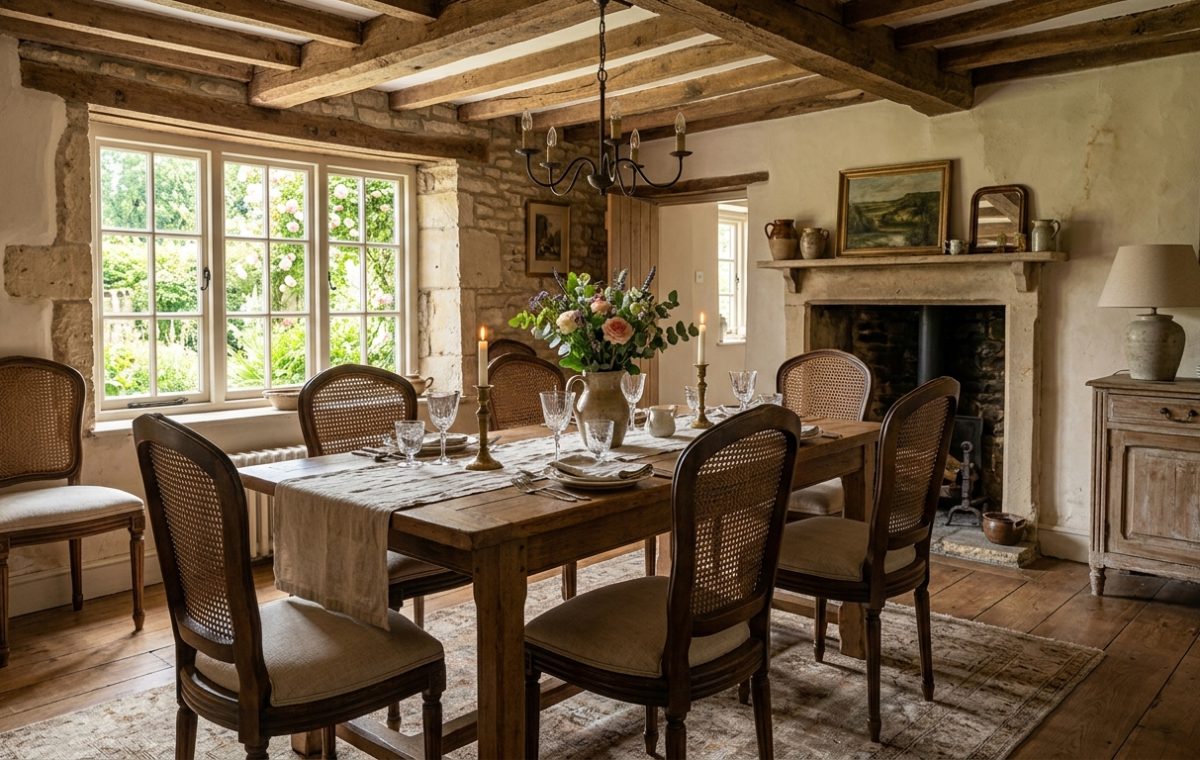
Exposed ceiling beams dictate the rhythm of the entire room. If your ceiling lacks structural timber, resist the urge to nail up fake polyurethane beams. Authenticity matters here. Pair genuine architectural depth with a long, rustic wooden table that has already survived countless family arguments and spilled wine. Scratches are not flaws; they are character.
Seating and Textures That Breathe
Matching dining chairs belong in sterile boardrooms, not cozy rustic retreats. Mixing cane-backed chairs with solid wood seating adds an organic, collected-over-time feel. Notice how light filters through the woven cane panels. It softens the heavy farmhouse aesthetic. Place a simple, faded vintage rug underneath to anchor the heavy furniture without making the floor plan feel claustrophobic.
- Embrace mismatched chairs for a lived-in aesthetic.
- Keep window treatments minimal to maximize natural garden light.
- Use simple linen table runners instead of formal tablecloths.
- Display everyday ceramics on open mantel ledges.
Real rustic design fails the moment it looks like a stage set. Leave room for clutter, mismatched plates, and slightly crooked picture frames.
Balancing Raw Materials and Softness
Stone walls and black iron chandeliers carry immense visual weight. Left unmanaged, the room can easily turn gloomy. Combat this by letting natural sunlight pour through multi-pane windows, framing vibrant outdoor greenery. A simple ceramic pitcher filled with wild garden roses brings the outside world straight to the table. Keep your lighting warm and low. Hard overhead glare ruins the moody intimacy that makes cottage spaces so magnetic.
What is the most stubborn historic detail in your own home that you have learned to love?
Editorial Silo • Recommended Architecture Studies
- The Adaptive Anchor: Lighting For Dining Table & Ergonomic Engineering and Multi-Functional Lighting for the Modern Table — Archival Design Case Study
- Tactile Narratives: Restaurant Design Inspiration & Mastering Materiality, Acoustics, and Sensory Mood for Immersive Dining — Archival Design Case Study
Curated Lookbooks & Architectural Studies
- Fall Shelf Styling Ideas: Warm & Timeless Autumn Decor
- Floating Entryway Shelf Ideas: Why Less Floor Clutter Works
- Gray Bedroom Design Ideas for Moody Elegance
- French Apartment Interior Style Guide: Dark Walls & Wood
- How to Style a Hallway Console Table Like a Parisian Pro
- The Sovereign’s Workspace: Blair Waldorf Bedroom Decor & Ergonomic Luxury and Organization Lessons from the Waldorf Penthouse
Curated Visual Lookbook
Design Gallery & Spatial Studies
A visual curation of architectural arrangements, lighting concepts, and material palettes featured in this space.