The Deceptive Power of an Empty Floor
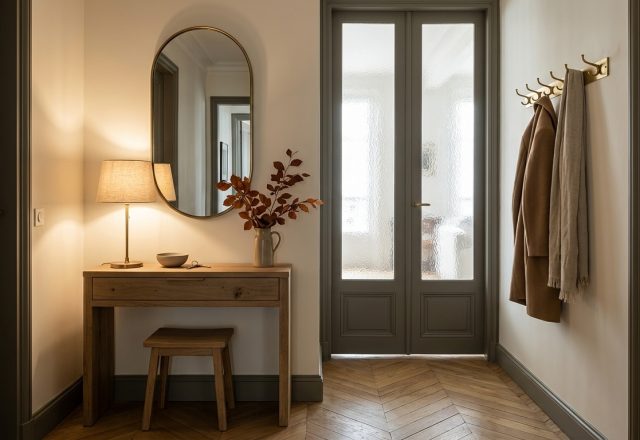
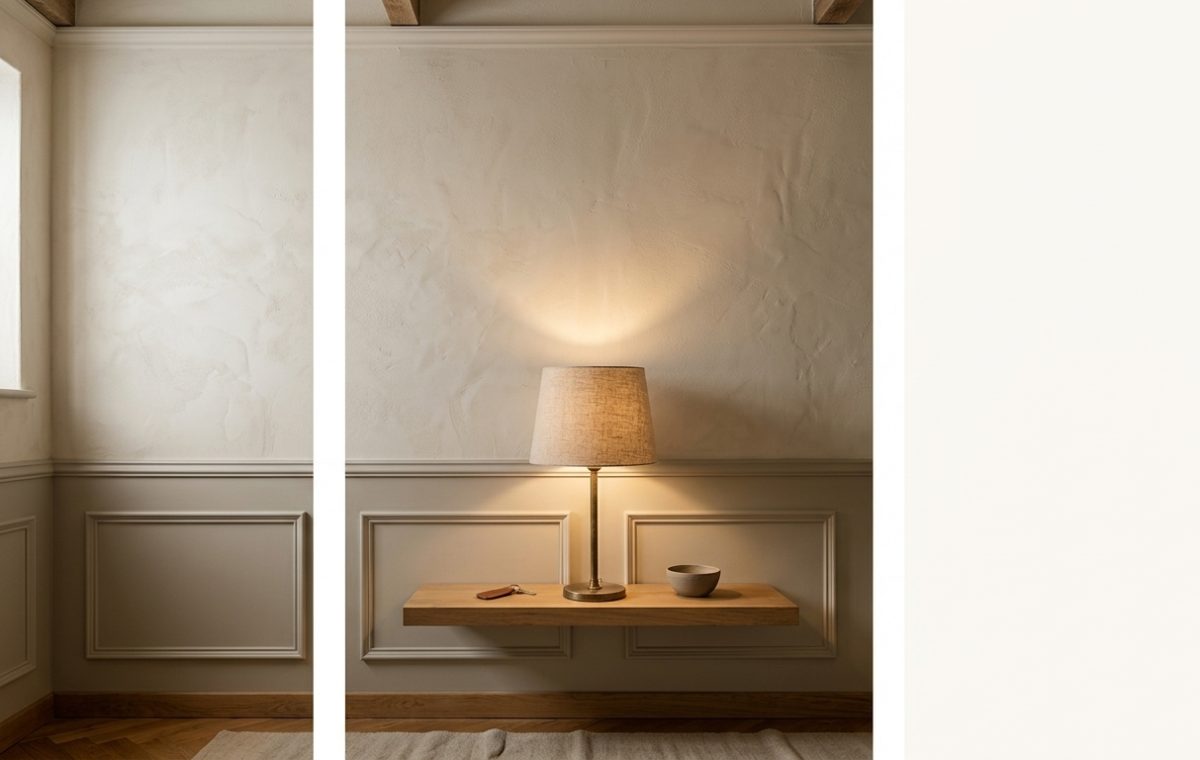
Floor space vanishes the minute four furniture legs hit a narrow hallway. You lose visual square footage instantly, even if the tabletop itself is modest. Mounting a solid, cantilevered timber slab directly to the wall changes the psychological weight of the entire room. When sightlines run straight across unbroken herringbone boards right up to the baseboard, your brain registers volume rather than obstruction.
Notice how this thick oak ledge intersects the crisp picture-frame wainscoting. It breaks the traditional rule that furniture must respect architectural mouldings. Instead of competing with the millwork, it anchors the vignette. The warm wood grain cuts straight through the pale paintwork, offering just enough utility without demanding a footprint.
The Built-In Discipline of Limited Surface Area
Large entryway consoles are clutter magnets. Give a household three drawers and a wide shelf, and within forty-eight hours you will find expired coupons, stray sunglasses, old receipts, and loose change piling up in corners. A minimalist drop zone storage strategy solves this by sheer physical constraint.
There is room for precisely three things: a lamp, a ceramic drop bowl, and a set of keys. That is deliberate design, not ascetic deprivation. When your surface area is small, you put things where they actually belong instead of parking them in an entry purgatory. The matte ceramic dish holds daily essentials and nothing more.
Small surfaces enforce clean habits faster than any organization system ever will.
Tactile Contrast: Plaster Meets Tailored Millwork
Pairing structured wainscoting with an organic limewash plaster wall creates depth that flat drywall simply cannot deliver. The lower half of the wall provides rhythmic geometry, grounding the room in architectural tradition. Above the chair rail, the hand-troweled texture picks up raking light from the linen lamp shade.
That play between soft light and uneven plaster prevents a minimalist entryway from feeling cold or clinical. The brass stem of the lamp introduces slight patinated reflection, while the woven shade softens the illumination casting upward and downward in warm cones. It turns a brief transitional pass-through into an inviting moment of arrival.
Mounting Reality and Cord Management
Before driving brackets into studs, consider the mechanics. Cantilevered wood shelves carry real leverage. If someone leans their forearm on that oak ledge while pulling off their boots, drywall anchors will tear out instantly. You need structural timber framing behind that finish work or a reinforced steel mounting plate anchored into solid studs.
Cable management requires equal ruthlessness. In this setup, visible dangling wires would ruin the architectural quiet completely. Running cords through the wall cavity or routing them discreetly behind the wainscoting rails keeps the illusion intact. How do you currently handle your daily threshold drop—do you prefer a hidden drawer or the brutal honesty of an open ledge?
Editorial Lookbook & Photo Collection