In the world of high-end landscape architecture and luxury modern playhouse design, there is a pervasive obsession with the static. We see it in the glossy pages of design magazines: the $30,000 cedar-clad miniature modernists, the prefab Scandinavian pods, and the overly-engineered ‘sustainable’ timber kits that arrive on pallets. While these structures are undeniably beautiful in a sculptural sense, they suffer from a fundamental flaw. They are dead. They are objects placed upon the landscape rather than emergent from it. Today, we are witnessing a paradigm shift that challenges the very definition of a ‘luxury modern playhouse design.’ We are moving beyond the kit and into the realm of ‘Living Architecture’—structures that are grown, woven, and nurtured rather than merely assembled.
The Luxury of Growth: Beyond the Prefabricated Box
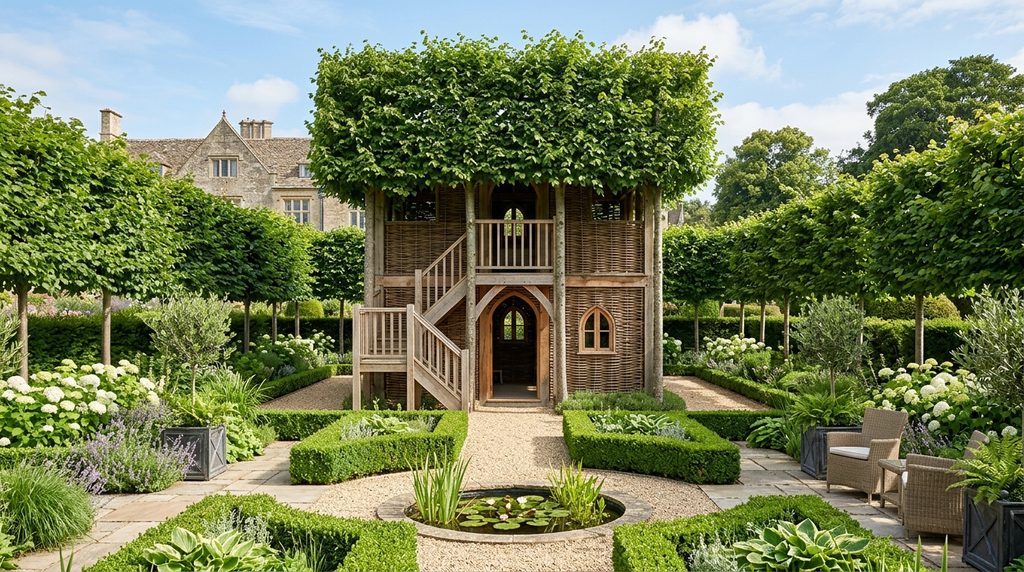
The contemporary parent is often sold the dream of a ‘sustainable’ playhouse based on the merits of FSC-certified wood or non-toxic stains. However, true sustainability and true luxury lie in the rejection of the commodity. When you purchase a timber kit, you are buying a product at its peak. From the moment it is installed, it begins a slow process of decay. UV rays bleach the wood, moisture invites rot, and the structure eventually becomes a maintenance liability or a landfill candidate. In contrast, a living playhouse—built from woven willow, pleached lime trees, or sculpted earth—is the only architectural form that actually improves with age. It grows stronger, denser, and more beautiful as the seasons pass. This is the ultimate expression of luxury: a bespoke, evolving sanctuary that is fundamentally tied to the life cycle of your garden.
The Static Nature of Conventional Kits
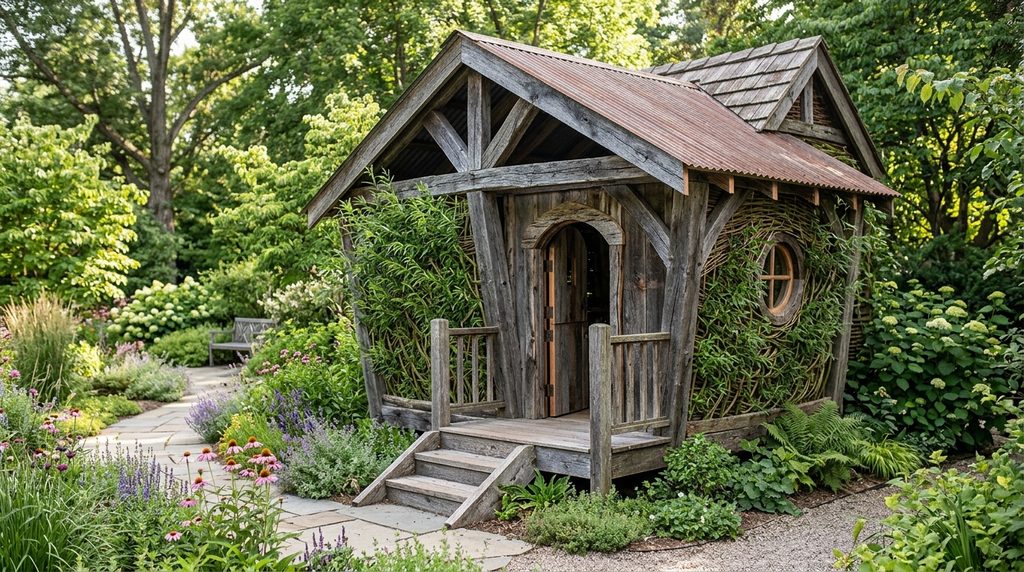
Conventional luxury playhouses are often just miniaturized versions of adult houses. They feature drywall, shingle roofs, and glass windows. While impressive to look at, they create a barrier between the child and the environment. The child is ‘inside,’ separated from the very nature the playhouse was supposedly intended to celebrate. A living structure dissolves these boundaries. It breathes. It transpires. It changes color with the autumn frost and buds with the spring thaw. By choosing living architecture, we are moving away from the ‘storage box for children’ and toward an immersive biological experience.
Defining Living Architecture: A New Paradigm for Play
Living architecture is not a new concept—ancient cultures have used woven trees for fences and bridges for millennia—but its application in luxury modern playhouse design is revolutionary. The core principle is ‘biophilic feedback.’ When a child interacts with a structure that is alive, they are not just playing; they are participating in an ecosystem. They see the ladybugs on the willow leaves, they feel the damp coolness of a sod-covered earth mound, and they learn the rhythm of growth through observation.
The Willow Loom: Weaving a Sanctuary
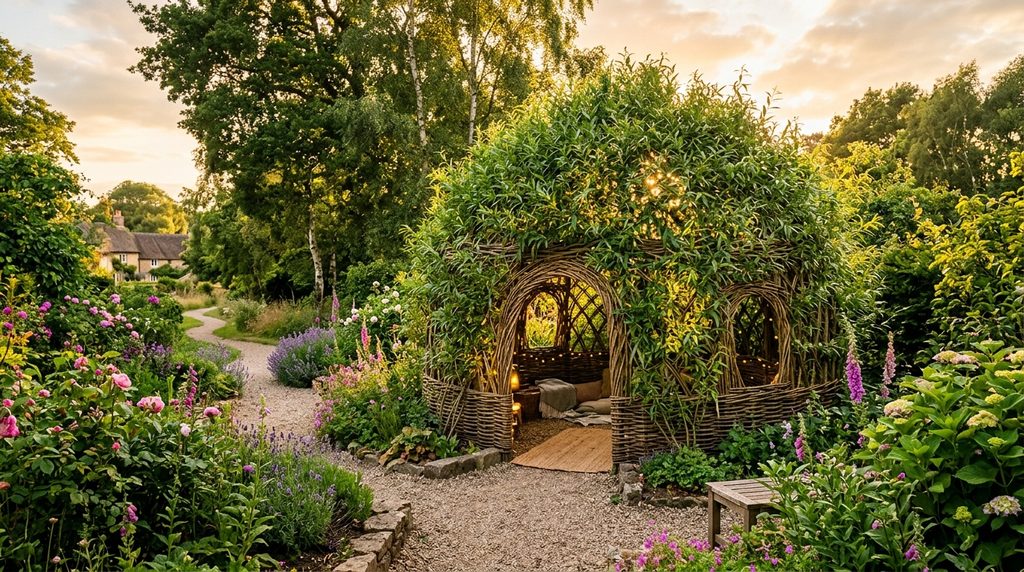
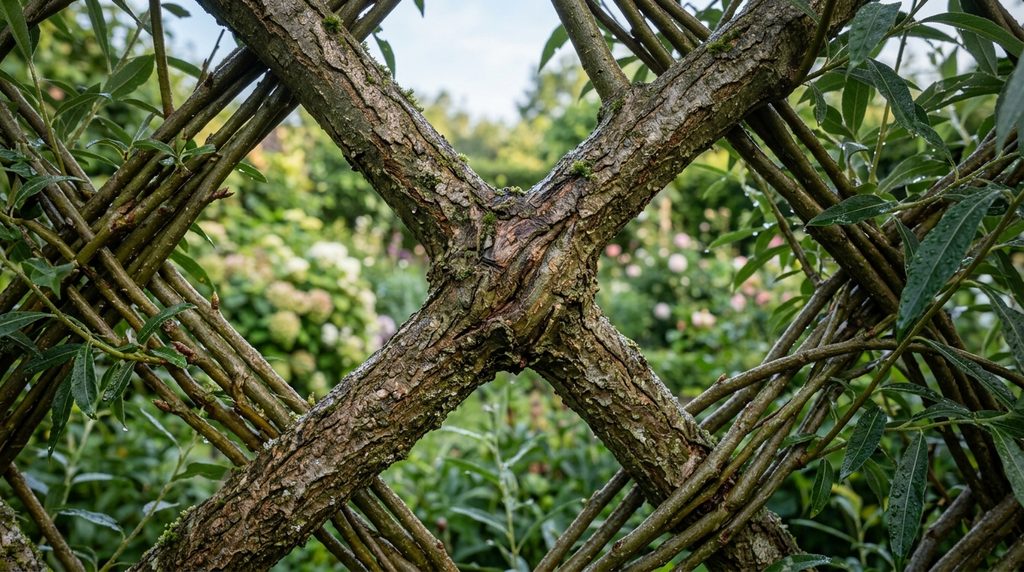
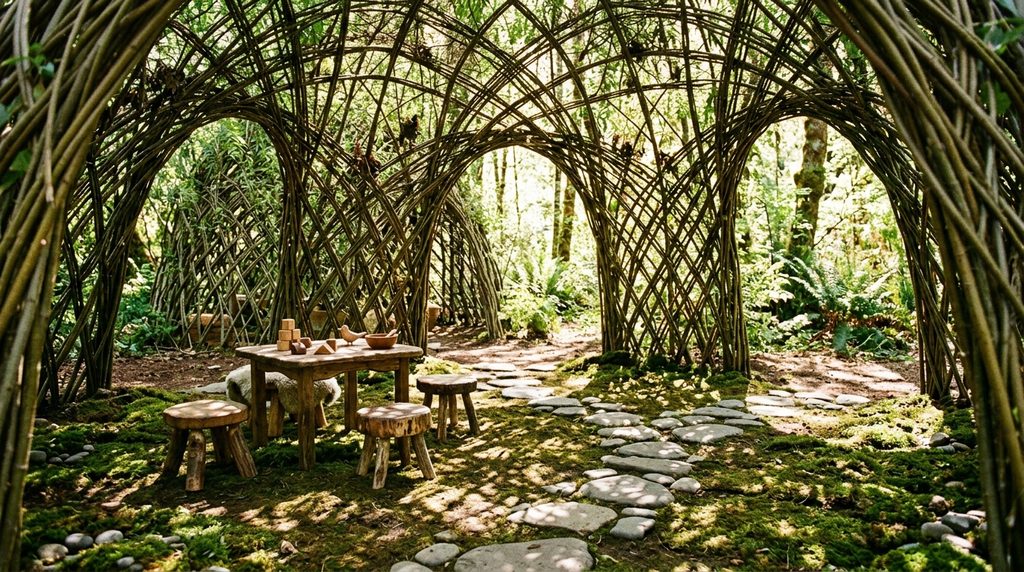
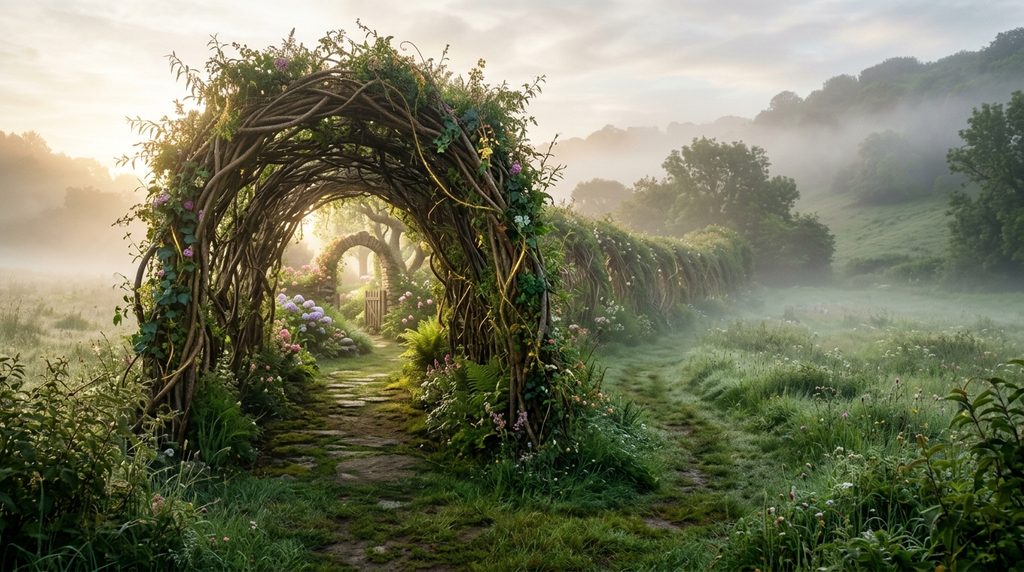
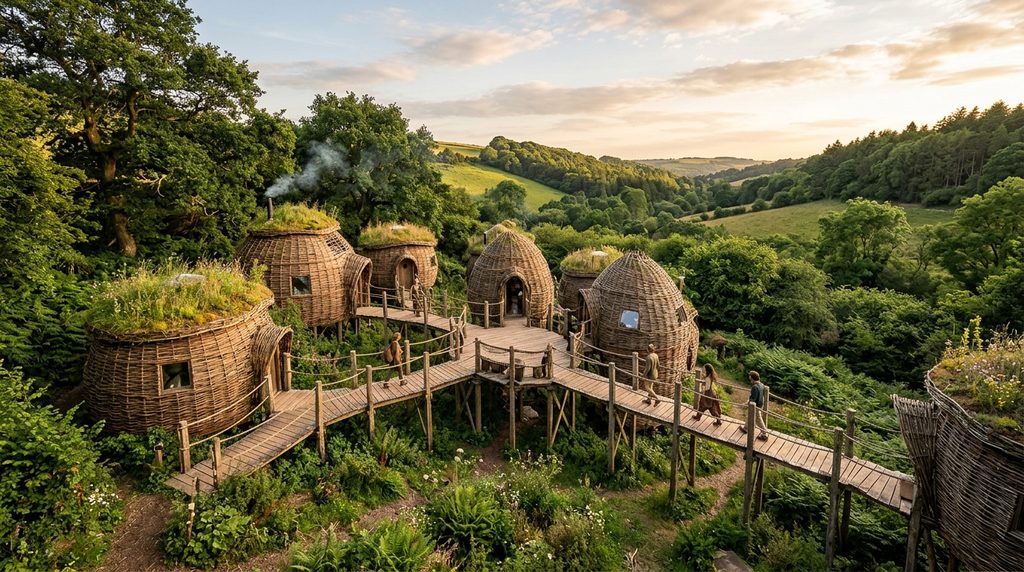
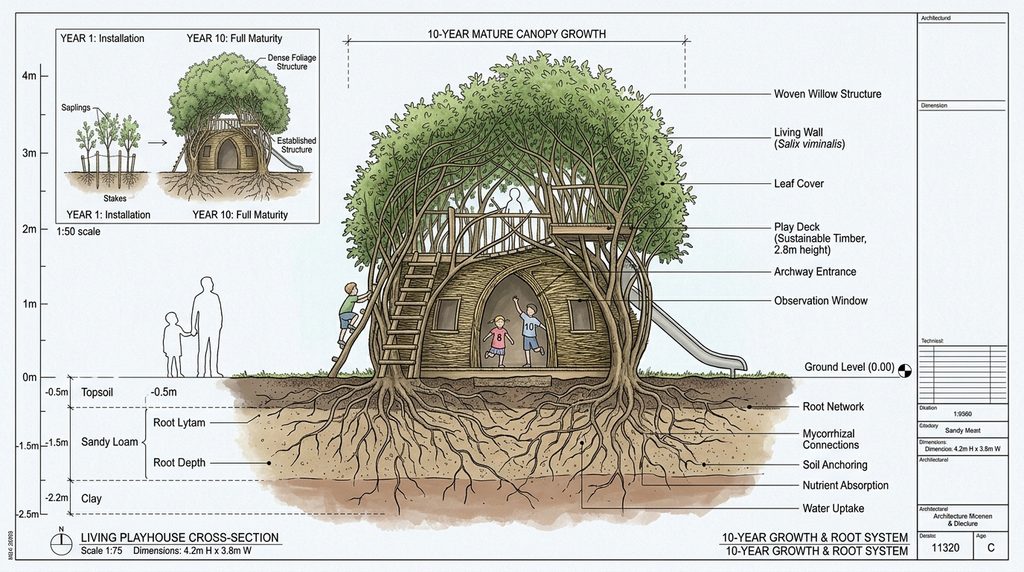
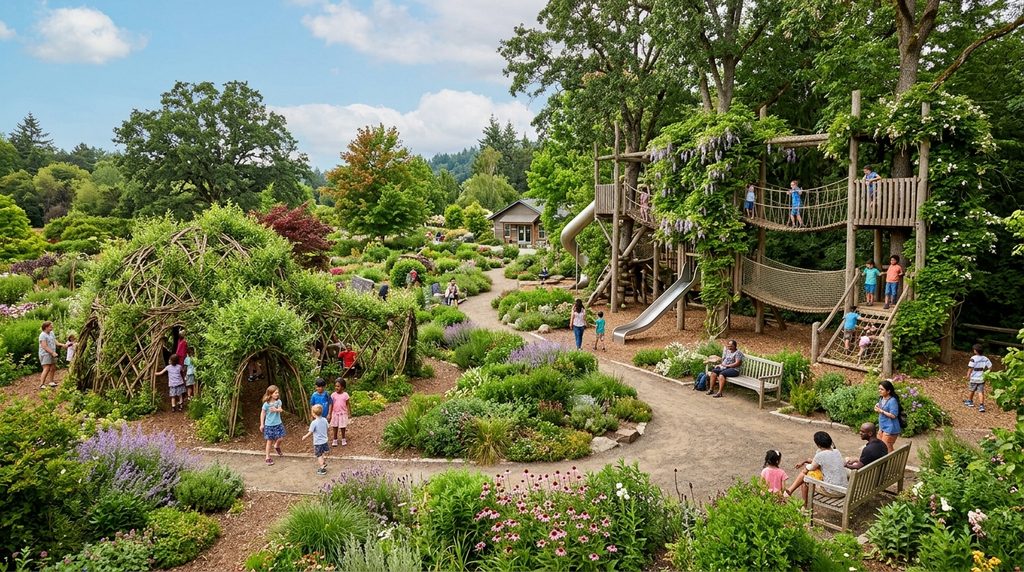
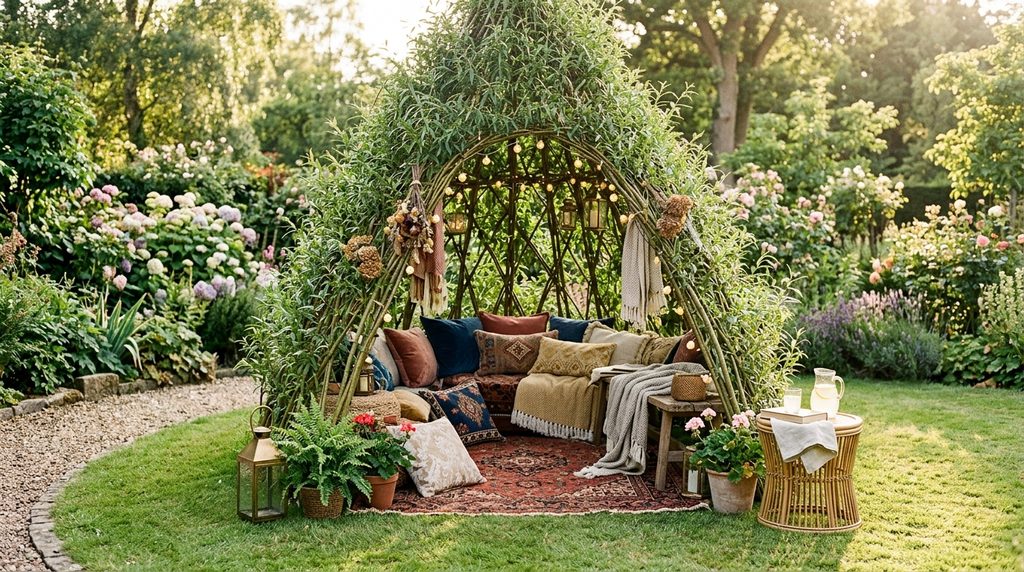
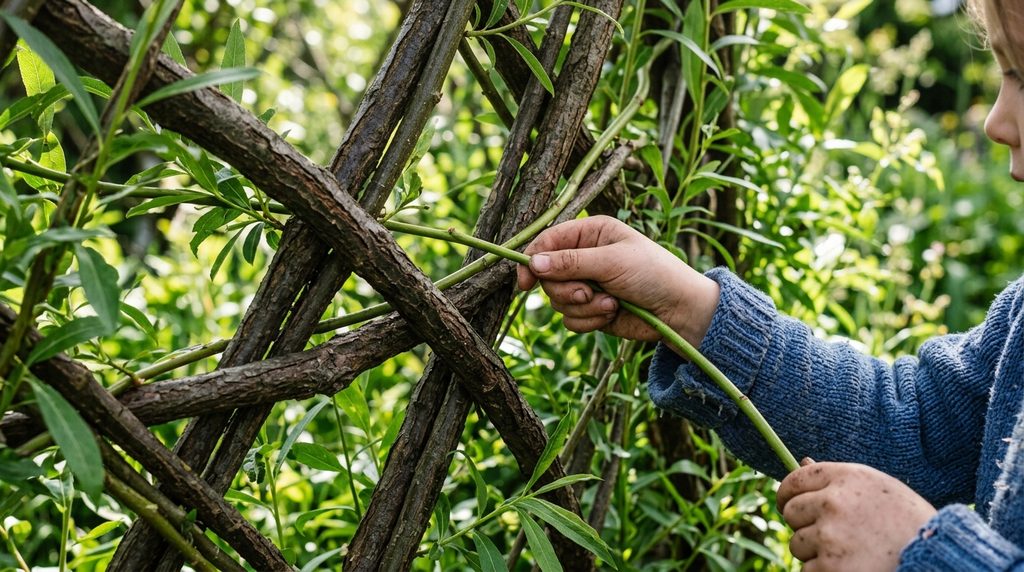
One of the most elegant forms of living architecture is the willow structure. Often referred to as ‘living willow’ or ‘salix sculpture,’ this involves planting long, flexible willow rods (whips) directly into the ground and weaving them into domes, tunnels, or multi-story towers. Because willow is incredibly resilient and fast-growing, these structures can take shape in a single season. As the rods take root, they become a permanent, self-sustaining framework. Over time, the junctions of the weave can graft together—a process known as inosculation—effectively turning a series of sticks into a single, living organism of incredible structural integrity.
Luxury Modern Playhouse Design Through a Biophilic Lens
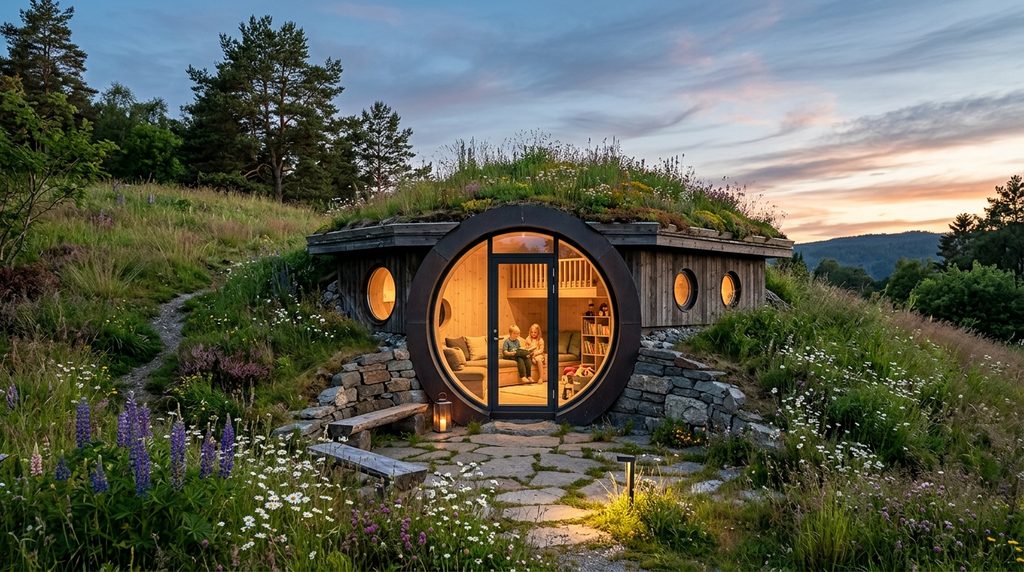
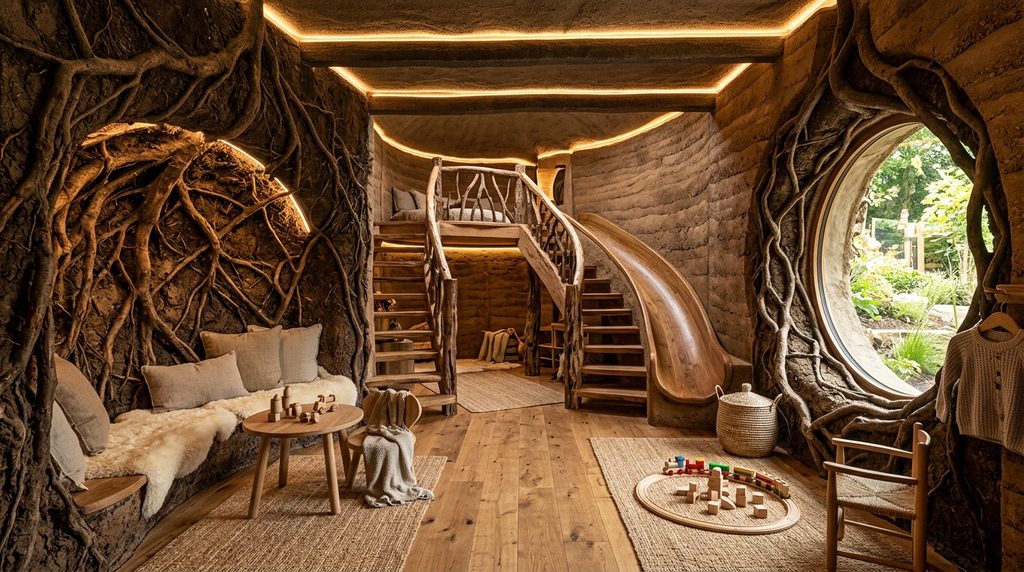
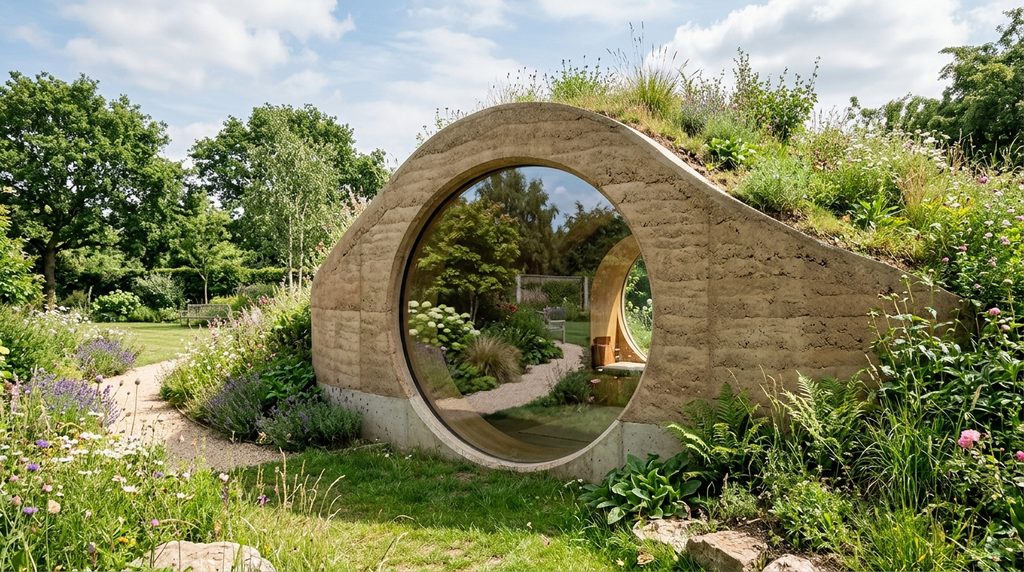
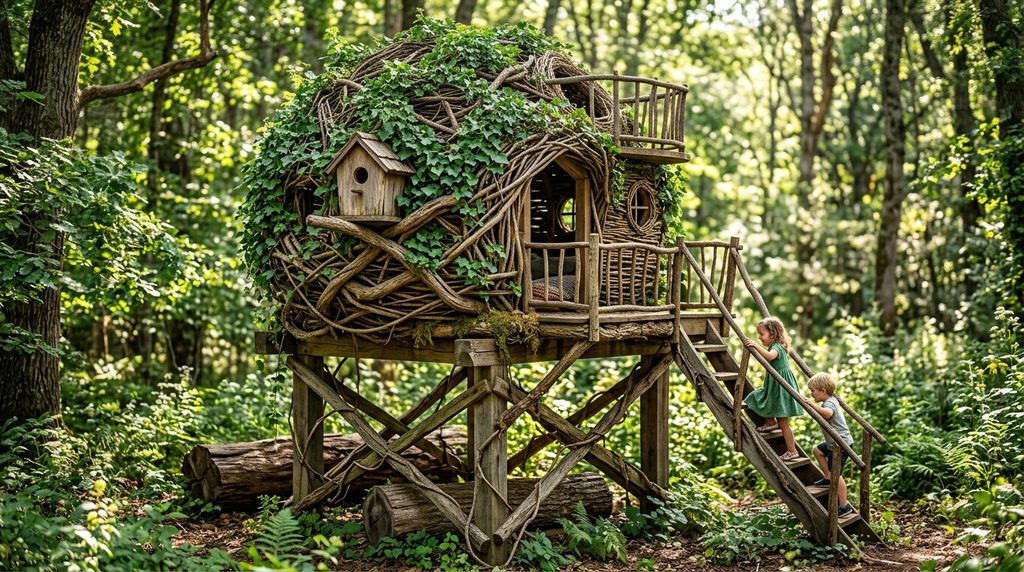
To achieve a truly high-end aesthetic with living materials, one must look at the garden as a medium. Instead of traditional flooring, imagine a subterranean earth mound—a ‘Hobbit hole’ of sorts—covered in a lush carpet of clover and creeping thyme. The interior walls aren’t painted; they are the exposed, intricate root systems of the sod roof above, or the soft, green interior of a dense willow weave. This is luxury redefined: it is the luxury of sensory richness. The scent of crushed herbs underfoot, the dappled light filtering through a canopy of leaves, and the organic, curving lines that no sawmill could ever produce.
Tactile Engagement and Sensory Development
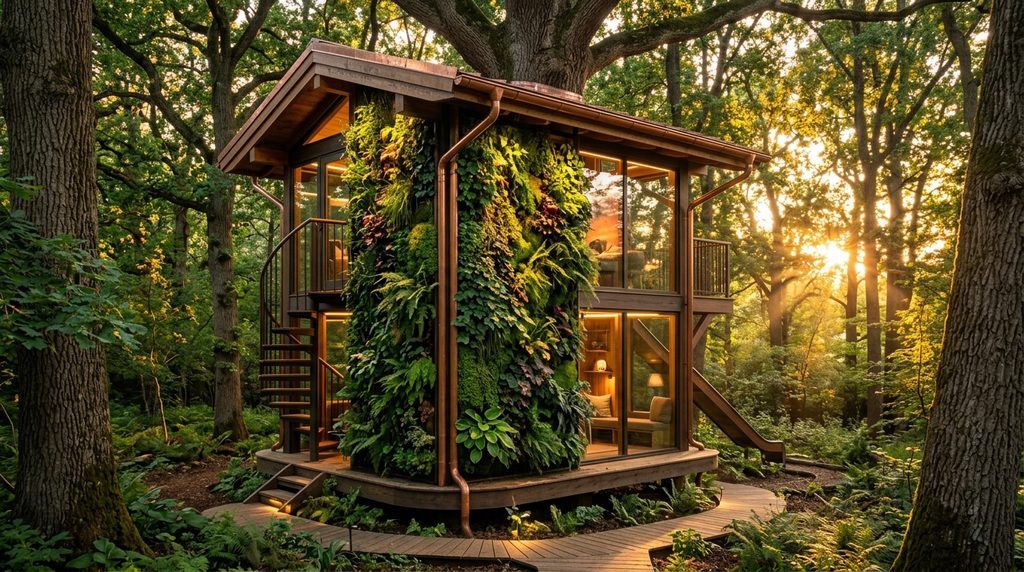
Modern luxury is increasingly measured by its impact on well-being. In the context of child development, a living playhouse offers unparalleled tactile stimulation. Unlike the smooth, sterile surface of plastic or sanded wood, living bark has texture. The temperature inside a living structure is naturally regulated; the transpiration of the leaves cools the air in the summer, while the earth-sheltered mounds provide natural insulation. This is a multisensory environment that fosters deep focus and emotional regulation—benefits that a kit-built house simply cannot replicate.
Sod Roofs and Earth Mounds: Integrating Topography
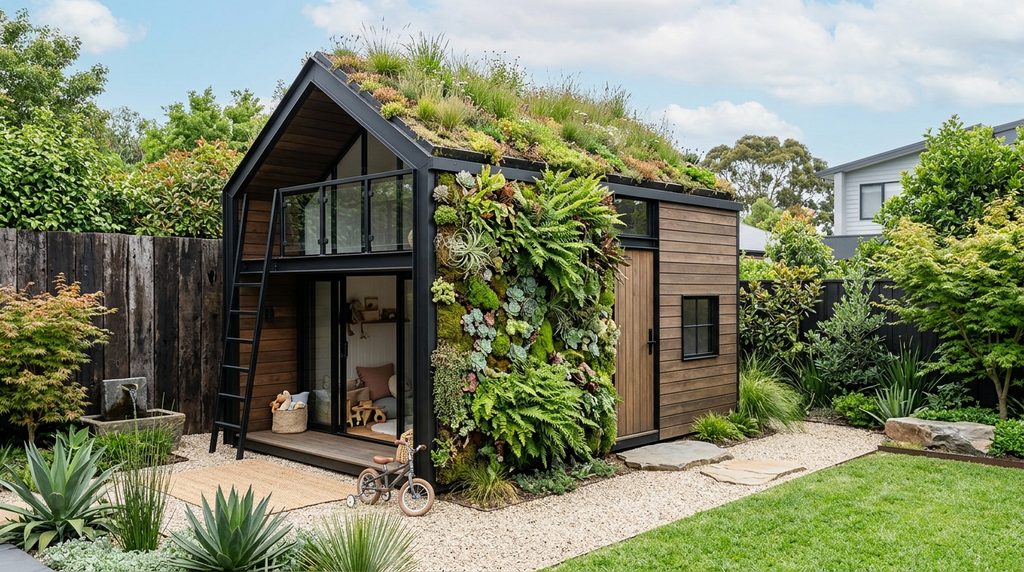
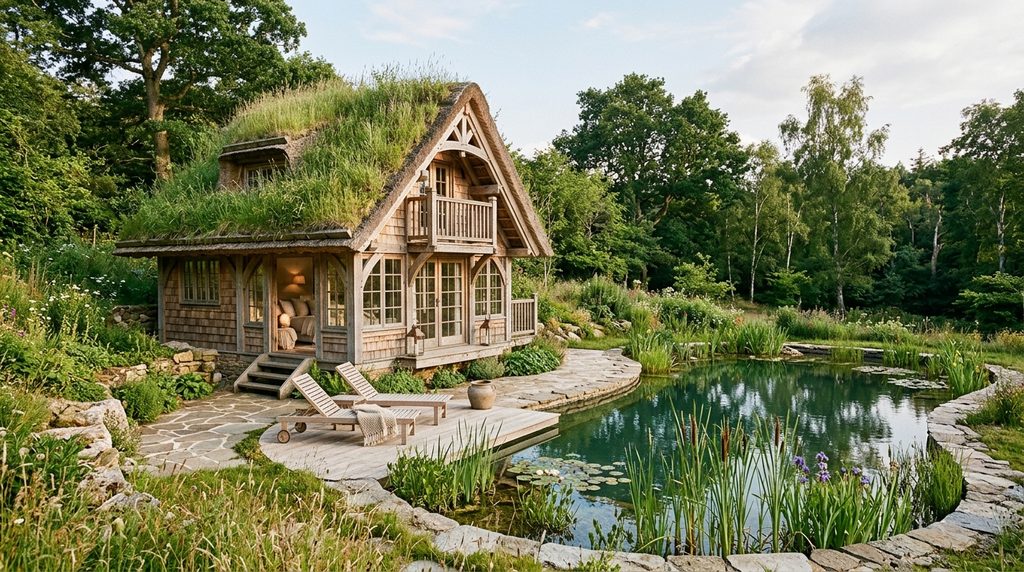
Another sophisticated alternative to the standard playhouse is the integration of the structure into the garden’s topography. By creating earth mounds or ‘landforms,’ you can carve out play spaces that feel like hidden caves. A sod roof—a living layer of grasses and wildflowers—not only provides a habitat for pollinators but also turns the playhouse into a literal part of the landscape. From an architectural perspective, this ‘camouflaged’ design is much more sophisticated than a bright wooden shed. It creates a sense of mystery and discovery, as if the playhouse is a secret revealed only to those who know where to look.
The Structural Integrity of the Salix Genus
Critics of living architecture often worry about durability. However, the Salix genus (willow) is remarkably hardy. When properly maintained, a living willow structure can last for decades. The ‘maintenance’ isn’t about painting or staining; it’s about pruning and weaving. Each winter, the new growth is woven back into the main structure, thickening the walls and reinforcing the shape. This act of stewardship becomes a ritual, a way for parents and children to bond over the care of their shared space. It teaches the value of patience—a rare commodity in the age of instant gratification and overnight shipping.
The Educational Value of Growing Your Play Space
When you opt for a luxury modern playhouse design that is alive, you are providing your children with a front-row seat to the wonders of biology. They aren’t just reading about photosynthesis; they are sitting inside the very engine of it. They learn how soil health affects the vibrancy of their ‘house.’ They see how the structure provides a home for birds and insects. This is stewardship in its most organic form. The playhouse becomes a laboratory, a classroom, and a sanctuary all at once.
The Alchemy of Chlorophyll and Play
There is a certain magic in the ‘green light’ that filters through a living canopy. Studies have shown that exposure to natural patterns—fractals found in branches and leaves—reduces stress and enhances creativity. By surrounding a child with living geometry, we are nurturing their cognitive development. The ever-changing nature of the structure—its growth, its flowering, its dormancy—reflects the child’s own growth. It is a mirror of life itself.
Lighting and Interiority: Designing the Nighttime Experience
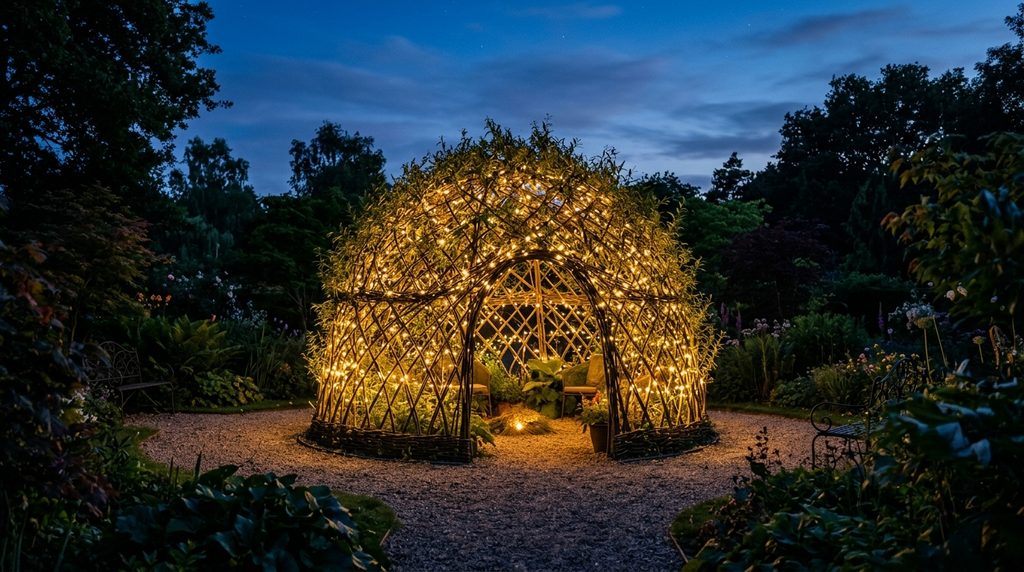
To truly elevate a living playhouse to the level of luxury design, one must consider the lighting. Instead of harsh outdoor floodlights, imagine low-voltage, warm-toned LEDs woven into the willow branches, or solar-powered lanterns hanging from the living rafters. At night, the structure should glow from within, casting intricate shadows of leaves and twigs across the garden. This transforms the playhouse into a magical lantern, a focal point of the garden that is as beautiful to look at from the main house as it is to inhabit.
Conclusion: The Shift from ‘Having’ to ‘Growing’
The original ’37 awesome outdoor kids playhouses’ are wonders of craftsmanship, but they represent a static philosophy of play. They are items to be possessed. The living playhouse, however, is a relationship to be nurtured. By choosing living architecture, we are making a statement about what we value: sustainability, biological connection, and the beauty of the natural world. A luxury modern playhouse design shouldn’t be something you buy in a box. It should be something that takes root in your soil, grows with your children, and eventually becomes a timeless, breathing part of your family’s history. It is time to stop building playhouses and start growing them.
Inspiration Gallery
Editorial Lookbook & Photo Collection