The Anti-Clutter Manifesto: Why One Giant Pinecone Trumps 29 Tiny Crafts
In the world of autumn interior design, we have been conditioned to believe that abundance is synonymous with festivity. We are bombarded with listicles promising ’29 creative fall pinecone decorations’ or ’50 DIY projects for your pinecone harvest.’ But as we stand amidst a sea of hot glue strings, plastic glitter, and dozens of small, nondescript woody scales scattered across our tables, we have to ask ourselves: are we decorating, or are we just creating more work? The modern home is already a battleground against visual noise. Why, then, do we insist on cluttering our sanctuary with tiny, repetitive crafts that lack a singular soul? It is time for a shift in perspective. It is time to embrace the ‘Power of One’—the architectural, minimalist, and deeply intentional choice of a single, giant, high-quality pinecone over a mountain of craft-store clutter.
The Fall Decor Fatigue: Why We Need to Stop Crafting and Start Curating
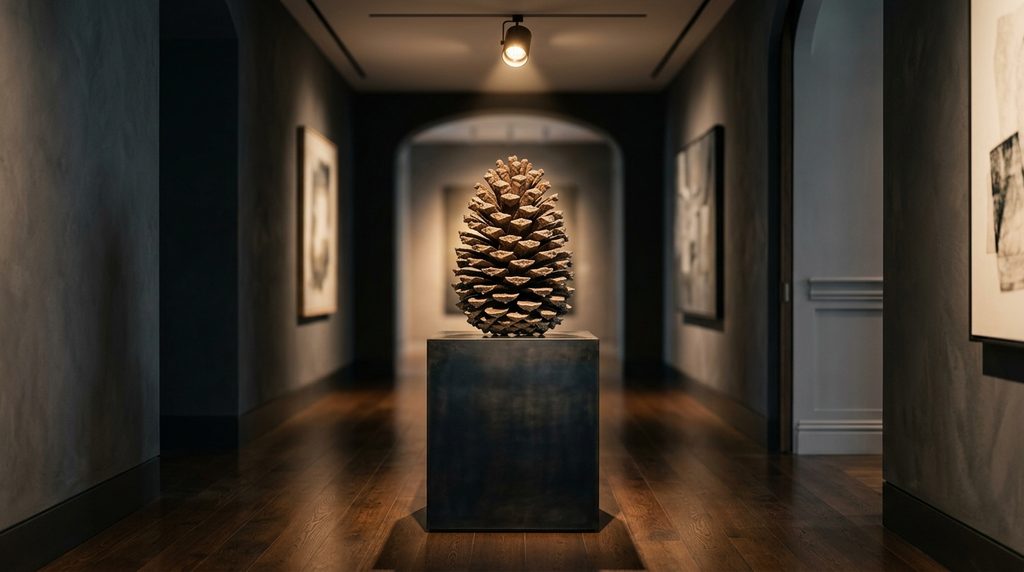
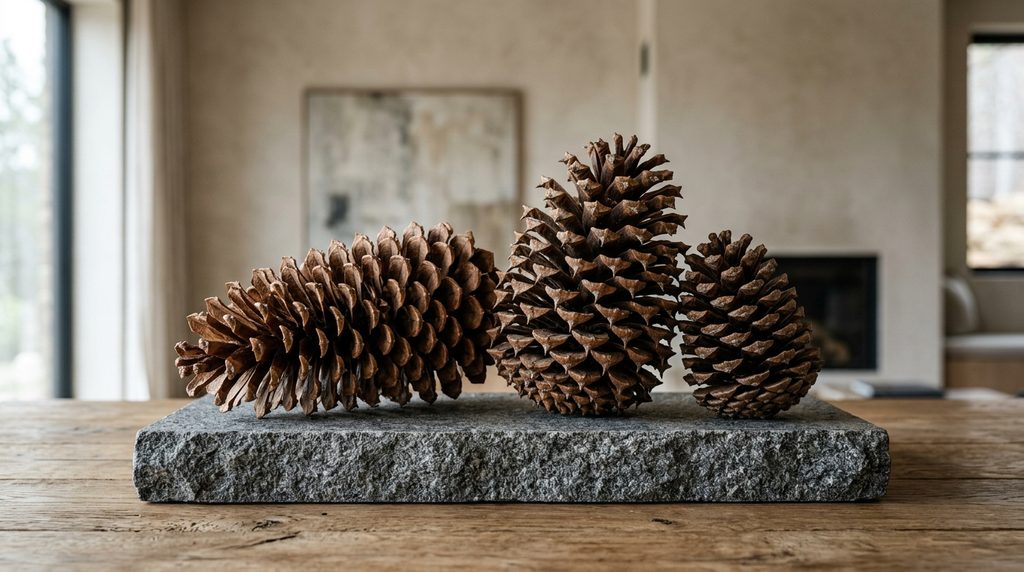
For years, the DIY movement has championed the idea that more is better. If one pinecone is good, twenty-nine must be better. This ‘maximalist crafting’ approach often leads to what designers call ‘visual vibration’—a state where the eye doesn’t know where to land, causing a subtle but persistent sense of unrest in a room. When you follow the typical path of scattering small pinecones across a mantel or filling a bowl with dozens of them, you aren’t creating a focal point; you’re creating a texture that often mimics dust or clutter from a distance. High-end interior design, the kind seen in the pages of Architectural Digest or Elle Decor, rarely relies on dozens of small items. Instead, it relies on scale, proportion, and the weight of a singular, magnificent object. By choosing one oversized specimen—such as a Sugar Pine or a Coulter Pine—you shift from being a ‘crafter’ to being a ‘curator.’ You are no longer making a decoration; you are exhibiting a natural sculpture.
The Architectural Power of the Sugar Pine
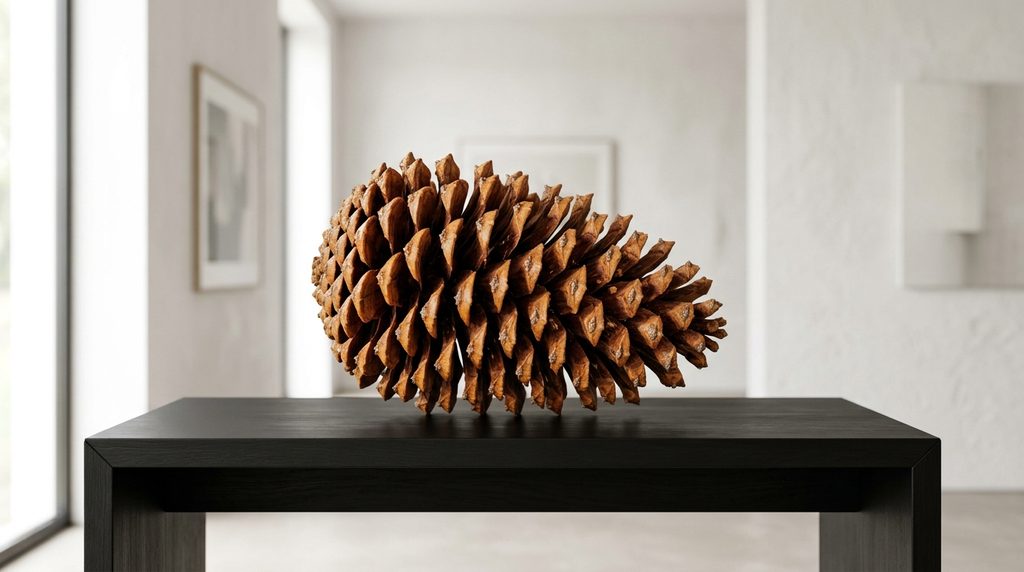
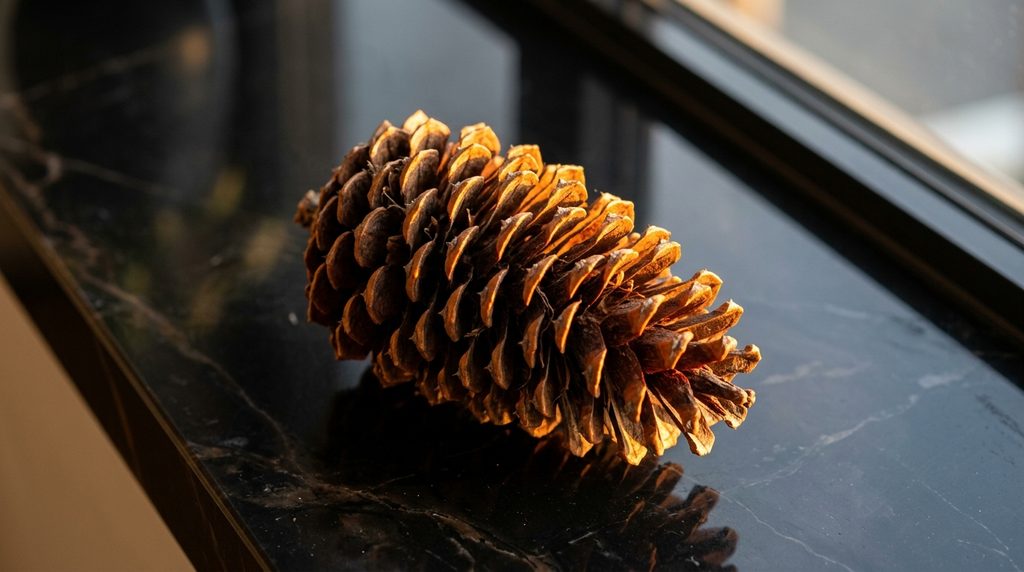
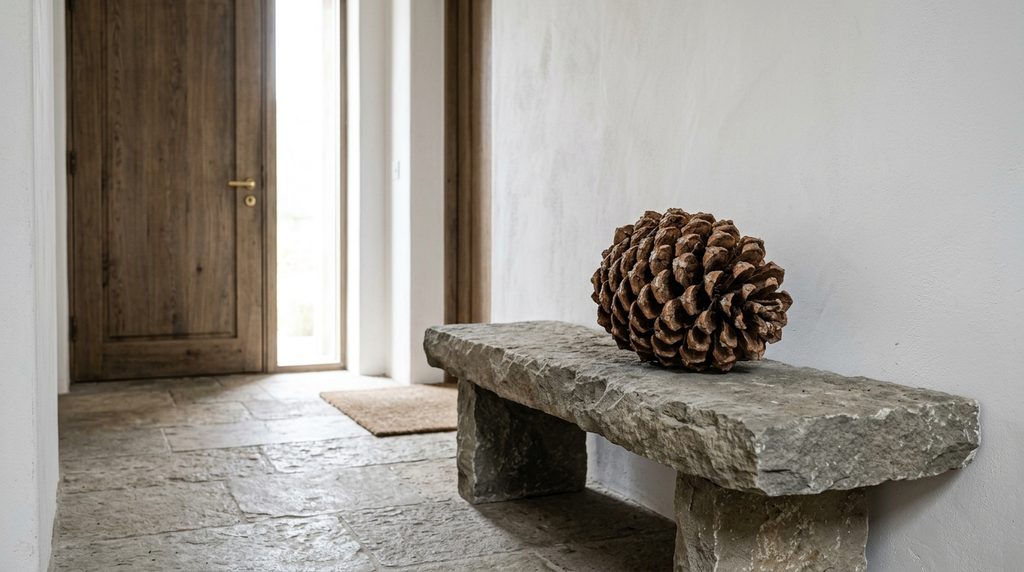
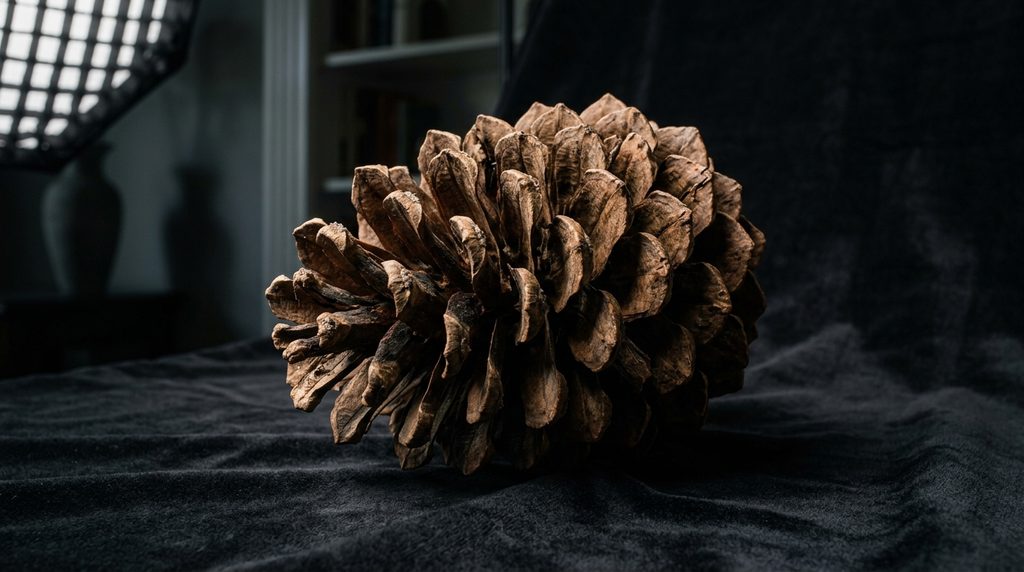
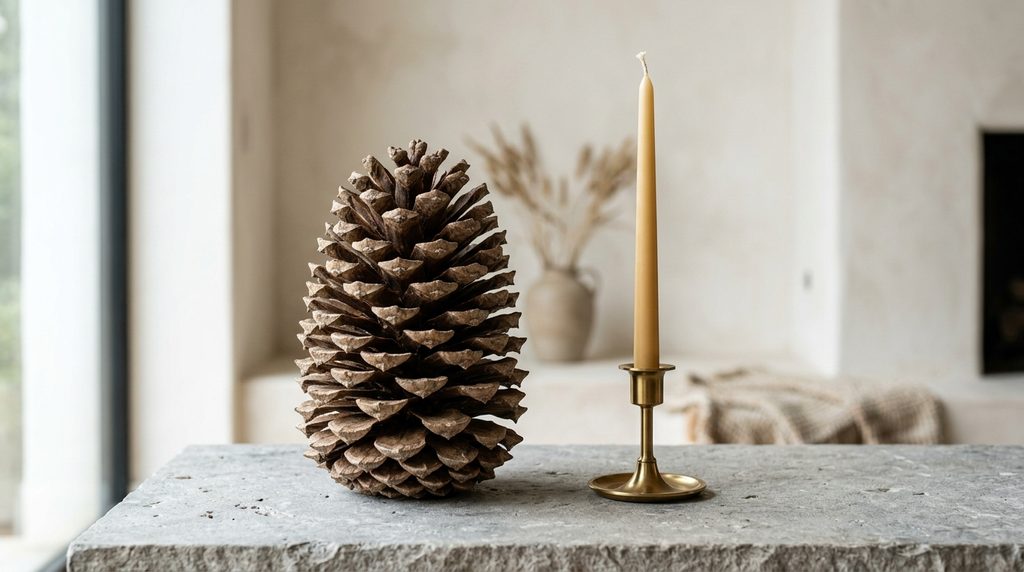
To understand why one pinecone can beat twenty-nine, one must look at the specimen itself. The Sugar Pine (Pinus lambertiana) produces cones that can reach up to 20 inches in length. These are not the small, anonymous brown lumps found on a suburban lawn. These are marvels of evolutionary engineering. Their scales are thick, their symmetry is mathematically divine, and their sheer scale commands respect. When you place a single 18-inch Sugar Pine cone on a minimalist black console table, you are introducing a piece of the forest’s ancient architecture into your home. Its verticality and rugged texture provide a stark, sophisticated contrast to the smooth surfaces of a modern interior. You don’t need ribbons. You don’t need spray paint. You don’t need a hot glue gun. The object speaks for itself, requiring no embellishment to prove its value.
Scale and Proportion: The Designer’s Secret Weapon
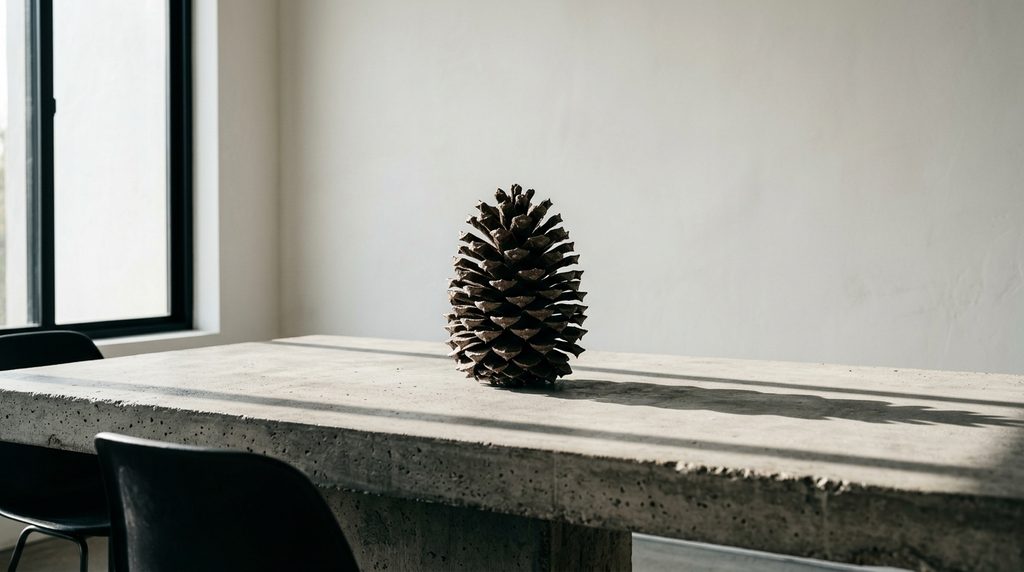
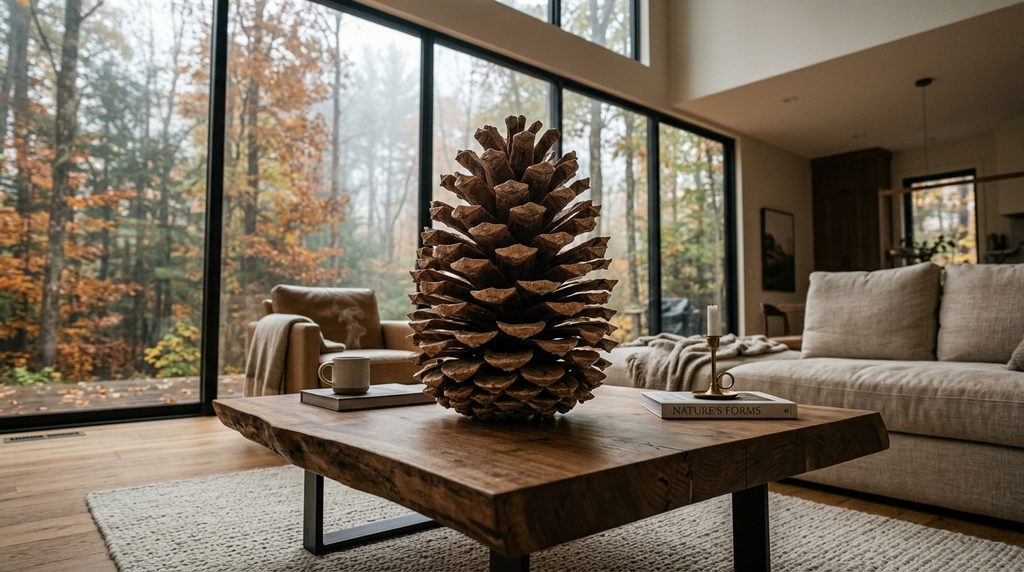
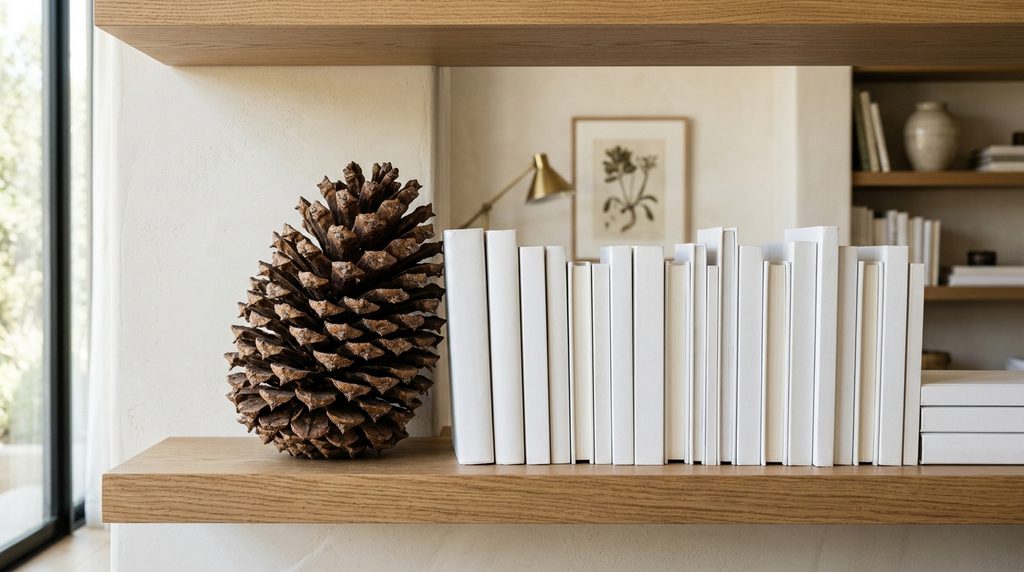
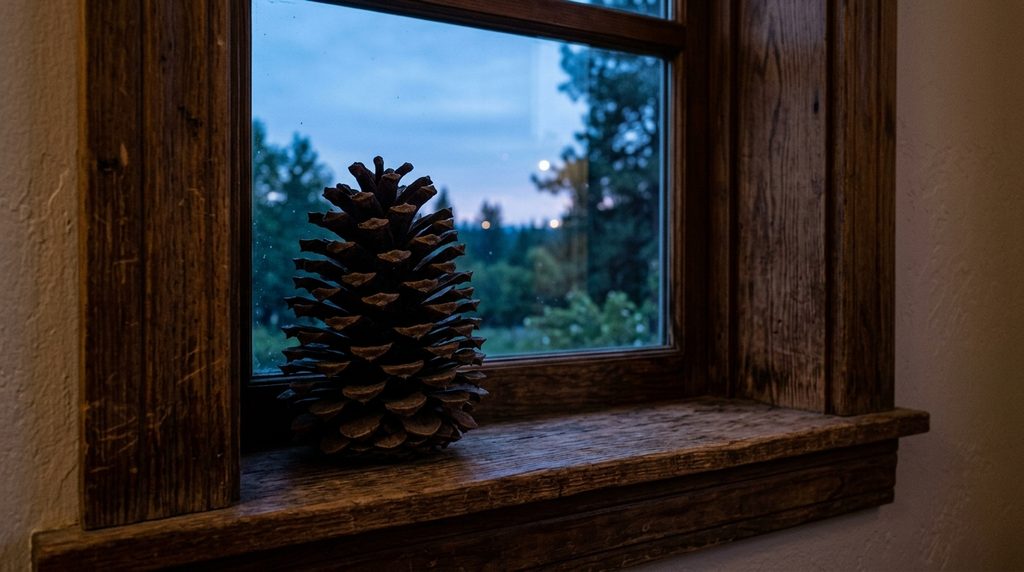
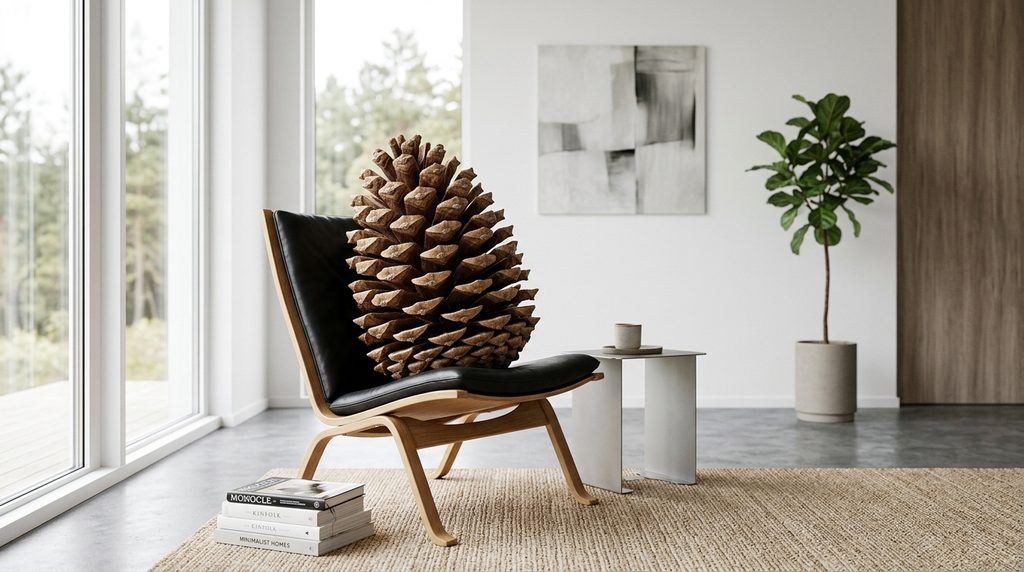
The primary reason the ’29 crafts’ approach fails in a sophisticated home is a lack of scale. Small objects tend to disappear in large rooms, or worse, they make the room feel smaller by breaking up surfaces into tiny segments. Interior designers often use the ‘Rule of Three’ or the ‘Hero Object’ strategy. A single giant pinecone acts as a Hero Object. It provides a sense of grounding. Because of its size, it creates a relationship with the furniture it sits upon. A large pinecone placed on a low coffee table creates a vertical axis that draws the eye upward, making the ceiling feel higher and the room feel more expansive. Compare this to twenty-nine small pinecones scattered in a basket; the latter creates a horizontal blob of color that weighs the table down without providing any structural interest.
The Psychology of Negative Space
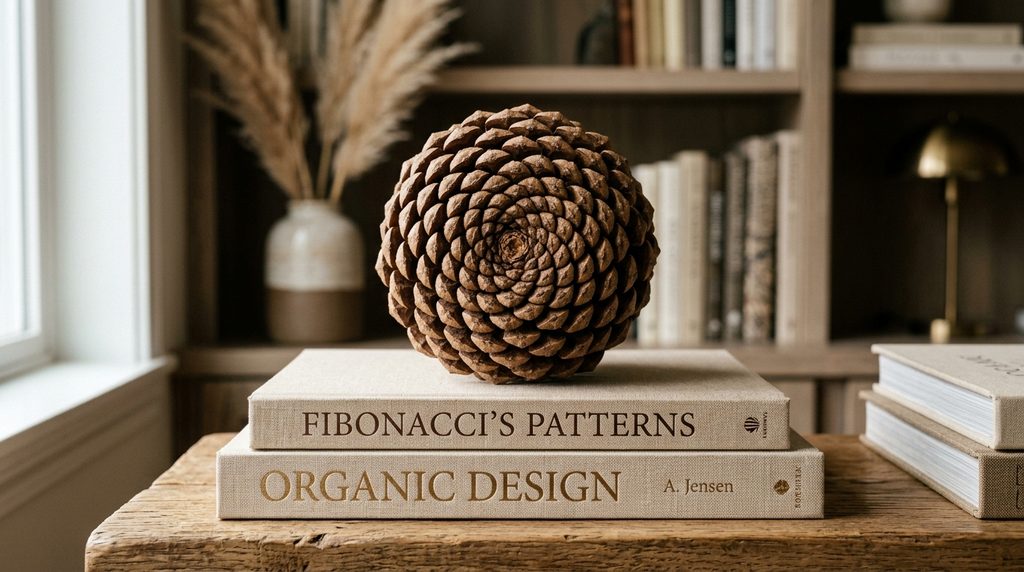
Minimalism isn’t just about having less; it’s about the space between things. This is known as negative space. When you have one magnificent pinecone, the empty space around it becomes part of the design. This space allows the eye to rest and the mind to appreciate the intricate Fibonacci spirals of the cone’s scales. In a world that is constantly screaming for our attention, a single, silent, powerful natural object offers a moment of zen. Clutter, even ‘festive’ clutter, is an energy drain. A single, well-placed pinecone is an energy source.
Sustainability and the ‘One and Done’ Philosophy
We must also address the ecological and temporal cost of the ’29 crafts’ philosophy. Most pinecone DIY projects involve synthetic materials: micro-plastic glitters, petroleum-based glues, and chemical-heavy spray paints. Once the season is over, these ‘decorated’ pinecones are no longer compostable. They end up in landfills, trapped in a sarcophagus of plastic. Choosing one giant, raw pinecone is the ultimate sustainable choice. It requires no additional materials. It is biodegradable. It can be stored easily without breaking, or better yet, it can remain as a year-round sculptural element. Furthermore, the time saved by not ‘crafting’ is time gained to actually enjoy the season. Why spend four hours gluing googly eyes or felt ears onto pinecones when you could spend that time walking in the woods where those cones originated?
Placement Strategies for the Minimalist Home
If you are to adopt the Power of One, placement becomes your most important tool. You are no longer ‘scattering’; you are ‘positioning.’ Here are three ways to make a single giant pinecone the star of your fall decor:
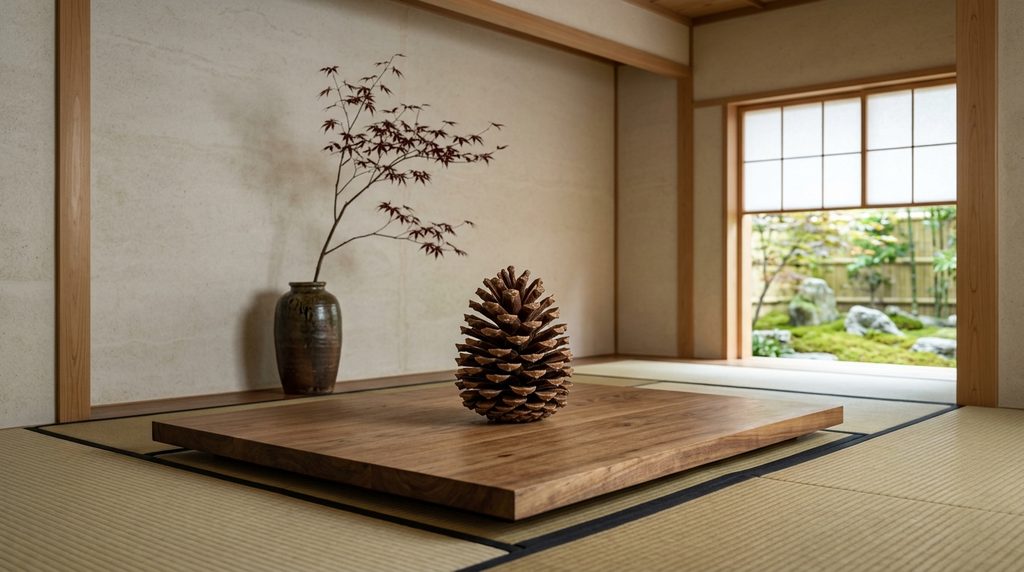
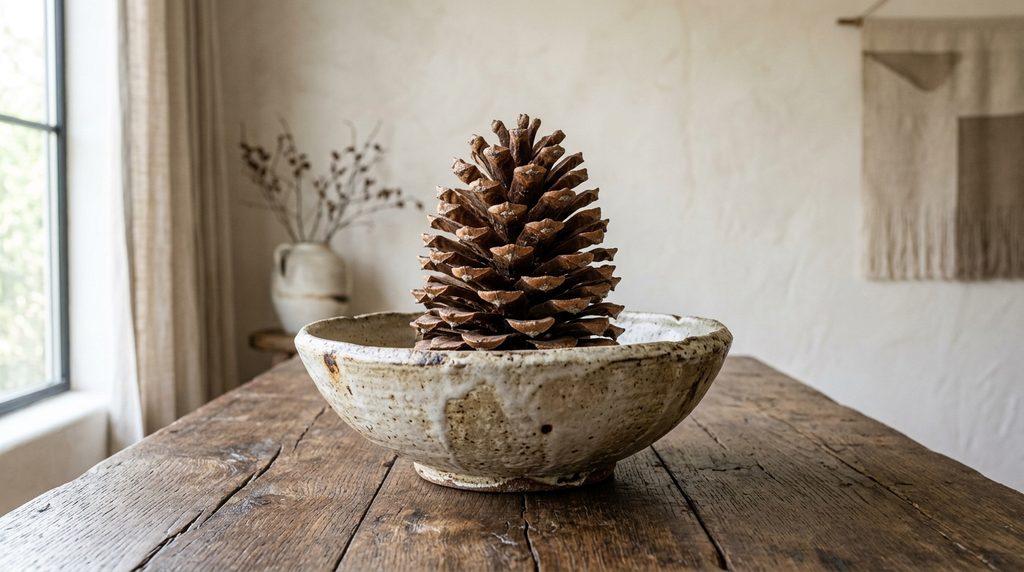
- The Gallery Plinth: Place a giant pinecone on a dedicated pedestal or a stack of thick, linen-bound art books. This elevates the cone from a ‘found object’ to an ‘art piece.’
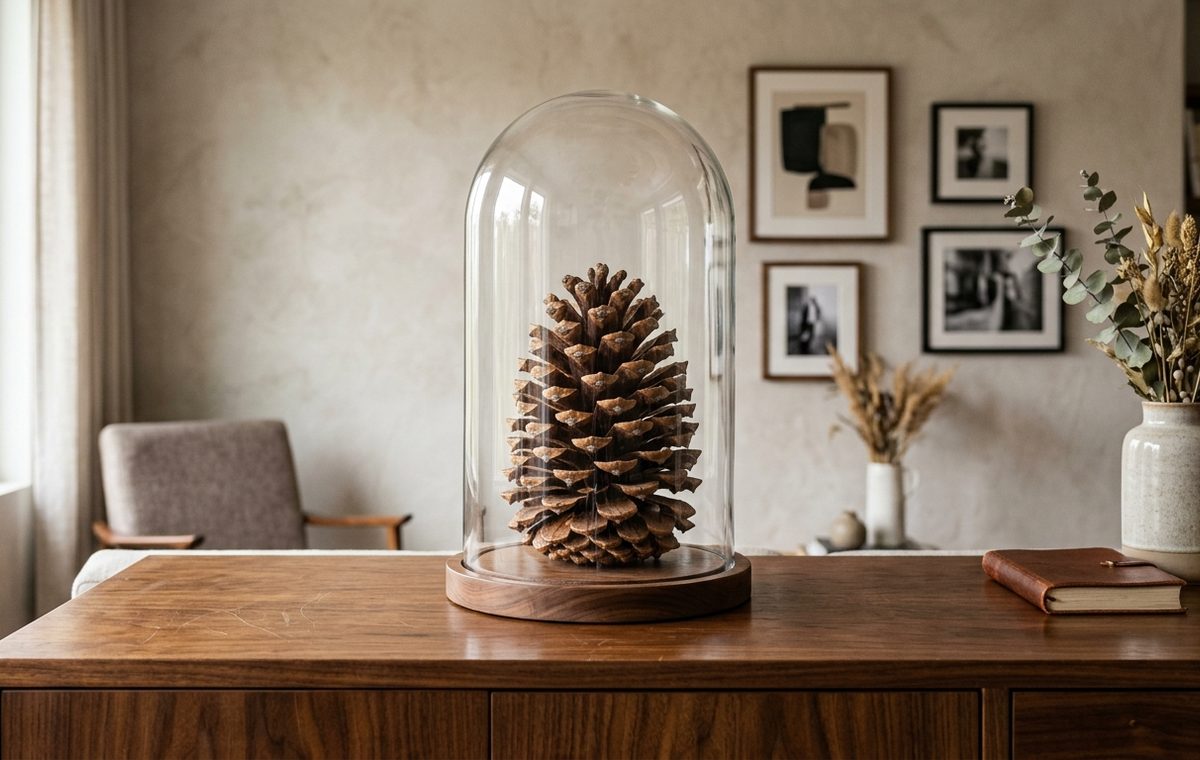
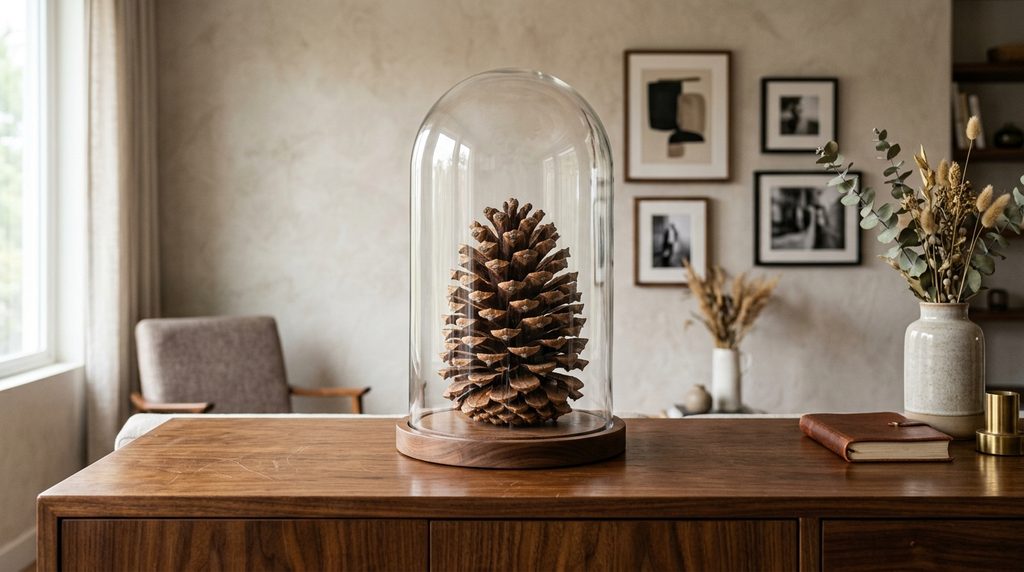
- The Glass Cloche: Enclosing a single, large cone under a glass dome adds a layer of museum-quality preciousness. It protects the delicate tips of the scales while highlighting the object’s form.
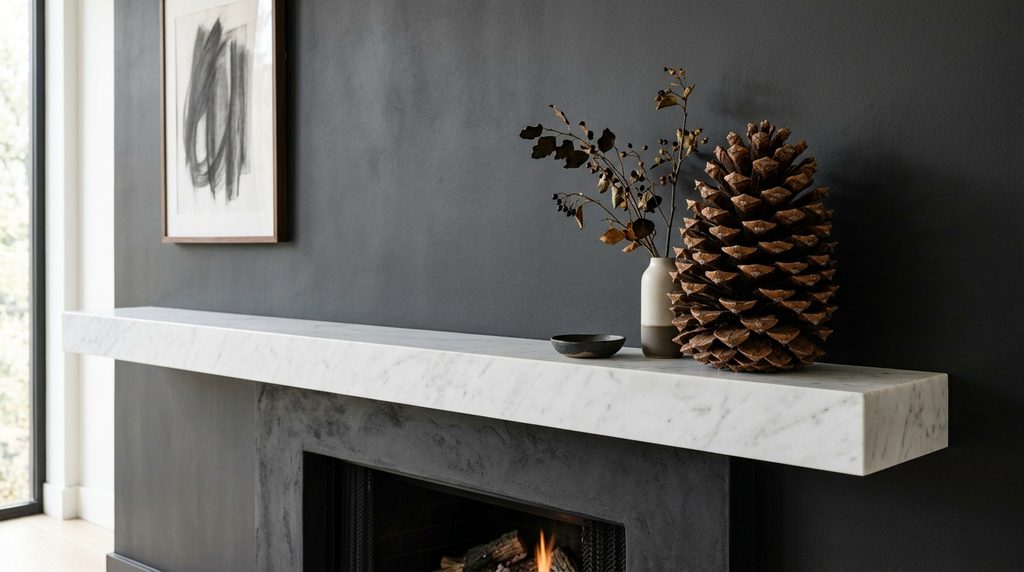
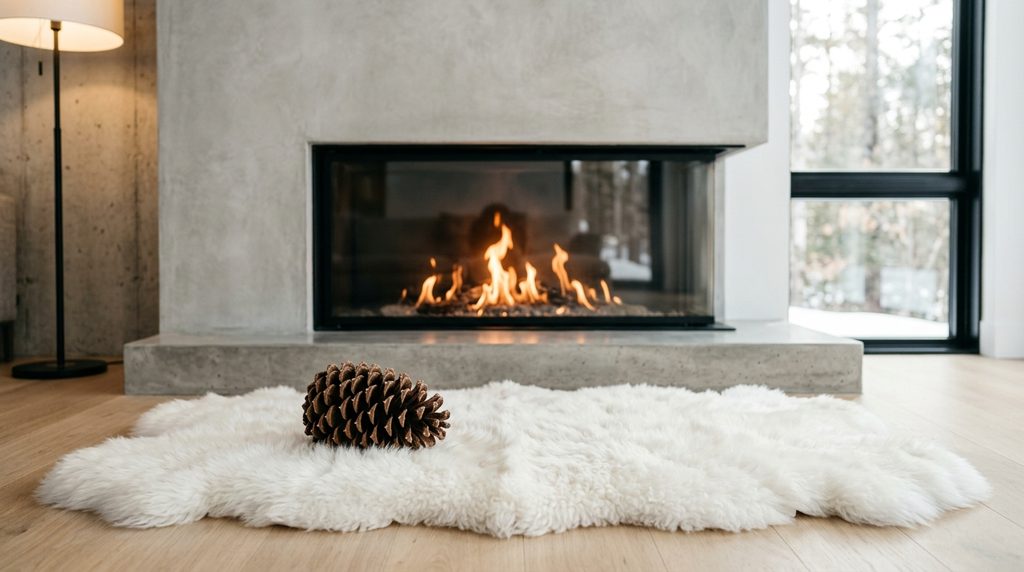
- The Solitary Mantel: Clear your mantel of all small trinkets. Place the giant pinecone slightly off-center. The asymmetry creates a dynamic, modern feel that feels curated rather than staged.
The Fallacy of ‘Creative’ Chaos
Articles that offer dozens of ‘creative’ ways to use pinecones often conflate ‘activity’ with ‘creativity.’ Gluing a pom-pom to a pinecone isn’t necessarily a creative act; it’s a repetitive one. True creativity lies in seeing the inherent beauty of a natural form and knowing when to leave it alone. The ‘One Giant Pinecone’ approach requires a higher level of aesthetic confidence. It requires you to trust that nature is enough. It challenges the consumerist urge to buy ‘filler’ and ‘accents.’ When you stop looking for 29 ways to change a pinecone, you finally start seeing the pinecone for what it actually is: a masterpiece of biological design.
Challenging the ‘Cozy’ Stereotype
There is a persistent myth that ‘cozy’ requires ‘stuff.’ We are told that to have a cozy fall home, we need piles of blankets, dozens of candles, and baskets overflowing with gourds and cones. But there is a different kind of coziness—one found in clarity. A room that is clean, quiet, and centered around a few high-quality natural elements is far more comforting than a room bursting with seasonal debris. A single, large Sugar Pine cone, with its warm woody tones and architectural shadows, provides all the ‘fall vibes’ you need without the accompanying claustrophobia.
Conclusion: Quality Over Quantity
As the leaves turn and the air cools, resist the urge to follow the crowd into the craft aisle. Avoid the temptation of the ’29-tip’ listicle that leads to a cluttered home and a cluttered mind. Instead, seek out the exceptional. Find one giant, magnificent pinecone. Treat it with the respect you would give a piece of fine sculpture. Place it where it can breathe, where it can be seen, and where it can command the room. In the debate between 29 tiny crafts and one giant pinecone, the winner is clear. Elegance, after all, is not about how much you can add, but how much you can take away while still retaining the soul of the season.
Inspiration Gallery


Editorial Lookbook & Photo Collection