The Weight of True Gilt
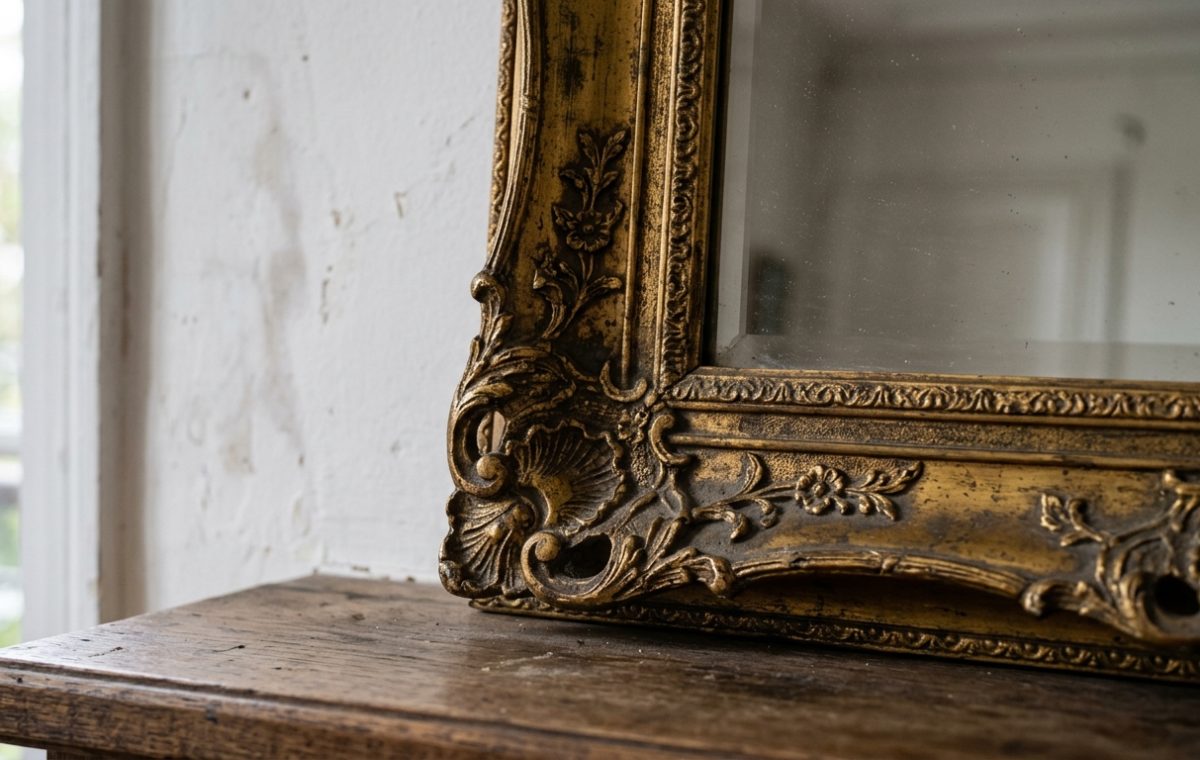
Modern reproductions try hard. They mimic the heavy relief work and the honeyed patina of centuries past, but they almost always miss the microscopic fractures and the uneven hand-applied leafing of genuine pieces. When you set an antique gold mirror down on a raw-grained oak mantel, the visual dialogue changes instantly. It stops being just another home decor object and becomes a physical anchor for the entire wall.
Reading the Patina
Real age leaves signatures. Look closely at the carved acanthus leaves and molded flourishes along the corner joints; you will find subtle wear where decades of soft dust and passing hands have polished the high points while leaving dark shadows in the recessed grooves. This natural aging process cannot be rushed by factory distressing. It requires time, shifting temperatures, and the slow march of seasons.
- Inspect joint lines for historical stabilization or minor structural repairs.
- Check the silvering on the rear glass plate for classic foxing and dark spots.
- Ensure the hanging hardware or resting base can safely support heavy solid wood.
Placing a heavily carved gilded frame against a plain lime-washed or plastered wall creates instant tension. The pristine white surface acts as a silent gallery backdrop, pulling every nuanced shadow out of the golden scrollwork. You do not need gallery lights or complicated track systems when the piece brings its own dramatic lighting dynamics.
Balancing Scale and Surface
Scale is where most styling attempts fail. A petite gilded glass gets swallowed whole by massive stone fireplaces or oversized salon walls, while an extra-large piece crushes delicate furniture. Resting an oblong vertical frame on a low, unadorned wooden chest allows the heavy architectural lines to breathe without needing extra clutter surrounding it. Leave the flanking spaces completely bare. Let the negative wall space do the heavy lifting.
Upkeep requires patience. Feather dusters will snag on fragile gesso details, so reach for a soft artist brush to sweep out accumulated debris from the carved hollows. Avoid liquid chemical cleaners entirely, as modern ammonia can strip vintage leafing within seconds. How do you usually balance heavy historic accents without making a modern room feel like a dusty museum?
Editorial Silo • Recommended Architecture Studies
- The Architect’s Blueprint: Living Room Ideas For Small Rooms & Engineering Spatial Volume and Flow in Compact Living Rooms — Archival Design Case Study
- Large living room design rules for functional flow — Archival Design Case Study
Curated Lookbooks & Architectural Studies
- The Tactile Aesthetic of Ways To Decorate A Small Balcony: Materials, Moods & Lighting Kelvin
- Designing a Classic French Apartment Living Room
- The Science of Space: Mastering Ergonomic Kitchen Lay Outs for High-Efficiency Living
- Neutral Living Room Styling Ideas for an Inviting Space
- The Tactile Aesthetic of Modern Style Kitchen: Materials, Moods & Lighting Kelvin
- Nice Curtain Style Ideas for Contemporary and Modern Living Room
Curated Visual Lookbook
Design Gallery & Spatial Studies
A visual curation of architectural arrangements, lighting concepts, and material palettes featured in this space.