Curating a Workspace with History
Most modern workspaces feel sterile. They rely on cold glass, humming monitors, and synthetic mats that drain the life out of a room. A vintage home office desk tells a completely different story. It starts with the weight of seasoned timber, the minor scuffs left behind by past decades, and the deliberate absence of digital clutter.
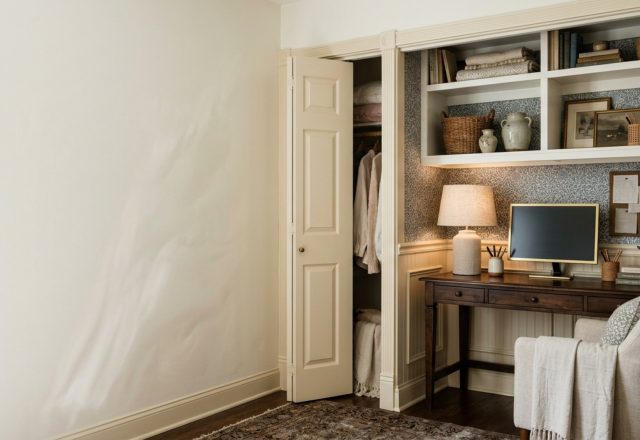
Look closely at how natural light pours through tall paned windows. It catches the patina of an aged brass table lamp and warms up a leather-bound journal waiting open on the grain. This is not about staging a trendy aesthetic for social media. It is about building an environment that slows your pulse down the moment you sit in the velvet armchair.
The Anatomy of an Authentic Desk Setup
You do not need an endless budget to recreate this depth. You need patience at antique markets and an eye for honest materials. A solid wood partner’s desk anchors the room. Pair it with a classic weighted banker lamp or an adjustable brass arm fixture casting a warm, amber pool of light directly onto your notebook.
Essential Elements for Your Study
- Heavy oak or walnut writing desk with visible grain
- An analog fountain pen and thick paper notebooks
- Warm-toned table lamps with textured linen shades
- Comfortable seating upholstered in rich, muted velvet
Avoid the trap of buying matching office sets. Real character comes from friction. A mid-century chair against a French country table creates tension that keeps the eye moving. Add a ceramic coffee mug that feels heavy in your hand. Let the morning breeze carry sounds from the street below.
Maintenance Realities
Antique wood demands respect. Water rings happen if you forget a coaster. Dry winter air can cause old joints to shift slightly. Wipe surfaces down with natural beeswax rather than harsh commercial sprays. The upkeep is part of the ritual. It forces you to touch your workspace and pay attention to its physical state.
How often do you find yourself distracted by the sheer minimalism of contemporary setups compared to the grounding weight of traditional rooms?
Editorial Silo • Recommended Architecture Studies
- The Engineering of Ease: How to Make Contemporary Furniture for High-Performance Urban Living”, description: “Modern living demands a departure from static design; to make contemporary furniture today is to engineer kinetic, multifunctional solutions. This guide introduces the ‘2:1 Rule’ of spatial density—balancing two parts low-profile furniture with one part uninterrupted breathing room. We analyze the ergonomics of ‘cognitive stability,’ integrating hidden power hubs, wireless charging surfaces, and modular footprints that allow a single piece to pivot between a high-focus workspace and a serene sanctuary. — Archival Design Case Study
- Grand Closet home office aesthetic styling trends — Archival Design Case Study
Curated Lookbooks & Architectural Studies
- Autumn Home Decor Styling: Warmth Through Dried Botanicals
- The Tactile Aesthetic of Dwell Magazine Bathrooms: Materials, Moods & Lighting Kelvin
- The High-Performance Foyer: Mastering Narrow Entryway Ideas through Ergonomic Mirror-Storage Hybrids
- Vintage Armchair Styling Tips for a Cozy Reading Corner
- Wall Sconce Lighting Ideas for Warm, Layered Interiors
- 12 Interior design trends 2011: Mindful Texture secrets
Curated Visual Lookbook
Design Gallery & Spatial Studies
A visual curation of architectural arrangements, lighting concepts, and material palettes featured in this space.