The Anatomy of a Well-Styled Tray
Most coffee tables slip into chaos within forty-eight hours. Remotes multiply, coasters wander off, and mail accumulates like sediment. A heavy stone base changes the physics of clutter. By corralling items inside rigid boundaries, you force a sense of intentionality onto an otherwise chaotic surface. It is less about rigid curation and more about creating a visual anchor for the room.
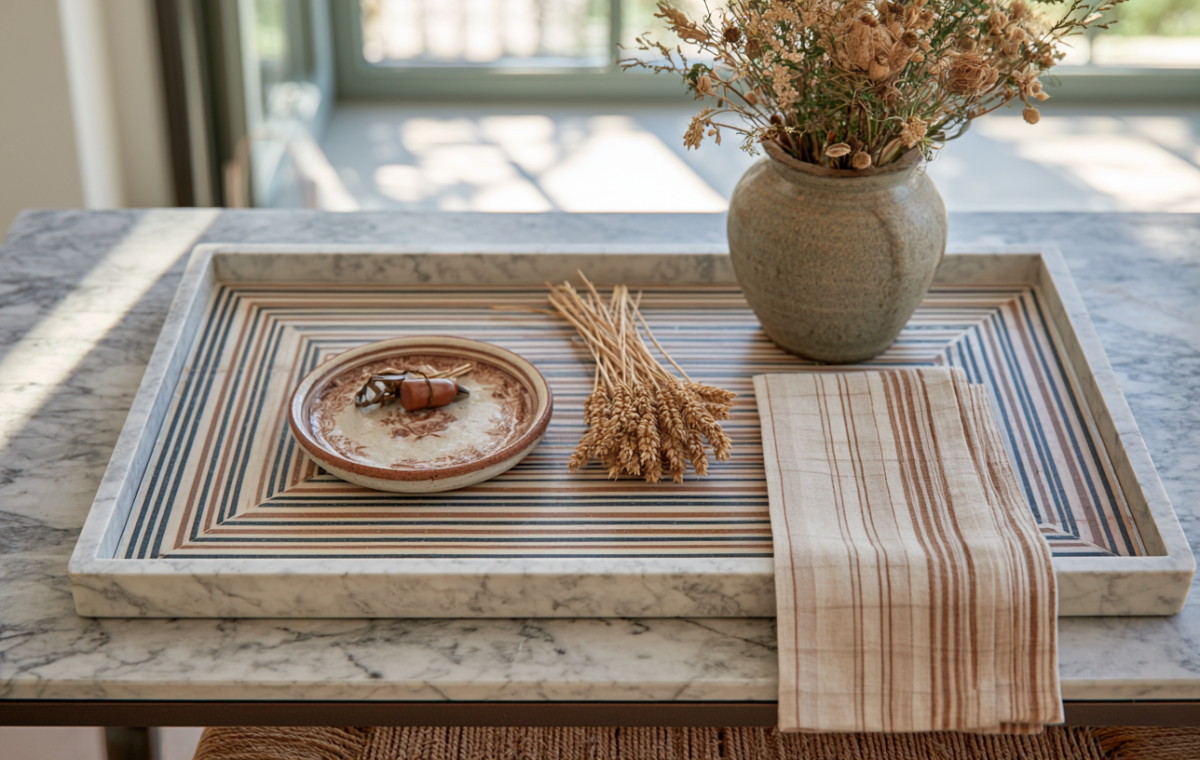
Notice how the patterned inlay inside this marble tray breaks up the coldness of the stone. Monolithic white marble can feel sterile if left bare, but contrasting wood tones and delicate geometric lines warm it up instantly. When you choose a tray, look for weight. Lightweight trays slide around and feel cheap under the hand. A substantial piece stays put when you pull a napkin or reach for a small dish.
Layering Textures Without the Clutter
The secret to keeping a tabletop vignette interesting lies in material contrast. Hard stone demands softness. Pairing a heavy marble tray with a textured cotton napkin and raw dried wheat creates an instant tactile dialogue. You want fingers to reach out and touch the objects. If everything on the tray has the same smooth, polished finish, the eye gets bored.
Balancing Height and Proportion
Scale is where most styling attempts derail. If every item sits at the exact same height, the arrangement looks flat and lifeless. A tall ceramic vase filled with dried botanicals provides the necessary vertical lift, while a low, shallow dish keeps the composition grounded. Keep these quick rules in mind when building your display:
- Vary your heights by at least three distinct levels to keep the eye moving.
- Leave some negative space inside the tray rather than filling every square inch.
- Stick to a tight, earthy color palette like warm beige, terracotta, and muted stone.
- Incorporate organic elements like dried grains or branches to soften rigid geometric lines.
Real homes collect dust, and everyday styling needs to survive real life. Keep a lint-free cloth nearby to wipe down stone surfaces regularly, especially if you use your trays for holding daily-use items like keys or pocket change. How do you usually handle the endless drift of small items across your living room surfaces?
Editorial Silo • Recommended Architecture Studies
- The Architect’s Blueprint: Living Room Ideas For Small Rooms & Engineering Spatial Volume and Flow in Compact Living Rooms — Archival Design Case Study
- Large living room design rules for functional flow — Archival Design Case Study
Curated Lookbooks & Architectural Studies
- Slow Living Desk Setup Ideas for a Mindful Workspace
- Autumn Apartment Decor Ideas for a Cozy Seasonal Refresh
- The Best Laminate Wood Flooring Ideas for Small Spaces
- Cool Walk In Closets: Compact Lighting Trends
- The Architectural Blueprint: Mastering Spatial Flow with Monolithic Kitchen Tile Options
- Antique Brass Kitchen Faucet Ideas for Timeless Character
Curated Visual Lookbook
Design Gallery & Spatial Studies
A visual curation of architectural arrangements, lighting concepts, and material palettes featured in this space.