There is a specific, quiet alchemy that occurs when the right shade of green meets the right frequency of light. For years, the design world flirted with mints and teals, but as we move into 2026, the obsession has matured into something far more grounded and expensive-looking. We are seeing a renaissance of sage green living room ideas that reject the flat, one-dimensional ‘Pinterest-perfect’ aesthetic in favor of something much more visceral. This is ‘Quiet Luxury’ in its most organic form—a strategy that relies not on flashy gold accents, but on the sophisticated interplay of Sherwin-Williams’ ‘Evergreen Fog’ and the honeyed warmth of a 2700K lighting scheme.
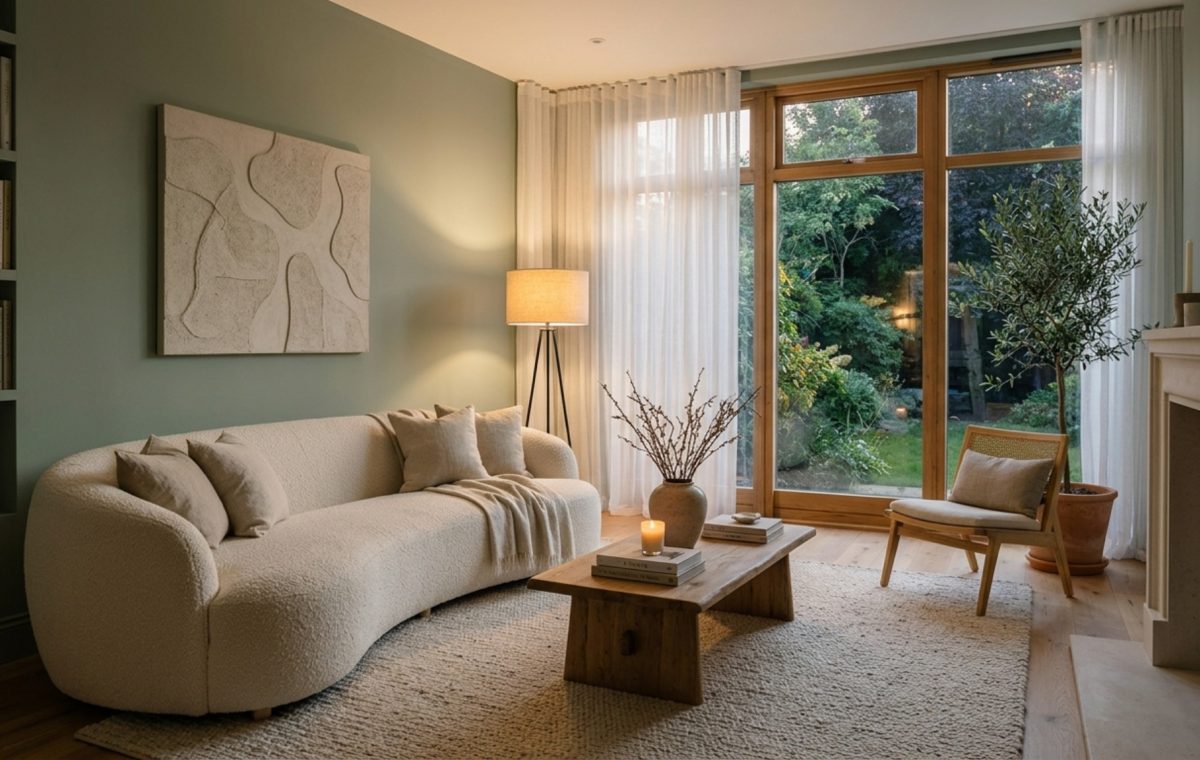
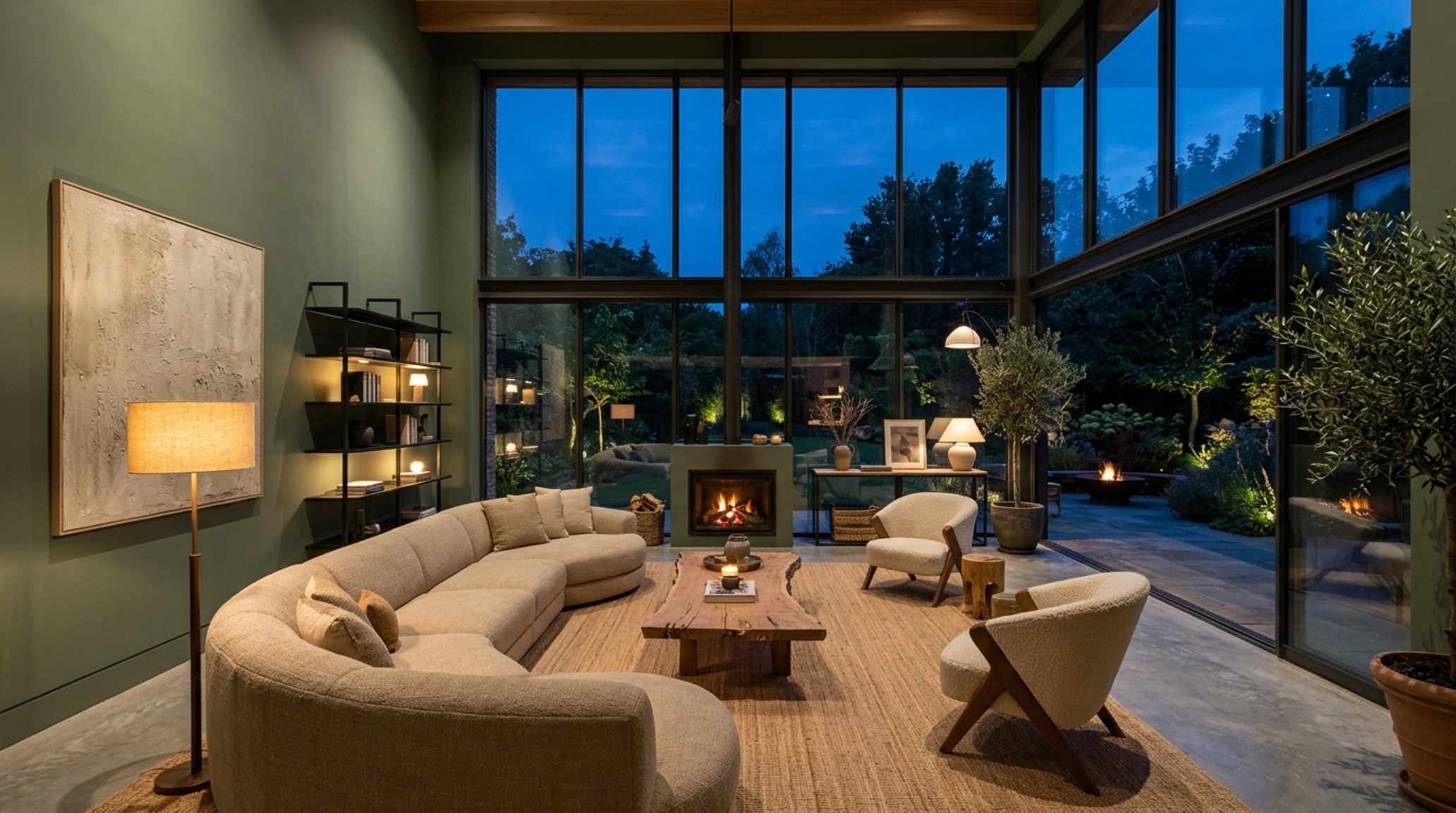
The secret to making sage feel like a deliberate architectural choice rather than a safe neutral lies in what I call ‘Atmospheric Kelvin Tuning.’ Most homeowners make the mistake of pairing these earthy pigments with 3000K or 4000K bulbs, which can turn a sophisticated sage into something clinical and cold. By shifting the color temperature down to 2700K, the green pigments absorb the warm light, pulling out hidden ochre and umber undertones. This transforms the space from a fresh, biophilic sanctuary by day into a moody, expensive-looking retreat by night.
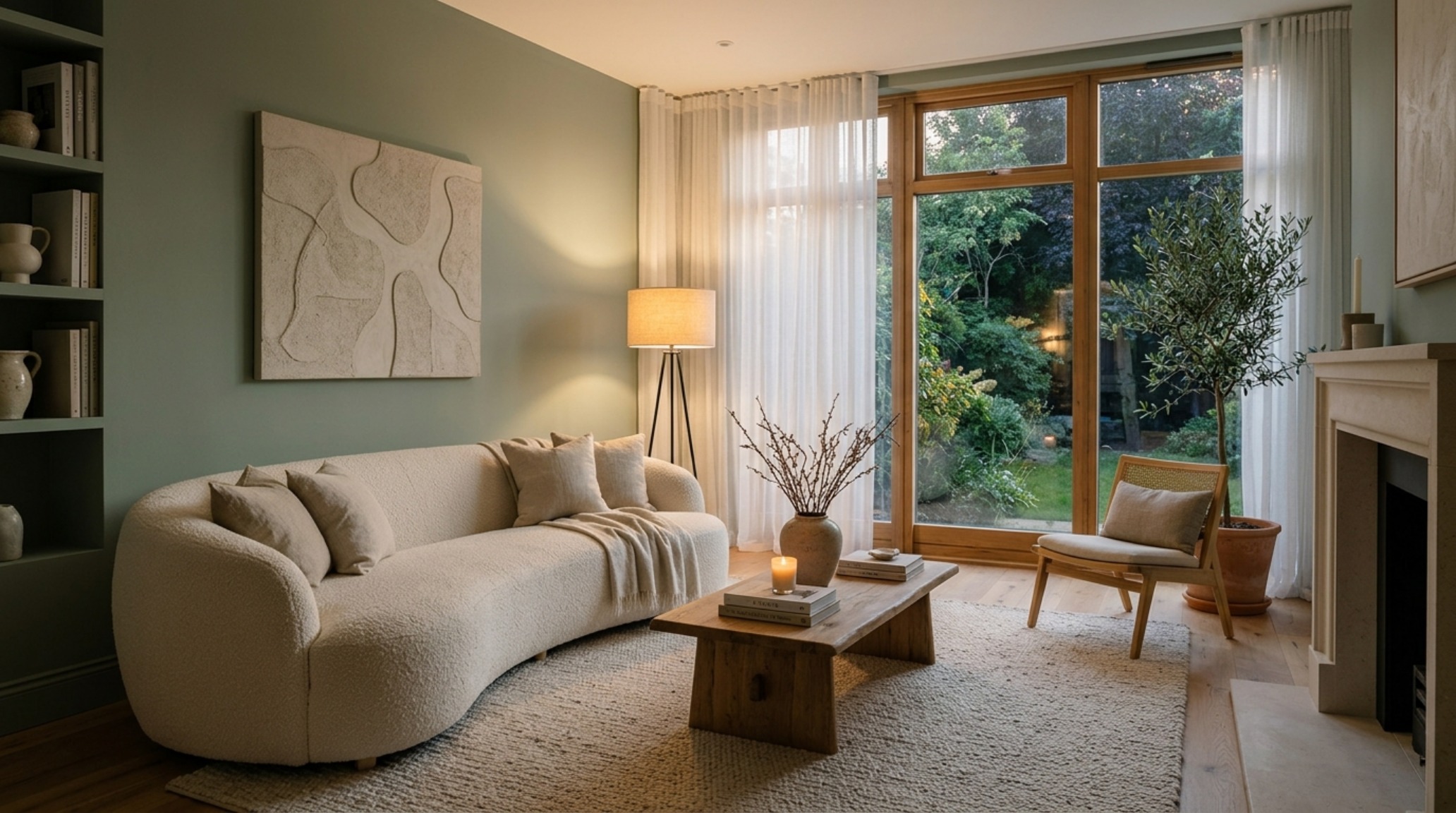
Defining the Palette: Why Sage Green is the New Architectural Neutral
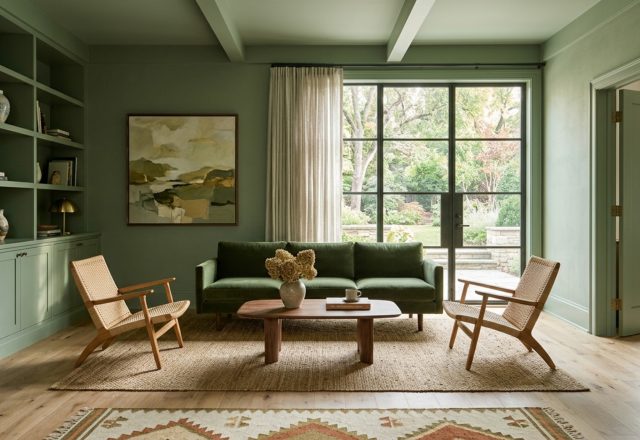
In the hierarchy of the 2026 ‘Organic Modern’ movement, sage green serves as the foundational bridge between the outdoors and our increasingly digital interiors. Unlike the stark whites of the late 2010s, a well-executed sage provides a sense of enclosure and psychological safety. When considering sage green living room ideas, we must look beyond the paint chip. We are looking for depth—the kind found in Farrow & Ball’s ‘French Gray’ or Benjamin Moore’s ‘Saybrook Sage.’ These colors aren’t just green; they are chameleons infused with gray and blue that respond dynamically to their surroundings.
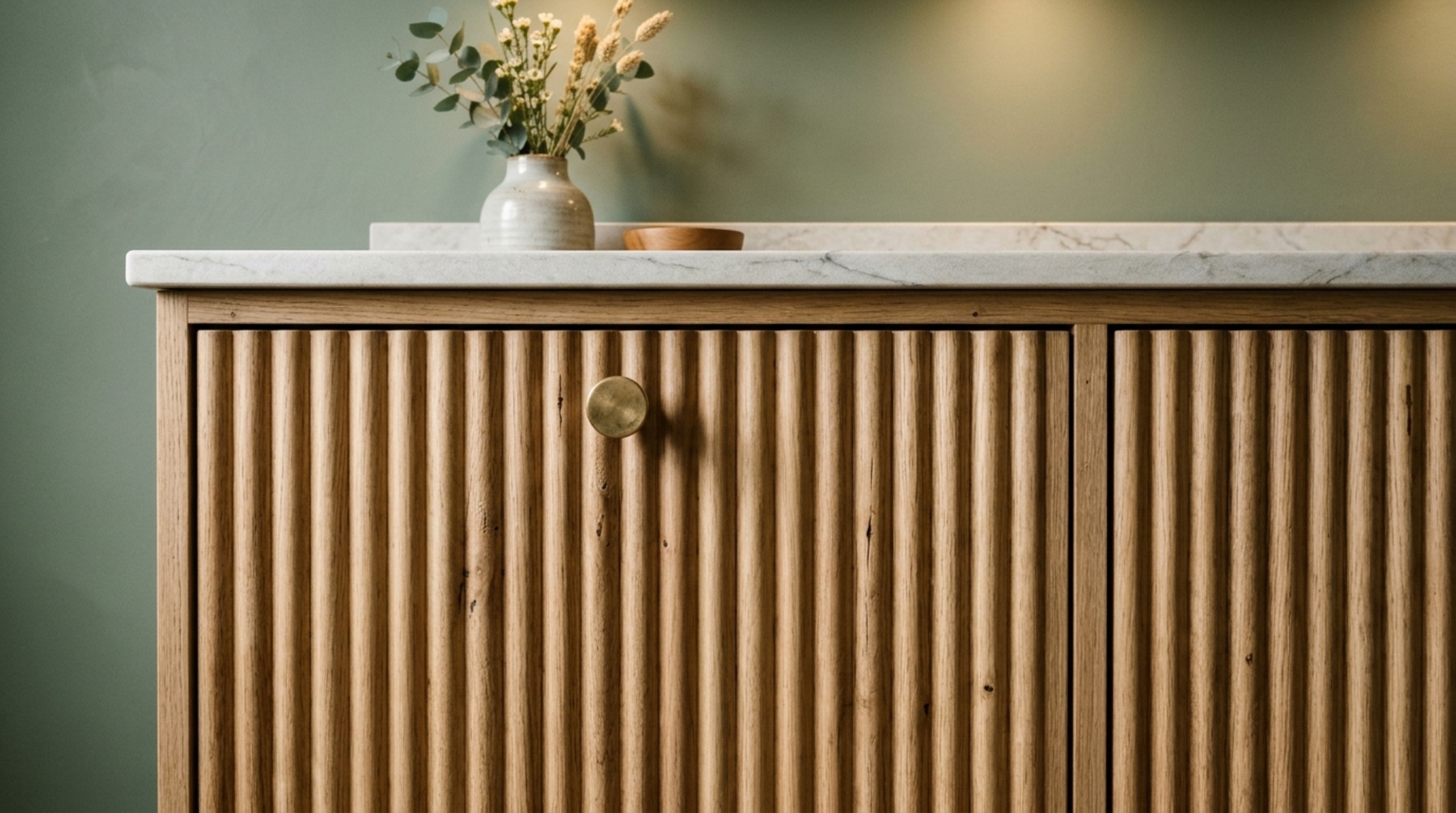
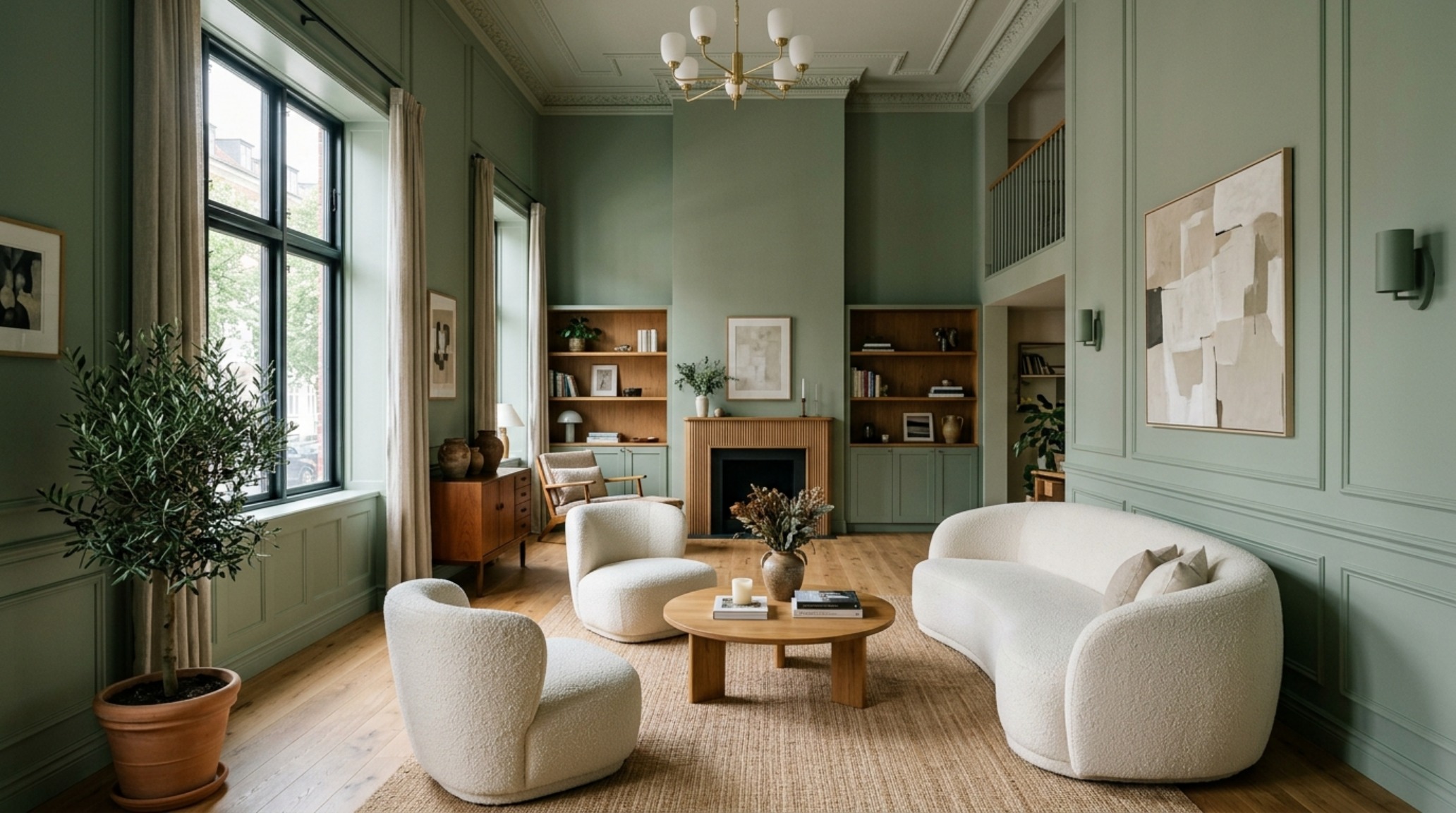
To achieve this level of sophistication, one must embrace ‘color drenching.’ This involves painting the walls, trim, and even the ceiling in varying sheens of the same sage hue. By removing the high-contrast white trim, you eliminate the visual ‘stutter’ that makes a room feel smaller. Instead, the eye glides across the space, focusing on the tactile quality of the furniture rather than the boundaries of the walls. It creates a seamless canvas where a beige bouclé sofa or a fluted oak sideboard can truly sing.
The Material Matrix: Travertine, Bouclé, and Raw Oak
If sage is the soul of the room, materiality is its skeleton. To avoid the ‘flatness’ that often plagues monochromatic designs, we must introduce high-contrast textures. This isn’t about color contrast, but tactile contrast. Imagine the softness of a nubby bouclé fabric resting against the cool, pockmarked surface of a honed travertine coffee table. This juxtaposition is the hallmark of the ‘Quiet Luxury’ aesthetic.
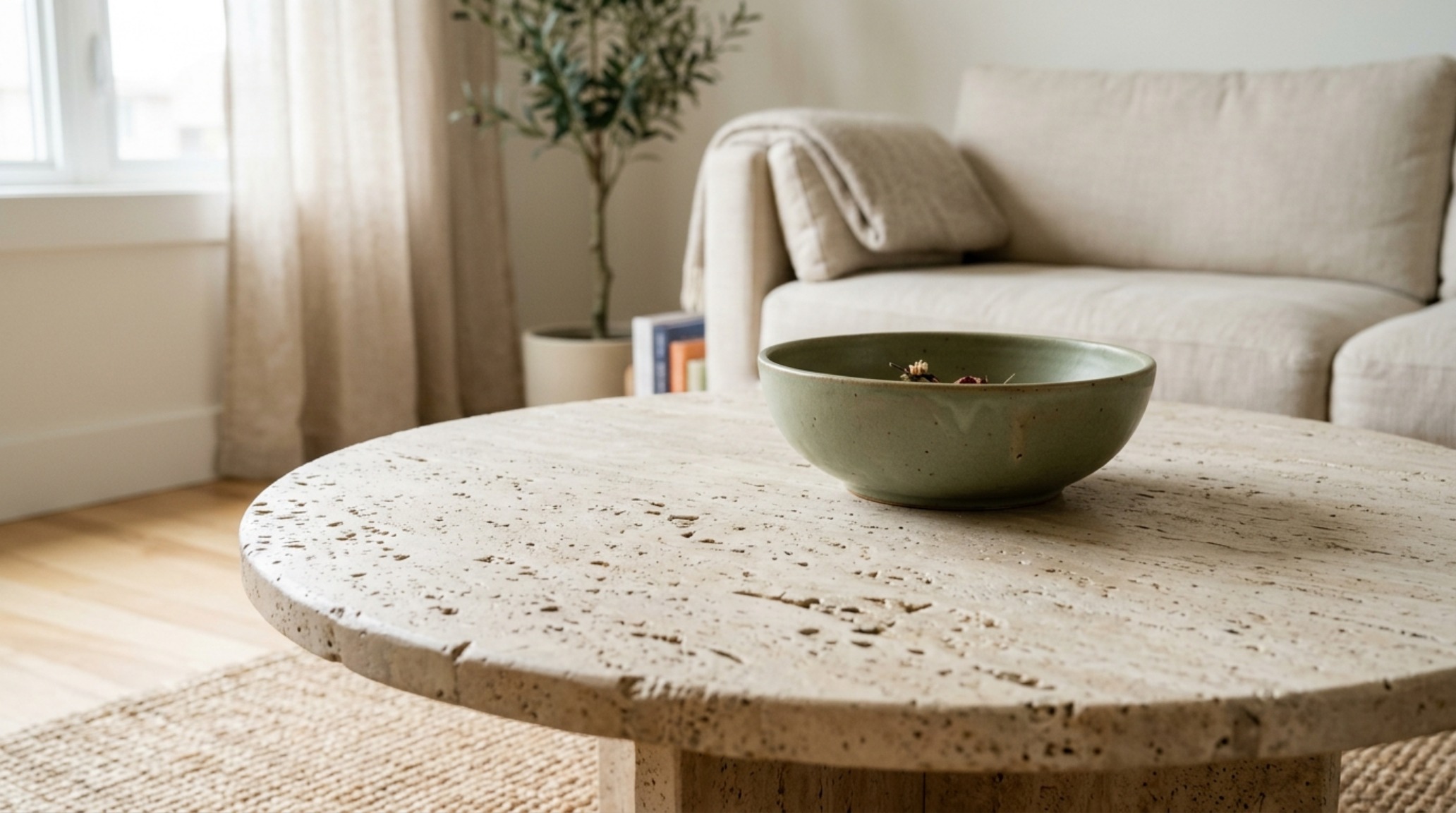
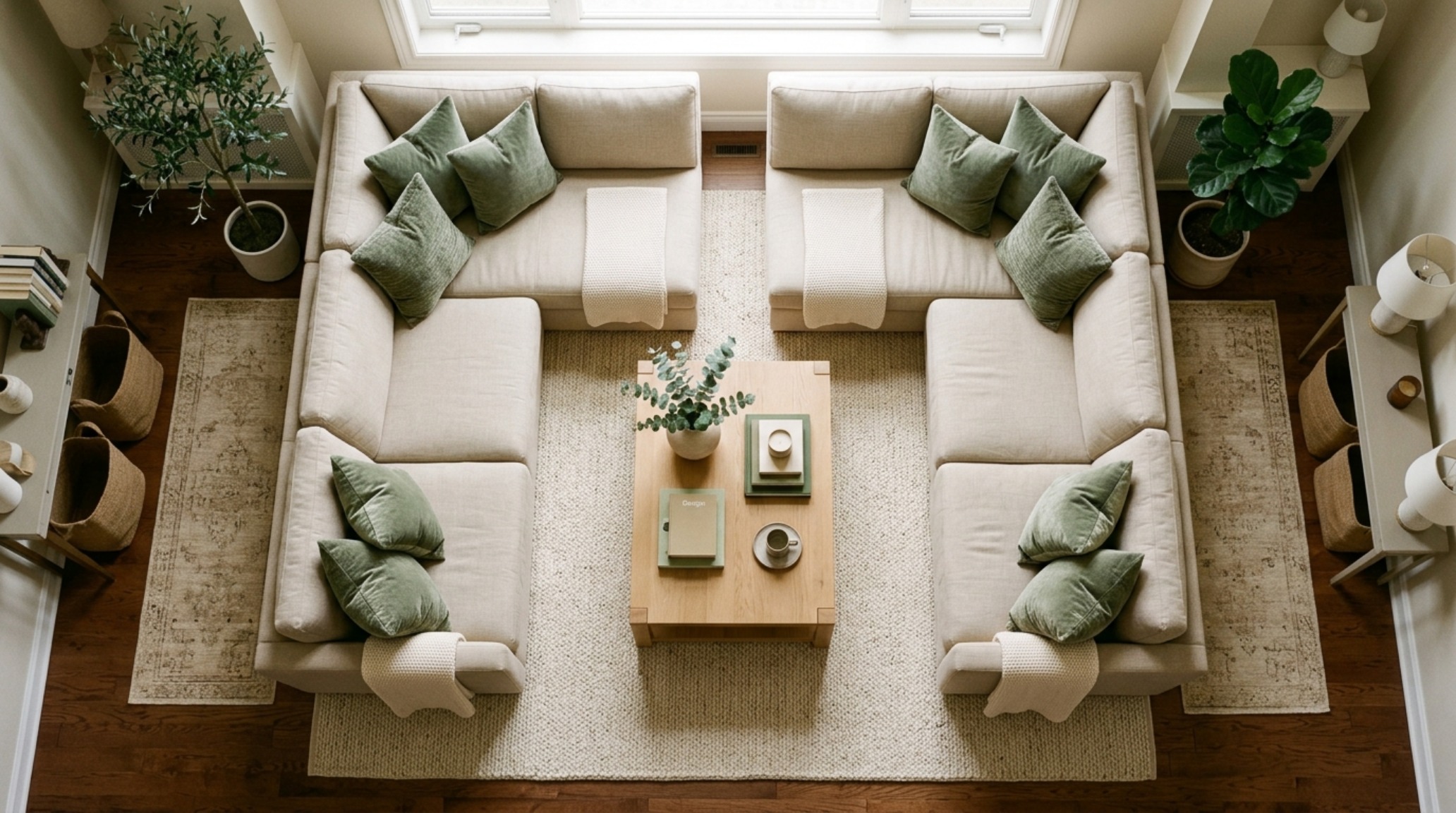
Travertine, specifically in its unfilled, honed state, is the perfect partner for sage. Its porous nature and creamy, sandy tones provide a needed grounding element. When the sun hits a travertine surface, the light diffuses softly, echoing the matte finish of an ‘Evergreen Fog’ wall. To maintain a functional flow, ensure your coffee table is positioned with an 18-inch reach from the primary seating. This isn’t just a design rule; it’s about the ergonomics of comfort, ensuring that a drink or a book is always within an effortless skeletal range.
The Science of Atmospheric Kelvin Tuning
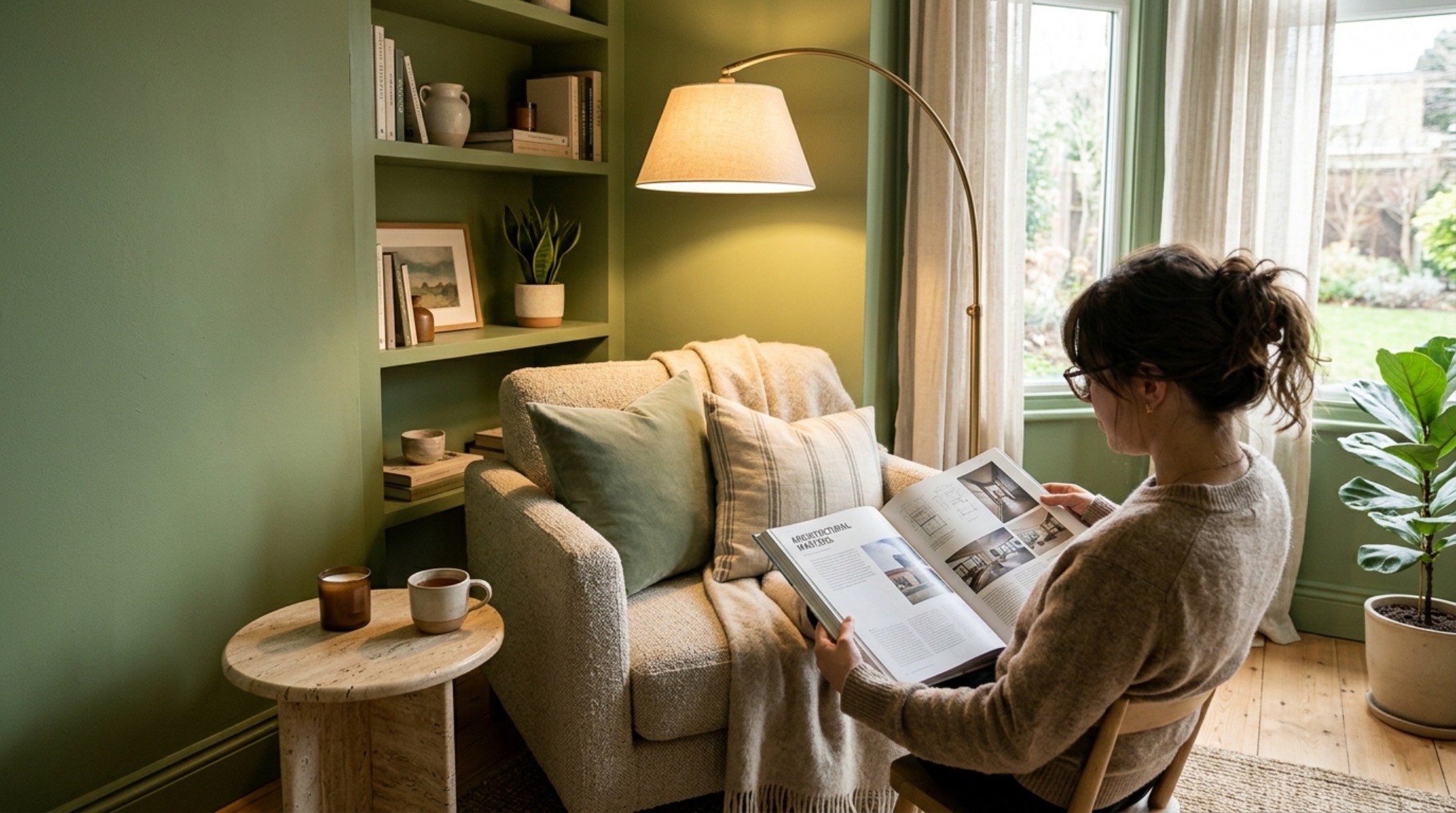
Lighting is the most undervalued tool in an interior designer’s kit. When we talk about 2700K lighting, we are talking about the ‘Golden Hour’ in a box. This specific temperature mimics the warmth of a setting sun, which is crucial when working with green. Green is a cool color by nature, and without that 2700K intervention, it can feel ‘recessive’—it pulls away from the viewer. The warm glow of a 2700K bulb pushes back, adding a layer of perceived ‘heat’ to the pigment that feels incredibly inviting.
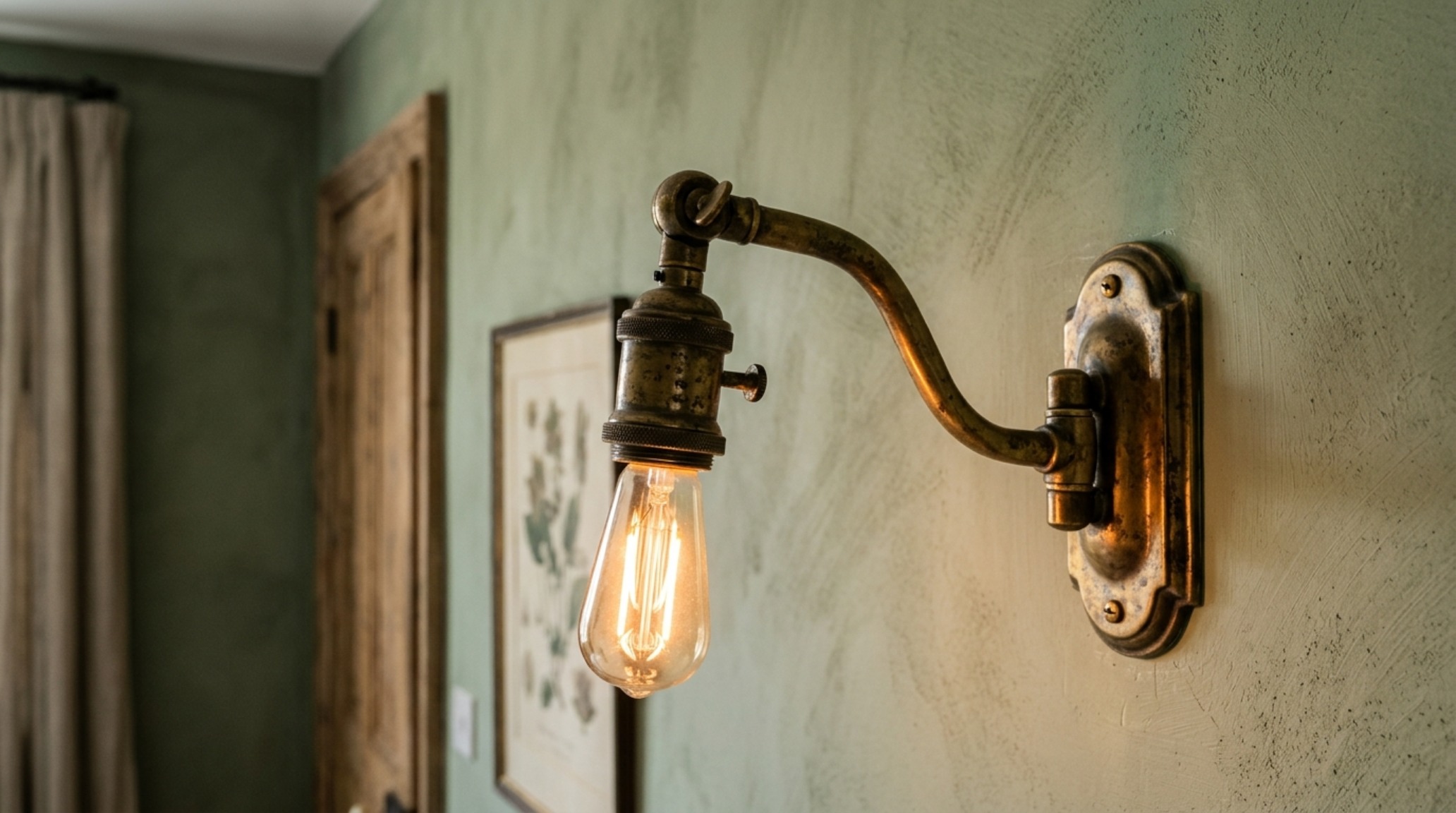
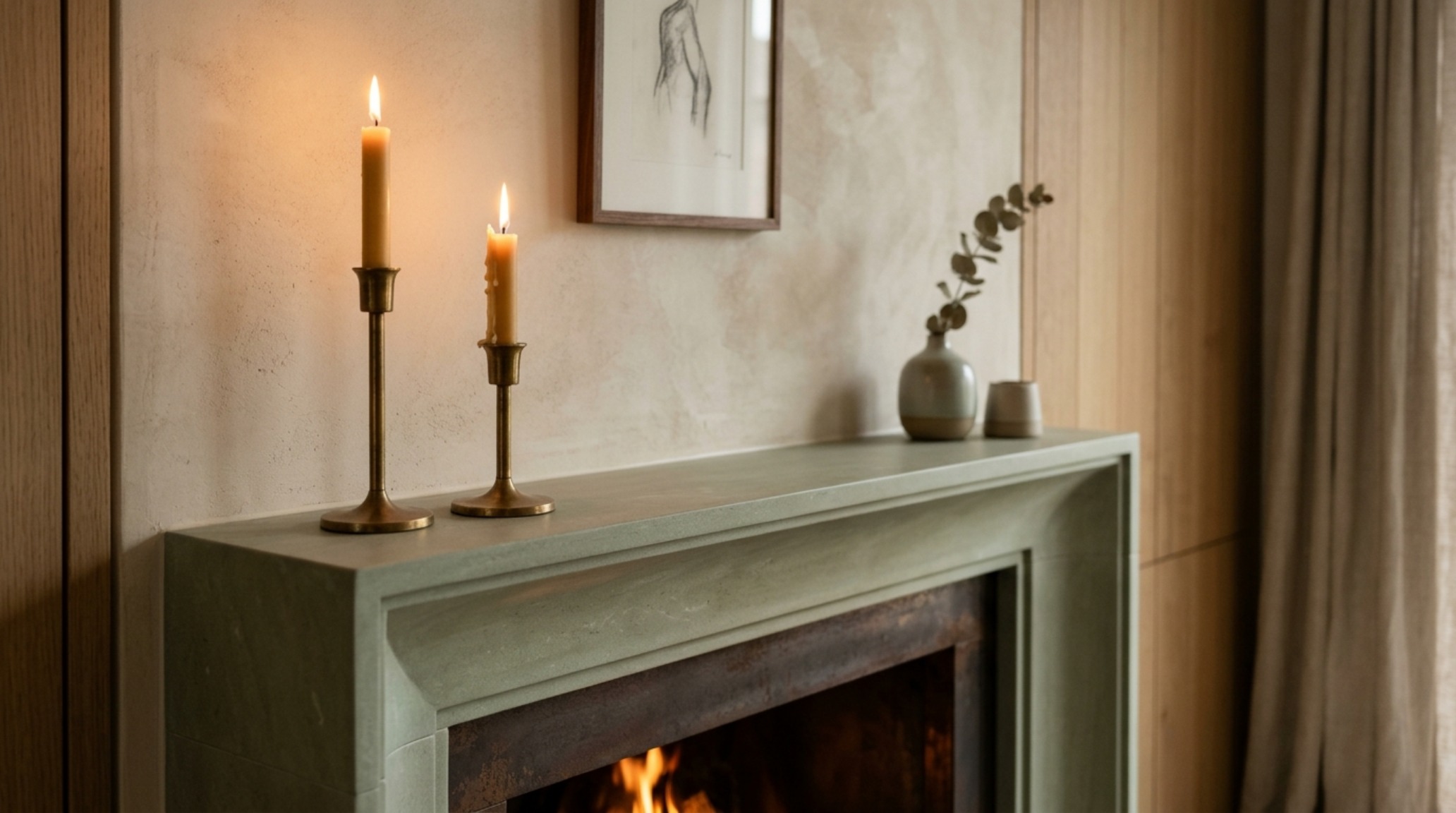
For a truly professional result, look for bulbs with a High CRI (Color Rendering Index) of 90 or above. This ensures that the sage on your walls doesn’t shift into a muddy brown or a sickly yellow when the sun goes down. Supplement your ambient lighting with unlacquered brass sconces. Unlike polished gold, unlacquered brass develops a patina over time, echoing the organic aging process of the wood and stone elements in the room. This ‘living finish’ is a key component of the 2026 trend toward authenticity and slow design.
Spatial Cadence and the Luxury of Negative Space
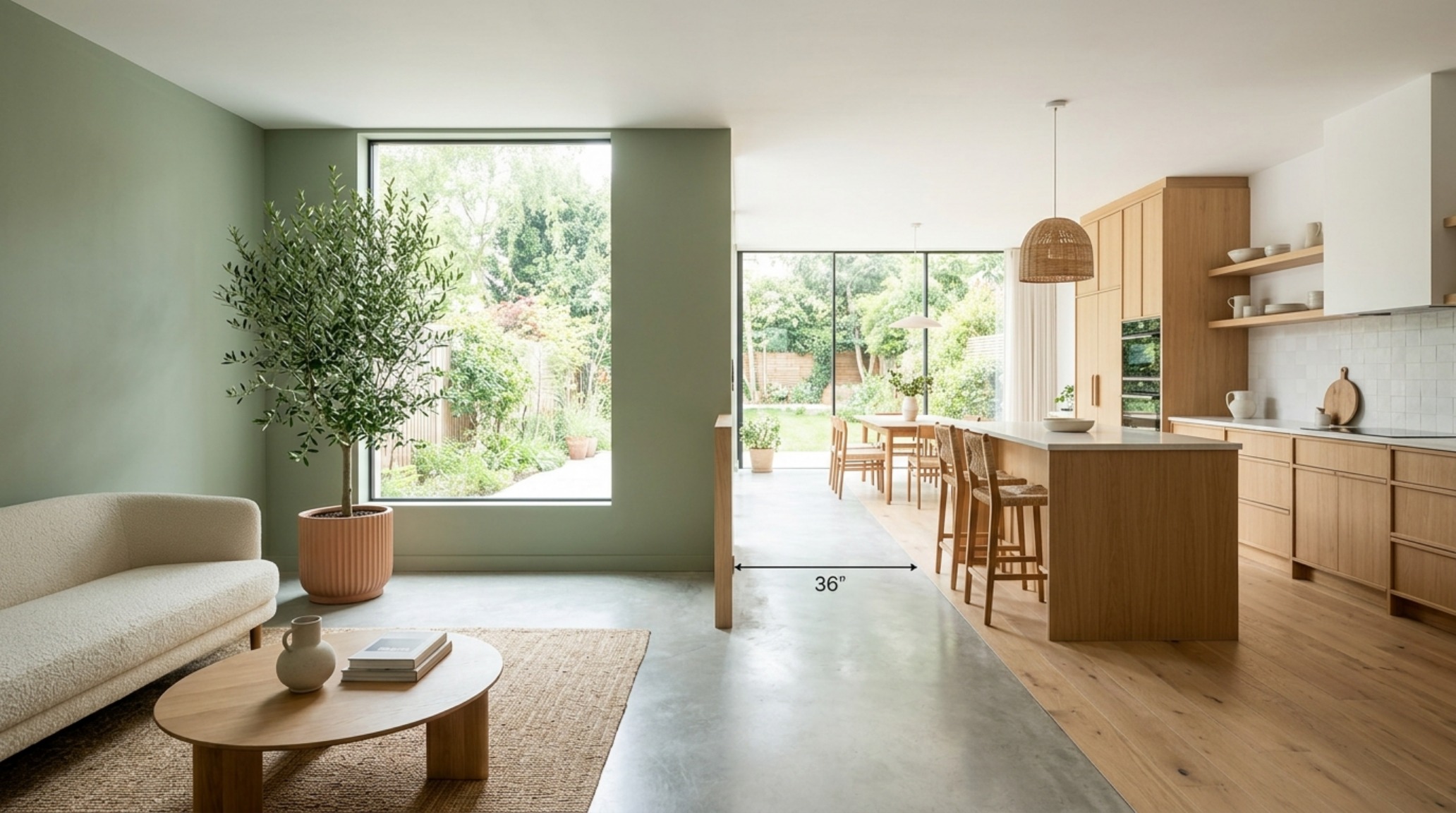
One of the most frequent errors in living room design is overcrowding. A luxury space needs ‘negative space breathing room’ to feel expensive. This means respecting architectural clearances. Your primary walkways should maintain a 36-inch clearance to allow for a natural, unhurried flow through the home. If a beautiful sage green armchair is crammed into a corner, its impact is lost. It needs space to be seen as an object of art.
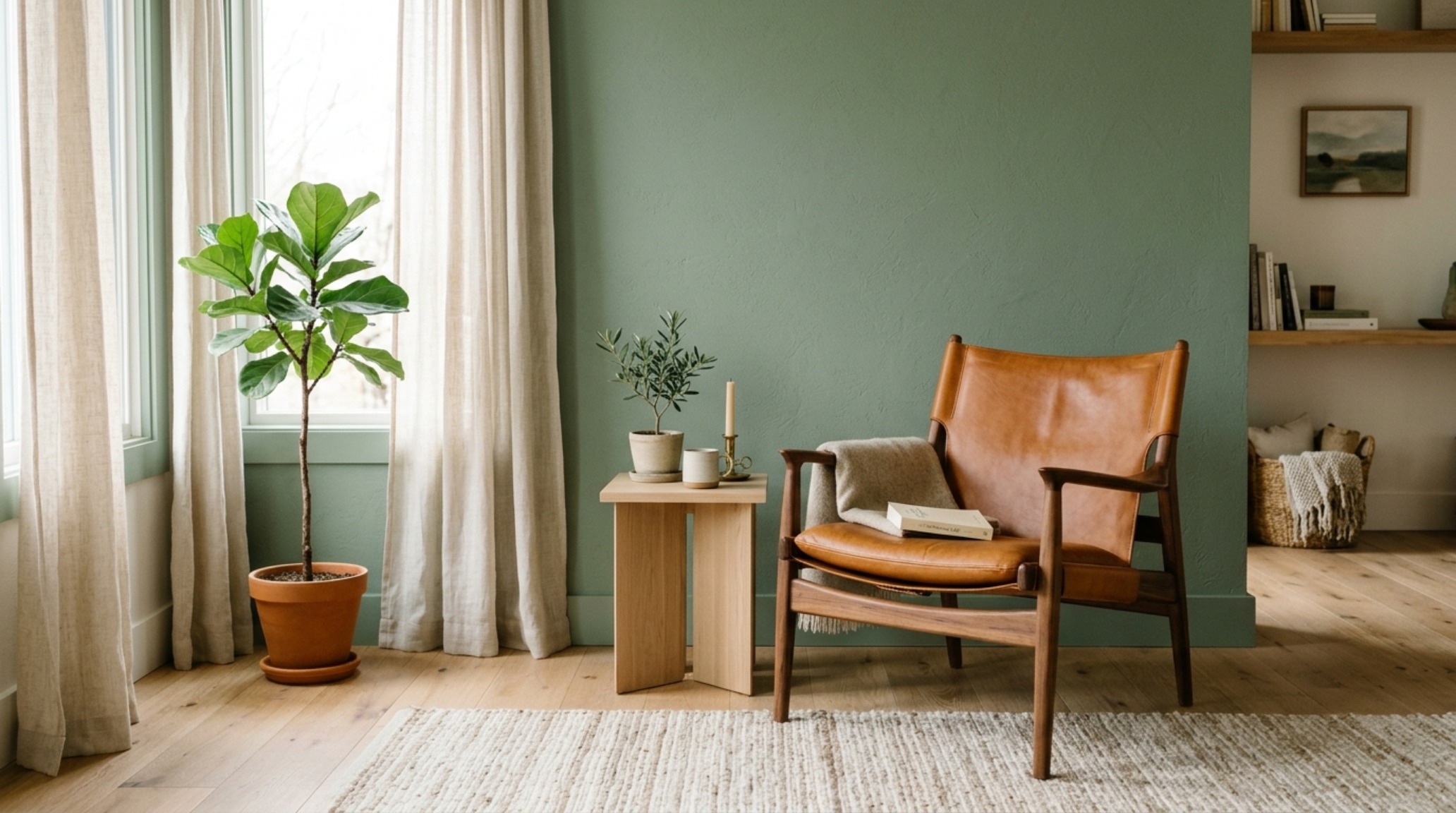
Consider the ‘sightline alignment.’ When you stand at the entrance of the room, what is the first thing your eye hits? In an organic modern living room, you want that first impression to be a balance of heights and weights. A tall, leafy Fiddle Leaf Fig or an Olive Tree in a terracotta pot provides the verticality needed to balance a low-slung, 30-inch-high modular sofa. This rhythmic rise and fall of furniture heights creates a spatial cadence that feels harmonious and intentional.
The 2026 Trend Shift: Sage and Caramel Palettes
As we look toward the next design cycle, the ‘sage and caramel’ palette is emerging as the sophisticated successor to the ‘gray and white’ era. This involves layering rich, leathery tones and warm wood grains into our sage green living room ideas. Think of a buttery caramel leather sling chair paired with a sage-washed linen drapery. The warmth of the leather cuts through the cool green, creating a balanced temperature within the room.
This trend is deeply rooted in biophilic design—the practice of connecting our indoor environments to the natural world. By using materials that age gracefully—raw oak floors that show a bit of wear, linen that wrinkles naturally, and stone that bears the marks of its geological history—we create homes that feel lived-in yet curated. It is the antithesis of the ‘disposable’ furniture culture, favoring pieces that carry a sense of weight and permanence.
“Design is not just about what we see, but how the environment holds us. A room bathed in 2700K light against a backdrop of sage and stone doesn’t just look expensive; it feels like a sanctuary for the nervous system.”
Architectural Specification & Material Matrix
Curated tactile palette, spatial dimensions, and atmospheric lighting index for this design scheme.
Ultimately, the success of these sage green living room ideas depends on your willingness to play with shadow. In a world that is often overly bright and clinical, there is a profound luxury in the soft, diffused glow of a well-placed lamp against a matte, organic wall. It is a reminder that our homes should be more than just backgrounds for screens; they should be sensory experiences that evolve as the day fades into night. As we design for the future, let us prioritize the materials that ground us and the light that warms us, creating spaces that feel as enduring as the stone and wood they are built from.
Editorial Silo • Recommended Architecture Studies
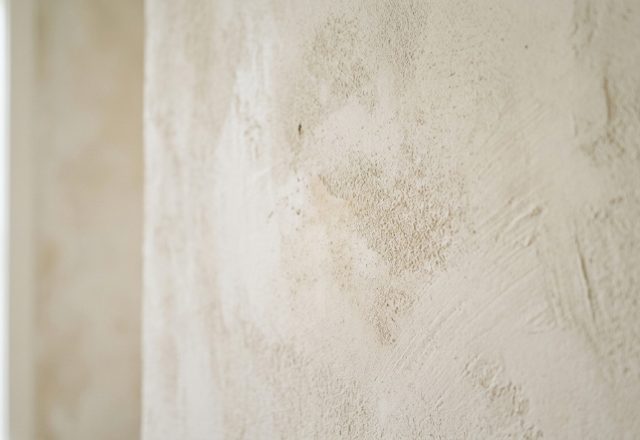
- Tactile Hues: Sculpting Organic Modern Interiors with Limewash Textures and Ambient Light Temperature — Archival Design Case Study
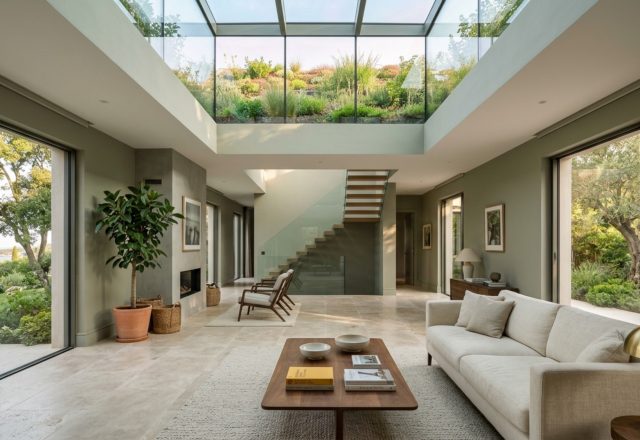
- The Vertical Green Axis: Architecting the Ultimate Sage Green Villa for Biophilic Living — Archival Design Case Study
Architectural Inspiration Lookbook
A high-resolution study in spatial proportions, tactile materiality, and light choreography curated for enduring modern living.
Curated Visual Lookbook
Design Gallery & Spatial Studies
A visual curation of architectural arrangements, lighting concepts, and material palettes featured in this space.