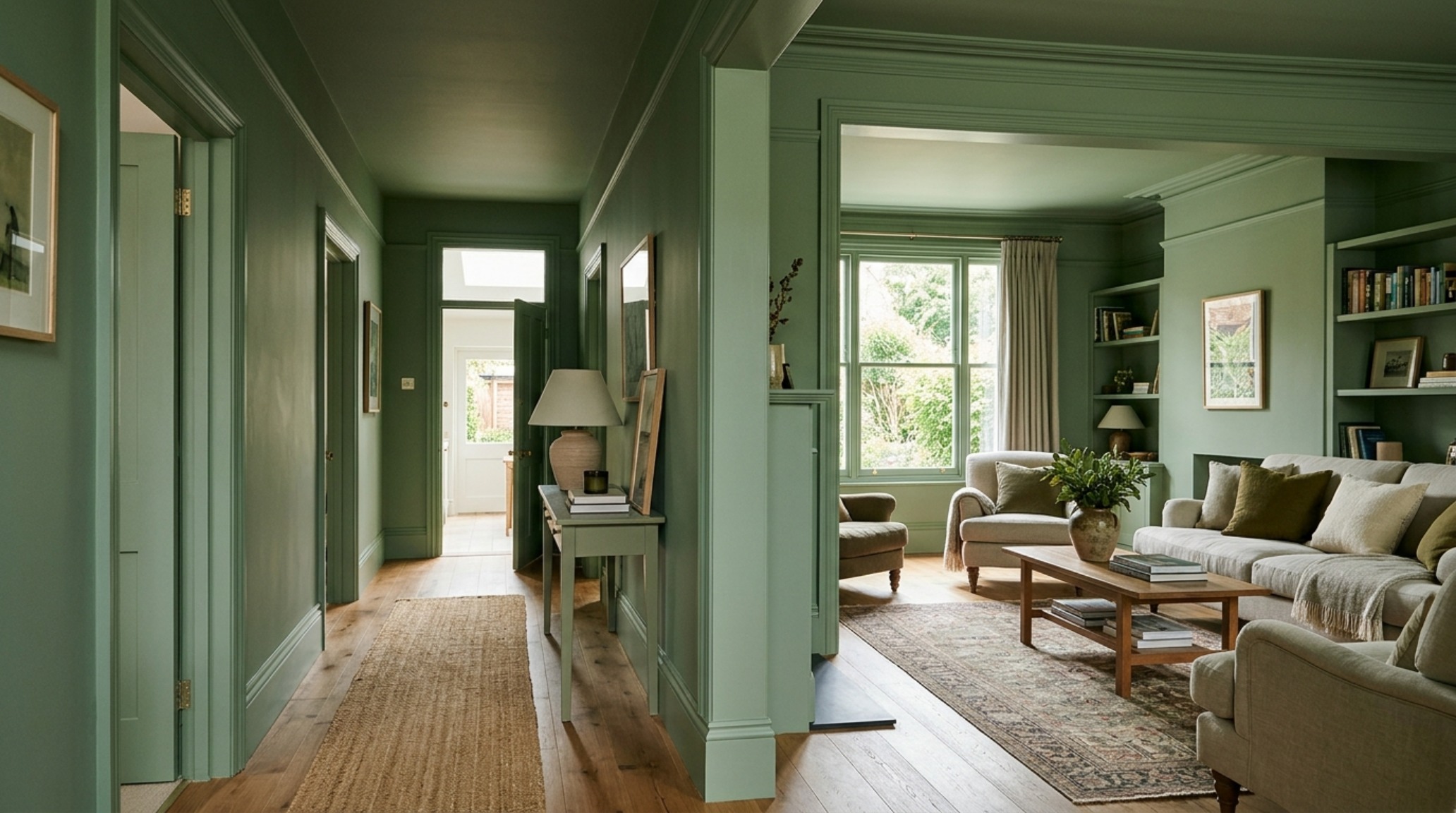
We have reached a pivotal inflection point in the evolution of the domestic landscape. For years, the design community leaned on the safety of the ‘pop of color’—that singular, often apologetic accent wall that stood in isolation against a sea of sterile white. But as we move toward a more emotive and grounded residential philosophy, the conversation has shifted. If you are exploring sage green living room ideas, you are likely seeking more than just a trend; you are seeking a sanctuary. The current architectural movement is discarding the timid accent in favor of ‘Color Drenching,’ a sophisticated technique where a single, nuanced hue like sage envelopes the walls, baseboards, crown molding, and even the ceiling to create a seamless, three-dimensional experience.
The Science of Chromatic Depth: LRV and Spatial Proportions
Color drenching is not merely a stylistic choice; it is an architectural tool used to manipulate the perceived dimensions of a room. To master this, one must understand Light Reflectance Value (LRV). LRV measures the percentage of light a color reflects. In the world of sage green paint colors, the spectrum is vast. A deeper, more saturated tone like Sherwin-Williams Pewter Green (LRV 12) absorbs light, effectively ‘receding’ the walls to create an atmospheric, cocoon-like depth. This is particularly effective in large, open-concept zones where you need to anchor a specific seating area without building physical partitions.
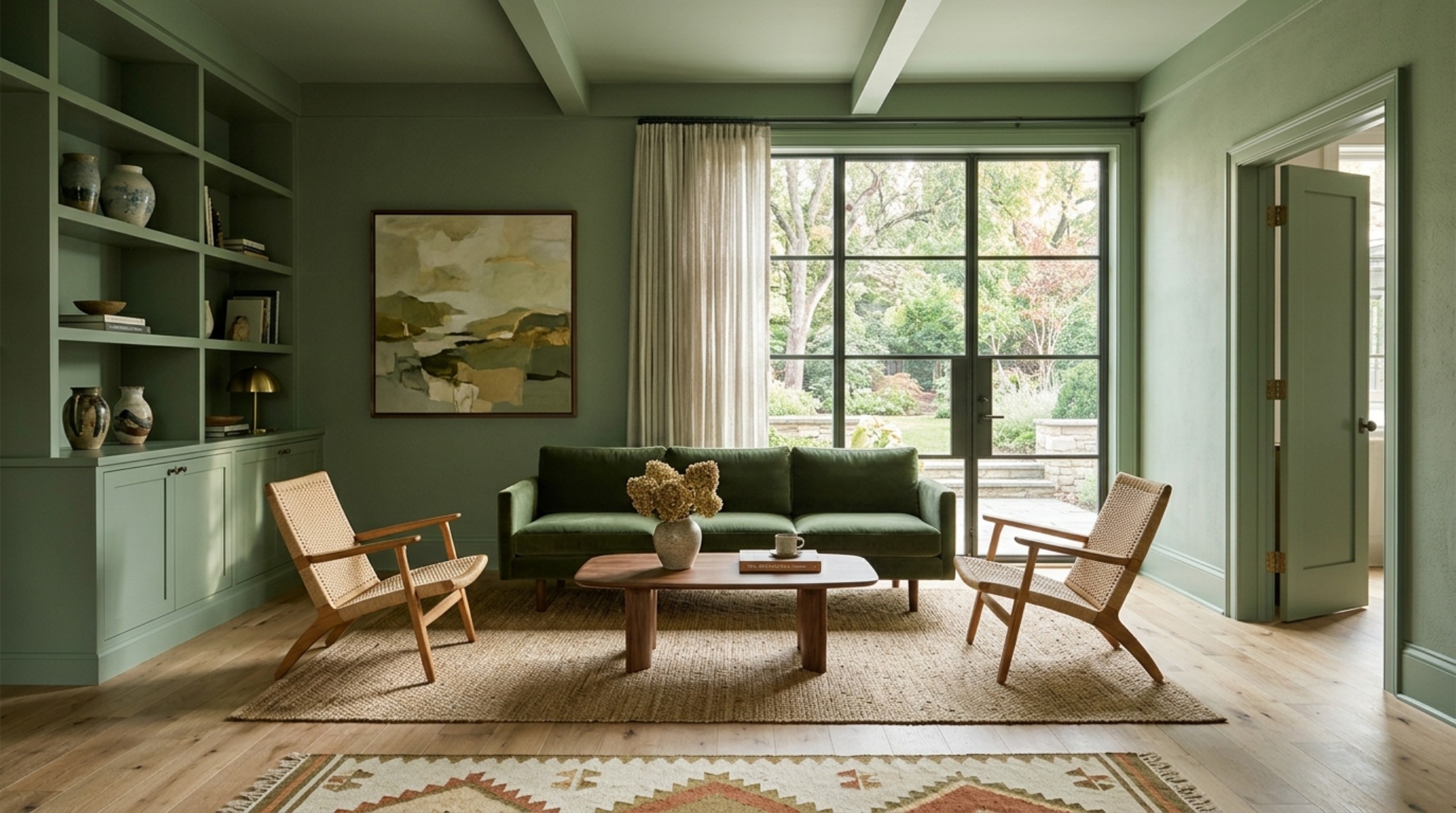
Conversely, for spaces with lower eight-foot ceilings, a lighter sage such as Benjamin Moore October Mist (LRV 46) can be utilized across all surfaces to blur the ‘hard line’ where the wall meets the ceiling. This erasure of boundaries tricks the eye into perceiving a loftier volume. By drenching the space, you eliminate the visual clutter of white trim breaking up the vertical plane, allowing the organic modern design of your furniture to take center stage.
Mastering Color Drenching for Sophisticated Sage Green Living Room Ideas
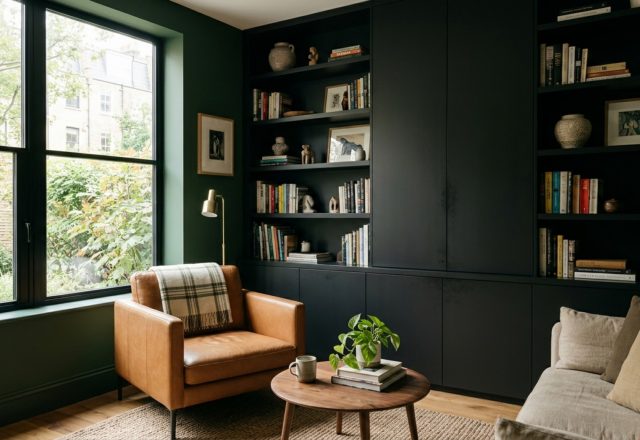
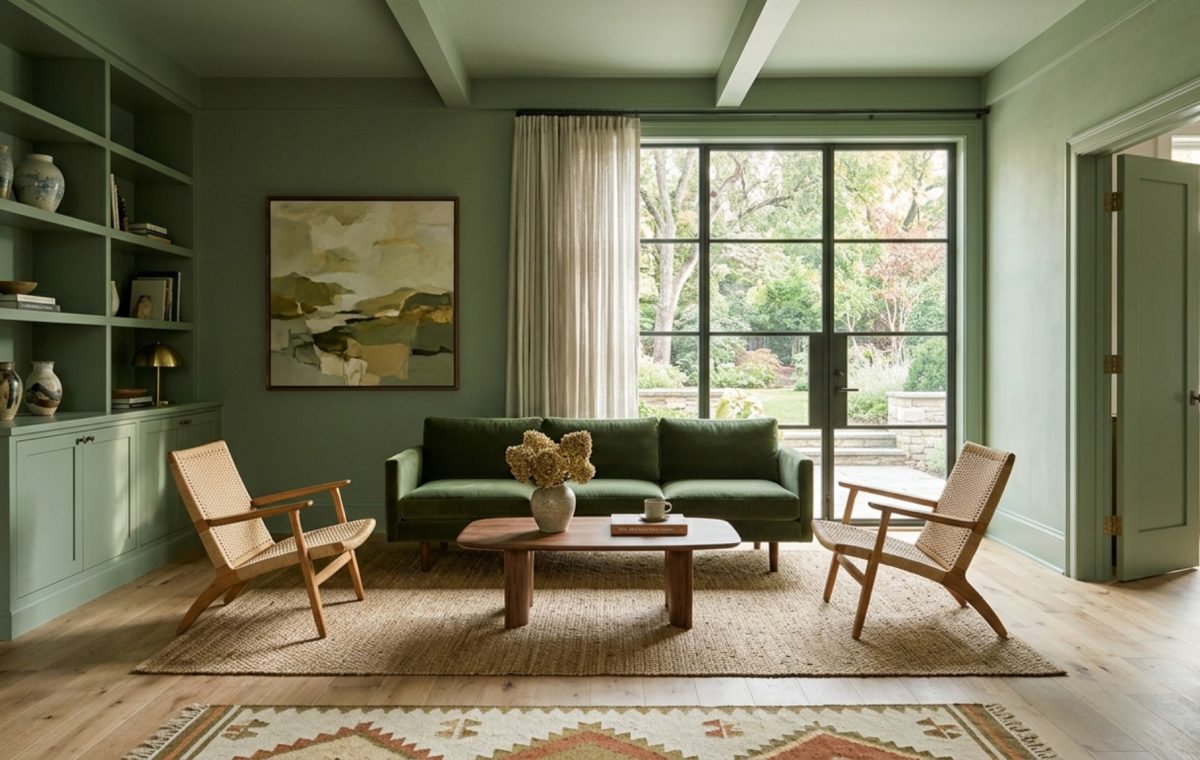
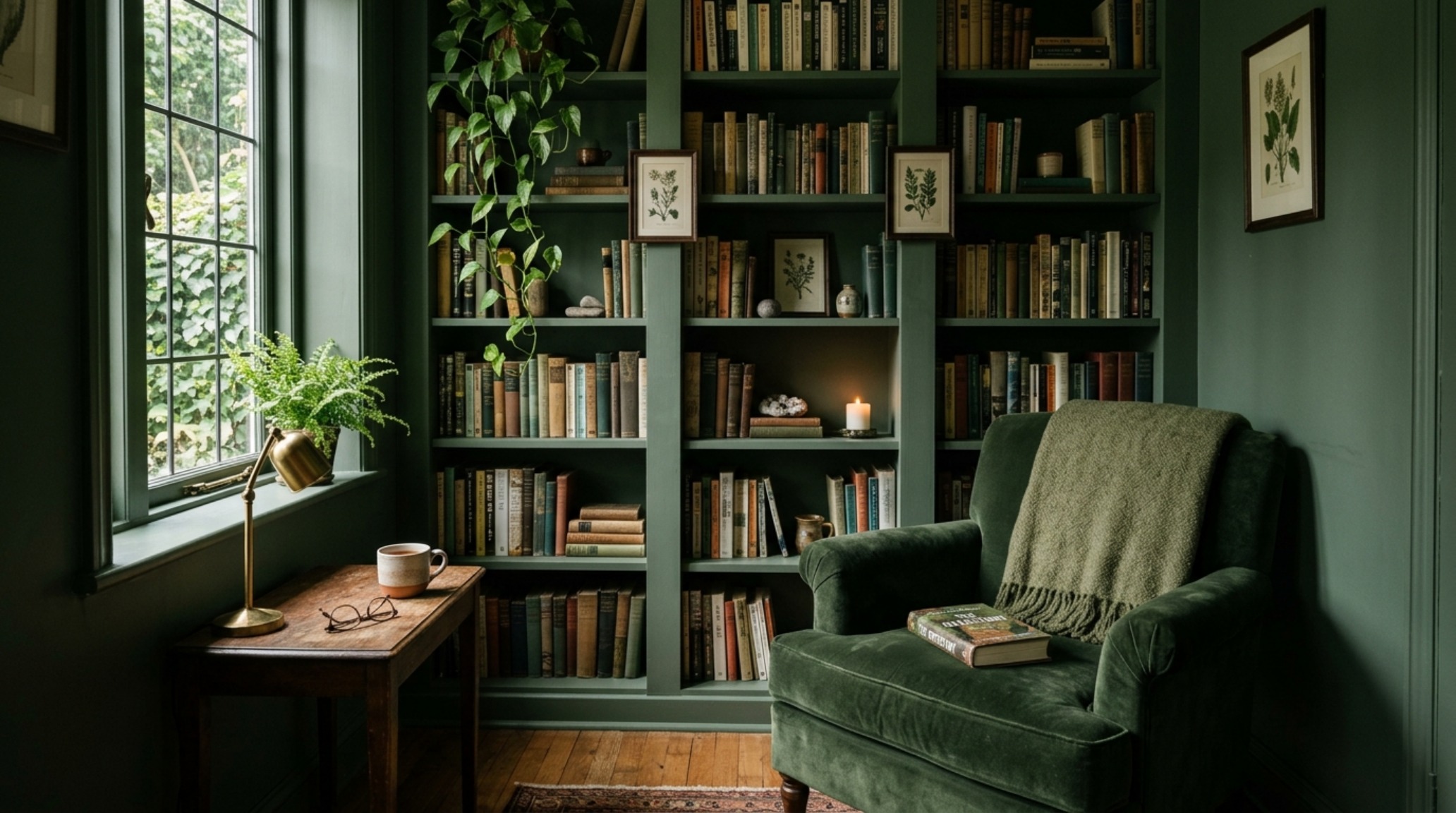
When implementing sage green living room ideas, the objective is to create a biophilic interior design that feels both intentional and effortless. The secret lies in the ‘Architectural Envelope.’ When you paint the radiator, the window mullions, and the built-in cabinetry in the same matte or eggshell sage finish, the objects themselves become part of the architecture rather than obstacles within it. This creates a serene ‘visual silence’ that is the hallmark of high-end editorial homes.
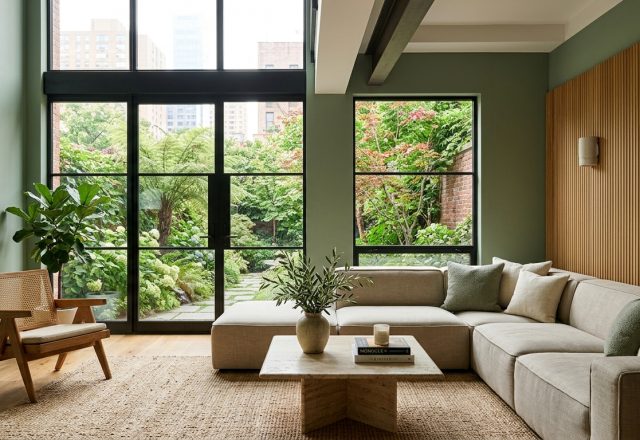
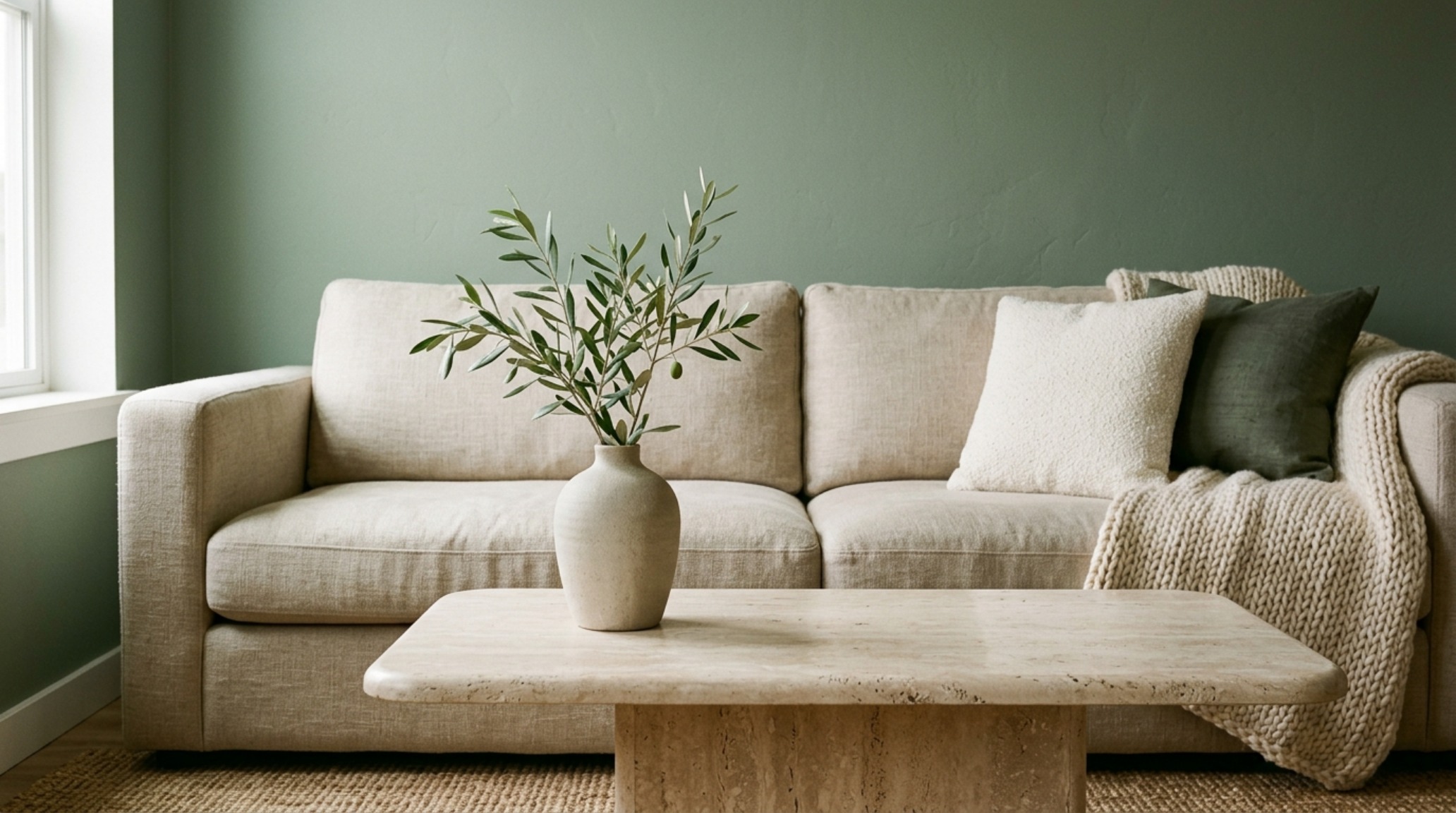
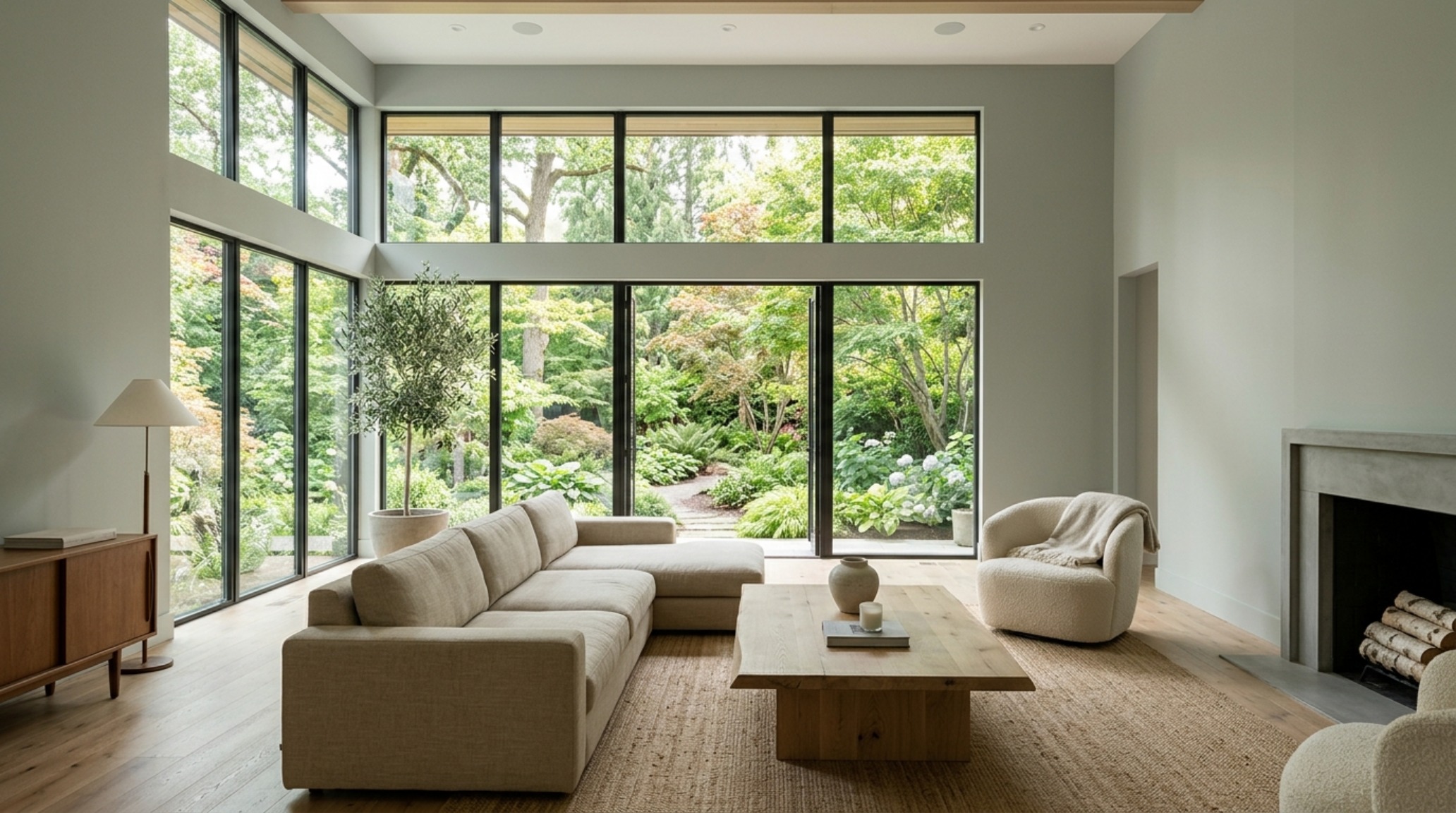
To avoid a space feeling flat, you must introduce ‘texture as color.’ In an earthy neutral green living room, the variation should come from materiality. Imagine a walls-up-to-ceiling application of Farrow & Ball French Gray paired with a sage green wall with beige sofa in a heavy bouclé or Belgian linen. The sofa provides a structural, tactile contrast while staying within the same low-contrast tonal family. This approach relies on earthy color palettes that mirror the forest floor—mossy greens, stone grays, and the warm tan of dried oak.
Material Synergy and the Organic Modern Pivot
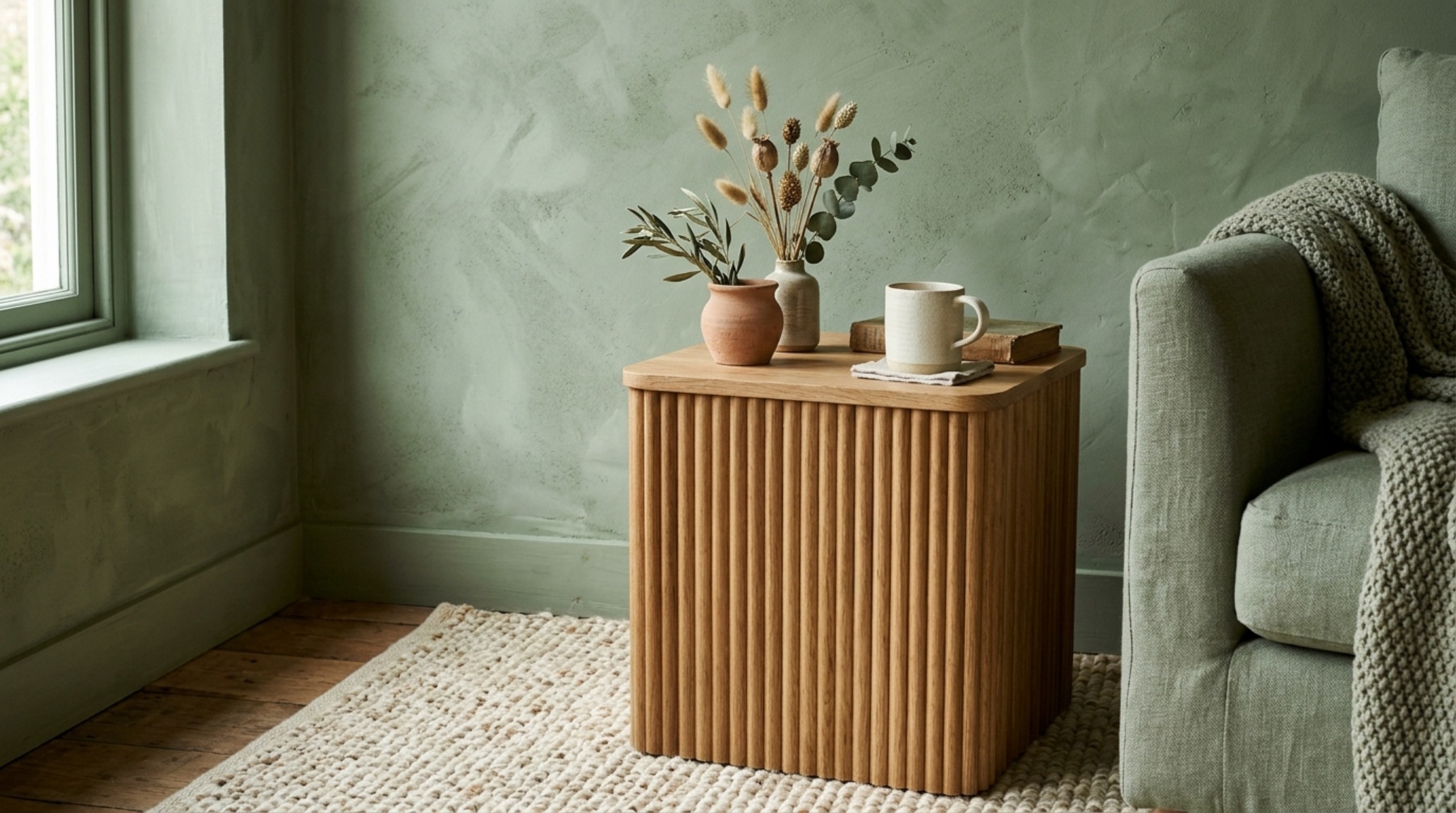
An organic modern living room paint colors strategy is only as successful as the materials it supports. To ground a sage-drenched room, designers often look to the floor. A light-toned, wide-plank white oak flooring offers the necessary warmth to balance the cool undertones of sage. In terms of hard surfaces, consider a coffee table in honed travertine or a side table in fluted oak. These materials possess a ‘visual weight’ that complements the ethereal quality of a green-washed room.
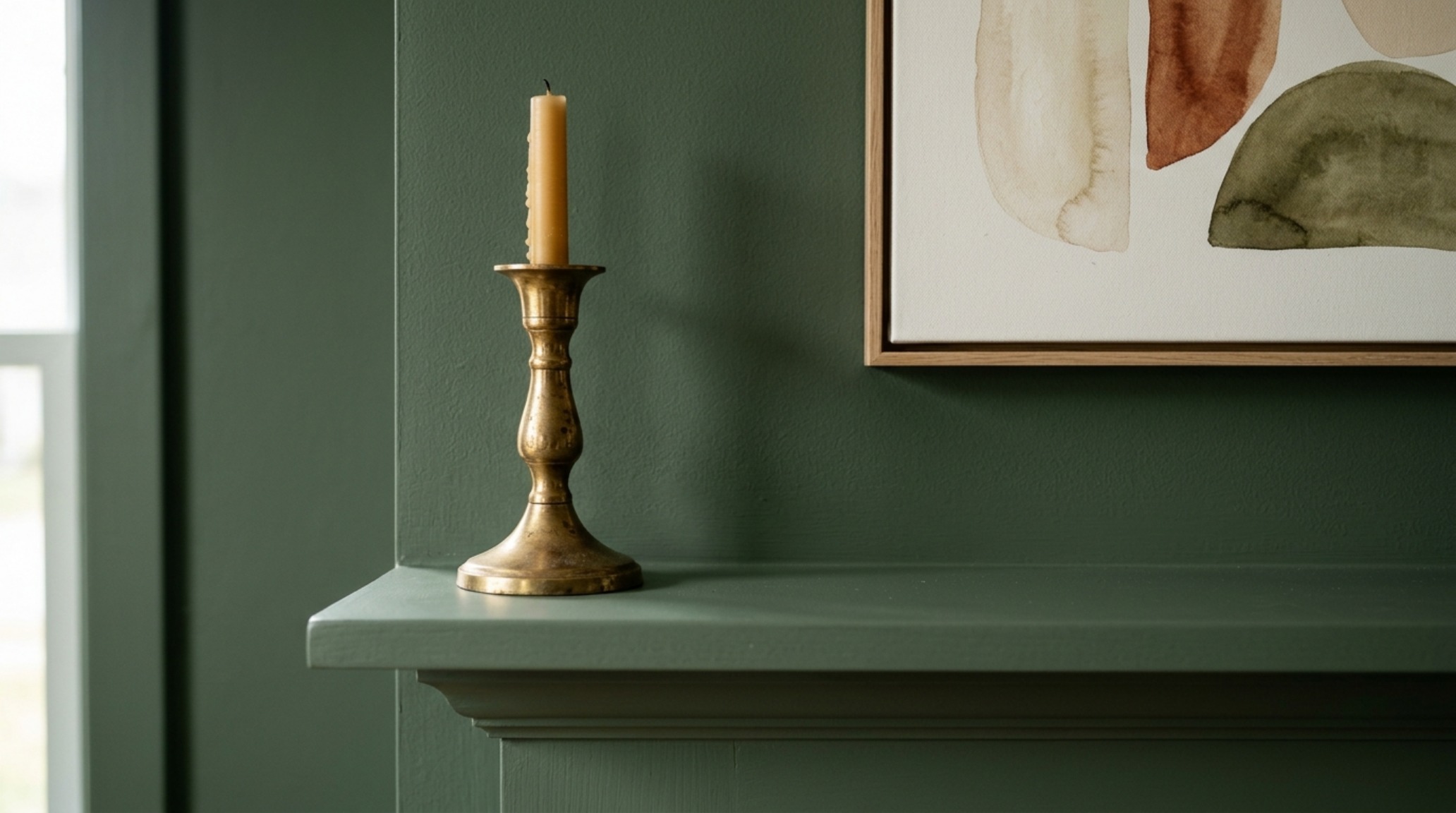
When selecting your secondary palette, look to Sherwin Williams Evergreen Fog living room inspirations. This specific mid-tone green has a slight gray-blue undertone that pairs exquisitely with matte black hardware and brushed brass light fixtures. The goal is to create a sage green accent wall decor narrative that isn’t about hanging a single picture, but about how a curated collection of ceramics, vintage books, and sculptural branches interacts with the verdant backdrop.
The Technical Specs: Lighting and Clearance
Lighting is the invisible architect of any color-drenched space. Sage green is notoriously metamorphic; it can look like a crisp mint in the morning and a moody slate by evening. To maintain the integrity of your sage green living room ideas, architectural lighting must be specified with a high Color Rendering Index (CRI) of 90 or above. This ensures that the green doesn’t ‘muddy’ under artificial light.
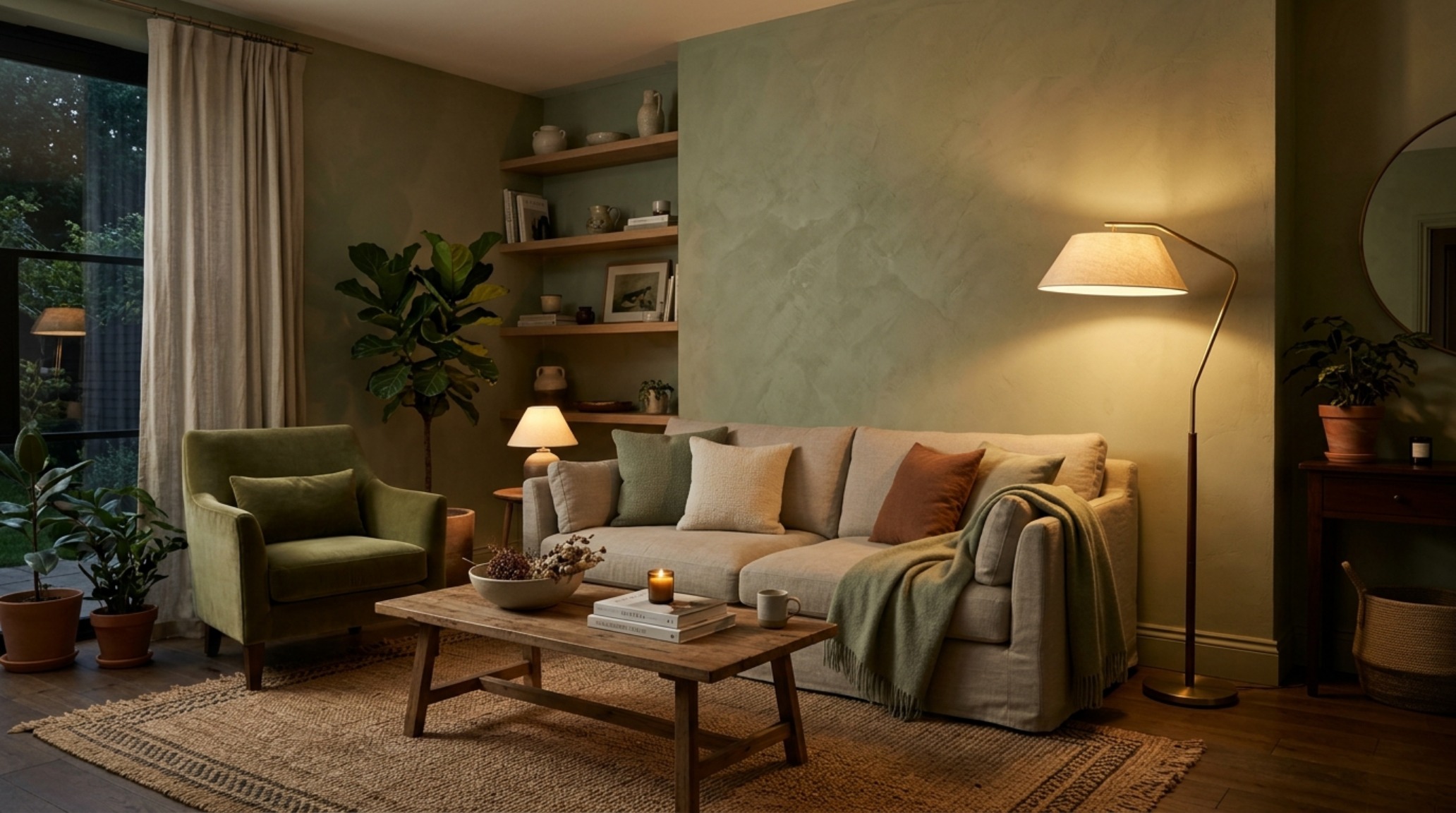
For ambient lighting, 2700K warm-dim LED technology is the gold standard, providing a glow that mimics a setting sun. Task lighting, such as a pharmacy lamp for a reading nook, should be slightly cooler at 3000K to provide clarity without clashing with the wall tone. Furthermore, spatial flow is critical. Even the most beautiful best sage green paint for low light cannot save a room that feels cramped. Maintain a minimum of 36 inches for primary circulation walkways and ensure your coffee table is positioned exactly 18 inches from the edge of the sofa—a distance that balances accessibility with architectural breathing room.
Tactile Grounding in the Verdant Living Room
As we curate these spaces, we must consider the ‘spatial cadence.’ This refers to the rhythm of high and low elements within the room. In a sage-drenched environment, the eye needs a place to rest. This is where organic modern design principles thrive. By using a sage green wall with beige sofa, you create a central ‘island’ of neutrality. Surround this with biophilic interior design elements—perhaps a tall Fiddle Leaf Fig or a grouping of olive trees—to bridge the gap between the indoor paint and the outdoor world.
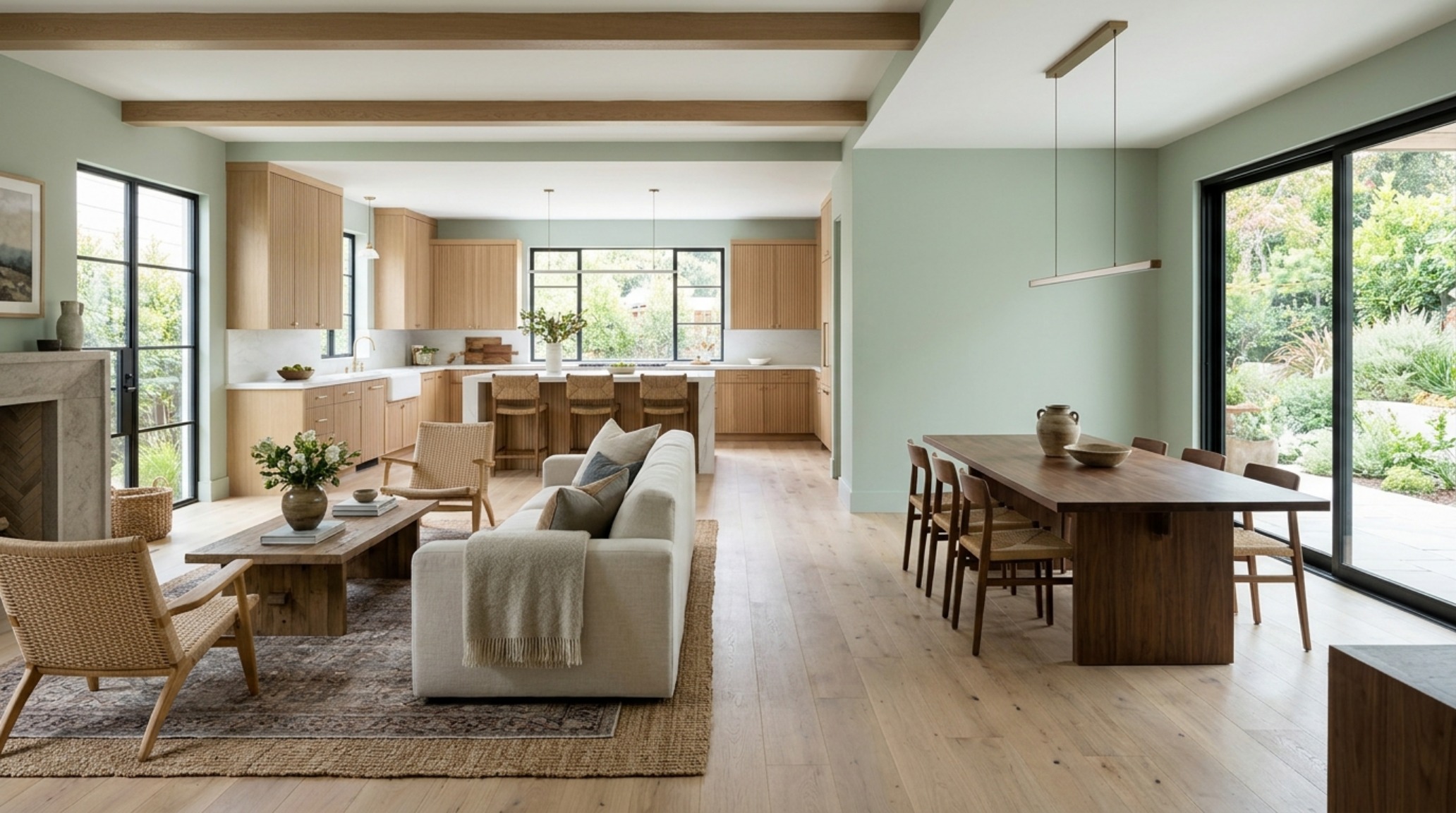
Don’t overlook the ceiling. If a full drench feels too daring, consider a ‘half-drench’ where the walls and trim are sage, but the ceiling is a warm, creamy off-white like Benjamin Moore Swiss Coffee. This retains the architectural cohesiveness while providing a ‘skylight effect’ that can brighten rooms with limited northern exposure. The key is to avoid stark, cool whites, which can make sage green look clinical or dated.
Architectural Specification & Material Matrix
Curated tactile palette, spatial dimensions, and atmospheric lighting index for this design scheme.
Ultimately, the most successful sage green living room ideas are those that treat color not as a surface-level decoration, but as a structural component. By drenching a room in these mossy, atmospheric tones, you aren’t just painting walls—you are defining a boundary-less environment that prioritizes emotional resonance and architectural clarity. The sage green movement represents a return to the restorative power of nature, translated through a sophisticated, modern lens that will endure far beyond the seasonal trends of the day.
Editorial Silo • Recommended Architecture Studies
- The Geometry of Calm: Sculpting 90sqm with Sage Green Zoning and Architectural Flow — Archival Design Case Study
- The Silent Sanctuary: Why Modern Minimalist Interior Design is the Ultimate Antidote to Digital Burnout — Archival Design Case Study
Architectural Inspiration Lookbook
A high-resolution study in spatial proportions, tactile materiality, and light choreography curated for enduring modern living.
Curated Visual Lookbook
Design Gallery & Spatial Studies
A visual curation of architectural arrangements, lighting concepts, and material palettes featured in this space.