Designing a Workspace Around Natural Daylight
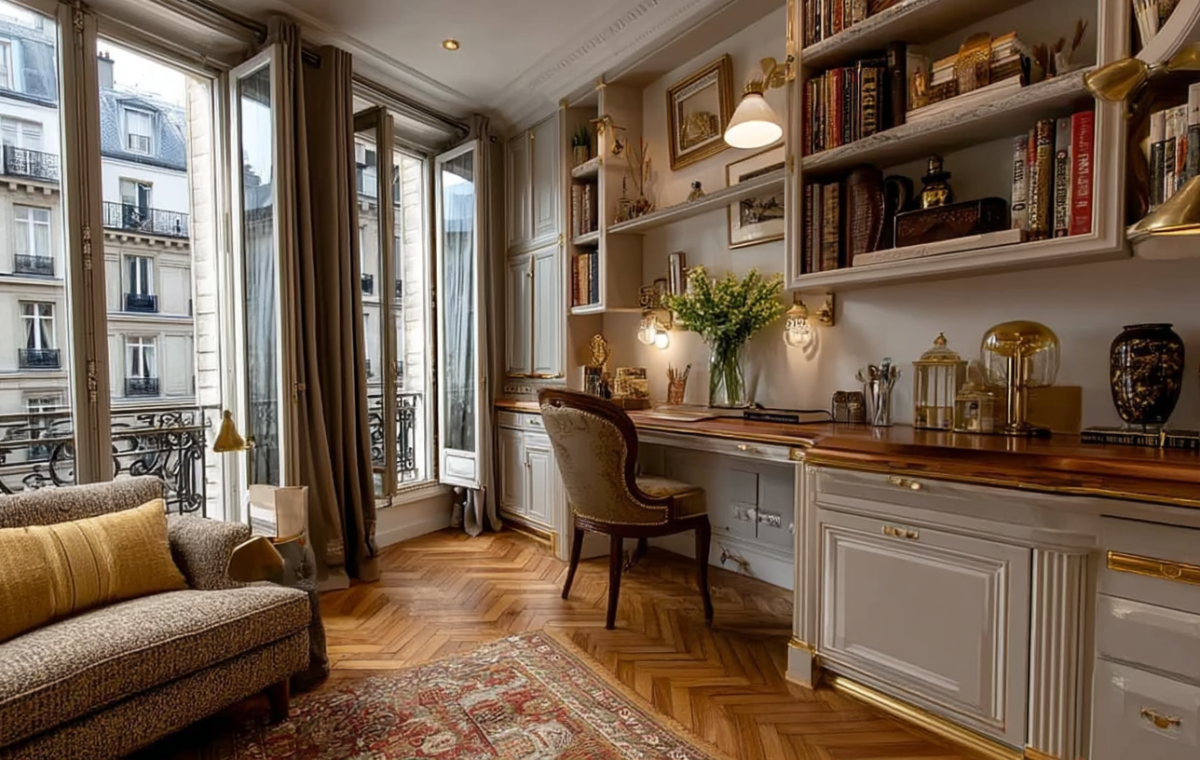
Working efficiently often depends on how well your room handles natural light. When your desk sits right beside tall French doors opening up to a bustling street view, daytime artificial lighting becomes completely unnecessary. You get crisp, direct sunlight flooding the entire writing surface, which naturally boosts productivity and keeps eye strain at bay during long hours of typing and editing.
Yet, relying solely on the sun is a rookie mistake. Once late afternoon rolls around, shadows creep in fast. That is where layered illumination saves the day. Notice how brass task lamps and adjustable arm fixtures mount directly onto the walls above the desk and bookshelves. This setup eliminates harsh screen glare while providing targeted pools of light exactly where your hands need to work.
Balancing Task Light with Ambient Warmth
Overhead ceiling cans rarely cut it for serious study rooms. They cast flat, sterile shadows that drain all the character out of your decor. Instead, mixing directional wall sconces with accent lights creates a much richer interior dynamic. In this particular setup, the built-in shelving units house tiny hidden spotlights that wash the book spines in a soft, welcoming glow. It turns a functional storage wall into an attractive backdrop during late-night writing sessions.
Of course, hardwiring multiple wall fixtures takes genuine forethought. You have to plan your electrical layout before hanging wallpaper or putting up heavy cabinetry. If you rent or want a quick fix, swing-arm plug-in sconces offer a brilliant workaround without sacrificing that high-end, custom look.
Why Material Selection Matters
- Brass finishes: Adds a timeless warmth that contrasts nicely against pale grey cabinetry.
- Dark wood desktops: Grounds the space and hides daily wear and tear much better than white laminates.
- Patterned rugs: Protects classic herringbone hardwood floors while dampening echoey room acoustics.
Comfort plays just as big a role as lighting. A well-cushioned vintage chair with traditional wooden framing beats a bulky mesh office chair any day when it comes to visual aesthetic. Granted, antique seating might lack ergonomic lumbar dials, but pairing it with a supportive throw pillow often bridges the gap between style and spine health.
How do you currently balance your need for focused task lighting against keeping your workspace looking like a real room rather than a sterile corporate cubicle?
Editorial Silo • Recommended Architecture Studies
- The Engineering of Ease: How to Make Contemporary Furniture for High-Performance Urban Living”, description: “Modern living demands a departure from static design; to make contemporary furniture today is to engineer kinetic, multifunctional solutions. This guide introduces the ‘2:1 Rule’ of spatial density—balancing two parts low-profile furniture with one part uninterrupted breathing room. We analyze the ergonomics of ‘cognitive stability,’ integrating hidden power hubs, wireless charging surfaces, and modular footprints that allow a single piece to pivot between a high-focus workspace and a serene sanctuary. — Archival Design Case Study
- Grand Closet home office aesthetic styling trends — Archival Design Case Study
Curated Lookbooks & Architectural Studies
- French Apartment Interior Design: Embracing Historic Charm
- Autumn Dining Table Centerpiece Ideas for Seasonal Charm
- Ergonomic Mastery: Functional & Space-Saving Hacks for Front Door Christmas Decorating Ideas
- Parisian Hallway Design: Making Narrow Corridors Work
- Beyond the Chop: The Ergonomic Guide to Functional Decorative Pillows for Couches
- French Apartment Living Room Decor: Timeless Parisian Styling
Curated Visual Lookbook
Design Gallery & Spatial Studies
A visual curation of architectural arrangements, lighting concepts, and material palettes featured in this space.