The Allure of Exposed Kitchen Storage
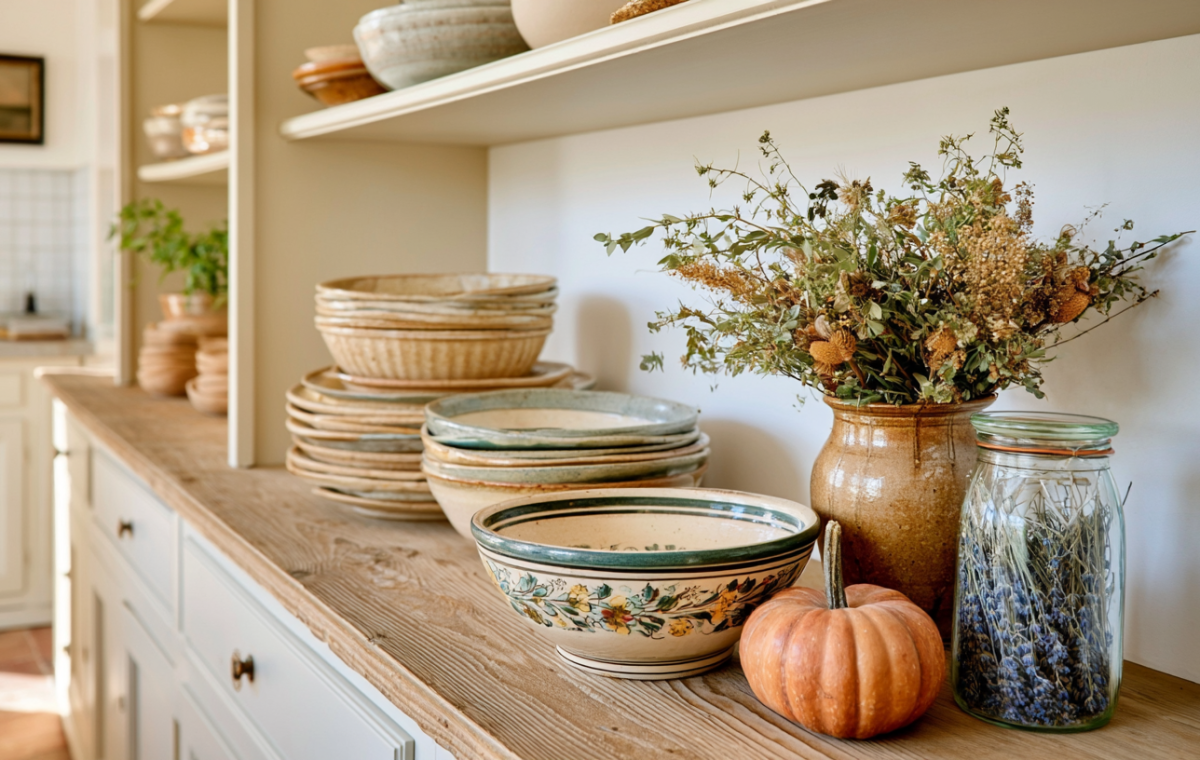
Open shelving invites a different kind of discipline into the culinary workspace. When your plates, bowls, and jars sit exposed to the room, every stack matters. You stop hoarding plastic containers and start investing in weight, glaze, and form. Stacking ceramic bowls on a warm wooden countertop creates an instant anchor for the space. But styling these surfaces requires a careful balance between utility and aesthetic intention.
Dust and grease are real adversaries here. High-traffic kitchens mean everyday dinnerware stays clean through constant rotation, but delicate decor items will demand occasional maintenance. Real life isn’t a glossy magazine spread; daily cooking throws flour, steam, and splashes across nearby surfaces. Keep frequently used dishware at the front where hands can reach them without knocking over decorative jars or fragile dried botanicals.
Layering Textures and Natural Elements
Flat stacks of ceramic plates can quickly look monotonous if you rely on uniformity alone. Break up the geometry by introducing organic shapes, such as a hand-thrown bowl with a decorative green and yellow painted rim. Contrast rough earthenware textures with the smooth, transparent glass of a storage jar packed with dried lavender or herbs. A simple terracotta jar filled with wild dried grasses adds height and a weathered, lived-in character to the backdrop.
Seasonal touches help keep fixed architectural elements feeling fresh throughout the year. Dropping a small heirloom pumpkin onto the counter or swapping out summer greens for dried seed pods grounds the display in the present season without requiring a total overhaul. The trick is to avoid overcrowding. Negative space lets the eye rest and highlights the individual beauty of each handmade piece.
Practical Upkeep and Arrangement Pitfalls
Weight distribution is another silent trap. Heavy stacks of ceramic dinnerware need sturdy support, both from the wooden surface below and wall anchoring if you mount shelves higher up. Do not overload a single corner just because it looks balanced in a photograph. Consider your actual cooking routine: does reaching for a mixing bowl require moving three decorative objects first? If yes, edit the display.
How do you balance everyday cooking efficiency with the desire for a curated, clutter-free kitchen aesthetic in your own home?
Editorial Silo • Recommended Architecture Studies
- Ergonomic Mastery: Functional & Space-Saving Hacks for Kitchen Tile Ideas Floor — Archival Design Case Study
- The Golden Ratio of Designing Kitchen Island: A Masterclass in Spatial Flow and Architectural Symmetry — Archival Design Case Study
Curated Lookbooks & Architectural Studies
- Attic Home Office Ideas: Designing a Bright Parisian Workspace
- Polished Images Of Walk In Closets: 15 Style Ideas
- Fall Table Centerpieces: Effortless Autumn Styling Ideas
- Soft Power: A Material Analysis of Sensory Warmth and Tonal Depth Inside Modern Chalets in the Alps
- How to Style a Rattan Armchair for Effortless Warmth
- French Country Corner Seating Ideas for Bright Living Spaces
Curated Visual Lookbook
Design Gallery & Spatial Studies
A visual curation of architectural arrangements, lighting concepts, and material palettes featured in this space.