The Anatomy of an Unlikely Pairing
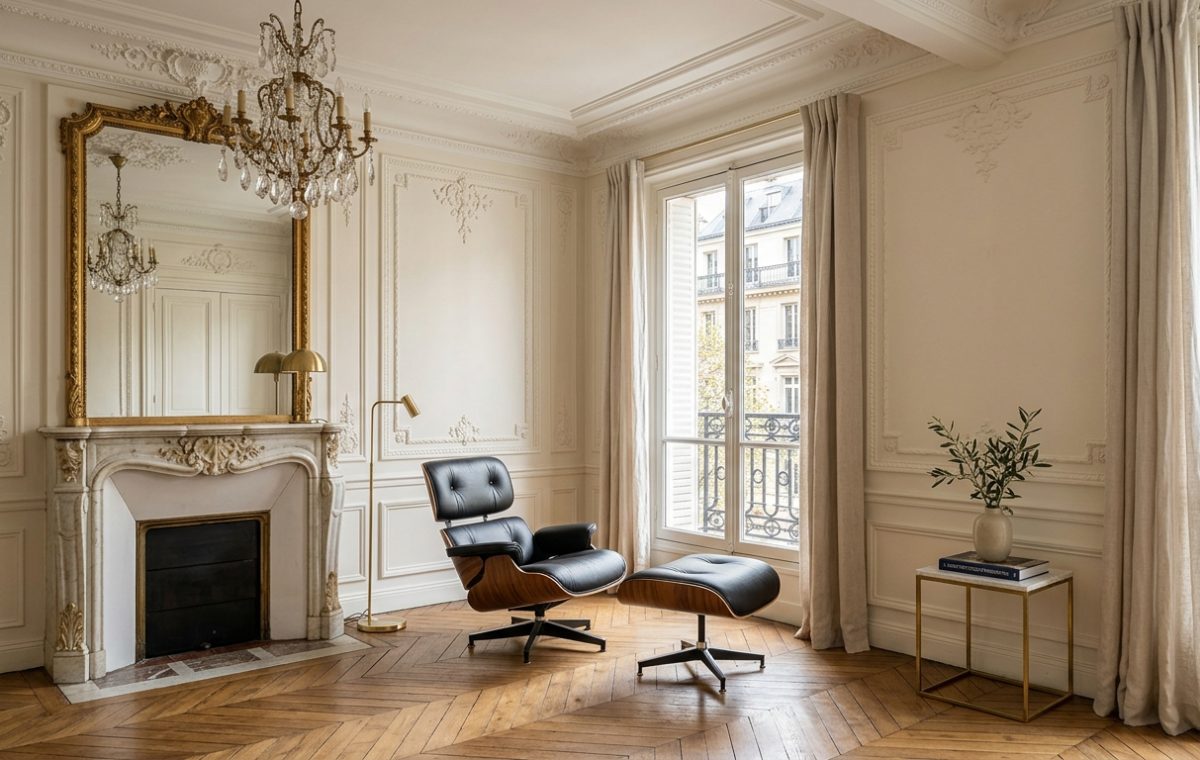
Design rules love safety. They tell you to keep everything in the same historical bucket, matching Louis XVI moldings with matching velvet settees. That approach usually yields a museum, not a home. Real spaces need friction. Throwing a stark leather lounger with molded plywood directly against carved boiserie and a weathered marble mantel creates tension. The room wakes up.
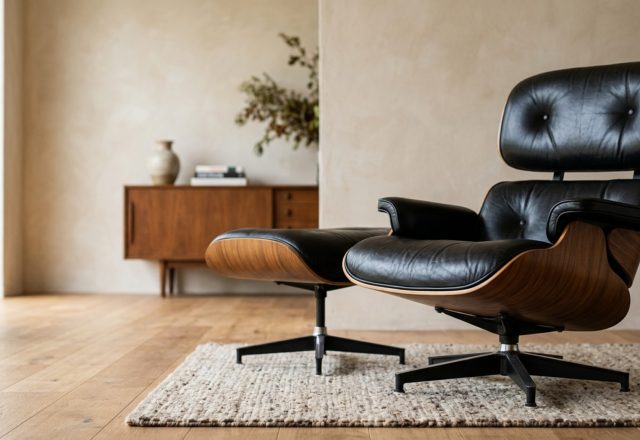
Notice the floor beneath your feet. Classic chevron or herringbone wood planks carry centuries of historical weight. Plop a sleek, aluminum-framed swivel lounge chair right on top of that rustic timber, and suddenly the heavy heritage work softens. It stops feeling like a set piece and starts feeling lived in.
Lighting and Metallic Echoes
Contrast needs a bridge to keep from descending into visual chaos. Here, the heavy crystal chandelier hanging overhead echoes the subtle gleam of the modern brass floor lamp tucked by the corner. They speak different dialects of the same metallic language. When you cross styles, look for tiny shared signatures. A finish, a wood tone, or a sharp angle can tie two entirely different design centuries together without a drop of paint.
Why Scale Matters Most
- Anchor heavy historical architecture with low-slung, lightweight seating silhouettes.
- Leave breathing room around statement furniture pieces rather than crowding the perimeter.
- Let natural window light hit contrasting textures to highlight the depth of the plasterwork.
Of course, this approach has its pitfalls. If you choose a lounge seat that is too chunky, it swallows the delicate room carvings. If your modern accent is too sterile, the space instantly reads like a corporate lobby. The sweet spot lives in the middle. Clean silhouettes that respect the ceiling height while carving out an independent zone for reading and watching the street below.
How do you balance old architectural quirks with the modern furniture you actually want to sit in?
Editorial Silo • Recommended Architecture Studies
- The Architect’s Blueprint: Living Room Ideas For Small Rooms & Engineering Spatial Volume and Flow in Compact Living Rooms — Archival Design Case Study
- Large living room design rules for functional flow — Archival Design Case Study
Curated Lookbooks & Architectural Studies
- Saturated Sanctuaries: How Elite Interior Desiners Weave Materiality and Moody Palettes
- L-Shaped Kitchen Design Ideas with Vintage Charm
- Cozy Living Room Decor Ideas with Travertine and Textures
- Vintage Mirror Wall Decor Ideas for Character-Rich Spaces
- Stunning Front Door Paint Colors That Elevate Curb Appeal
- The Architectural Anatomy of Grandin: Reclaiming 18th-Century Proportions for Bold Modern Living
Curated Visual Lookbook
Design Gallery & Spatial Studies
A visual curation of architectural arrangements, lighting concepts, and material palettes featured in this space.