Atmospheric Thresholds: The Grounding Power of the Kitchen Plane
Morning light has a specific way of spilling across a kitchen floor, catching the subtle undulations of a textured surface before it hits the baseboards. When we design for the heart of the home, we aren’t just selecting finishes; we are curating the stage for the home’s most frequent choreography. Finding the best tile for kitchen environments requires a delicate negotiation between the physics of high-performance materials and the soul of residential warmth. It is a choice that defines the spatial cadence of your daily life, from the first barefoot coffee to the late-night cleanup after a dinner party.
As an architectural journalist, I’ve seen countless kitchens that look like a page from a magazine but fail the test of a Tuesday night spills or a Saturday morning rush. The transition from ‘architectural dream’ to ‘high-performance reality’ lies in the technical specifications that often go unread on the back of a sample board. We are moving toward a period where the barrier between commercial-grade durability and artisanal beauty has finally dissolved, allowing for floors that can withstand heavy traffic while maintaining a soft, organic aesthetic.
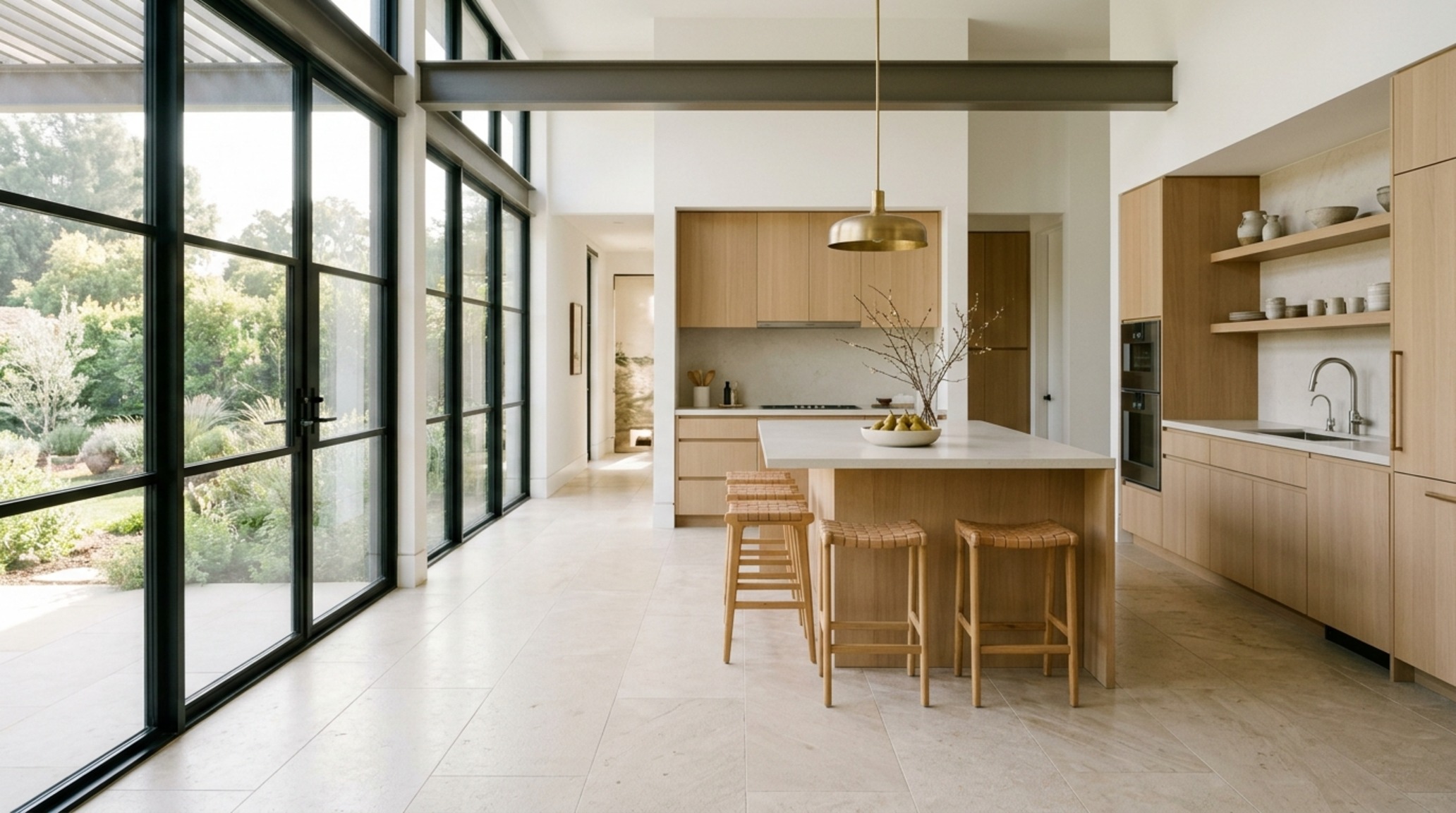
Porcelain vs Ceramic Kitchen Tile: Deciphering the Density
The debate between porcelain vs ceramic kitchen tile is often misunderstood as a choice of style, but it is actually a choice of density. Porcelain is fired at significantly higher temperatures than ceramic, resulting in a vitrified material that is nearly impervious to moisture. In a high-traffic kitchen where water, grease, and heavy pots are inevitable, the density of porcelain offers a level of resilience that standard ceramic simply cannot match. When I specify materials for a client, I look for porcelain tiles with a water absorption rate of less than 0.5 percent.
This technical density translates to real-world longevity. Imagine dropping a heavy cast iron skillet; on a standard ceramic tile, you’re looking at a likely chip or crack that reveals the red clay body beneath. Porcelain, however, is often ‘through-body,’ meaning the color and composition are consistent from the surface to the base. This material integrity is why porcelain remains the gold standard for high-performance living, offering a foundation that resists the wear of time and the impact of a busy household.
Architectural Vignettes & Spatial Flow: The Scale of Modern Surfaces
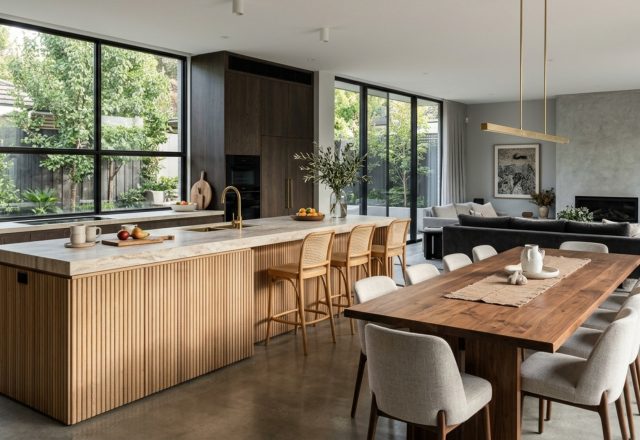
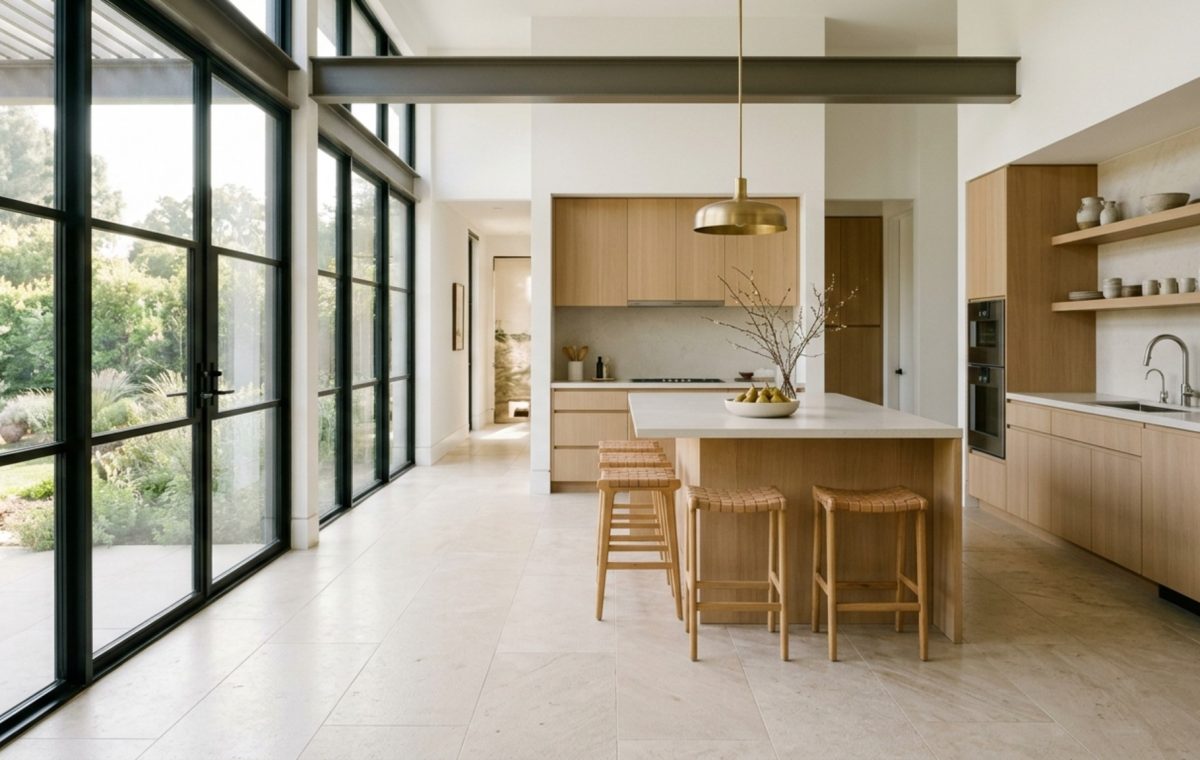
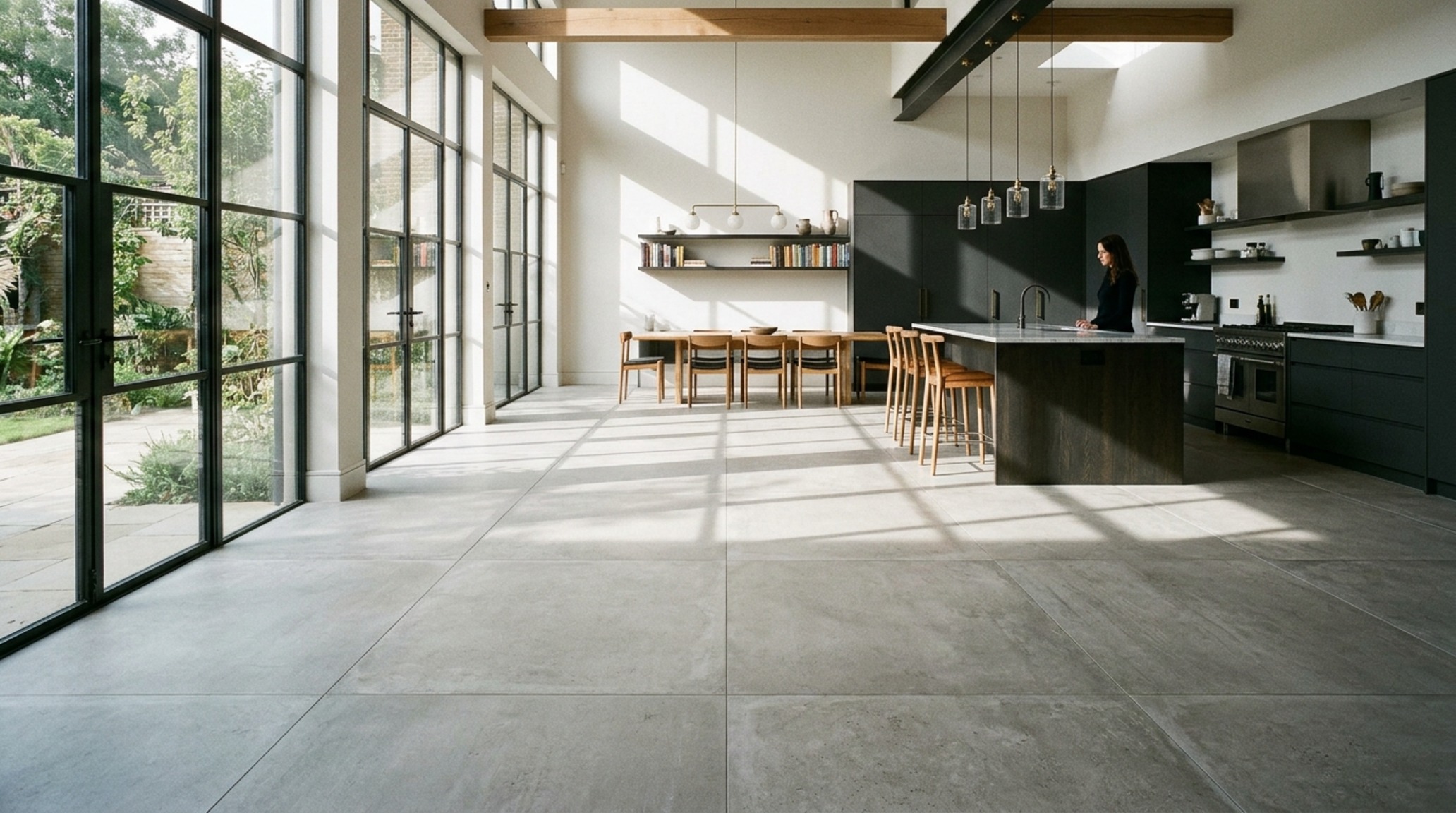
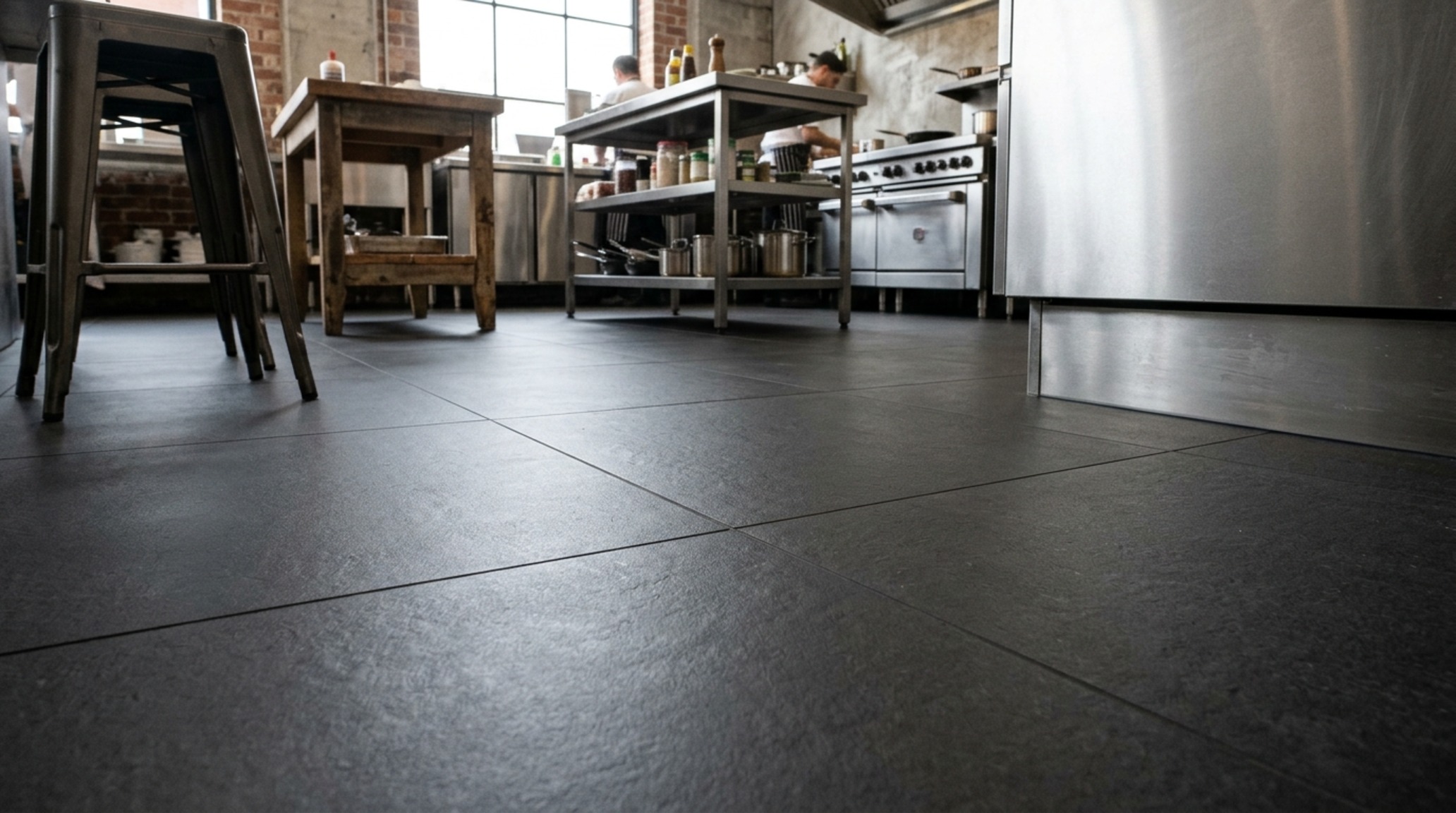
Beyond the material composition, the physical size of the tile dictates the visual energy of the room. We are seeing a significant shift away from the busy, multi-joint patterns of the past. Large format kitchen tiles—those measuring 24×48 inches or even larger slabs—have become the preferred choice for designers looking to create a sense of expansive, uninterrupted flow. By reducing the number of grout lines, you effectively eliminate the visual ‘noise’ of the floor, allowing the eye to travel across the room to focus on architectural features like a waterfall island or custom cabinetry.
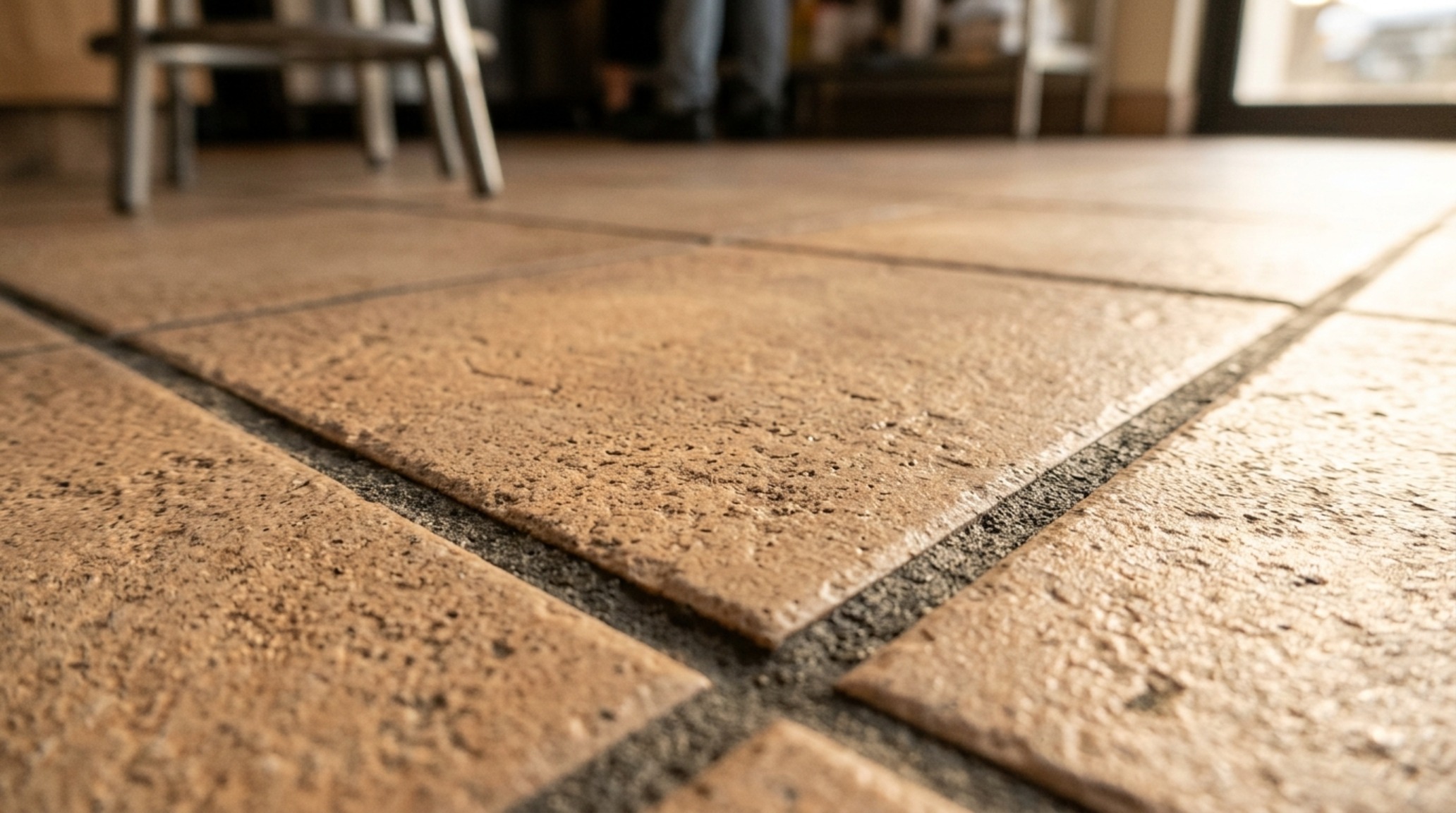
From a functional perspective, large format surfaces are a revelation for maintenance. Grout is traditionally the weakest point in any tile installation—it is porous, prone to staining, and difficult to scrub. By opting for larger planes, you minimize the surface area that requires intense cleaning. When these are paired with a 1/16-inch grout joint and a color-matched epoxy, the floor appears as a singular, monolithic surface that feels more like a custom-poured stone floor than a traditional tile installation.
Non-Slip Kitchen Floor Tiles: The Science of DCOF
Safety in the kitchen is often an afterthought until a spill occurs. The architectural standard for slip resistance has moved beyond the old ‘R-rating’ to the DCOF (Dynamic Coefficient of Friction). For a residential kitchen floor, a DCOF rating of 0.42 or higher is the benchmark for safety. Non-slip kitchen floor tiles today utilize advanced glazing techniques that provide a tactile grip without feeling like sandpaper. This ‘soft-touch’ grip is achieved through micro-textures that remain easy to clean while providing the necessary friction for a safe workspace.
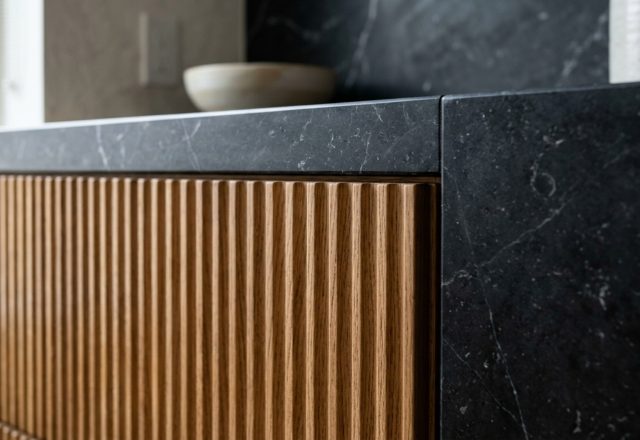
When selecting these tiles, I often recommend a ‘honed’ or ‘matte’ finish over a high-gloss polish. Not only does a matte finish hide water spots and dust more effectively, but it also provides a grounded, sophisticated look that pairs beautifully with natural materials like white oak or walnut. In a space where you are often standing for hours—prepping vegetables or hosting guests—the ergonomic comfort of a slightly textured surface provides a more stable and forgiving underfoot experience than a slippery, mirrored floor.
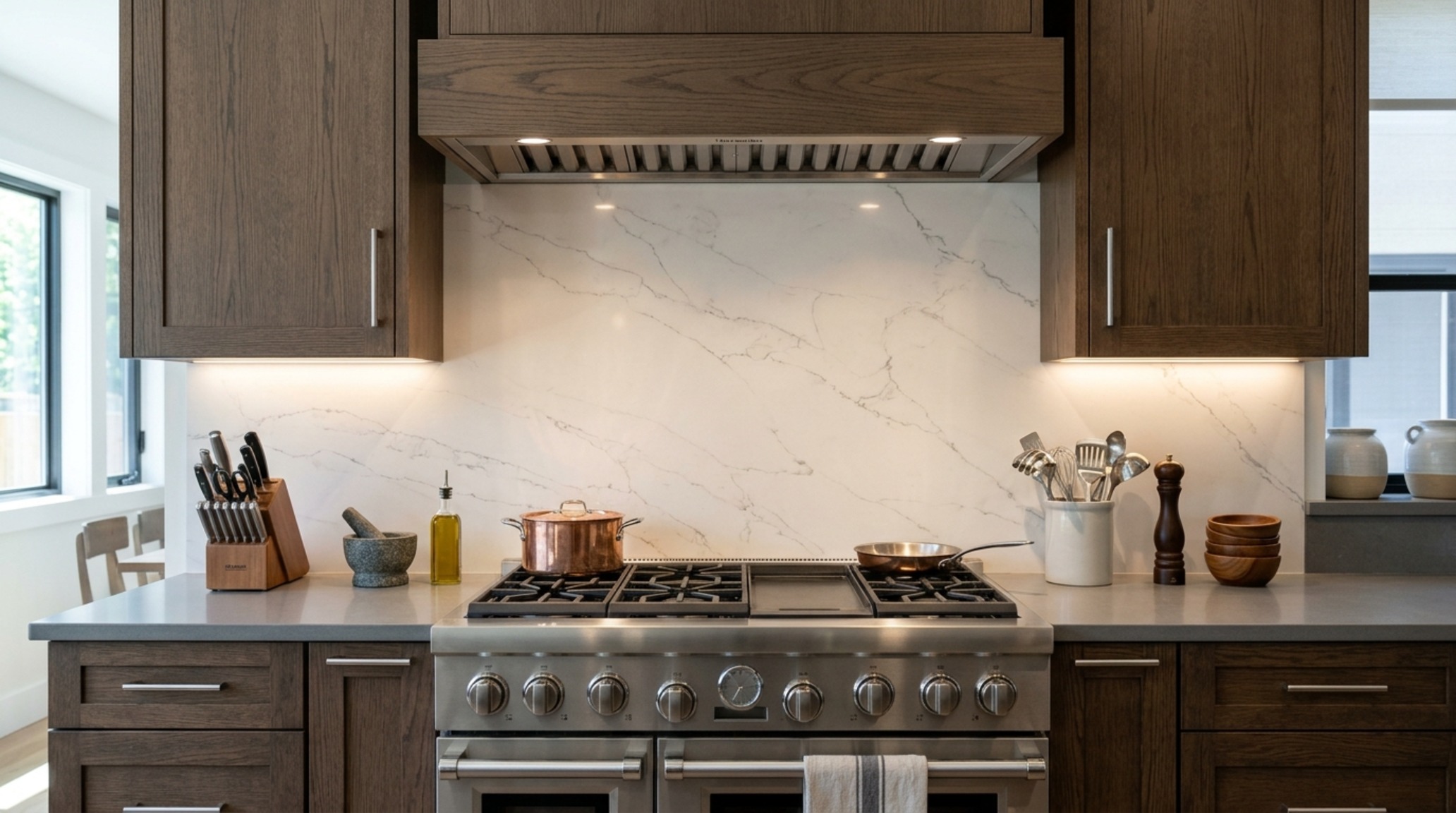
Curated Visual Chronicle: Materiality and Maintenance
Maintaining the pristine look of a new kitchen requires more than just a mop; it requires the right chemical foundation. The best grout for kitchen floors is no longer the standard cementitious mix found at big-box stores. High-performance epoxy or pre-mixed urethane grouts are the industry secret to a ‘forever clean’ floor. These products are non-porous and chemically resistant to oils and acids, meaning that spilled red wine or balsamic vinegar won’t leave a permanent ghost on your grout lines.
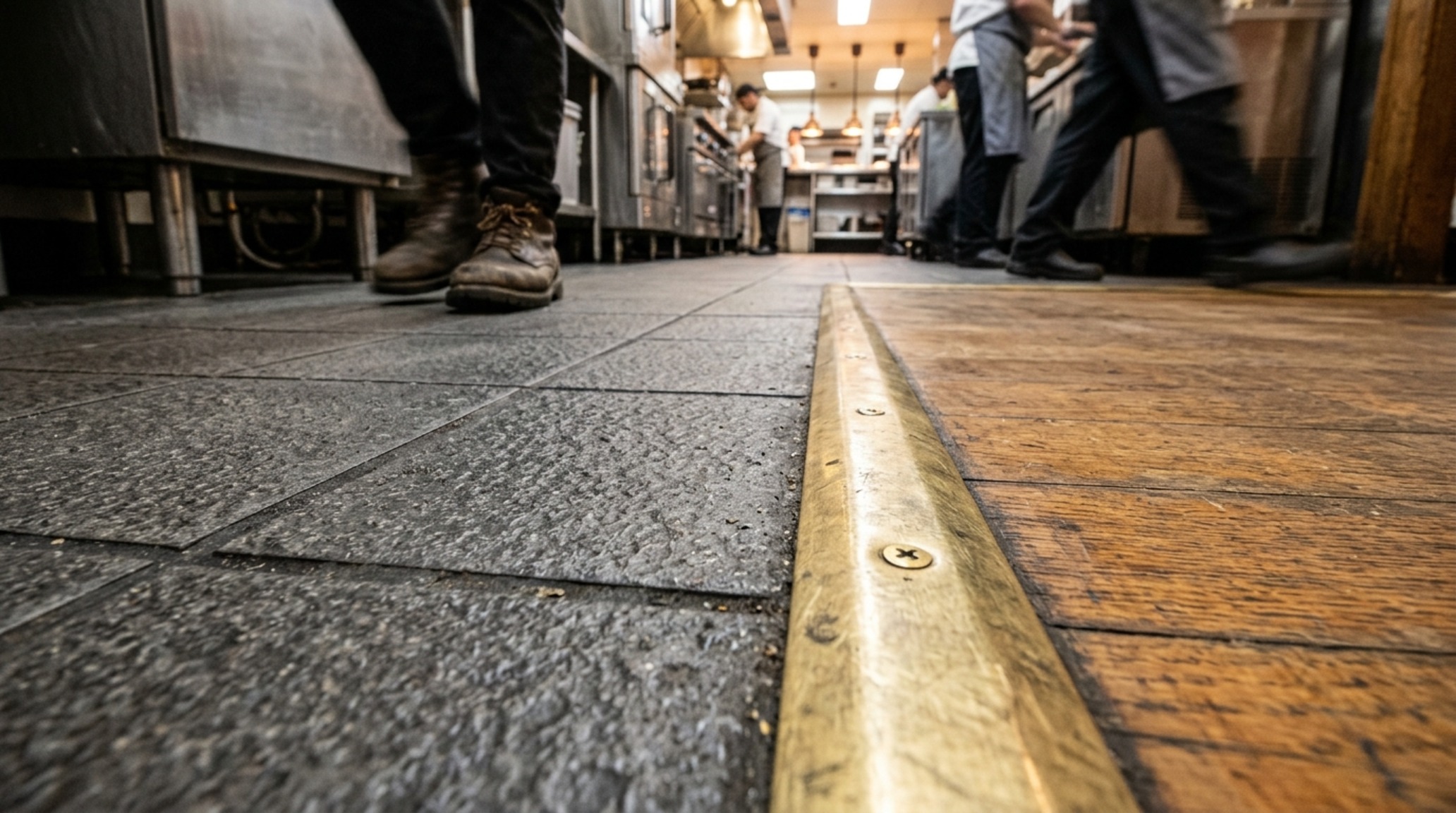
Strategic zone-tiling is another technique I advocate for in open-concept homes. While we love the warmth of hardwood in living areas, the 36-inch ‘wet zone’ around an island or sink often demands a more durable material. By insetting a section of high-performance tile into a wood floor—using a clean brass or matte black Schluter strip for the transition—you create a ‘chef’s zone’ that handles the heavy lifting of the kitchen while the rest of the home remains soft and wooden. This architectural ‘rug’ of tile is both a functional necessity and a stunning visual anchor.
Easy to Clean Kitchen Backsplash: The Vertical Advantage
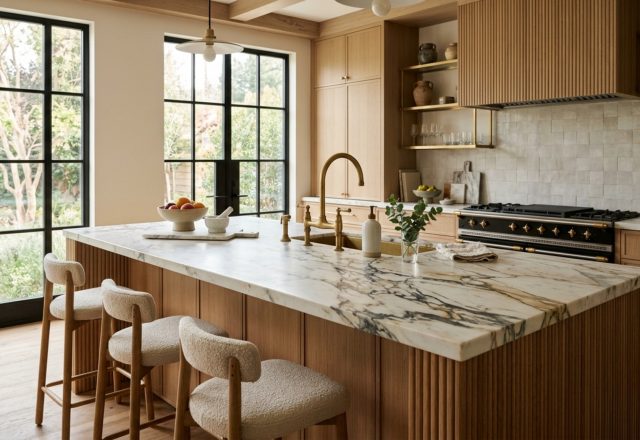
The backsplash is the kitchen’s jewelry, but it also faces the brunt of stovetop splatter. An easy to clean kitchen backsplash isn’t just about the tile; it’s about the texture. While heavily riven stone or deeply pitted zellige tiles are incredibly popular on Pinterest, they can be a nightmare to de-grease. For a high-performance backsplash, I lean toward large-format porcelain slabs or smooth, glazed tiles that can be wiped down in a single pass.
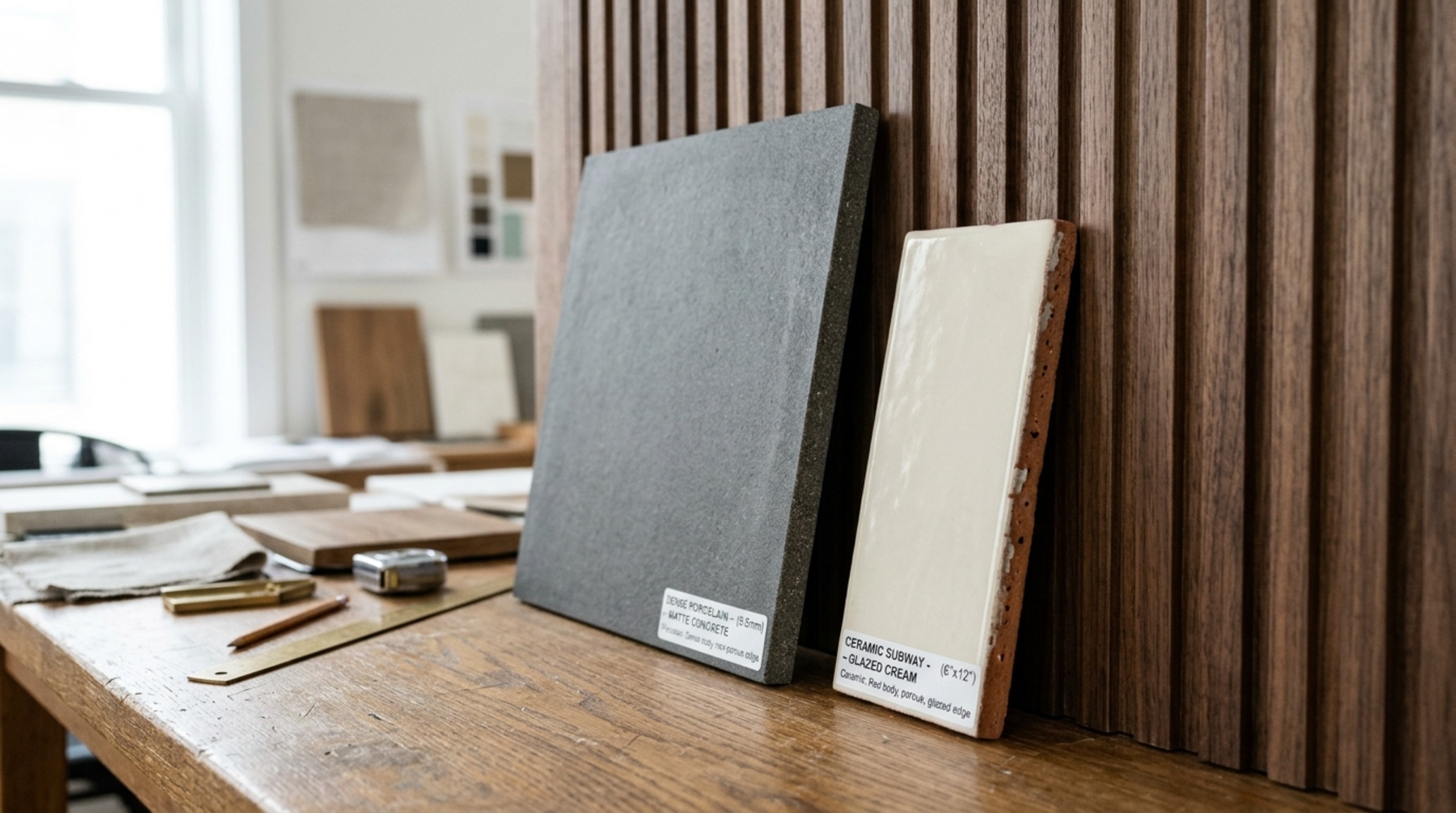
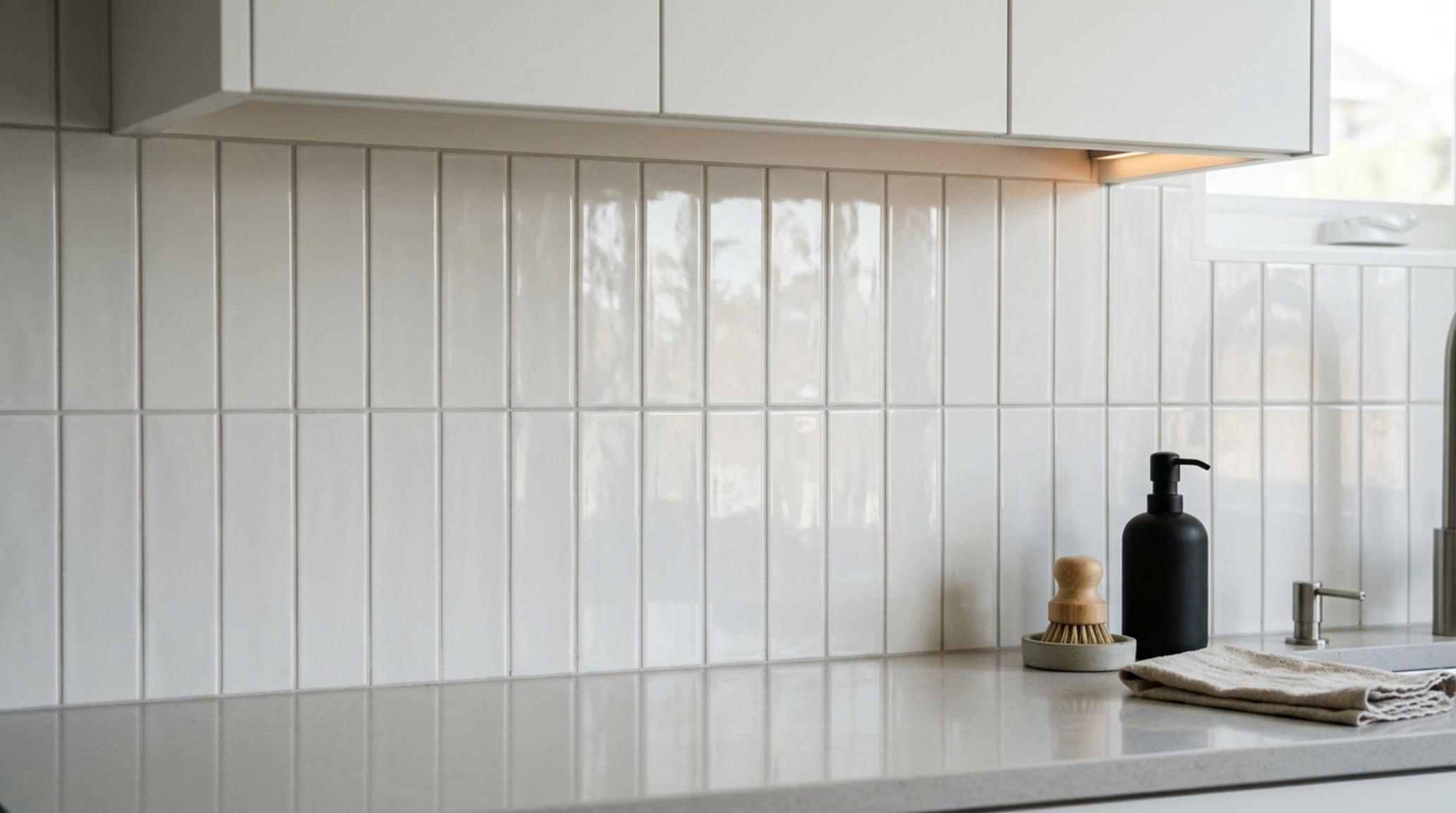
The trend for 2025 is moving toward ‘slab-match’ backsplashes, where the countertop material continues up the wall to the underside of the cabinets or a floating shelf. This eliminates the horizontal grout line at the most vulnerable spot—the junction where the wall meets the counter. If you prefer the rhythm of individual tiles, consider a vertically stacked layout. This orientation draws the eye upward, making standard 8-foot ceilings feel significantly loftier while providing a clean, modern aesthetic that is remarkably simple to maintain with a basic microfiber cloth and warm water.
Spatial Perspectives & Material Curation: Anticipating 2025
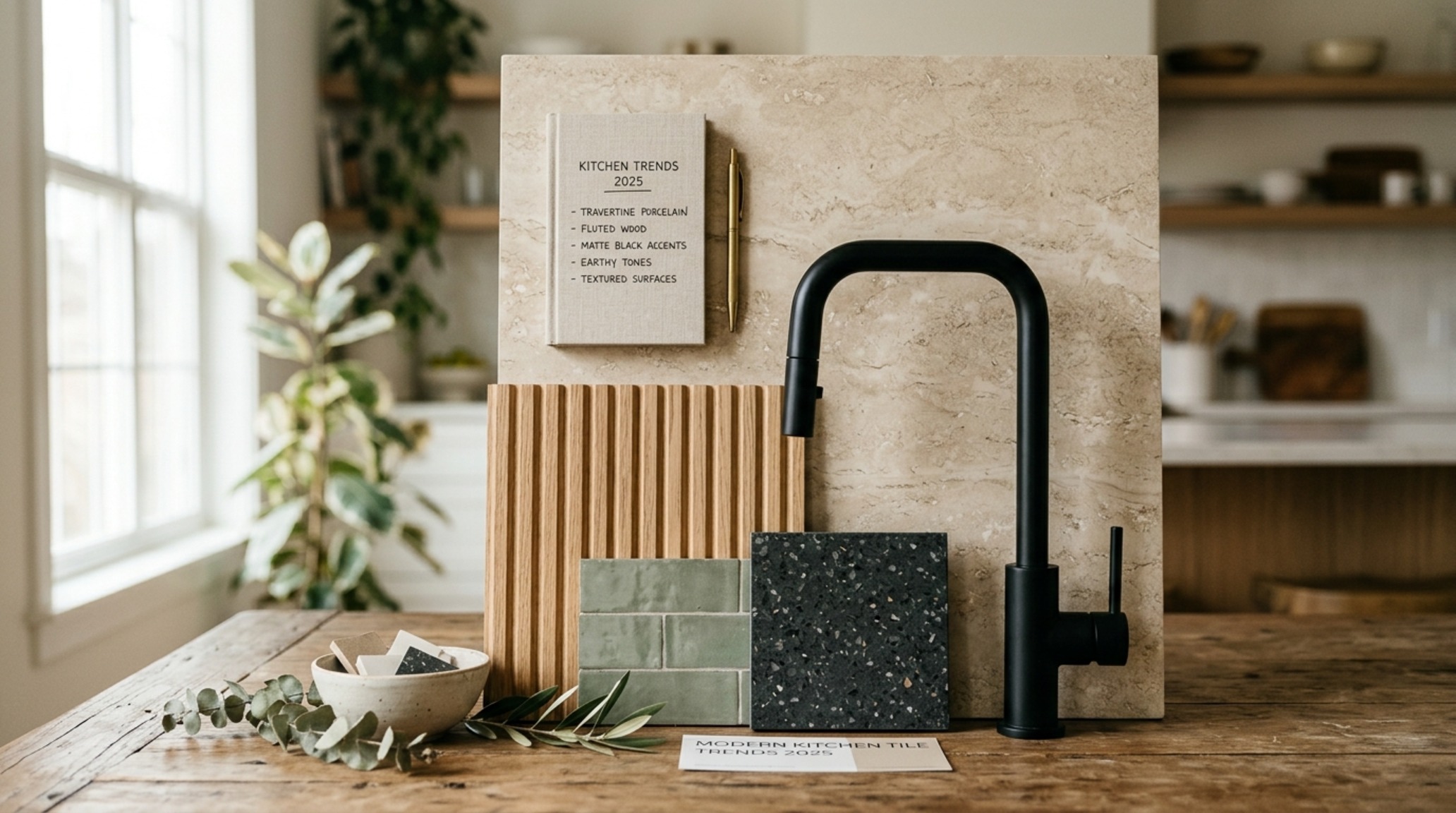
As we look toward the future of interior architecture, the clinical, cold look of minimalism is being replaced by ‘Warm Minimalism.’ This shift is evident in the modern kitchen tile trends 2025, where we see a return to organic textures and earth-toned palettes. Think limestone-look porcelains in warm beiges, terracotta-inspired tiles with a refined matte finish, and soft greys that mimic the tonality of weathered concrete. These materials bring a sense of ‘tactile grounding’ to the kitchen, making it feel less like a laboratory and more like a lived-in sanctuary.
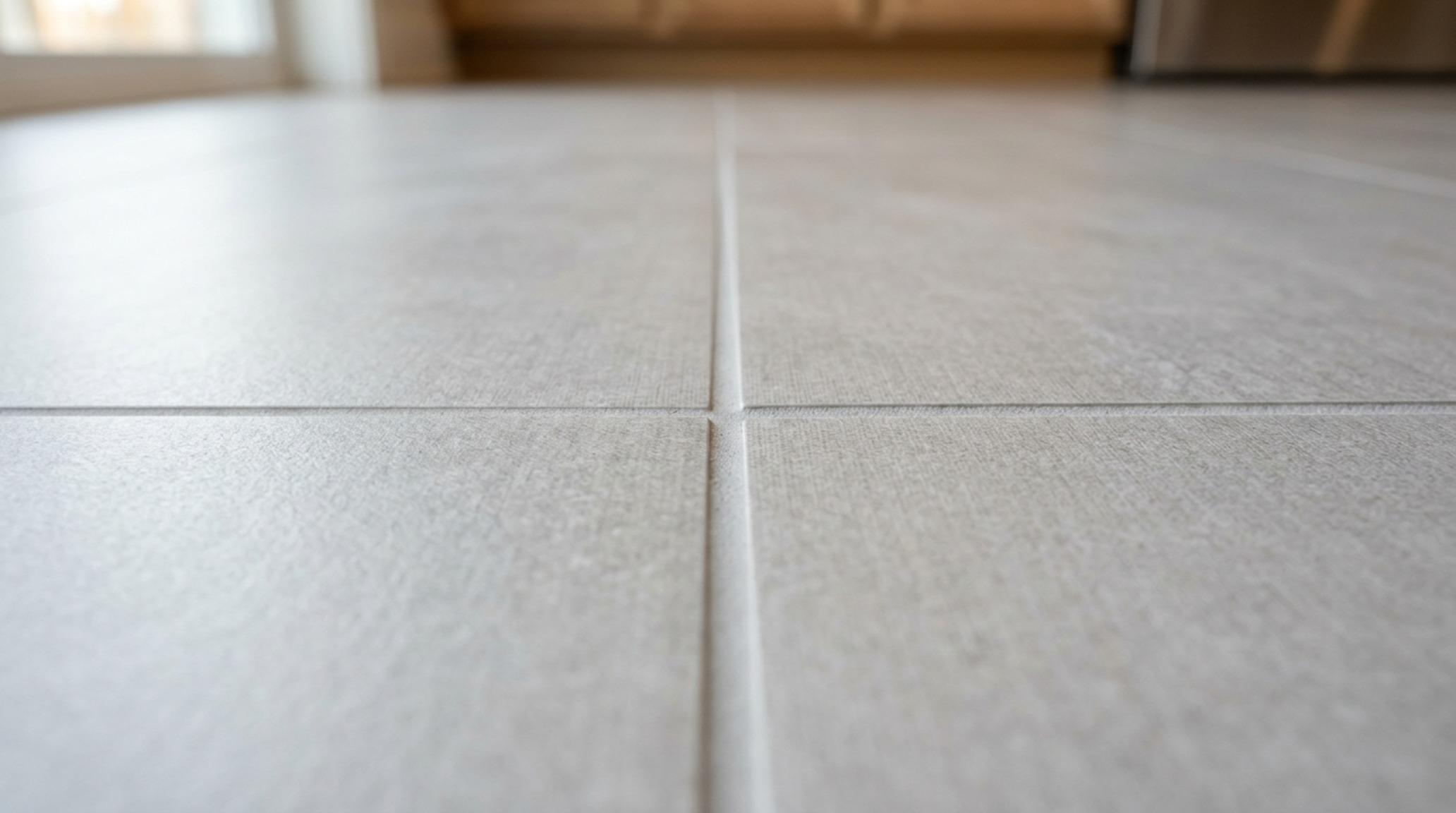
Lighting plays a critical role in how these materials are perceived. A tile with a subtle texture might look flat under a standard 4000K ‘cool’ light, but under 2700K warm ambient lighting, the shadows catch the micro-grooves of the surface, revealing a depth and character that is purely artisanal. For task areas, a 3000K light with a high CRI (Color Rendering Index) of 90+ ensures that the true colors of your food and your materials are accurately represented, preventing the space from feeling muddy or artificial.
The Ergonomics of Hard Surfaces
Design is as much about how a space feels as how it looks. Living on hard surfaces like tile can be taxing on the joints if not planned correctly. When selecting the best tile for kitchen use, consider the subfloor preparation. Using a high-quality uncoupling membrane like Schluter-DITRA not only prevents tiles from cracking due to seasonal expansion but also provides a minute amount of ‘give’ and acoustic dampening. This small layer of engineering makes a significant difference in how the floor feels during a three-hour dinner prep session.
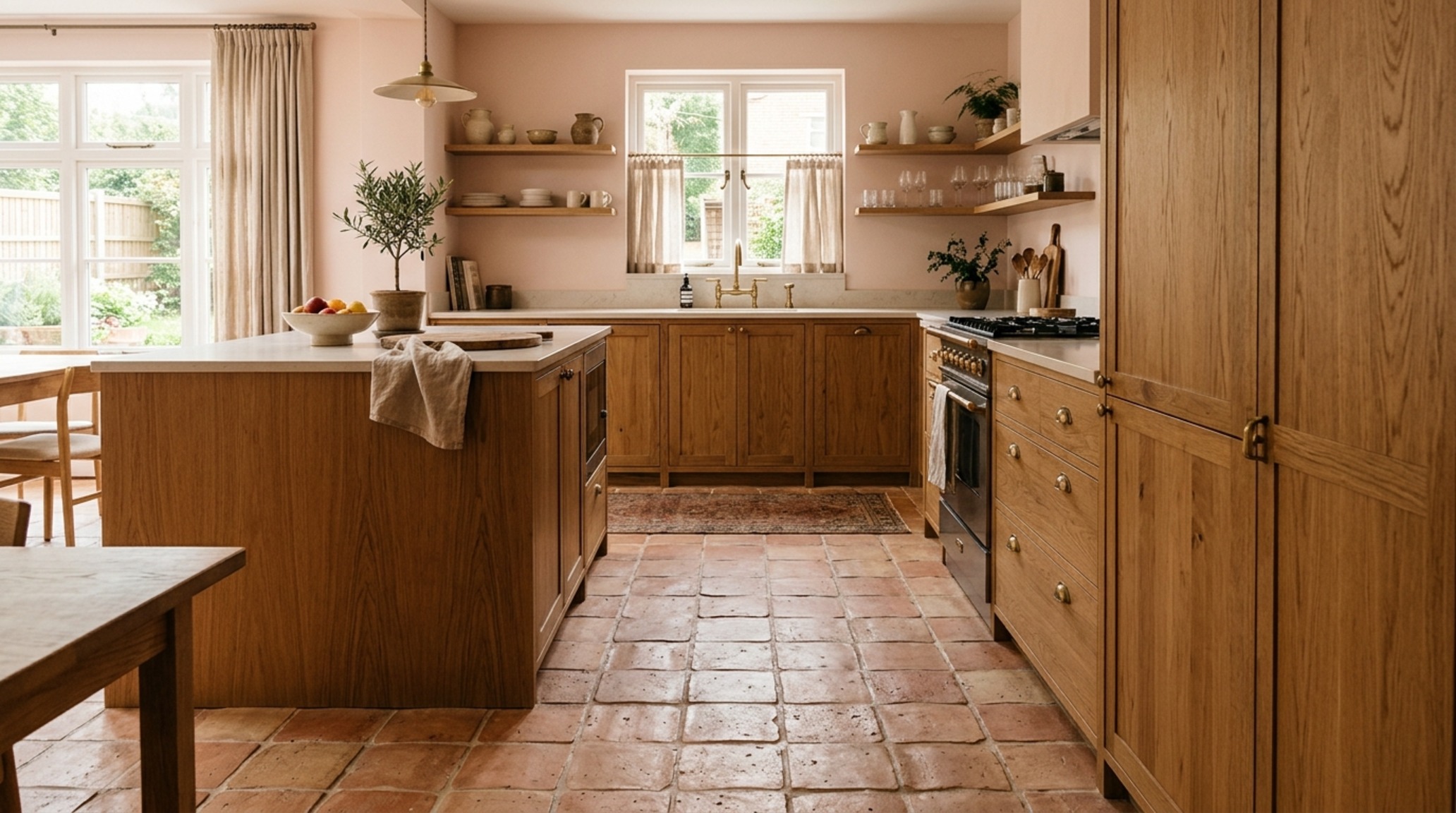
Clearance and circulation are the final pillars of high-performance design. No matter how beautiful the tile, the kitchen fails if the spatial flow is constricted. Ensure a minimum of 36 inches for primary circulation paths, though 42 to 48 inches is the ‘gold standard’ for a multi-cook kitchen. These measurements ensure that your chosen surfaces have room to breathe, allowing the material patterns to be seen and appreciated without the clutter of overlapping furniture or tight corners.
Interior Architecture Specification Sheet
Comprehensive architectural blueprint detailing finishes, paint hex codes, and structural balance.
Ultimately, the architecture of a high-performance home is a quiet one. It is a space where the technical rigors of the materials—the slip resistance, the epoxy durability, the porcelain density—fade into the background, leaving only the experience of the room itself. When you invest in the best tile for kitchen longevity, you are essentially buying time: time not spent scrubbing grout, time not spent worrying about spills, and time spent simply enjoying the play of light across a floor that was designed to last a lifetime. As our homes continue to evolve into multifunctional sanctuaries, these grounded material choices become the bedrock of our domestic well-being, standing firm through every season and every meal shared.
Editorial Silo • Recommended Architecture Studies
- The Structural Logic of Flow: Open Floor Plan Kitchen Dining Living Room & Master-Planning Your Kitchen, Dining, and Living Triad — Archival Design Case Study
- The Tactile Aesthetic of Contemporary Kitchen Furniture: Materials, Moods & Lighting Kelvin — Archival Design Case Study
The Spatial Vignettes Portfolio
Documenting spatial cadence through authentic materials, intentional voids, and sculpted architectural illumination.
Curated Visual Lookbook
Design Gallery & Spatial Studies
A visual curation of architectural arrangements, lighting concepts, and material palettes featured in this space.