The Evolution of the Domestic Hearth: From Utility to Artistry
For decades, the culinary zone was a hidden engine room—a cramped, utilitarian space defined by bulky historical conventions of heavy dark woods, overbearing crown molding, and closed-off partitions that isolated the cook from the social rhythm of the home. These outdated layouts prioritized sheer storage volume over human movement, often resulting in visual clutter that felt more like a warehouse than a sanctuary. However, a profound shift has occurred in the architectural landscape. Today, we view the kitchen not as a chore-bound box, but as a fluid extension of our living identity. This transformation is anchored by the rise of contemporary kitchen furniture, an elevated modern standard that strips away the superfluous to celebrate the intersection of refined materiality, ergonomic precision, and the quiet luxury of negative space.
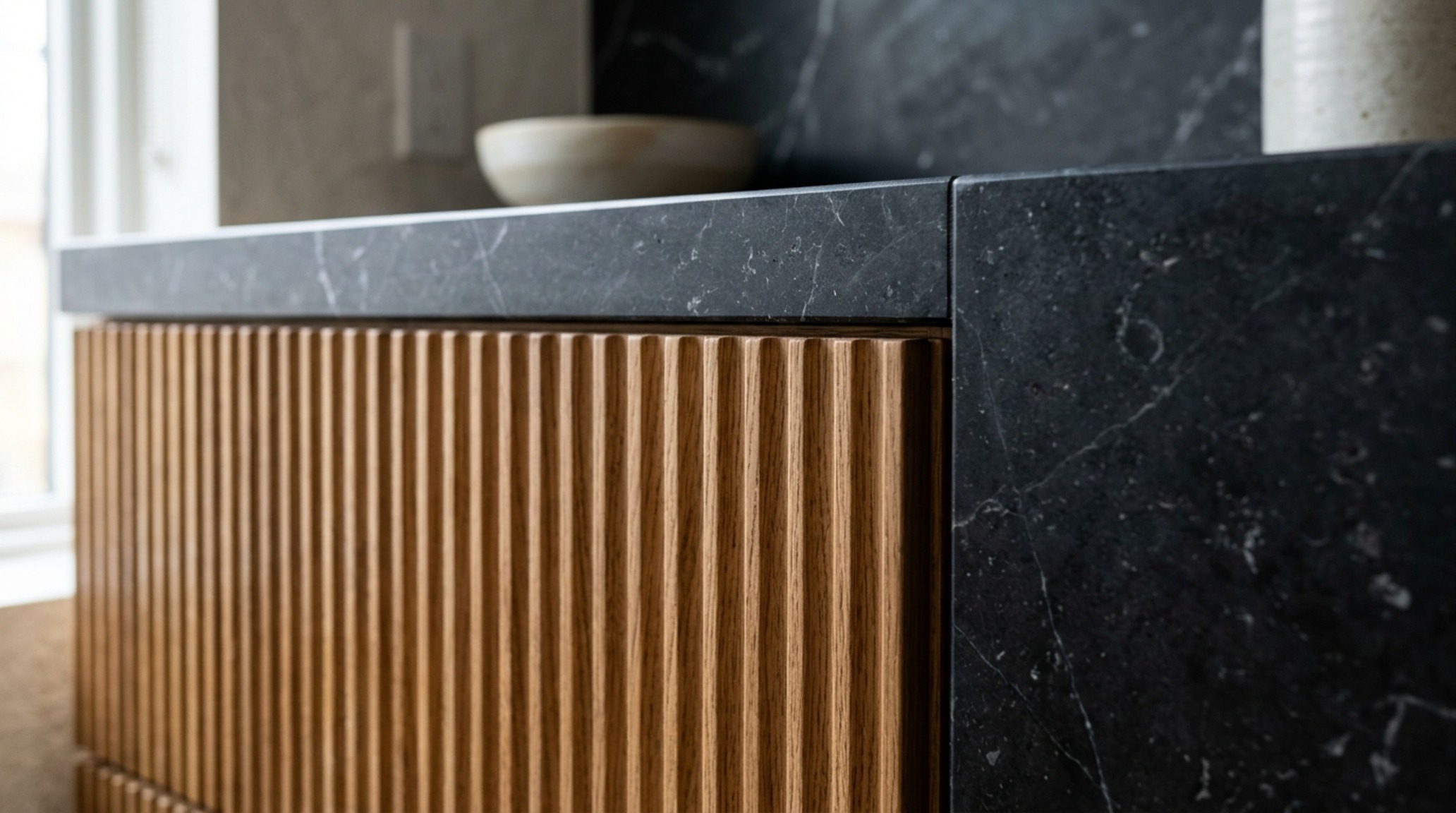
Spatial Cadence and the Architecture of Silence
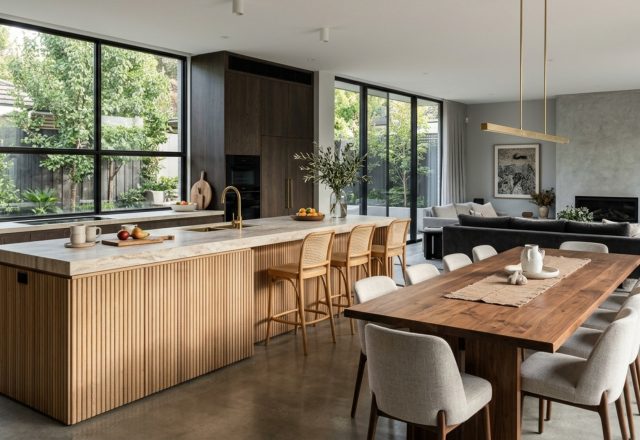
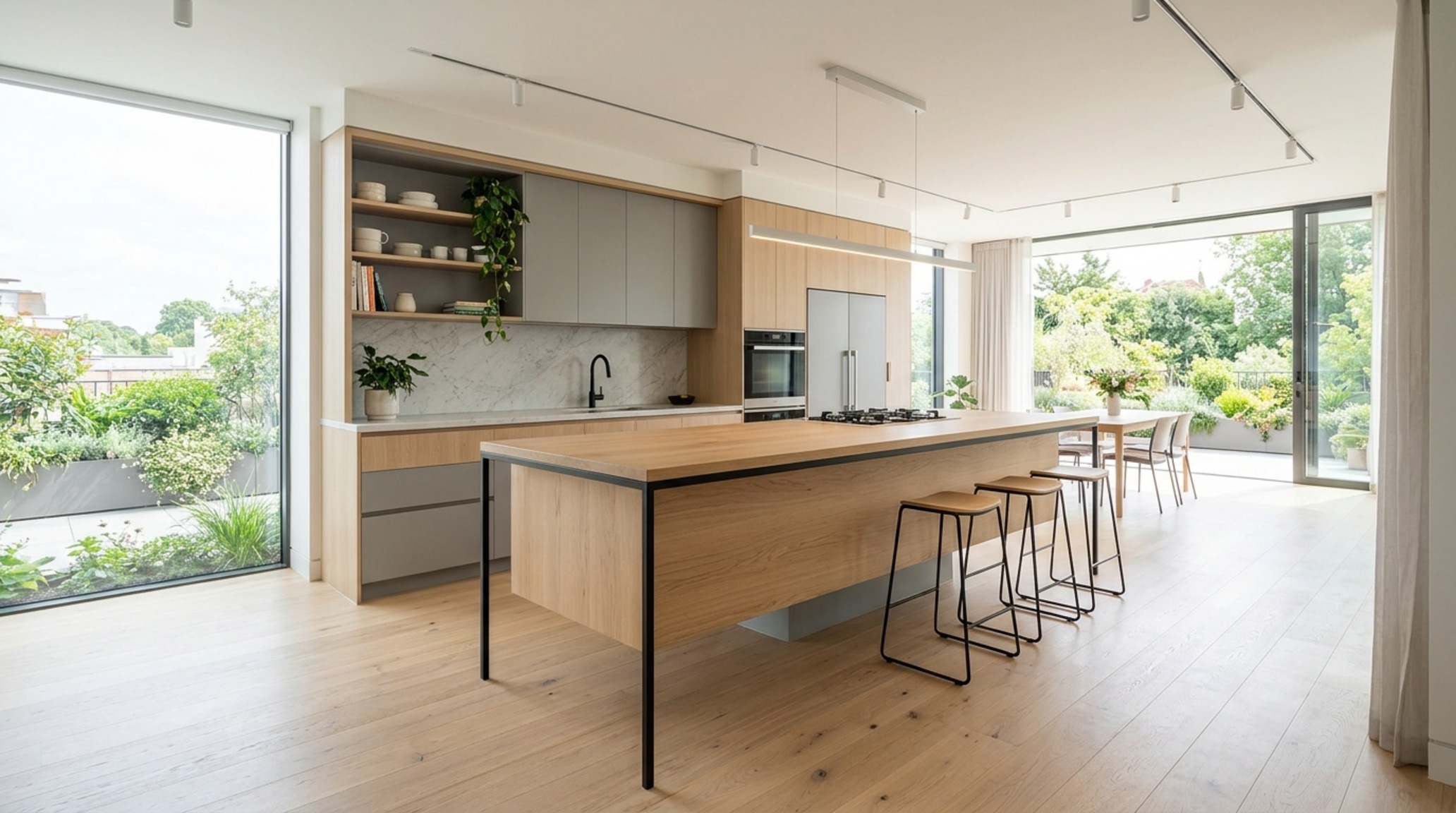
In contemporary design, what we leave out is just as vital as what we put in. The concept of ‘breathing room’ or negative space is the hallmark of a sophisticated layout. When selecting contemporary kitchen furniture, the goal is to establish a sightline alignment that allows the eye to travel effortlessly across the room. We no longer aim for wall-to-wall cabinetry; instead, we look for ‘furniture-grade’ pieces—islands that resemble sculptural monoliths and cabinetry that feels like integrated wall paneling.
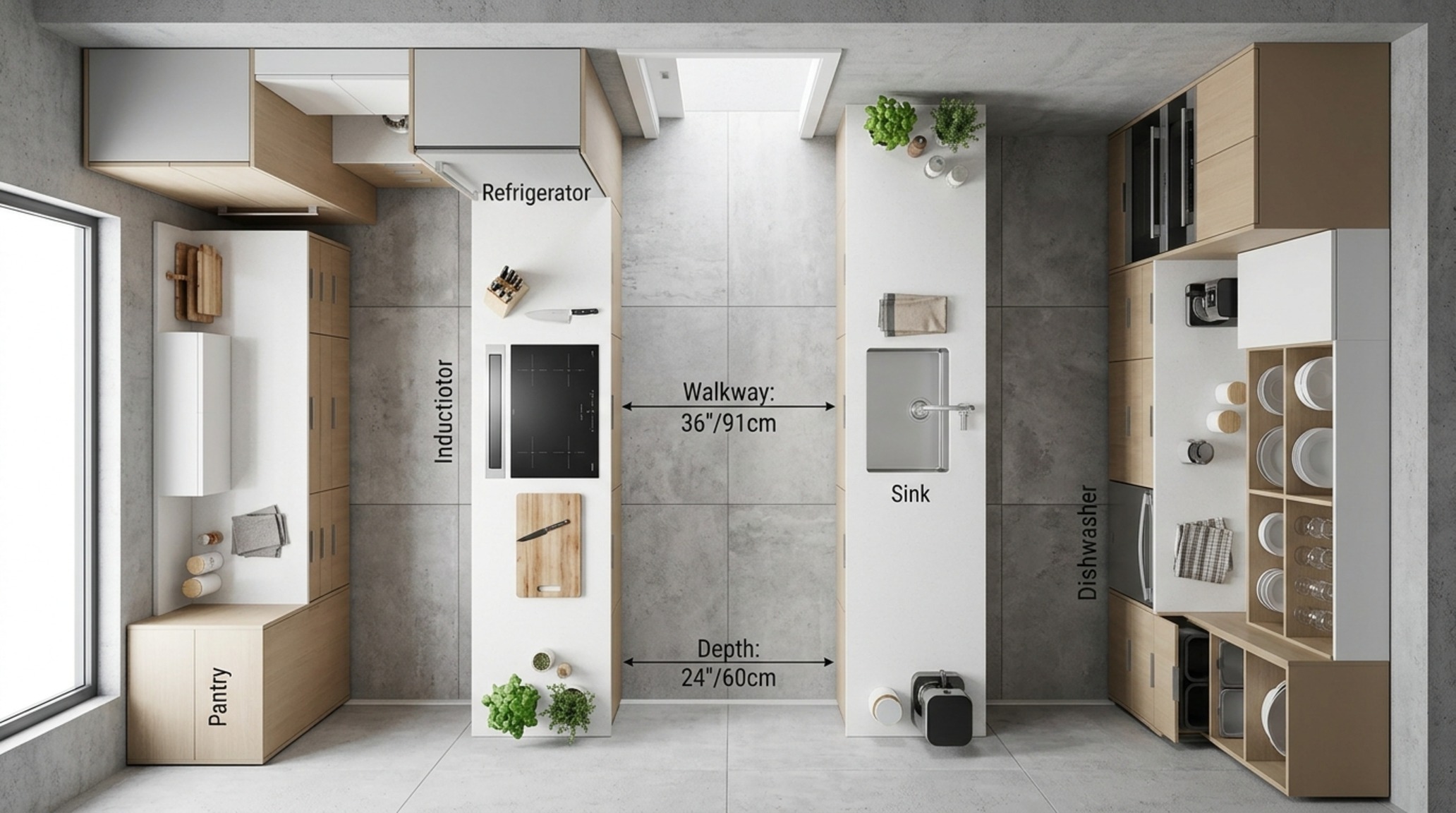
Architectural clearances are non-negotiable for this sense of serenity. To maintain a functional flow, a primary circulation path requires a 36-inch standard walkway clearance, though 42 to 48 inches is the gold standard for multi-cook environments. This spatial discipline ensures that even the most robust luxury contemporary kitchen furniture textures—like heavy-veined Calacatta marble or deep-grained charred wood—don’t overwhelm the room’s atmospheric balance.
Luxury Contemporary Kitchen Furniture Textures: The New Tactile Language
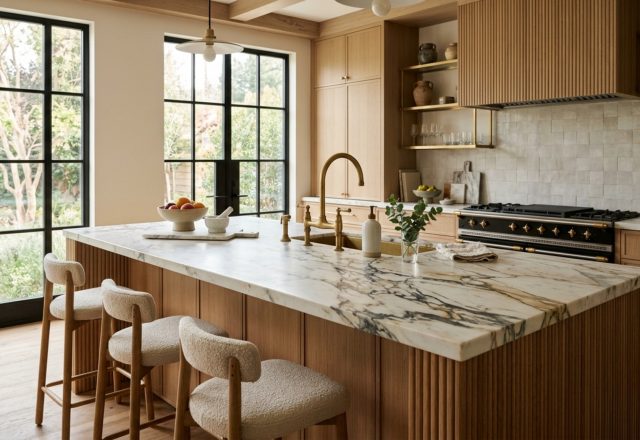
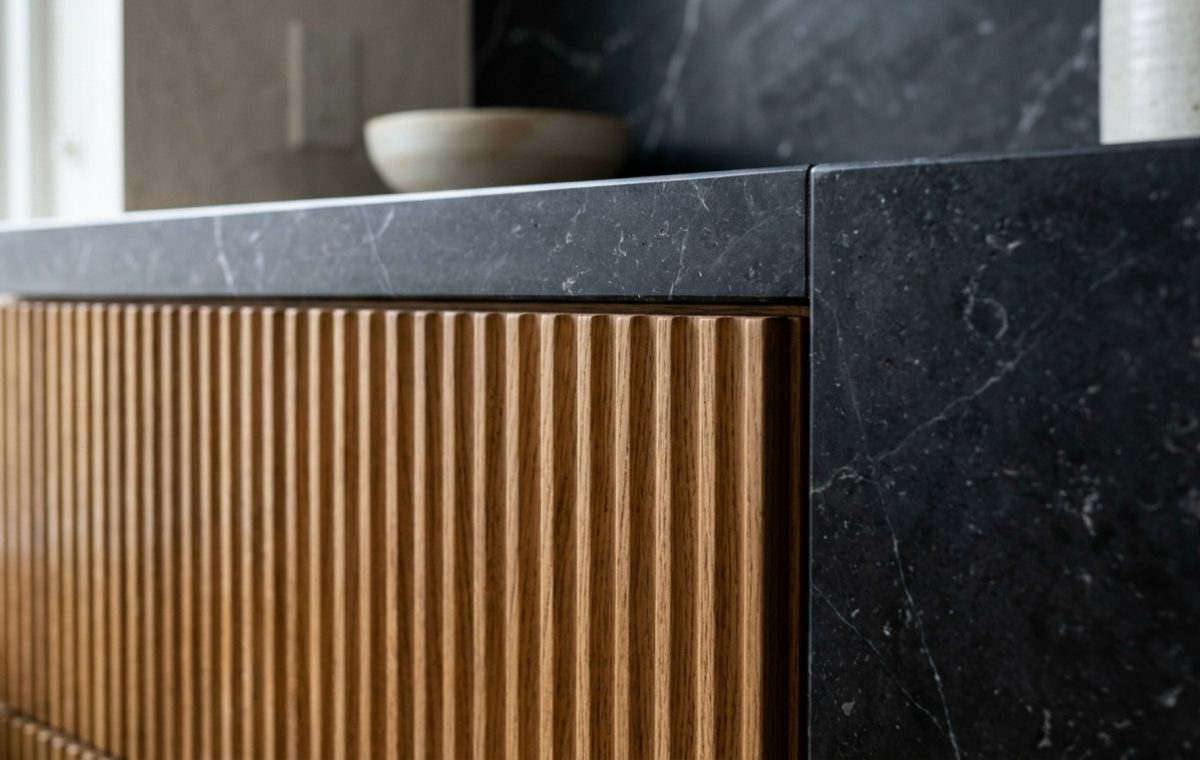
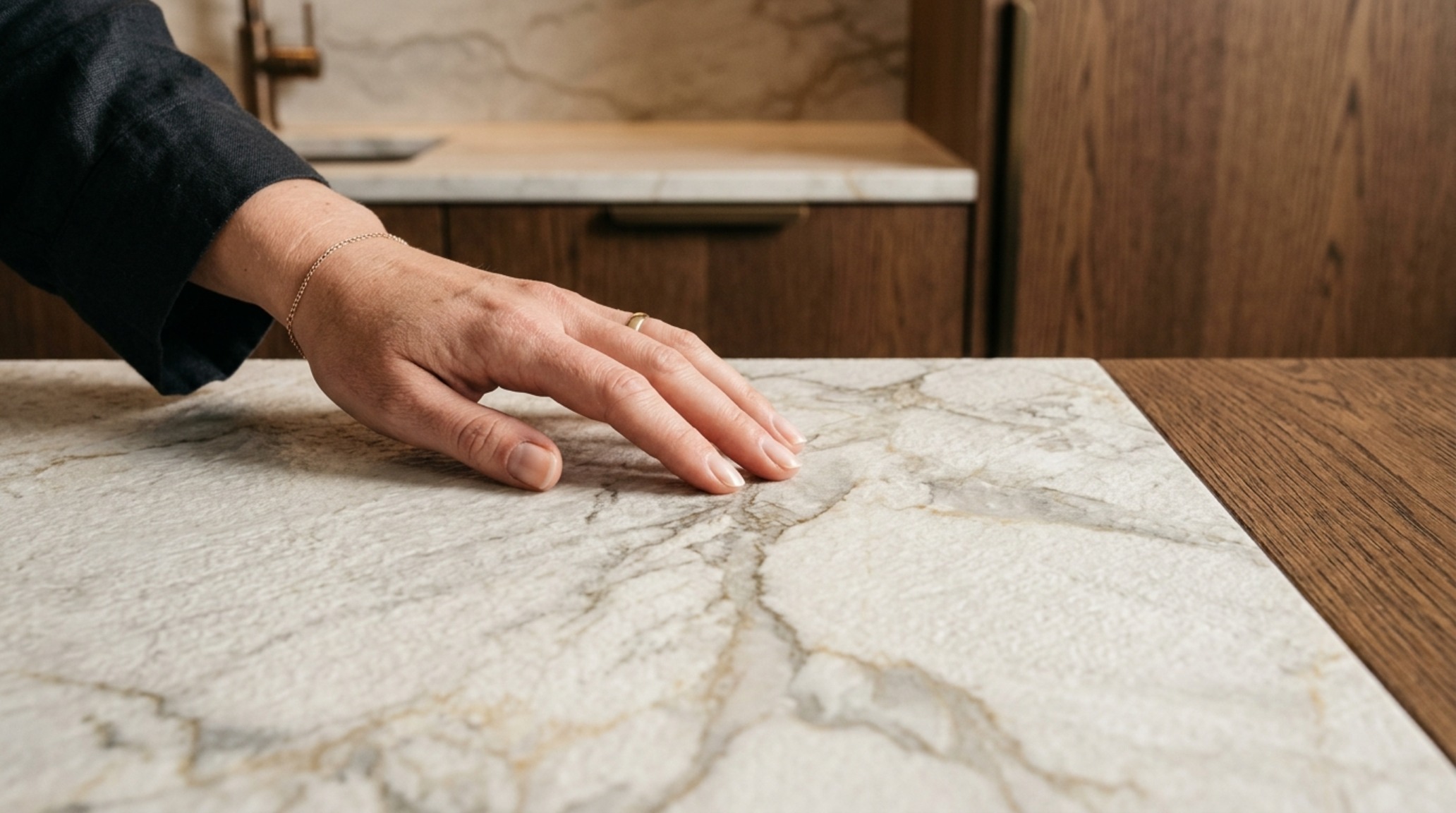
The modern kitchen has moved beyond the sterility of high-gloss white. We are currently seeing a renaissance of tactile grounding—a design philosophy that prioritizes how a surface feels under the hand. It is about the juxtaposition of the rough and the refined. Imagine the sensory contrast of a fluted white oak island base paired against a countertop of honed travertine stone. The fluting creates a rhythmic shadow play as the sun moves through the space, while the matte, porous nature of the stone provides an earthy, grounded counterpoint to the precision of the woodwork.
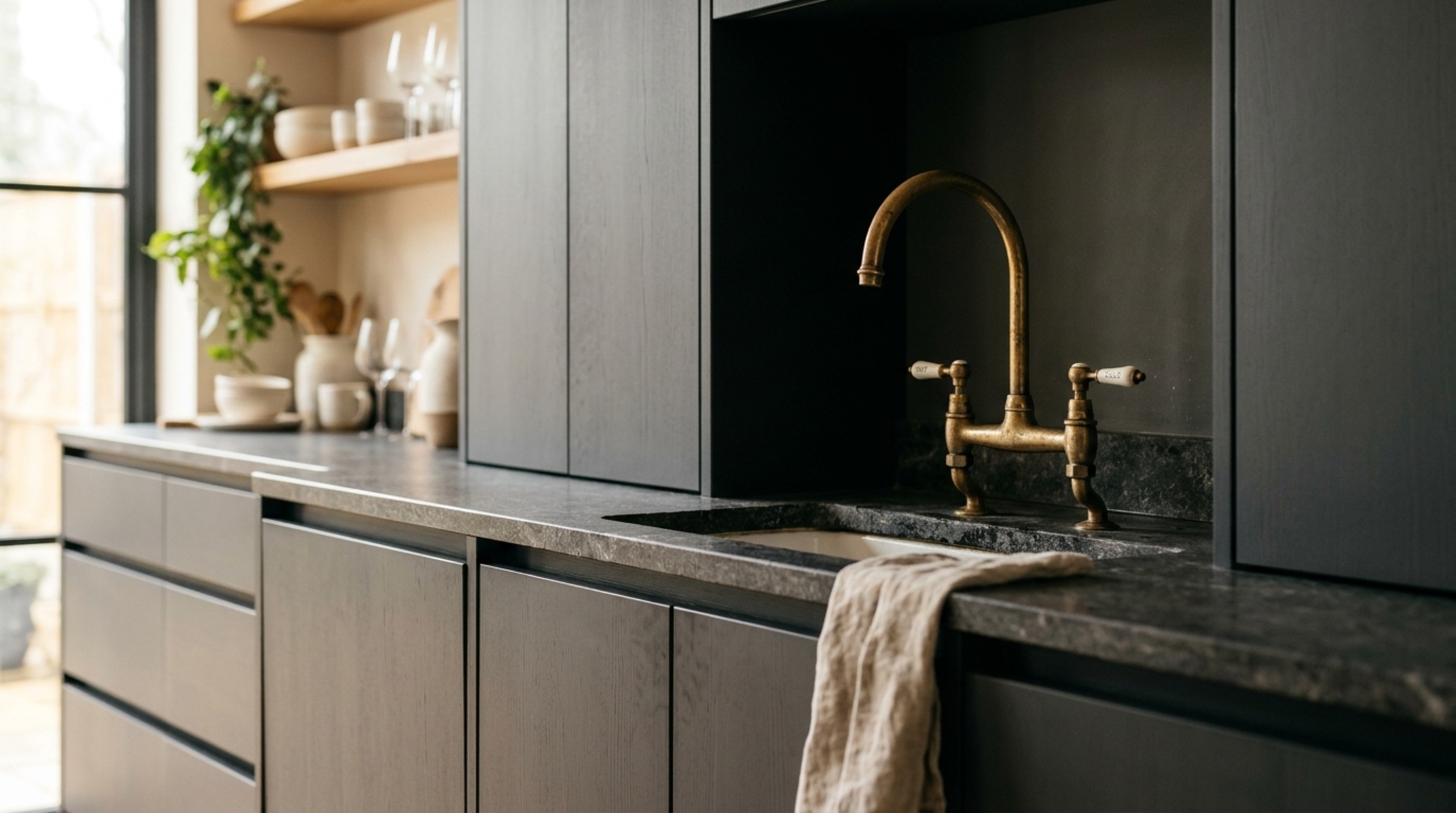
Metals, too, have evolved. We are moving away from the clinical look of polished chrome toward living finishes like unlacquered brass or patinated bronze. These materials possess an inherent ‘mood’ that shifts over time, reflecting the life lived within the kitchen. When these textures are applied to contemporary kitchen furniture, they transform functional objects into artifacts. A handleless cabinet drawer, featuring a precise 45-degree mitered edge and a subtle shadow gap, becomes a study in minimalist joinery.
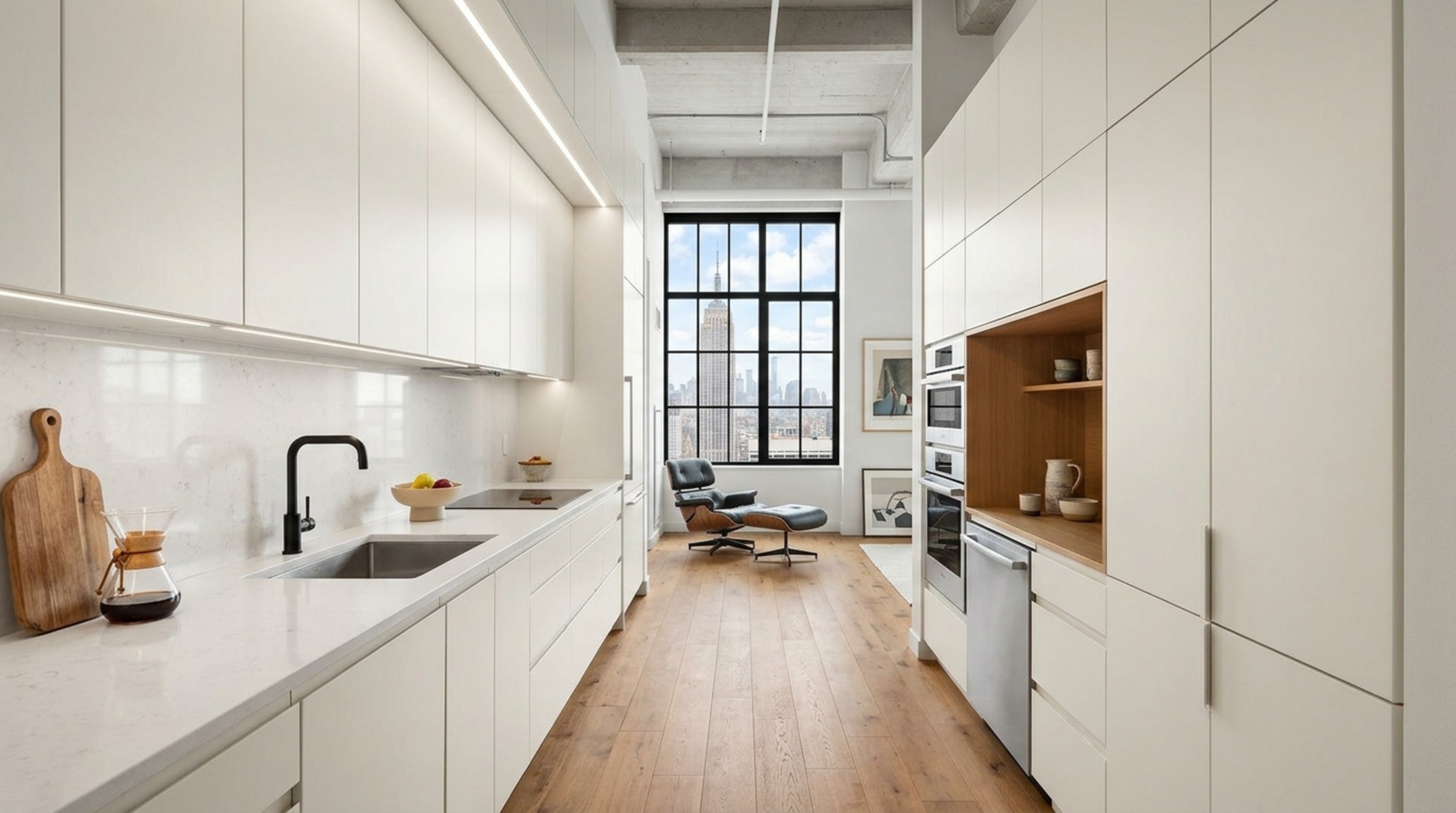
Small Space Contemporary Kitchen Furniture: The Art of the Compact Narrative
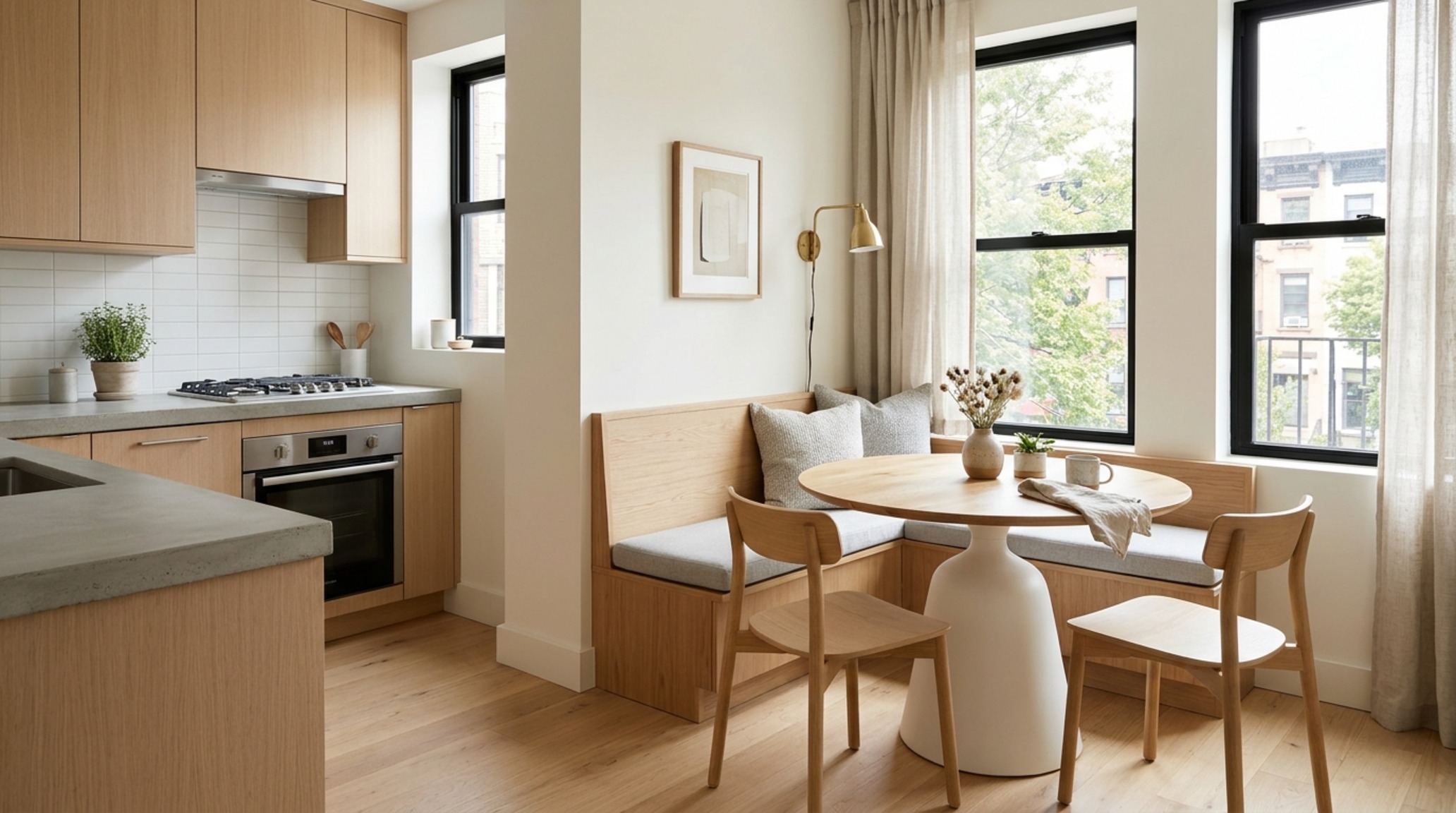
Designing for density requires a different kind of architectural bravery. In urban environments, small space contemporary kitchen furniture must perform a double duty: providing maximum utility while occupying a minimal visual footprint. The secret lies in verticality and integration. By utilizing full-height cabinetry painted in ‘recessive’ tones like Benjamin Moore Swiss Coffee or Farrow & Ball School House White, the furniture appears to melt into the architecture itself.
In these smaller footprints, every inch is scrutinized. We utilize 18-inch depths for secondary countertop zones and ensure that dining chair clearances remain at a strict 30-inch minimum from the table edge to the nearest obstruction. This prevents the ‘cramped’ feeling often associated with compact living. Integration is key; paneled appliances that match the furniture finish eliminate the visual ‘stops’ of stainless steel, allowing the gaze to sweep uninterrupted from one end of the room to the other. It is in these tight constraints that contemporary kitchen furniture truly shines, proving that luxury is a matter of proportion, not just square footage.
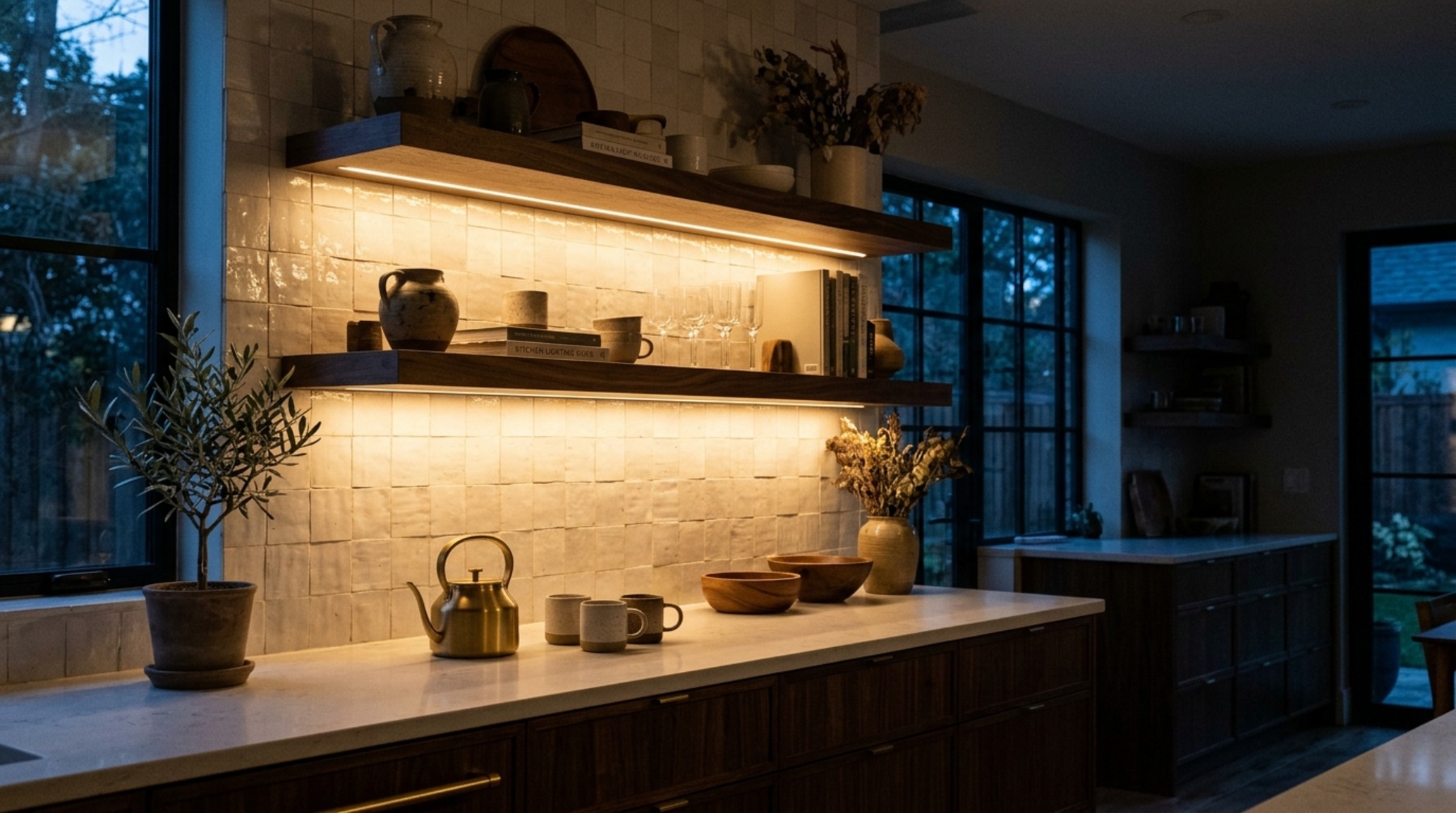
Contemporary Kitchen Furniture Lighting Guide: Kelvin and Chromatic Soul
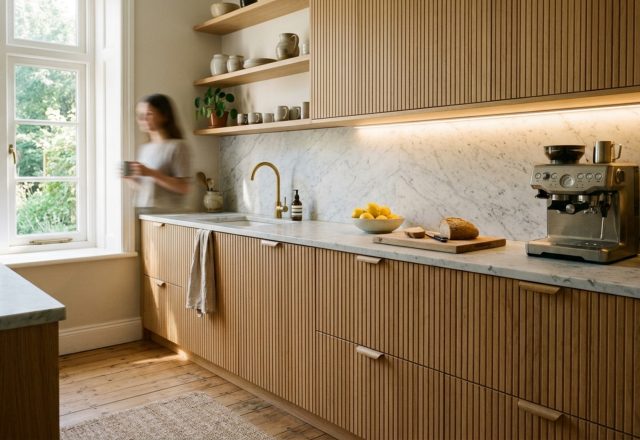
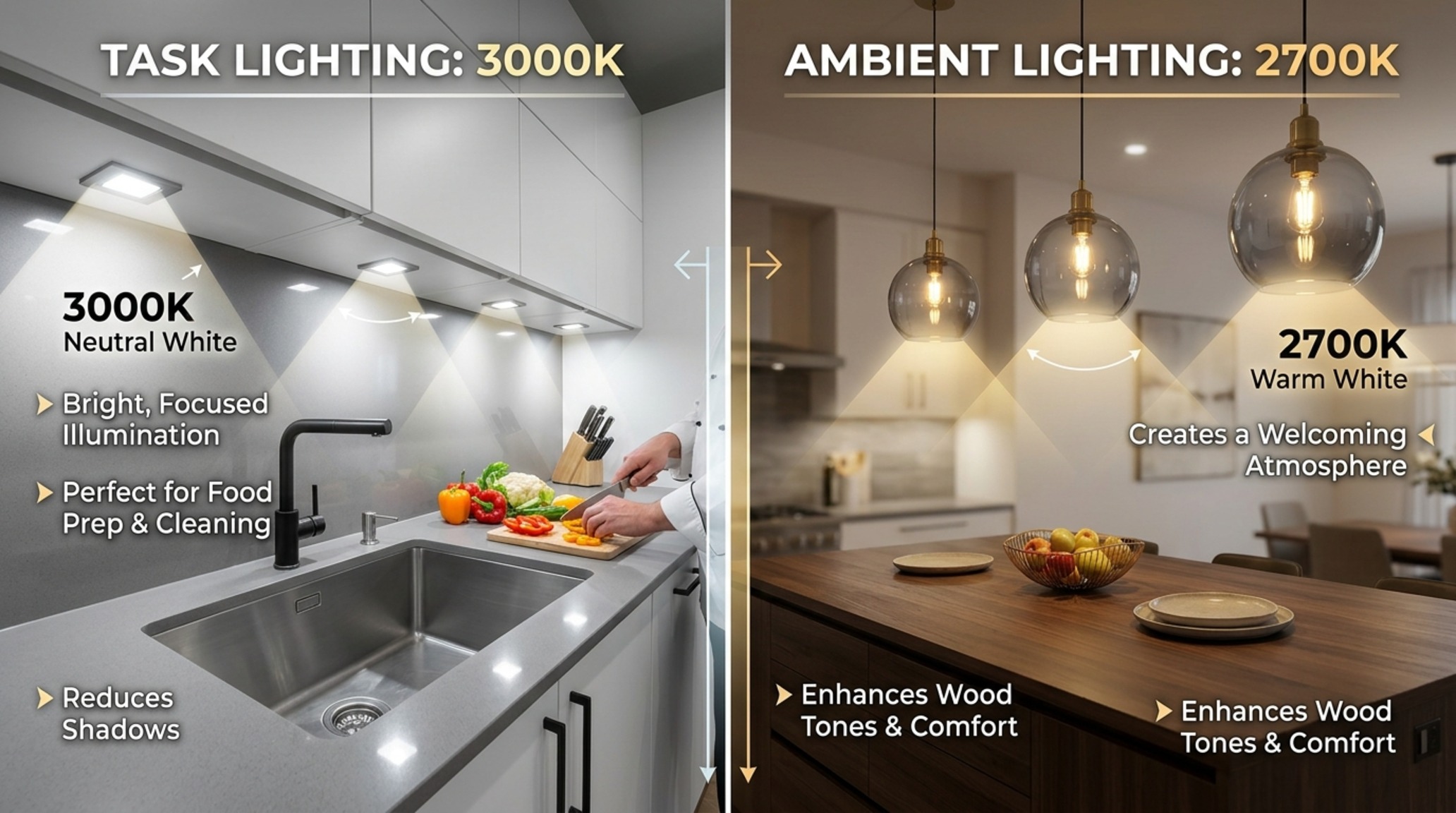
Lighting is the invisible architecture that defines the success of a kitchen. A common mistake is the over-reliance on high-voltage, ‘cool’ downlights that can make a kitchen feel like a laboratory. For a serene sanctuary, we must master the art of layered illumination. This starts with understanding Kelvin temperatures. Ambient lighting should almost always reside in the 2700K range—a warm, golden glow that mimics the softness of late-afternoon sun. This is the light that makes contemporary kitchen furniture feel inviting after dark.
However, task zones—where the actual work of the kitchen happens—require more clarity. Here, we shift slightly to 3000K, providing a crispness that aids precision without feeling jarring. The most critical technical specification, however, is the Color Rendering Index (CRI). To ensure that the rich grain of your walnut cabinetry or the vibrant greens of fresh produce look authentic, always specify fixtures with a high CRI of 90+. This prevents the ‘graying’ effect that low-quality LEDs can have on expensive finishes.
- Ambient Layer: Dimmable 2700K integrated LED strips tucked into coves or under cabinets.
- Task Layer: Targeted 3000K directional spotlights with a narrow beam spread.
- Accent Layer: Decorative pendants over the island, acting as the ‘jewelry’ of the space.
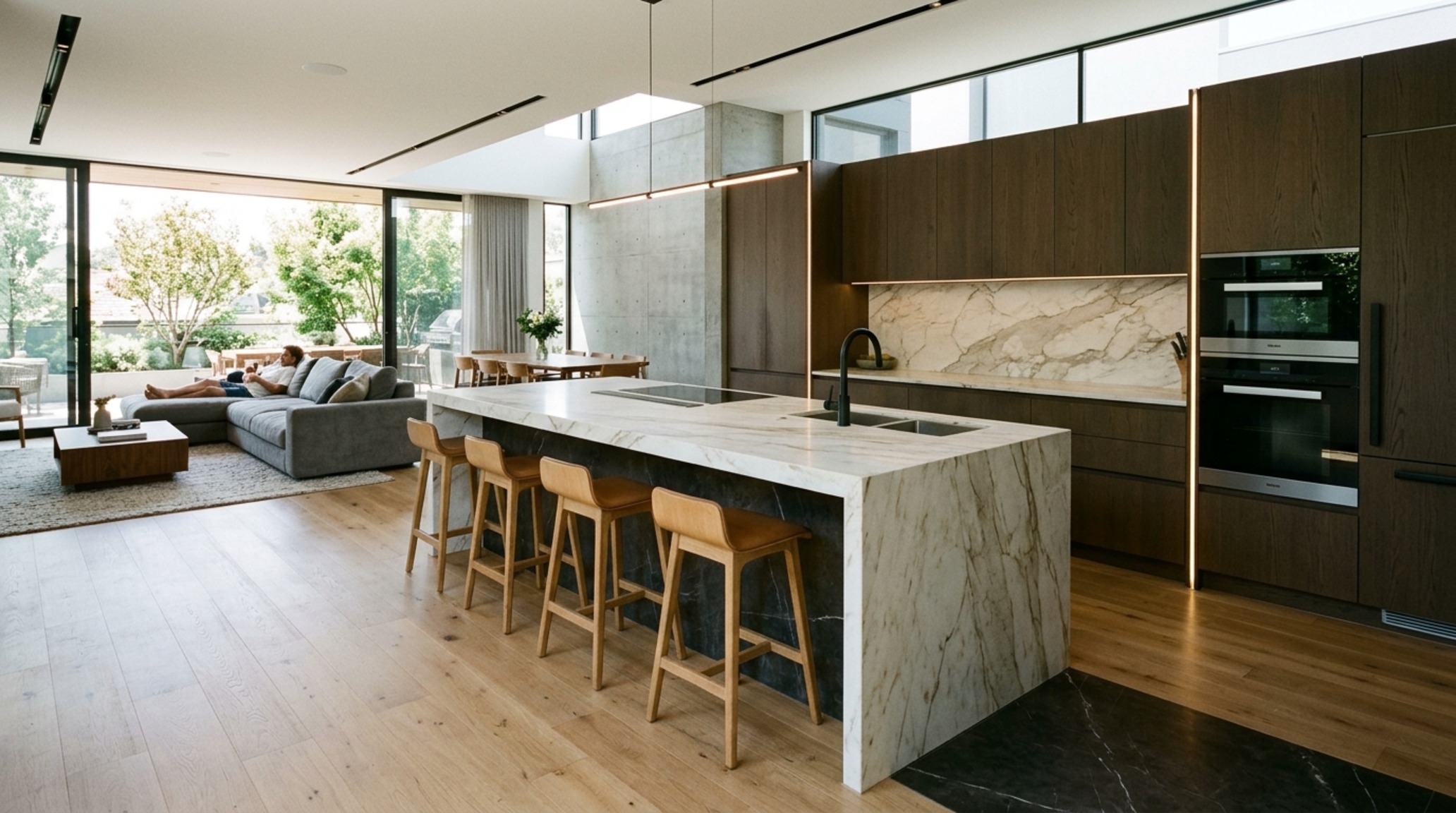
Modern Contemporary Kitchen Furniture Ideas: Curating the Visual Narrative
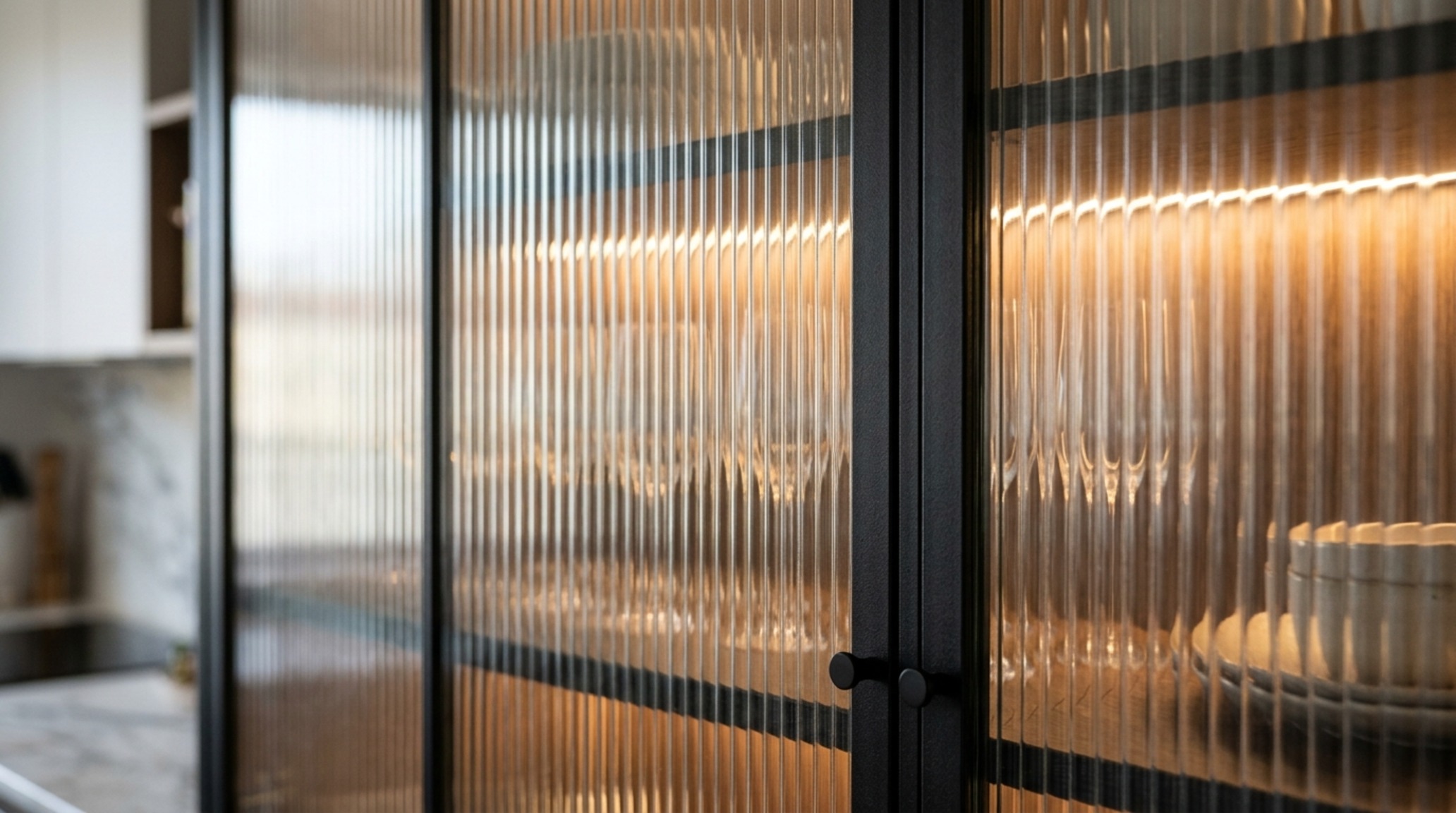
When looking for modern contemporary kitchen furniture ideas, look toward the trend of the ‘living kitchen.’ This is the idea that the kitchen should not look like a kitchen at all, but rather a curated collection of beautiful objects. Open shelving, when done with restraint, allows for the display of artisanal ceramics and vintage glassware, breaking up the monolithic feel of large cabinet banks. The use of ‘furniture legs’ on islands instead of traditional toe-kicks can also lift the weight of the room, making a heavy stone island appear to float above the floor plane.
Consider the ‘dark kitchen’ trend as well. While light and airy has been the default for years, there is an incredible depth to be found in charcoal, navy, and forest green. A kitchen anchored in Farrow & Ball Railings feels grounded and sophisticated, especially when paired with warm timber accents. This moody palette creates a cocoon-like environment, perfect for a space meant to be a sanctuary from the digital noise of the outside world.
The Ergonomics of Daily Rituals
Beyond the aesthetics, the furniture must respond to the human body. Ergonomics is the silent partner of style. The height of a work surface (standard 36 inches) is designed to minimize strain, but for the avid baker, a lowered section of the island at 30 inches can be a game-changer for kneading dough. The ‘work triangle’ has evolved into ‘work zones’—dedicated areas for prep, cleaning, and social interaction. Contemporary kitchen furniture facilitates this by offering specialized internal organizers—hidden drawers within drawers, magnetic knife blocks, and pull-out pantries that bring the contents to the user, rather than forcing the user to reach into the dark recesses of a cupboard.
Technical Specification & Material Matrix
A concise technical ledger of paint hex codes, architectural finishes, and dimensional standards.
Ultimately, the kitchen is the most complex room in the home because it must balance extreme durability with high-level aesthetics. As we move forward, the definition of contemporary kitchen furniture will continue to lean into this duality—favoring materials that age gracefully and layouts that prioritize human connection over mere storage. By focusing on the tactile quality of a surface, the warmth of the light, and the precision of the spatial flow, we create more than just a place to cook; we craft an architectural sanctuary that nourishes the spirit as much as the body.
Editorial Silo • Recommended Architecture Studies
- The Structural Logic of Flow: Open Floor Plan Kitchen Dining Living Room & Master-Planning Your Kitchen, Dining, and Living Triad — Archival Design Case Study
- The Tactile Aesthetic of Kitchen Design Trends: Materials, Moods & Lighting Kelvin — Archival Design Case Study
Modern Spatial Living Lookbook
A visual anthology detailing craftsmanship, tailored millwork, and nuanced ambient illumination.
Curated Visual Lookbook
Design Gallery & Spatial Studies
A visual curation of architectural arrangements, lighting concepts, and material palettes featured in this space.