36 inches. In the architectural lexicon, that is the non-negotiable baseline for a primary circulation path—the breathing room required for a human being to move through a space without the friction of snagging a sleeve or bruising a hip. When we introduce christmas decoration designs into a compact or multi-functional home, we often treat them as an emotional overlay rather than a spatial intervention. But the most successful holiday interiors aren’t just decorated; they are engineered. By respecting the physics of the room—ensuring that doorway swings remain unobstructed and sightline paths lead the eye toward a deliberate focal point—we can create an atmosphere that feels expansive rather than cluttered. The secret lies in the ergonomics of joy: placing the weight of the decor where the floor plane remains untouched, allowing the seasonal spirit to float, hang, and glow without encroaching on the essential cadence of daily life.
Space-Saving Christmas Ideas: The Do’s and Don’ts of Vertical Living
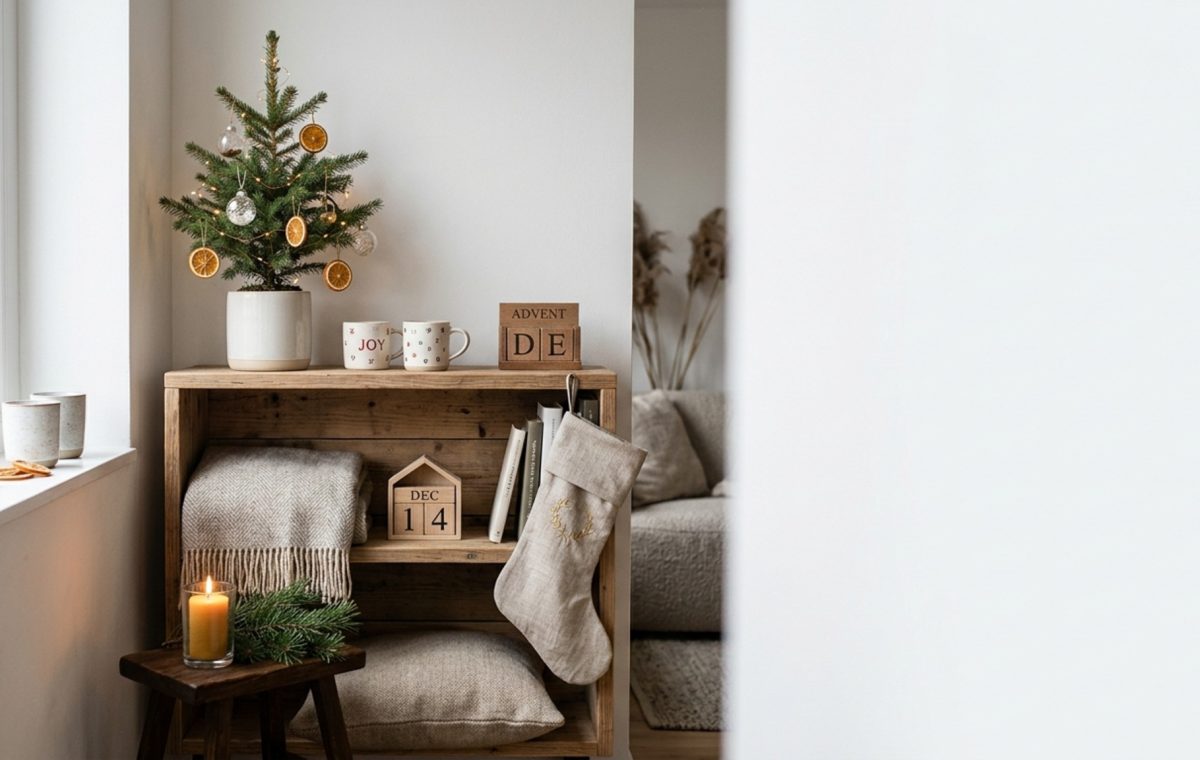
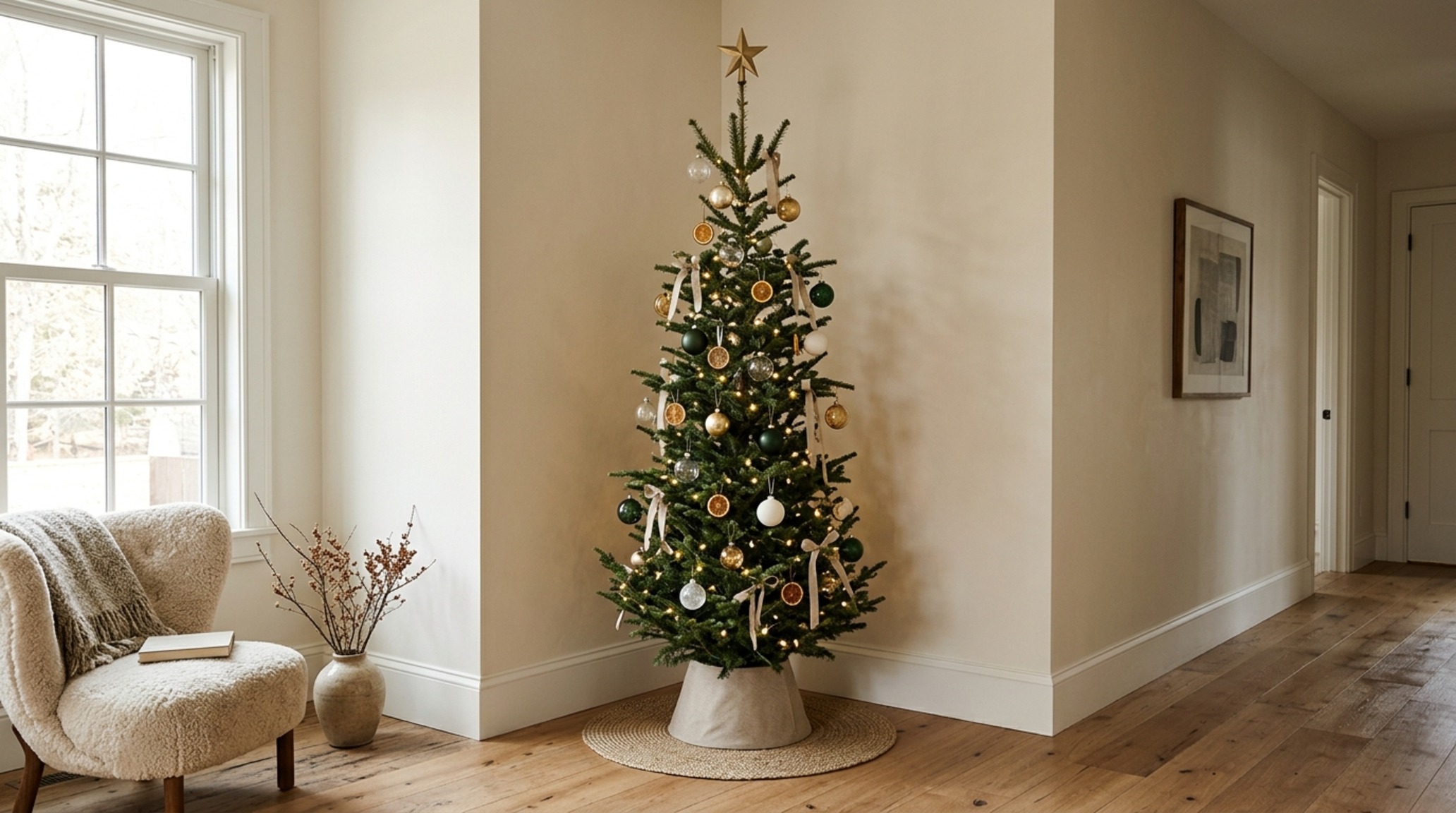
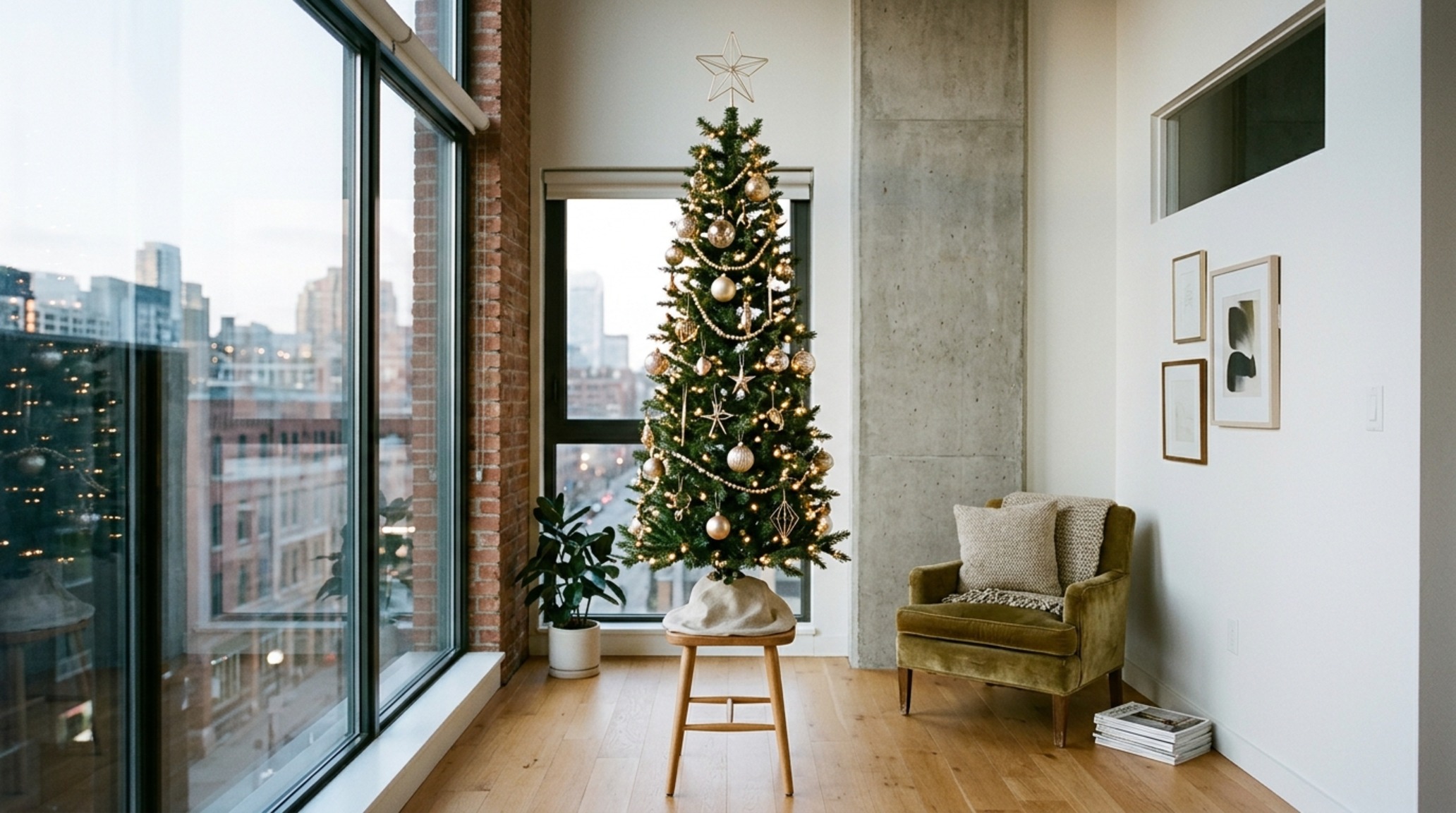
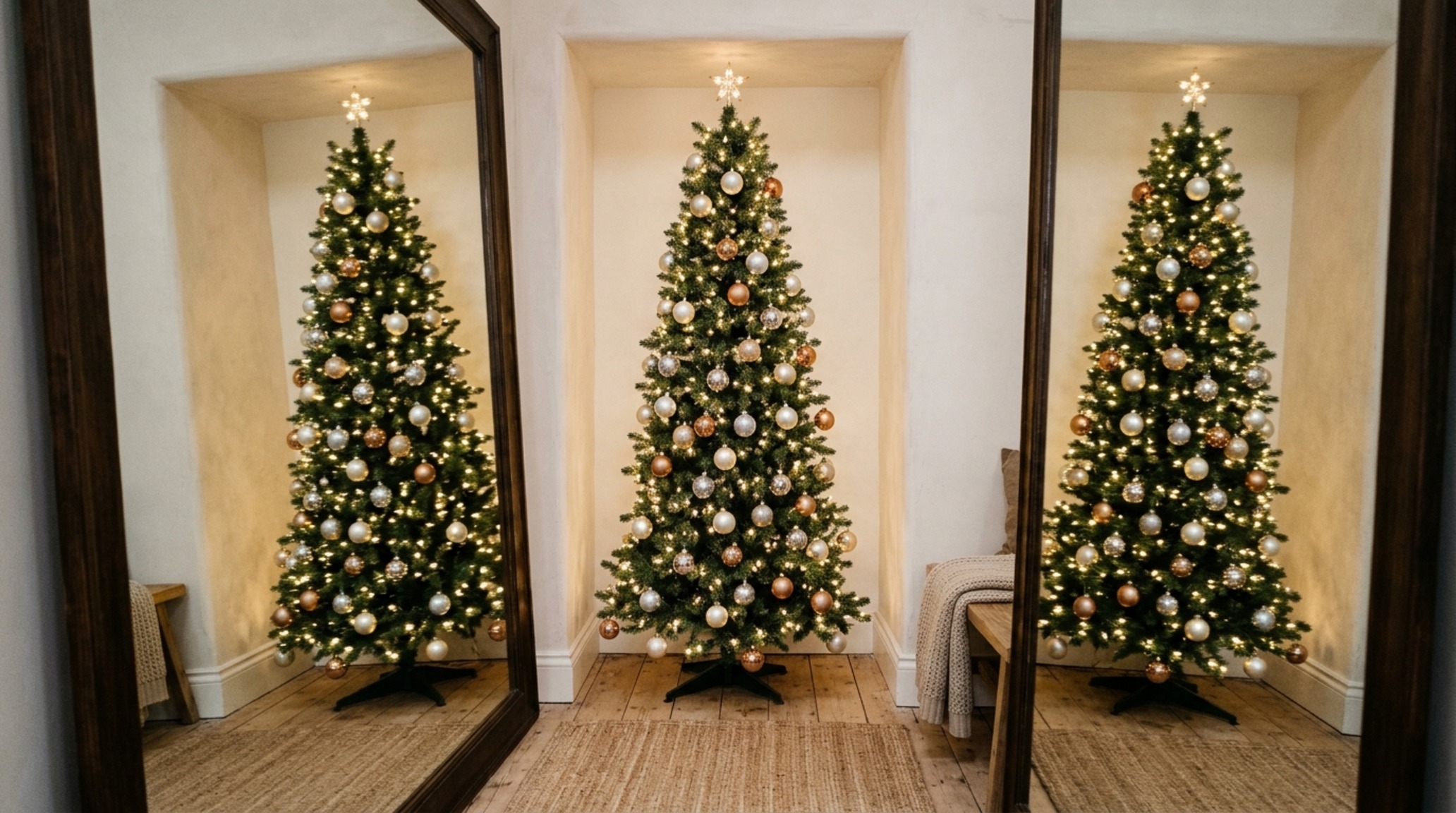
When floor area is at a premium, the vertical plane becomes your most valuable asset. The do here is to leverage the height of your walls and the structural integrity of your millwork. Think beyond the traditional footprint of a seven-foot spruce and consider the architectural impact of a wall-mounted installation or a slender, ‘pencil’ profile tree. Pro Tip: To maintain a sense of openness, place your tree on a raised plinth or a slim-legged mid-century stool. Lifting the base of the tree off the floor allows the eye to see the continuous floor plane underneath, which trickles into the brain as a signal of ‘more space.’ This approach to space-saving christmas ideas shifts the focus from horizontal bulk to vertical elegance.
Conversely, the don’t is to block the natural flow of light from your primary windows. A common mistake in christmas decoration designs for small apartments is placing a dense, opaque tree directly in front of the only natural light source. This effectively shrinks the room by three feet by killing the depth of field. Instead, use the window frame for minimalist apartment garlands that act as a soft, translucent border, preserving the view while framing the season. Pro Tip: Use clear command hooks on the interior of the window frame to suspend delicate glass orbs at varying heights. This creates a ‘floating’ effect that adds festive depth without the heavy visual mass of a traditional fir.
Modern Holiday Home Trends: Mastering the Do’s and Don’ts of Tonal Layering
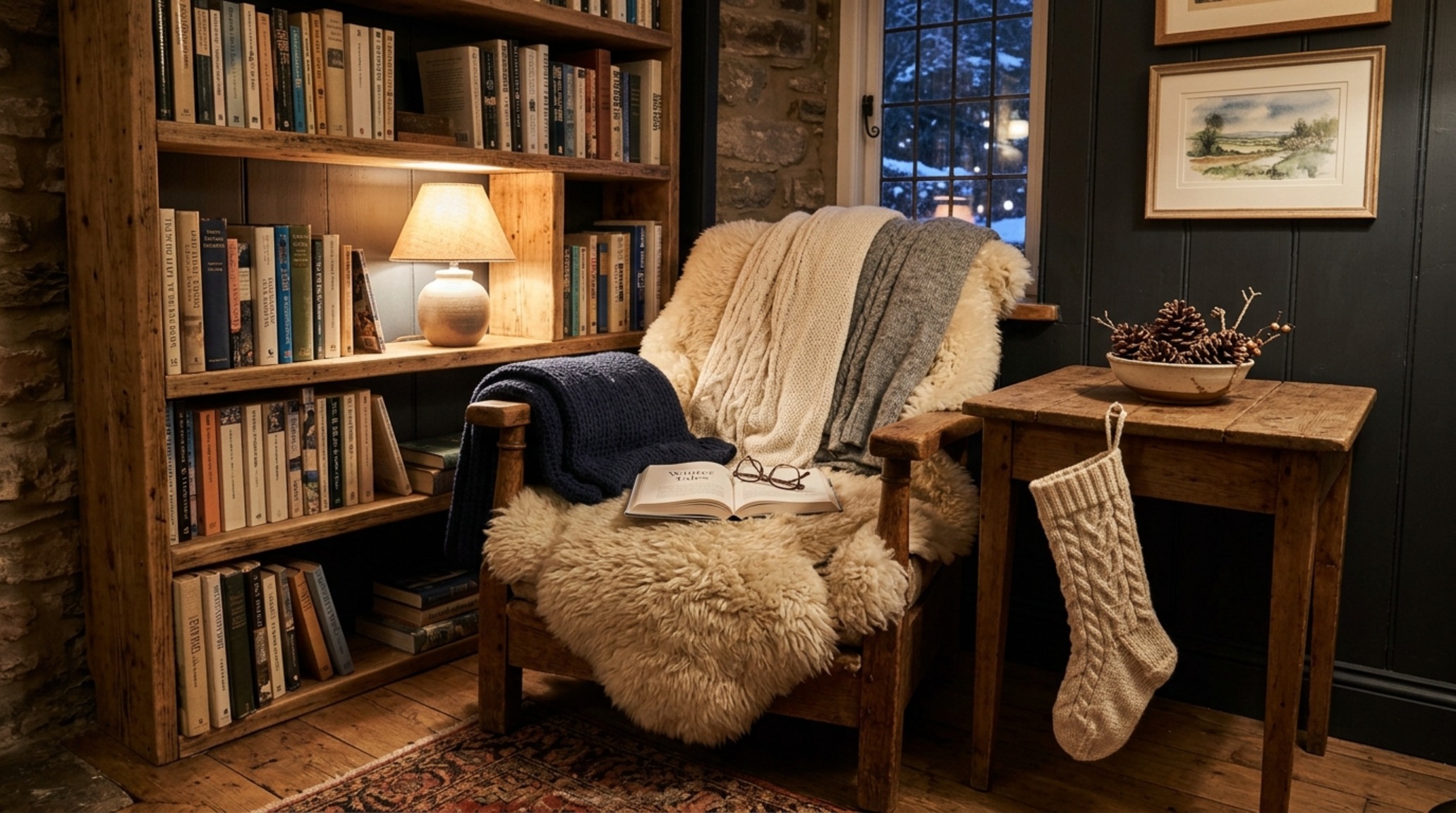
We are currently seeing a shift away from the jarring, high-contrast palettes of the past toward what I call ‘tactile grounding.’ The do in modern holiday home trends is to adopt a monochromatic or analogous color scheme that mirrors your existing interior architecture. If your walls are finished in a soft, chalky hue like Benjamin Moore Swiss Coffee, choose ornaments in cream, champagne, and brushed brass. This creates a seamless visual transition. Pro Tip: Introduce texture over color. A boucle stocking, a raw silk ribbon, or a hand-thrown ceramic bell provides more sophistication and visual interest than a dozen mismatched plastic baubles.
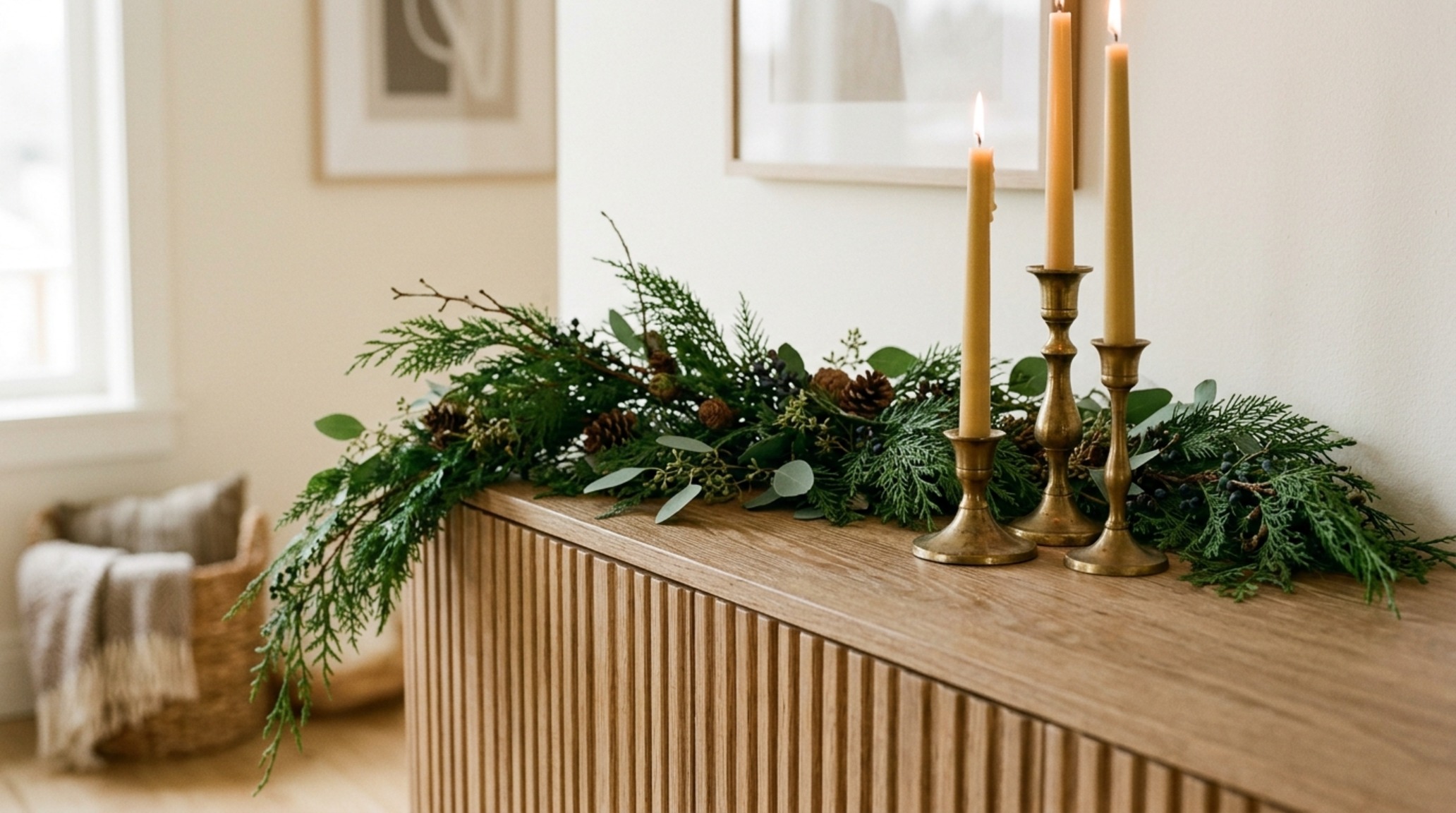
The don’t is to over-rely on saturated, ‘fast-fashion’ holiday colors that fight with your room’s permanent materials. A vibrant, synthetic scarlet can look out of place against the subtle, organic warmth of Farrow & Ball Setting Plaster or the cool, architectural weight of honed travertine. Pro Tip: If you crave the classic red, look for it in natural materials—think dried ilex berries or deep burgundy velvet ribbons. These shades have a natural complexity that resonates with high-end finishes. In the context of christmas decoration designs, the goal is to make the decor look like it was commissioned for the room, not just placed inside it.
Elegant Mantel Arrangements: The Do’s and Don’ts of Focal Point Weight
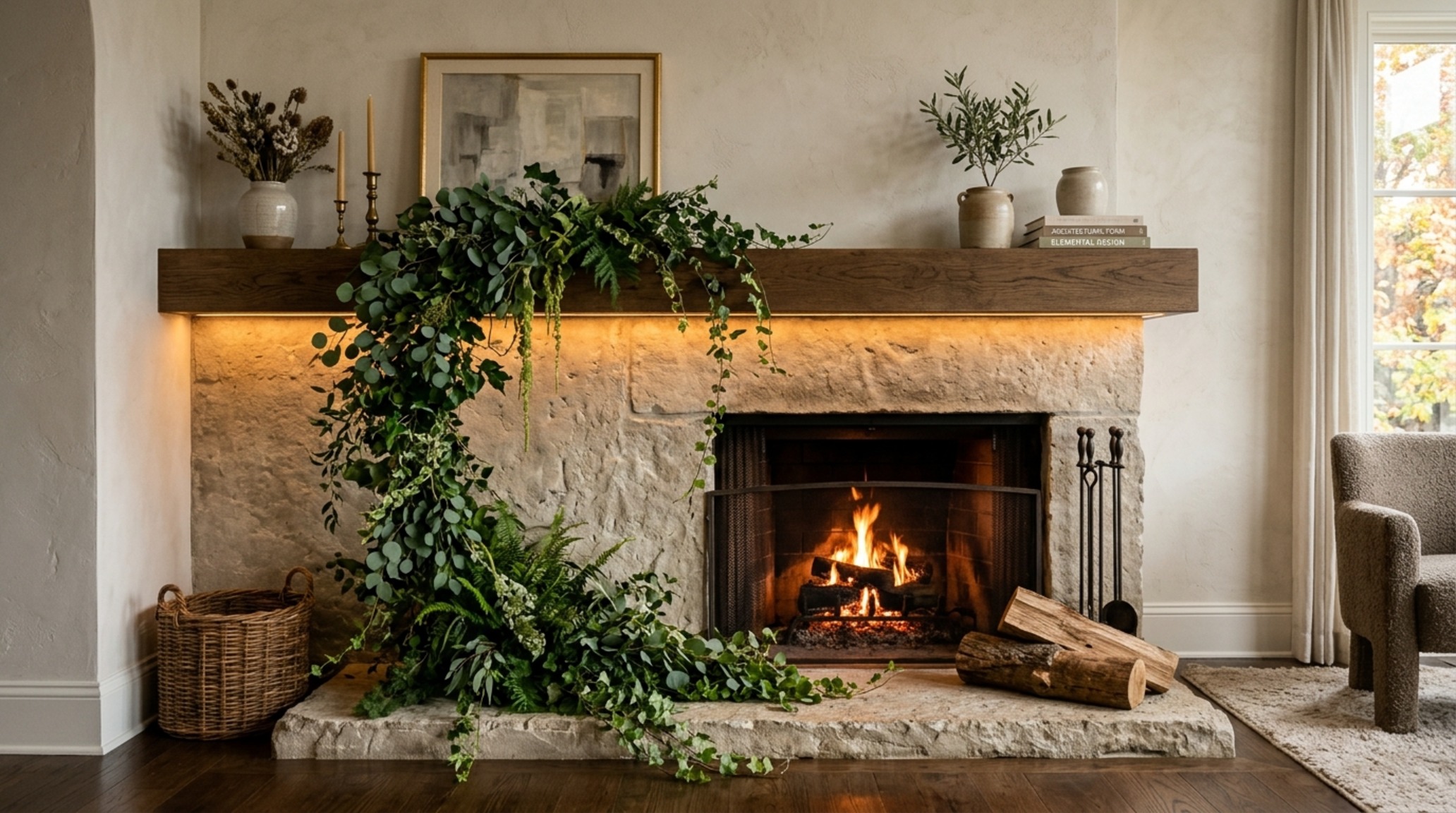
In a multi-functional space, the mantel is often the only dedicated architectural ‘stage’ you have. The do for elegant mantel arrangements is to embrace asymmetry. A heavy, centered arrangement can feel stagnant and formal. Instead, drape a lush, cedar garland so that it cascades down one side of the mantel, pooling slightly on the floor or a low hearth. This draws the eye in a dynamic, sweeping motion that makes the ceiling feel higher. Pro Tip: Intersperse your greenery with varied heights of taper candles in 2700K warm tones. The flicker of real flame against a 90+ CRI LED string light creates a professional-grade lighting hierarchy.
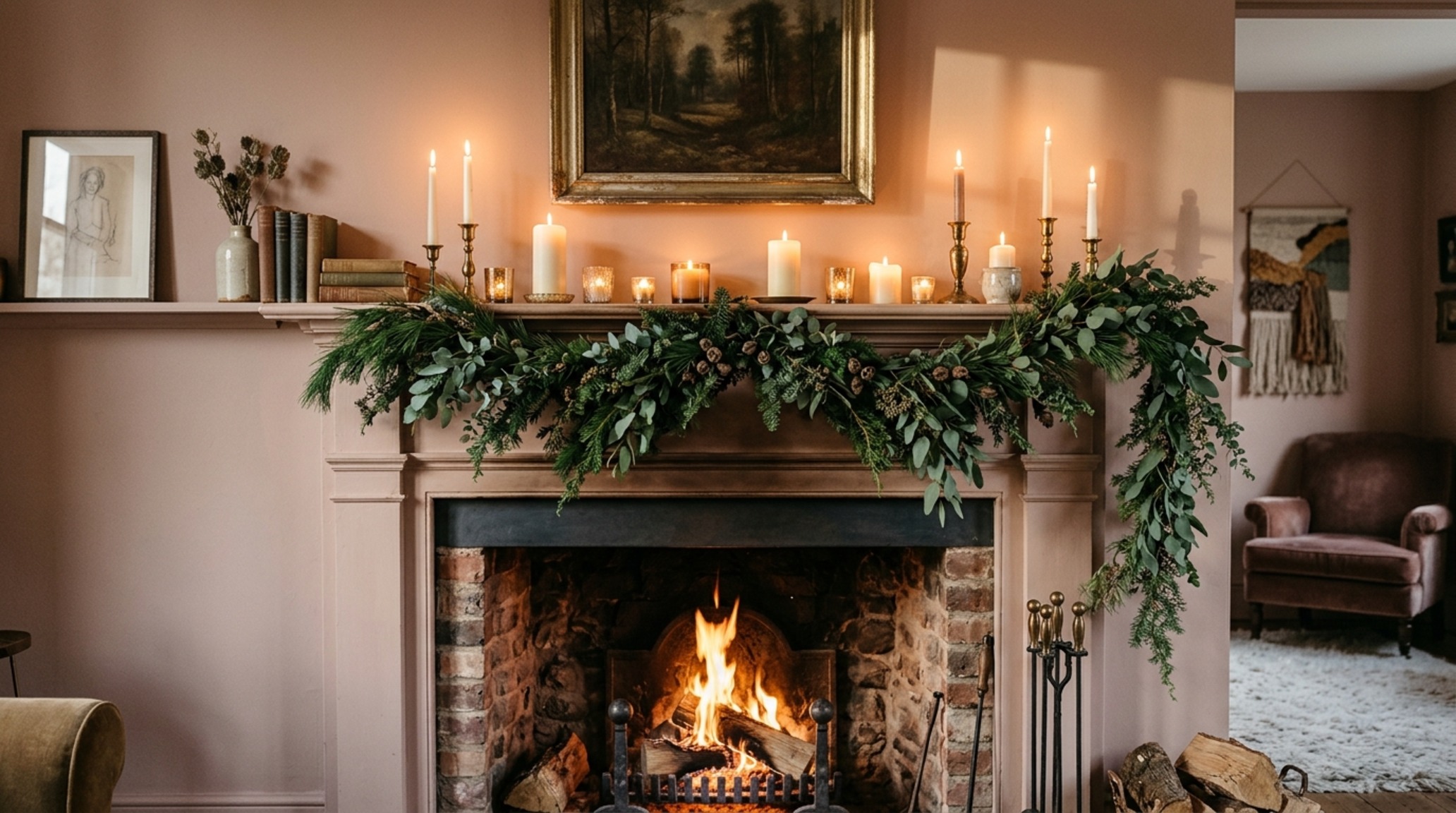
The don’t is to clutter the surface with small, disparate ‘knick-knacks.’ A collection of tiny reindeer and miniature houses creates visual noise that collapses the space. Pro Tip: Follow the ‘Rule of Three’—one large vertical element (like a framed mirror or a large branch), one medium textural element (the garland), and one small grouped element (a cluster of brass candlesticks). This maintains the negative space breathing room that is essential for compact living. When executed correctly, these christmas decoration designs act as a sophisticated extension of your home’s year-round identity.
Biophilic Seasonal Decor: Do’s and Don’ts for Living Materiality
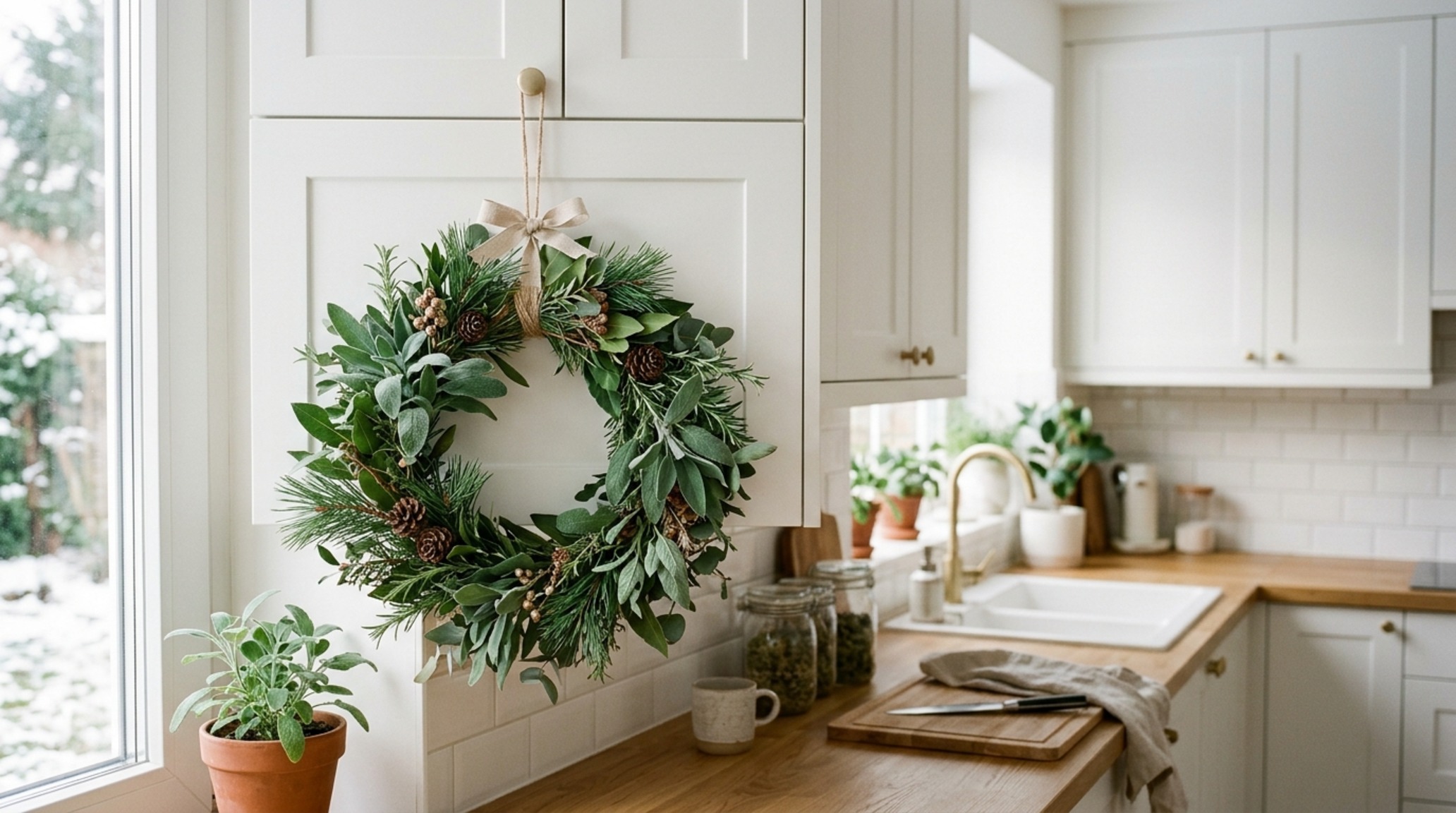
Biophilic design isn’t just a trend; it’s a physiological necessity, especially during the darker winter months. The do of biophilic seasonal decor is to use ‘live’ elements that offer scent and humidity. Real eucalyptus, pine, and cedar don’t just look better than their plastic counterparts; they change the olfactory architecture of the home. Pro Tip: If you lack space for a full tree, create a ‘living’ wall installation using air plants and sprigs of rosemary pinned into a moss-covered frame. It’s a sustainable, space-saving christmas ideas solution that doubles as a piece of art.
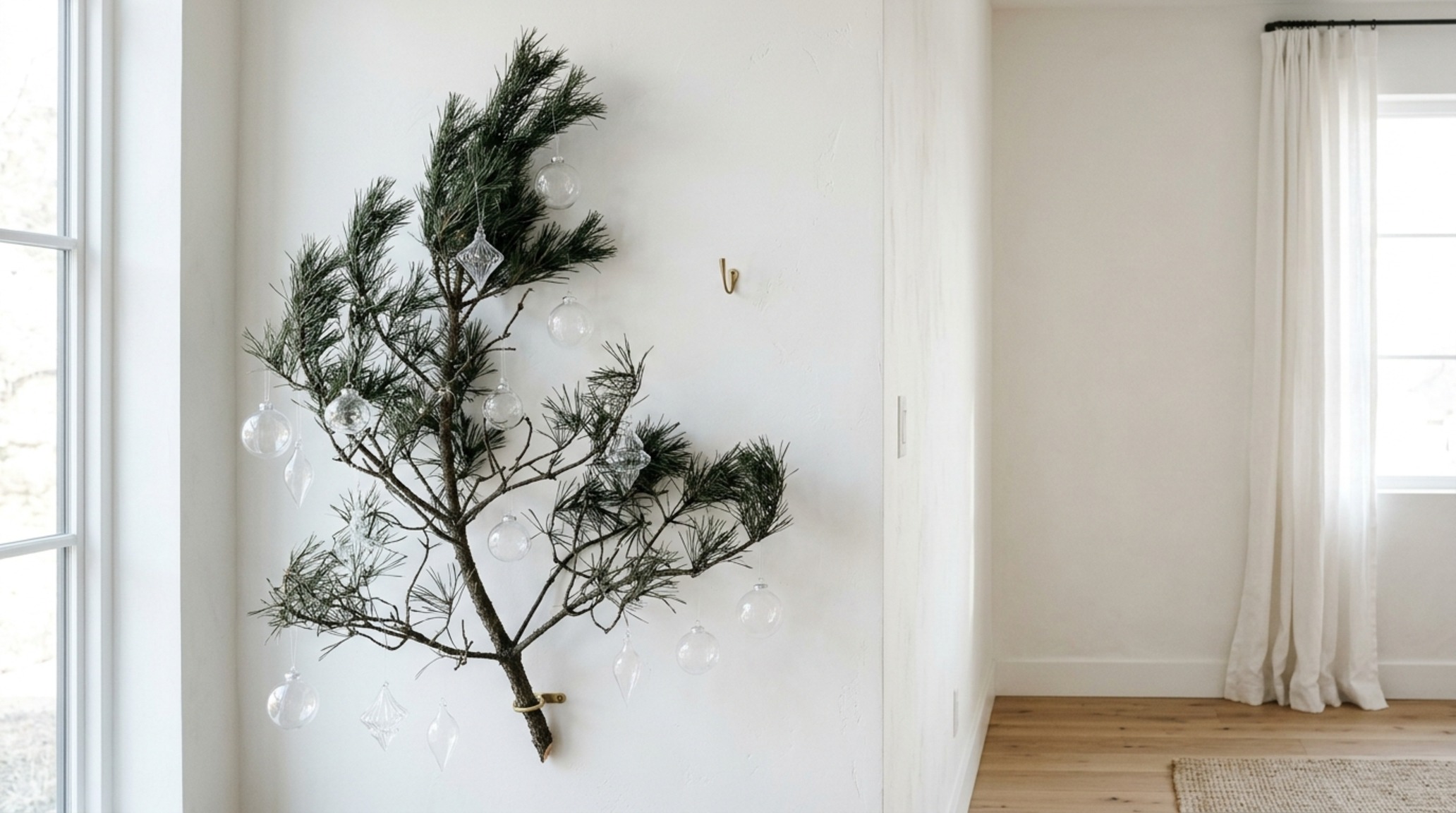
The don’t is to use ‘filler’ greens that lack structural integrity. Cheap, flat pine boughs can look limp and uninspiring within days. Pro Tip: Mix your greens for architectural depth. Use the stiffness of noble fir as a base, then layer in the lace-like texture of incense cedar and the silvery underside of silver fir. This layering creates ‘shadow play’ and visual density without requiring extra physical space. In high-traffic areas, ensure your greenery is secured high enough to maintain that crucial 36-inch walkway clearance.
Sustainable Festive Accents: Do’s and Don’ts of the Conscious Capsule
Sustainability in design means longevity. The do for sustainable festive accents is to invest in pieces made from heirloom materials like turned wood, hand-blown glass, and heavy-gauge metals. These items have a tactile weight that synthetic pieces lack. Pro Tip: Look for multi-use items. A beautiful stoneware bowl can hold pinecones in December, moss in March, and fruit in July. This integrated storage hack ensures you aren’t storing boxes of ‘once-a-year’ junk in your limited closet space. These christmas decoration designs are about editing, not accumulating.
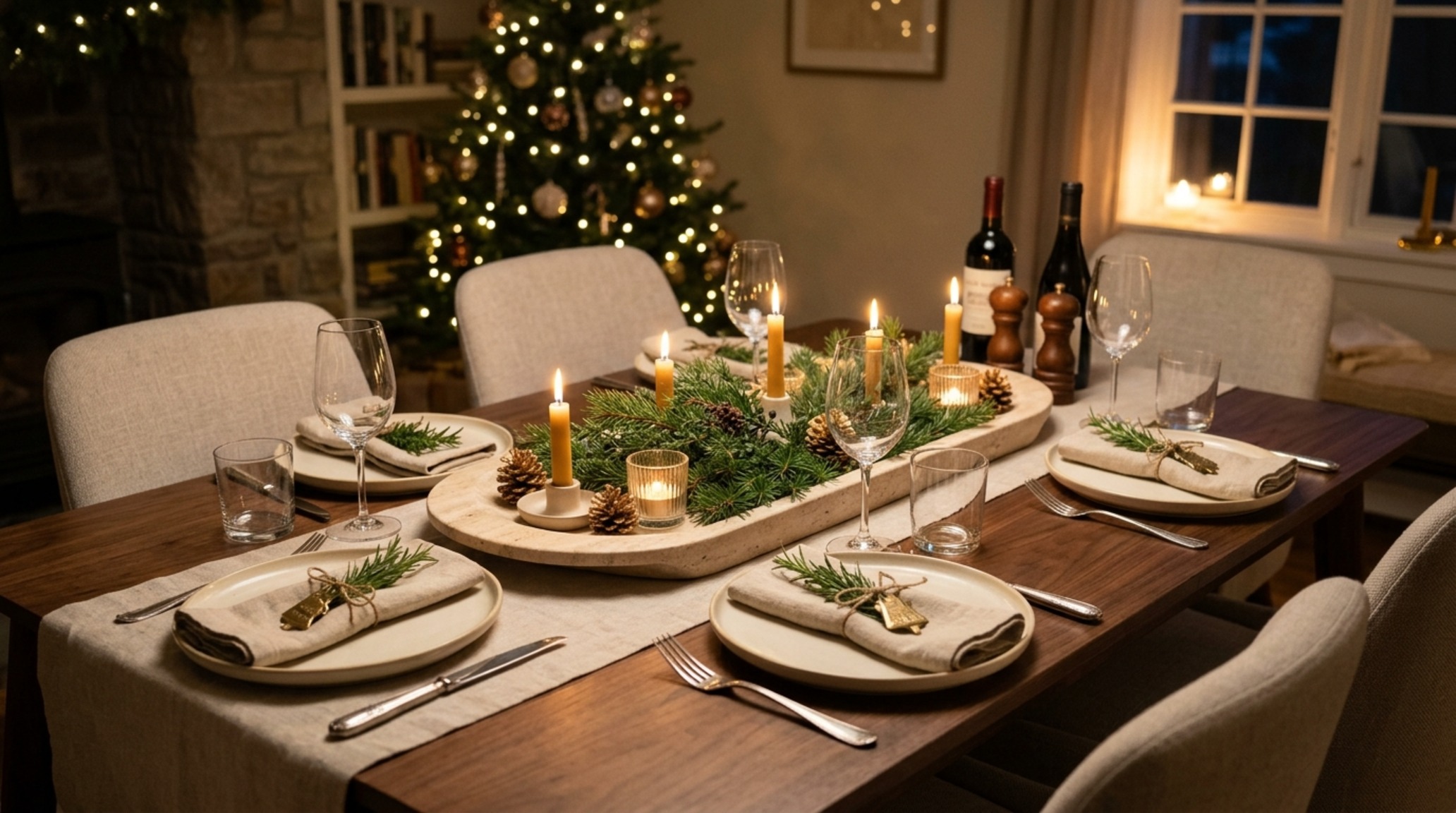
The don’t is to participate in the ‘trend-of-the-month’ cycle. Avoid glitter-heavy items or cheap plastics that end up in landfills by January 5th. Pro Tip: Focus on ‘found’ objects. A sculptural driftwood branch found on a walk, when wrapped in high-quality fairy lights and hung over a dining table, becomes a stunning, zero-waste chandelier. This reflects a shift toward a more mindful, architectural approach to holiday styling.
Minimalist Apartment Garlands: Do’s and Don’ts of Spatial Thresholds
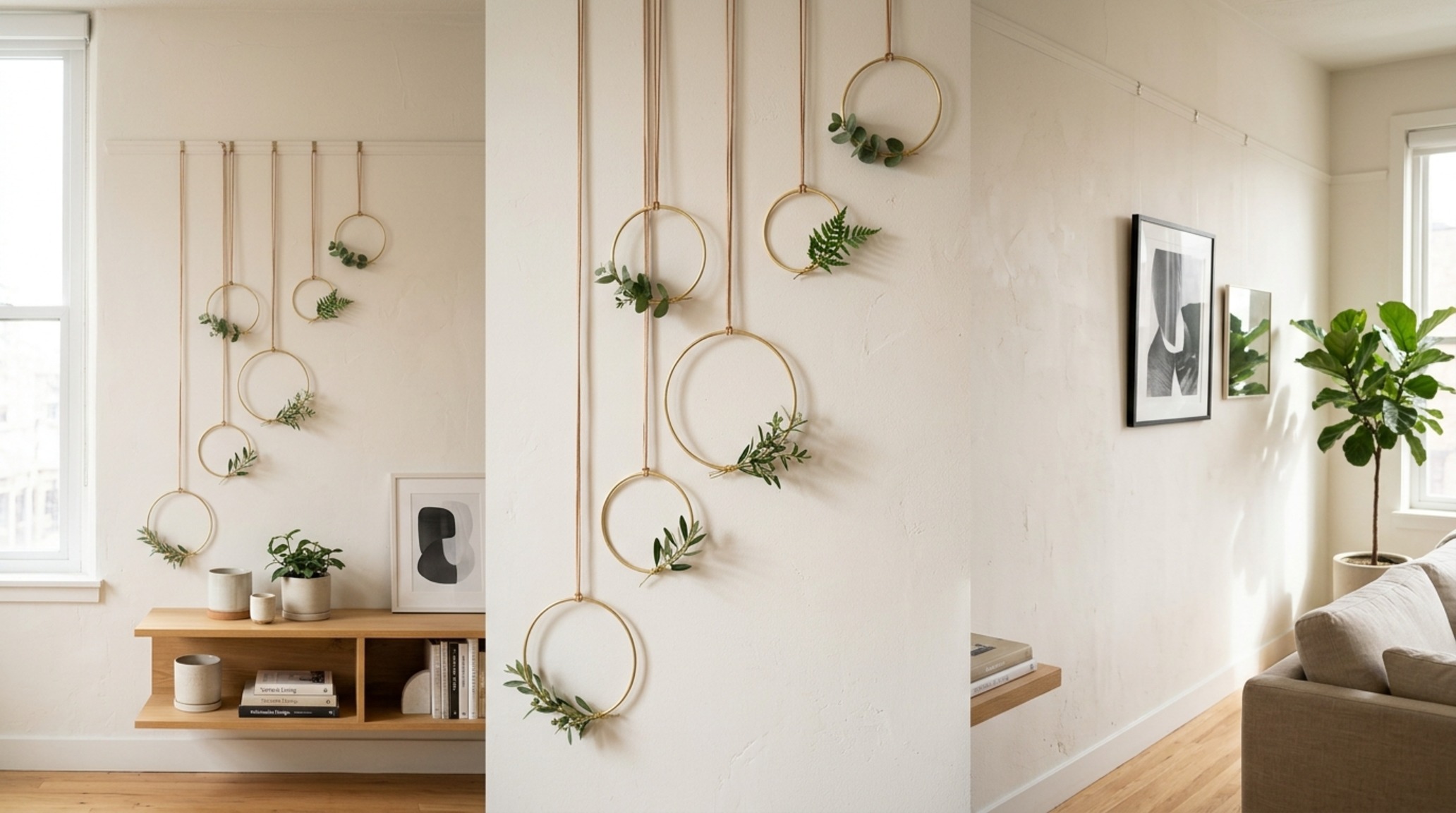
In a small home, the transitions between rooms—doorways and hallways—are often neglected. The do for minimalist apartment garlands is to use them to highlight these thresholds. A thin, delicate garland of dried orange slices and bay leaves draped over a door frame defines the transition without encroaching on the floor. Pro Tip: Match your garland’s scale to the trim of your home. If you have slim, modern casings, use a ‘vine-style’ garland. If you have chunky, historic crown molding, you can afford a bit more volume. This ensures sightline alignment remains harmonious.
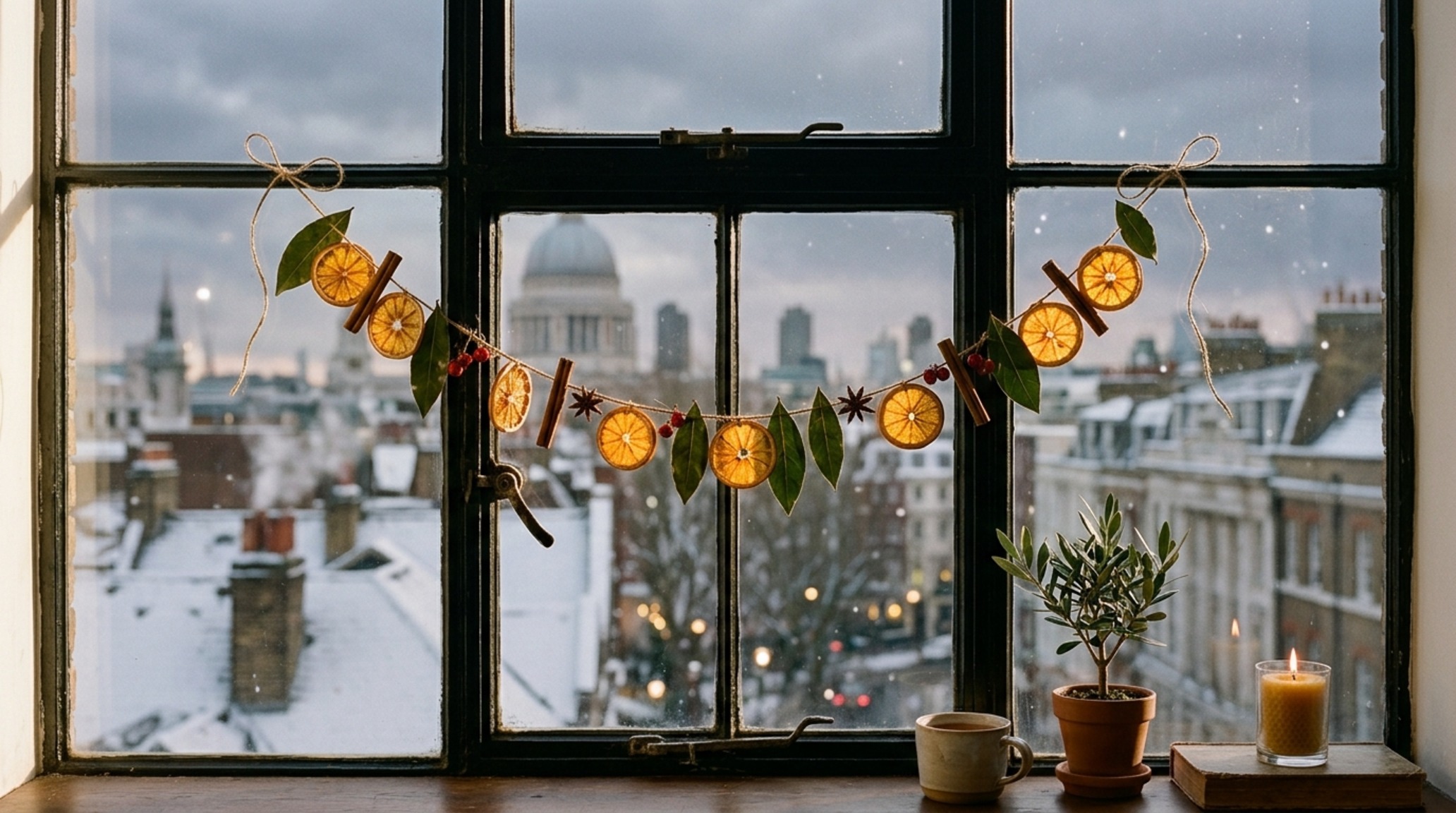
The don’t is to let your garlands ‘droop’ into the walking path. There is nothing less elegant than having to duck under a decoration to get to the kitchen. Pro Tip: Use tension rods inside door frames to secure garlands flush against the header. This keeps the decoration within the architectural ‘envelope’ of the wall, preserving the functional clearance of the opening. It is a subtle but powerful way to integrate christmas decoration designs into a high-performance living environment.
Architectural Finishes, Swatches & Matrix
Summary of authentic finishes, designer paint selections, and standard architectural clearances.
Designing for the holidays in a compact home is an exercise in restraint and spatial intelligence. It requires us to look at our floor plans not as static grids, but as fluid environments where every square inch must justify its existence. By prioritizing verticality, leveraging the psychology of lighting, and selecting materials that harmonize with our architectural finishes, we can celebrate the season without compromising the clarity and comfort of our daily lives. As a final styling tip: try removing one non-seasonal piece of decor for every festive item you add—this ‘one-in, one-out’ rule keeps the visual energy balanced and the atmosphere serene. How will you reclaim your vertical space this season to create a festive focal point that breathes?
Editorial Silo • Recommended Architecture Studies
- 12 Range Hood Styles: Minimalist Designs — Archival Design Case Study
- Charming Finding an interior decorator for visual mood — Archival Design Case Study
The Visual Architecture Journal
A curated visual breakdown of structural layout, layered lighting, and material compositions.


Curated Visual Lookbook
Design Gallery & Spatial Studies
A visual curation of architectural arrangements, lighting concepts, and material palettes featured in this space.