The Allure of Unfussy French Elegance
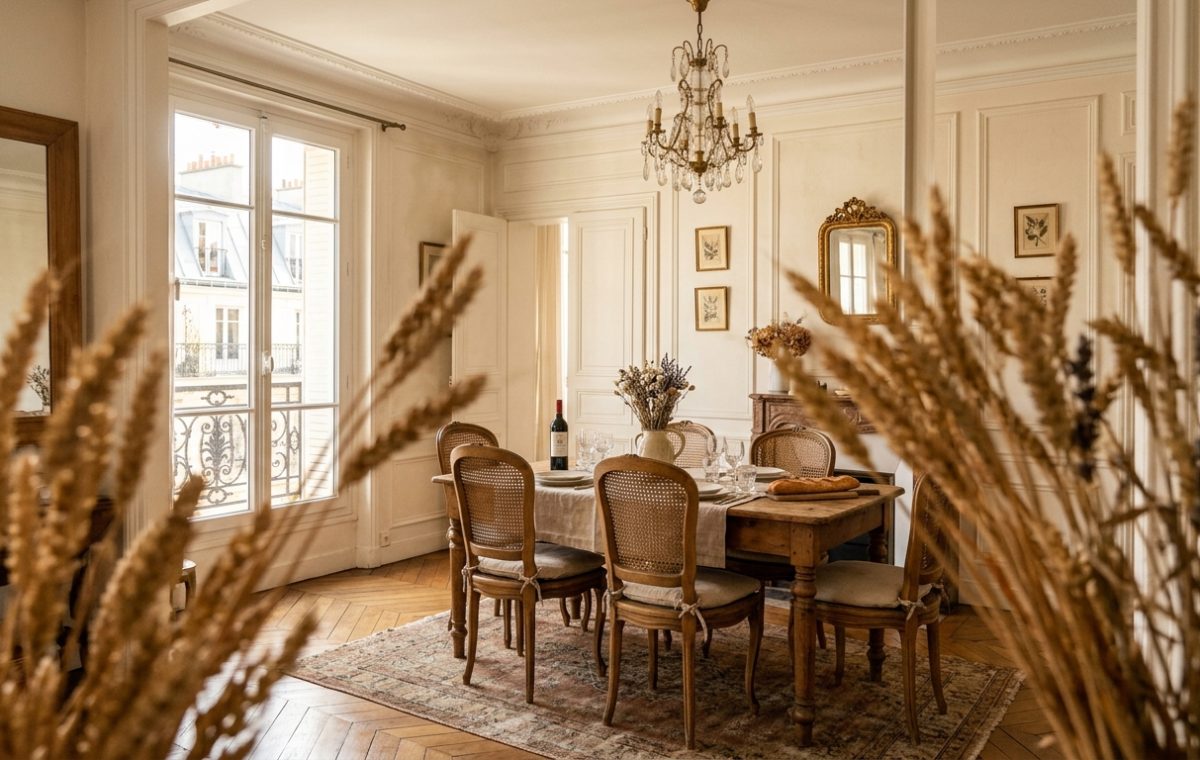
Designing a dining space that feels genuinely lived-in rather than staged requires a delicate balance of history and restraint. We often look at historic European apartments and wonder why their interiors feel so effortlessly magnetic. The secret lies in texture. When you anchor a room with herringbone wood floors and original wall moldings, you let the architecture do the heavy lifting.
Dining rooms should invite lingering. Nobody wants to sit on a stiff, overly formal chair for a three-hour meal. Pairing a worn oak table with woven cane back chairs introduces physical comfort and organic warmth simultaneously. That patina matters. Brand-new furniture often lacks soul.
Layering Natural Elements and Light
Natural light streaming through tall casement windows changes everything. If you are lucky enough to have tall French windows, keep window treatments minimal. Let the exterior view—even if it is just a bustling city street—become part of the interior atmosphere.
Overhead lighting needs consideration. A crystal chandelier adds sparkle against neutral plaster walls, keeping the rustic elements from feeling too heavy or rustic cabin-like. Contrast is key. Pair rough-hewn wood with delicate glassware and flickering candles to create tension.
- Embrace natural wood grain instead of heavy paint.
- Use dried wheat or lavender for low-maintenance, organic centerpieces.
- Incorporate vintage mirrors to bounce light around smaller dining spaces.
Styling tablescapes shouldn’t feel like an architectural blueprint. A simple loaf of crusty bread on a cutting board, an open bottle of wine, and mismatched ceramic water glasses communicate hospitality better than a pristine, untouchable centerpiece ever will.
Avoiding Common Design Traps
One major pitfall in traditional spaces is matching everything from a single catalog set. It kills personality. Mix flea-market finds with modern essentials. If your table is antique, let your dinnerware lean simple and contemporary to avoid a theme-park effect.
Maintenance is another reality check. Cane seating requires gentle care, and vintage rugs need occasional professional cleaning, especially under a busy dining table. Factor these upkeep steps into your daily life before committing to delicate antique pieces.
How do you balance rustic textures with refined details in your own home?
Editorial Silo • Recommended Architecture Studies
- The Adaptive Anchor: Lighting For Dining Table & Ergonomic Engineering and Multi-Functional Lighting for the Modern Table — Archival Design Case Study
- Tactile Narratives: Restaurant Design Inspiration & Mastering Materiality, Acoustics, and Sensory Mood for Immersive Dining — Archival Design Case Study
Curated Lookbooks & Architectural Studies
- Architectural Expansion: Mastering Spatial Depth and Vertical Geometry in Narrow Entryway Ideas
- Curating an Authentic Home Library Decor Aesthetic
- Neutral Living Room Design: Timeless Style & Warm Textures
- Why a Rumpled Linen Throw Blanket Beats Designer Styling
- Beyond the Accent Wall: Engineering Hidden Ergonomics into Sage-Paneled Small Bedrooms
- French Country Exterior Design Ideas for Timeless Curb Appeal
Curated Visual Lookbook
Design Gallery & Spatial Studies
A visual curation of architectural arrangements, lighting concepts, and material palettes featured in this space.