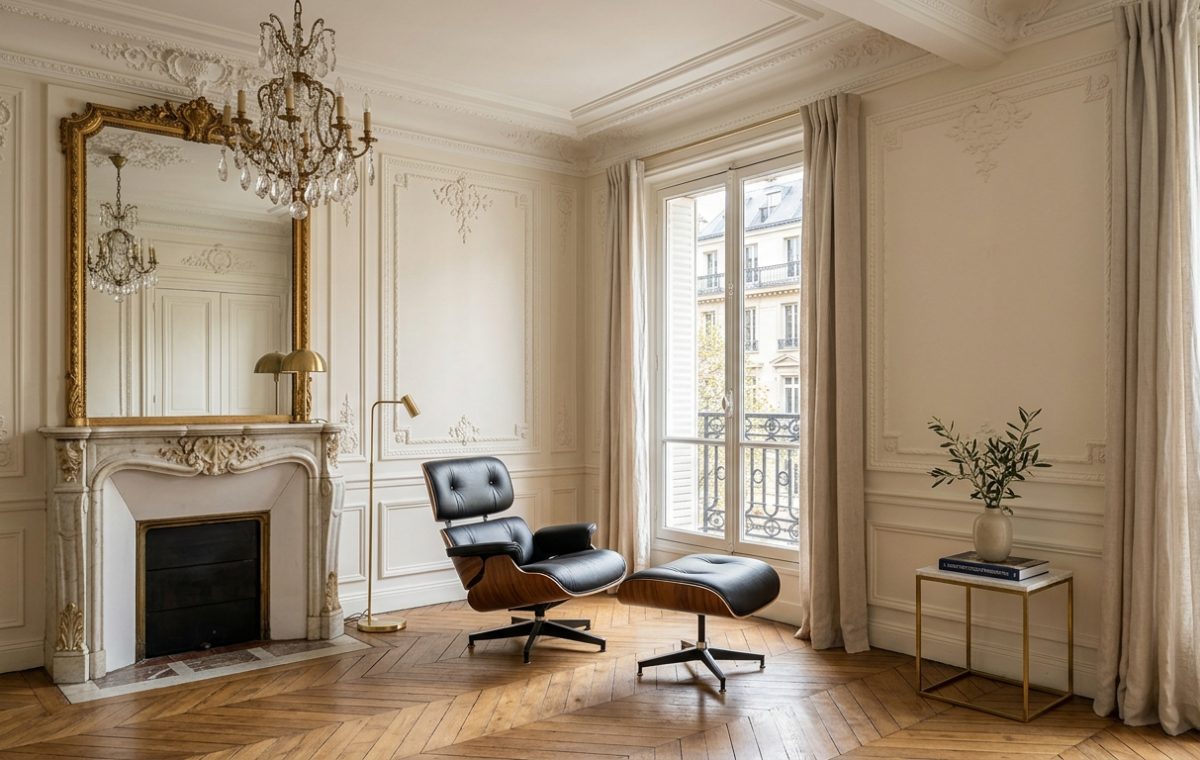
Rules are made to be broken. Nowhere is that truer than in interior design. We often trap ourselves into matching every single piece of furniture to a singular historic era. Walk into this Haussmann-style apartment, and you will see why that rigidity fails. It works because it embraces friction.
The Friction of Eras
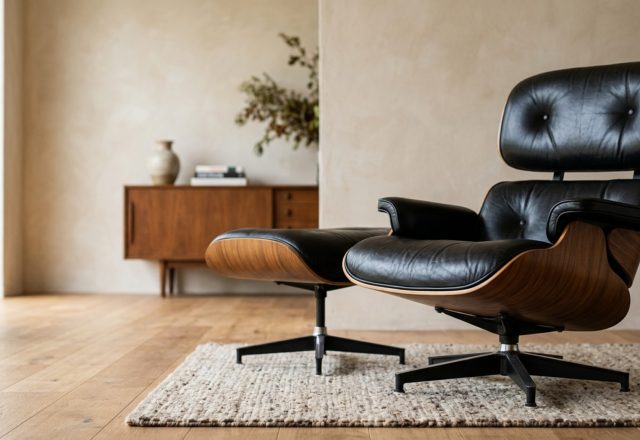
Look past the surface. You have heavy French wall moulding, an ornate antique marble fireplace, and a towering crystal chandelier. These elements whisper centuries of Parisian history. Yet, planted right in the center sits an unmistakable black leather lounge chair on a plywood shell. It screams mid-century industrial utility. That clash is precisely why the room comes alive.
Design safety is boring. If you put a Louis XIV chair next to that fireplace, the space instantly morphs into a suffocating museum exhibit. By injecting a sleek, organic silhouette, you reset the visual temperature. The room stops feeling like a stage set and starts feeling inhabited.
Letting the Architecture Breathe
Parquet flooring demands respect. Its geometric herringbone pattern adds immense texture underfoot, which means your furniture selections need enough weight to hold their own. A fragile, spindly chair would vanish entirely against this backdrop. The dark molded wood and deep upholstery anchor the seating area securely against the grand scale of the tall windows and heavy linen curtains.
Balance is a balancing act, not a math equation. Notice how the metallic finish of the modern floor lamp mirrors the tarnished brass of the antique mirror frame across the room. These subtle dialogue threads tie disparate decades together. You do not need matching sets. You need a common denominator, whether it is tone, scale, or negative space.
The Danger of Over-Curating
Purity kills character. Designers often fall into the trap of over-accessorizing historic rooms until they feel stiff. Leaving expansive areas of herringbone wood bare lets the architecture do the heavy lifting. You do not need rugs layered upon rugs when the floor pattern is this strong. Let the negative space exist.
How do you approach mixing decades in your own home? Are you brave enough to drop a stark contemporary piece into a deeply traditional backdrop, or do you prefer keeping your eras cleanly separated?
Editorial Silo • Recommended Architecture Studies
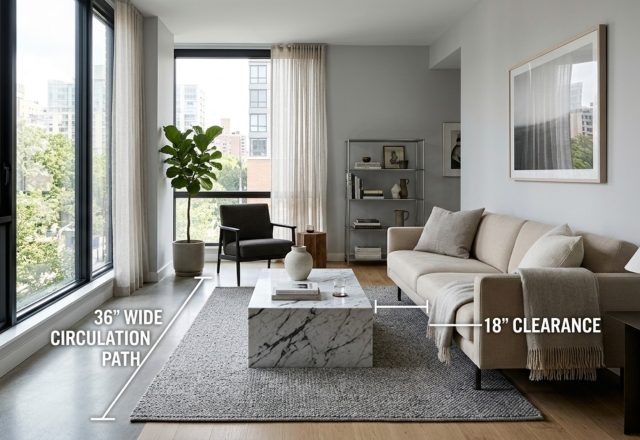
- The Architect’s Blueprint: Living Room Ideas For Small Rooms & Engineering Spatial Volume and Flow in Compact Living Rooms — Archival Design Case Study
- Large living room design rules for functional flow — Archival Design Case Study
Curated Lookbooks & Architectural Studies
- Styling an Antique Gold Mirror for Timeless Interiors
- Practical Styling Guide for Bathroom Floating Shelves
- Stunning Round Window Architectural Ideas for Cozy Interiors
- Websites for interior design ideas 2025
- How to Design a Small Dining Nook That Actually Works
- Neutral Wingback Chair Styling Guide for Cozy Living Rooms
Curated Visual Lookbook
Design Gallery & Spatial Studies
A visual curation of architectural arrangements, lighting concepts, and material palettes featured in this space.