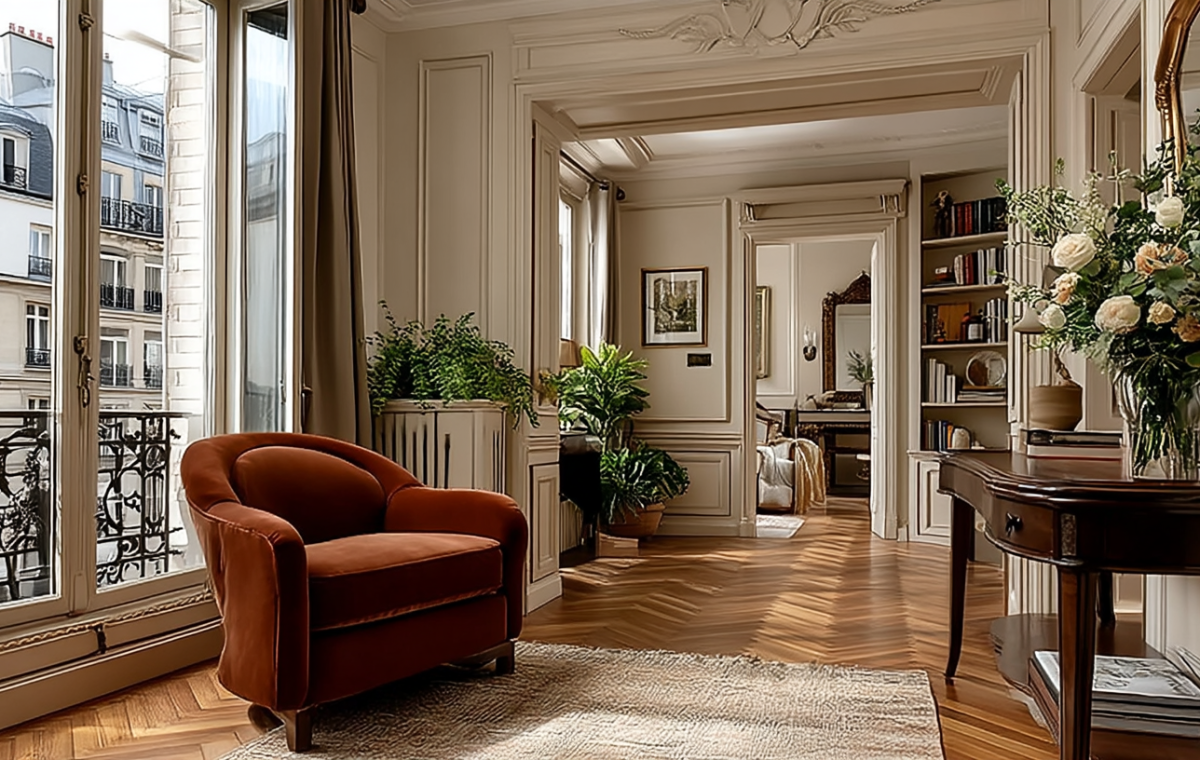
Old architecture demands a specific kind of restraint. You do not fight high ceilings or ornate plasterwork. You let them breathe. When daylight floods through tall, double-glazed French doors onto worn herringbone parquet, half the decorating job is already done.
That rich rust velvet armchair sitting casually on a textured jute rug changes everything. It adds gravity to an otherwise pale room. Many people panic when dealing with neutral walls and decorative moldings, rushing to fill every corner. Real historic spaces look better when furniture floats, leaving breathing room around every doorway and built-in bookcase.
Balancing Period Details with Modern Comfort
Restoring or maintaining an older interior is a constant tug-of-war between preservation and livability. Original woodwork requires gentle care, and antique sideboards rarely offer hidden cable management. Yet, that friction creates charm. A dark wooden console topped with a massive bouquet of fresh spring blooms grounds the entrance hallway without feeling heavy.
- Embrace natural wood grain differences in vintage parquet flooring.
- Layer textured neutral rugs over wood to absorb acoustic echo.
- Introduce jewel-toned velvet upholstery for tactile contrast.
- Style console tables with tall floral arrangements to draw the eye upward.
Lighting plays a quiet role here. Instead of glaring overhead fixtures, rely on low lamps scattered across bookshelves and side tables. This approach highlights the depth of the wall panels and casts soft shadows across the ceiling medallions.
Avoiding Common Decorating Traps
It is easy to turn a classic Haussmann apartment into a sterile museum if you buy matching suites of furniture. Avoid showroom syndrome. Mix mid-century lighting with Louis XVI chairs or sleek modern art inside heavily carved antique frames. Contrast keeps a room alive. Be honest about your upkeep routine, too. Large houseplants in heavy ceramic pots look incredible, but they demand real attention and proper drainage protection over expensive hardwood floors.
How do you plan to balance period architectural features with your own modern seating preferences in your space?
Editorial Silo • Recommended Architecture Studies
- The Architect’s Blueprint: Living Room Ideas For Small Rooms & Engineering Spatial Volume and Flow in Compact Living Rooms — Archival Design Case Study
- Large living room design rules for functional flow — Archival Design Case Study
Curated Lookbooks & Architectural Studies
- Mastering Narrow Hallway Decor with Style and Purpose
- Artistic Kitchen countertop design ideas for spatial flow
- Coffee Table Styling Mistakes Everyone Makes
- The Architecture of First Impressions: 7 Spatial Rules to Visually Expand a Narrow Entryway
- Ceramic Bowl Table Setting Ideas for Earthy Kitchen Decor
- About Interior Designer: Exquisite Sensory Texture Moods
Curated Visual Lookbook
Design Gallery & Spatial Studies
A visual curation of architectural arrangements, lighting concepts, and material palettes featured in this space.