CURATORIAL CRITIQUE & DESIGN ANTHOLOGY
In the quietude of a modern residential sanctuary, the holiday season offers a rare invitation to interrogate the relationship between spatial volume and seasonal ornamentation. As an architectural curator, I often observe how the quintessential festive centerpiece frequently falls victim to visual clutter—a haphazard accumulation of sentiment rather than a calculated study in form. However, the most compelling decorating ideas for christmas tree arrangements this season move away from the traditional riot of color toward a sophisticated sensory experience. We are seeing a transition from the ‘decorated object’ to an ‘integrated installation,’ where the tree functions as a living sculpture that respects the existing architectural cadence of a room.
The shift is tactile. We are no longer satisfied with the glass-and-plastic homogeneity of decades past. Instead, the focus has turned to the physics of light and the materiality of nature. By layering organic elements like cascading amaranthus with the structural rigidity of velvet ribbons, designers are creating a sense of ‘visual weight’ that grounds the tree within the interior. This approach ensures that the festive intervention enhances, rather than disrupts, the carefully curated atmosphere of a contemporary home.
Light Dripping: The Physics of Luminescence
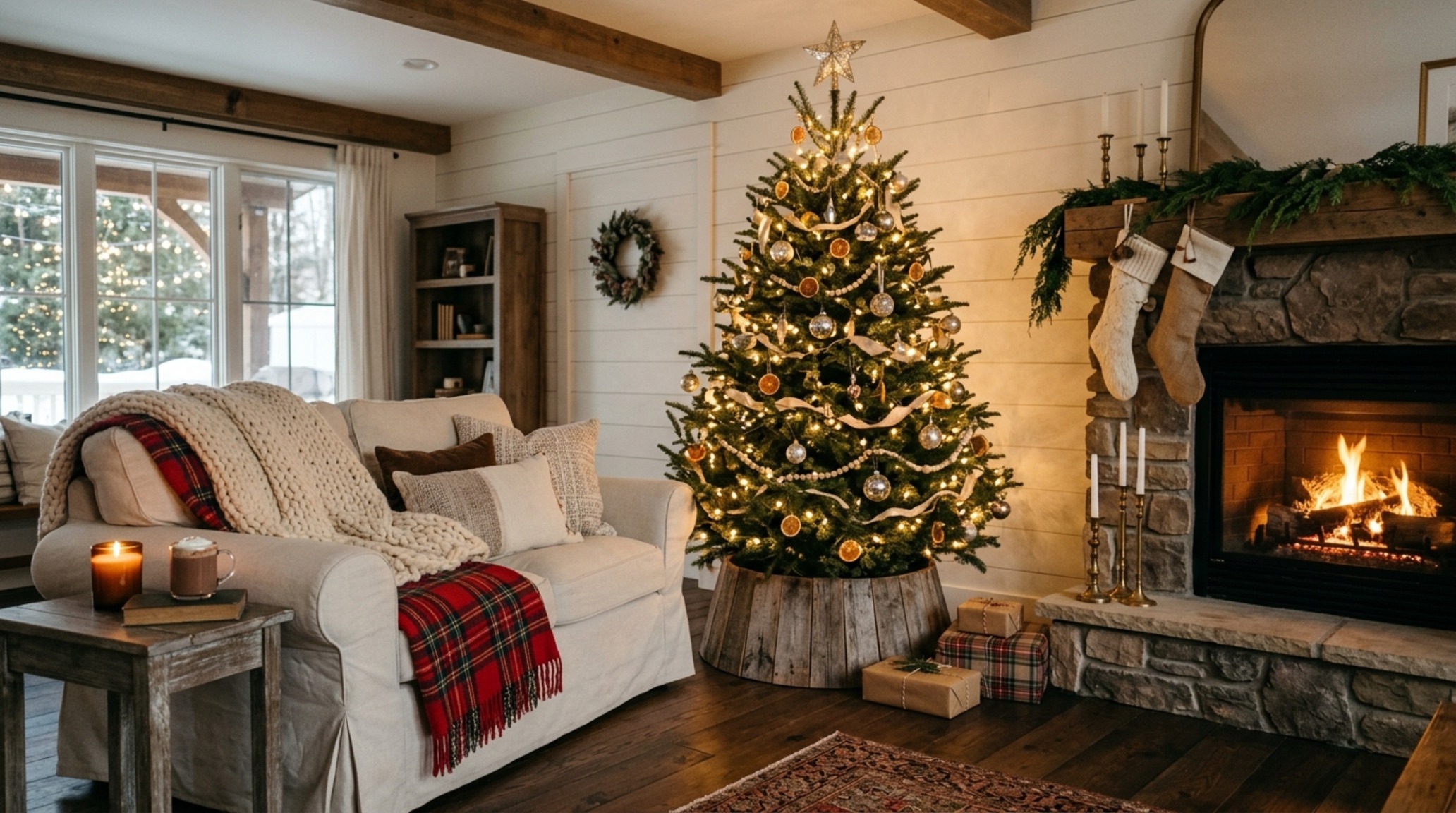
At the heart of a successful installation is the concept of ‘Light Dripping.’ This technique transcends the basic wrapping of a strand; it is an exercise in layering light temperatures to create depth. To achieve this, one must consider the core of the tree as the primary light source. By placing high-density, 2700K warm ambient LEDs deep within the branches, near the trunk, you create a glowing internal volume. As you move outward toward the tips, a slightly higher Kelvin—perhaps 3000K—can be used sparingly to highlight the delicate textures of the needles.
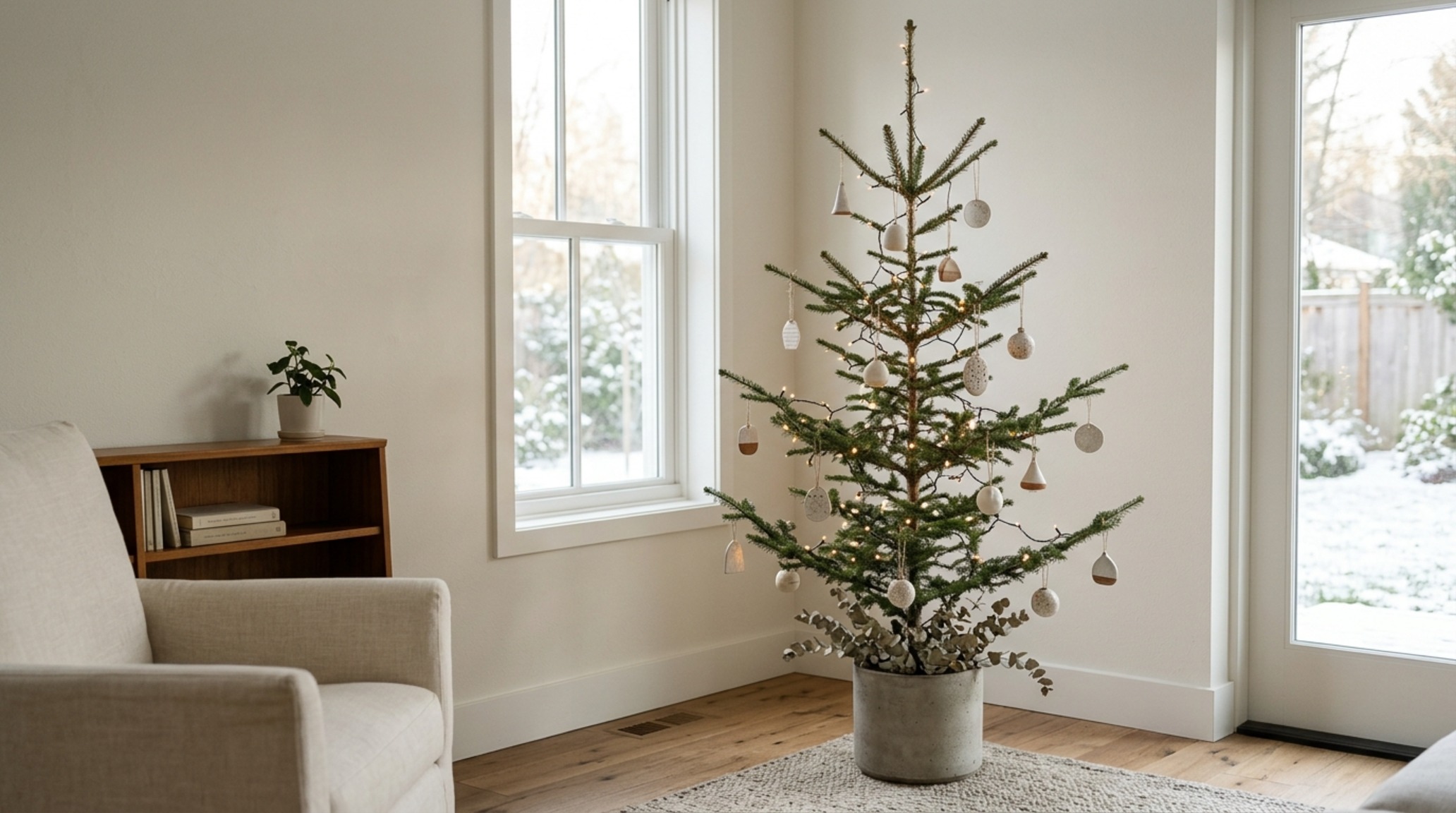
This internal-to-external lighting gradient mimics the way light filters through a forest canopy. It eliminates the ‘flat’ look of many commercial displays. When searching for modern decorating ideas for christmas tree lighting, the goal should always be to avoid the harsh blue glare of low-quality bulbs. A High CRI (Color Rendering Index) of 90+ is essential; it ensures that the deep greens of the fir and the rich ochres of dried botanicals are rendered with fidelity, maintaining the warmth that defines a luxury interior.
Materiality, Form & Light Vignettes
Ribbon Placement Techniques for Trees: Creating Vertical Rhythm
Movement is often the missing element in seasonal decor. To introduce a sense of fluidity, we look to the couture-inspired application of textiles. Moving away from the horizontal ‘mummy wrap’ style, current ribbon placement techniques for trees emphasize verticality and drape. Using 4-inch wide velvet ribbons in muted tones—think Farrow & Ball’s Mouse’s Back or a deep, desaturated forest green—allows for a luxurious ‘dripping’ effect. By anchoring the ribbon at the crown and letting it cascade in loose, asymmetrical waves toward the base, you create a visual path for the eye to follow.

This technique works best when the ribbon is tucked periodically into the branches, creating a series of soft loops and ‘billows’ that catch the light. The choice of material is paramount. Velvet provides a matte, light-absorbing contrast to the shimmering surfaces of glass or metal, grounding the tree with a sense of tactile permanence. This interplay between the reflective and the recessive is what distinguishes a designer-led installation from a standard retail display.
Oversized Ornament Styling: The Architecture of Scale
Scale is the primary tool of the architectural stylist. In large-scale residential projects with high ceilings, standard-sized ornaments often disappear, creating a ‘busy’ rather than ‘bold’ aesthetic. Oversized ornament styling involves the strategic placement of 8-inch to 12-inch spheres or geometric forms deep within the ‘negative space’ of the branches. These larger pieces act as anchors, providing a structural foundation that allows smaller, more intricate details to breathe.
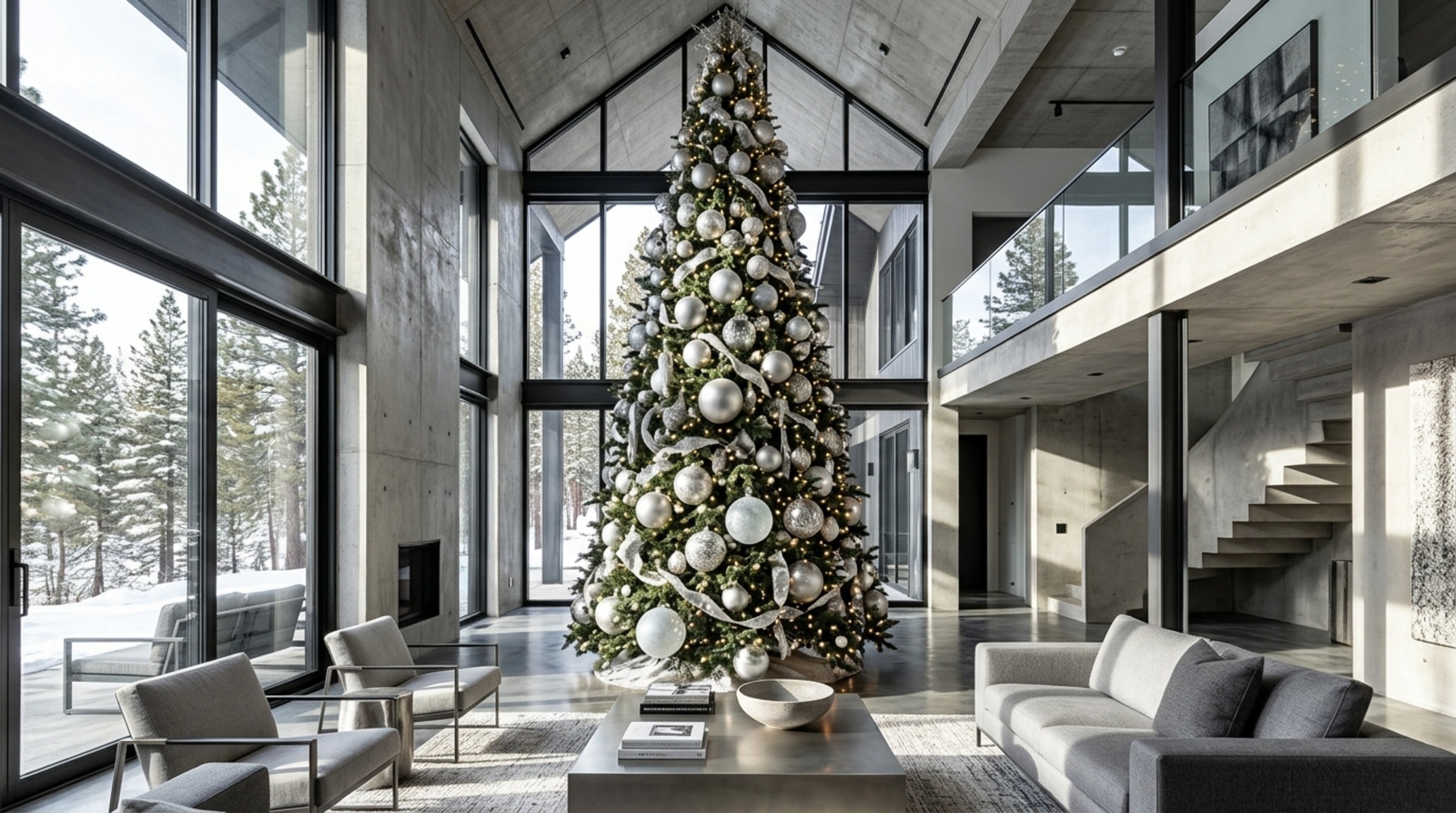
When selecting these statement pieces, consider monochrome metallics or frosted glass finishes. A cluster of oversized matte silver globes placed near the base can evoke the feeling of heavy snowfall, while geometric brass forms higher up add a touch of mid-century precision. The key is balance; for every oversized element, ensure there is enough ‘breathing room’ around it to prevent the composition from feeling top-heavy or congested.
The Visual Concept Gallery
Floral Christmas Tree Trends: Botanical Layers and Textural Depth
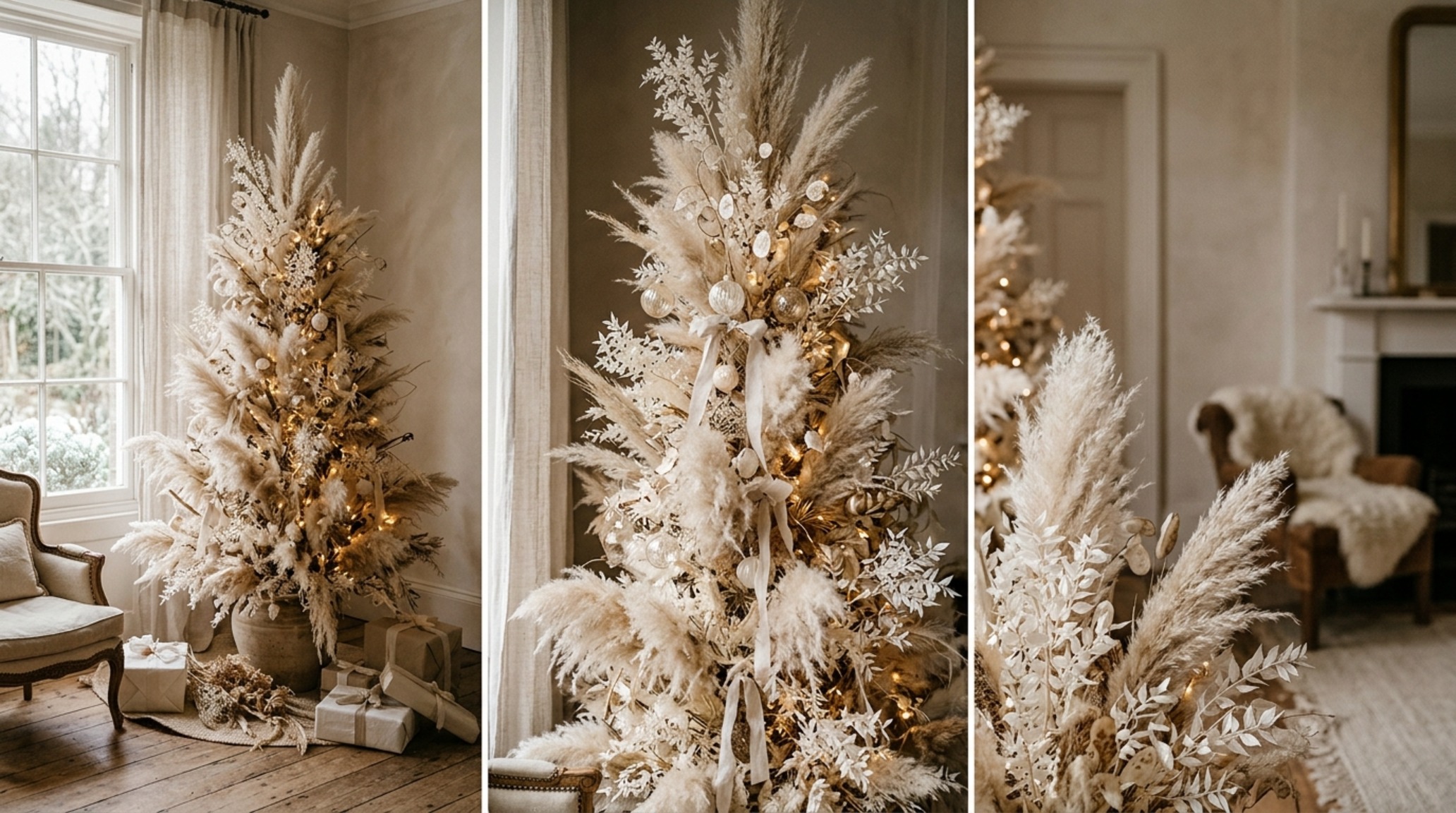
The convergence of floristry and holiday decor has birthed one of the most exciting movements in interior styling: the botanical tree. Moving beyond the traditional pine cone, floral christmas tree trends now embrace dried hydrangeas, bleached ruscus, and preserved amaranthus. These elements provide a ‘soft’ architecture that blurs the lines between the organic and the ornamental. Dried hydrangeas, in particular, offer a cloud-like texture that can be used to fill larger gaps in the tree’s silhouette, providing a matte, dusty-rose or sepia-toned backdrop for more delicate ornaments.

Preserved amaranthus, with its long, weeping tendrils, is used to mimic the natural drape of willow branches. When integrated into the ‘Light Dripping’ technique, these floral elements catch the internal glow of the LEDs, creating a halo effect around the tree. This botanical approach is especially effective in homes with a ‘Modern Farmhouse’ or ‘Organic Modern’ aesthetic, where the connection to the natural world is a core design principle.
Minimalist Christmas Tree Styles: The Power of Restraint
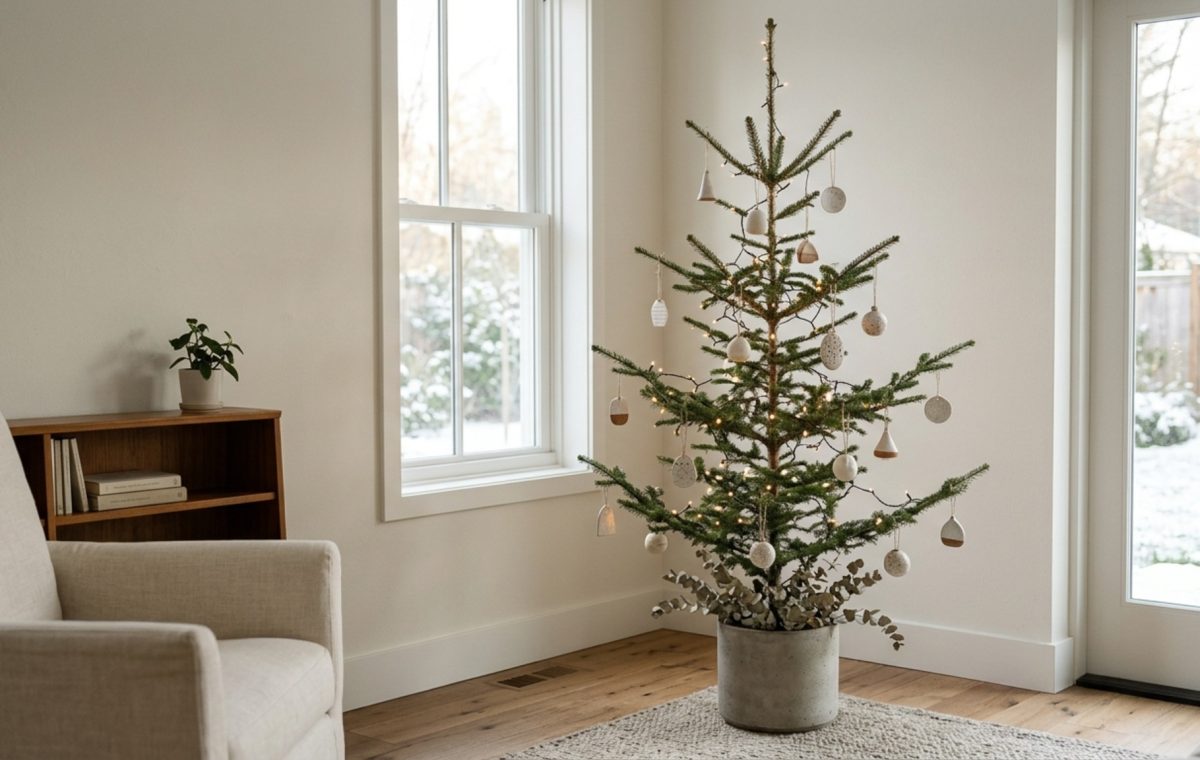
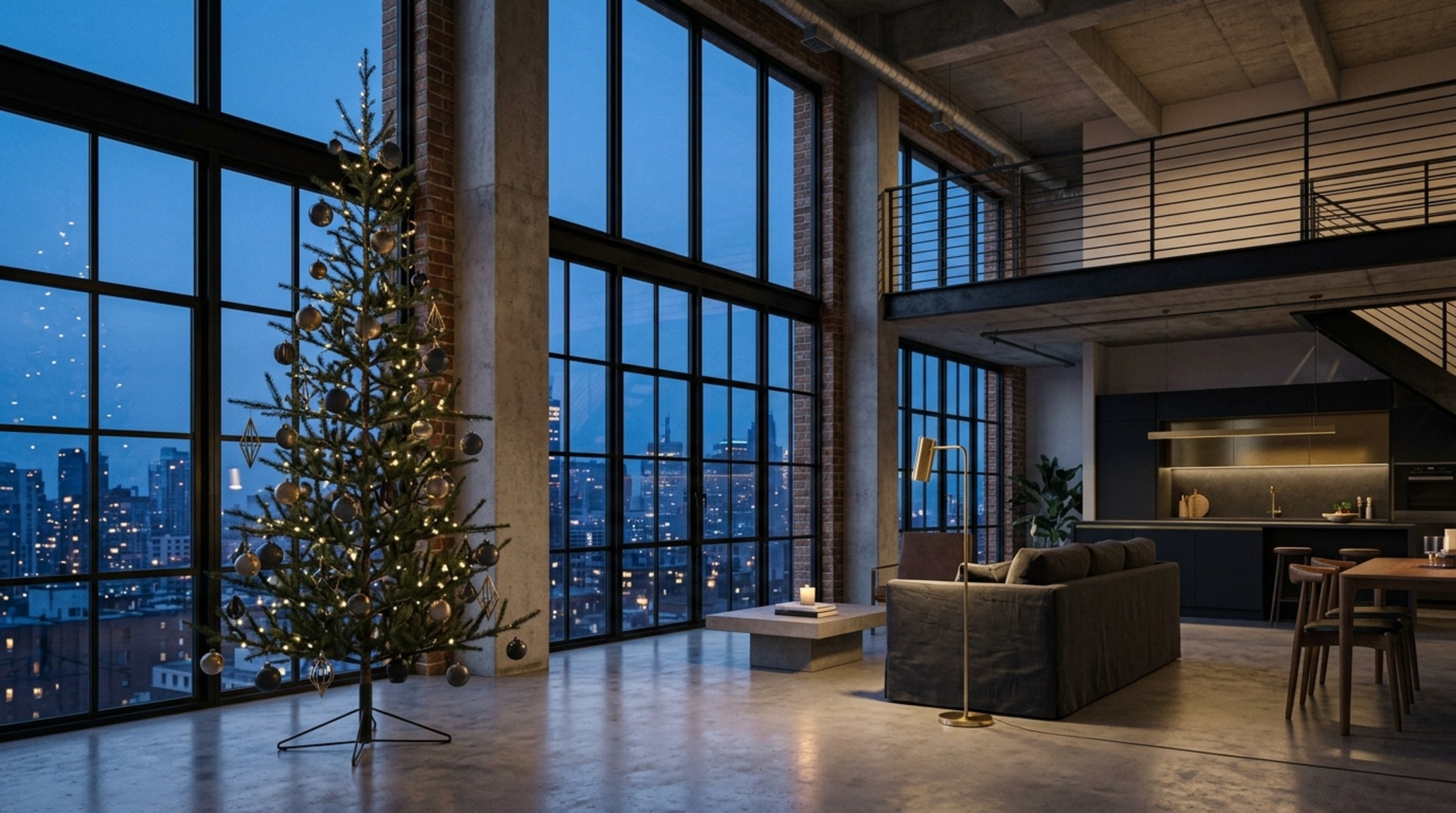
In smaller urban environments or highly minimalist spaces, the ‘less is more’ philosophy takes center stage. Minimalist christmas tree styles prioritize the silhouette of the tree itself over the quantity of ornaments. This might involve a sparsely branched Alpine Fir or a pencil-thin spruce, decorated solely with a single strand of micro-fairy lights and a handful of hand-crafted ceramic ornaments. The focus here is on the quality of each individual piece—the grain of the wood, the texture of the clay, or the way a single glass bead refracts a 2700K light source.
Sustainable Tree Decorating Tips: Longevity in Design
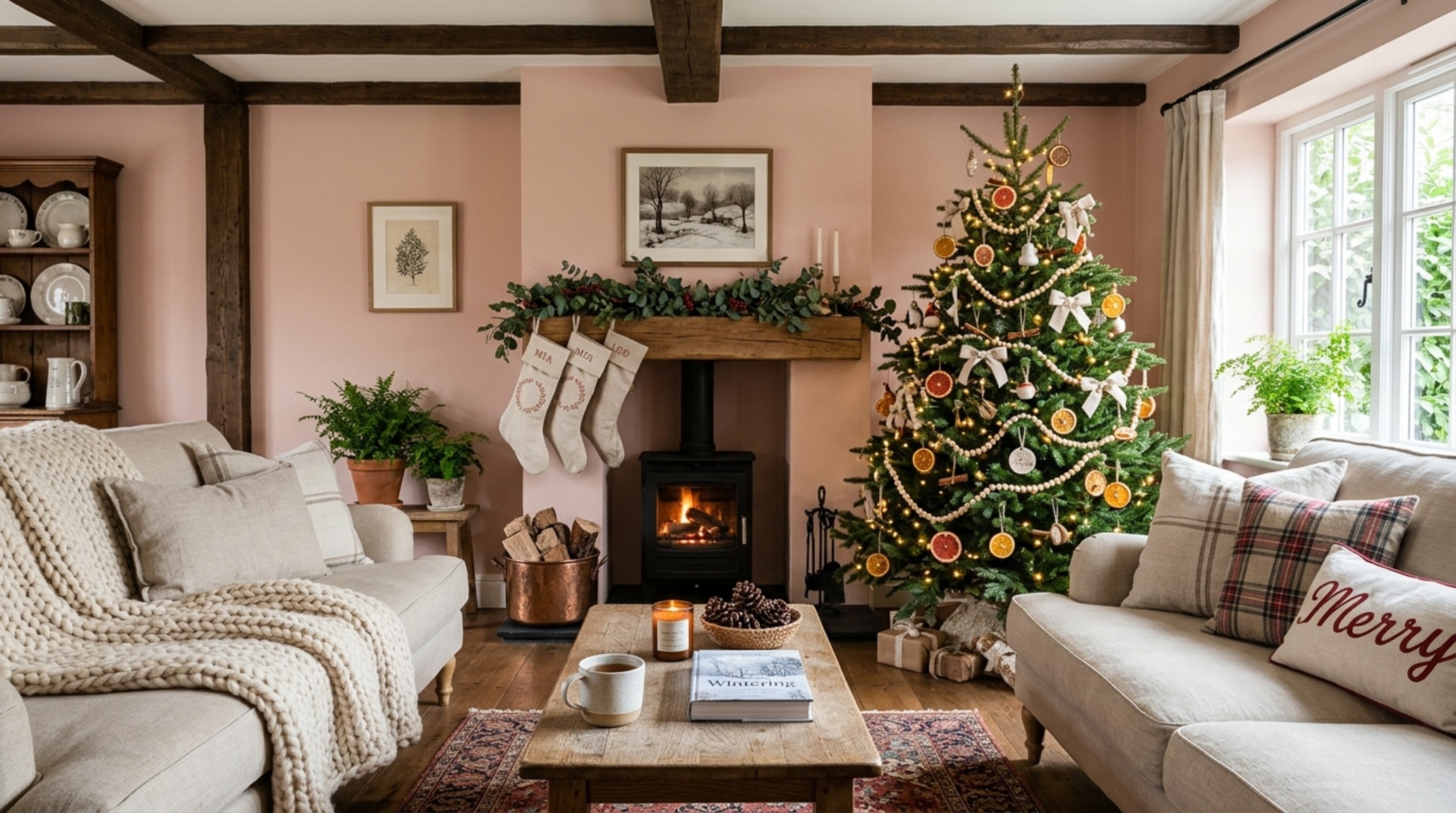
As we become more conscious of our environmental footprint, sustainable tree decorating tips are no longer an afterthought but a primary design consideration. This involves moving away from single-use plastics and toward heirloom-quality materials. Consider investing in hand-blown glass, solid wood, or recycled metal ornaments that will last for generations. Additionally, using natural elements gathered from your own environment—such as dried citrus slices, cinnamon sticks, or even sculptural twigs—adds a personal, localized narrative to your holiday decor that mass-produced items simply cannot replicate.
Architectural Integration and Spatial Flow
A Christmas tree is a significant spatial intervention. To maintain the integrity of a room’s layout, one must respect established architectural clearances. Ensure a minimum 36-inch primary circulation path remains open around the tree to prevent the space from feeling claustrophobic. If the tree is placed near a seating area, maintain an 18-inch ‘reach’ clearance from coffee tables and a 30-inch clearance from dining chairs. By treating the tree as a piece of temporary furniture, you ensure that the holiday season enhances the ‘livability’ of your home rather than obstructing it.
Architectural Materials, Swatches & Kelvin Index
Key material specifications, color codes, lighting kelvin, and ergonomic clearances for professional holiday styling.
Ultimately, the most successful decorating ideas for christmas tree arrangements are those that reflect the architectural soul of the home. By prioritizing texture over trend and luminescence over luster, we transform the seasonal tree into a profound expression of sensory elegance. It becomes a temporal landmark in our living space—a reminder that design, at its best, is an emotional dialogue between the structures we build and the memories we cultivate within them. As the light settles into the deep velvet folds and the botanical scents fill the room, the tree stands not just as a decoration, but as a masterpiece of festive architecture.
Editorial Silo • Recommended Architecture Studies
- The Living Machine: Precision-Engineered Interior Design Elements for Ergonomic Mastery — Archival Design Case Study
- The Sensory Architect: Becoming an Interior Designer Through Materiality and Atmospheric Mastery — Archival Design Case Study
Editorial Photo Collection
A tactile photo journey through spatial flow, tonal warmth, and balanced structural geometries.


Curated Visual Lookbook
A visual curation of architectural arrangements, lighting concepts, and material palettes featured in this space.
Design Gallery & Spatial Studies