Old European apartments possess a distinct personality that modern builds cannot replicate. High ceilings, intricate moldings, and worn wooden window frames demand a specific approach to interior decoration. Fight the urge to fill every corner with minimalist pieces. Instead, let the architecture breathe while anchoring the room with heavy, storied furniture.
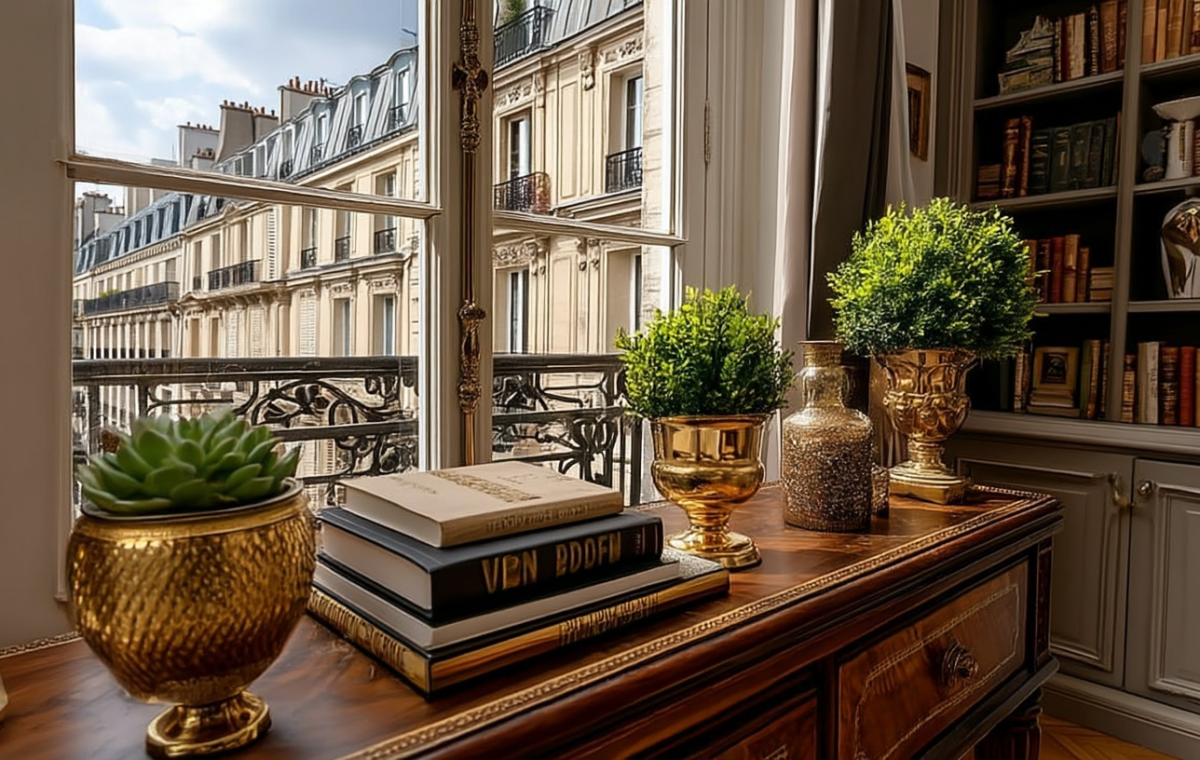
Take a look at how a heavy wooden credenza grounds a sunlit room. It is not about matching every wood tone. It is about layering textures. A stack of linen-bound volumes paired with contrasting black book covers brings weight to a tabletop. Small brass pots housing tiny succulents add organic life without competing with the grand cityscape visible just beyond the glass balcony rails.
Balancing Heavy Antique Furniture with Natural Light
Massive wooden sideboards can easily overwhelm a compact space if handled incorrectly. The trick lies in placement. Position large cabinets against neutral walls to let their grain and hardware do the talking. Keep surfaces functional yet curated. Avoid random clutter. Every object sitting on that dark wood surface should serve a visual purpose, whether it reflects light or adds a touch of aged metallic warmth.
- Use brass containers to introduce warm metallic accents.
- Mix old hardback books with matte black modern editions for contrast.
- Place small green plants near windows to bridge indoor and outdoor spaces.
Built-in bookshelves flanking a wall should be treated as living archives rather than strict design statements. Mix vertical book rows with horizontal stacks. Leave small gaps to let the painted backing show through. This prevents the heavy wooden shelves from looking like a suffocating wall of paper.
Embracing Architectural Character
Windows are the true focal point in heritage homes. Heavy wrought-iron balconies and zinc roofs outside dictate the mood inside. Keep window treatments minimal or nonexistent. Heavy drapes block out the very urban texture that makes these spaces desirable. Let natural daylight pour over your curated tabletops and bookshelves, shifting shadows across the room as the sun moves overhead.
Styling historic rooms requires restraint and a willingness to let aged imperfections remain. Are you currently leaning into antique furnishings, or do you prefer mixing modern clean lines with old-world bones?
Editorial Silo • Recommended Architecture Studies
- The Architect’s Blueprint: Living Room Ideas For Small Rooms & Engineering Spatial Volume and Flow in Compact Living Rooms — Archival Design Case Study
- Large living room design rules for functional flow — Archival Design Case Study
Curated Lookbooks & Architectural Studies
- Styling a Rust Velvet Accent Chair for Warm Interiors
- Ergonomic Mastery: Functional & Space-Saving Hacks for Modern Kitchen Wall Decor
- Styling French Apartment Living Room Plants Like a Pro
- Why a Wall Mounted Coat Rack Beats Bulky Hallway Furniture
- Mastering Vintage Textile Styling in Historic Interiors
- Attic Living Room Ideas to Transform Sloped Ceilings
Curated Visual Lookbook
Design Gallery & Spatial Studies
A visual curation of architectural arrangements, lighting concepts, and material palettes featured in this space.