The Ergonomic Evolution of Living Room Sculpting
The standard for modern living dictates that decorative pillows for couches are no longer mere sedentary ornaments but essential architectural tools for ergonomic alignment and spatial rhythm. We have moved past the era of ‘look but don’t touch’ showrooms; today’s high-end residential design demands a rigorous marriage of textural maximalism and utilitarian comfort. When we approach a sofa—whether it is a sprawling velvet sectional or a tight-back mid-century loveseat—the pillows serve as the primary interface between the human body and the furniture’s rigid frame. To ignore the ergonomics of these accents is to fail the fundamental test of interior design: the pursuit of human-centric wellness within a curated environment.
Achieving this balance requires an ‘Anti-Clutter Count.’ It is the disciplined practice of selecting exactly what the body needs to feel supported while maintaining the visual ‘breathability’ of the room. A couch buried under a mountain of polyester-filled squares is not a design statement; it is a spatial hazard that obscures the silhouette of the furniture and complicates the simple act of sitting. Instead, we look toward high-performance fills and precise scaling to create a seat that feels as intentional as it looks.
Best Pillow Inserts for Karate Chop: The Secret to Sculptural Softness
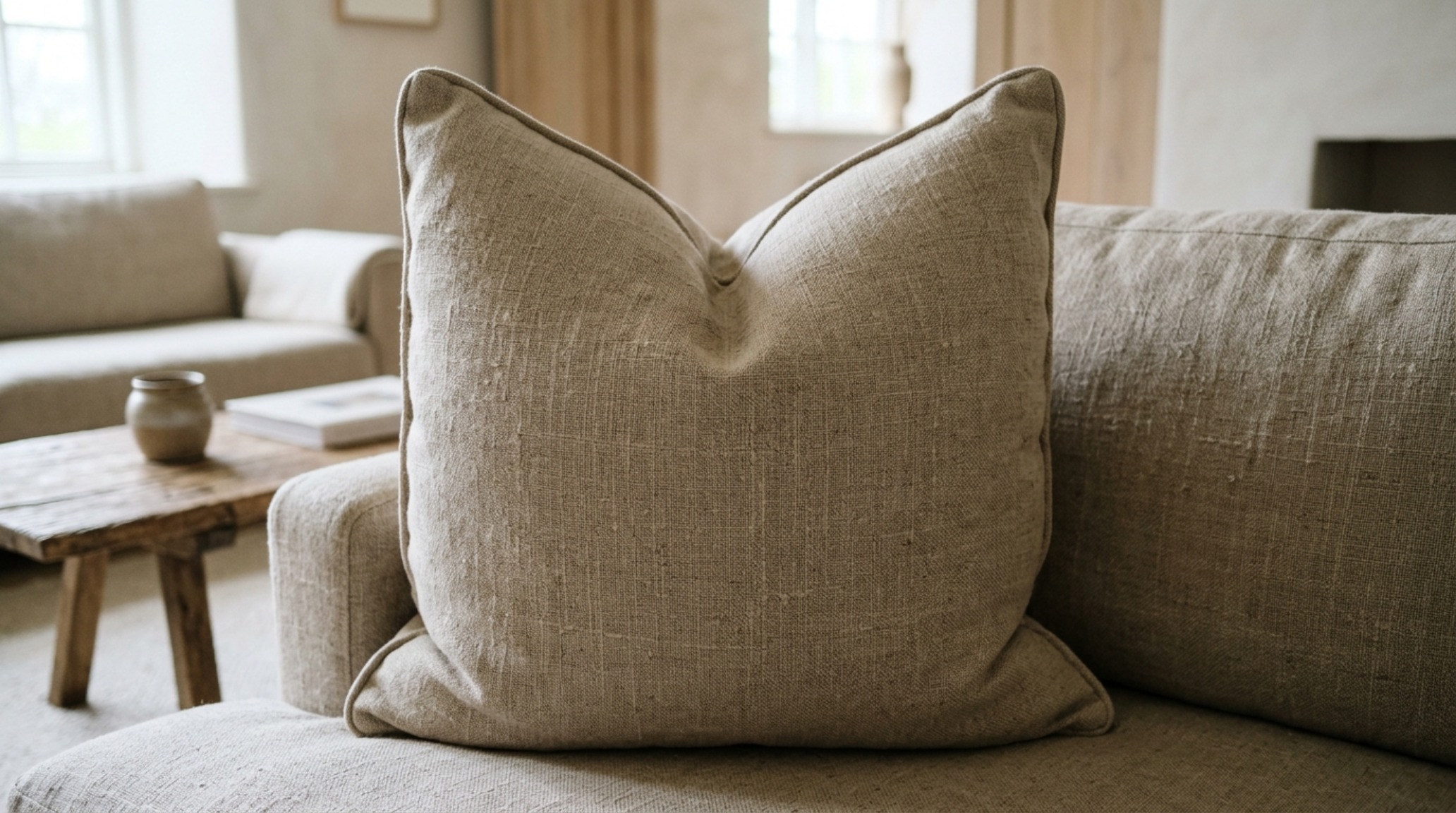
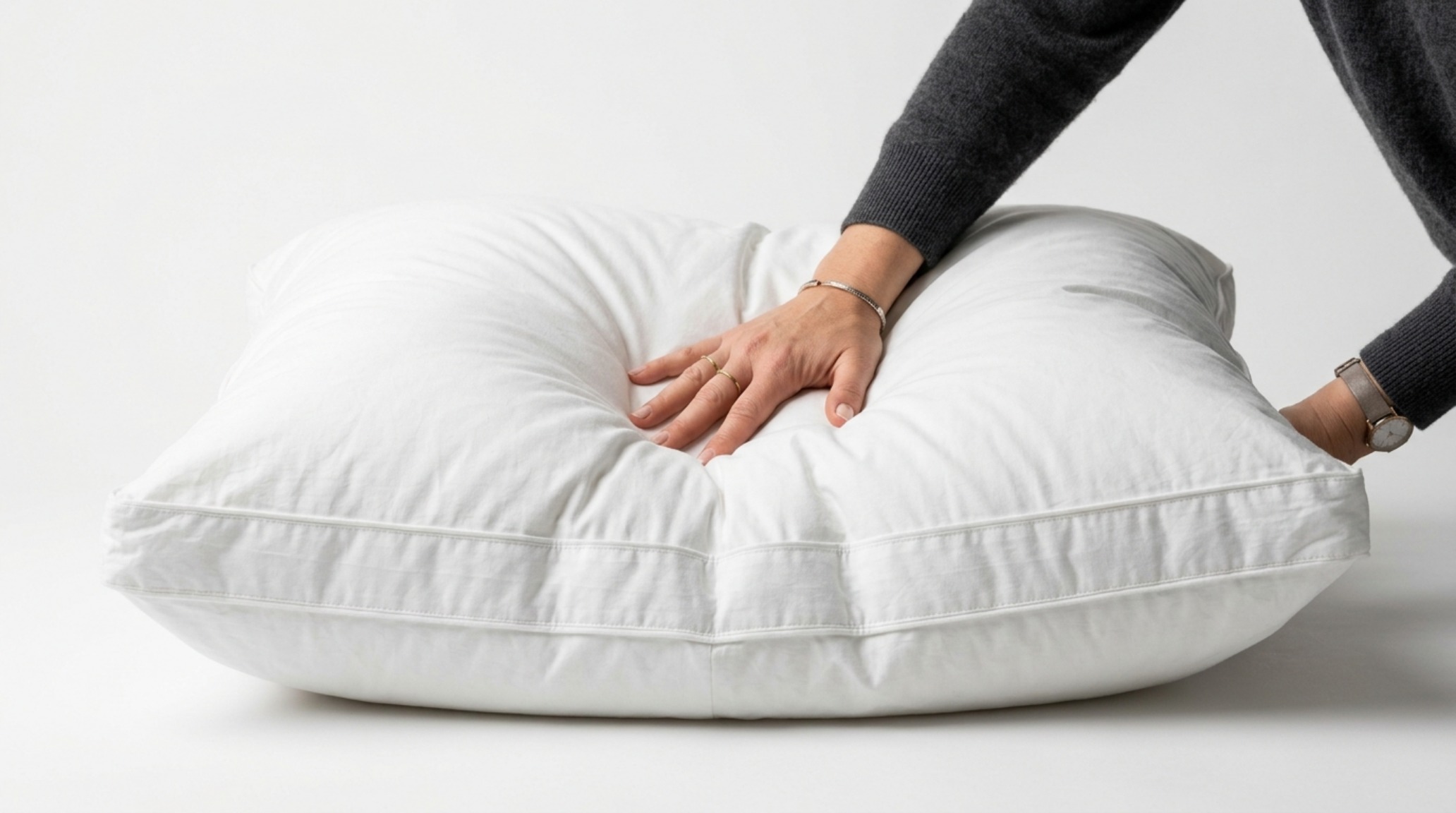
To achieve that iconic, lived-in designer look, the internal composition of the pillow is more critical than the textile itself. The best pillow inserts for karate chop aesthetics are invariably those with a high-density down and feather blend—specifically a 90/10 or 75/25 ratio of small grey duck feathers to down. This ratio provides the necessary ‘heft’ and structural memory to hold a soft center crease while offering meaningful lumbar support that synthetic poly-fill simply cannot replicate. Synthetic inserts, while hypoallergenic, often act like trampolines; they resist the body’s weight and eventually flatten into lifeless pancakes.
When specifying these inserts for a professional project, I always advise sizing up. A 22-inch insert inside a 20-inch cover creates a ‘plump-to-the-edge’ finish that feels substantial. This technique ensures the corners are filled, preventing the dreaded ‘dog-ear’ effect where the fabric goes limp at the extremities. In a room bathed in 2700K warm ambient lighting, the shadows cast by a perfectly ‘chopped’ down pillow add a layer of depth and architectural shadow play that elevates the entire seating vignette.
The 2-2-1 Pillow Arrangement Formula: A Masterclass in Symmetry and Scale
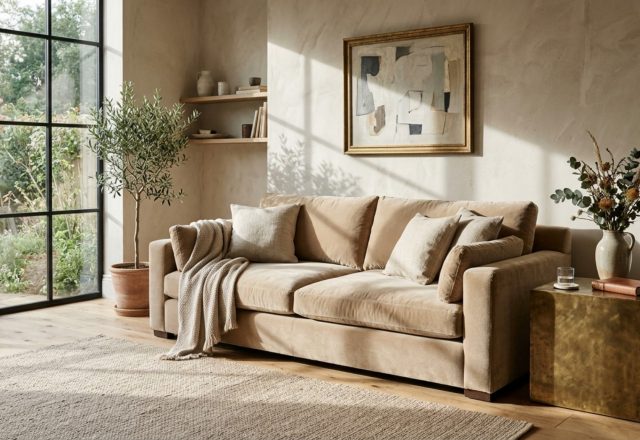
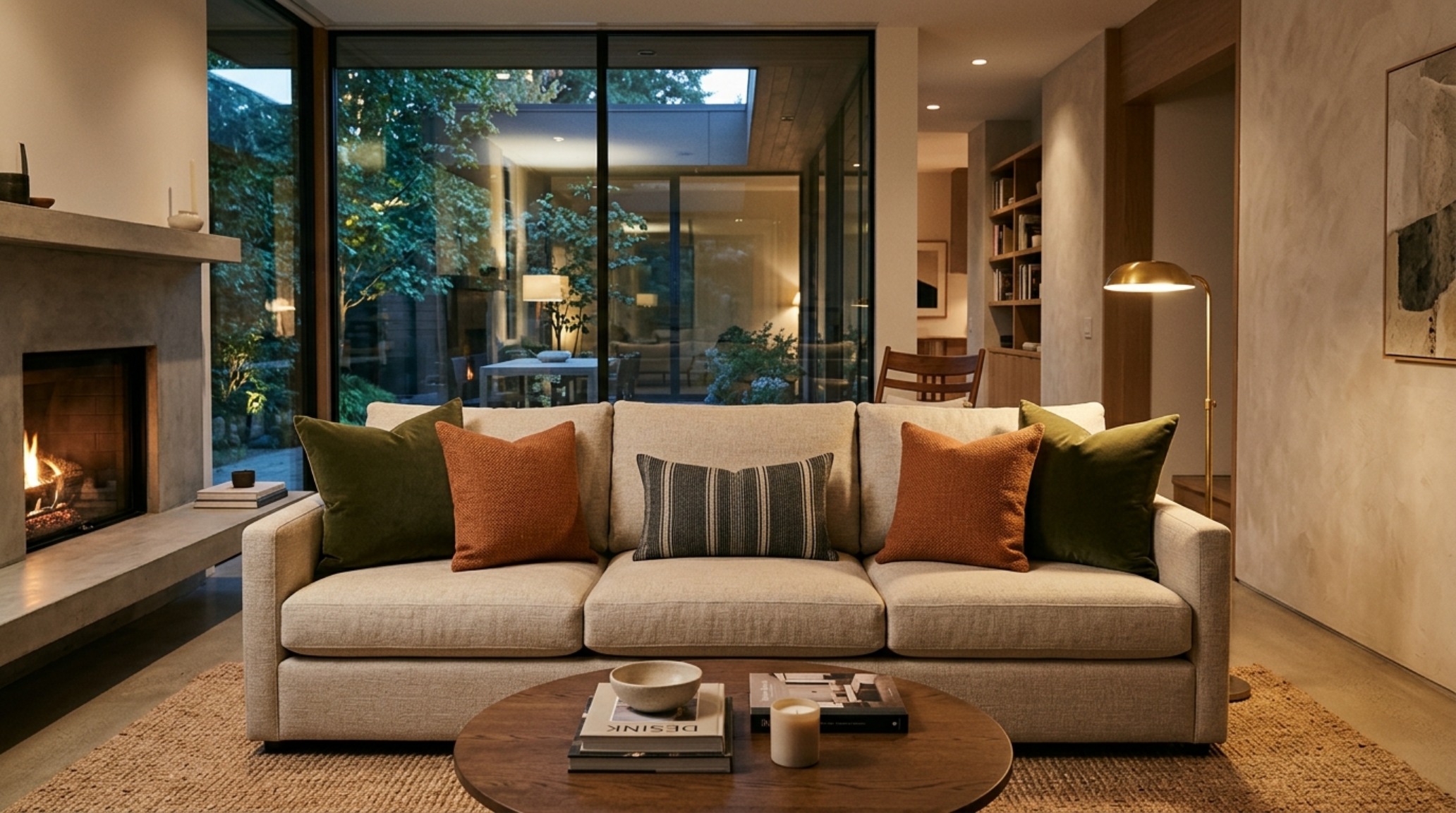
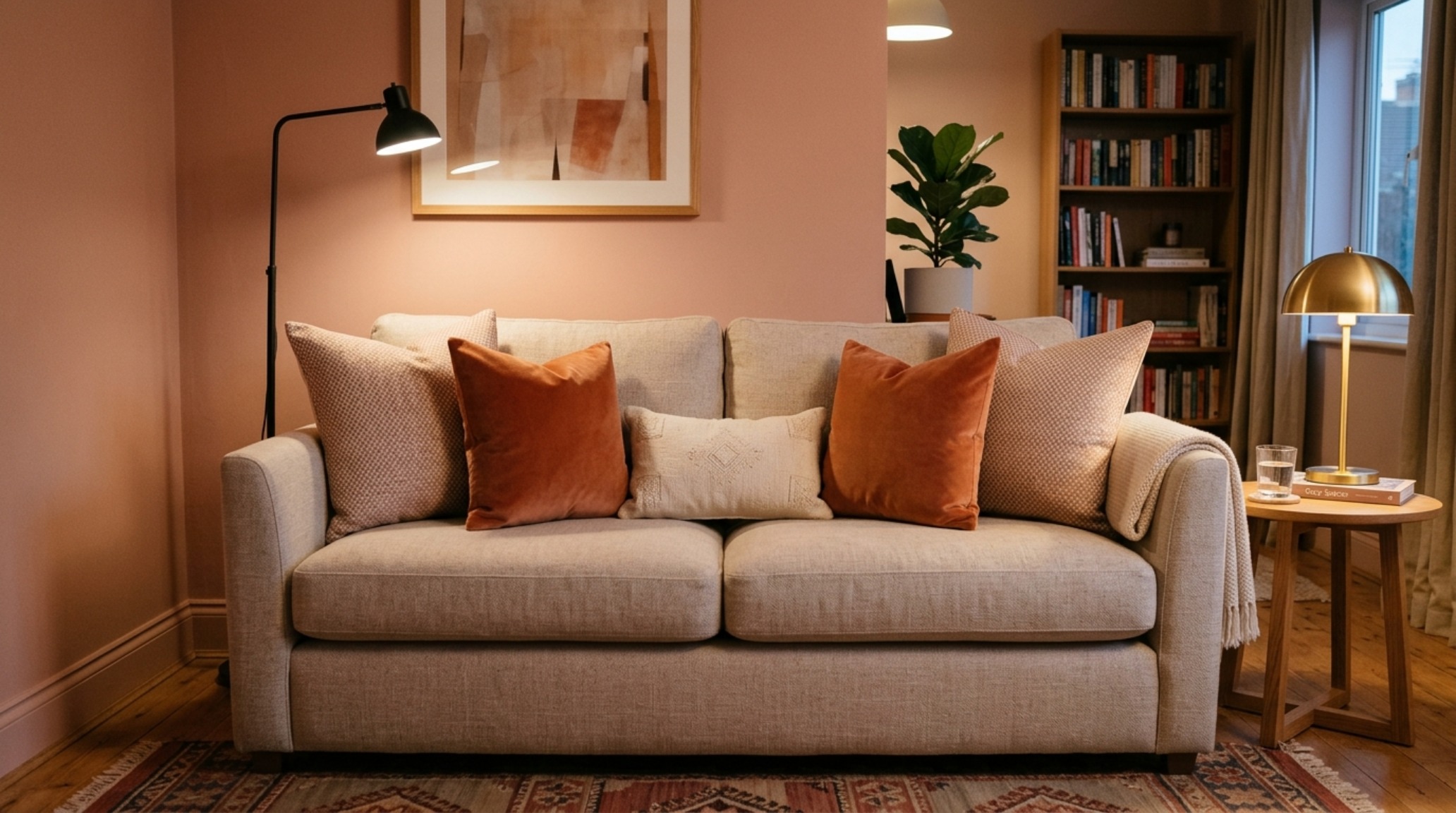
For a standard three-cushion sofa, the 2-2-1 pillow arrangement formula remains the gold standard for spatial cadence. This methodology involves placing two large 22-inch square pillows in the far corners, followed by two slightly smaller 20-inch pillows in a contrasting texture just inside them, and finishing with a single elongated lumbar pillow in the center. This creates a rhythmic ‘V’ shape that draws the eye inward, grounding the furniture piece within the room’s sightline alignment.
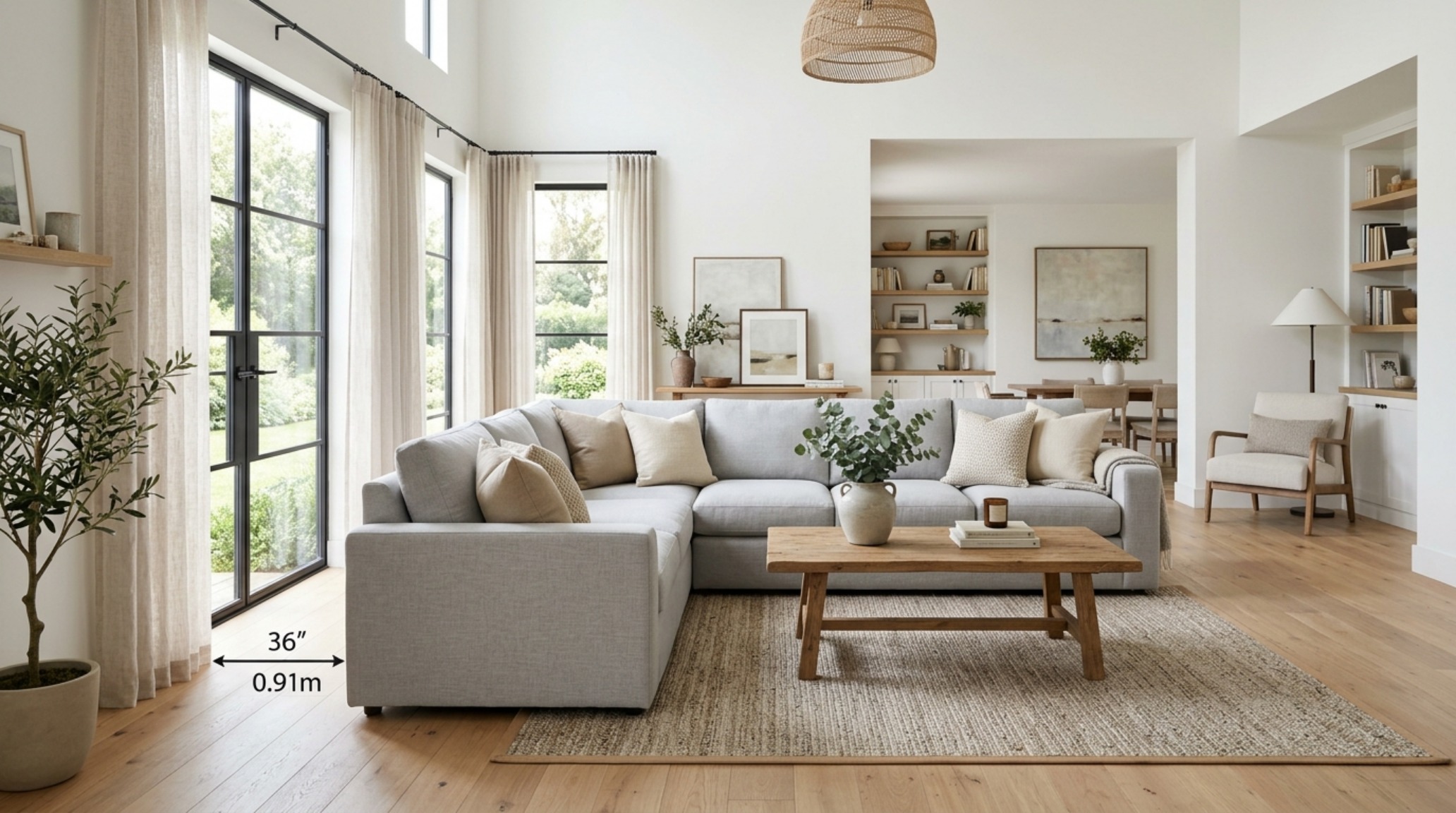
This formula isn’t just about visual layering; it’s about clearance. By keeping the center of the sofa relatively clear with only a single low-profile lumbar, you preserve the 18-inch reach to the coffee table and ensure that two people can sit comfortably without having to relocate an entire mountain of fabric to the floor. It respects the 36-inch primary circulation paths by keeping the sofa’s footprint contained and tidy.
Spatial Perspectives & Material Curation
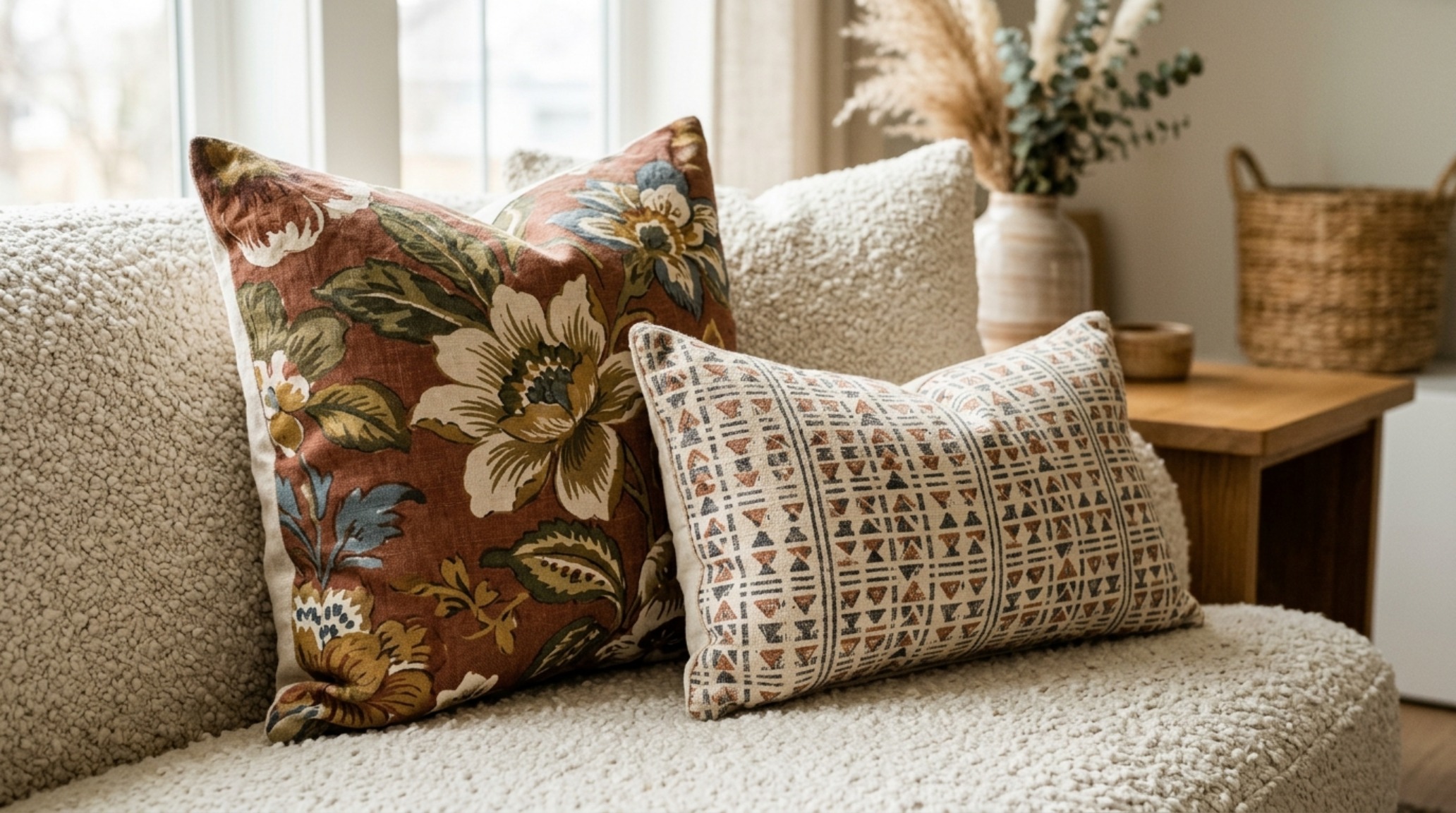
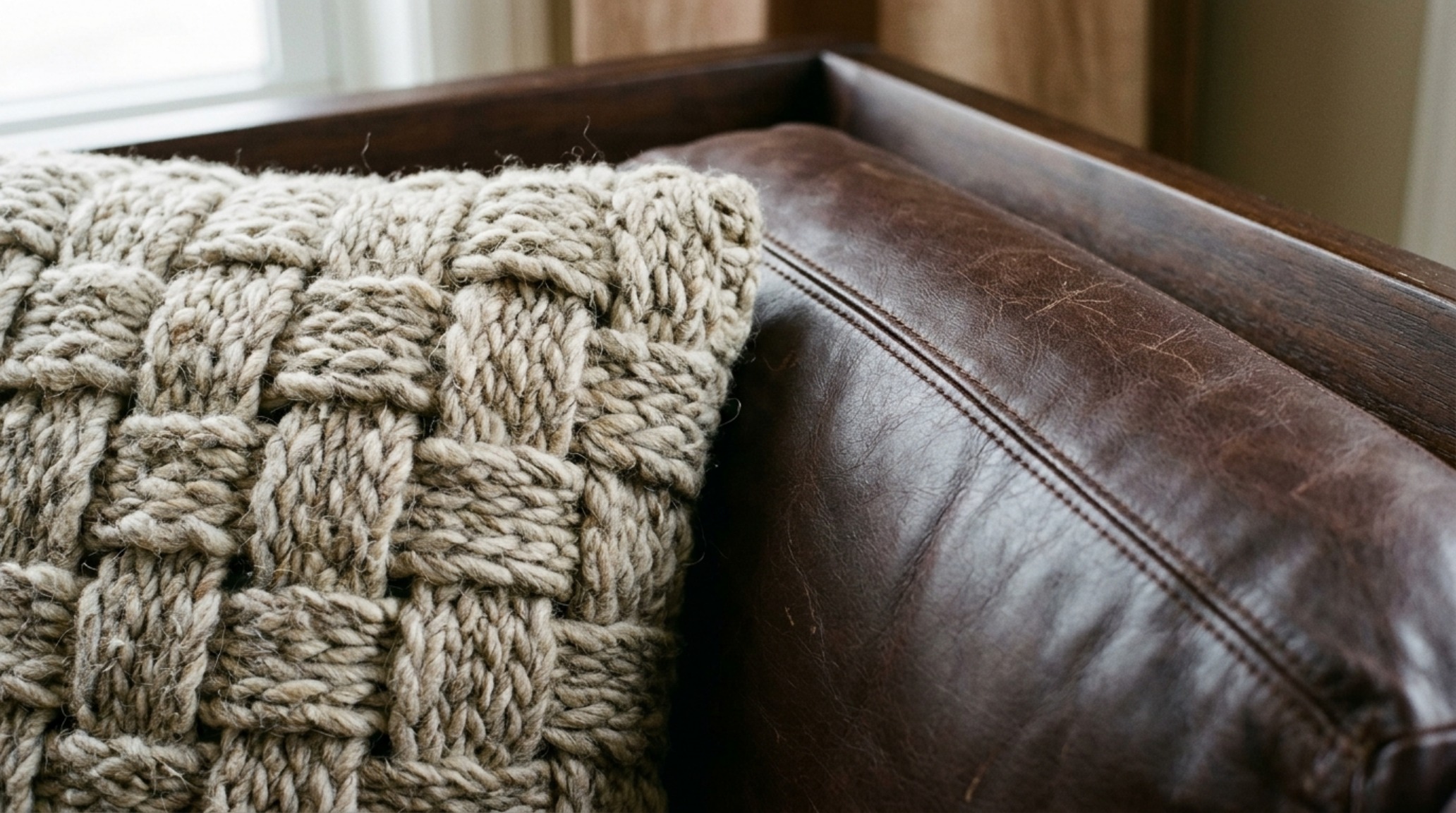
Mixing pillow patterns and textures is where the 2026 trend of ‘Textural Maximalism’ truly manifests. We are seeing a move away from identical sets toward a more curated, ‘collected over time’ aesthetic. Think of your sofa as a canvas for tactile grounding. A heavy-weight Belgian linen paired with a chunky wool bouclé and a smooth, low-pile velvet creates a sensory dialogue that feels rich and sophisticated. The key is to vary the scale of the patterns—if you have a large-scale organic floral, pair it with a tight, geometric micro-print or a solid with high tactile interest like a corduroy or a quilted silk.
When working with a palette of warm earth tones—perhaps anchored by walls in Farrow & Ball Setting Plaster or Benjamin Moore Swiss Coffee—the pillows should act as the tonal bridge. Incorporate shades of terracotta, deep ochre, and charred umber to create a cohesive ‘warmth’ that feels intentional. These colors, when rendered in high-quality textiles, absorb light rather than reflecting it, contributing to a cozy, atmospheric environment that feels grounded in the natural world.
How to Arrange Pillows on a Sectional: Navigating the L-Shape
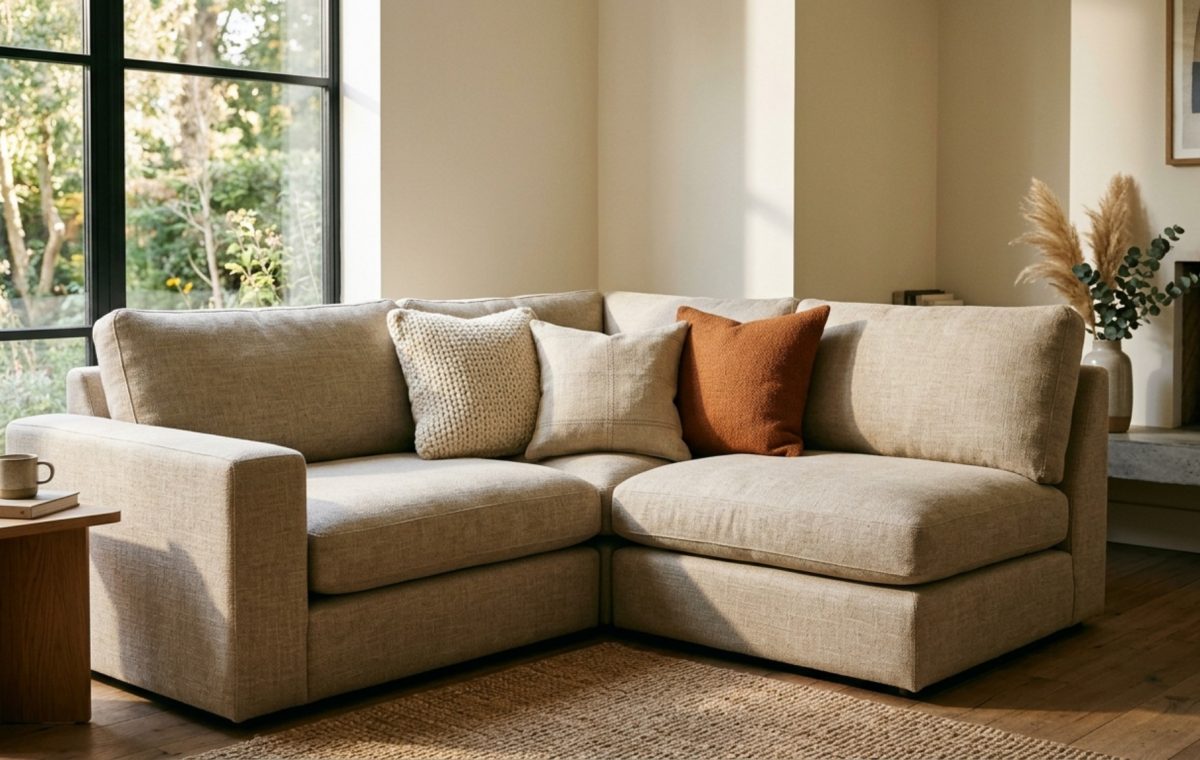
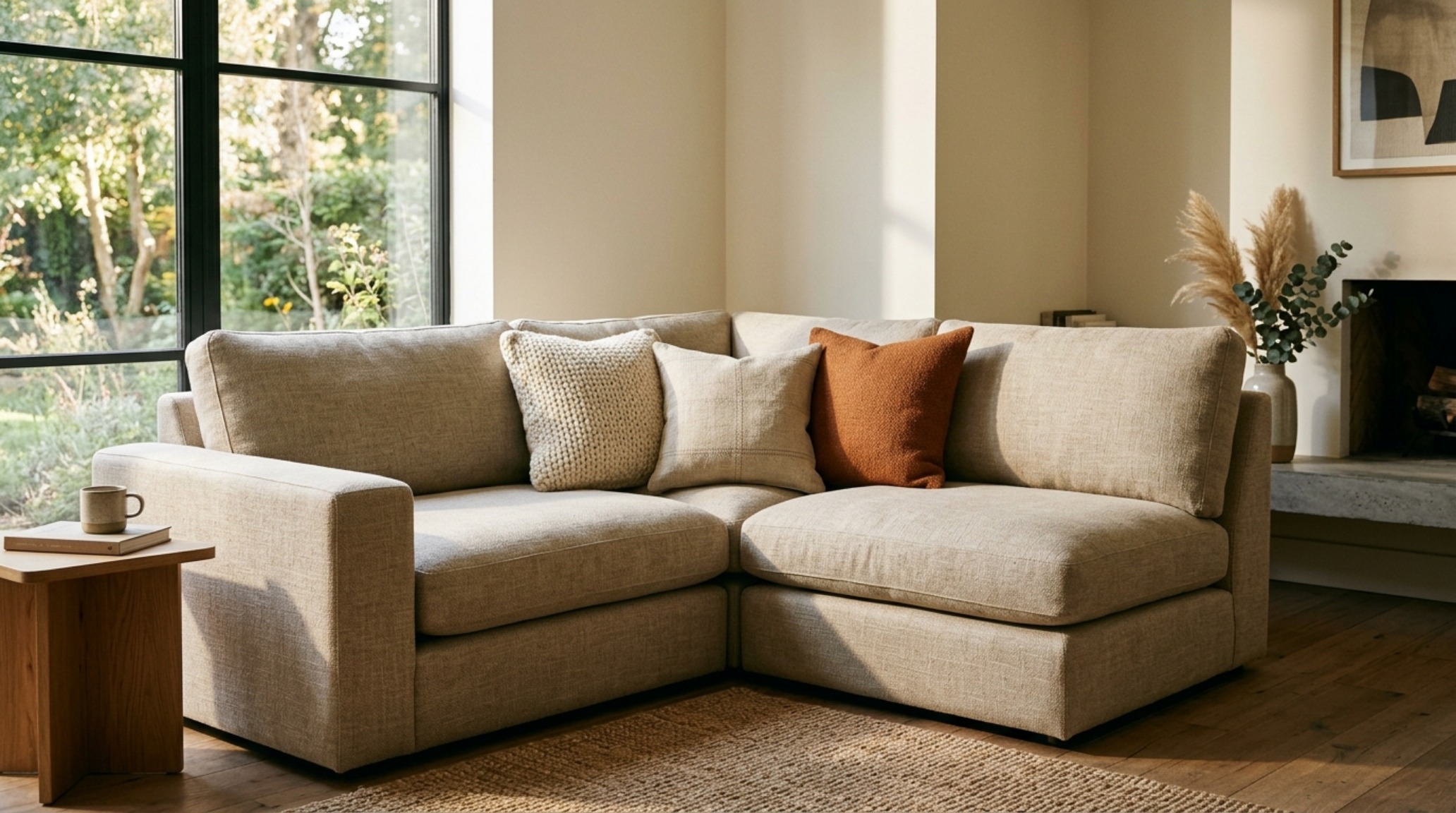
The sectional presents a unique challenge: the ‘dead corner.’ Knowing how to arrange pillows on a sectional is the difference between a cluttered mess and a functional retreat. The corner is the natural focal point and requires a grouping of three: a large 24-inch ‘anchor’ pillow at the back, a 22-inch medium pillow, and a smaller rectangular piece in front. This creates a nested ‘pit’ that invites lounging. For the outer ends of the sectional, keep it simpler with a single 22-inch square or a 20-inch pair to avoid overwhelming the spatial flow of the room.
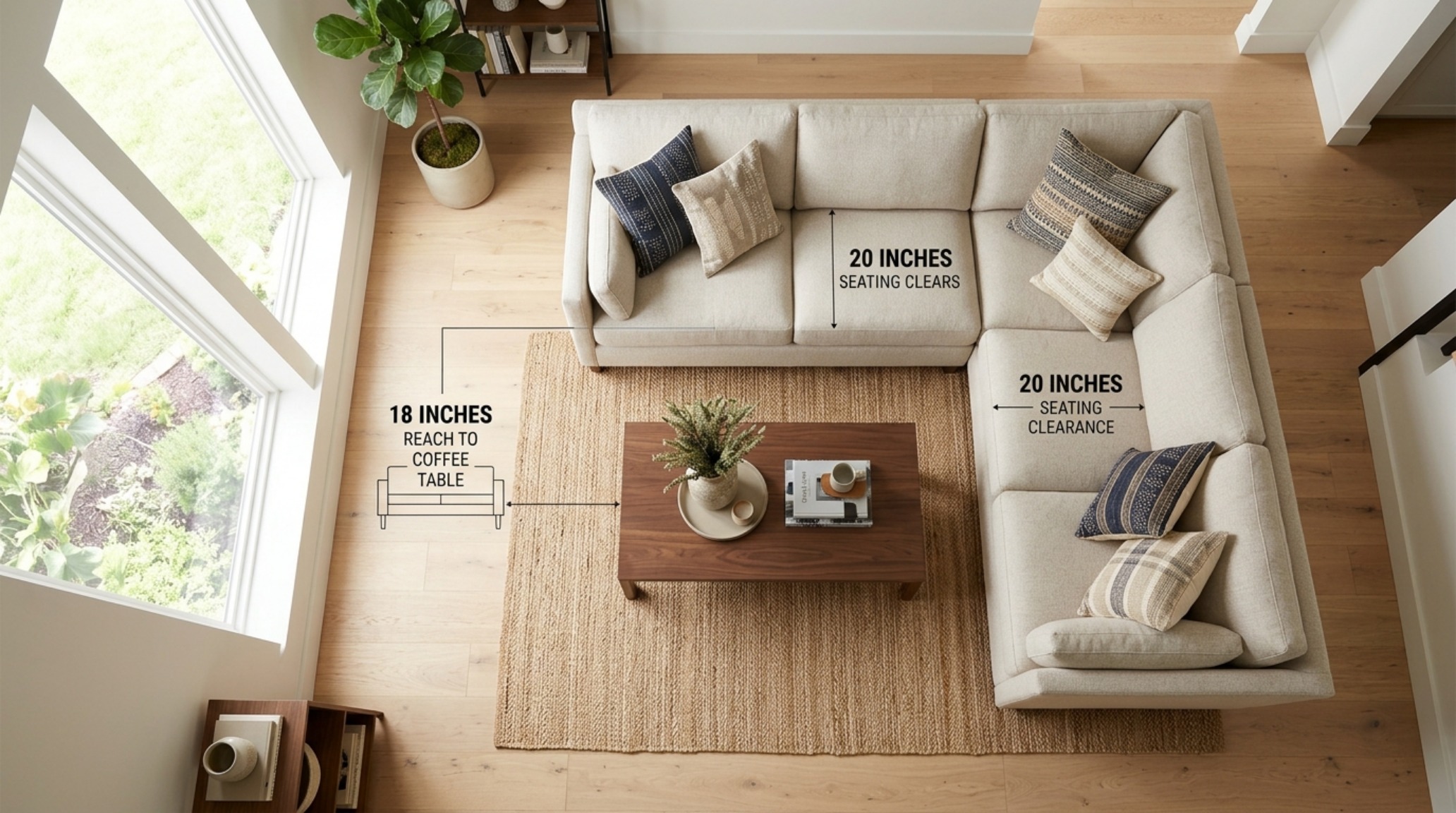
Crucially, keep the depth of the seat in mind. If your sectional has deep cushions (over 40 inches), you have the luxury of using larger, more voluminous pillows. If the seat is shallow, however, avoid the temptation to over-layer. You need at least 20 inches of ‘seating clearance’ from the front of the pillow to the edge of the cushion to ensure the occupant’s knees are properly supported and they don’t feel like they are being pushed off the edge of the furniture.
Large Lumbar Pillows for Couches: The Ultimate Ergonomic Pivot
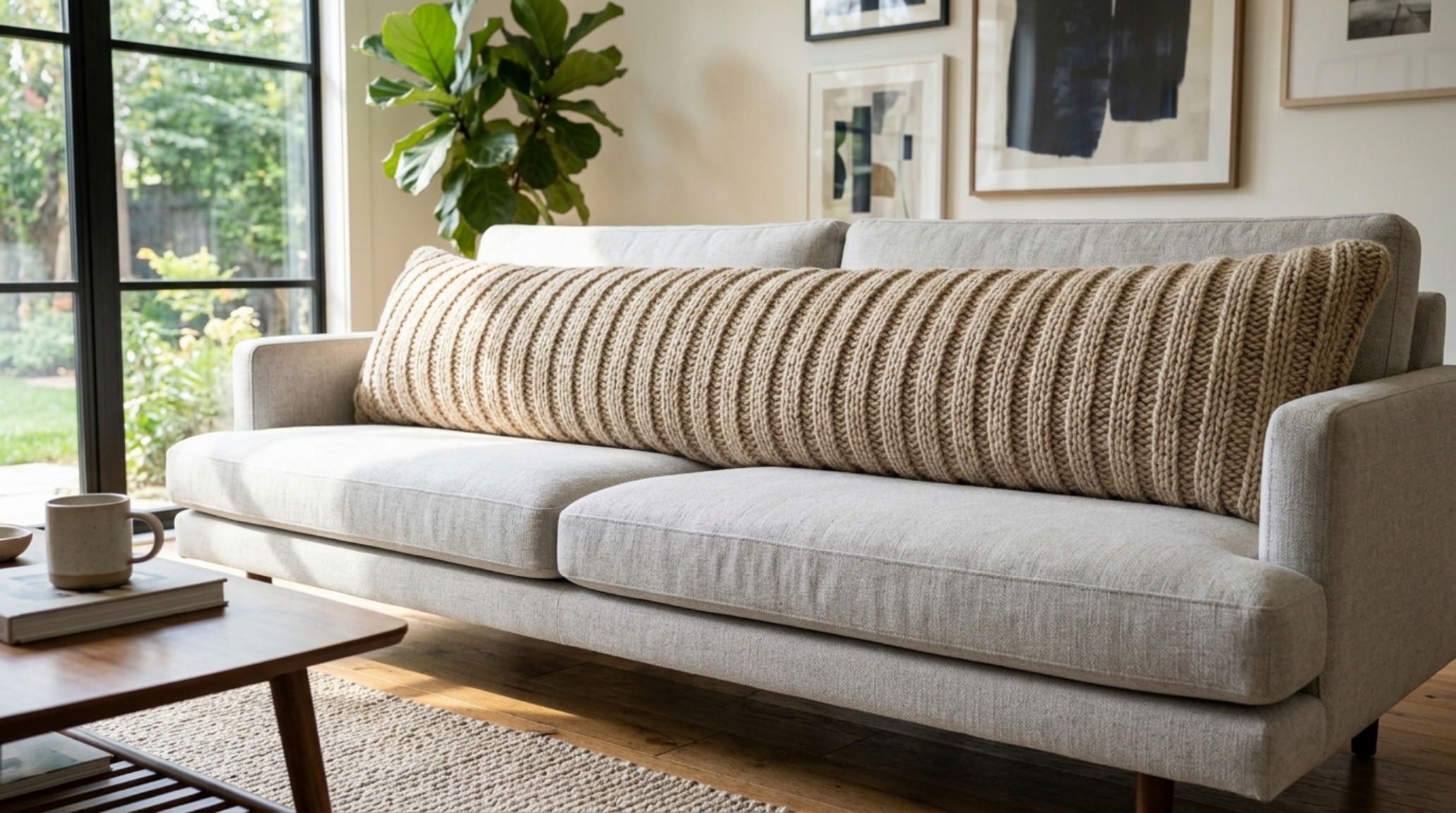
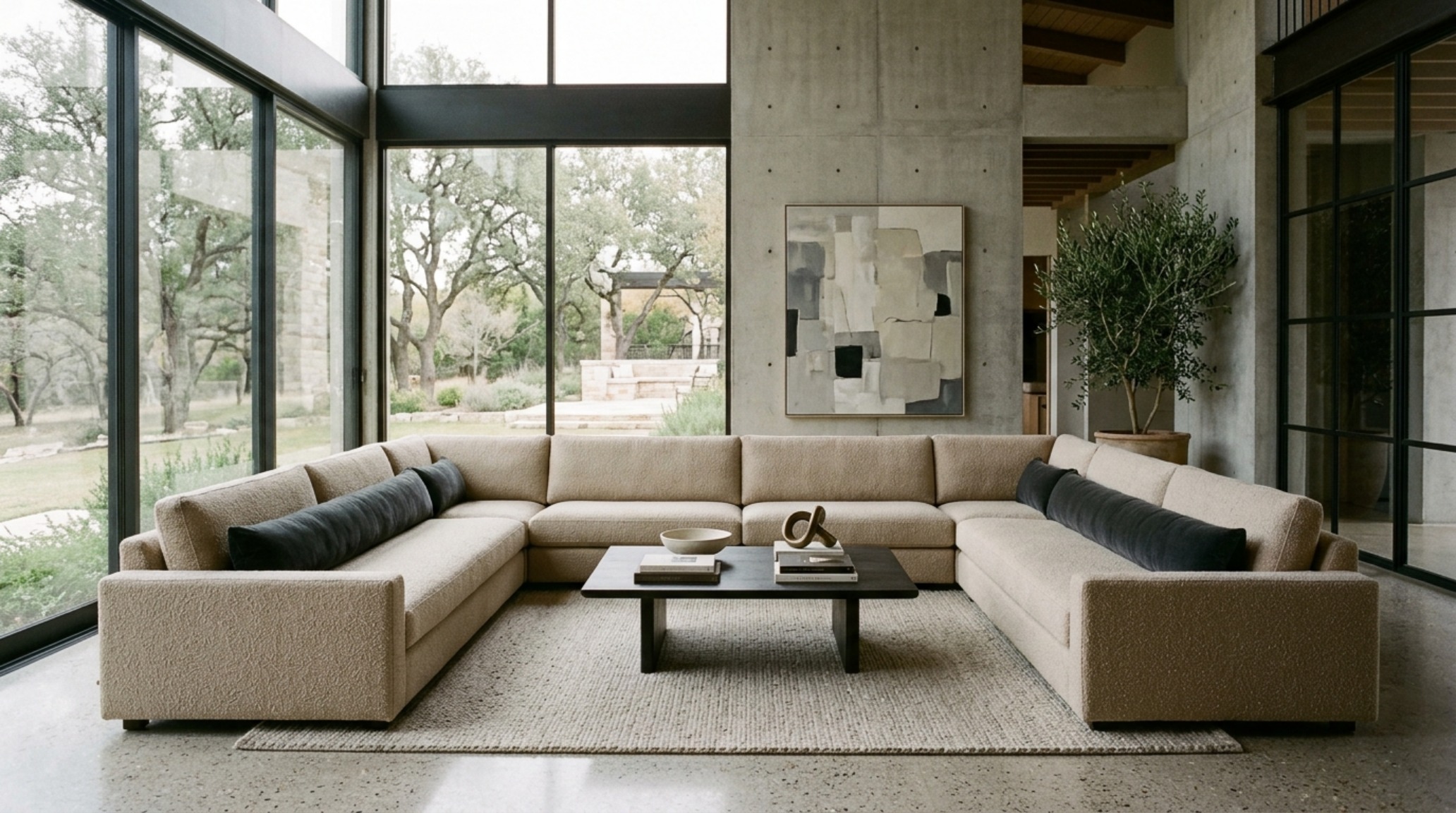
Perhaps the most underrated tool in the designer’s kit is the use of large lumbar pillows for couches. Unlike square pillows, which can sometimes push the upper back too far forward, a long lumbar (roughly 14×36 inches) follows the natural curvature of the spine. This is particularly effective for deep-seated sofas or U-shaped configurations where users tend to sprawl. A single oversized lumbar in a high-texture fabric like a mohair or a heavy-gauge knit can replace three smaller pillows, offering a cleaner, more minimalist silhouette while providing superior lower-back support.
In a U-shaped configuration, use these long lumbars on the ‘wings’ of the sofa to provide a consistent backrest that doesn’t slide around. This approach reinforces the architectural lines of the furniture, emphasizing the horizontal plane and making the room feel wider and more expansive. When paired with high CRI 90+ lighting, the texture of a long lumbar becomes a focal point of the room’s materiality.
Velvet Accent Pillows for Sofa: The Anchor of Luxury
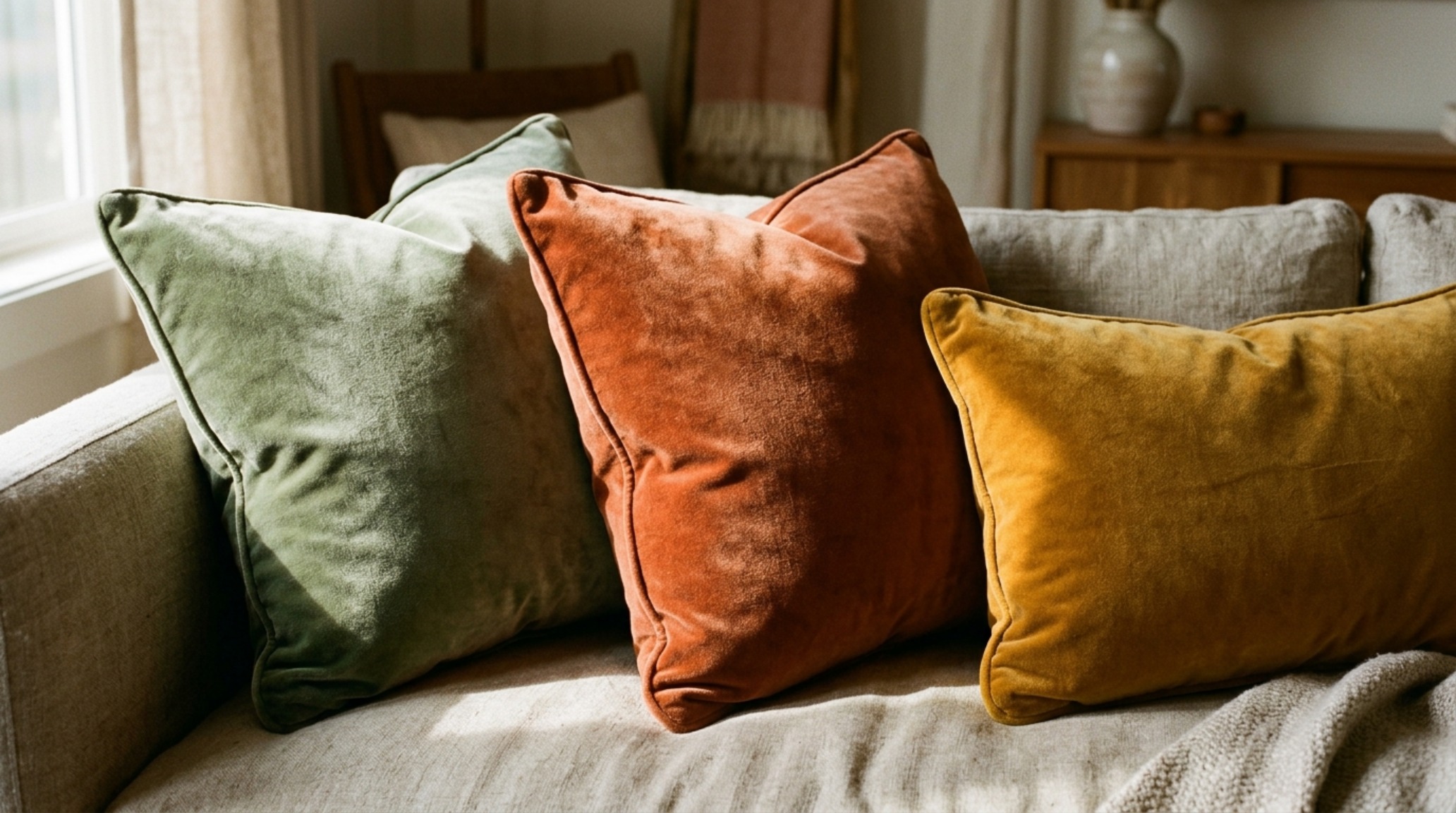
There is a reason velvet remains a staple of high-end interiors. Velvet accent pillows for sofa styling provide a visual ‘weight’ that other fabrics lack. The way a silk or cotton velvet catches the light creates a natural gradient of color—a phenomenon known as ‘shading’—that adds movement to a static arrangement. In the 2026 design landscape, we are seeing velvets in muted, ‘dusty’ tones like sage, mauve, and slate, which offer a sophisticated alternative to the jewel tones of the past decade.
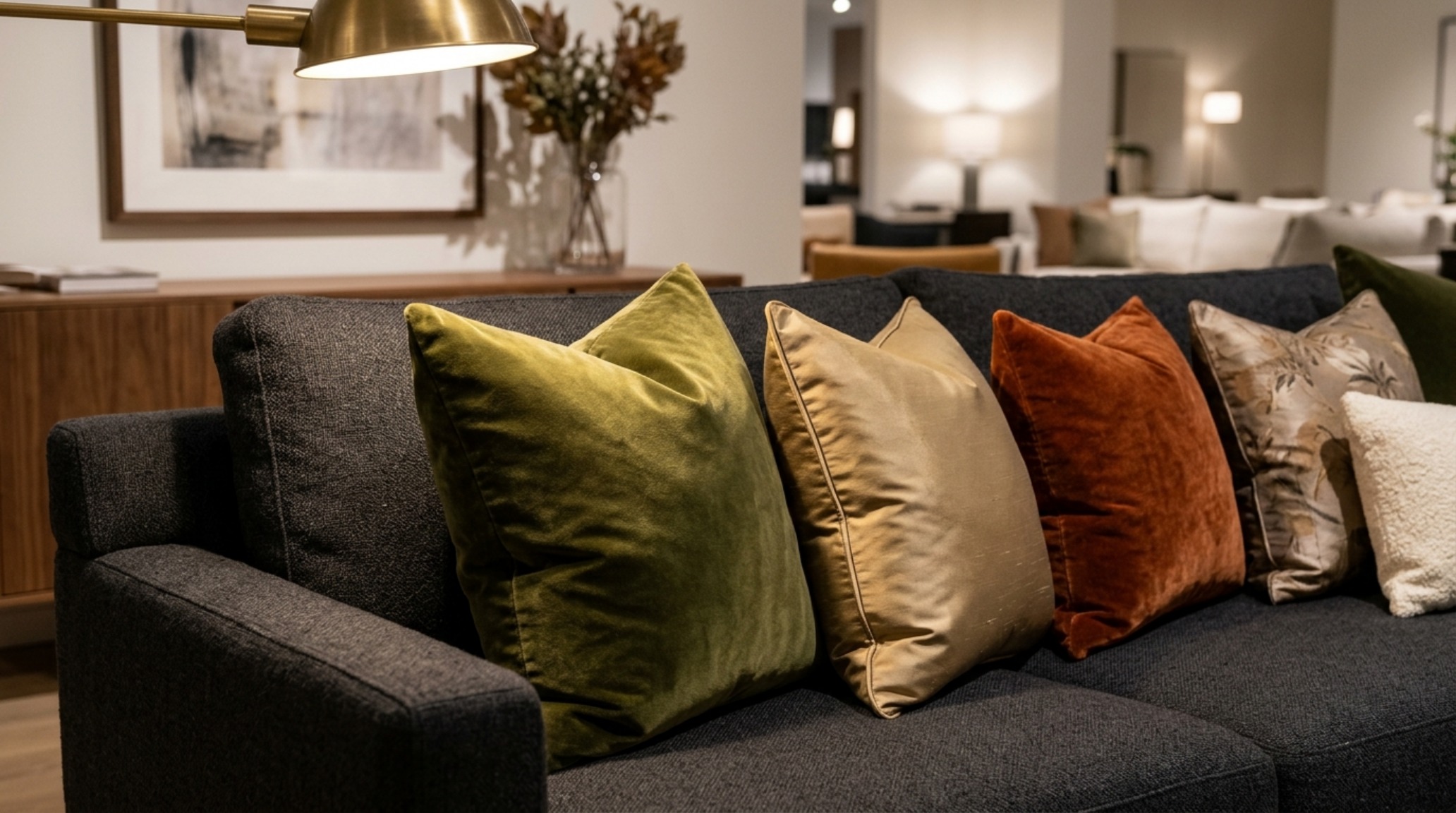
Velvet is also incredibly durable and ‘grippy,’ meaning it stays in place better than slicker silks or synthetics. This makes it an ideal ‘base’ pillow. Place your velvet squares at the very back of your arrangement; they will provide a stable foundation for lighter linens or embroidered pieces to rest against without sliding. This structural stability is a hallmark of a professional-grade arrangement, ensuring the ‘decorative pillows for couches’ stay looking crisp from the first morning coffee to the final evening nightcap.
Architectural Specification & Material Matrix
Curated tactile palette, spatial dimensions, and atmospheric lighting index for this design scheme.
Ultimately, the art of the arrangement is an exercise in restraint and anatomical awareness. By selecting decorative pillows for couches that prioritize fill quality, textural diversity, and ergonomic clearance, we create spaces that do more than just photograph well—they live well. As our homes continue to evolve into sanctuaries of both work and rest, the humble pillow remains our most intimate architectural ally, soft-shaping the rigors of the built environment into a landscape of genuine repose. We are designing for the pause, for the exhale, and for the quiet moments where form and function finally find their perfect, soft-landing equilibrium.
Editorial Silo • Recommended Architecture Studies
- Beds That Save Space: The Architectural Blueprint & Spatial Flow Guide — Archival Design Case Study
- The Closed-Loop Life: Mastering the Functional Ergonomics of Self Sustaining Homes — Archival Design Case Study
The Curated Design Compendium
A curated visual breakdown of structural layout, layered lighting, and material compositions.
Curated Visual Lookbook
Design Gallery & Spatial Studies
A visual curation of architectural arrangements, lighting concepts, and material palettes featured in this space.