The Anatomy of a Quiet Workspace
Modern workspaces often lean heavily into ergonomic plastic and sterile LED arrays. They are efficient. They are also entirely soulless. Stepping back into a room defined by honest timber and time-worn textures changes how a person thinks. A heavy rustic home office grounds the mind. It slows down the frantic pace of digital deadlines.
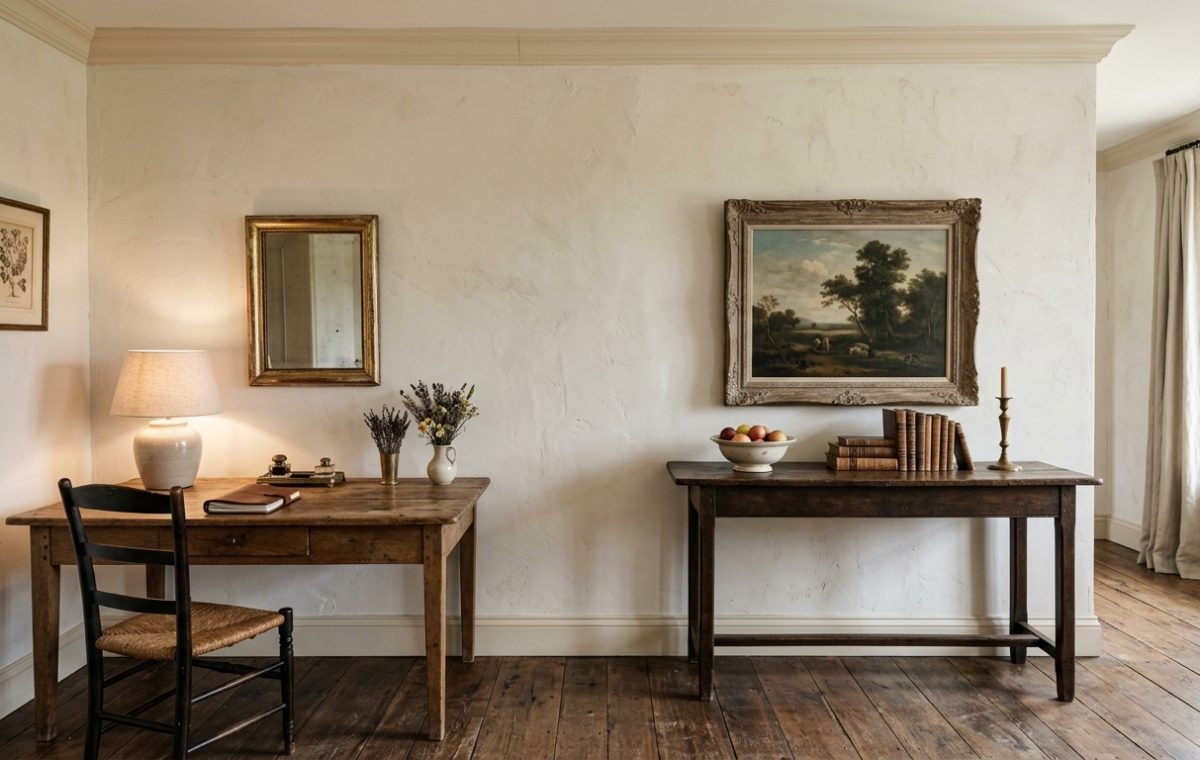
Consider the raw perimeter. Lime washed walls do not offer the flat perfection of modern drywall. Instead, they capture natural shifting light throughout the day. Imperfections become features. That textured backdrop makes simple antique furniture feel entirely integrated rather than staged.
Selecting Foundational Pieces
You do not need a massive square footage to build atmosphere. A modest drop-leaf wooden table makes an exceptional writing desk. Pair it with a ladder-back straw-seat chair. Keep the layout simple. Let the room breathe. Overcrowding a historic aesthetic destroys its quiet charm immediately.
authenticity cannot be bought off a showroom floor. it accumulates slowly through patinas, uneven wood grain, and objects that have survived generations.
Storage should remain understated. Forget heavy modular filing cabinets. A secondary console table pushed against a blank wall provides ample display space for leather-bound volumes and a simple bowl of fruit. Functional objects double as decor when selected with an eye for history.
Balancing Light and Shadow
Harsh overhead illumination kills mood. Rely instead on directional table lamps with linen shades to cast a warm glow across your workspace. Keep curtains simple. Natural linen panels filtering afternoon sunlight through a nearby window create a soft contrast against dark, hand-scraped floorboards.
Upkeep requires patience. Antique timber demands occasional waxing, and lime wash is delicate compared to modern scrubbable paint. Yet, that physical maintenance keeps you connected to your environment in a deeply satisfying way. How do you balance modern productivity tools with the desire for old-world architectural warmth in your own home?
Editorial Silo • Recommended Architecture Studies
- The Engineering of Ease: How to Make Contemporary Furniture for High-Performance Urban Living”, description: “Modern living demands a departure from static design; to make contemporary furniture today is to engineer kinetic, multifunctional solutions. This guide introduces the ‘2:1 Rule’ of spatial density—balancing two parts low-profile furniture with one part uninterrupted breathing room. We analyze the ergonomics of ‘cognitive stability,’ integrating hidden power hubs, wireless charging surfaces, and modular footprints that allow a single piece to pivot between a high-focus workspace and a serene sanctuary. — Archival Design Case Study
- Grand Closet home office aesthetic styling trends — Archival Design Case Study
Curated Lookbooks & Architectural Studies
- Sensory Modernism: Modern Houses Pictures & A Visual Guide to Textural Depth and Earth-Toned Palettes
- Invisible Efficiency: The Masterclass in Seamless Ergonomics and Bespoke Hidden Storage for Compact Living
- The Art of the Compact: Strategic Wash Basins for Bathrooms in High-Performance Small Spaces
- Stunning Freestanding Bathtub Design Ideas for Warm Spaces
- Restoring Historic Architectural Wall Panelings in Period Homes
- Neutral Living Room Design Ideas That Feel Warm & Layered
Curated Visual Lookbook
Design Gallery & Spatial Studies
A visual curation of architectural arrangements, lighting concepts, and material palettes featured in this space.