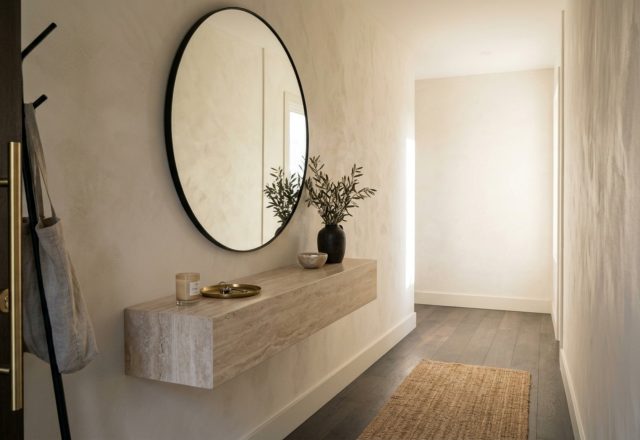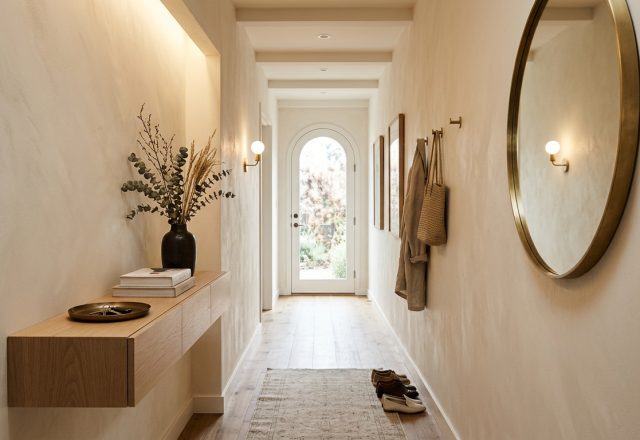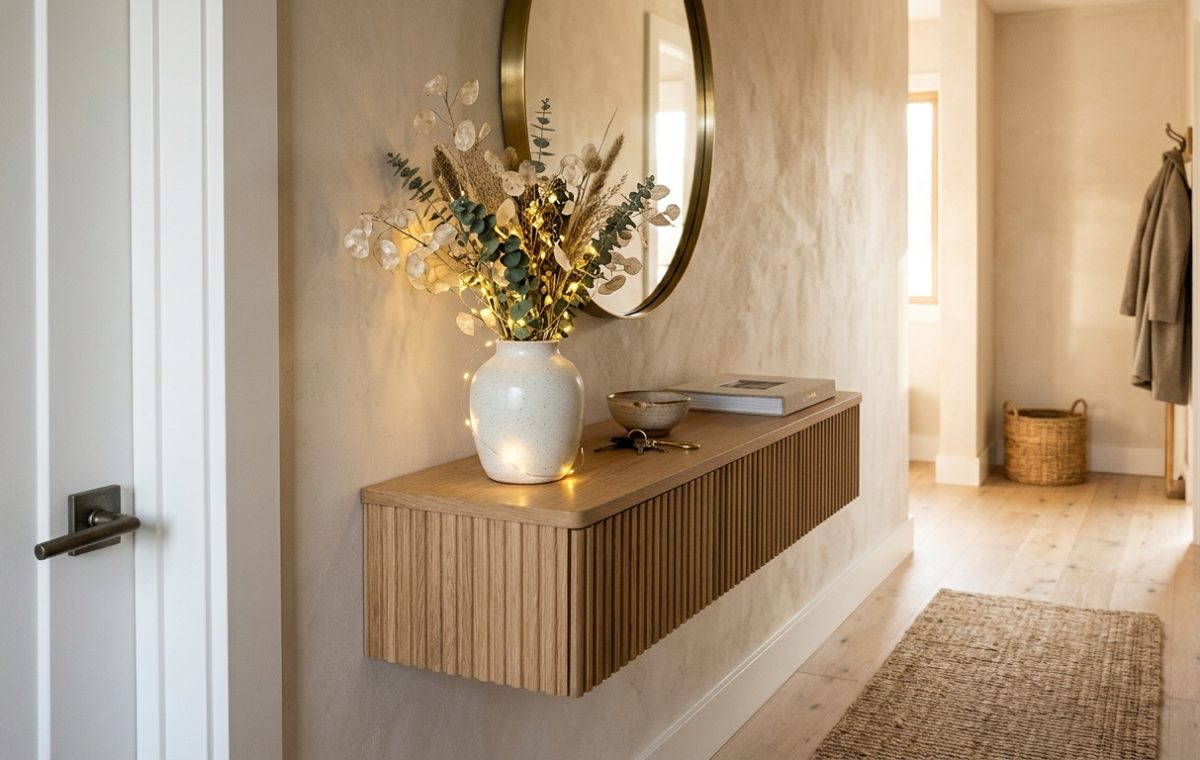
There is a specific, often overlooked tension in residential architecture: the high-traffic transition zone. It is the narrow corridor that must facilitate the chaotic arrival of a family, the shedding of coats, and the immediate visual decompression of a sanctuary. When exploring narrow entryway ideas, we frequently collide with the physical reality of the floor plan. A traditional floor lamp, no matter how slender its silhouette, consumes precious square inches of ‘walking breathing room.’ In a space where a 36-inch standard circulation path is non-negotiable, a tripod base is an obstacle; a cord is a trip hazard. This is where we pivot from traditional fixtures to the concept of zero-footprint radiance—using the architectural bones of the home to host light without ever touching the floor.
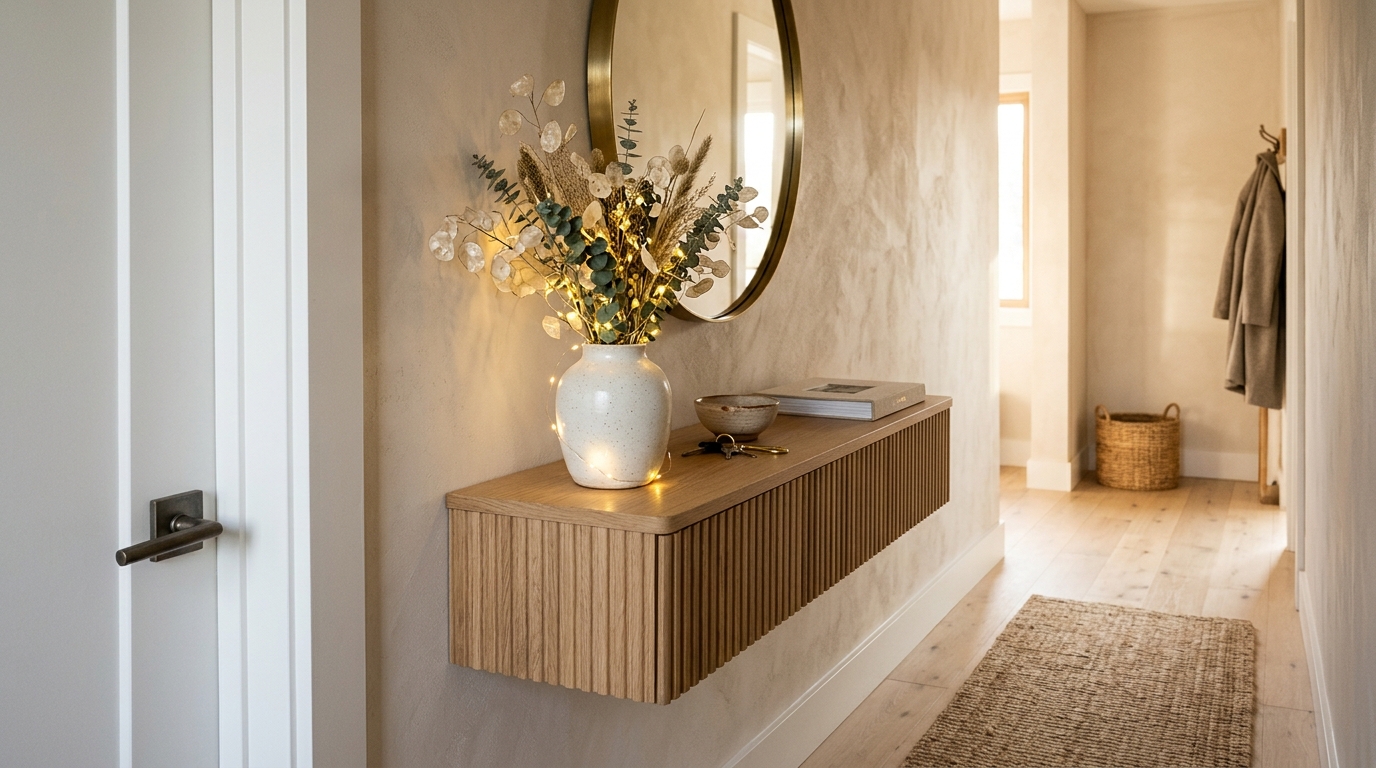
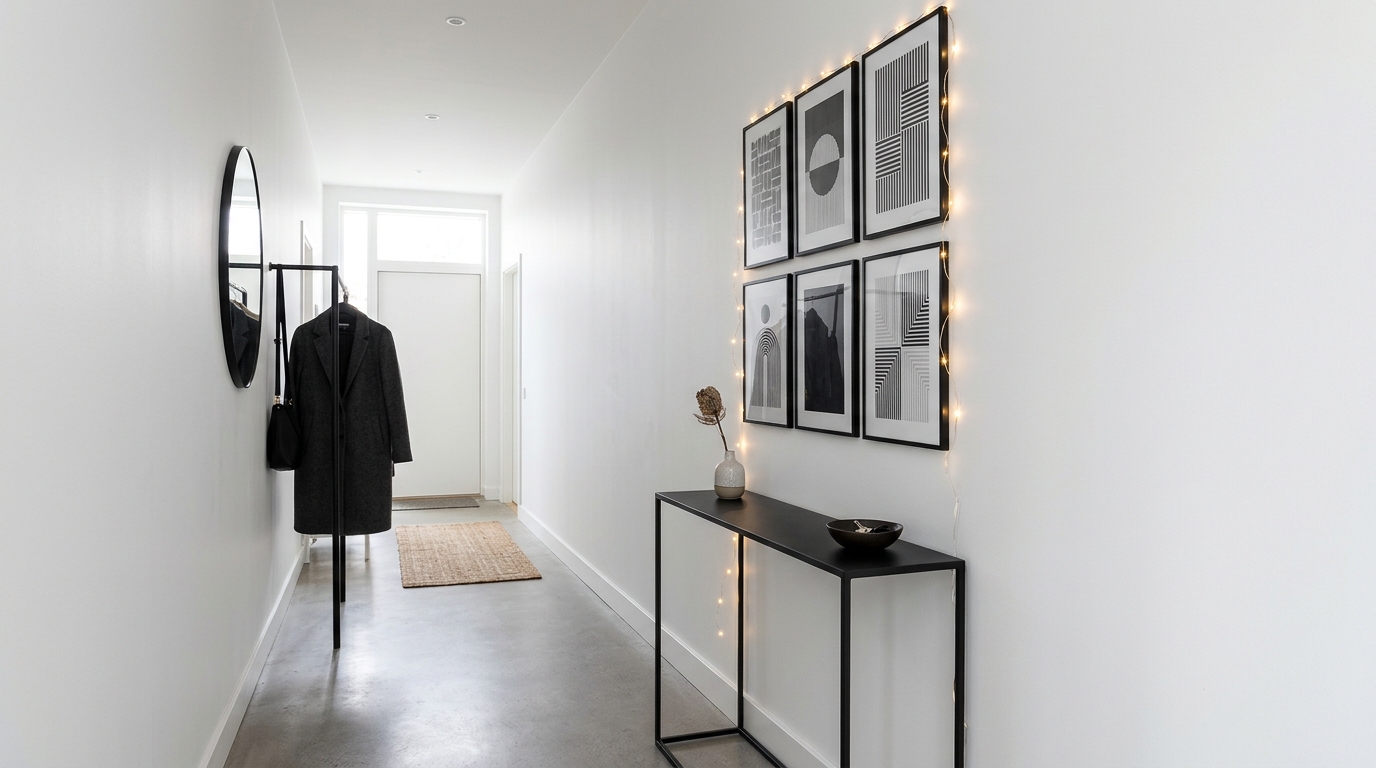
The secret to mastering small space design in these transitional volumes lies in what I call ‘spatial cadence.’ It is the rhythm of movement through a hallway. When we introduce string lights, specifically high-CRI (Color Rendering Index) micro-LEDs, we aren’t just adding a festive touch; we are engineering an atmospheric layer that occupies negative space. By weaving these lights through a slim, wall-mounted console or along the underside of a floating shelf, we create a soft, upward-facing glow that expands the perceived width of the walls. It creates a sense of levity, lifting the eye away from the narrow floor and toward the architectural details above.
Engineering the Flow: Why Traditional Lighting Fails in Narrow Entryways
Architectural Digest often speaks to the ‘geometry of the arrival,’ but for those of us living in authentic urban apartments or historic cottages, that geometry is often a tight rectangle. Standard entryway lighting—typically a single, harsh overhead flush-mount—creates deep shadows in corners, making the space feel more like a tunnel than a foyer. When we search for narrow entryway ideas that actually work, we must prioritize ergonomics. A floor lamp requires a 12-to-18-inch footprint; in a 40-inch wide hallway, that lamp reduces your functional path to just 22 inches, violating basic architectural clearances and making the simple act of carrying groceries an exercise in frustration.
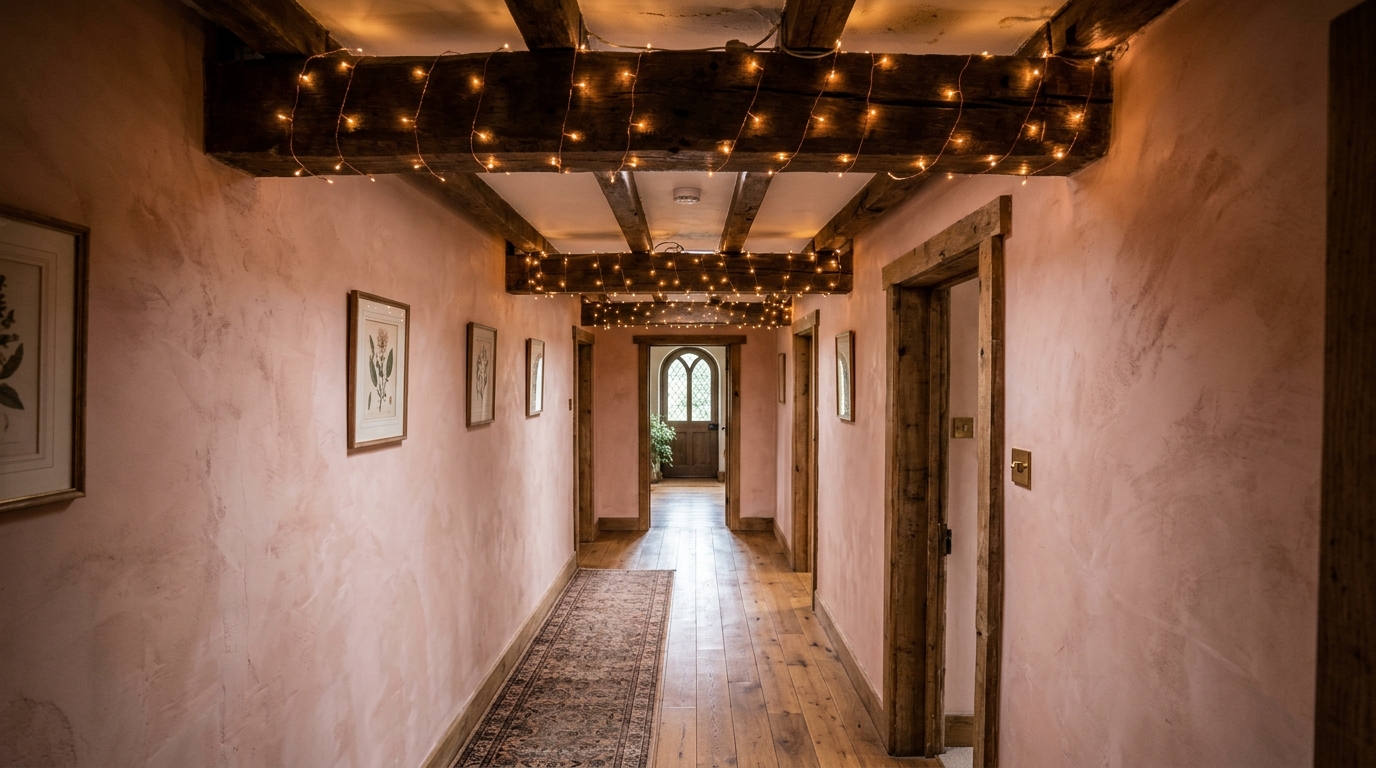
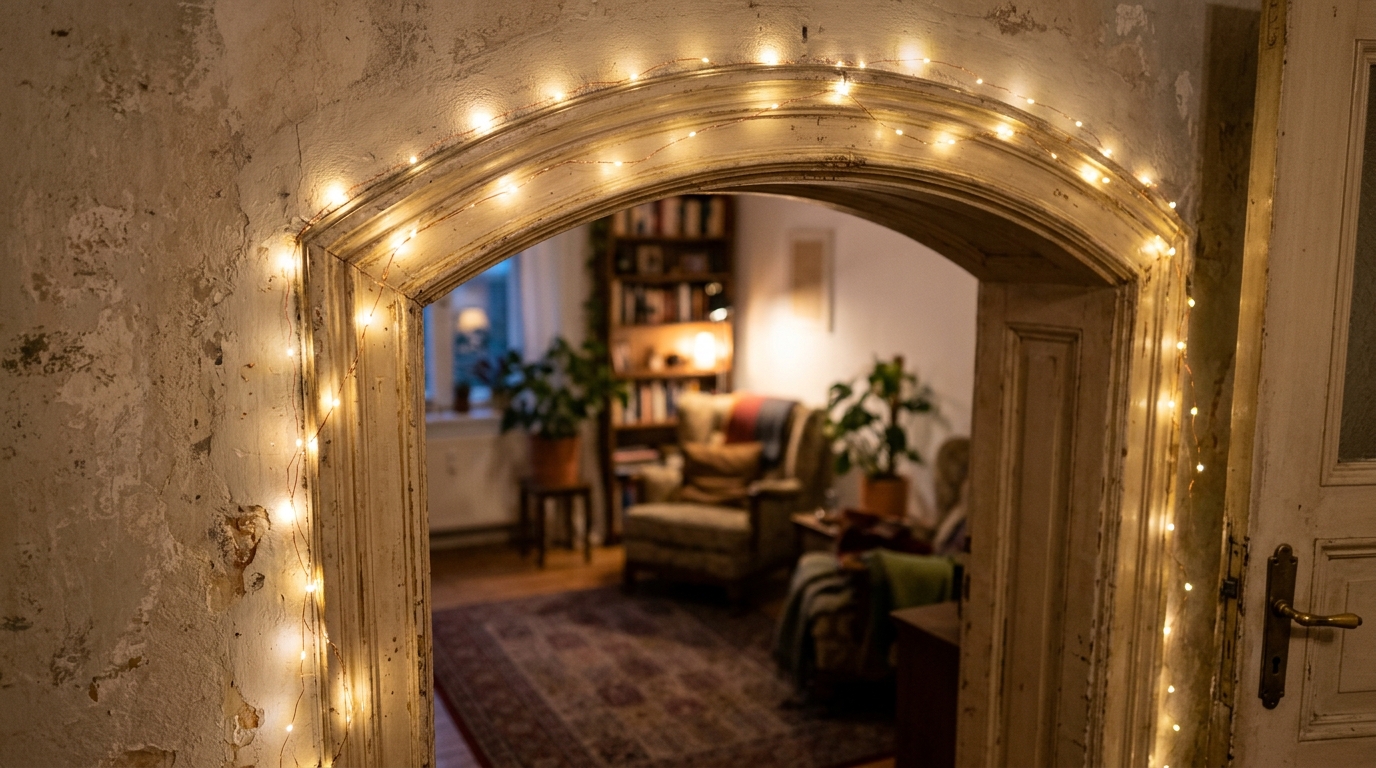
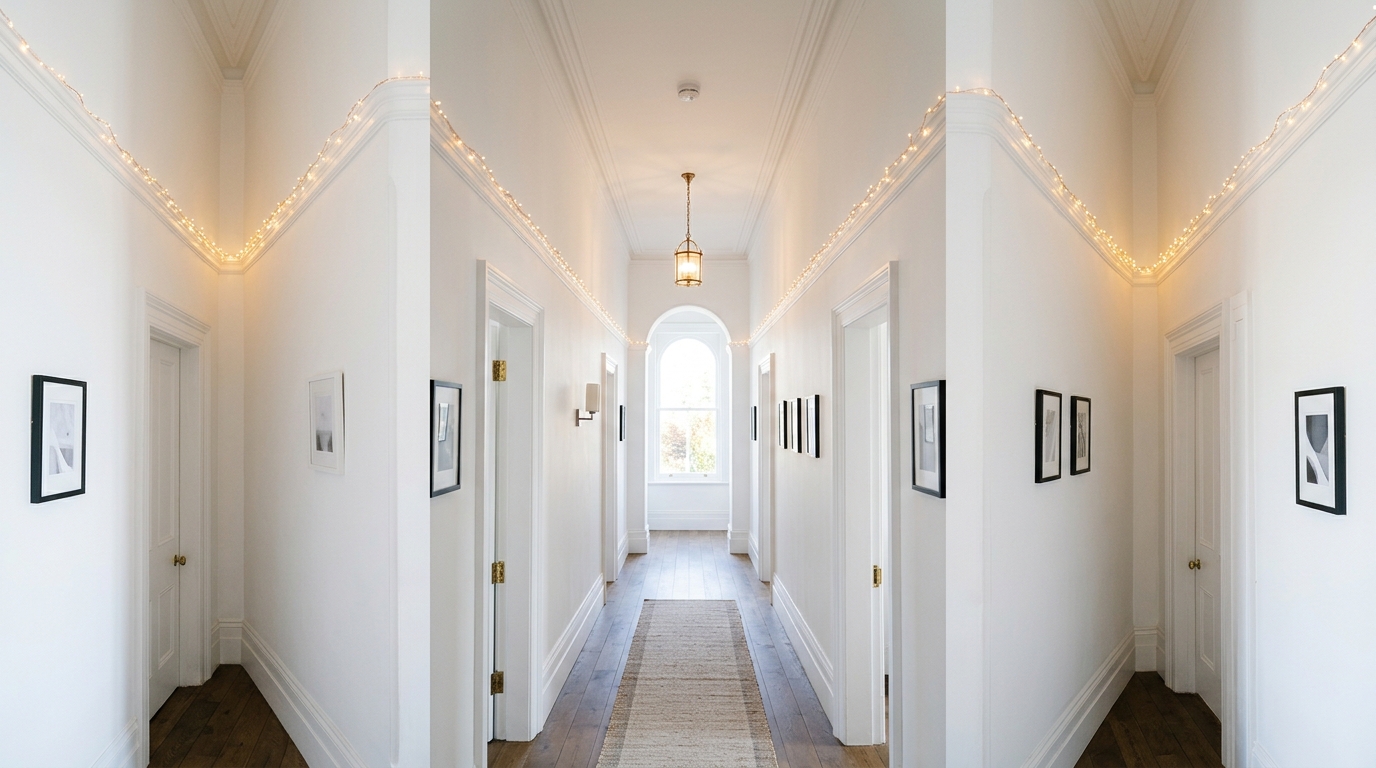
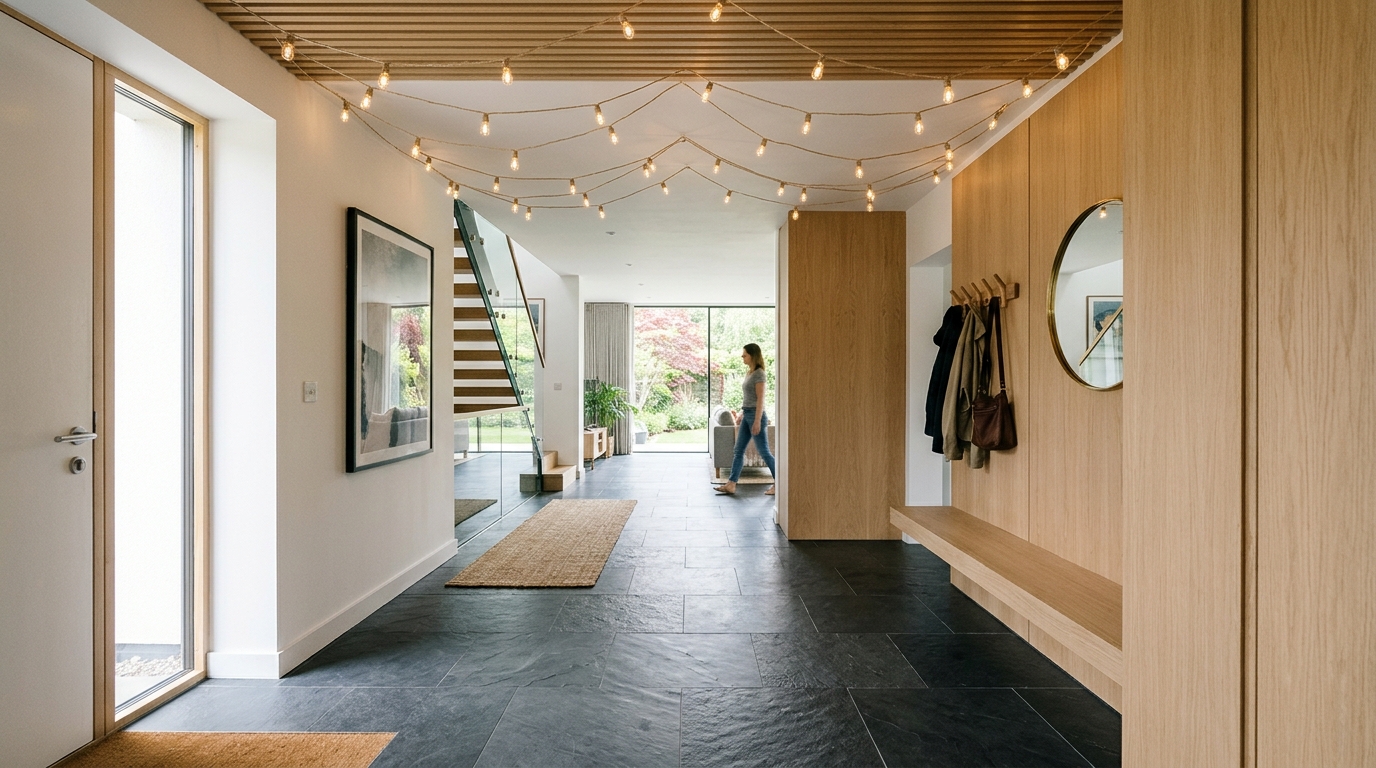
String lights, particularly ‘fairy’ or micro-wire LEDs, offer a structural solution that traditional lamps cannot match. They are weightless. They are flexible. And most importantly, they are modular. Instead of a single point-source of light that creates high-contrast glare, string lights provide a distributed linear glow. This mimics the effect of high-end integrated cove lighting but at a fraction of the cost and without the need for structural renovation. By wrapping these lights around an overhead architectural beam or tracing the crown molding, we define the ceiling plane, making the entire entryway feel taller and more expansive.
The Science of the Glow: Kelvin, CRI, and Atmospheric Depth
Not all string lights are created equal. To achieve a professional, ‘Interior Lens’ look, we must move away from the cool-blue, battery-operated sets found in bargain bins. For a sophisticated hallway decor, aim for a color temperature of exactly 2700K. This provides a warm, golden-hour amber that feels welcoming rather than clinical. Furthermore, look for a CRI (Color Rendering Index) of 90 or higher. This ensures that the textures of your home—the grain of a fluted white oak console, the depth of a Farrow & Ball ‘Setting Plaster’ wall, or the weave of a jute runner—are rendered with authentic richness.
Lighting is the jewelry of the room, but in a narrow space, it must also be the invisible infrastructure of comfort.
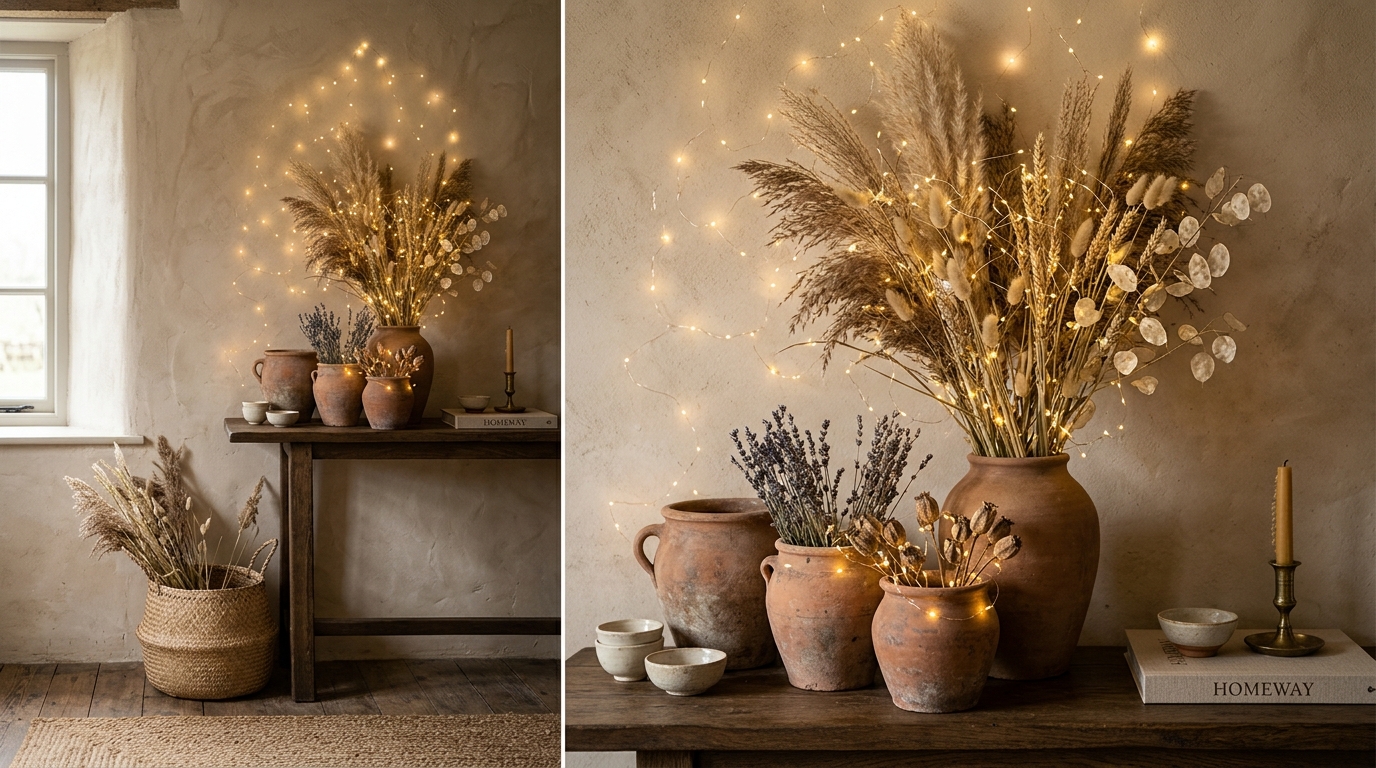
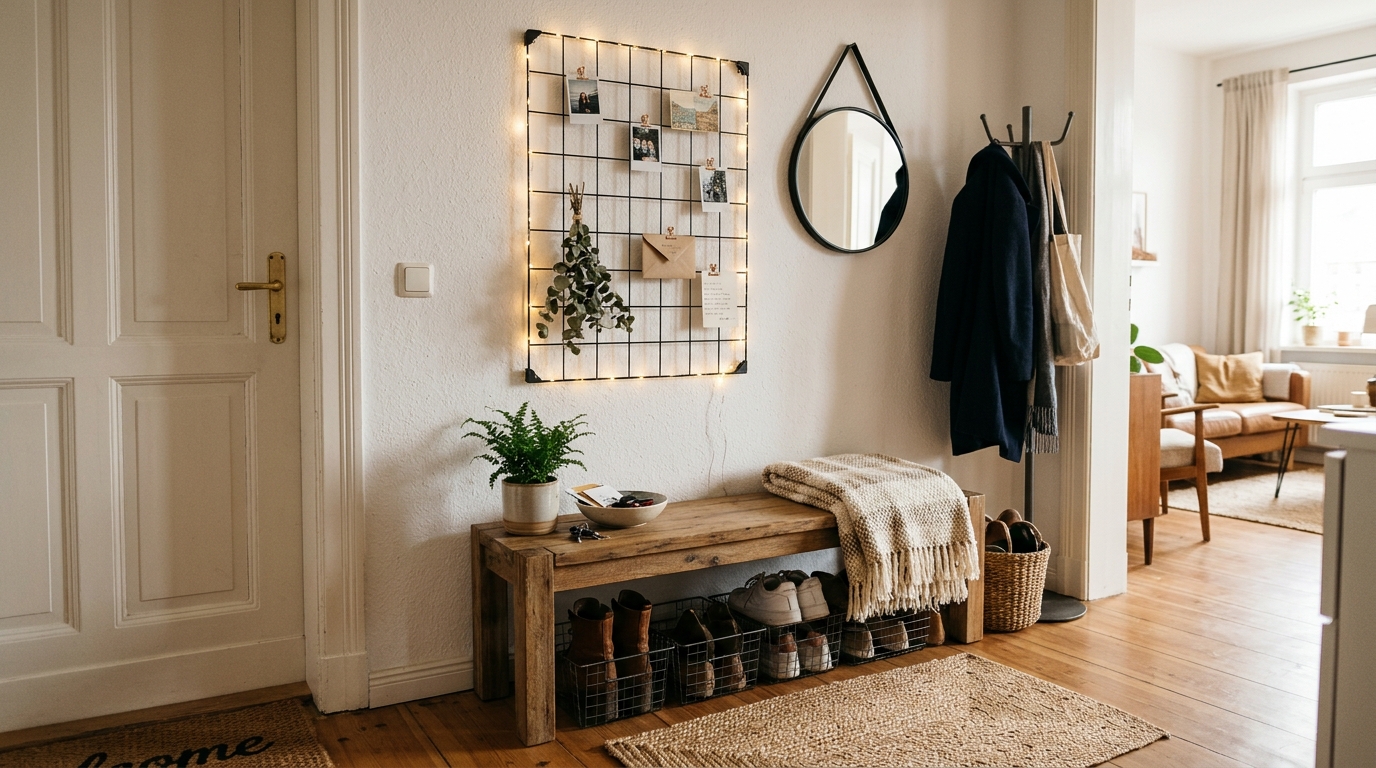
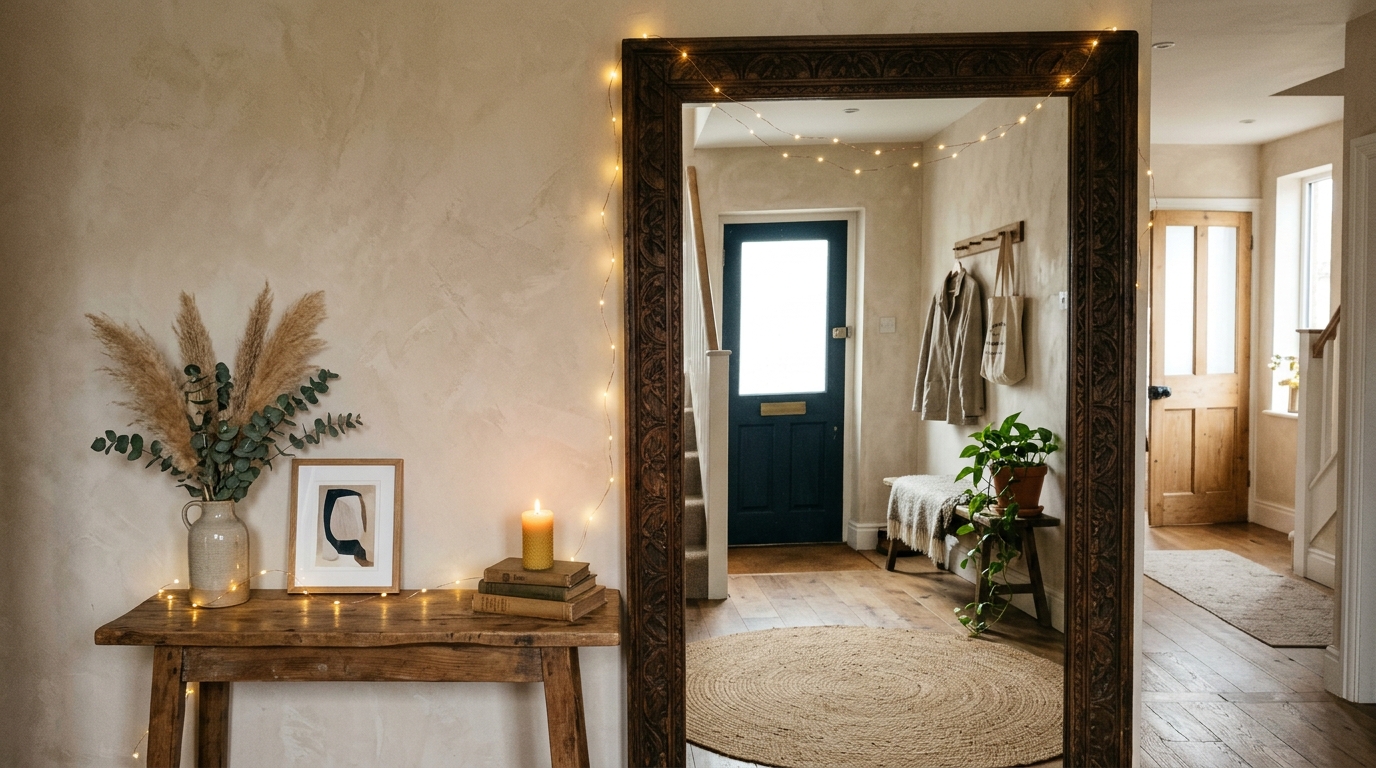
Consider the interplay of shadow play and tactile grounding. When micro-LEDs are nestled behind a stack of art books or woven through a dried floral arrangement on a narrow entryway console table, they create pockets of light that break up the visual monotony of a long wall. This ‘zonal’ approach to lighting is a hallmark of high-end design, allowing the eye to rest on specific curated vignettes rather than being overwhelmed by a singular, flat light source.
Tactile Materiality: Pairing Lights with Premium Finishes
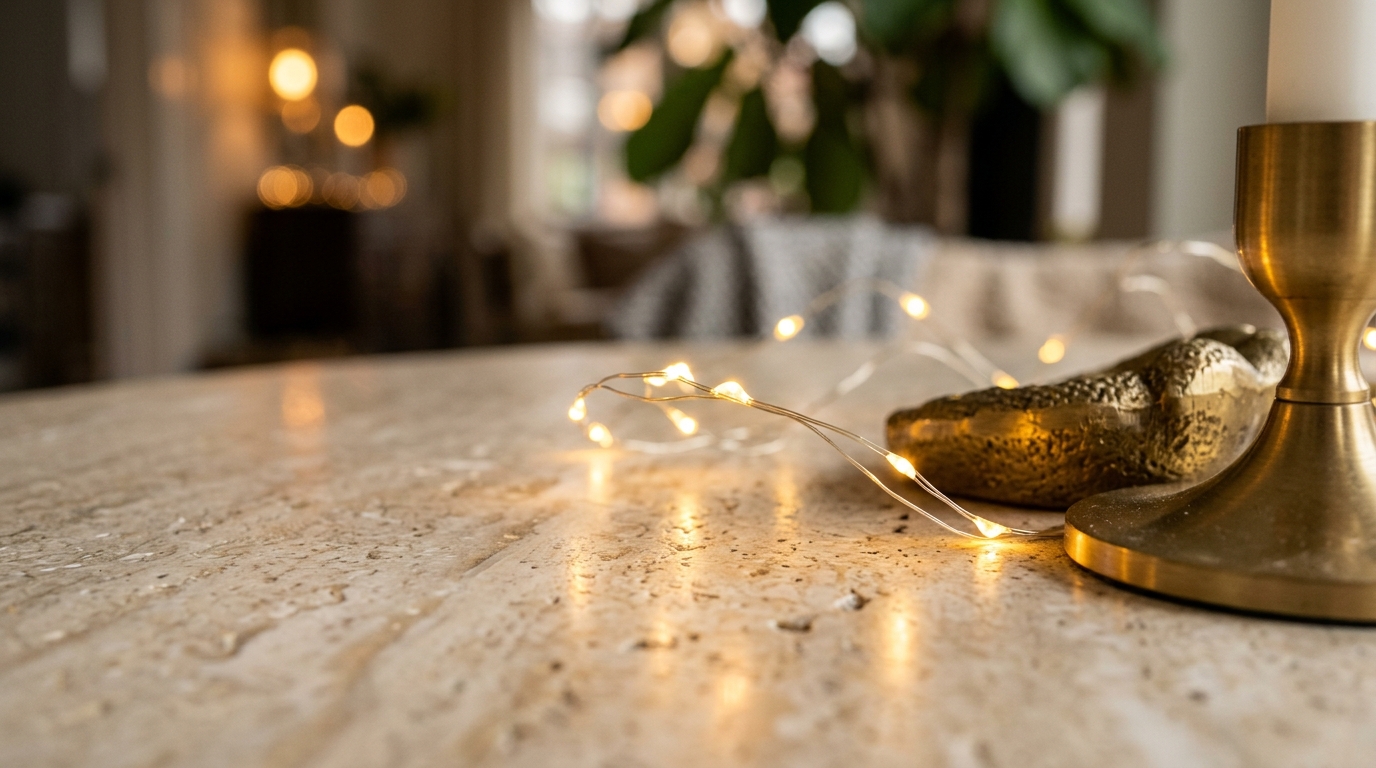
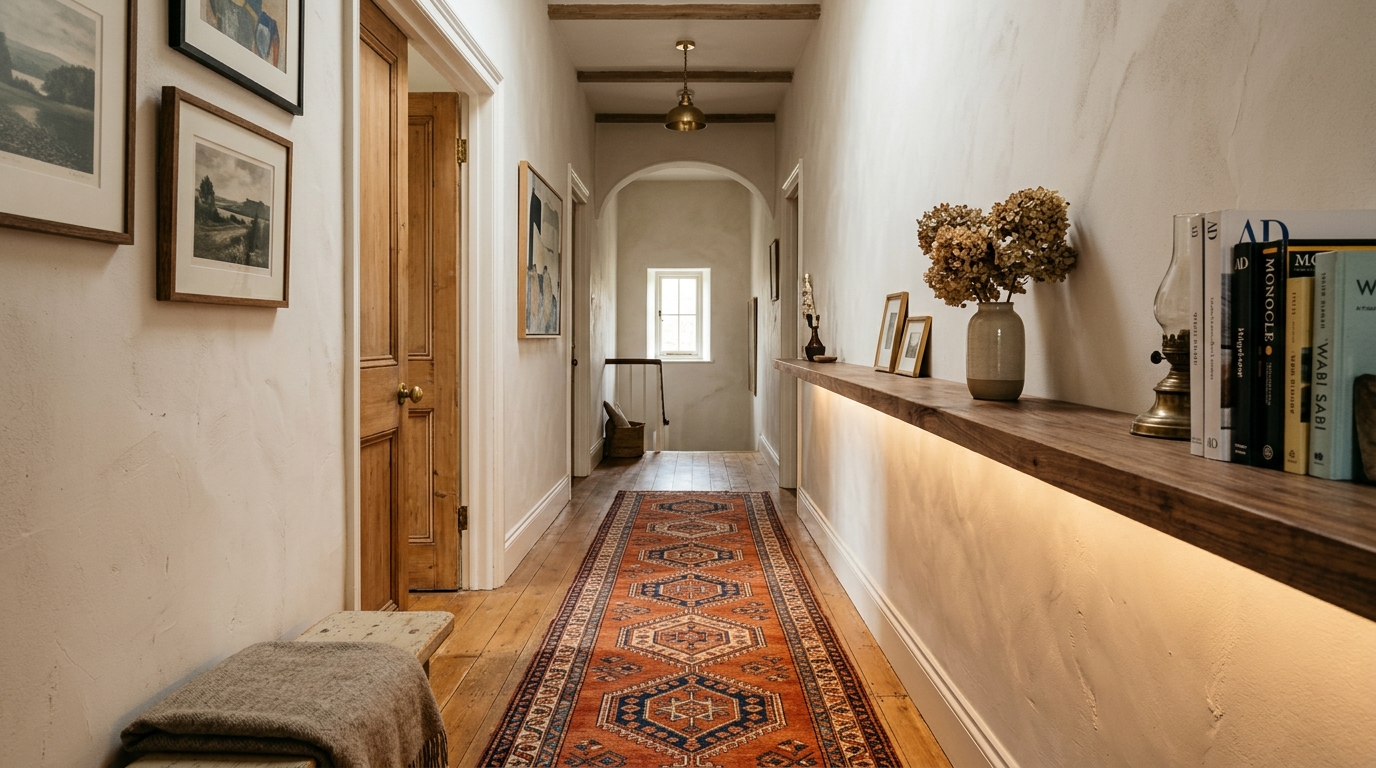
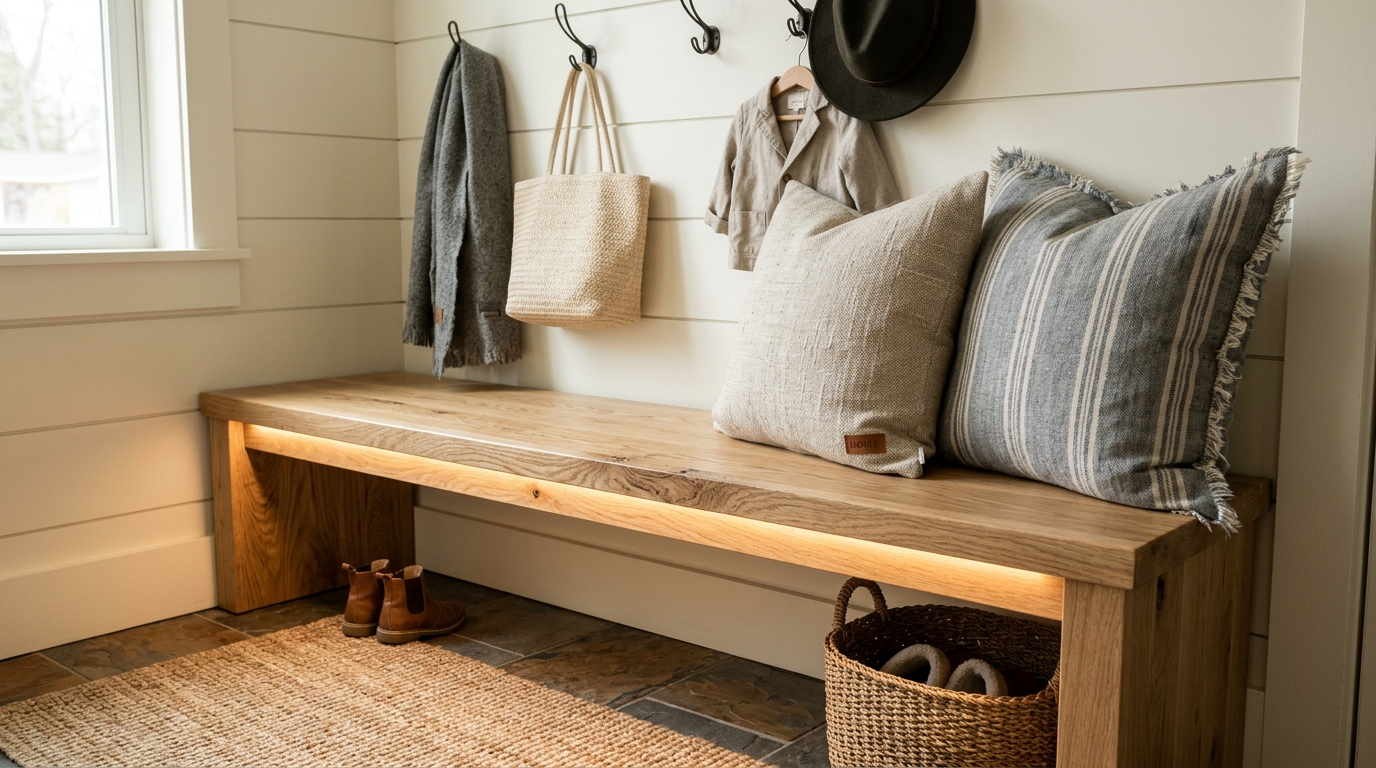
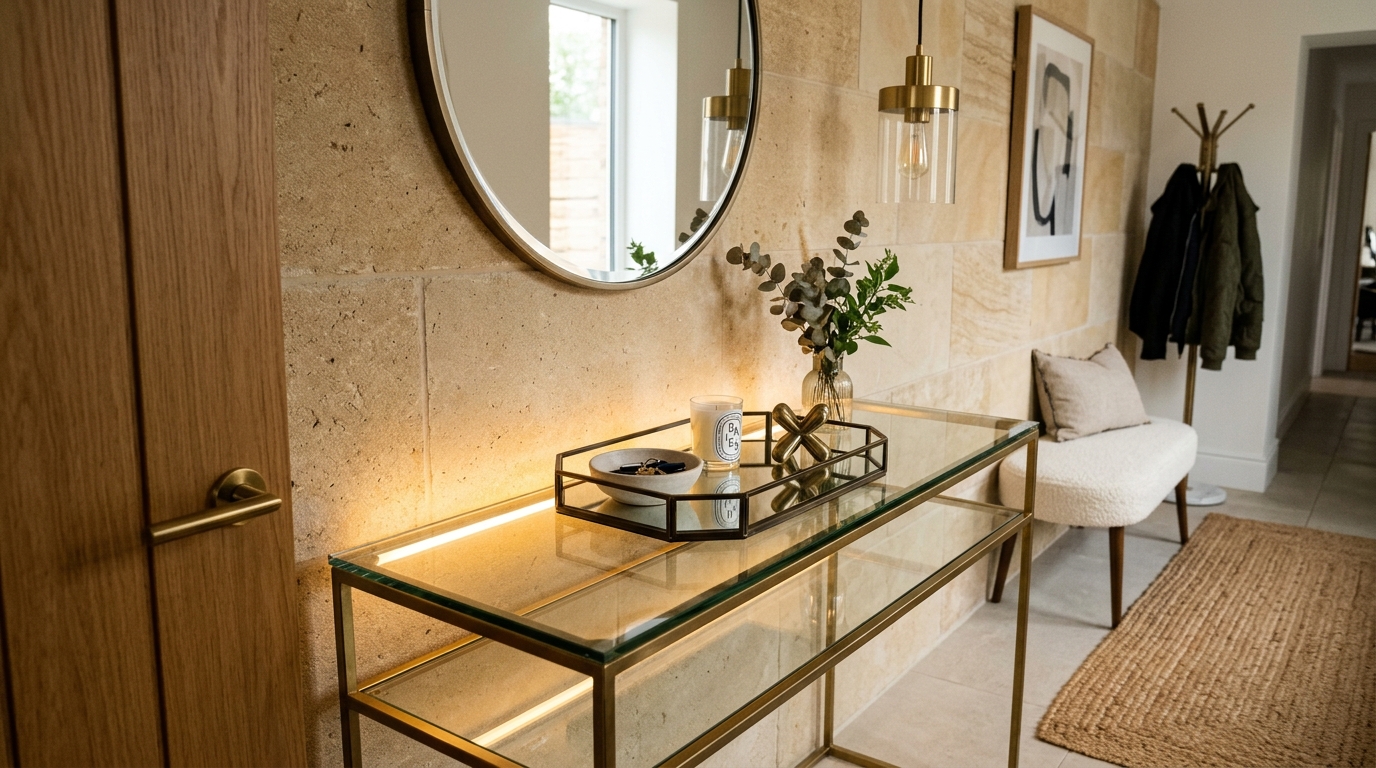
The success of these zero-footprint lighting hacks depends heavily on the surfaces they illuminate. If you are working with a narrow hallway runner rug in a deep charcoal or a textured sisal, the downward spill of light from a wall-mounted string setup will highlight the tactile quality of the fibers. I often recommend pairing these lights with materials that have a subtle ‘sheen’ but not a high-gloss ‘glare.’ Think honed travertine stone, brushed brass accents, or the soft matte finish of a limewash wall.
When light hits a limewash surface, like Benjamin Moore’s ‘Swiss Coffee’ in a matte finish, it diffuses beautifully, creating a soft-focus effect that softens the hard edges of a small foyer. If your entryway features architectural beams, wrapping them in copper-wire LEDs creates a ‘starry’ effect that draws the gaze upward, effectively doubling the perceived height of the room. This is a primary strategy in professional narrow entryway ideas: use verticality to compensate for a lack of horizontal square footage.
The Professional Installation: Beyond the Holiday Aesthetic
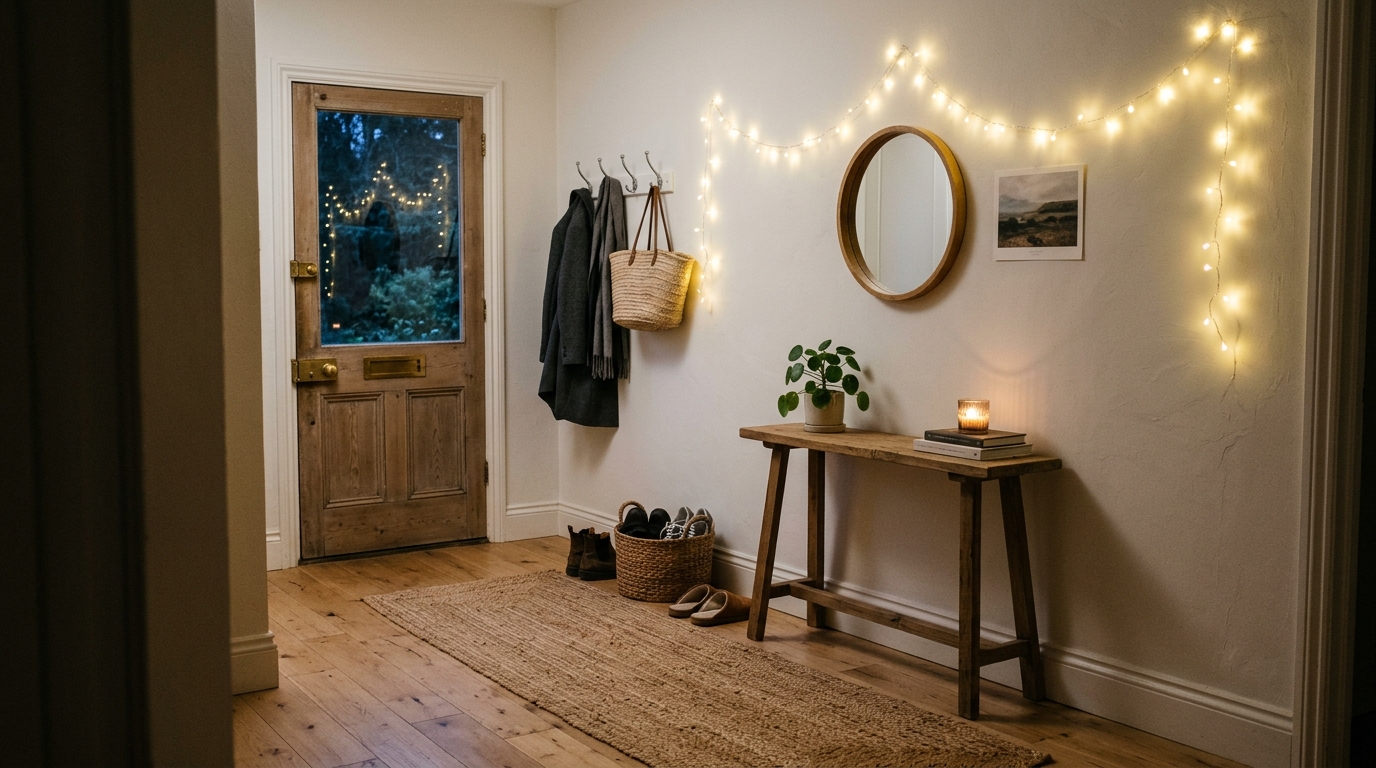
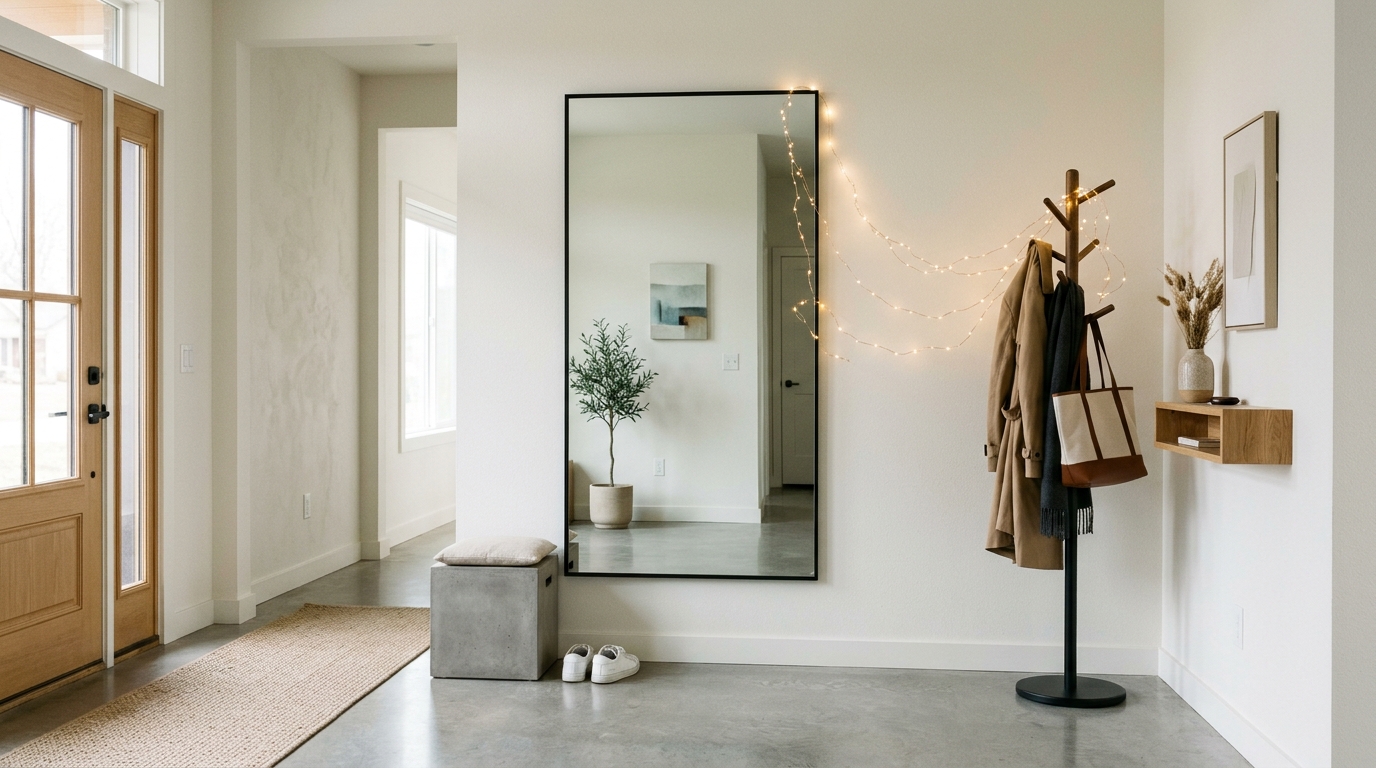
The biggest hurdle in using indoor string lights for foyers is the ‘dorm room’ stigma. To elevate this from a temporary decoration to a permanent architectural feature, the installation must be precise. Hidden battery packs or discreetly routed cables are essential. If you are using a small entryway console table with a mirror, hide the power source behind the mirror frame and allow the lights to glow from the periphery. This creates a backlit, halo effect that adds incredible depth to the reflection, making the narrow hallway feel like it opens into a much larger chamber.
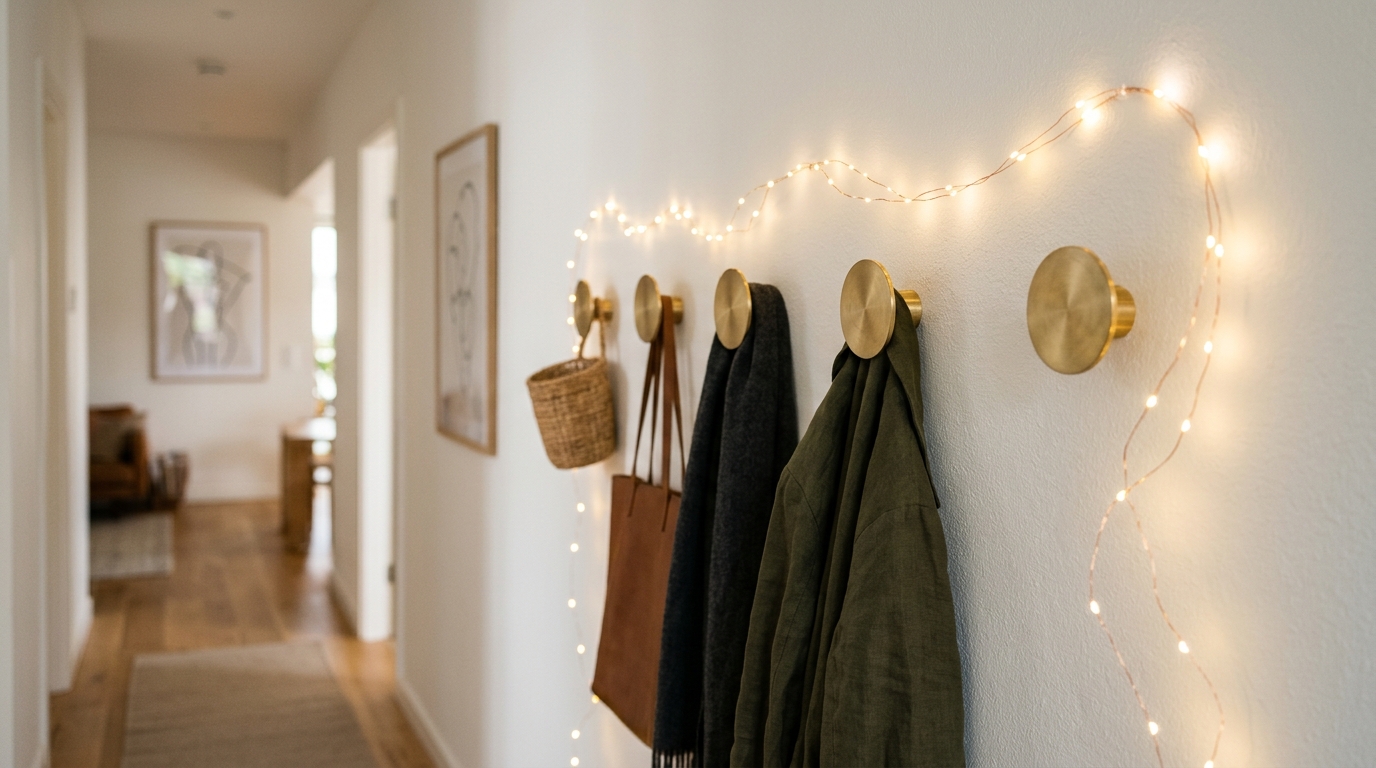
Functionality remains the priority. In high-traffic zones, any lighting must be secured. Use clear, micro-command hooks or professional cable clips to ensure the wires are taut and integrated into the architecture. A loose wire is a design failure; a perfectly tensioned line of light is a deliberate architectural choice. This ensures the lighting never obstructs the flow of a busy home, maintaining those critical 36-inch clearances while providing the warm white entryway lighting hacks that make a house feel like a home the moment you step through the door.
Small Space Design: The Power of Reflected Light
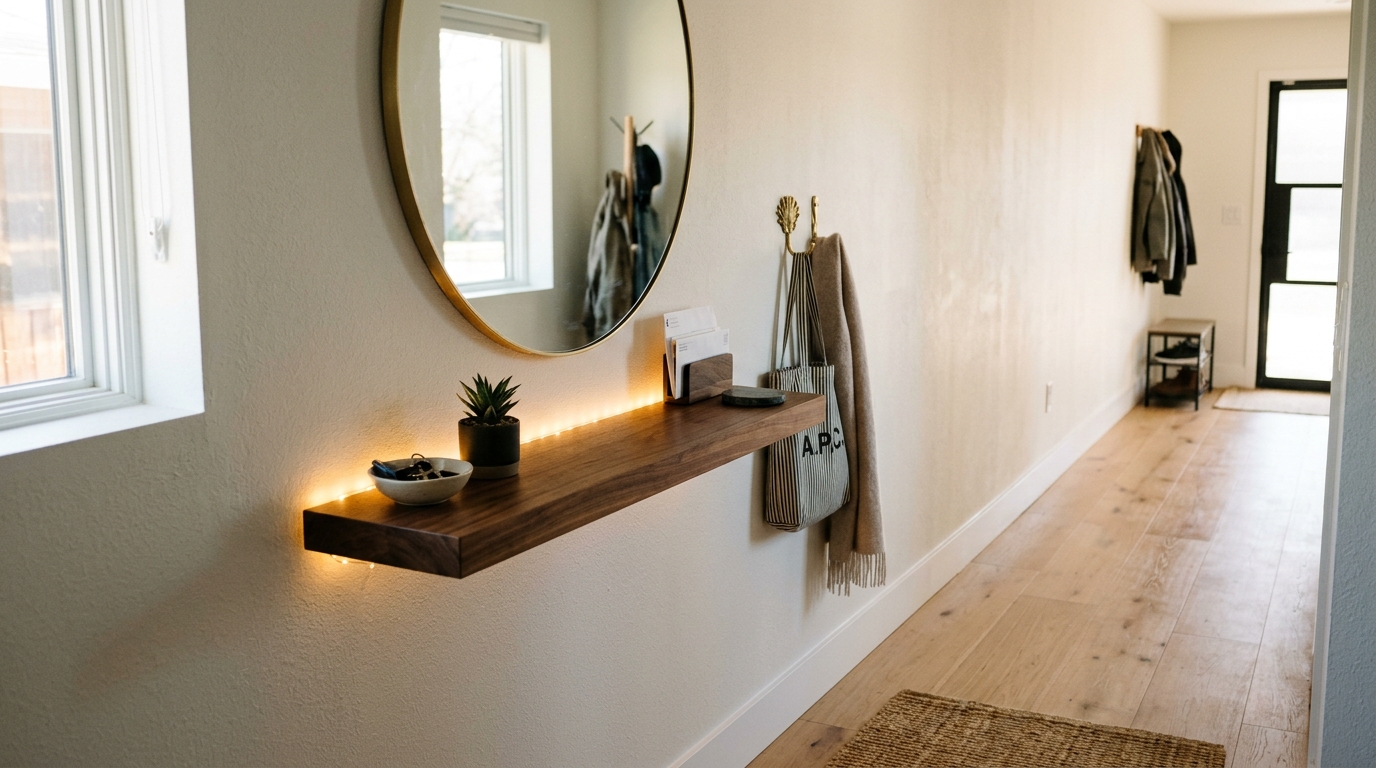
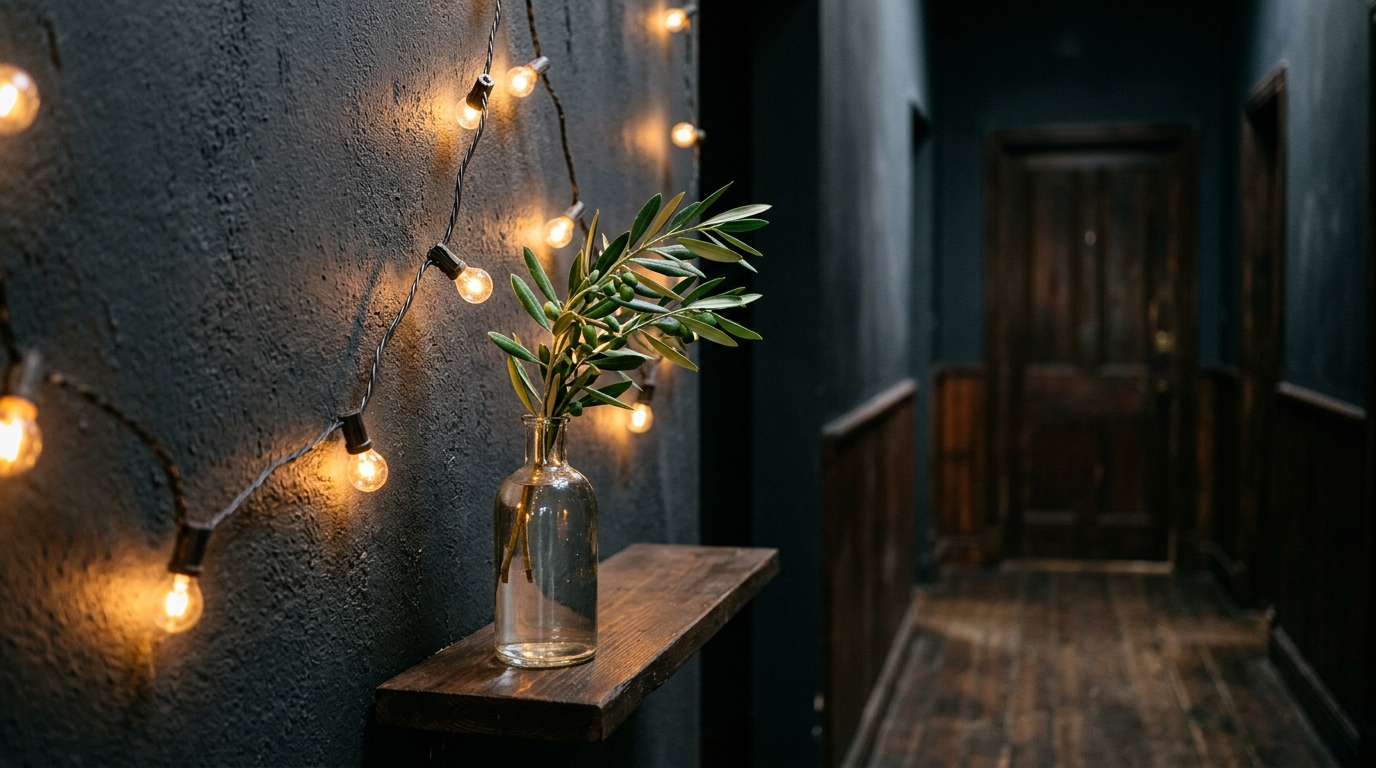
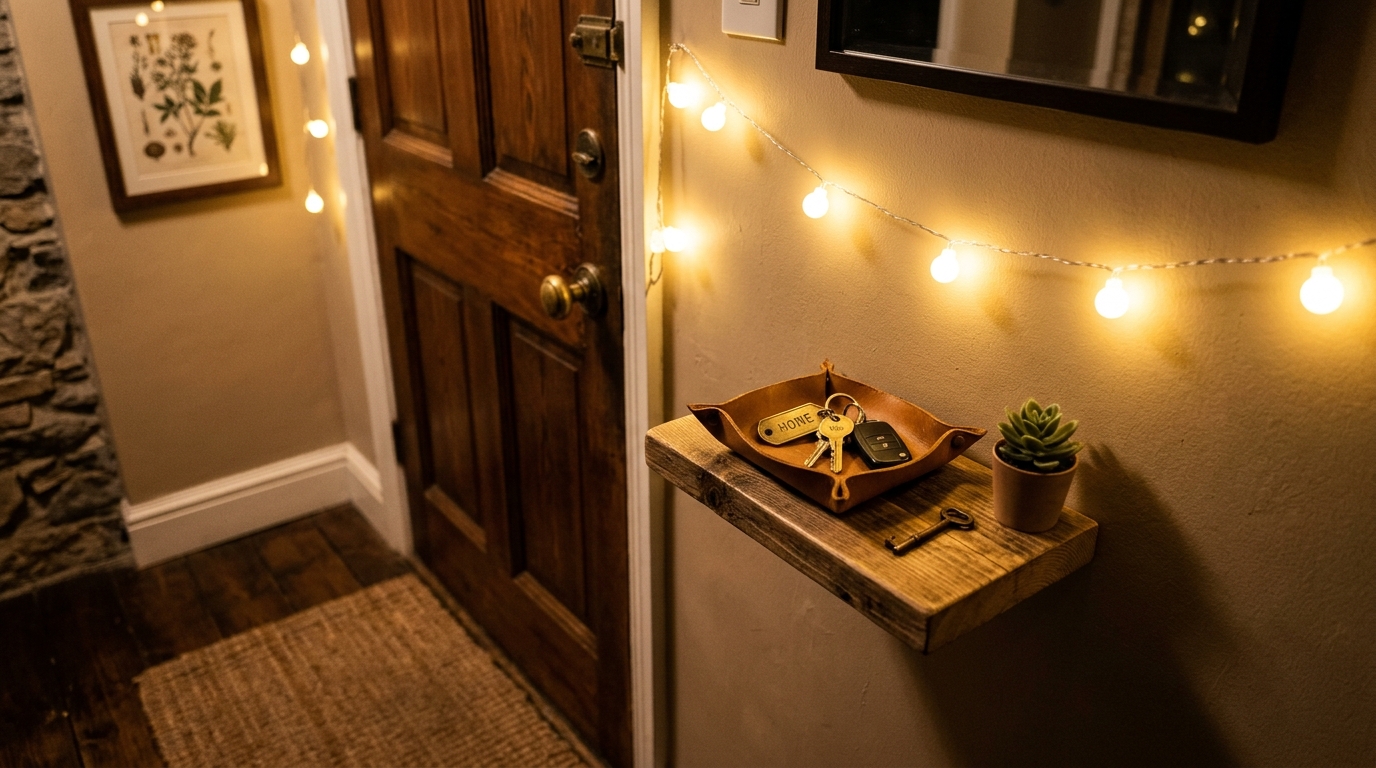
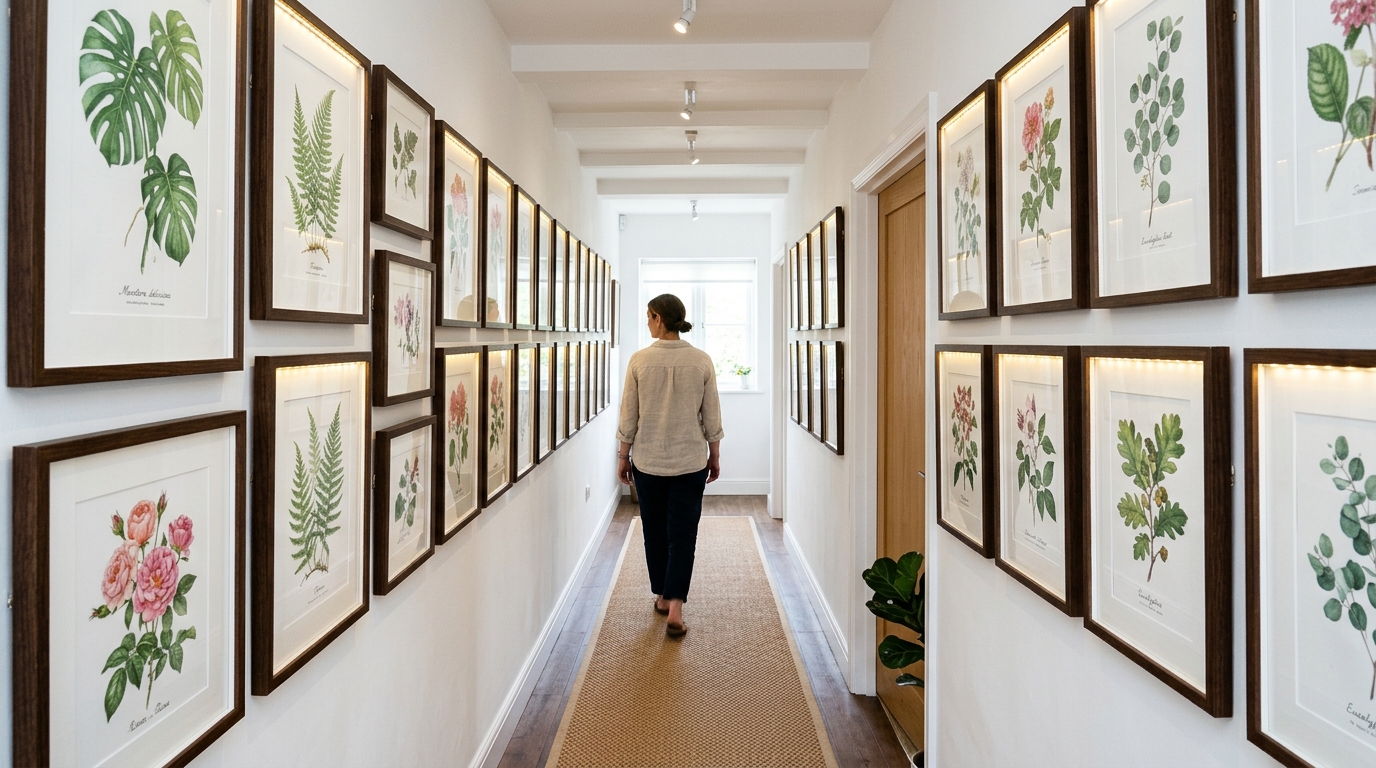
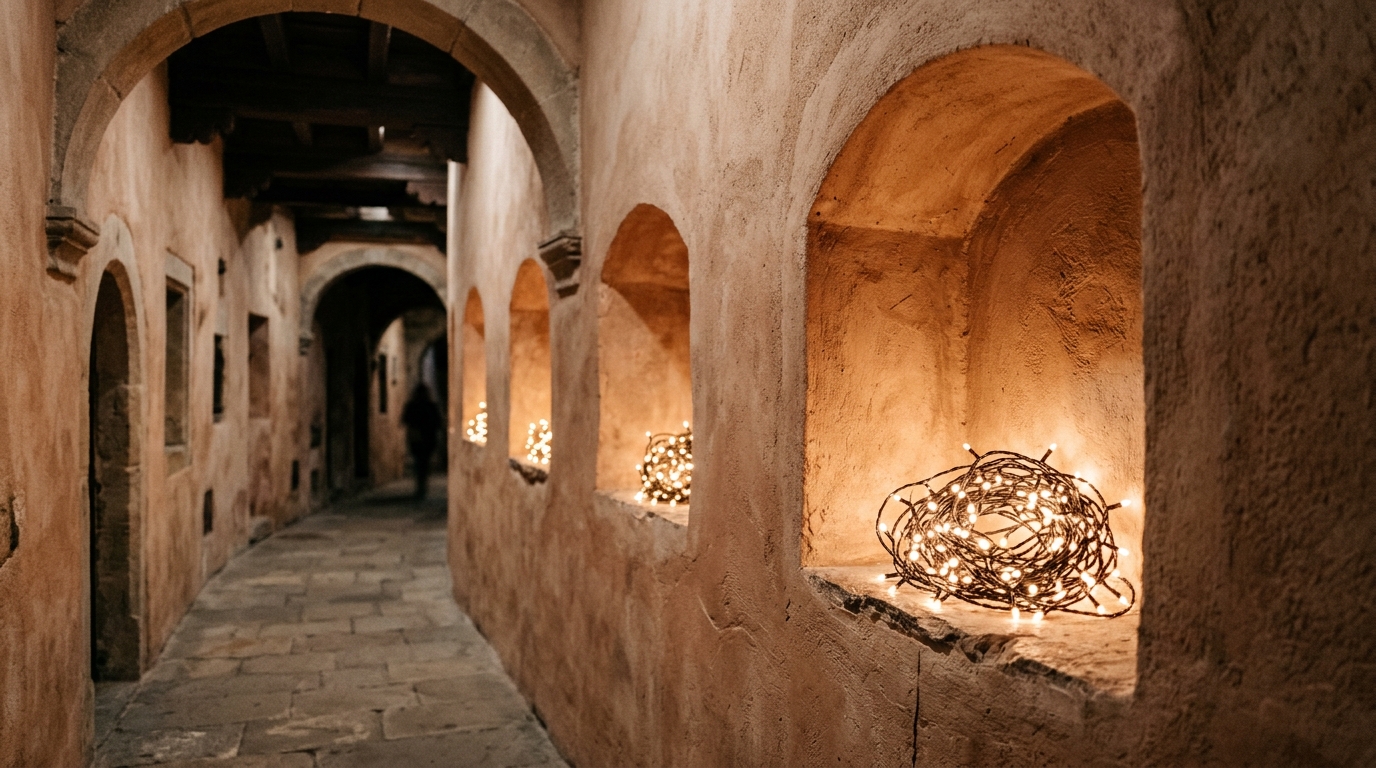
One of the most effective apartment hallway lighting solutions is the use of ‘bounce light.’ Instead of pointing your light sources into the center of the hall, point them at the walls. When string lights are tucked behind a floating shelf or a piece of wall art, the light bounces off the wall surface before reaching your eyes. This significantly reduces glare and creates a ‘wash’ of light that fills the volume of the space. It’s a technique used in luxury galleries to ensure the space feels airy and open. By applying this to your entryway, you transform a cramped utility area into a serene, curated passage.
Architectural Specification & Material Matrix
Curated tactile palette, spatial dimensions, and atmospheric lighting index for this design scheme.
Ultimately, the goal of integrating zero-footprint lighting into your narrow entryway ideas is to harmonize the functional requirements of the home with the emotional need for beauty. We are looking for that delicate balance where a space feels curated but not cluttered, illuminated but not exposed. By treating string lights as a legitimate architectural tool—considering their Kelvin temp, their CRI, and their spatial placement—we create an entrance that breathes. It is a reminder that even in the most restricted square footage, light can provide the ultimate sense of luxury and space.
Editorial Silo • Recommended Architecture Studies
- Fabulous Designer Foyers: Masterful Narrow Entryway Ideas & Spatial Flow — Archival Design Case Study
- The Tactile Aesthetic of Narrow Entryway: Materials, Moods & Lighting Kelvin — Archival Design Case Study
Architectural Inspiration Lookbook
A high-resolution study in spatial proportions, tactile materiality, and light choreography curated for enduring modern living.
Curated Visual Lookbook
Design Gallery & Spatial Studies
A visual curation of architectural arrangements, lighting concepts, and material palettes featured in this space.