The Death of Flat Walls
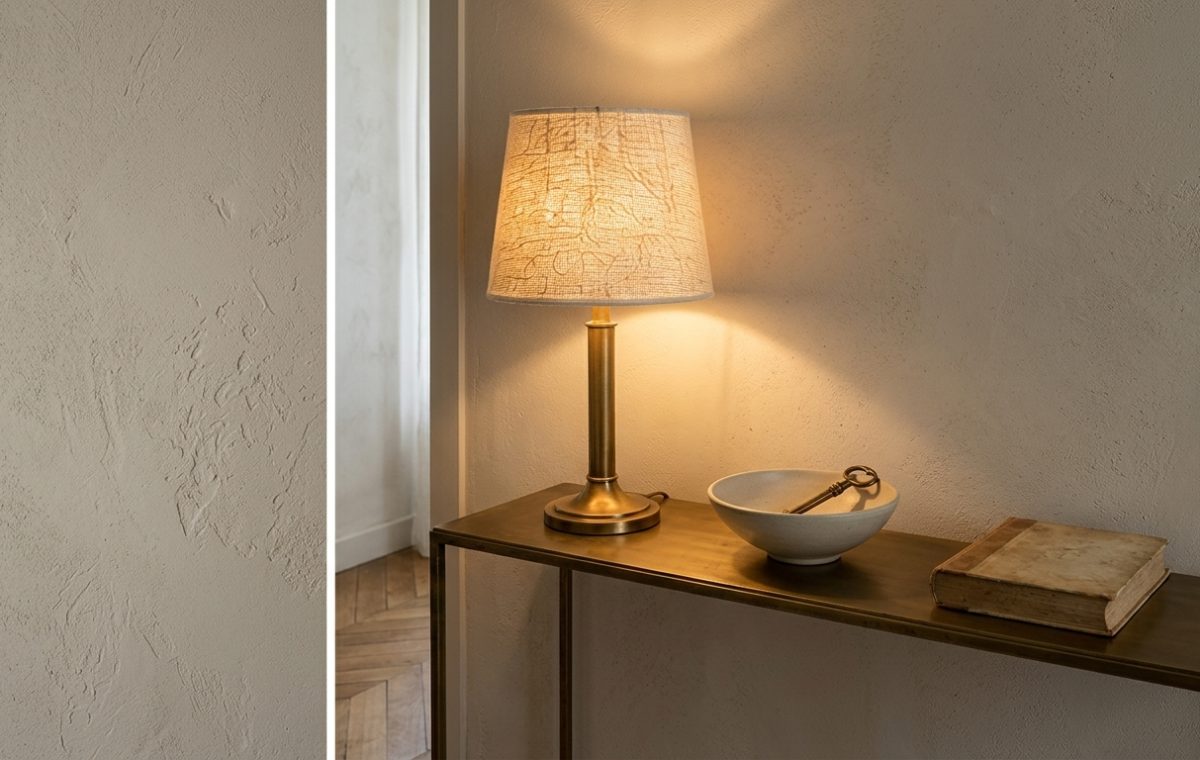
Most modern interiors suffer from a terminal case of ‘flatness.’ We spend thousands on mid-century furniture and designer rugs, only to slap two coats of plastic-looking eggshell paint on the walls and wonder why the room feels cold. Look at the way light hits a Limewash Wall Finish. It doesn’t just sit there; it moves. The subtle variations in tone and the visible brushwork create a sense of history that a standard gallon of hardware-store white simply cannot replicate.
The image here proves a point I’ve made for years: texture is a color in its own right. When you use a plaster effect or lime-based paint, you aren’t just changing the hue. You’re changing how the room breathes. It’s raw. It’s imperfect. And that is exactly why it works.
Lighting as a Sculptural Tool
If you invest in textured walls, your choice of interior lighting becomes your most important design decision. A flat wall looks the same under a fluorescent bulb or a designer lamp. A textured wall, however, demands ‘grazing’ light. Notice how the warm glow from the brass lamp in the photo catches the ridges and valleys of the plaster. It creates a shadow play that makes the wall feel three-dimensional. Without that texture, the lamp is just a light source. With it, the lamp is an artist.
Stop putting recessed lights directly over a textured surface. It washes everything out. Use table lamps, sconces, or floor lamps to cast light across the surface rather than directly at it. This highlights the textured paint and gives the room a moody, lived-in atmosphere that feels expensive without being flashy.
The Material Mix
A minimalist decor approach doesn’t mean having nothing in the room. It means making sure every object earns its keep. The pairing of aged brass against a neutral, chalky wall is a classic move for a reason. The reflective, hard surface of the metal provides a necessary contrast to the soft, porous look of the lime. Add in a bit of linen from a lampshade or the weathered paper of an old book, and you have a sensory experience that feels grounded.
Is it practical? Mostly. Limewash is naturally breathable and mold-resistant, which is a massive plus. The downside? You can’t really ‘patch’ a scuff. If you hit it with a vacuum cleaner, you might have to recoat the whole section or learn to love the ‘patina.’ For most people who value aesthetics, that’s a small price to pay for a home that doesn’t look like a generic rental unit.
Living with Imperfection
We have become obsessed with wipeable, scrubbable, perfect surfaces. But perfection is boring. It lacks soul. There is something deeply satisfying about a room that shows the hand of the maker. Whether it’s the slight wobble in a hand-poured ceramic bowl or the uneven strokes of a lime-based finish, these details remind us that a human lived here. When was the last time you actually stopped to look at the texture of your own walls, or do they just disappear into the background?</
Editorial Lookbook & Photo Collection