The Anatomy of an Unfussy Landing Strip
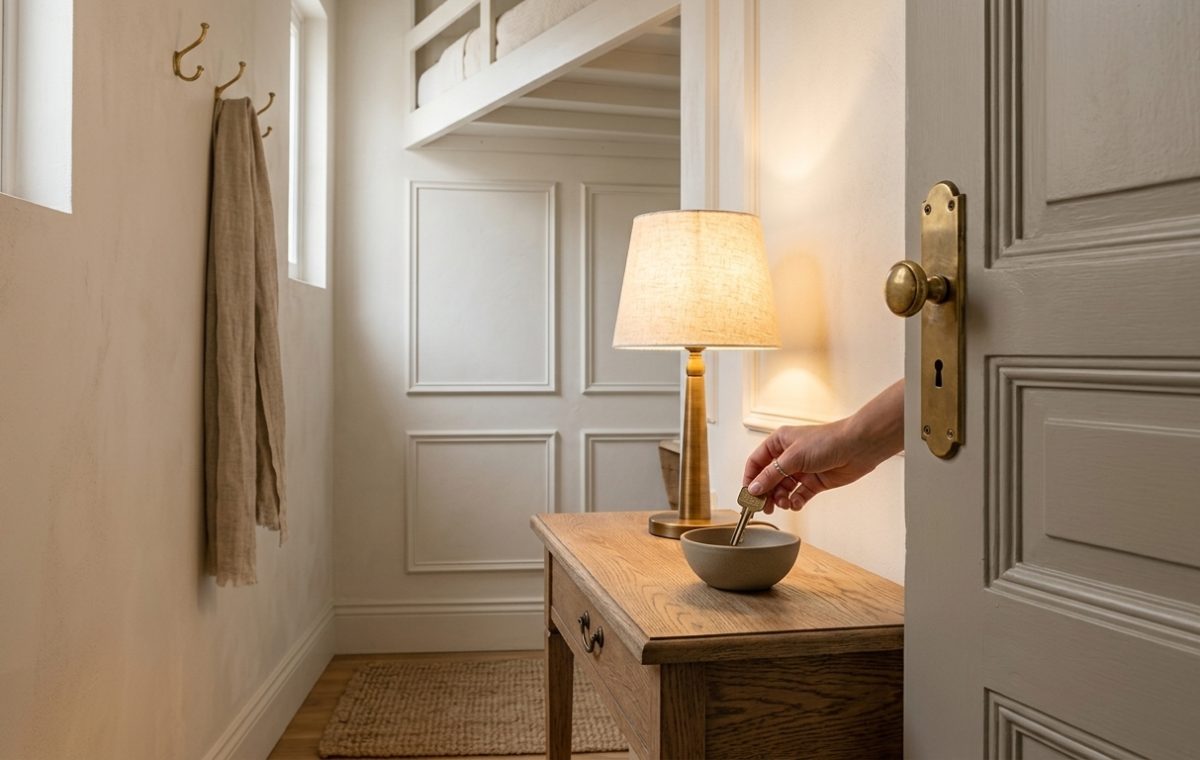
That subtle metallic click of keys meeting a ceramic bowl marks the exact moment outside chaos stops. You take off your coat, shed the day’s weight, and cross a physical boundary. Most people get this space completely wrong. They either treat the front hall as a pure staging ground for decorative knickknacks or surrender entirely to shoe piles and unopened mail.
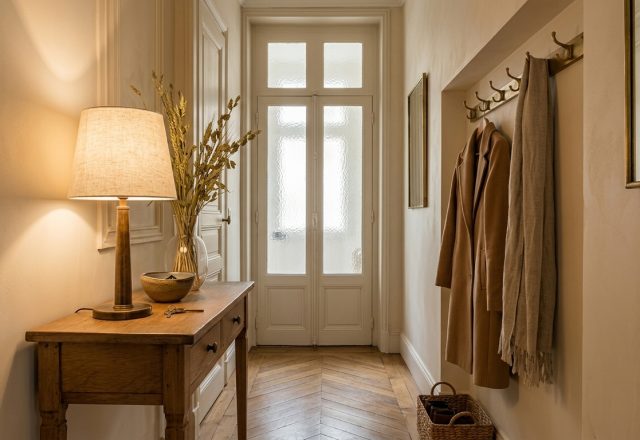
A well-proportioned entryway drop zone styling solves that friction point without feeling sterile. Look at the narrow oak console tucked against the wainscoting. It claims scarcely twelve inches of depth, leaving the walkway entirely clear. You do not need grand dimensions to establish order; you just need intentional zoning.
The Three Essentials of Surface Balance
Restraint keeps a small foyer functional. Overcrowd the console, and people will dump their daily essentials onto the nearest floorboard instead. Three working elements create the sweet spot:
- Anchored task lighting: Overhead fixtures often feel harsh when coming inside after dusk. A warm table lamp with a woven shade casts an inviting pool of amber light right where your hands land.
- A deliberate catchall: The humble ceramic key bowl does heavy lifting. By limiting the receptacle to something roughly the size of two cupped palms, you physically prevent mail stacks from accumulating. It holds keys, a tube of lip balm, perhaps a pocketknife—nothing more.
- Negative space: Leaving at least half the wooden tabletop bare gives your eyes a break the second you step past the doorframe.
Vertical Thinking in Tight Thresholds
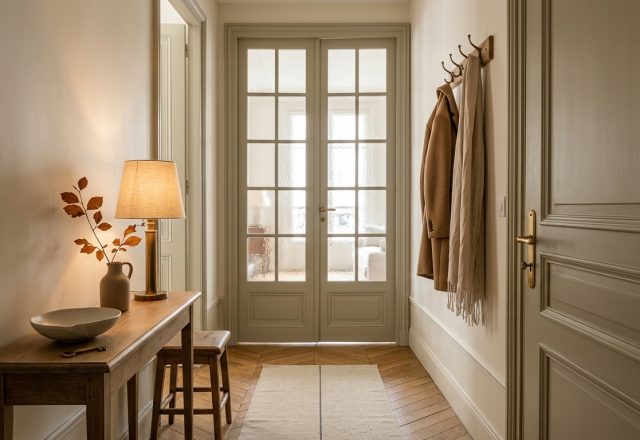
What happens when floor area is at an absolute premium? Look up. Running simple brass coat hooks directly on the adjacent wall keeps coats, tote bags, and linen scarves off horizontal surfaces. Notice how the hooks sit at shoulder height rather than eye level, giving coats plenty of drop without tangling with whatever sits on the table.
Small entry spaces fail when they ask too much of you. If an organizing system requires opening two drawers and clipping three baskets, nobody will use it after a twelve-hour workday.
There is also the matter of upkeep. Oak surfaces show rings if wet umbrellas touch them, and ceramic dishes will scuff unfinished wood over time. A tiny felt pad under your catchall bowl spares you the heartbreak of scratched timber. Natural textures like a rough jute runner and raw plaster walls handle scuffs and muddy boots far more gracefully than high-gloss trim ever could.
Take a look at your own front door right now. What is the single item that always ends up dumped on the floor the second you unlock the deadbolt?
Editorial Lookbook & Photo Collection