The Physics of Diffusion
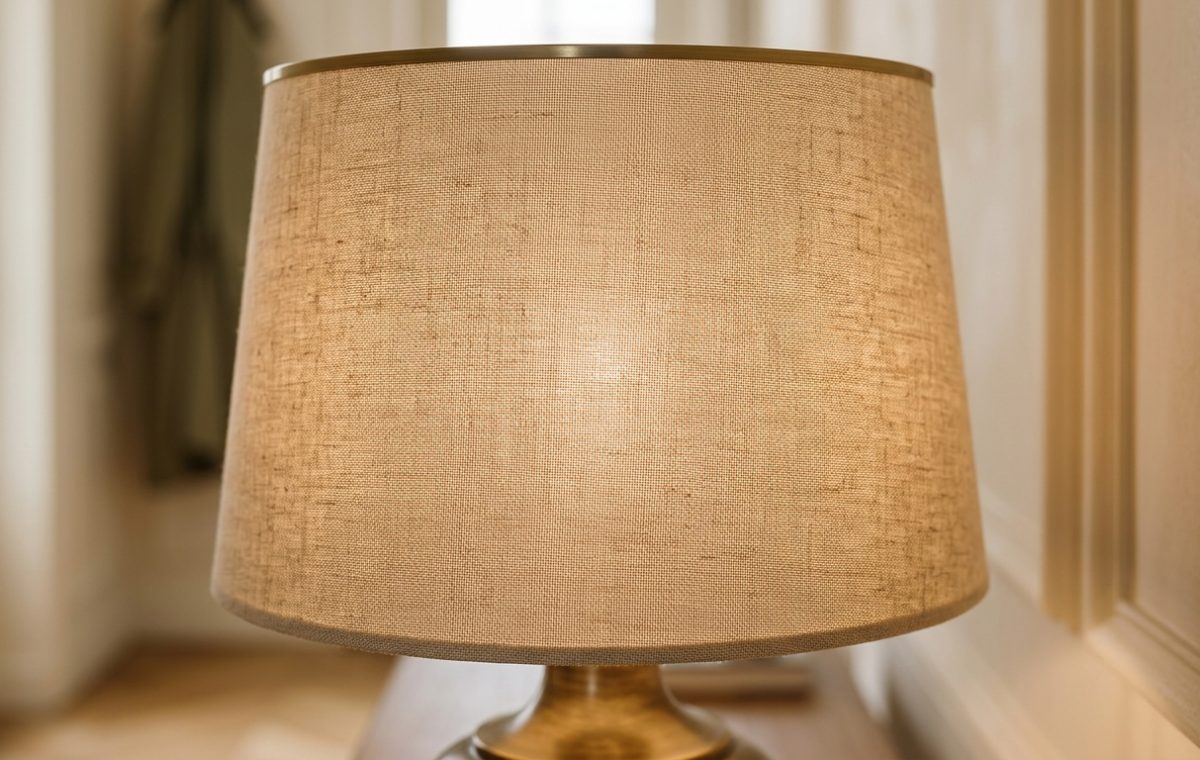
Look closely at the weave of that fabric. It is the difference between a room that feels like a clinical office and one that feels like a sanctuary. A linen lampshade doesn’t just block light; it sculpts it. While synthetic materials often produce a flat, plasticized glow, the natural irregularities in linen fibers create a micro-texture of shadows and highlights. This is what we call depth. When you flick the switch, the lamp isn’t just a source of illumination—it becomes a tactile object that anchors the room.
Have you ever noticed how the same bulb can feel aggressive in one fixture and soothing in another? It’s rarely about the wattage. It’s about the filter. A coarse weave, like the one seen in the image, allows tiny pinpricks of light to escape through the gaps while the thicker threads soak up the harshness. This creates a warm white glow that softens the hard edges of your furniture. It’s a low-tech solution to a high-stress world.
Texture Over Trend
Minimalism often gets a bad rap for being cold. Usually, that’s because the surfaces are too smooth. To fix a sterile living space, you don’t need more furniture; you need better friction. Pairing a textured shade with a brass lamp base introduces a classic material contrast. The metal reflects the light downward onto the tabletop, while the linen breathes the light outward into the space. It’s a functional duality that works in almost any setting, from a mid-century modern nook to a traditional study.
Lighting is the jewelry of the home, but the shade is the skin that makes it human.
There is a realistic caveat to consider: maintenance. Natural fibers are dust magnets. Unlike a glass globe that you can wipe down in five seconds, a linen shade requires a delicate touch. A lint roller or a soft brush is your best friend here. If you let the dust settle into the weave, the light starts to look muddy rather than warm. It’s a small trade-off for the organic aesthetic, but one worth noting if you live in a high-traffic, high-dust environment.
Choosing Your Weave
Not all linen is created equal. A tight, fine-thread weave will provide a more formal, uniform light, whereas a slubby, heavy-duty linen offers that rustic, artisanal feel. When home styling, consider the surrounding walls. If your walls are flat paint, a highly textured shade adds necessary visual interest. If you have patterned wallpaper, a smoother linen might be the better play to avoid a visual clash. Ambient lighting is about balance, not just brightness. Next time you’re looking at a dark corner in your house, don’t just buy a brighter bulb. Look at the shade. Is it working for you, or is it just standing in the way? What’s the oldest lamp in your house, and how would it look with a fresh, textured upgrade?
Editorial Lookbook & Photo Collection