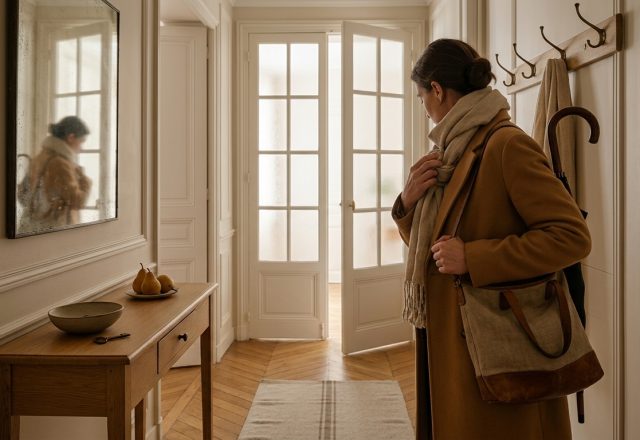
Most entryways are treated as transit zones, yet the heavy brass hook in this frame suggests a place where stories are hung up to dry. We often rush through these spaces. We kick off shoes, drop keys, and ignore the walls. But a hallway is the handshake of your home. If it feels cold or cluttered, the rest of the house struggles to recover that first impression.
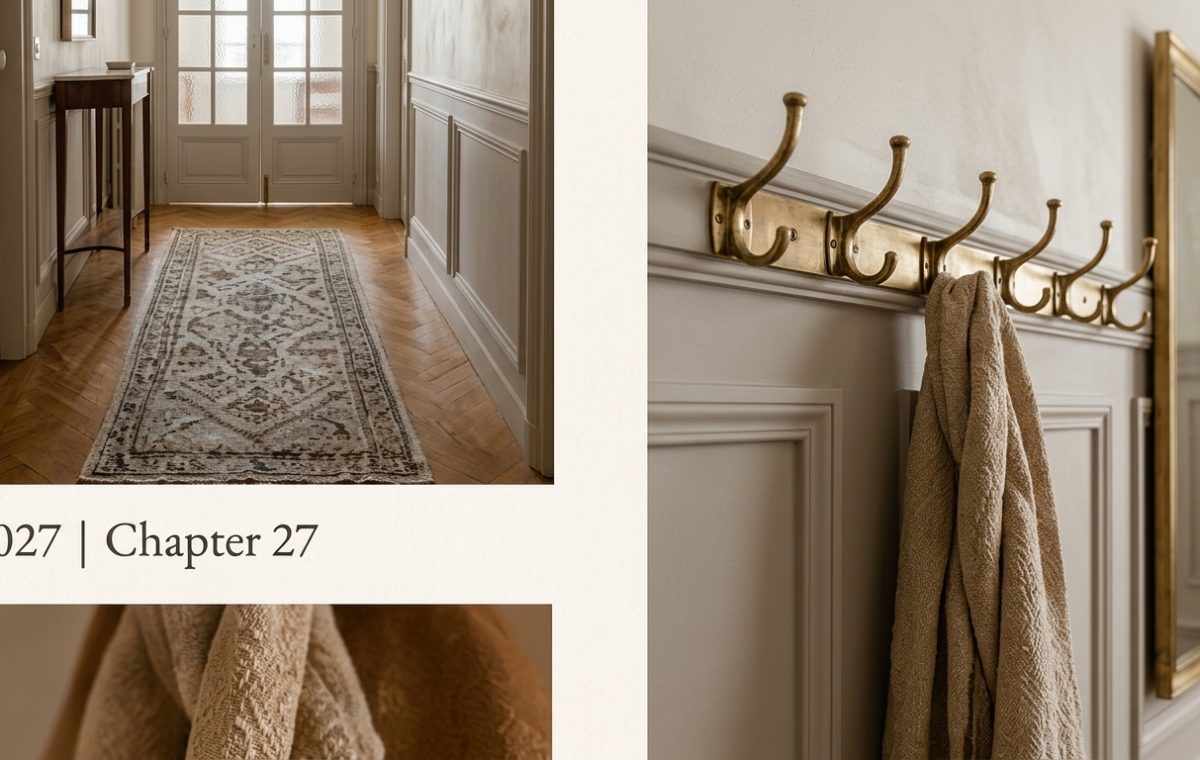
Vintage hallway decor isn’t about recreating a museum. It is about durability. Look at that herringbone flooring. It’s a classic for a reason. The interlocking pattern handles the visual weight of a long corridor without feeling like a bowling alley. It is expensive to install. Let’s be honest about that. The labor costs for a true herringbone layout will make your eyes water, but the resale value and sheer aesthetic longevity are unmatched.
The Power of Architectural Layers
Wall molding—specifically that waist-high wainscoting—serves a dual purpose. It looks sophisticated, yes. But practically? It’s a shield. Hallways take a beating. Vacuum cleaners, grocery bags, and stray elbows constantly scuff the paint. A solid wood or high-density MDF paneling is much easier to wipe down than flat, matte-painted drywall. It adds a physical depth that makes a narrow space feel intentional rather than cramped.
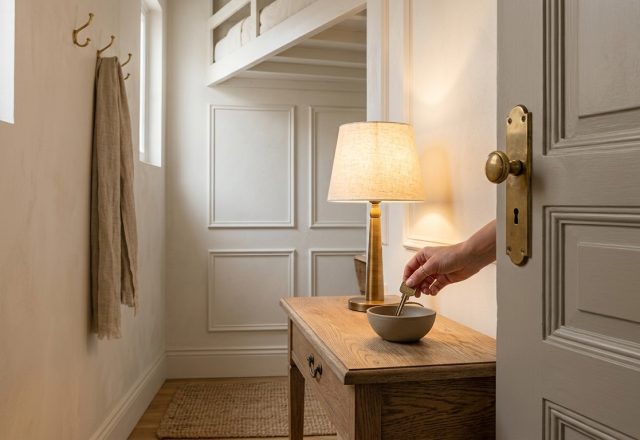
Pairing this with a smart console table styling routine keeps the clutter at bay. A slim table, like the dark wood one tucked against the wall here, provides a landing strip for mail. Keep it minimal. One bowl. One lamp. If you over-style it, you’ll just end up knocking things over when you’re in a hurry. Simple is safer.
Hardware That Actually Works
Let’s talk about those brass coat hooks. Cheap hardware is a mistake you’ll regret every time a heavy winter coat pulls a screw out of the wall. Solid brass has weight. It has a soul. Over time, it develops a patina that tells you exactly where people most often hang their bags. It’s a tactile connection to the house. It feels permanent.
An entryway rug shouldn’t be too precious. You need something with a tight weave—think wool or a high-quality synthetic blend—that can hide the inevitable grit. The patterned runner shown here works because the intricate design masks small stains while drawing the eye toward the light of those frosted glass doors. It anchors the space. Without it, the hallway is just a hollow tunnel of wood and plaster.
Transitioning a home from “standard” to “timeless” usually happens in these small, often-ignored square footages.
It takes more than a coat of white paint. It takes a willingness to invest in the details that people actually touch. How many times have you walked past your own entryway and felt a pang of “I’ll fix that later”? Perhaps it’s time to stop treating the hallway like a closet and start treating it like a room. What is the first thing you see when you walk through your front door tonight?
Editorial Lookbook & Photo Collection