The Discipline of the Drop Zone
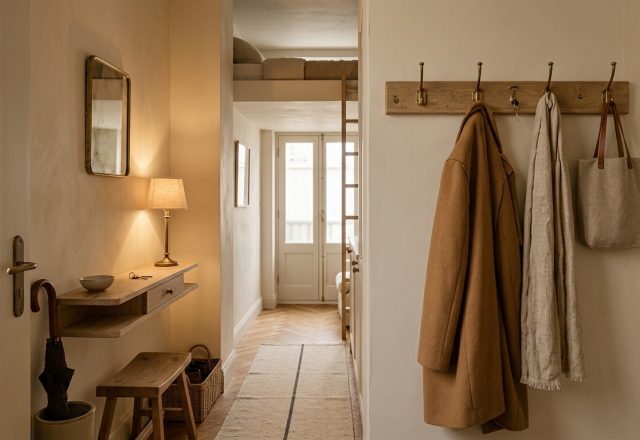
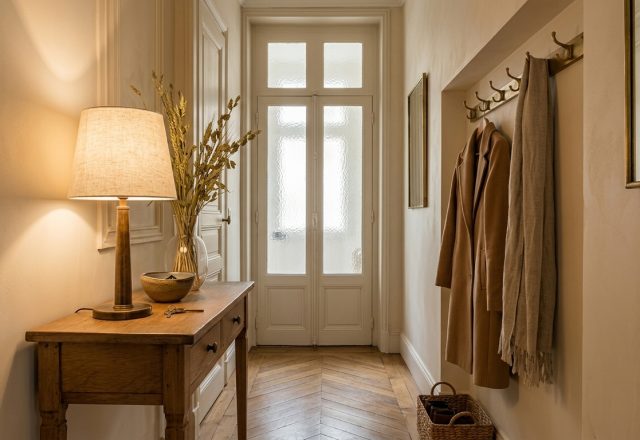
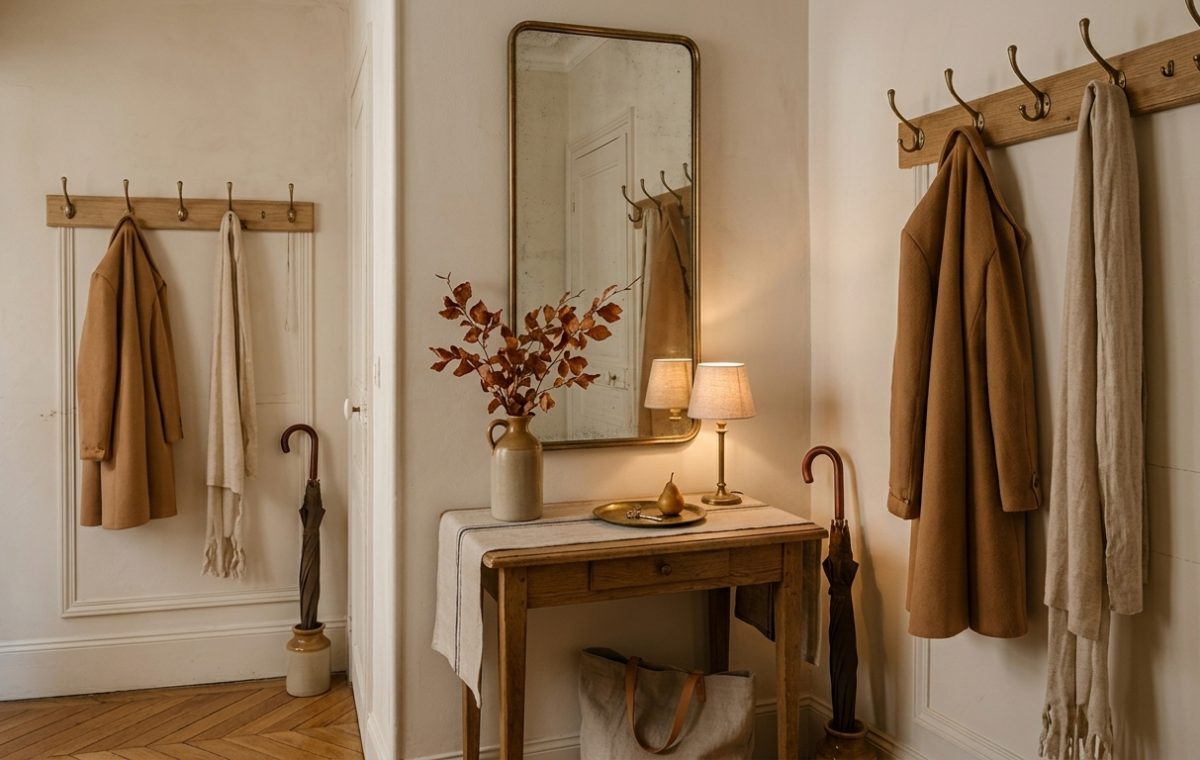
Notice that narrow wooden hallway console table tucked into the alcove? It takes up barely eighteen inches of depth, yet it commands the entire foyer. Too many homeowners choke their entryways with oversized shoe benches and monolithic storage towers that make arriving home feel like entering a luggage depot. Vintage entryway decor relies on a leaner approach. A slender oak table, a folded linen runner, and a soft lamp casting a pool of warm light create an instant psychological decompression chamber.
Real foyer storage is about restraint. When you place a small brass tray beside a ceramic pitcher filled with dried beech leaves, you leave just enough room for keys and mail. Force yourself into smaller drop zones. The moment you give yourself a massive tabletop, you collect junk mail, loose receipts, and dog leashes.
Why Exposed Peg Rails Outperform Closets
Standard closets hide clutter, but they also eat up precious hallway square footage. A solid wooden coat rack mounted directly into wall molding solves the depth problem instantly. Look at how the coats hang in this space: warm wool overcoats, raw linen scarves, nothing synthetic or blaring.
There is an unspoken trade-off here. Open pegs demand aesthetic discipline. If your household relies on puffy neon ski jackets and plastic umbrellas, an exposed rail will expose every bit of visual discord. The solution is simple: keep current season staples on the pegs and rotate heavy utility wear into a separate utility cupboard. Flank the walls symmetrically, just like this room does, to turn daily apparel into architectural texture.
Small architectural details, like glazed stoneware crocks doubling as umbrella stands, anchor a foyer far better than plastic organizers ever could.
Harnessing Reflected Light in Narrow Corridors
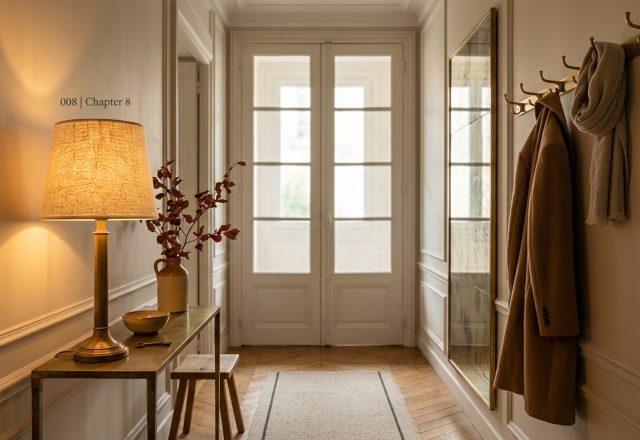
Hallways and entry halls rarely boast abundant direct sunlight. You have to manufacture it. An antique brass wall mirror hung at eye level bounces illumination from neighboring rooms right back into the dark corner. Notice the proportions of the tall, rounded-edge mirror above the table. It vertically stretches the room, balancing high baseboards and tall French doors.
Skip the harsh overhead recessed spotlights here. Overhead downlights make an entry feel clinical and expose every grain of dust on your floorboards. Instead, rely on a small fabric-shaded table lamp. That gentle glow across the chevron wood floors welcomes you home without feeling abrasive on winter evenings.
Materials That Tolerate Everyday Wear
An entry sees wet soles, mud, and dripping umbrellas. Chevron wood floors and patinated timber hold up remarkably well because scratches and scuffs blend into an aged character rather than ruining a showroom finish. Glazed ceramic umbrella crocks tuck cleanly into corners, catching rain drips without deteriorating like painted metal.
Functional entryway styling is less about catalog perfection and more about choosing materials that look better as they take a beating. How do you handle the outerwear overflow when winter hits your own front hall?
Editorial Lookbook & Photo Collection