The Weight of Old Hardware
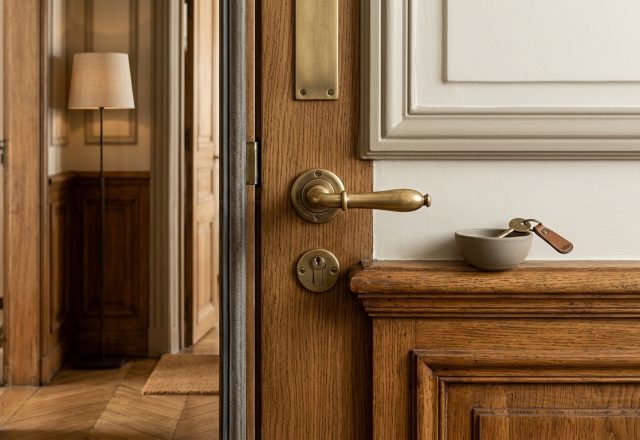
We forget how much tactile information our hands take in daily. A heavy brass lever tells a story before you even cross a threshold. It is not just about keeping a room private. It is about physical feedback. Light, hollow aluminum handles feel cheap and temporary. Solid brass, aged by decades of oils and air, stays grounded.
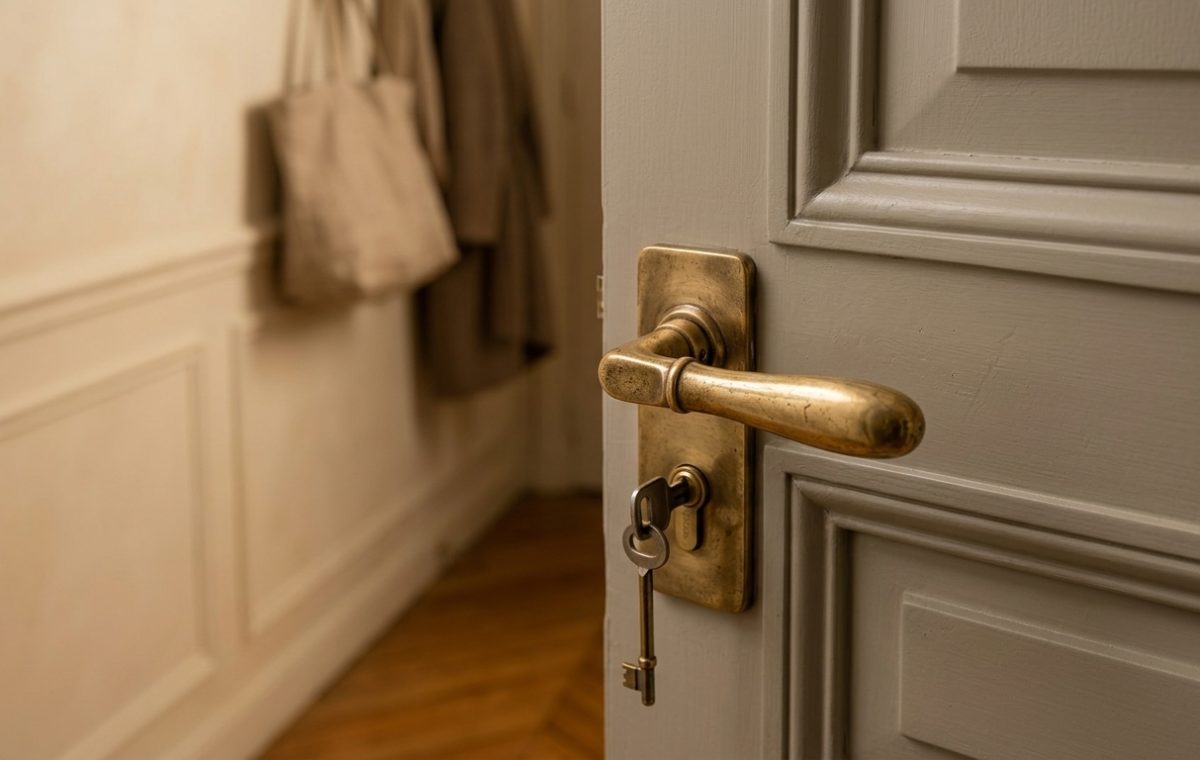
Notice that worn patina around the keyhole. That comes from years of missed turns and rushed mornings. You cannot buy that sort of authenticity off a big-box store shelf. It takes time, friction, and daily living to build character into metal.
Matching Era with Architecture
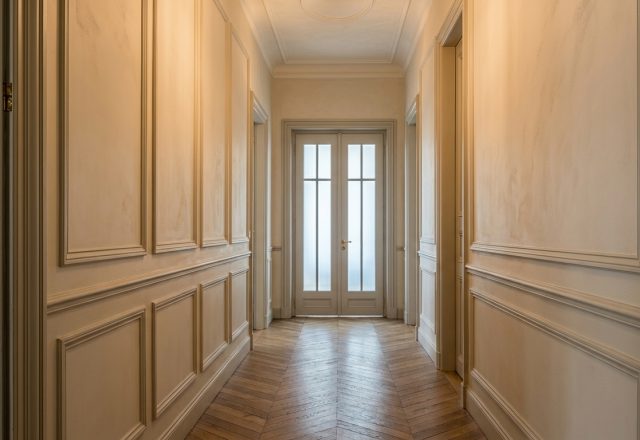
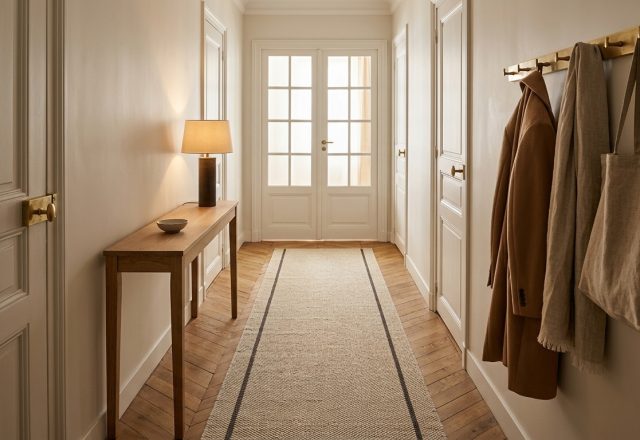
Putting heavy antique iron on a hollow-core flat slab door looks ridiculous. Materials need to converse with one another. If your panels are deep-set and heavy, the latch mechanism needs matching heft. Look at the surrounding walls in traditional hallways. Wainscoting and textured plaster demand hardware that holds its ground visually.
Keys left dangling in the lock are a quiet invitation. They suggest a house that is lived in, not a museum piece kept behind glass. People worry too much about matching every single metal finish across a house. Let it breathe. A front entry might sport polished brass while secondary bedrooms carry a softer, brushed bronze.
Upkeep and Realistic Expectations
Old hardware breaks down. Springs snap inside antique mortise locks. You will need patience if you decide to salvage original pieces from old buildings. Sometimes you find missing screws that are impossible to replace without visiting a specialty fastener shop. That is the hidden tax of living with history.
Do you prefer the pristine shine of brand-new fixtures, or do you find yourself drawn to the scarred surfaces of items with a past?
Editorial Lookbook & Photo Collection