The Vertical Anchor: Reimagining the Room’s Soul
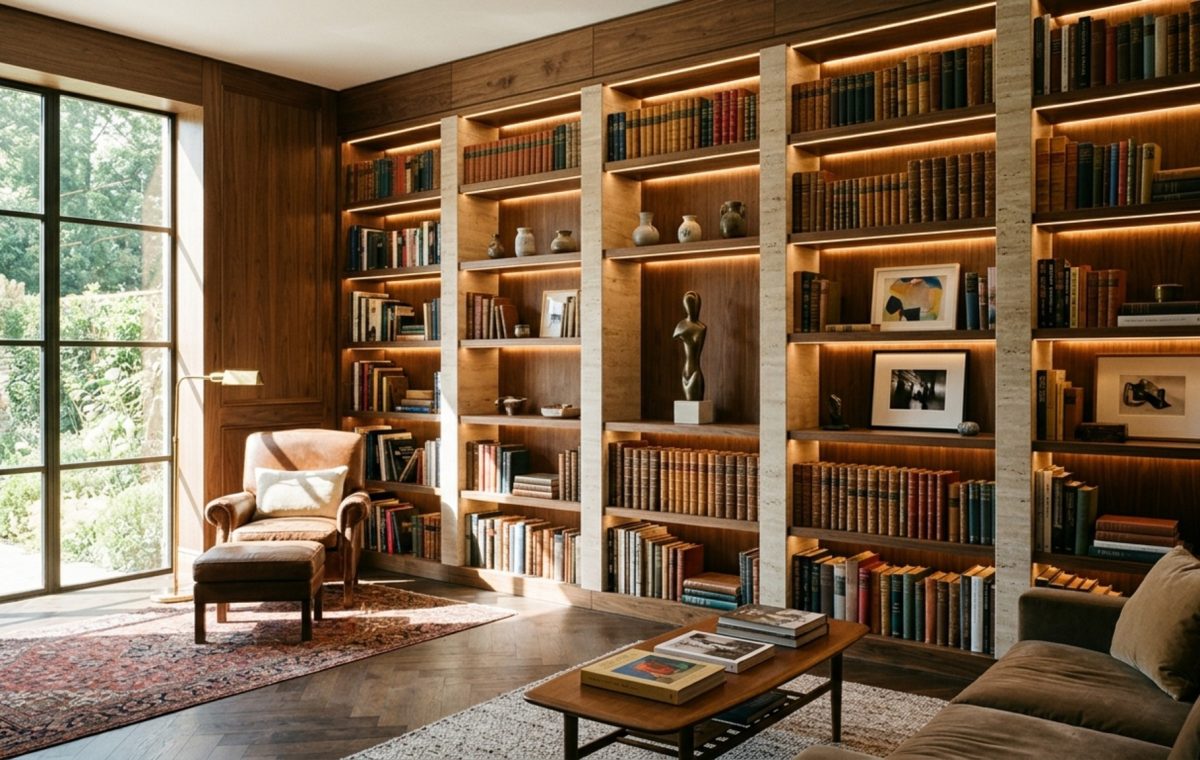
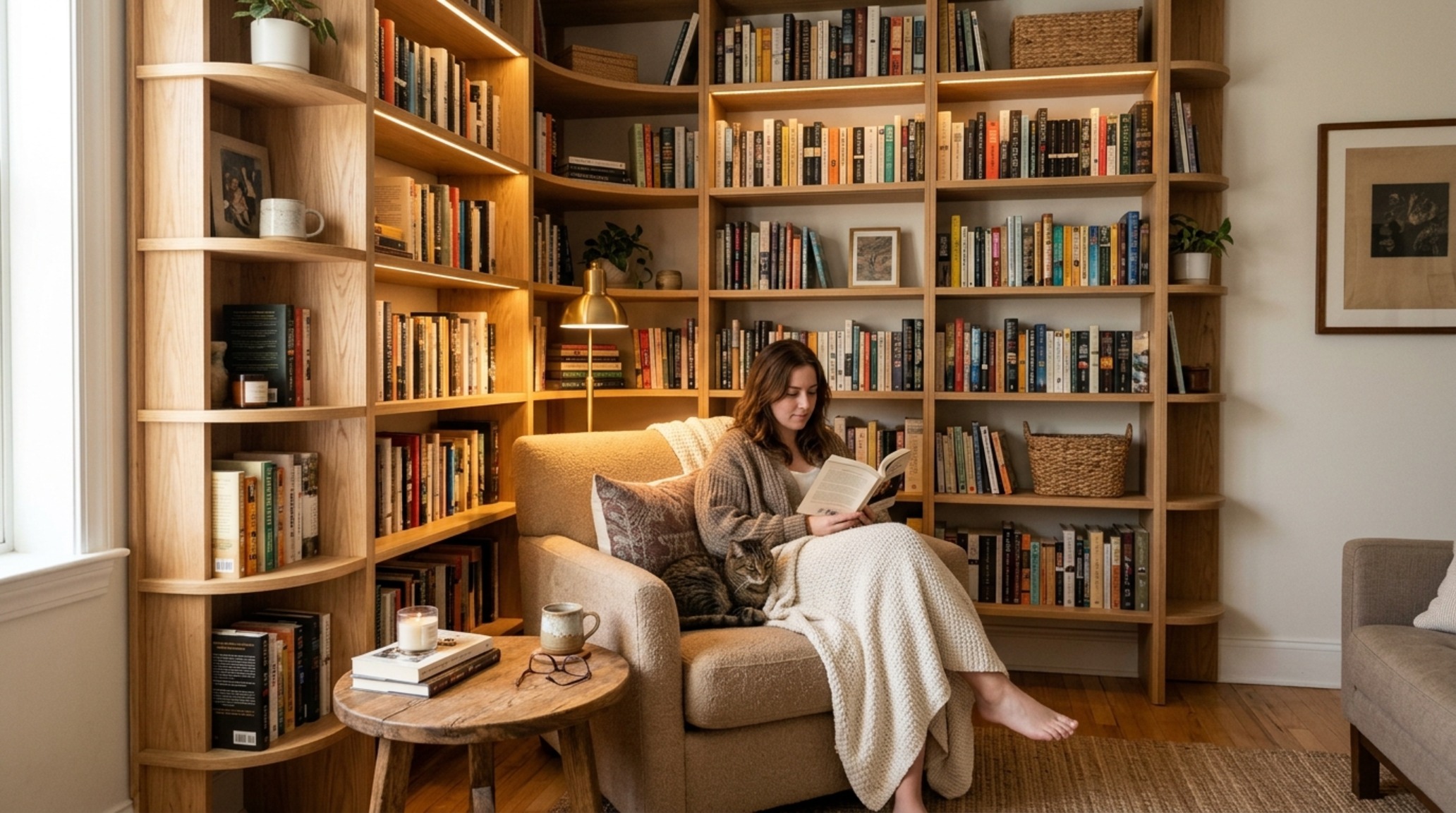
Implementing sophisticated bookshelf design ideas serves as the foundational architectural gesture for modern interiors, defining not just where we store our collections but how a room breathes through its own vertical rhythm. In the contemporary home, the bookshelf has transcended its utilitarian origins to become a tactile manifesto—a curated landscape where the weight of paper meets the grain of white oak and the soft glow of well-calibrated light. We no longer view these structures as mere shelving; they are the spatial cadence of our living environments, offering a physical manifestation of our intellectual and aesthetic histories.
When we talk about bookshelf design ideas, we are essentially talking about the manipulation of shadow and light. An expertly designed unit creates a dialogue between solid form and negative space breathing room. It is the difference between a cluttered wall and an architectural feature that provides tactile grounding to a room. As a designer, I look at the bookshelf as a secondary skin for the wall—a way to introduce depth, texture, and a sense of permanence that drywall alone cannot achieve.
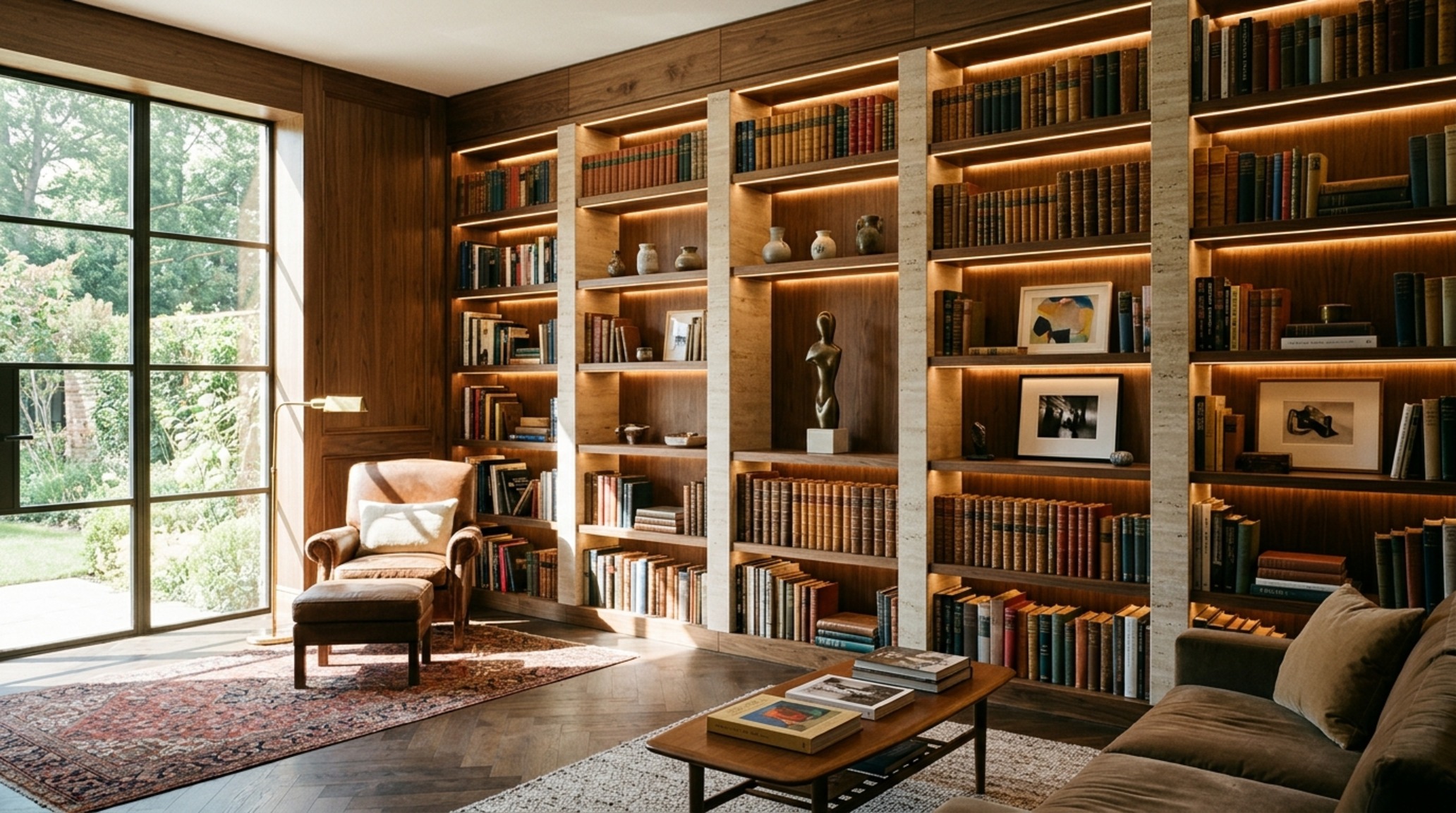
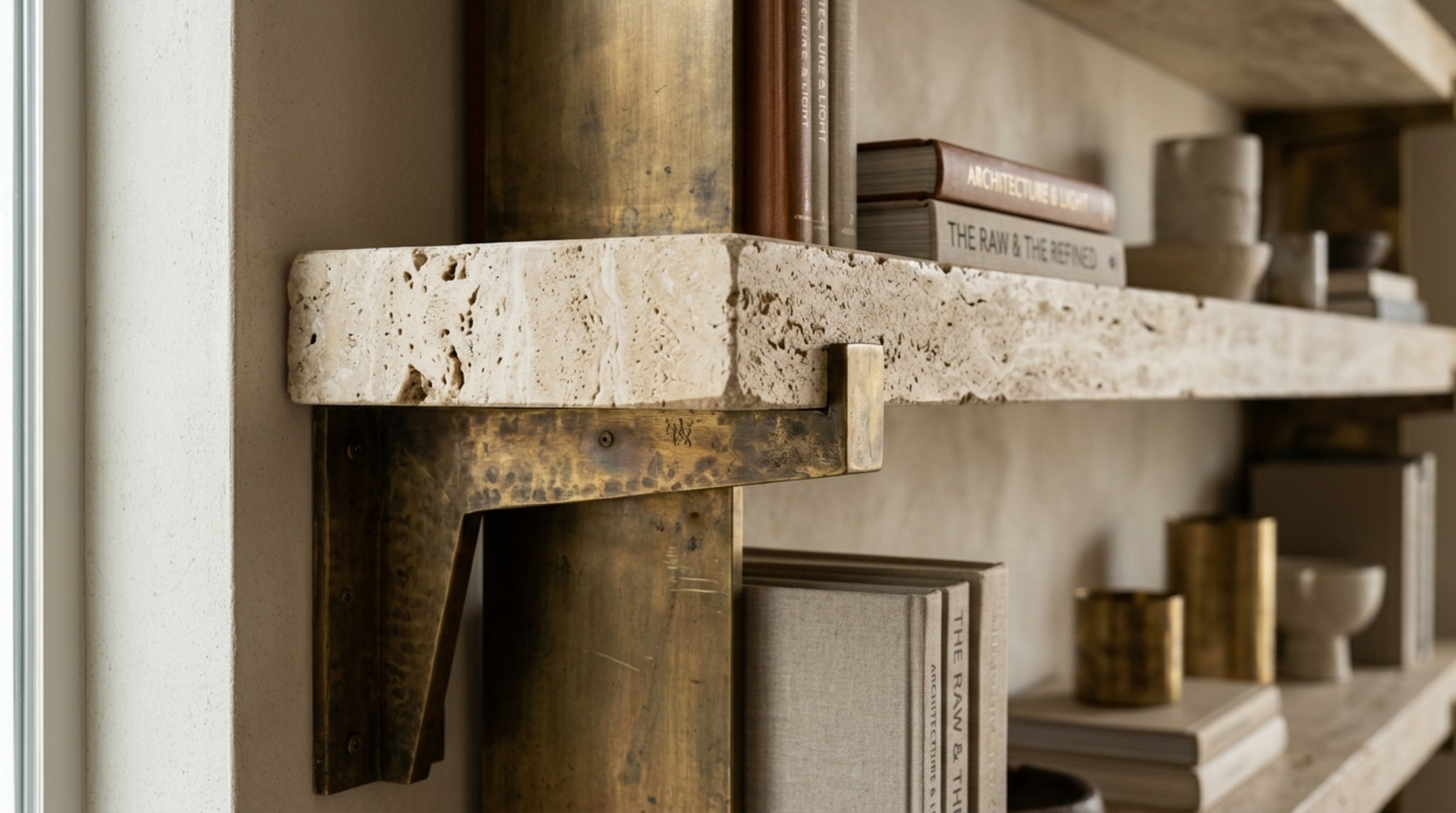
Materiality is where the narrative begins. The choice between a matte, open-grain walnut and a smooth, lacquered finish isn’t just about color; it’s about the haptic response of the space. A shelf crafted from fluted white oak, perhaps finished in a soft wash of Benjamin Moore Swiss Coffee, offers a subtle, rhythmic texture that catches the morning light. Conversely, integrating heavier elements like honed travertine or cold-rolled steel introduces a luxurious tension. This interplay of materials is central to luxury bookshelf design ideas textures, where the objective is to create a sensory experience that invites the hand as much as the eye.
Modern Bookshelf Design Ideas Ideas: The Shift Toward Asymmetrical Balance
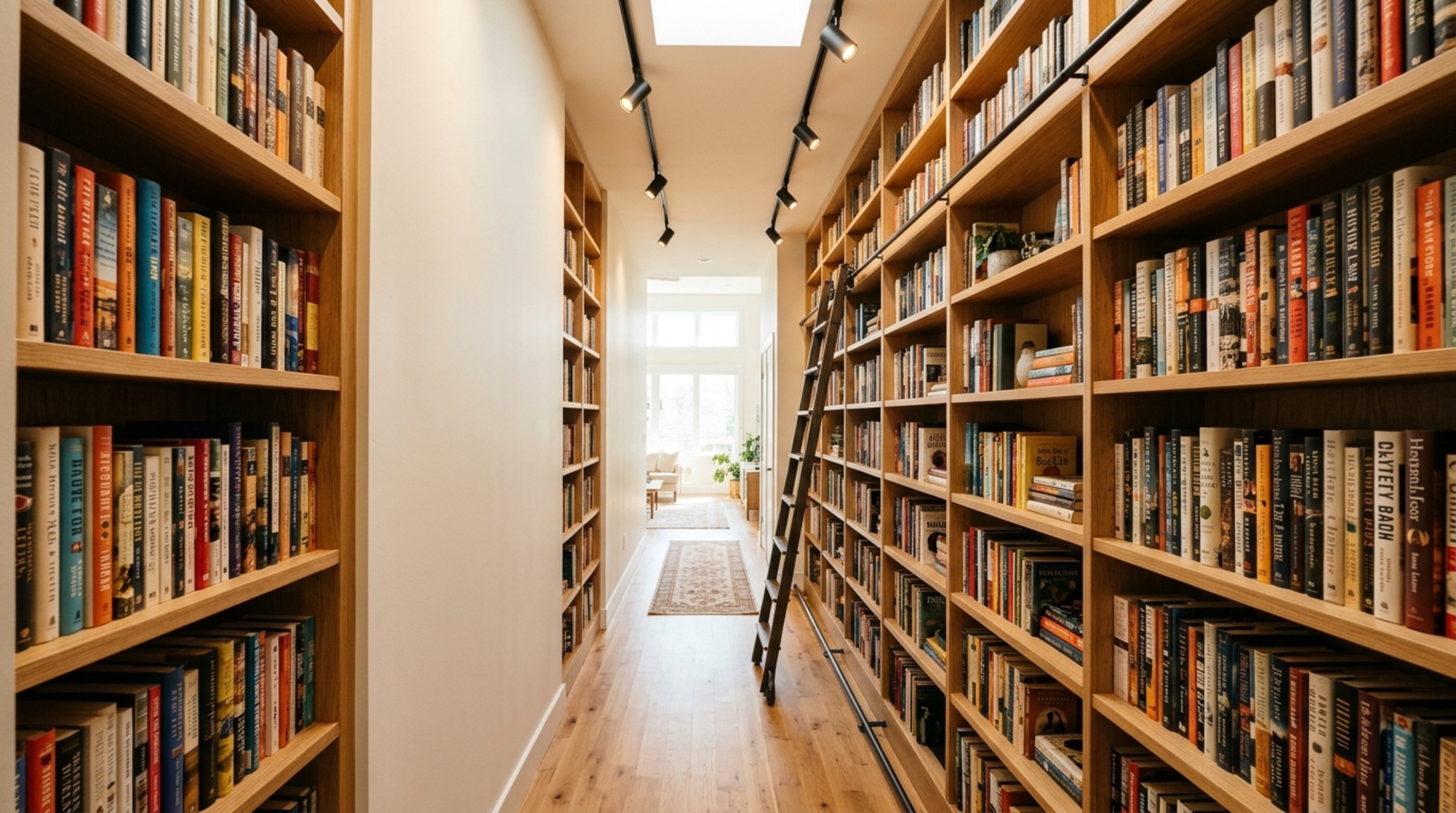
The evolution of the library has moved away from the rigid, grid-like structures of the past. Today, modern bookshelf design ideas ideas prioritize asymmetry and varied shelf heights to accommodate not just literature, but sculptural objects and negative space. This architectural flexibility allows the eye to travel across the composition rather than getting stuck in a repetitive pattern. By varying the height—leaving some gaps at 15 inches for tall art books and others at 10 inches for standard hardcovers—you create a spatial flow that feels intentional and curated.
Visual Narrative & Detail Studies
In a recent project in a high-rise loft, we utilized custom-milled white oak with integrated brass detailing. The key was the ‘sightline alignment.’ By aligning the top shelf with the header of the adjacent window, the bookshelf felt like a built-in part of the building’s skeleton rather than an afterthought. This level of precision is what distinguishes a professional installation. We also incorporated ‘breathing zones’—sections where no books were placed, allowing a single ceramic vessel to occupy the space, grounded by the rich texture of the wood grain.
Small Space Bookshelf Design Ideas: Maximizing Vertical Planes
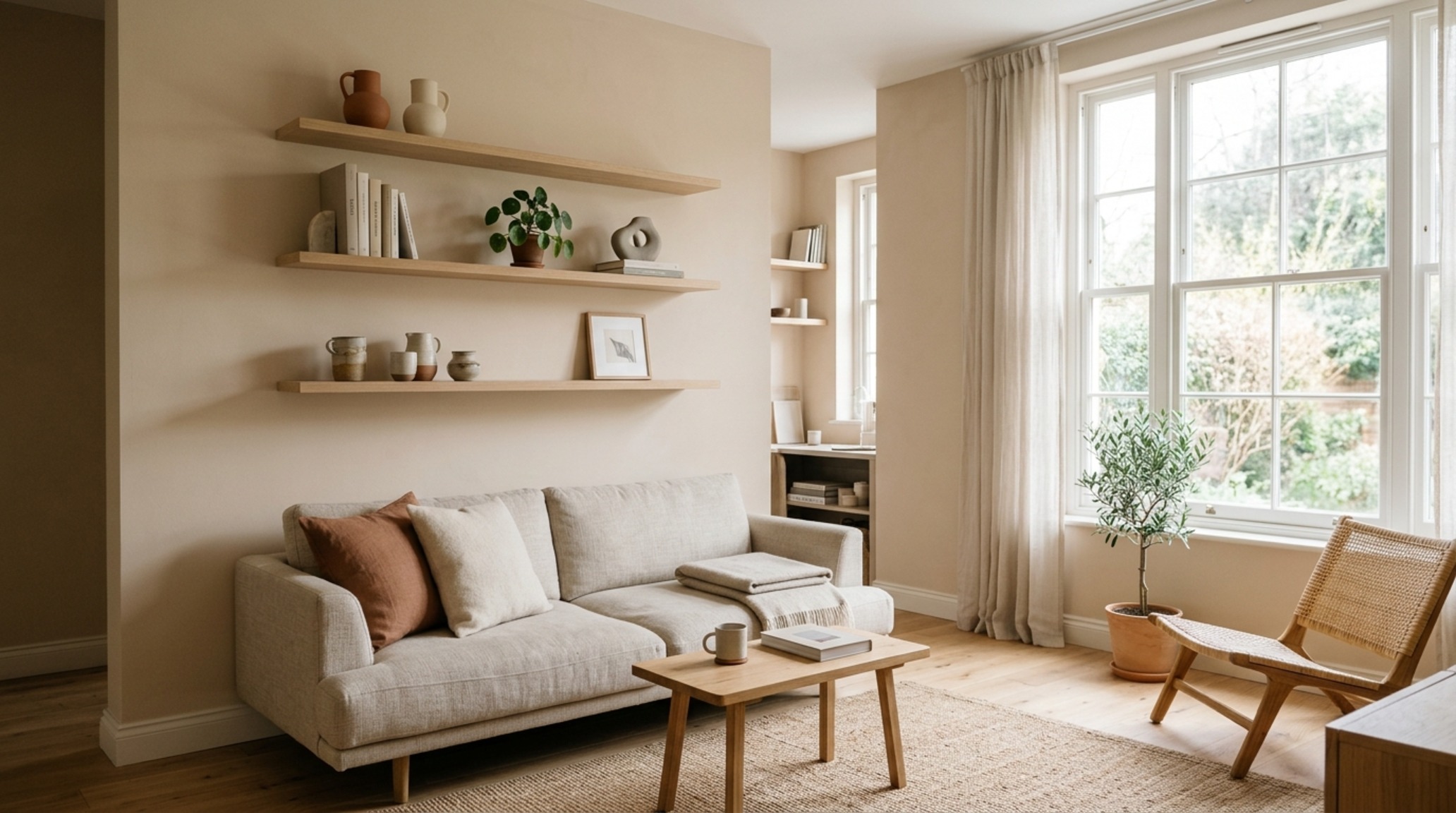
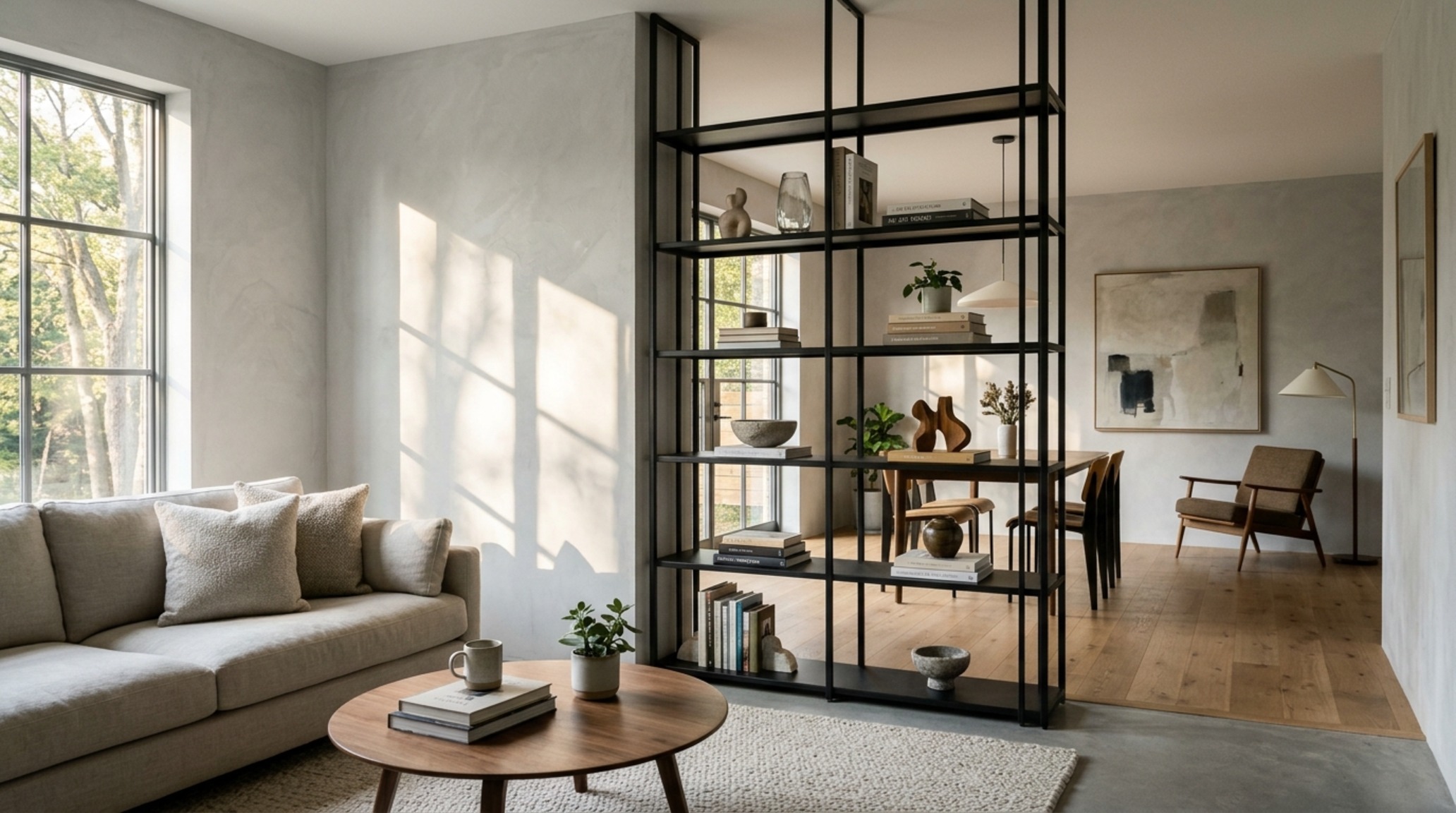
In urban environments where every square inch is a premium, small space bookshelf design ideas must focus on verticality and transparency. Floating shelves are a masterstroke here. By removing the vertical supports and the ‘toe kick’ at the base, you allow the floor plane to extend all the way to the wall, which visually expands the room. For a truly seamless look, paint the shelves the same color as the walls—perhaps a sophisticated Farrow & Ball Setting Plaster—to let the objects themselves provide the color and texture.
Clearance is the silent hero of small-space design. Even in a compact study, you must maintain at least 36-inch standard walkway clearances to ensure the room doesn’t feel claustrophobic. If the bookshelf is behind a desk, allow for a 30-inch dining chair clearance (or office chair equivalent) to ensure ergonomic comfort. These measurements are not suggestions; they are the rules of architectural survival in limited footprints.
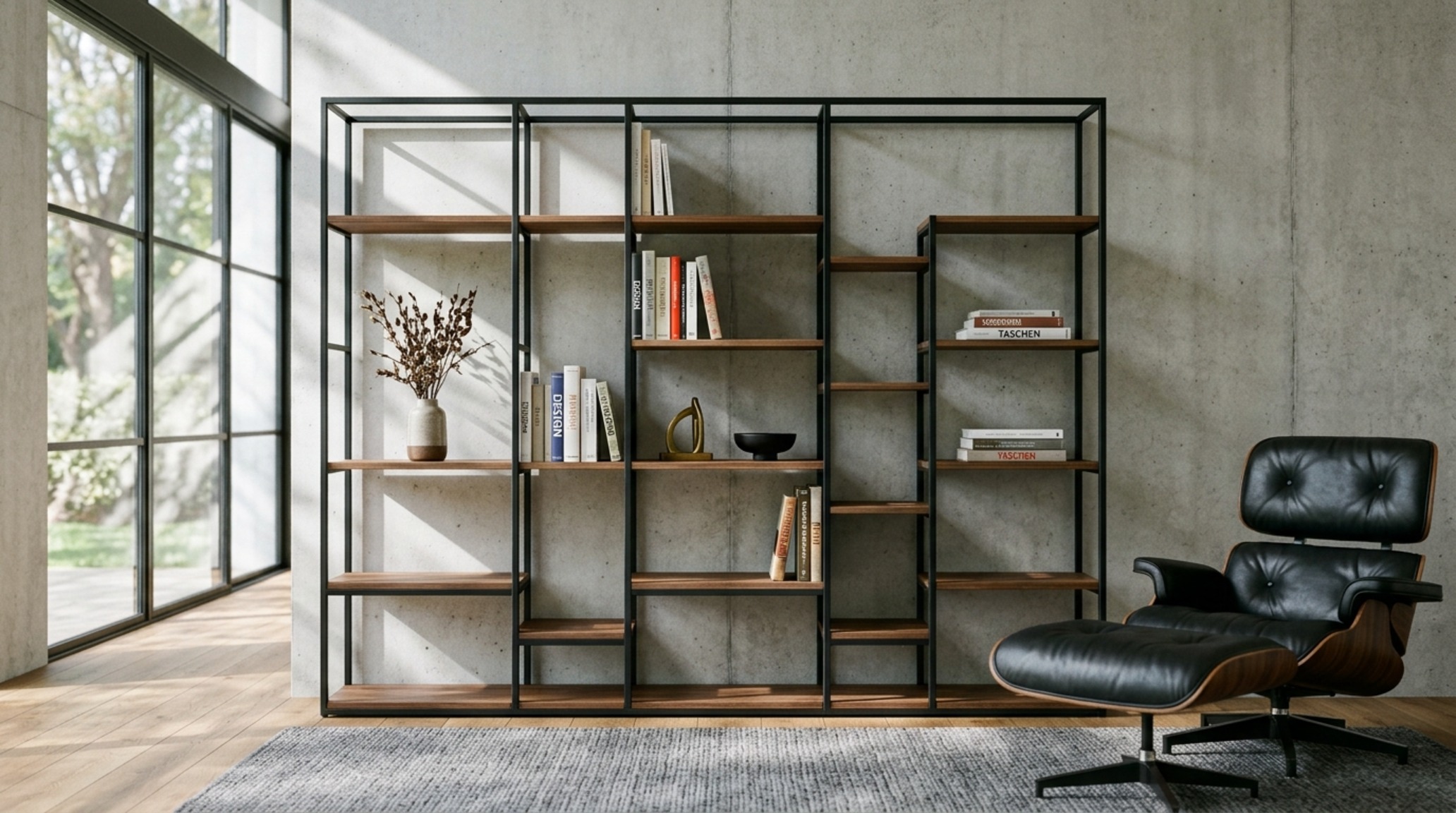
Luxury Bookshelf Design Ideas Textures: Integrating Stone and Patinated Metal
True luxury is found in the weight and the finish. When exploring luxury bookshelf design ideas textures, I often look toward materials that age gracefully. Unlacquered brass supports that will develop a deep patina over time, or back panels lined in a grasscloth wallpaper like Phillip Jeffries, provide a layer of richness that paint cannot replicate. The back panel of a bookshelf is often neglected, yet it is the perfect canvas for tactile experimentation. Imagine a dark, moody charcoal shelf—Benjamin Moore Iron Mountain—paired with a back panel of fluted glass or mirrored bronze.
Shadow play becomes an architectural tool when you mix textures. A rough-hewn stone bookend against a smooth, matte-black shelf creates a high-contrast moment that draws the eye. These vignettes within the bookshelf are mini-compositions. The ‘rule of three’ applies here: a stack of books, a organic shape (like a piece of driftwood or coral), and a vertical element (a tall vase or a framed sketch). This creates a balanced visual weight that feels effortless.
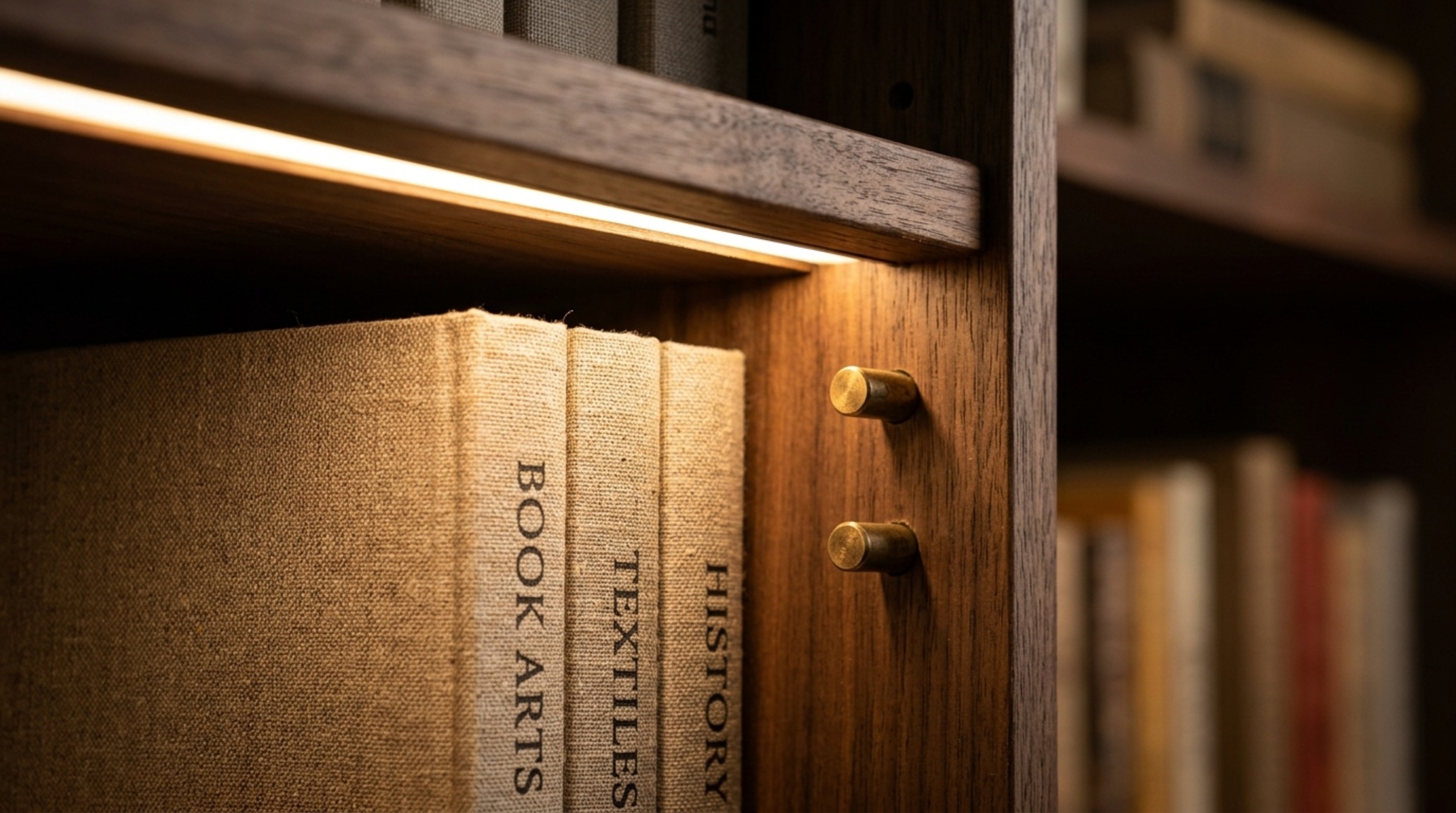
Bookshelf Design Ideas Lighting Guide: Mastering Kelvin and CRI
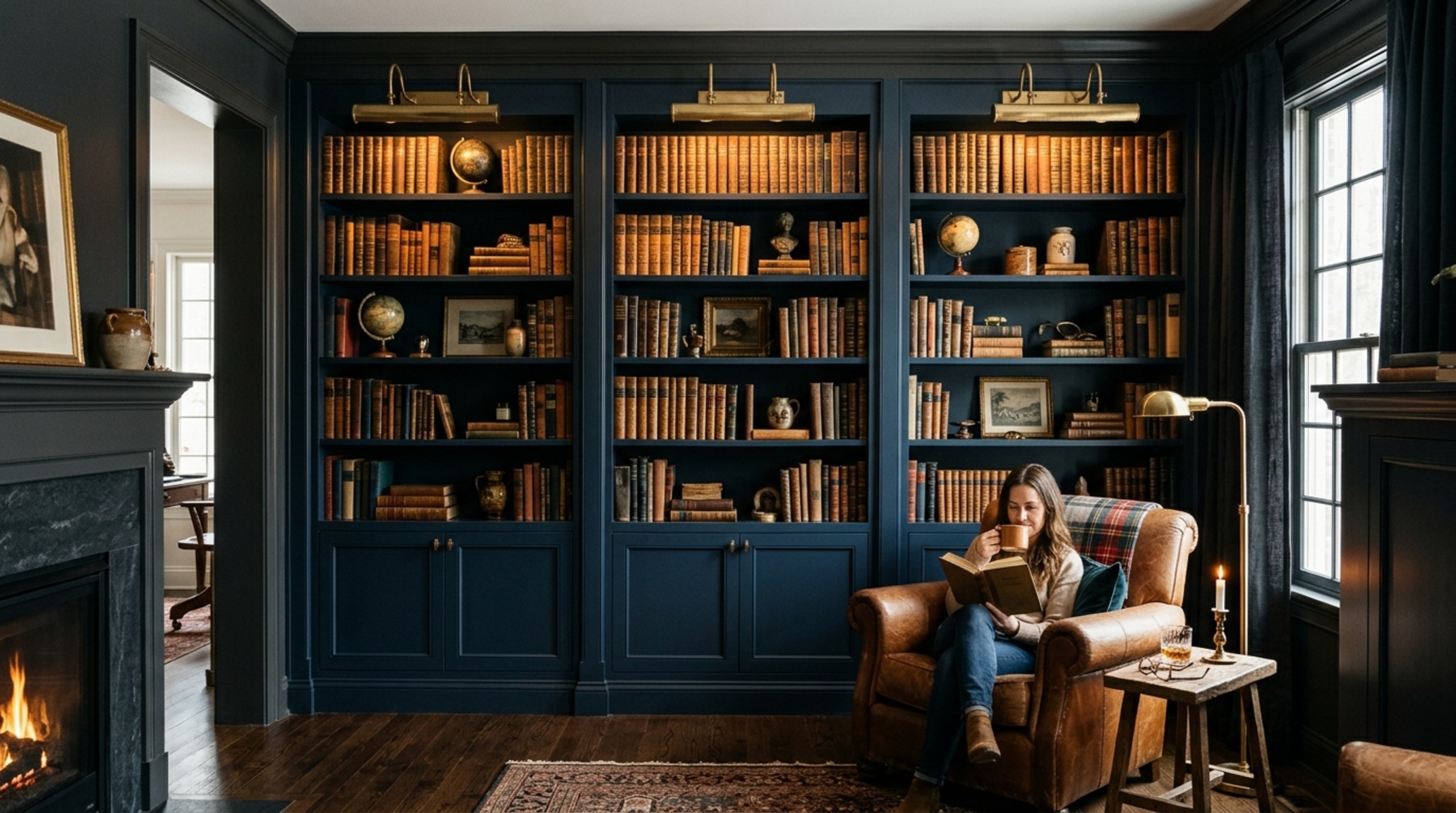
Lighting is the final, most critical layer. Without it, even the most expensive materials fall flat. In our bookshelf design ideas lighting guide, the primary rule is the Color Rendering Index (CRI). You want a high CRI of 90+ to ensure the colors of your book jackets and art pieces are rendered accurately. When it comes to color temperature, 2700K is the gold standard for residential libraries. It provides a warm, amber glow that mimics traditional incandescent bulbs, creating a serene sanctuary atmosphere.
Integrated LED tape light, hidden behind a small lip at the front of each shelf, provides a wash of light that eliminates harsh shadows. For a more traditional or ‘academic’ feel, consider articulated picture lights mounted to the header of the unit. The 3000K task lighting is better suited for a reading nook adjacent to the shelves, providing a crisper light that reduces eye strain while you dive into a novel. The goal is to layer your lighting: ambient light to fill the room, accent light to highlight the shelves, and task light for function.
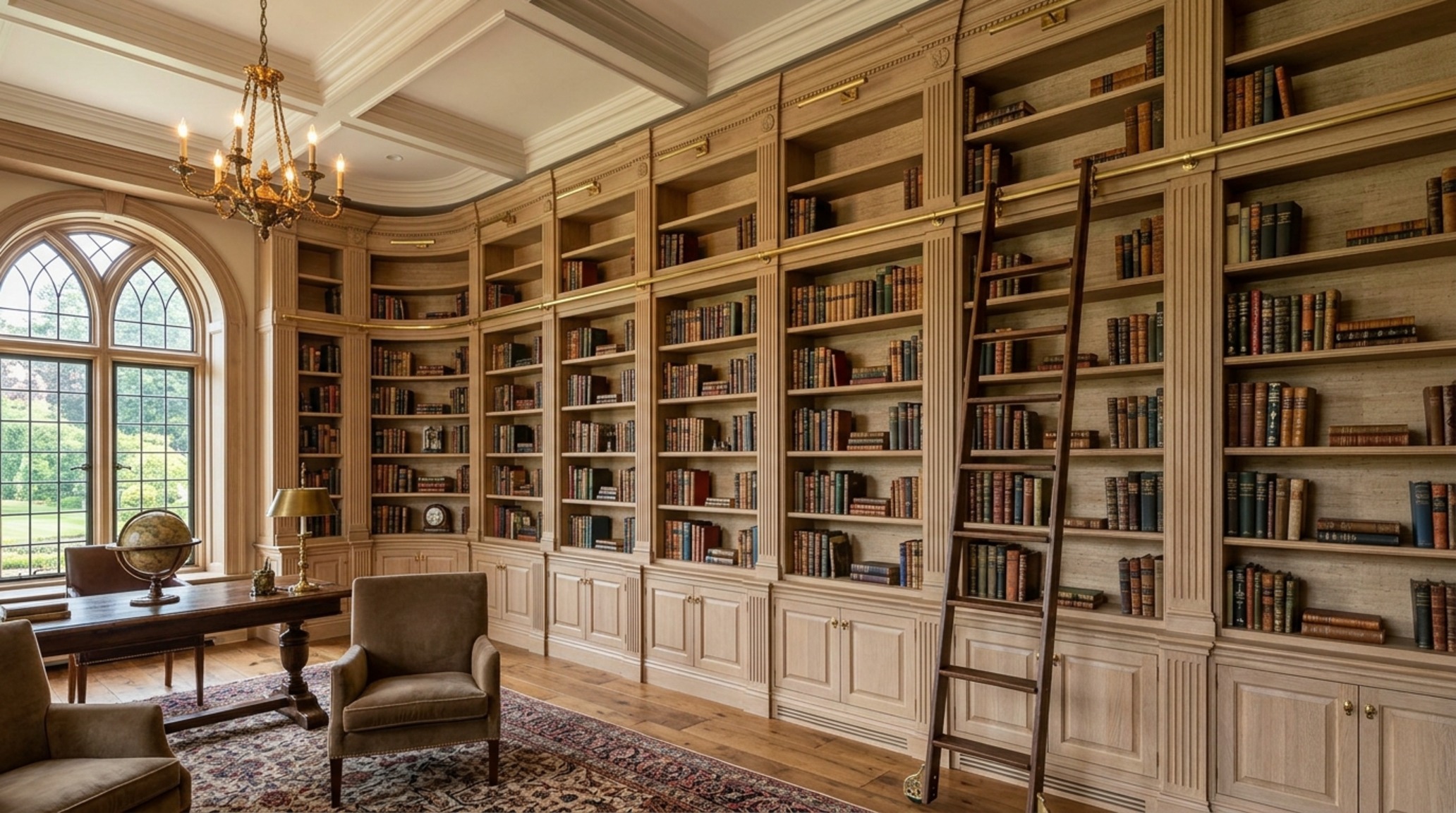
Beyond the technical specs, consider the ‘spill’ of light. Light should not just hit the books; it should softly illuminate the surrounding walls and floor, softening the edges of the furniture. This creates an ethereal quality that transforms a simple storage unit into a glowing architectural monument within the home.
Design Blueprint: Materials, Light & Dimensions
Essential specification summary: tactile finishes, spatial proportions, and ambient lighting index.
The ultimate goal of refining bookshelf design ideas is to create a space that feels deeply personal yet architecturally sound. It is about the quiet satisfaction of a perfectly aligned spine and the way a shadow falls across a favorite volume at dusk. As we continue to blur the lines between the digital and the physical, these tactile sanctuaries become even more vital—anchoring us in the material world through the timeless union of wood, stone, and light.
Editorial Silo • Recommended Architecture Studies
- Performance Modularity: Modular Shelf System & Engineering Seamless Living in the Modern Compact Home — Archival Design Case Study
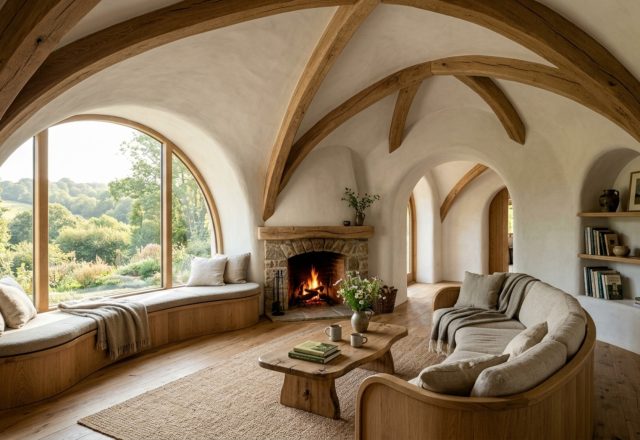
- The Physics of the Curve: Structural Secrets of Earth-Sheltered Hobbit Home Designs — Archival Design Case Study
Curated Materiality & Proportion
Photographic compositions framing clean architectural sightlines and layered sensory textures.
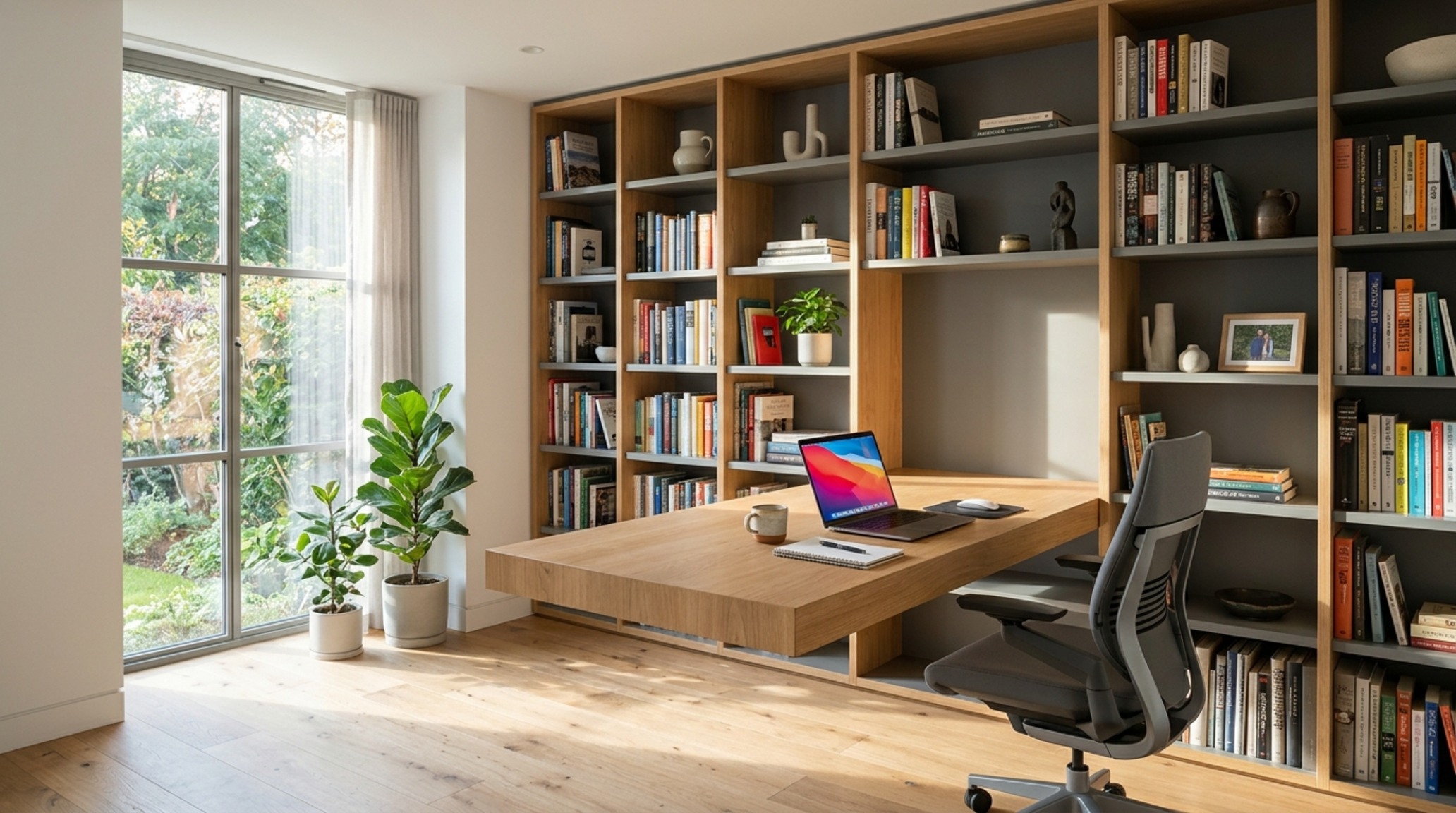
Curated Lookbooks & Architectural Studies
- Daring Architect Home Designer: Visual Warmth And Texture
- The Ergonomic Optimizer: Solving Compact Living Challenges with a Strategic Home Design Tool Free
- How to Master Reading Room Lighting for Cozy Evenings
- The Architectural Groundplane: Precision Tinting for the Ultimate Structural Silhouette
- French Fireplace Mantel Decor: Timeless Styling Ideas
- Mastering Cozy Bedside Table Styling Without the Clutter
Curated Visual Lookbook
Design Gallery & Spatial Studies
A visual curation of architectural arrangements, lighting concepts, and material palettes featured in this space.