The Structural Secret: Engineering a High-Density Seating Oasis with Integrated Functional Flow
Historically, the window seat was often a drafty afterthought—a Victorian relic of heavy velvet and lumpy horsehair that prioritized aesthetic charm over actual human comfort. These architectural niches were beautiful to look at but punishing to occupy for more than ten minutes. Today, the design paradigm has shifted toward what I call ‘living architecture.’ We are no longer satisfied with static beauty; we demand performance. This evolution has led designers to move away from generic, off-the-shelf pads toward the professional-grade realization that to truly make bay window seat cushion installations work, one must think like an engineer and feel like a couturier. The modern window seat is a high-performance zone where high-density 2.8lb HR foam meets precision-milled cabinetry, creating a sanctuary that supports the body for hours of reading while surreptitiously concealing the clutter of daily life.
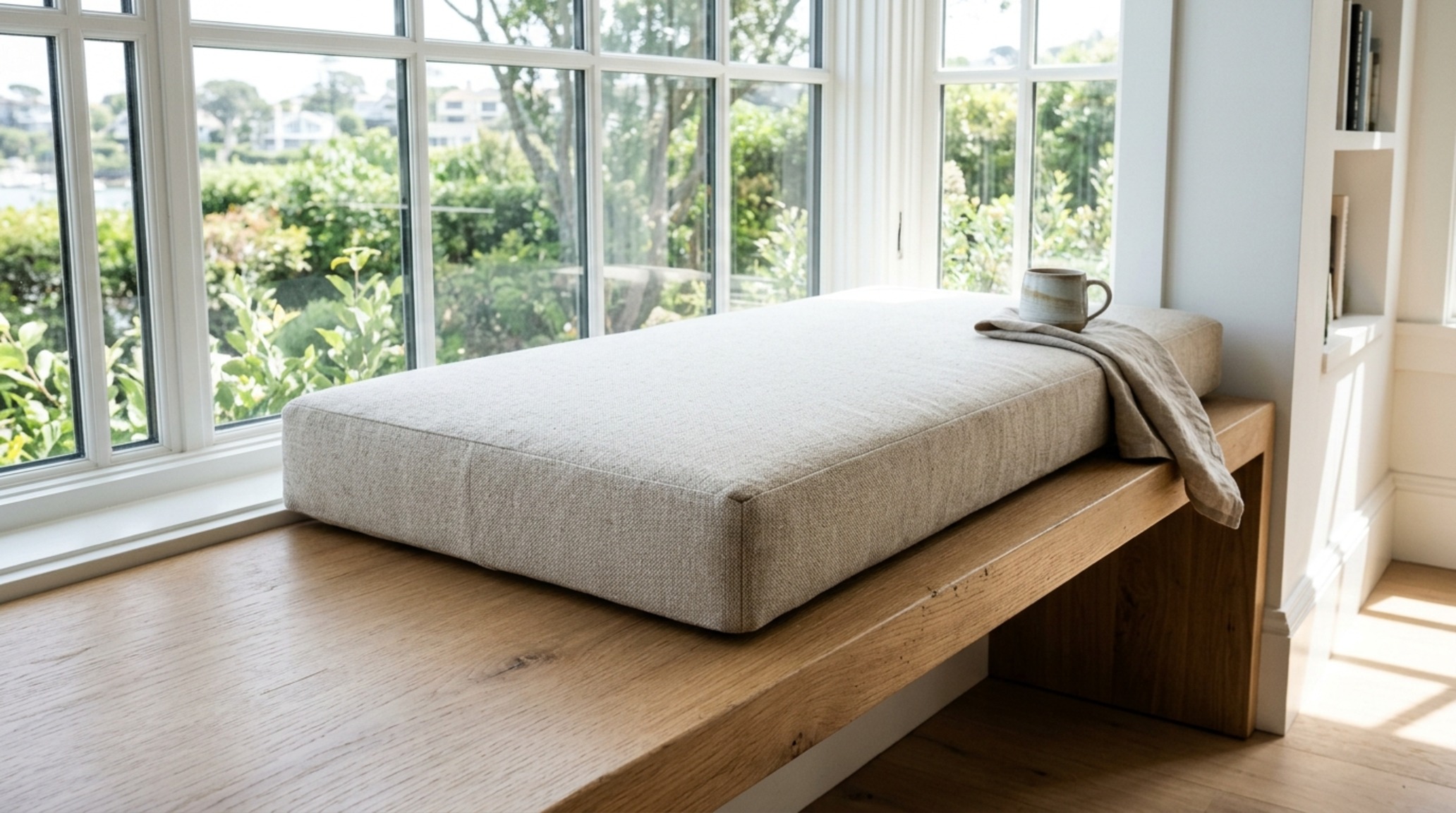
Window Seat Ergonomics: The Math of Finished Seat Height
Design is a game of millimeters, and nowhere is this more evident than in window seat ergonomics. The primary failure of most DIY projects is the ‘dangling foot’ syndrome. Standard chair height is approximately 18 inches. However, when you make bay window seat cushion decisions, you must subtract the thickness of your foam from your base cabinet height. If your wooden bench is built to 18 inches and you add a 4-inch cushion, you’ve created a 22-inch perch that cuts off circulation at the thighs. For a truly luxurious feel, I recommend a base height of 14 to 15 inches, topped with 4 inches of 2.8lb High Resilience (HR) foam. This specific density is the industry’s best-kept secret; it offers a ‘spring-back’ quality that prevents the foam from bottoming out, ensuring the seat remains supportive and visually crisp even after a long afternoon in the sun. We also look for a seat depth of at least 22 to 24 inches. This allows for a slight recline and the inclusion of lumbar pillows without pushing the occupant to the very edge of the abyss.
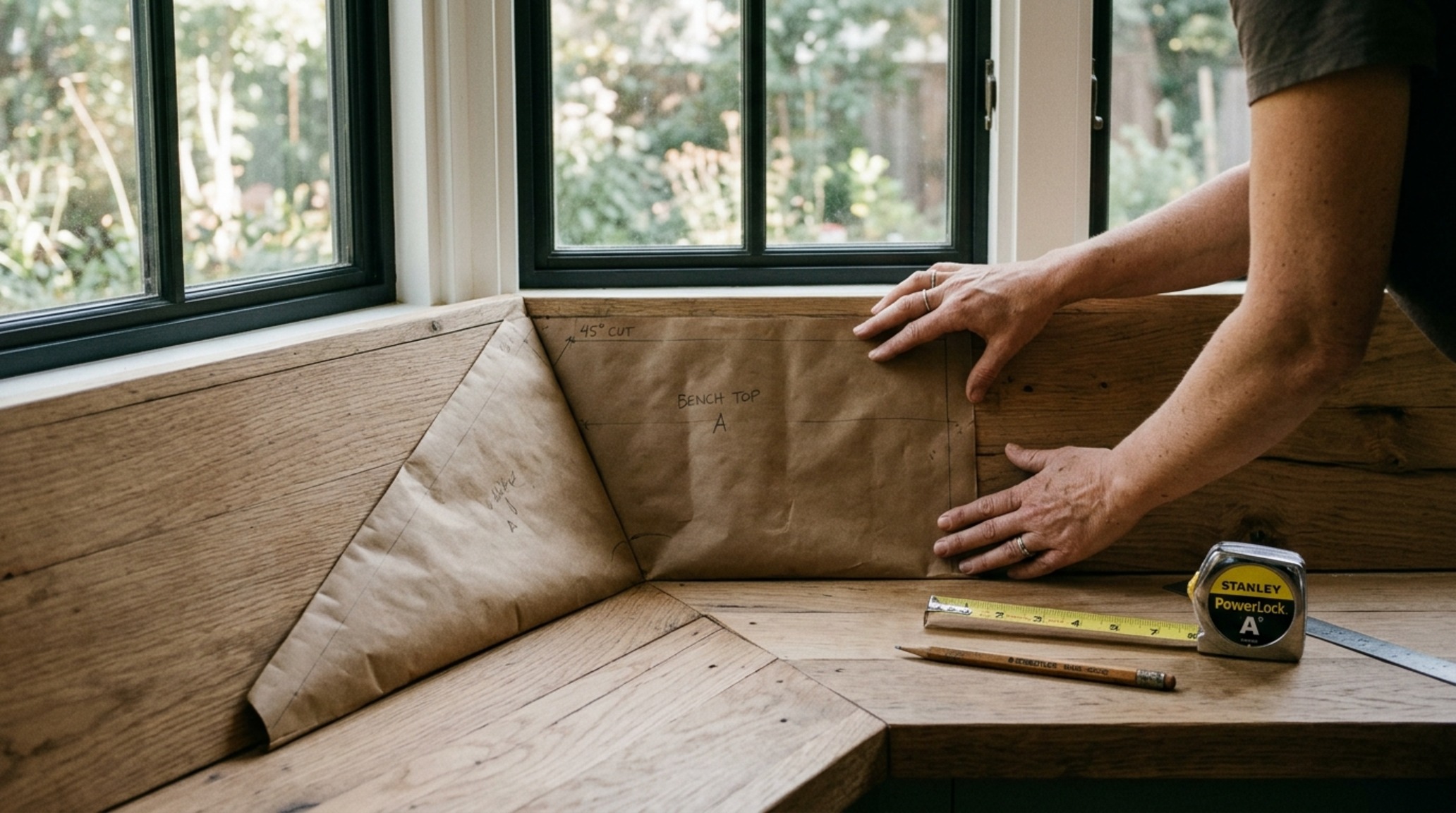
How to Measure Bay Window Angles: Precision Templating for a Seamless Fit
Walls are rarely straight, and bay windows are notoriously deceptive. If you attempt to measure with a tape measure alone, you will almost certainly end up with unsightly gaps at the corners or a cushion that is too tight to remove for cleaning. The professional approach utilizes ‘template-mapping.’ I advise my clients to use large sheets of brown butcher paper or thin 1/8-inch MDF to create a literal physical footprint of the seat. Lay the paper across the bench, crease it firmly into the back corners, and trace the exact edge of the cabinetry. This is the only way to account for ‘out-of-square’ angles that are the hallmark of older homes. When you understand how to measure bay window angles through physical templating, you are essentially creating a blueprint for the foam cutter that guarantees a ‘glove-like’ fit. This precision allows the finished cushion to sit flush against the window casing, eliminating the dark shadow lines that can make a custom project look amateur.
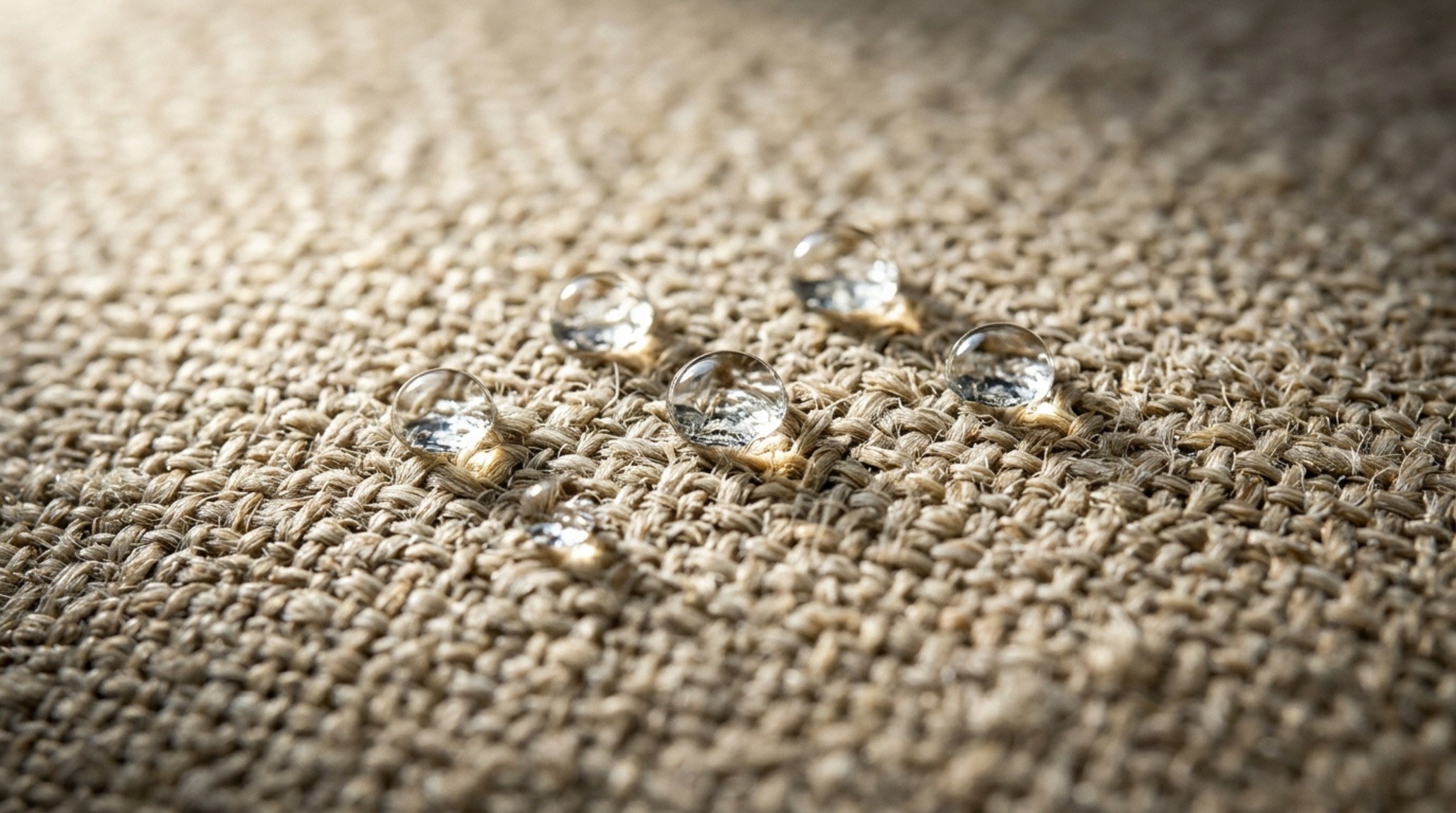
Sun-Resistant Upholstery Fabric: The Intersection of Light and Longevity
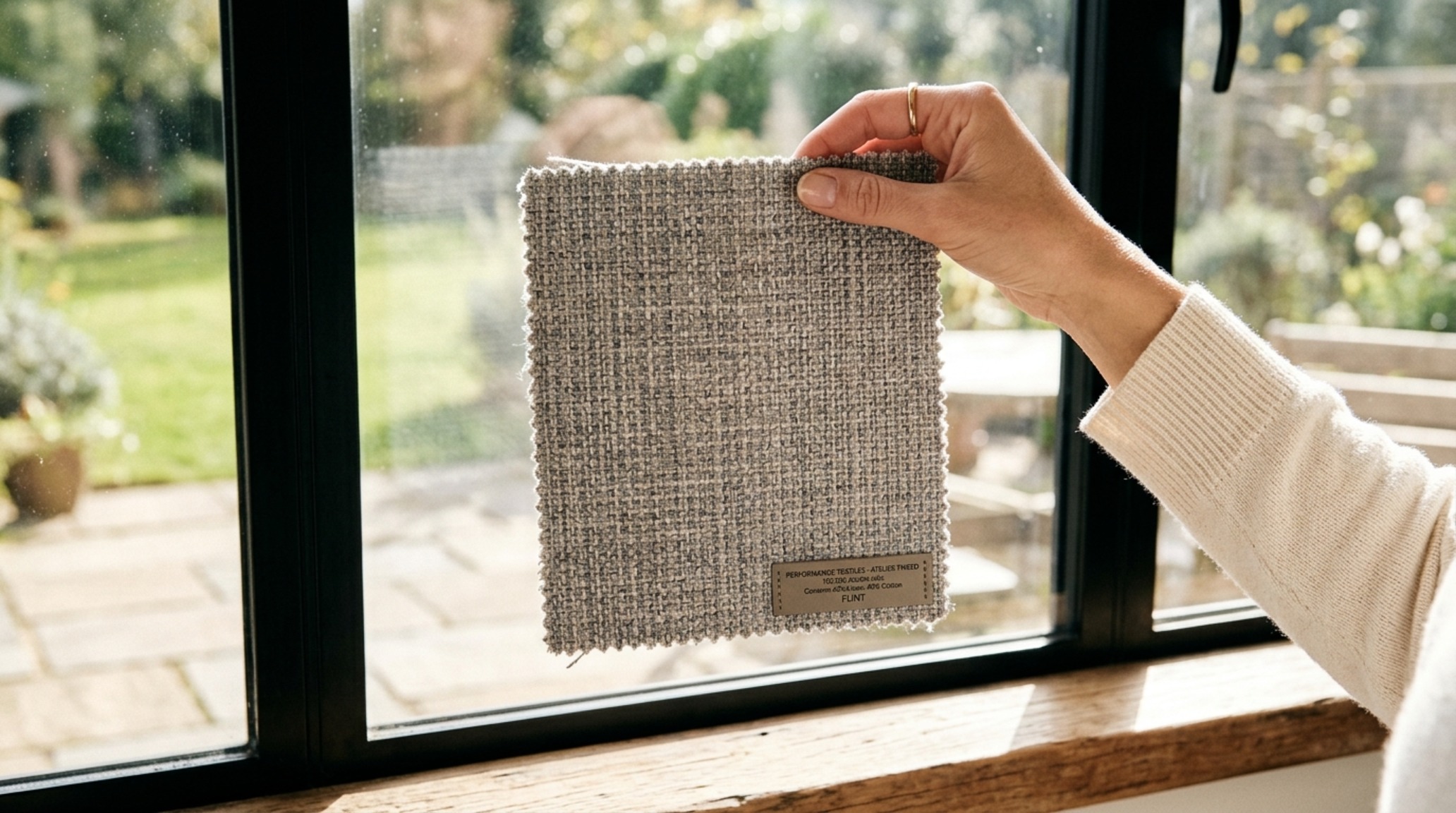
A bay window is, by definition, a sun trap. This makes material selection the most critical aesthetic decision you will make. While a 100% Belgian linen looks divine in a showroom, it will shatter and fade under constant UV exposure within two seasons. Instead, we look toward high-performance textiles like Perennials or Sunbrella, which have mastered the art of ‘solution-dyed’ acrylics. These fabrics are woven from fibers that are colored all the way through, much like a carrot versus a radish. This means you can clean them with a diluted bleach solution without losing the vibrancy of your hue. Selecting a sun-resistant upholstery fabric doesn’t mean sacrificing texture. Modern performance weaves offer the tactile depth of boucle, the softness of chenille, and the organic look of heavy-weight flax. I often lean toward a soft, warm neutral like Benjamin Moore Swiss Coffee for the cabinetry, paired with a ‘greige’ performance weave that grounds the light flooding in through the glass. This creates a tonal harmony that feels expansive rather than cluttered.
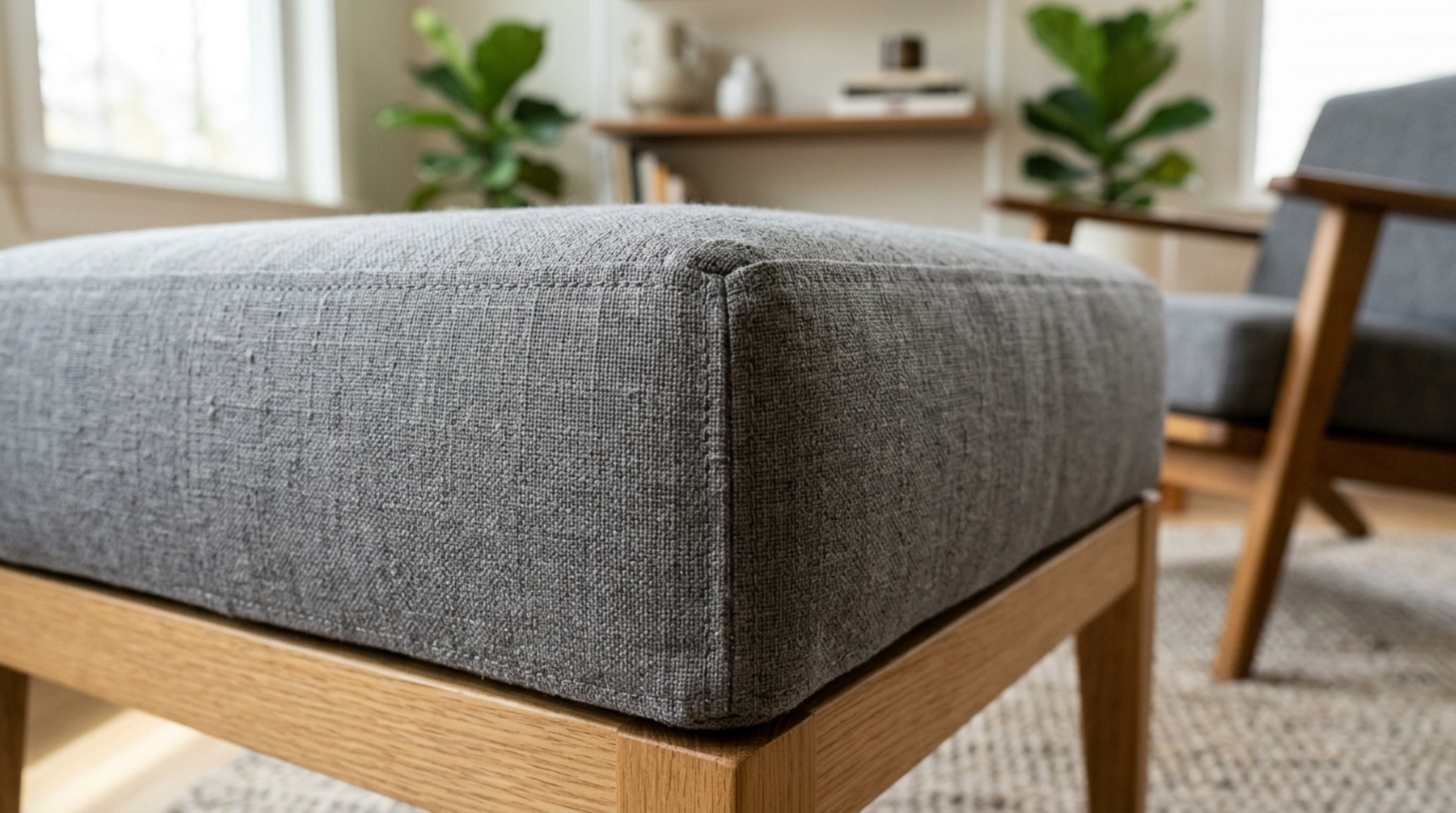
Boxing a Custom Cushion: Mastering the Architectural Edge
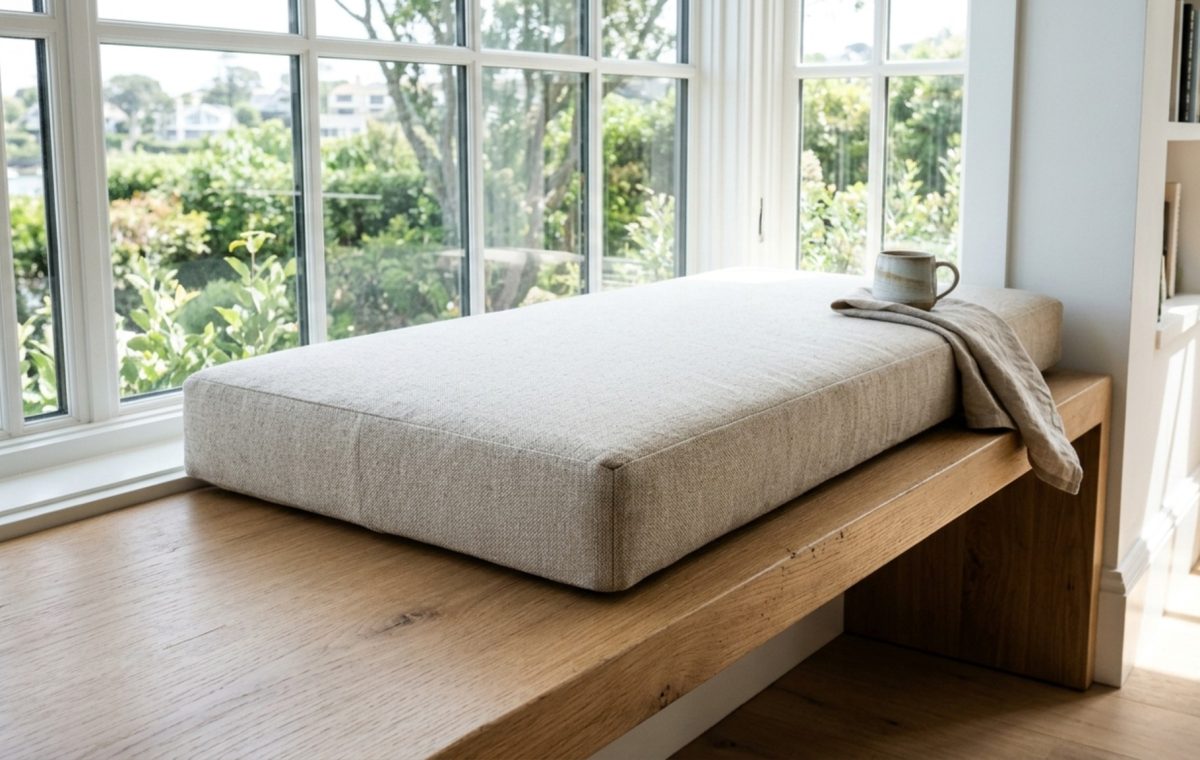
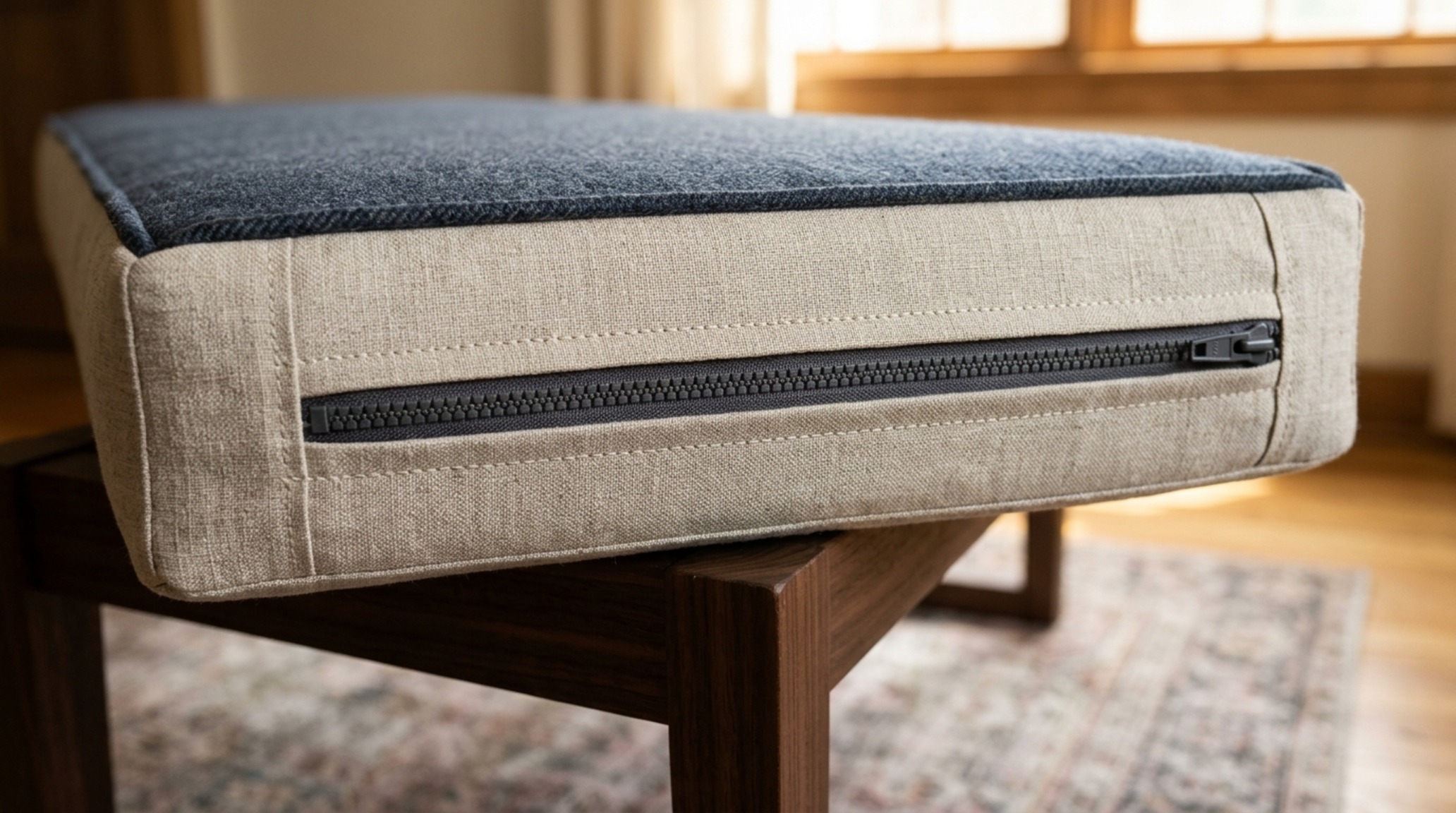
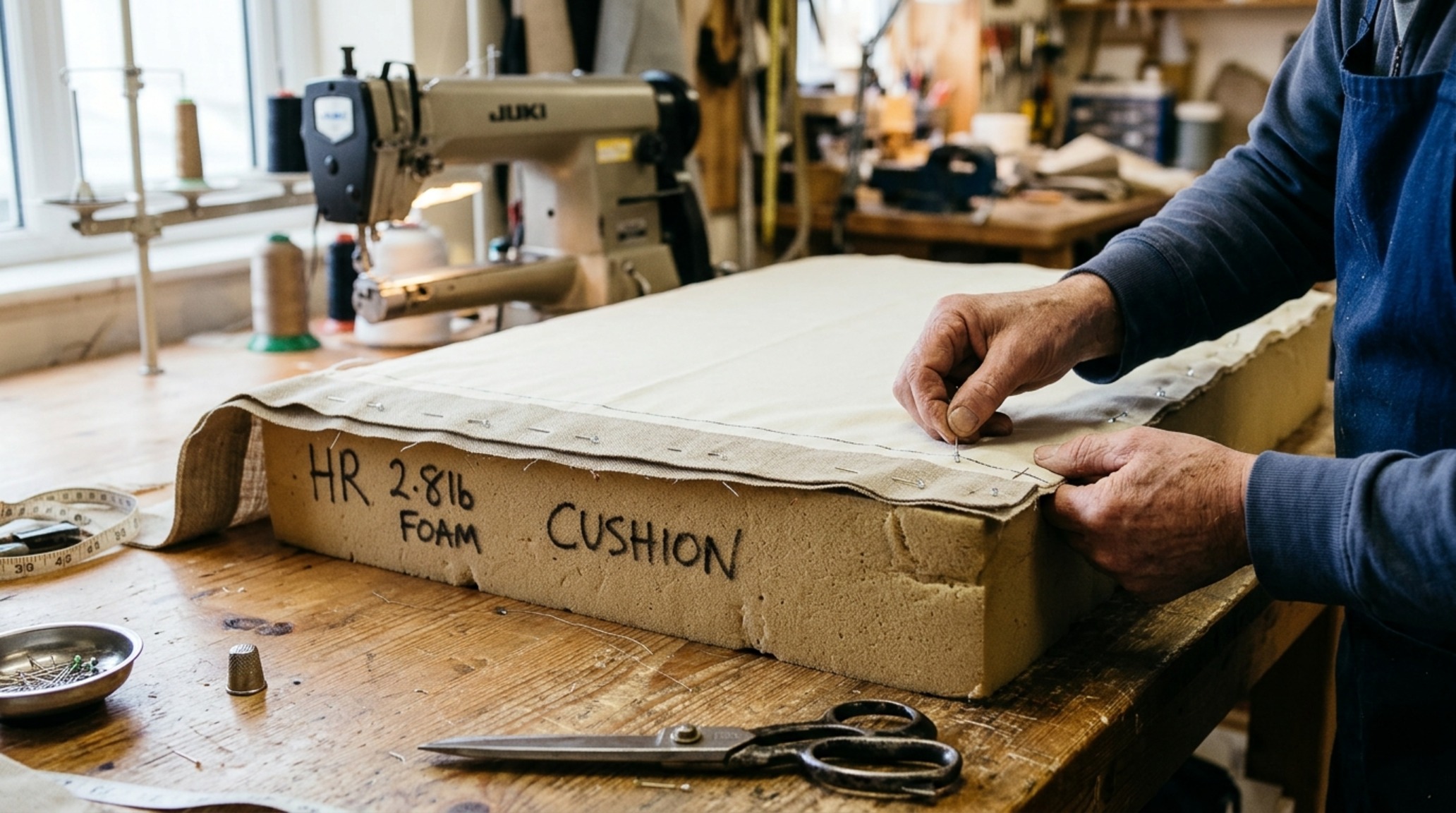
The difference between a ‘pillow’ and a ‘cushion’ lies in the boxing. A boxed cushion features a top, a bottom, and a vertical side panel (the boxing), which gives the seat its structural integrity and rectangular profile. When boxing a custom cushion, the tension of the fabric is paramount. Too loose, and the fabric will ‘puddle’ and wrinkle; too tight, and the foam will bow, creating a distorted shape. I recommend using a dacron wrap over your 2.8lb HR foam. This thin layer of polyester batting softens the edges of the foam, providing a ‘crowned’ look to the top of the seat that feels more inviting and high-end. It also creates friction between the foam and the fabric, preventing the cover from shifting during use. For the most sophisticated finish, consider a French seam or a micro-welt cord. This architectural detail emphasizes the crisp 90-degree angles of the seat and provides a subtle shadow line that adds depth to the overall composition.
Zipper Placement for Bench Cushions and Storage Accessibility
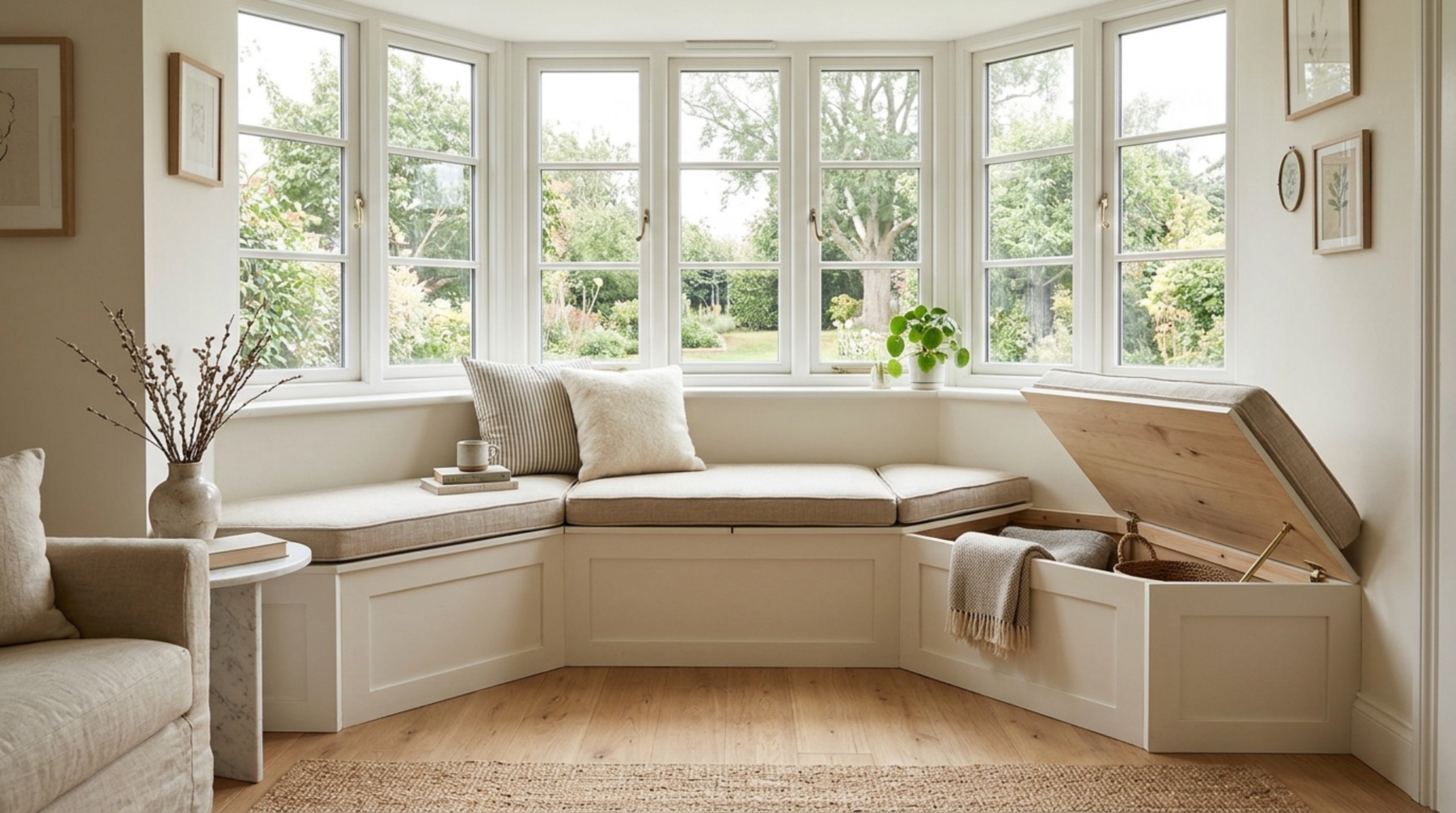
Functional flow is about removing friction from daily tasks. If your window seat features under-seat storage—as it should—the cushion must be designed to accommodate that access. We often engineer the bench with a ‘piano-hinged’ lid, meaning the entire top of the wooden bench flips up. In this scenario, the cushion must either be split into sections that correspond with the lids or be light enough to move. Furthermore, zipper placement for bench cushions is a detail many overlook. You never want a zipper teeth-line to be visible from the front or even the sides. The ‘pro move’ is to place a long, heavy-duty nylon zipper along the back bottom edge, protected by a 1-inch fabric placket. This keeps the zipper away from the window glass (preventing scratches) and ensures the front ‘face’ of the cushion is a single, uninterrupted plane of textile beauty. To prevent the cushion from sliding when the lid is closed, we integrate a non-slip friction layer—either a rubberized mesh fabric sewn into the bottom or a series of discreet Velcro tabs that keep the seating oasis firmly in place.
Curated Visual Concept Gallery & Spatial Vignettes
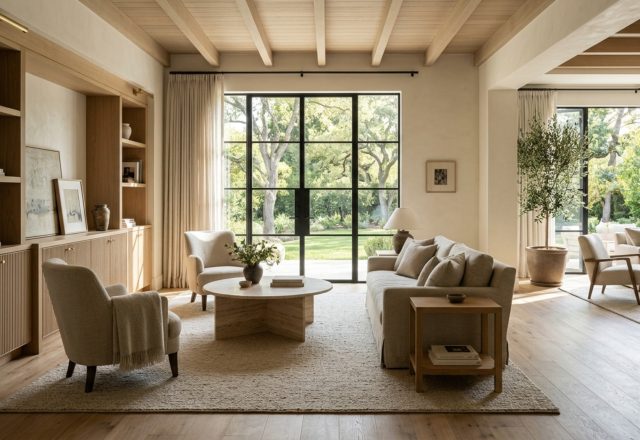
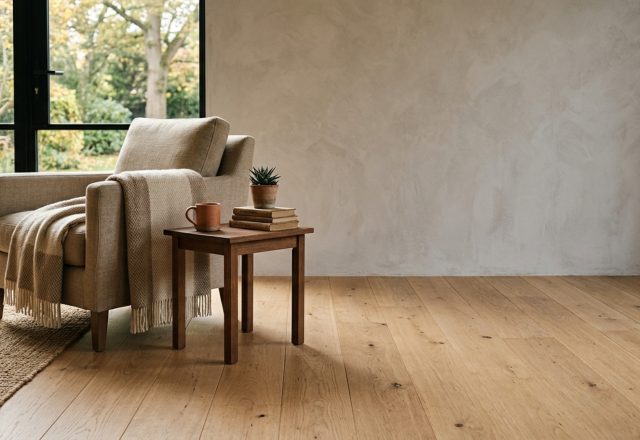
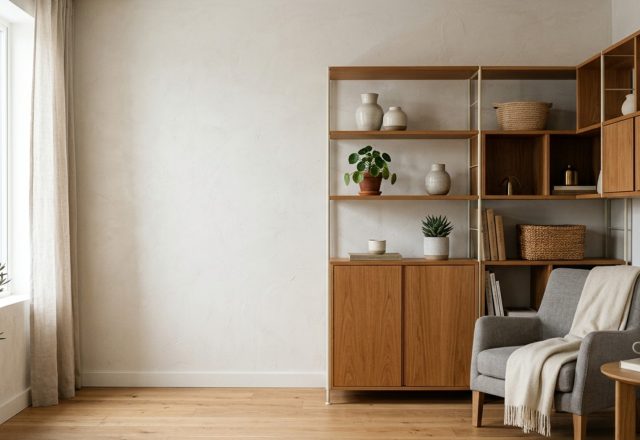
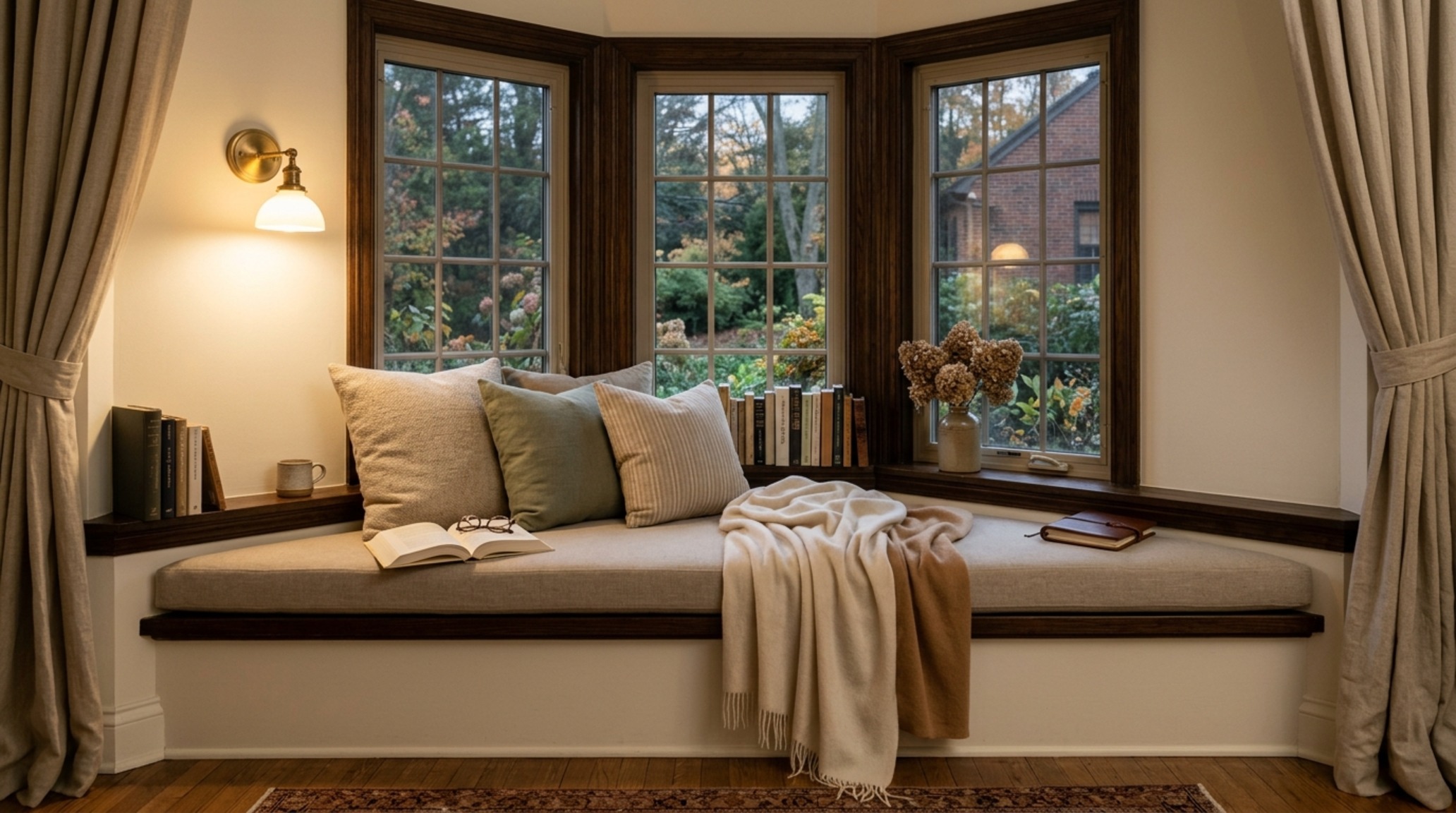
The visual success of a window seat is often dictated by its relationship to the surrounding room. It should act as a bridge between the interior architecture and the view outside. Consider the ‘sightline alignment’—the top of the cushion should ideally sit just below the window sill, allowing the eye to travel outward without obstruction. In more contemporary settings, we might use a monochromatic palette where the cushion fabric perfectly matches the wall color (think Farrow & Ball Setting Plaster), creating a ‘carved out’ effect that feels incredibly serene. In traditional homes, the window seat provides an opportunity for ‘tactile grounding’ through the use of contrasting textures—a smooth oak bench paired with a rugged, chunky knit cushion. Lighting plays a dual role here; while natural light dominates the day, a dedicated 2700K recessed spot or a small swing-arm sconce with a high CRI rating (90+) ensures the seat remains a functional reading nook long after the sun has set.
Integrating these technical elements—the ‘finished height’ math, the HR foam density, and the precision of the template—elevates the project from a simple DIY to a piece of bespoke architecture. It is about honoring the physics of the human body as much as the aesthetics of the home. When you sit in a well-engineered window seat, you feel an immediate sense of decompression. Your feet rest flat on the floor or a footstool, your back is supported by a cushion that doesn’t sag, and the fabric beneath your hands feels substantial and permanent. This is the structural secret of true luxury: it is invisible, felt through the absence of discomfort and the presence of effortless utility.
Material Schedule & Architectural Clearances
Comprehensive material guide featuring exact paint swatches, authentic finishes, and spatial clearances.
Designing for the way we actually live means acknowledging that our homes are evolving from static galleries into dynamic hubs of rest and productivity. The window seat, when executed with technical precision and material integrity, becomes more than a place to sit—it becomes an anchor for the soul of the house. By prioritizing the invisible engineering of ergonomics and high-performance textiles, we ensure that these small architectural moments remain relevant and deeply restorative for decades to come, reflecting a lifestyle where utility and beauty are finally, and harmoniously, inseparable.
Editorial Silo • Recommended Architecture Studies
- The Structural Strategist: How To Become Interior Decorator & How to Become an Interior Decorator by Mastering Spatial Architecture — Archival Design Case Study
- Most Efficient Home Heating Radiant Style — Archival Design Case Study
Curated Materiality & Proportion
A high-resolution study in spatial proportions, tactile materiality, and light choreography curated for enduring modern living.
Curated Visual Lookbook
A visual curation of architectural arrangements, lighting concepts, and material palettes featured in this space.
Design Gallery & Spatial Studies