The Architectural Silhouette: Reimagining the Festive Form
The friction between a raw, honed travertine plinth and the velvety needle-drop of a noble fir creates a tactile dialogue that defines the modern interior. When we conceptualize christmas decorating tree ideas, we aren’t merely placing a festive icon; we are introducing a temporary architectural column into a curated environment. The goal is to treat the evergreen as a sculptural installation—one that respects the existing geometry of the room while offering a soft, organic counterpoint to the hard angles of rift-sawn oak and matte plaster walls.
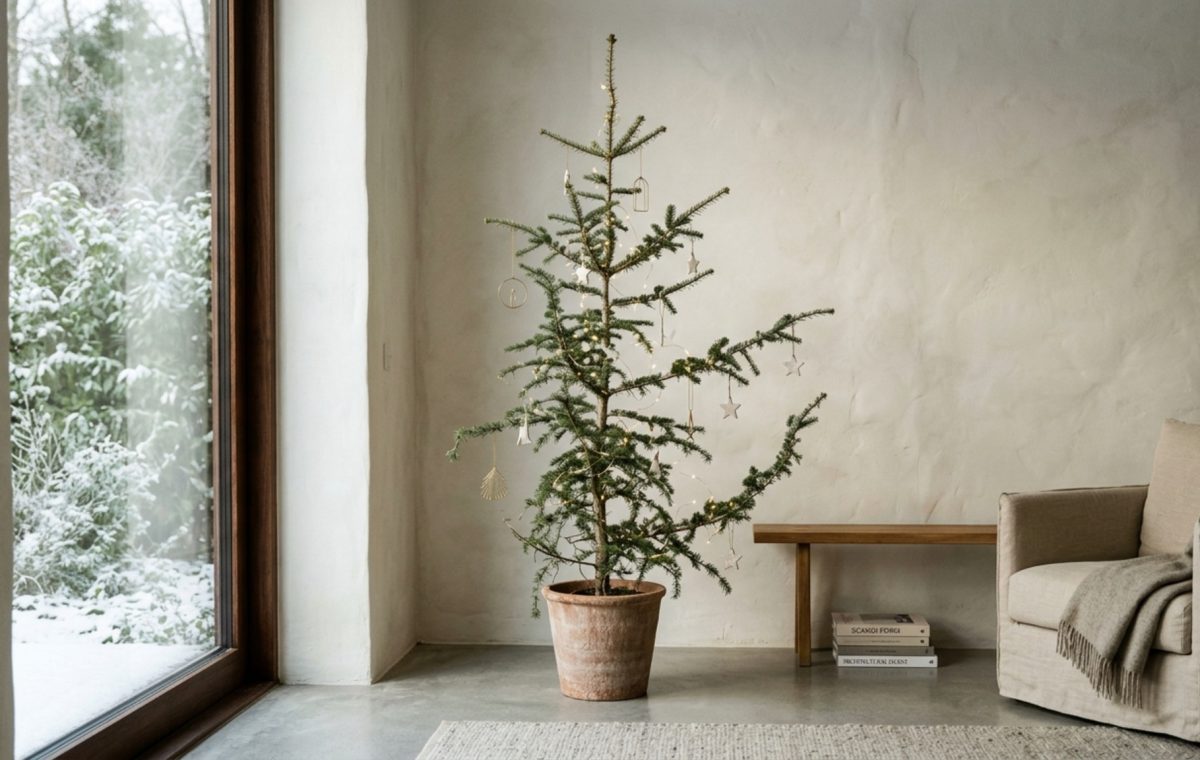
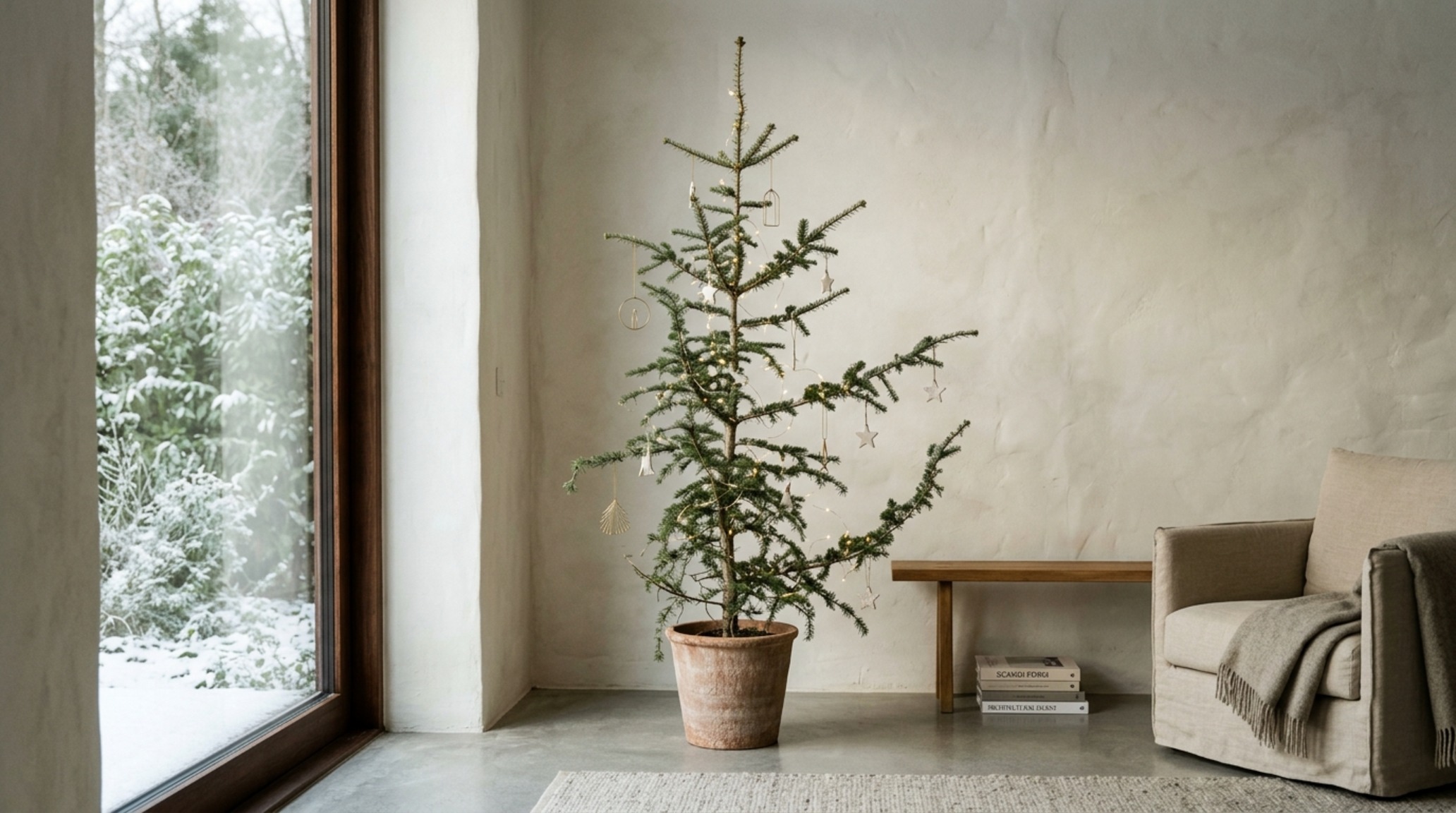
In the contemporary home, the tree must justify its footprint. We are seeing a move away from the ‘wall of green’ toward a more considered, airy silhouette. This involves looking at the tree through the lens of a curator rather than a decorator. We consider the negative space between branches as much as the needles themselves. By selecting trees with wide, irregular branch spacing—often referred to as ‘Sparas’ style—we allow the room’s architecture to breathe through the foliage, maintaining sightlines that are often obscured by more traditional, dense specimens.
Modern Sculptural Holiday Tree Trends: The Geometry of Asymmetry
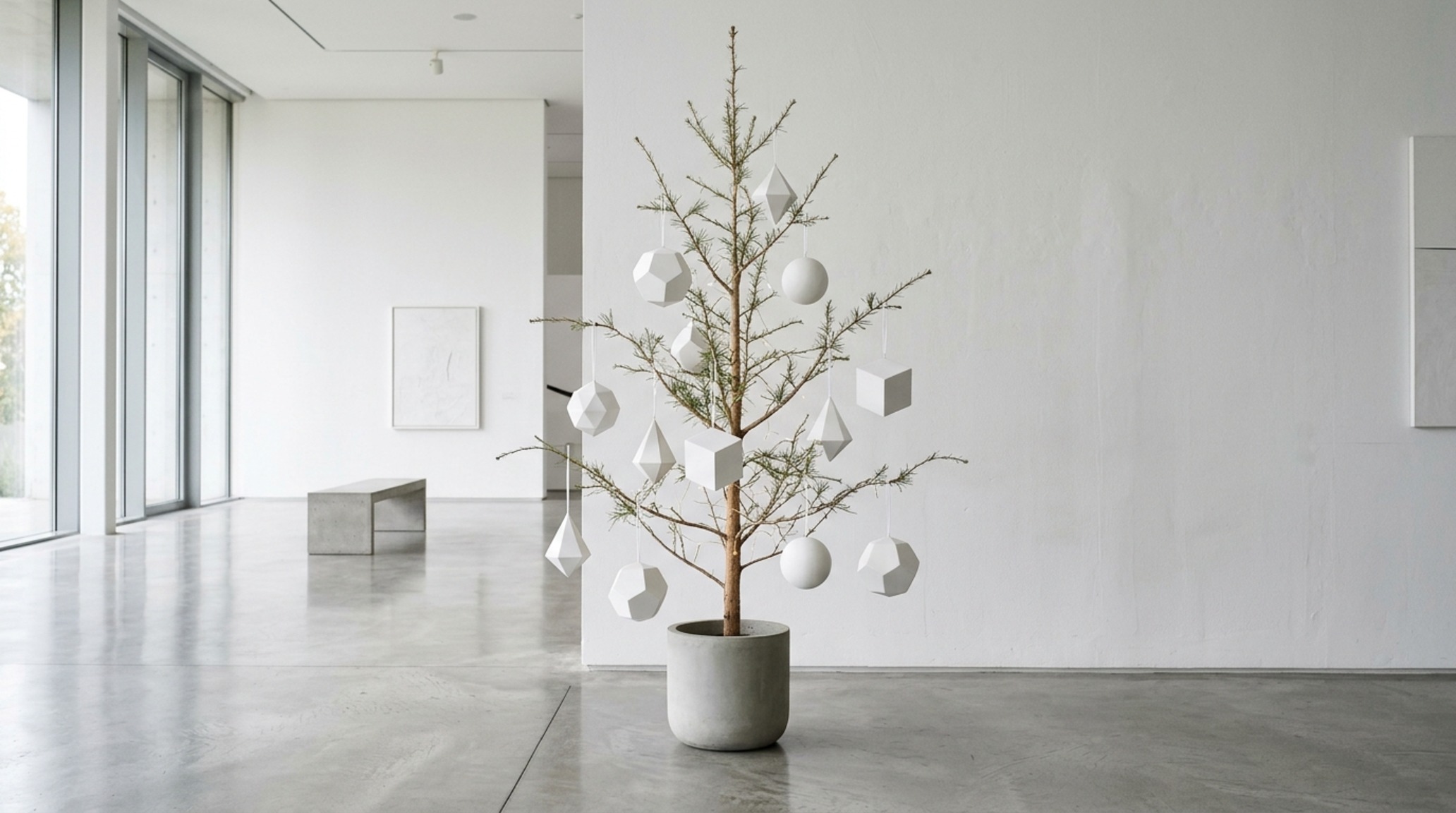
Current modern sculptural holiday tree trends emphasize the beauty of the imperfect. Instead of the perfect cone, we are seeing a preference for the ‘Charlie Brown’ aesthetic elevated to a high-art form. Think of a tree that mimics the wind-swept pines of a coastal cliff. This asymmetry creates a sense of movement and kinetic energy that aligns perfectly with mid-century modern or brutalist interiors. To achieve this, designers are intentionally thinning out dense branches, creating ‘galleries’ within the tree to showcase oversized, statement ornaments that hang like Calder mobiles.
When working with these sculptural forms, the lighting becomes a structural element. Rather than wrapping the tree in a chaotic web of wires, we look for high-CRI (90+) LED strings in a strictly 2700K warm white. This mimics the soft glow of candlelight and ensures that the natural green of the tree—and the authentic textures of your ornaments—isn’t washed out by the blue-tinted light often found in cheaper sets. The light should emanate from the trunk outward, casting shadows that emphasize the depth and skeletal structure of the branches.
Quiet Luxury Christmas Tree Ornaments and the Tactile Palette
The concept of ‘Quiet Luxury’ has migrated from the wardrobe to the holiday branch. This year, quiet luxury christmas tree ornaments are defined by a sophisticated restraint—think hand-blown glass in shades of ‘Setting Plaster’ by Farrow & Ball, or ornaments wrapped in heavy-weight silk velvet. The palette is monochromatic but texturally diverse. We are pairing matte ceramic spheres with high-gloss mercury glass to create a play of light that feels nuanced rather than flashy.
Materiality is the primary driver here. Instead of plastic or mass-produced metals, we reach for turned wood, unlacquered brass, and even elements of stone like alabaster or marble. These materials provide a ‘tactile grounding’ that connects the tree to the rest of the home’s finishes. When you touch an ornament, it should have a weight and coolness that reflects its quality. This approach ensures the tree feels like a continuation of your year-round design aesthetic, rather than a jarring, seasonal interruption.

Architectural Vignettes & Spatial Flow: Mastering the Placement
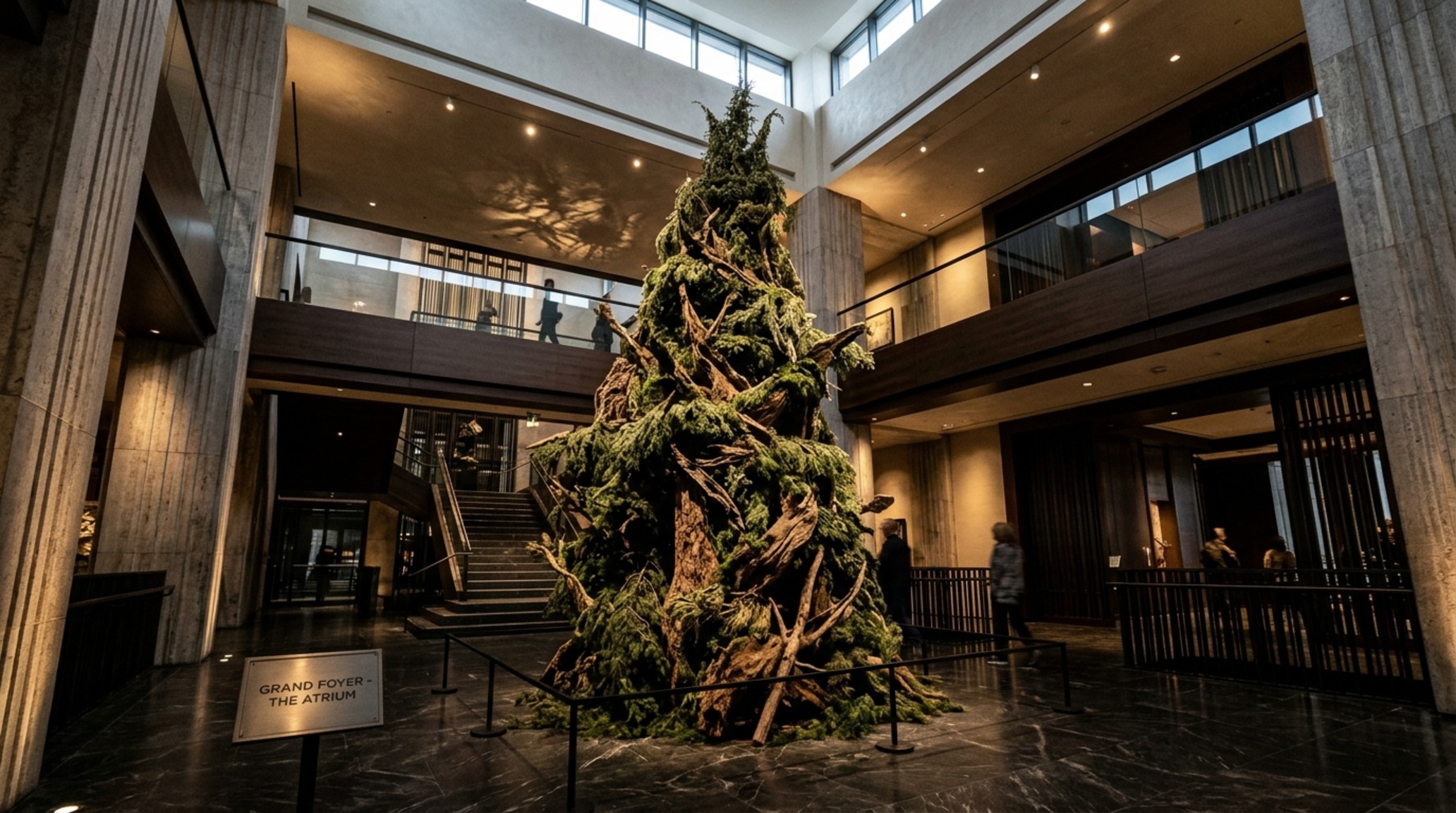
The most common error in christmas decorating tree ideas is a disregard for the room’s ‘spatial cadence.’ A tree that blocks a primary circulation path or crowds a focal point fireplace feels like an obstacle, not an installation. In a grand foyer, a tree should act as a vertical anchor, drawing the eye upward to celebrate a double-height ceiling. However, in more intimate settings, the placement must be surgical. We rely on the 36-inch standard walkway clearance to ensure the room remains functional for hosting. If your tree forces guests to shimmy sideways, it is too large for the space.
Small Living Room Tree Placement Guide: Scaling for Intimacy
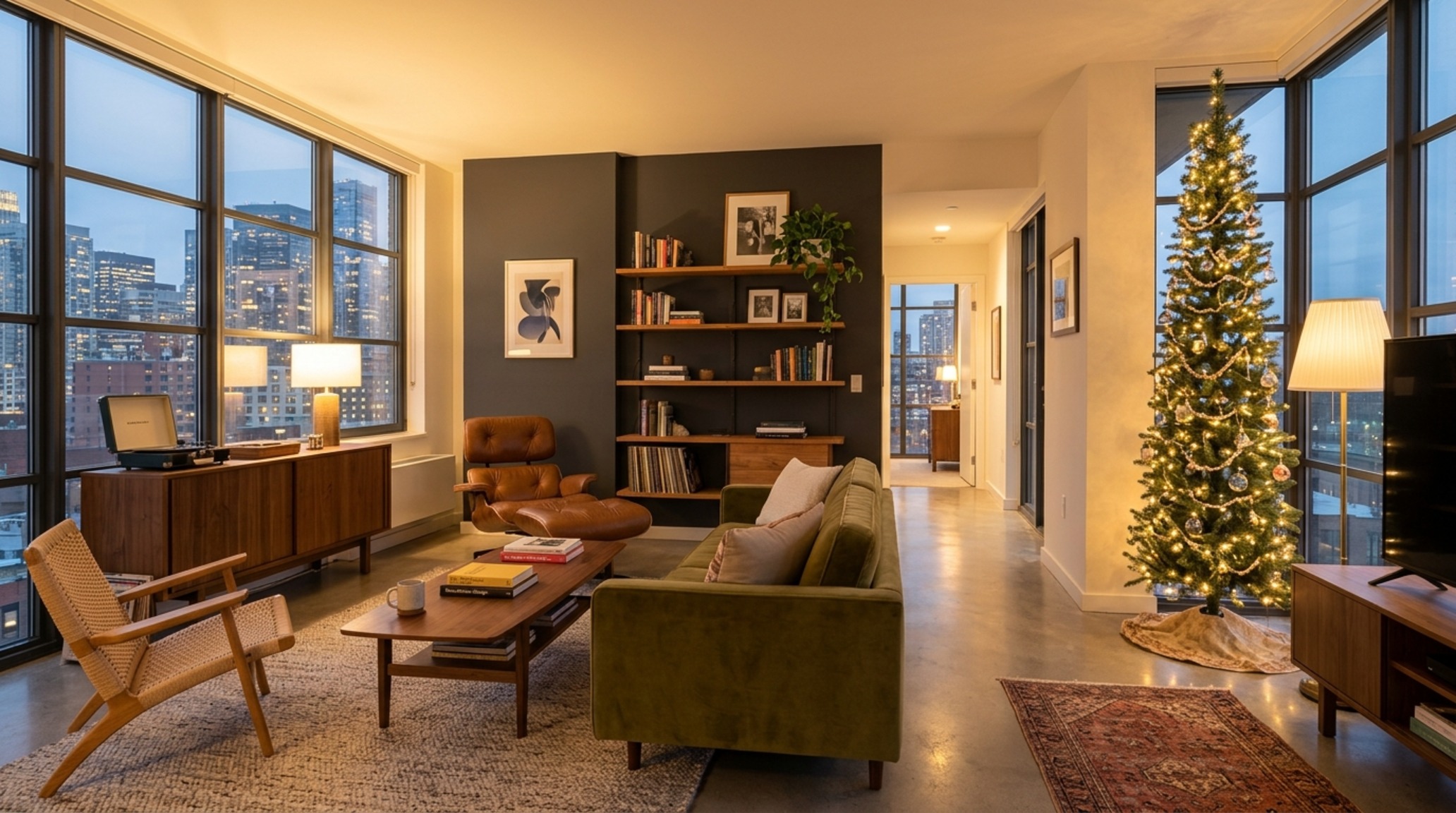
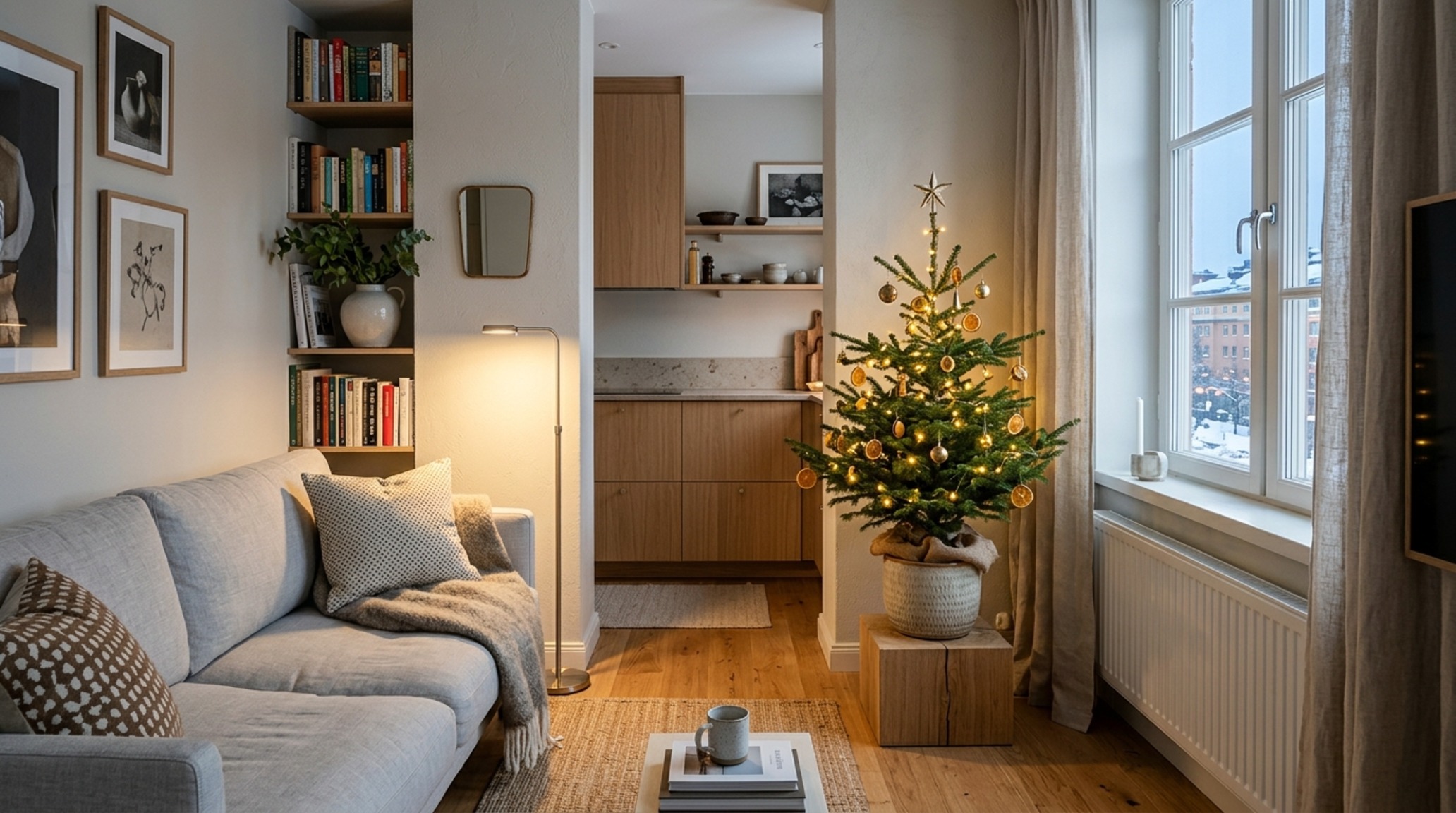
Working within a constrained footprint requires a mastery of scale. My small living room tree placement guide always begins with the ‘Golden Ratio’—the tree should ideally occupy no more than one-third of the available floor width in its designated corner. For urban apartments with standard 8-foot ceilings, a slender 7-foot pencil tree is often more successful than a shorter, wider ‘fat’ tree. By choosing a narrower profile, you preserve the 18-inch ‘reach zone’ around coffee tables, allowing the room to function as a social hub without feeling claustrophobic.
Another designer trick for small spaces is ‘elevating the floor plane.’ By placing a smaller, highly sculptural tree on a low travertine plinth or a sturdy oak side table, you keep the floor clear, which creates the illusion of more space. This also brings the ‘eye-level’ ornaments closer to the viewer, making a smaller tree feel more impactful and intentional. Lighting in small rooms should be diffused; avoid heavy, blinking patterns that can make a tight space feel frantic.
Cherry Cola Christmas Tree Aesthetic: A Study in Deep Chromatics
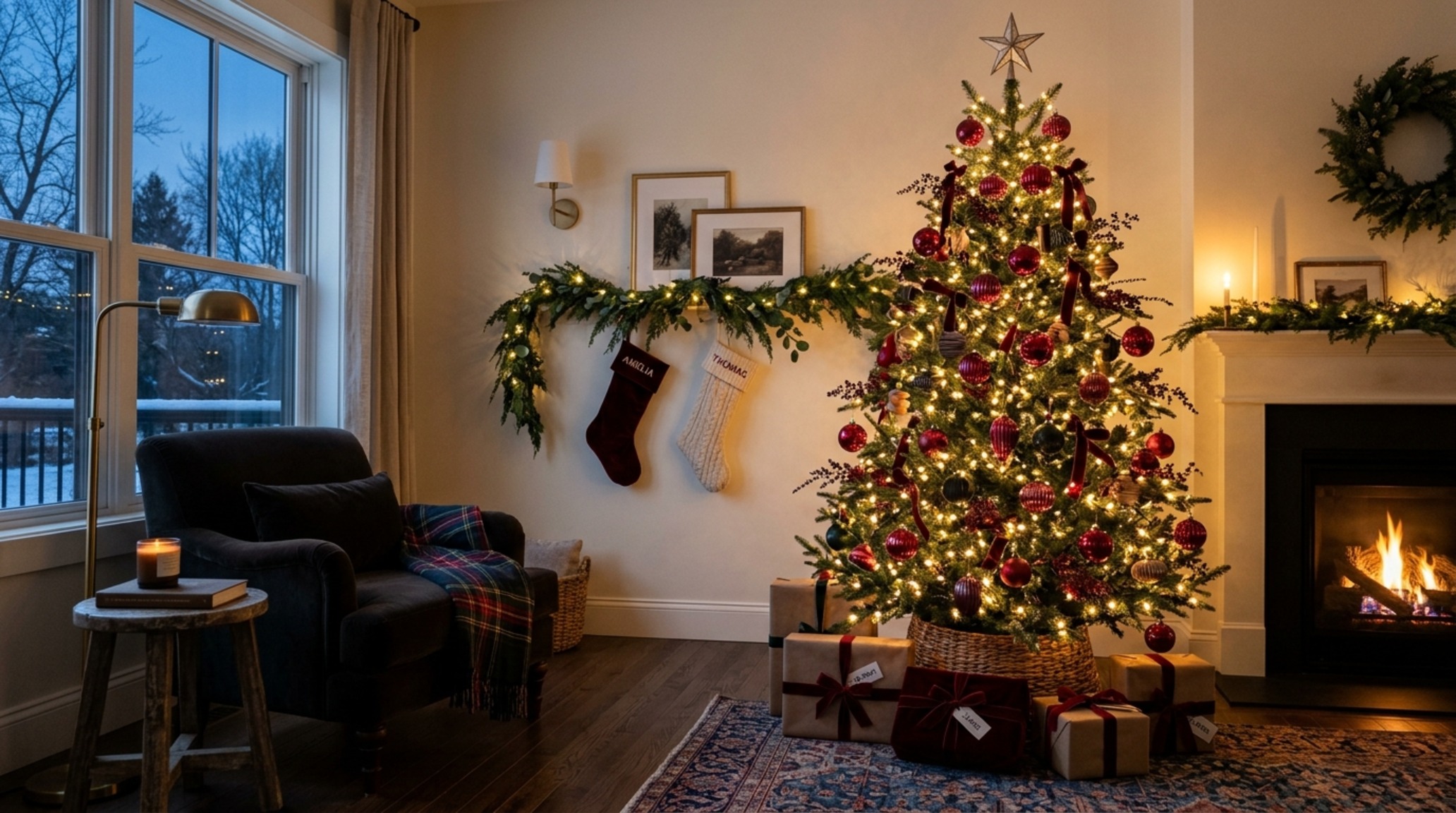
For those looking to move beyond the traditional forest green and gold, the cherry cola christmas tree aesthetic offers a rich, moody alternative that feels incredibly current. This trend focuses on a palette of deep oxblood, burnt umber, and translucent burgundy—shades that mirror the effervescent, dark richness of the namesake beverage. It’s a look that feels particularly at home in rooms with dark-stained wood floors or walls painted in shades like Benjamin Moore ‘Swiss Coffee’ which provides a crisp, warm backdrop for the saturated colors.
To execute this look without it feeling ‘themed,’ focus on the transparency of the ornaments. Use glass baubles that allow light to pass through the deep red liquid-like tones, creating a glow that feels like an ember. Pair these with ‘Tobacco’ or ‘Espresso’ colored velvet ribbons for a sophisticated contrast. The key to the cherry cola look is the ‘shadow play’—the darker ornaments absorb some of the light, creating a mysterious, layered depth that a standard bright red tree simply cannot achieve.

Maximalist vs Minimalist Tree Styling: Finding the Spatial Balance
The debate of maximalist vs minimalist tree styling often comes down to the architectural volume of the home. A maximalist tree, overflowing with layers of tinsel, ribbons, and a lifetime of collected ornaments, requires a room with enough ‘visual quiet’ to support it. If your room is already filled with bold patterns and diverse art, a maximalist tree can lead to sensory overload. In these cases, a minimalist approach—perhaps just a single strand of oversized wooden beads and warm lights—allows the tree’s natural form to be the hero.
Conversely, in a very minimalist, monochromatic room, a maximalist tree can act as the ‘color bomb’ that brings the space to life. The trick to a ‘curated maximalist’ tree is to maintain a tight color story. Even if you have 500 ornaments, keeping them within a range of three tonal colors (e.g., champagne, bronze, and copper) creates a sense of unity. This ensures the tree looks like a deliberate design choice rather than a chaotic accumulation of objects.
Velvet Ribbon Holiday Tree Tutorial: The Art of the ‘Floppy’ Bow
One of the most requested design details this season is the velvet ribbon holiday tree tutorial technique. Moving away from stiff, wired ribbons, the modern look favors long, ‘floppy’ tails of double-sided silk velvet. This adds a soft, verticality to the tree that mimics the way willow branches weep. Instead of tying a traditional bow, try the ‘knot-and-drape’ method. Simply tie a loose knot around a branch tip and let the ends trail down 12 to 18 inches, tucking them slightly into the lower branches.
The choice of ribbon width is crucial. For a standard 7.5-foot tree, a 1.5-inch or 2-inch ribbon provides enough weight to hang beautifully without overpowering the needles. Use colors that provide a subtle ‘tonal shift’ from the tree itself—moss green velvet on a fir tree creates a sophisticated, monochromatic texture, while a pale ‘Dusty Rose’ or ‘Setting Plaster’ ribbon adds a soft, ethereal warmth that catches the light beautifully.
Technical Specification & Material Matrix
Curated tactile palette, spatial dimensions, and atmospheric lighting index for this design scheme.
Ultimately, the most successful christmas decorating tree ideas are those that treat the evergreen not as an intruder, but as a guest that understands the house rules. By honoring the structural integrity of our living spaces—respecting the flow of light, the rhythm of movement, and the existing material palette—we create a holiday environment that feels both festive and profoundly permanent. It is a moment where the ephemeral beauty of the season meets the enduring principles of architectural design, leaving us with a home that feels larger, brighter, and more thoughtfully inhabited than before the first branch was even placed.
Editorial Silo • Recommended Architecture Studies
- The Geometry of Stillness: Architectural Directives for the Traditional Japanese Water Fountain — Archival Design Case Study
- The Luminous Gallery: Layering Materiality and Sensory Mood through Curated Mirror Decor Ideas — Archival Design Case Study
Curated Visual Chronicle
Carefully observed photographic studies detailing finish textures, sightline choreography, and enduring poise.


Curated Visual Lookbook
Design Gallery & Spatial Studies
A visual curation of architectural arrangements, lighting concepts, and material palettes featured in this space.