The Evolution of Reflective Materiality
For decades, the standard approach to glass in the home was governed by a static, almost utilitarian heavy-handedness. We inherited a legacy of bulky, ornate Victorian silhouettes and the somewhat soulless, wall-to-wall ‘builder grade’ slabs of the 1990s that did little more than double the visual clutter of a room. However, the contemporary design landscape has undergone a radical shift. Today, we view the reflective surface not as a vanity tool, but as a fluid architectural component. By integrating sophisticated mirror decor ideas, we move beyond simple narcissism and into the realm of sensory curation, where glass acts as a ‘light-palette’ to soften the edges of cold modernism and introduce a necessary material dialogue between shadow and sheen.
This new era of design treats the mirror as an artisanal layer. It is no longer about checking one’s reflection before leaving the house; it is about how a pane of antiqued mercury glass interacts with the raw, slubby texture of a Belgian linen sofa or how a slim, blackened steel frame punctuates a wall washed in the chalky depth of Farrow & Ball Setting Plaster. We are using these surfaces to manipulate the very DNA of our floor plans, pulling the outside in and stretching the limits of our spatial cadence.
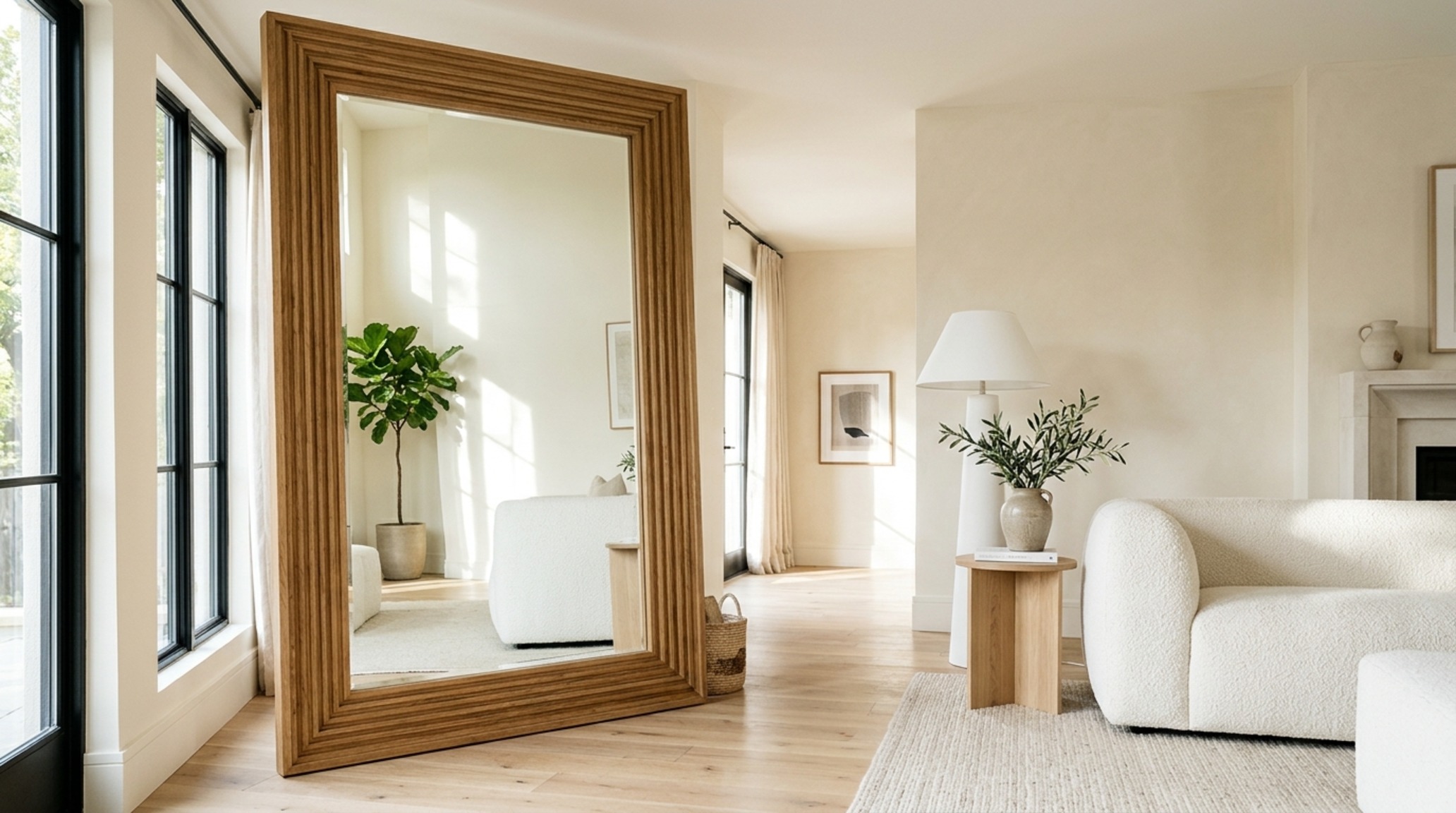
How to Decorate with Mirrors in Living Room: Establishing Spatial Cadence
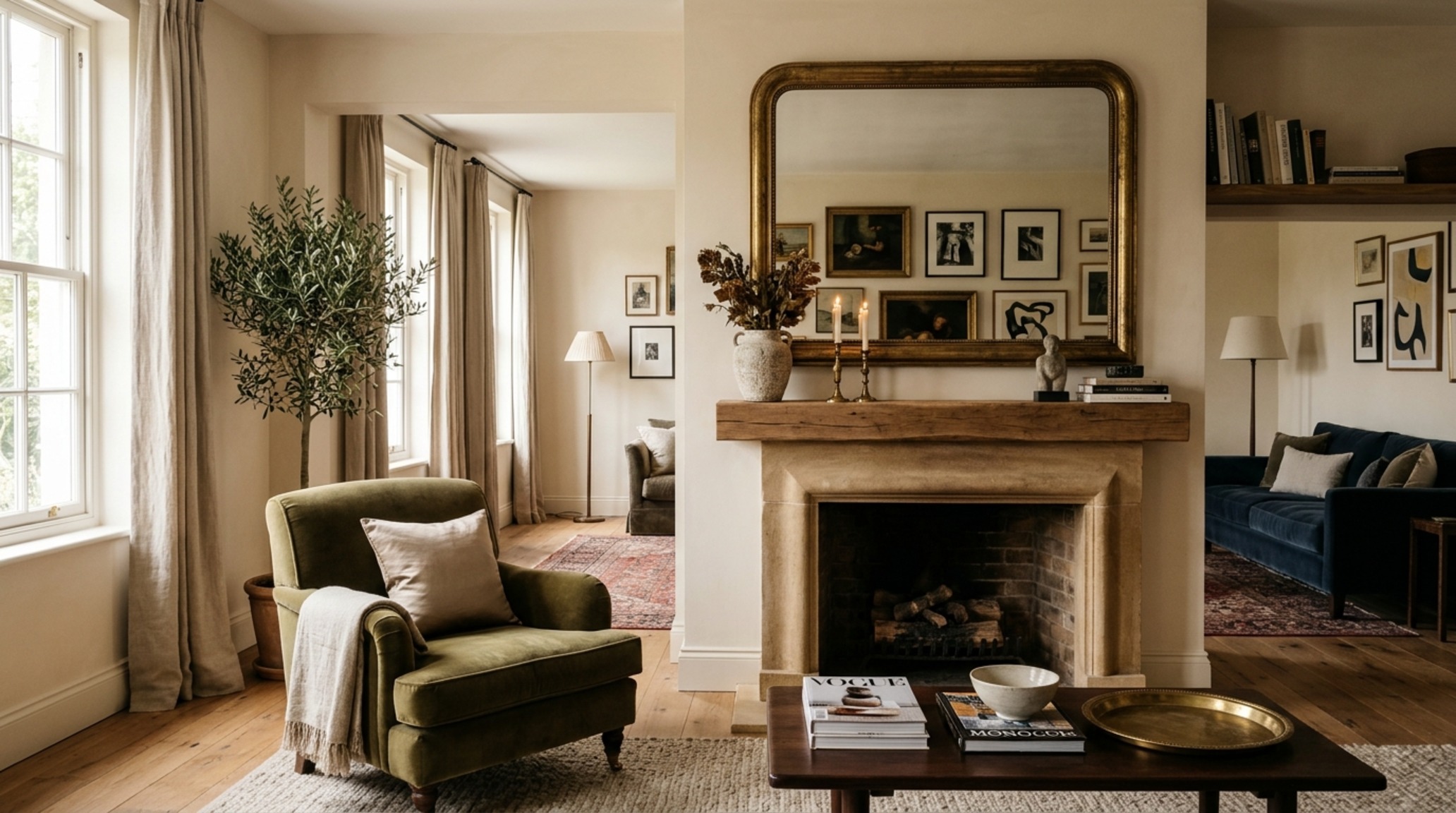
In the living room, the primary objective is often to anchor a conversational grouping while managing the flow of natural light. When considering how to decorate with mirrors in living room environments, the most common mistake is scaling too small. A mirror should feel like an intentional architectural window, not a postage stamp on a vast wall. If you are placing a mirror above a fireplace mantel, ensure the width covers at least two-thirds of the mantel’s total span to maintain visual weight.
The relationship between the mirror and the surrounding furniture is governed by strict ergonomic clearances. For instance, when leaning an oversized floor mirror near a seating area, maintain a 36-inch standard walkway clearance to ensure the room remains breathable and safe for movement. If the mirror is positioned behind a coffee table, respect the 18-inch reach distance, ensuring the reflection captures the curated textures of your tabletop—perhaps a stack of matte-finish art books and a stone vessel—rather than the underside of the furniture. By aligning the mirror with the room’s horizon line, you create a sense of ‘negative space breathing room’ that prevents even the most maximalist decor from feeling suffocating.
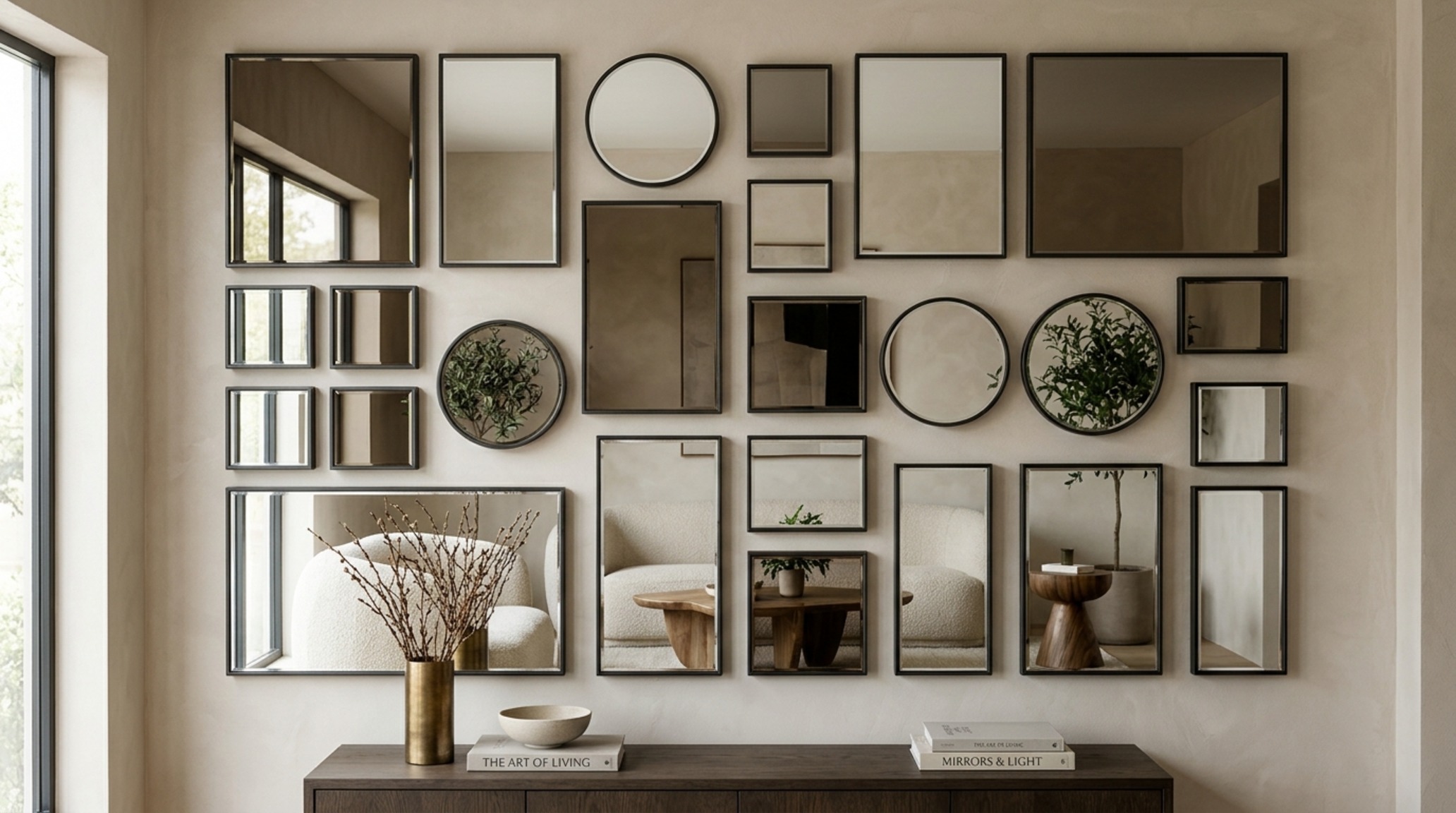
Modern Mirror Gallery Wall Layouts: A Study in Multi-Faceted Texture
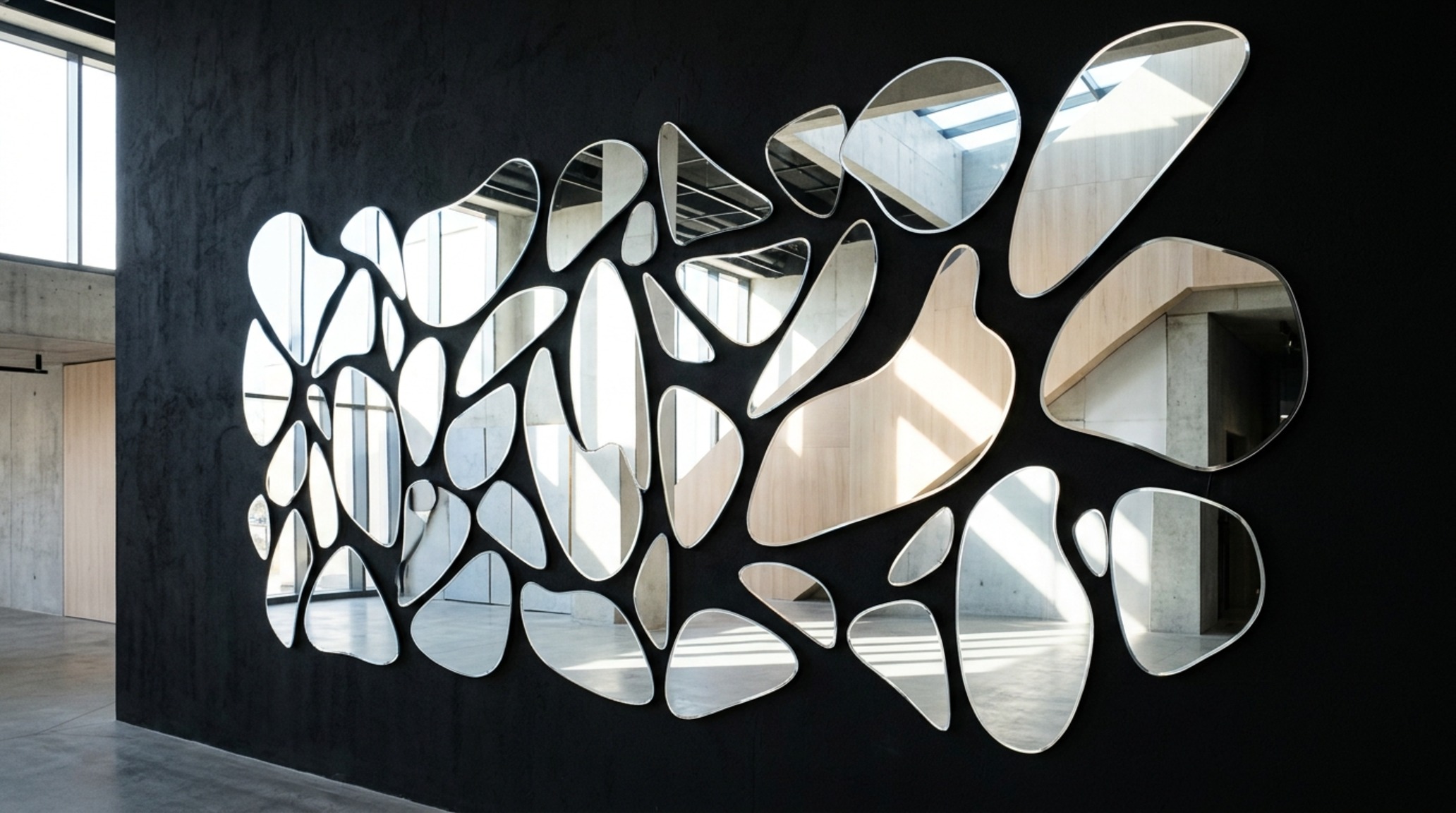
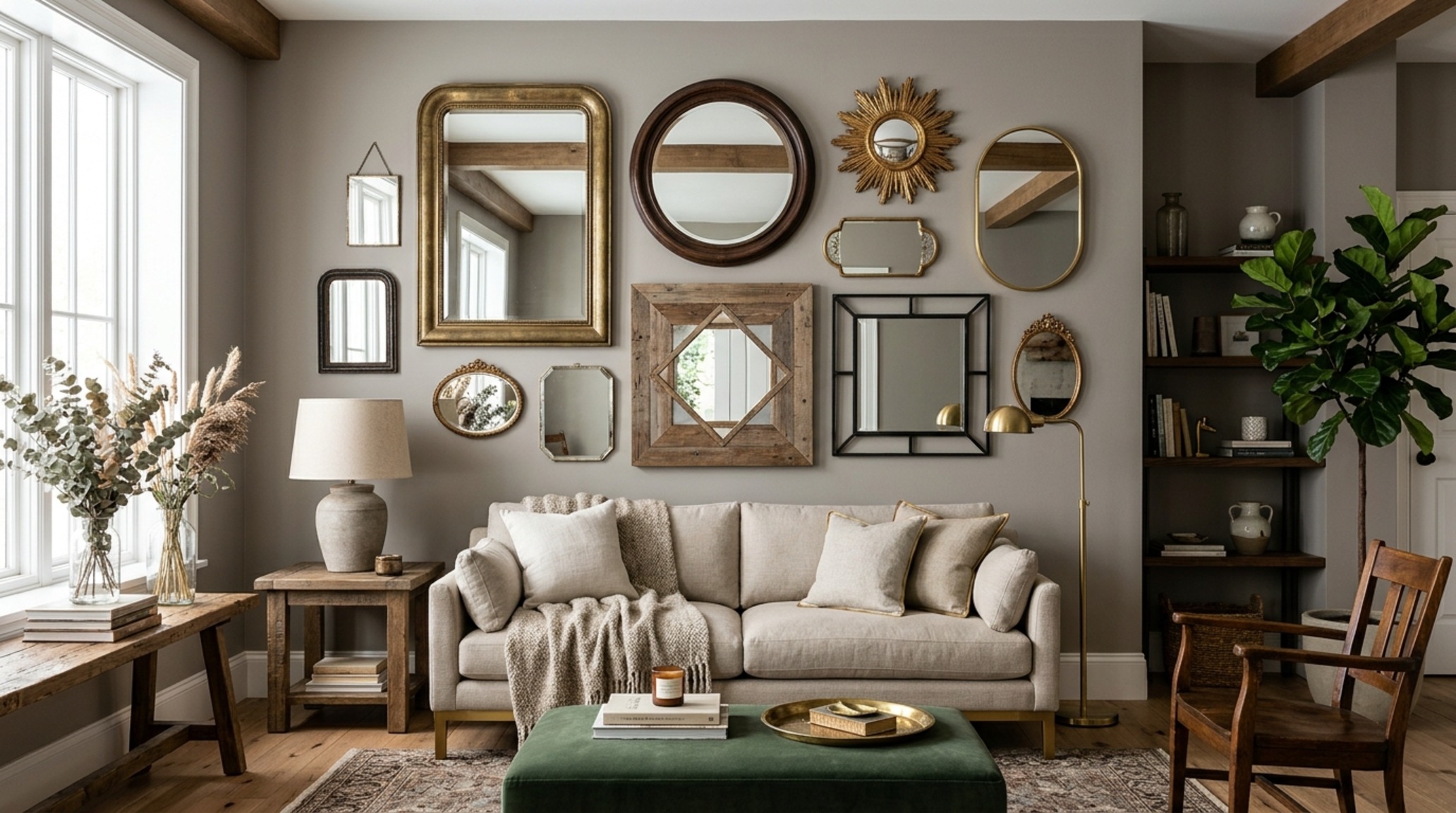
Moving away from the singular statement piece, modern mirror gallery wall layouts allow for a sophisticated interplay of shapes and finishes. Instead of uniform silver glass, consider mixing tonal reflections. Incorporating a smoked bronze mirror alongside a clear, high-polish piece creates a rhythmic ‘shadow play’ that adds depth to a flat wall. The key to a successful gallery is the interstitial space; keep gaps between frames consistent—usually between 2 to 3 inches—to maintain a cohesive architectural identity. Use varying frame depths—a deep shadow box frame paired with a flush-mount thin rim—to invite a tactile grounding that draws the eye in, rather than just bouncing it away.
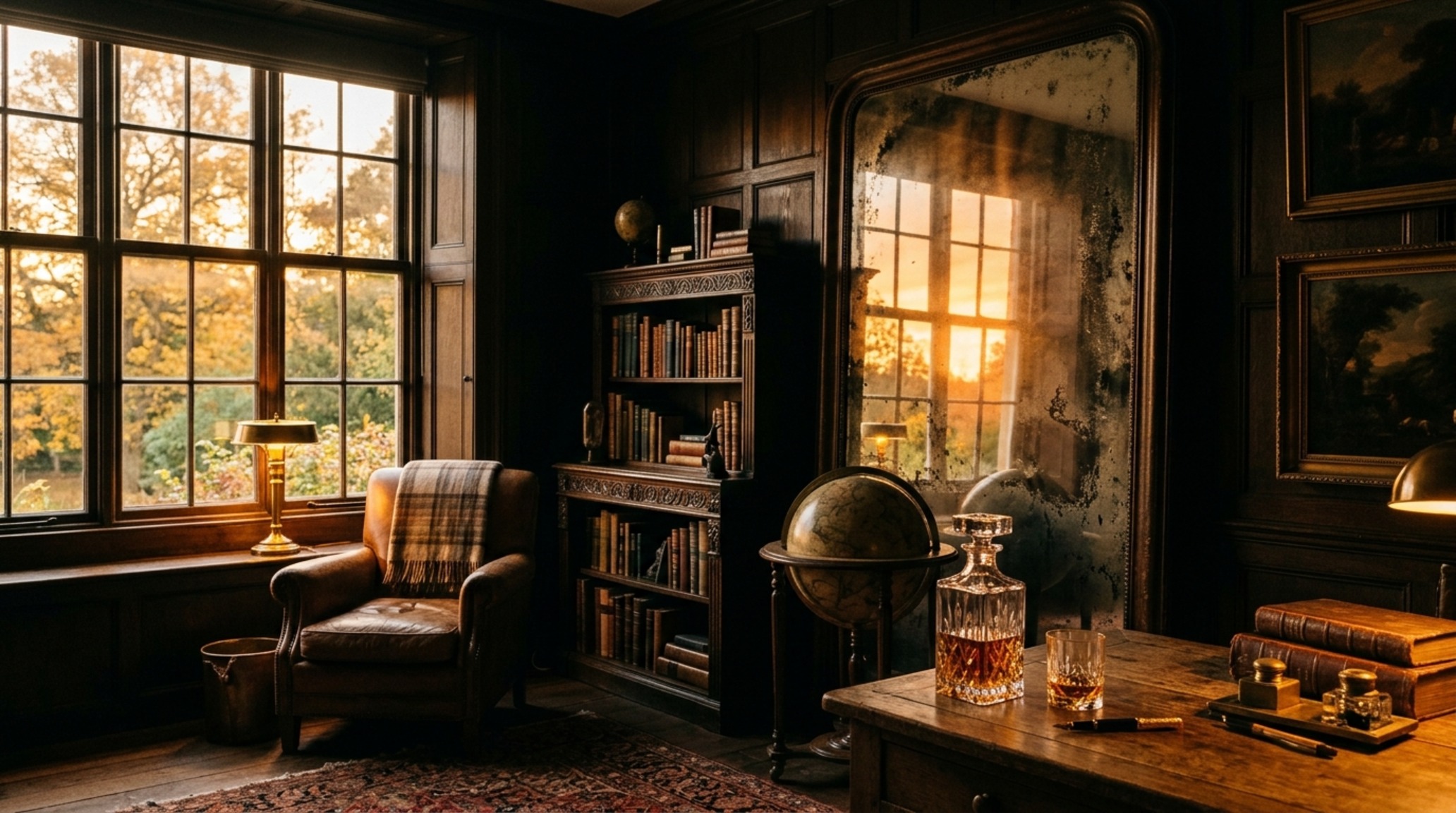
Reflecting Natural Light in Dark Rooms: The Luminary Strategic Placement
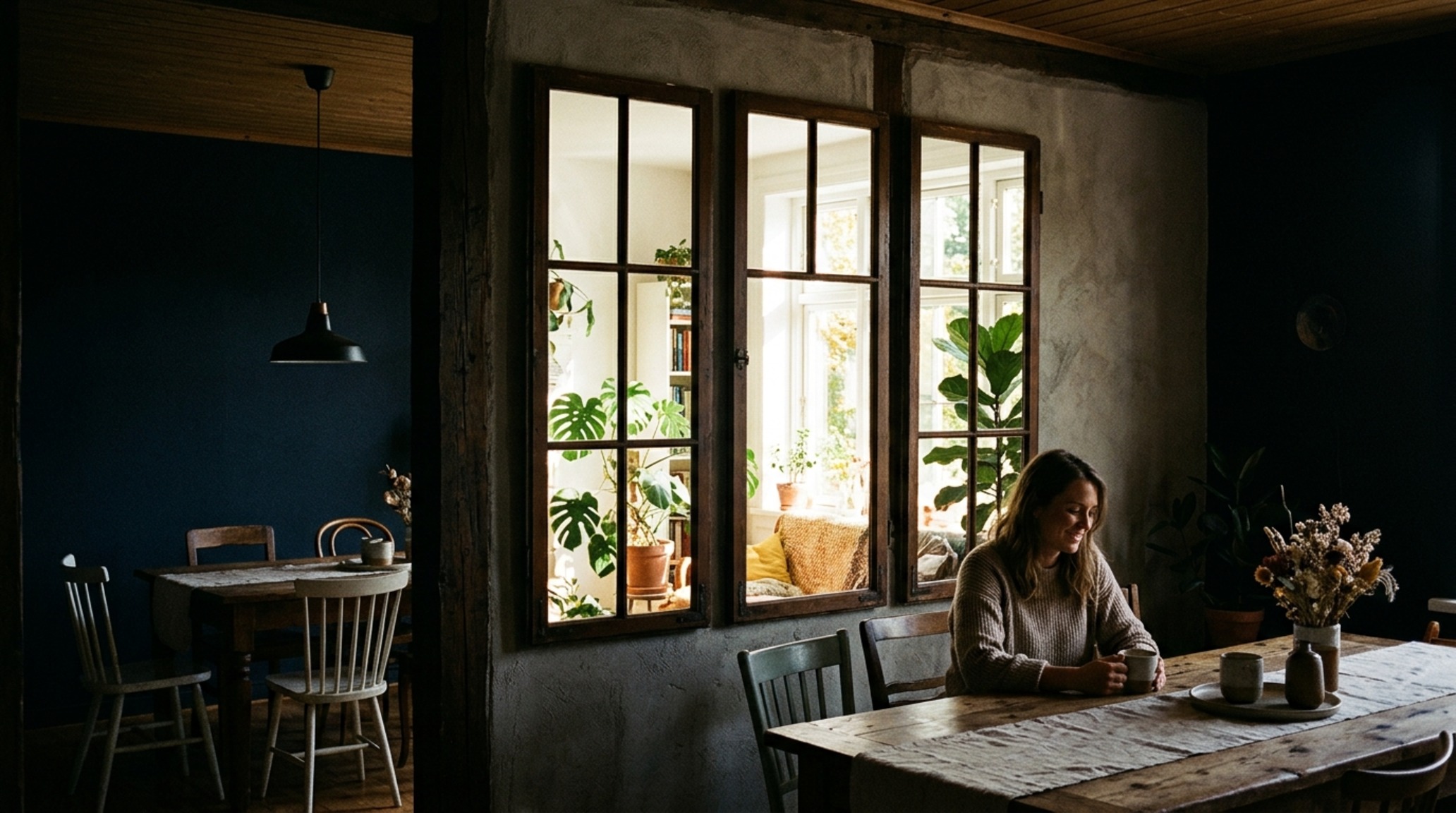
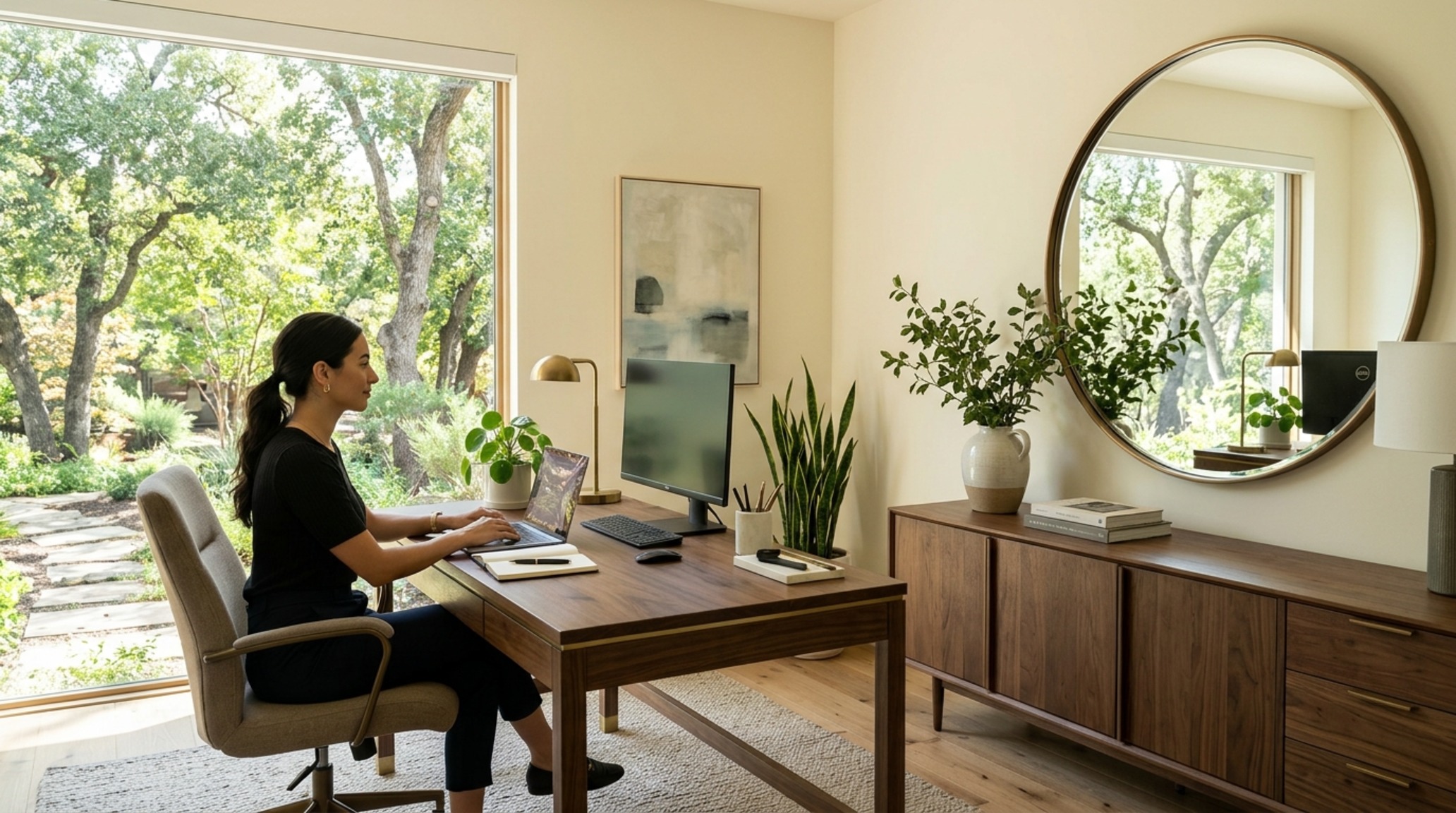
Light is a material as tangible as wood or stone. In spaces starved of Vitamin D, reflecting natural light in dark rooms becomes a technical necessity. The most effective strategy is to position a large-scale mirror directly opposite or perpendicular to your primary light source—usually a window or a set of French doors. This doesn’t just ‘brighten’ the room; it effectively doubles your square footage of perceived sky.
To avoid a clinical, harsh bounce, pay attention to the Kelvin temperature of your interior environment. If your room is painted in a warm neutral like Benjamin Moore Swiss Coffee, a silver-backed mirror might feel too cool. In this scenario, look for glass with a subtle champagne tint or an antiqued finish. This softens the reflected light, mimicking the 2700K warmth of a golden-hour sunset rather than the 3000K sharpness of task lighting. This technique turns the mirror into a passive light fixture, one that glows with the soft, diffused quality of a high-CRI 92+ light source throughout the day.
Oversized Floor Mirror Styling Tips: Managing Scale and Structural Presence
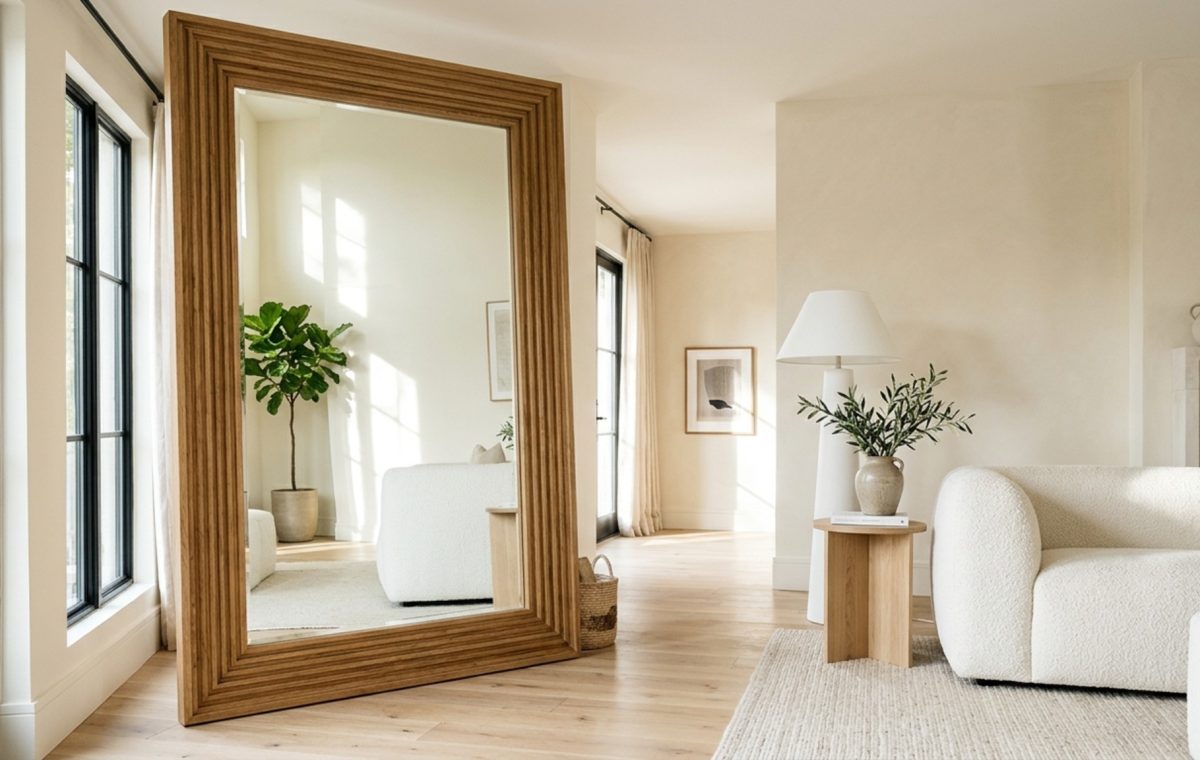
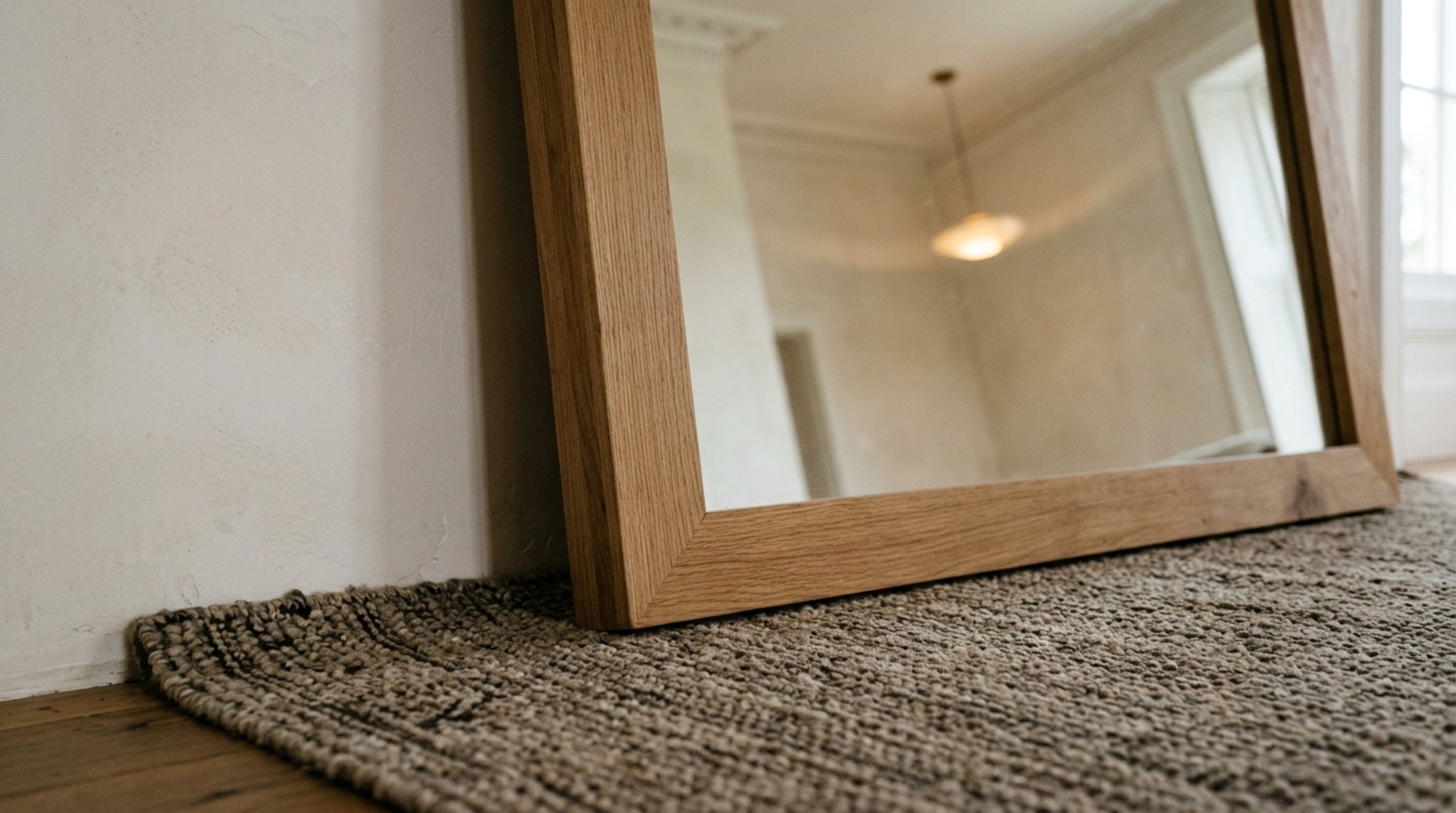
The oversized floor mirror is perhaps the most transformative tool in the designer’s kit, yet it requires a nuanced understanding of structural scale. These pieces act as secondary doorways, tricking the eye into perceiving a suite of rooms where there is only one. When executing oversized floor mirror styling tips, focus on the ’tilt factor.’ A mirror leaned at a slight 5-degree angle upward captures more of the ceiling and high-level architectural details, which can make a standard 8-foot ceiling feel significantly loftier.
Grounding these massive pieces is essential. Pair the base of a floor mirror with a tactile element like a low-slung travertine plinth or a heavy wool rug to prevent it from looking like it’s floating aimlessly. If you’re placing it in a high-traffic zone, such as near a dining area, ensure there is at least a 30-inch dining chair clearance behind any seated guests to avoid a feeling of spatial encroachment. The frame choice here is paramount; a fluted white oak frame offers a soft, organic warmth that bridges the gap between the hard glass and the soft furnishings of the home.
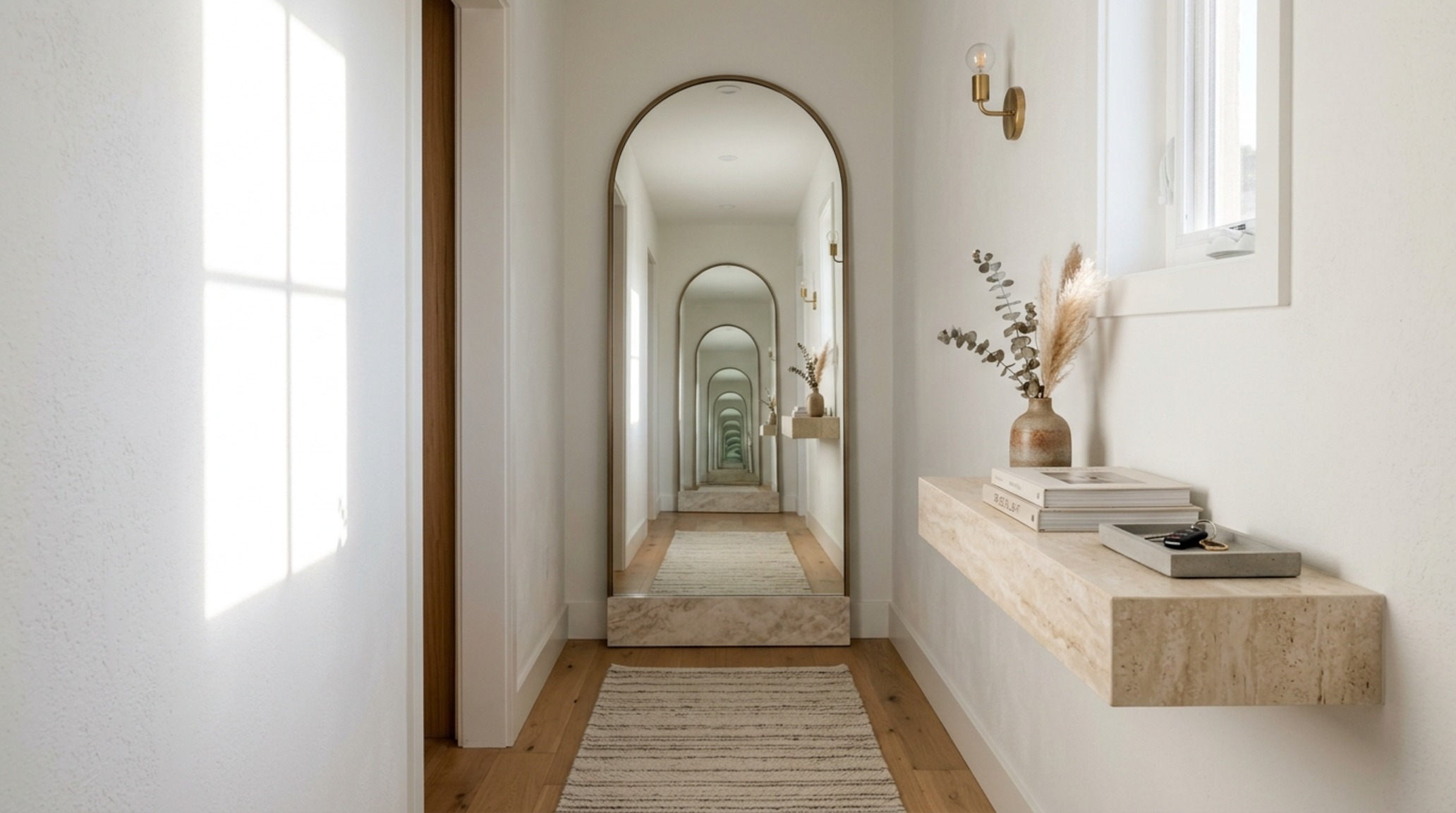
Mirror Decor for Small Entryways: Expanding the First Impression
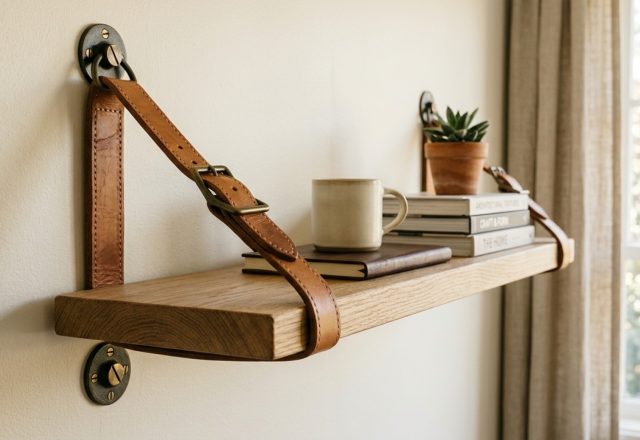
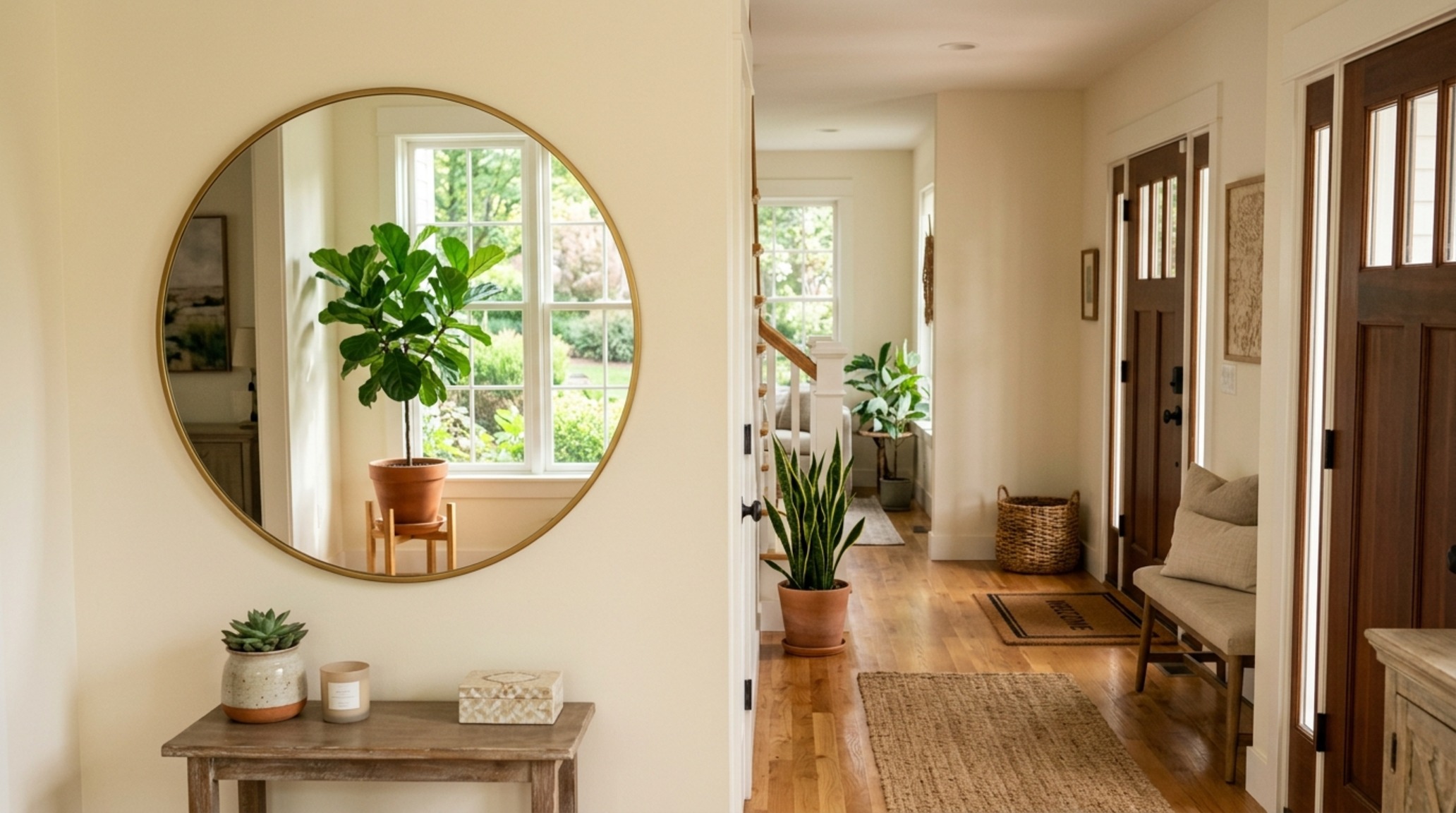
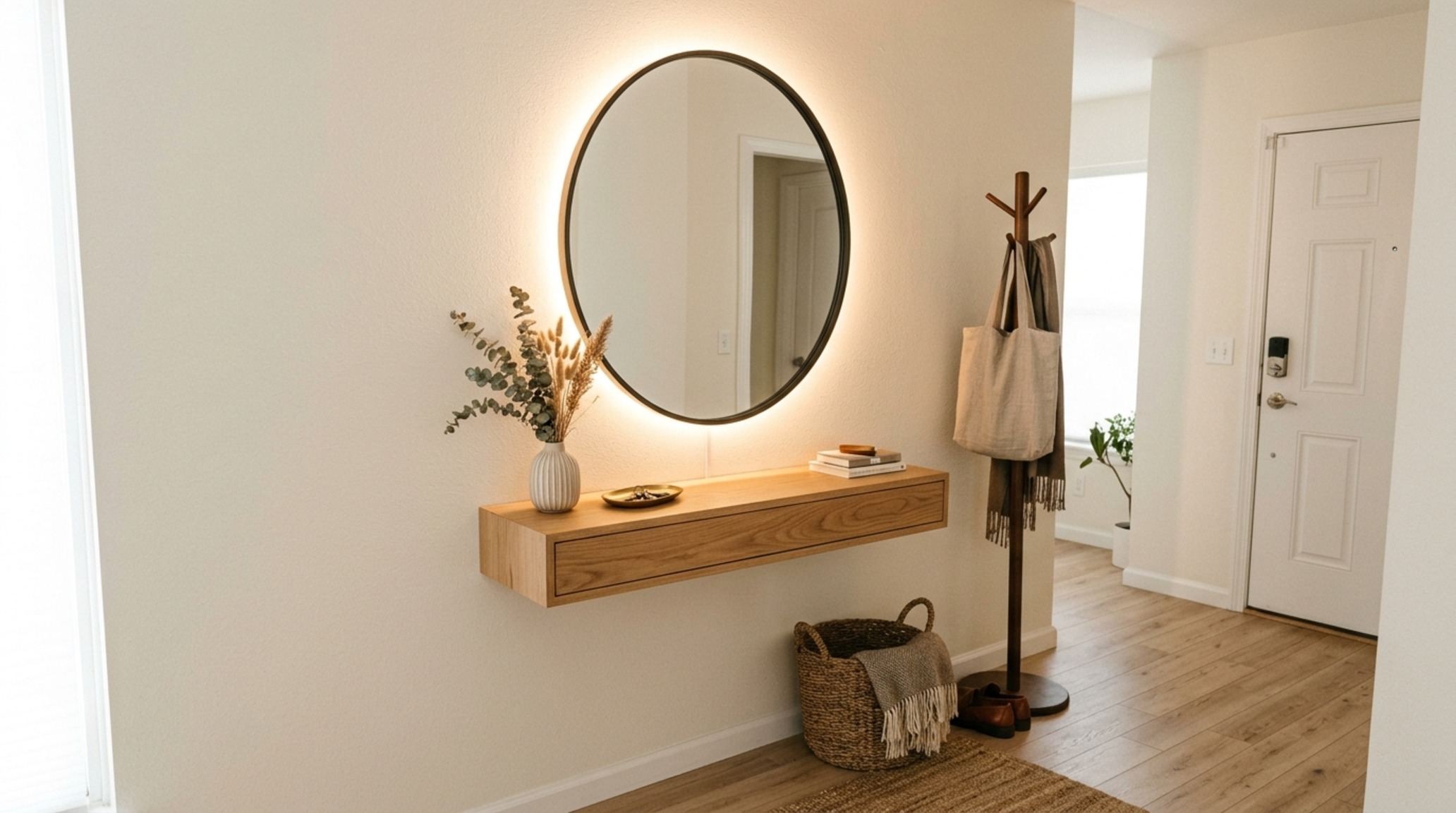
Entryways are often the most constrained spaces in a home, making mirror decor for small entryways a critical design intervention. A well-placed mirror here serves a dual purpose: it provides a final functional check and immediately eliminates that ‘closed-in’ feeling common in narrow hallways. Consider a full-height arched mirror at the end of a corridor to create an infinite sightline. This architectural trick extends the visual narrative of the home, suggesting that the space continues far beyond the physical wall. Balance the hard surface of the glass with a small floating shelf in a contrasting material—perhaps a dark walnut or a honed stone—to provide a landing strip for keys and mail without consuming precious floor real estate.
Feng Shui Mirror Placement for Energy: Aligning Flow and Intention
Beyond the physical and aesthetic, feng shui mirror placement for energy addresses the psychological impact of our surroundings. In this practice, mirrors are ‘aspirators’ of energy (Qi). To invite a sense of calm and abundance, a mirror should reflect something of beauty—a piece of art, a healthy indoor plant, or a view of the garden. Avoid placing a mirror directly facing the front door, as it is believed to push incoming energy back out of the house. Instead, place it on a side wall to draw the energy into the living spaces. In a bedroom, keep mirrors away from the direct sightline of the bed to promote a more restful, grounded sleep environment. This approach ensures that our mirror decor ideas are not just visually pleasing, but energetically supportive of our daily rituals.
Tactile Blueprint & Material Specifications
Curated tactile palette, spatial dimensions, and atmospheric lighting index for this design scheme.
Ultimately, a home’s relationship with its reflective surfaces defines its emotional temperature. When we approach our mirror decor ideas with the same rigor we apply to architectural floor plans or fine art curation, the results are transformative. We are not just hanging glass on a wall; we are sculpting light, managing energy, and creating a sensory dialogue that evolves with the sun’s path across the room. As design continues to prioritize the human experience, the mirror will remain a silent but powerful protagonist in our visual anthology of spatial living.
Editorial Silo • Recommended Architecture Studies
- Sensory Modernism: Modern Houses Pictures & A Visual Guide to Textural Depth and Earth-Toned Palettes — Archival Design Case Study
- Curtain Designs For Windows: The Architectural Blueprint & Spatial Flow Guide — Archival Design Case Study
Refined Living Space Catalog
Visual perspectives honoring architectural weight, understated craftsmanship, and layered atmospheric warmth.
Curated Visual Lookbook
Design Gallery & Spatial Studies
A visual curation of architectural arrangements, lighting concepts, and material palettes featured in this space.