The Luminance Blueprint: Engineering Spatial Volume Through Architectural Color Mastery
There is a specific, quiet magic that occurs when the first low-angled rays of morning sun graze a textured plaster wall. Finding the right bright bedroom color ideas is less about choosing a generic white from a swatch book and more about understanding the alchemy of light reflectance values (LRV) and their interaction with architectural volume. As designers, we are not just decorating; we are engineers of perception, using color as a structural tool to push back walls and lift ceilings that the physical blueprint might otherwise constrain.
The physics of spatial volume dictates that color is never static. It is a living participant in the room’s atmosphere, fluctuating with the Kelvin temperature of your bulbs and the orientation of your windows. To create a space that feels genuinely expansive, we must move beyond the ‘all-white’ cliché and embrace the nuance of receding tones—colors that, due to their wavelength and desaturation, appear to sit further away from the eye than they actually are.
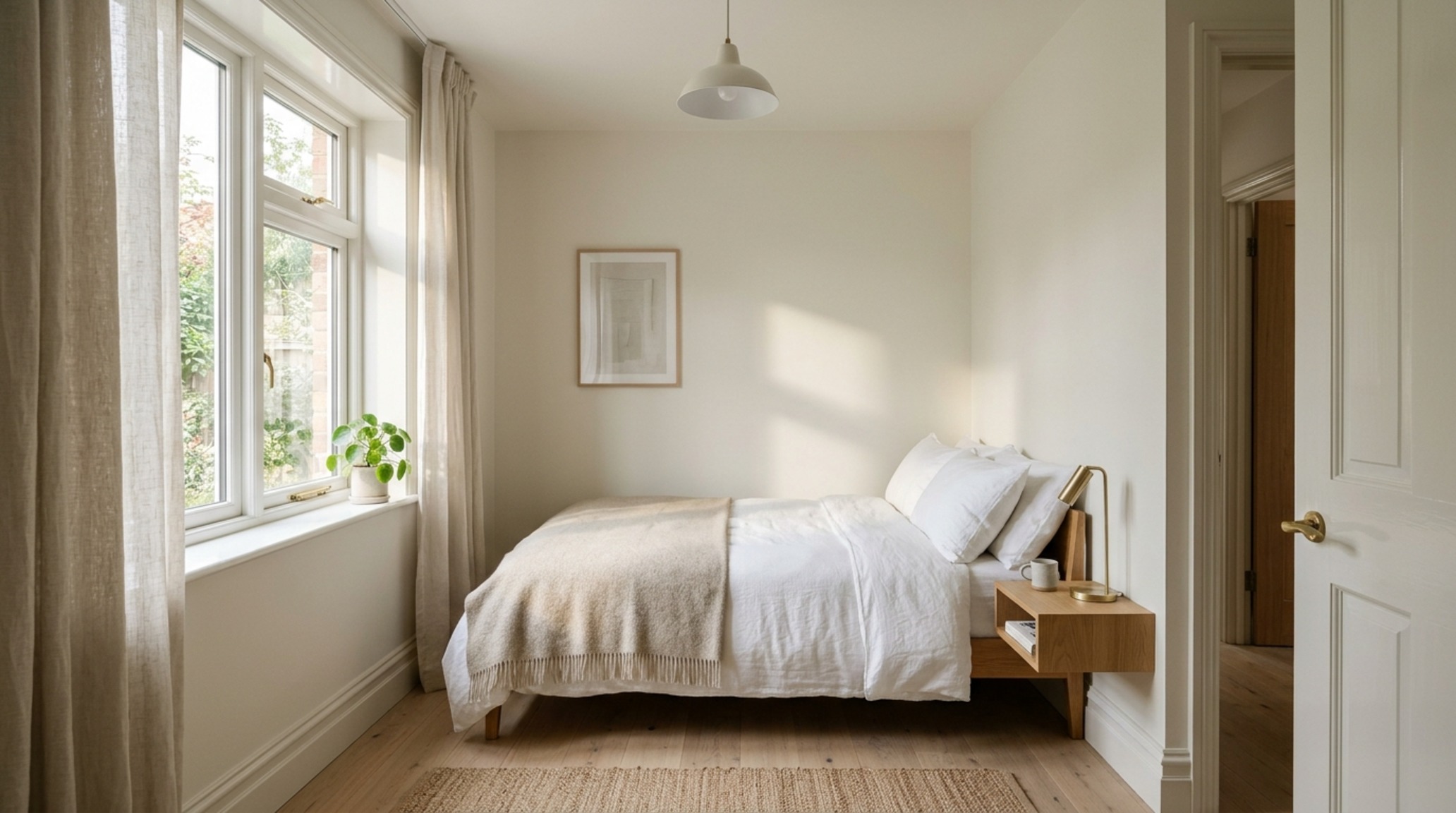
Best Paint Colors for Small Dark Bedrooms: Navigating the LRV Spectrum
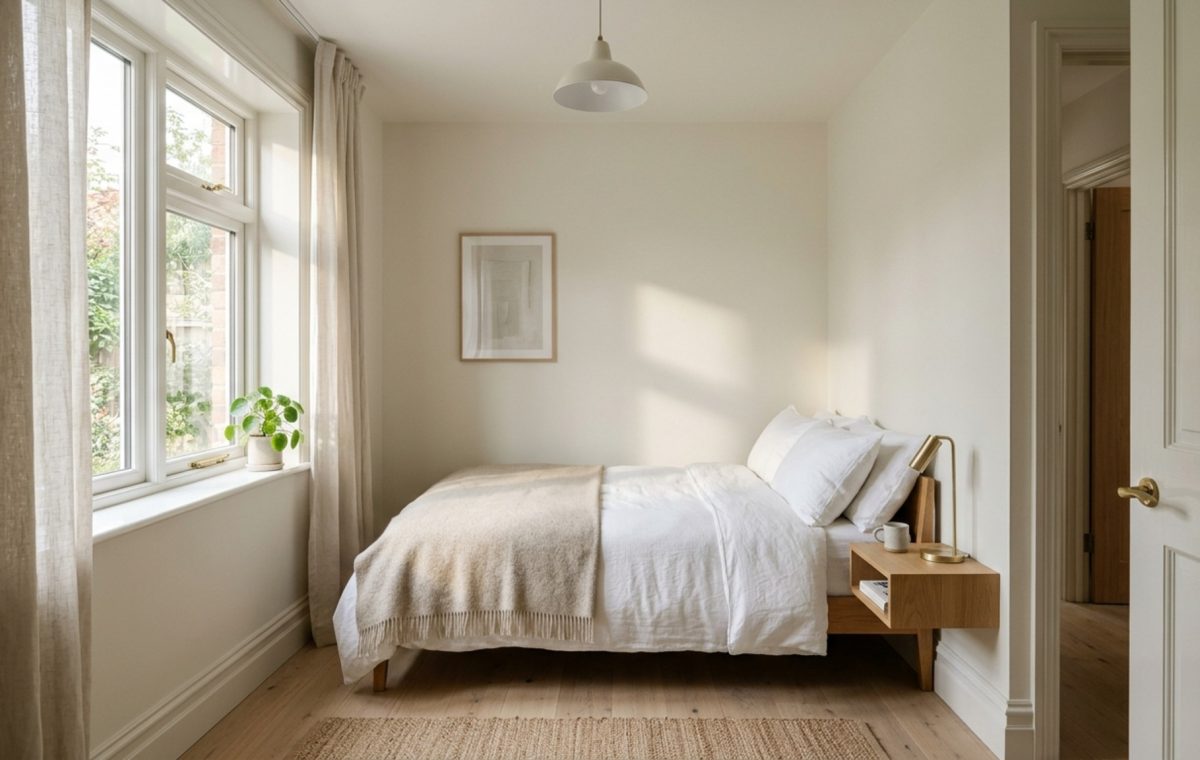
When dealing with limited square footage and minimal natural light, the instinct is often to reach for the brightest, starkest white available. However, in a low-light environment, pure white often turns a muddy, depressing grey. The secret to the best paint colors for small dark bedrooms lies in selecting shades with a high Light Reflectance Value (LRV) but enough pigment to maintain ‘body’ in the shadows. We look for colors like Benjamin Moore’s Swiss Coffee (LRV 81.91) or Farrow & Ball’s Pointing, which offer a creamy luminosity that bounces light without feeling sterile.
The strategy here is ‘diffused radiance.’ By using a satin or eggshell finish on the walls and a high-gloss finish on the architectural moldings, you create a tiered light-bounce system. The walls absorb and softly distribute the light, while the glossier trim acts as a crystalline edge, defining the room’s perimeter and creating a sense of crispness that makes the space feel intentionally designed rather than accidentally cramped.
Light and Airy Master Bedroom Decor: The Textural Contrast Rule
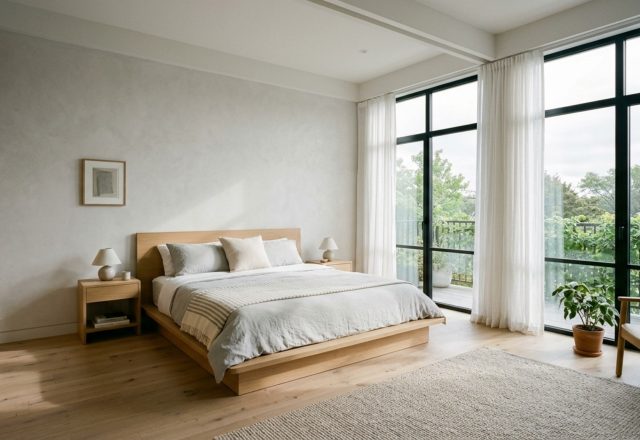
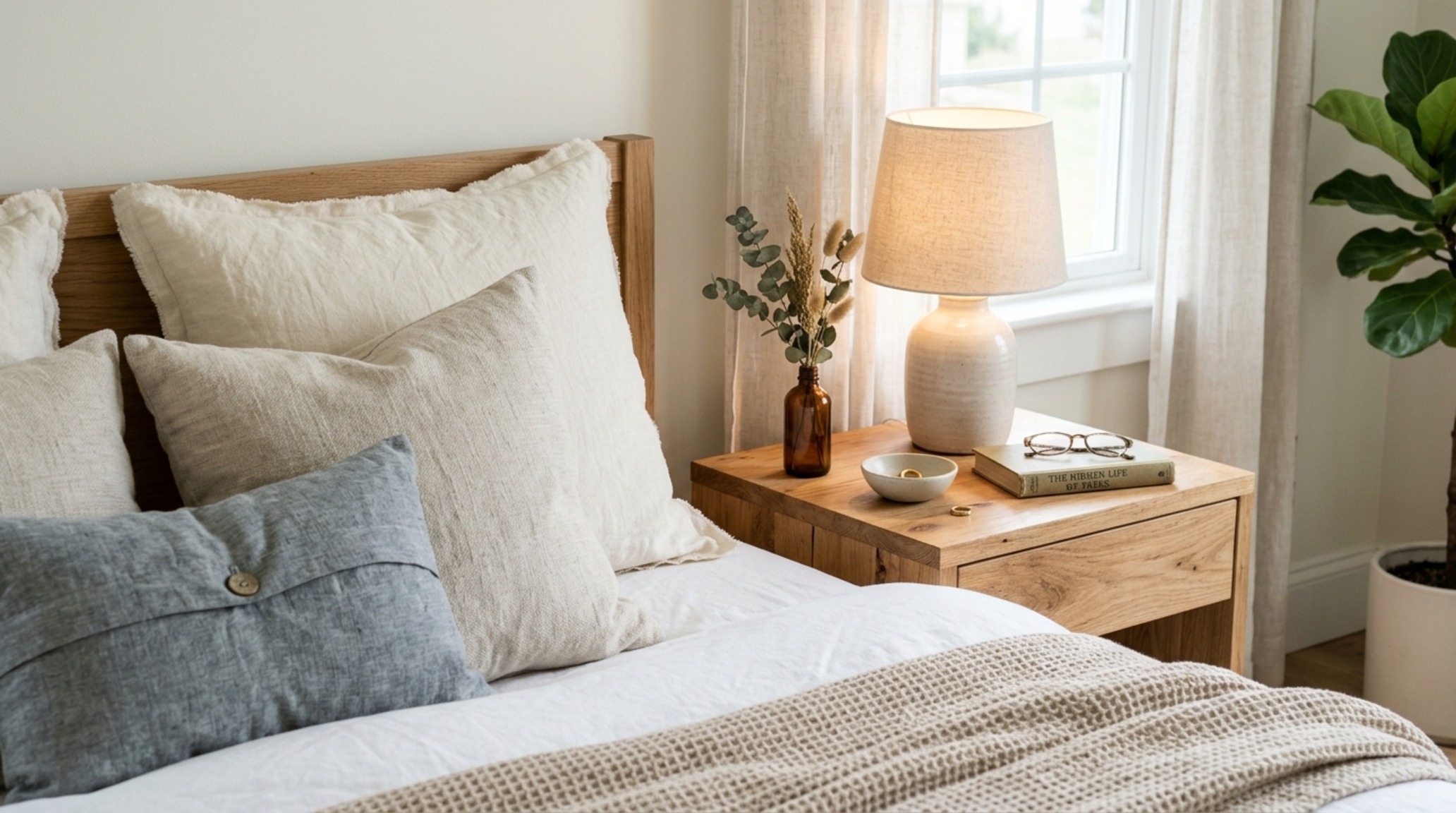
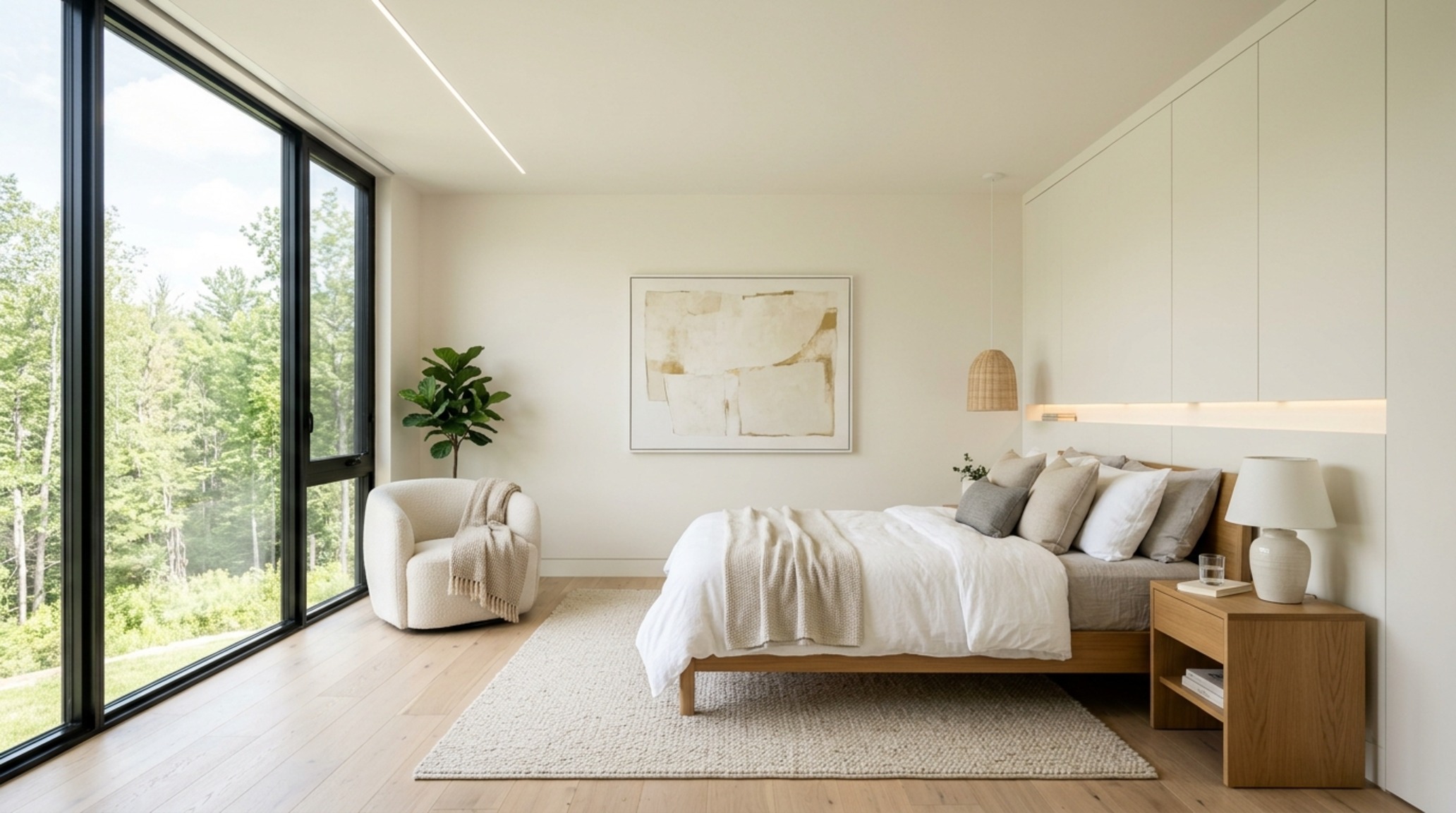
A bright room can easily feel cold if it lacks tactile grounding. Achieving a successful light and airy master bedroom decor requires a delicate balance between visual weightlessness and physical warmth. Consider the ’70/20/10′ rule for texture: 70% of the room should be light-reflecting surfaces (walls, bedding, large rugs), 20% should be warm organic materials (white oak furniture, linen drapes), and 10% should be ‘the anchor’—a dark metal, a deep wood grain, or a heavy weave that prevents the room from ‘floating away.’
In a master suite, the scale is larger, which means the interplay of light becomes even more critical. We often specify 2700K warm ambient lighting for evening hours, ensuring that even the brightest daytime palette feels cozy and intimate once the sun sets. The goal is to maximize the ‘lumen bounce’—the way light hits a surface and travels across the room. A sheer linen curtain, for instance, doesn’t just block light; it filters and spreads it, acting as a giant softbox for the entire interior.
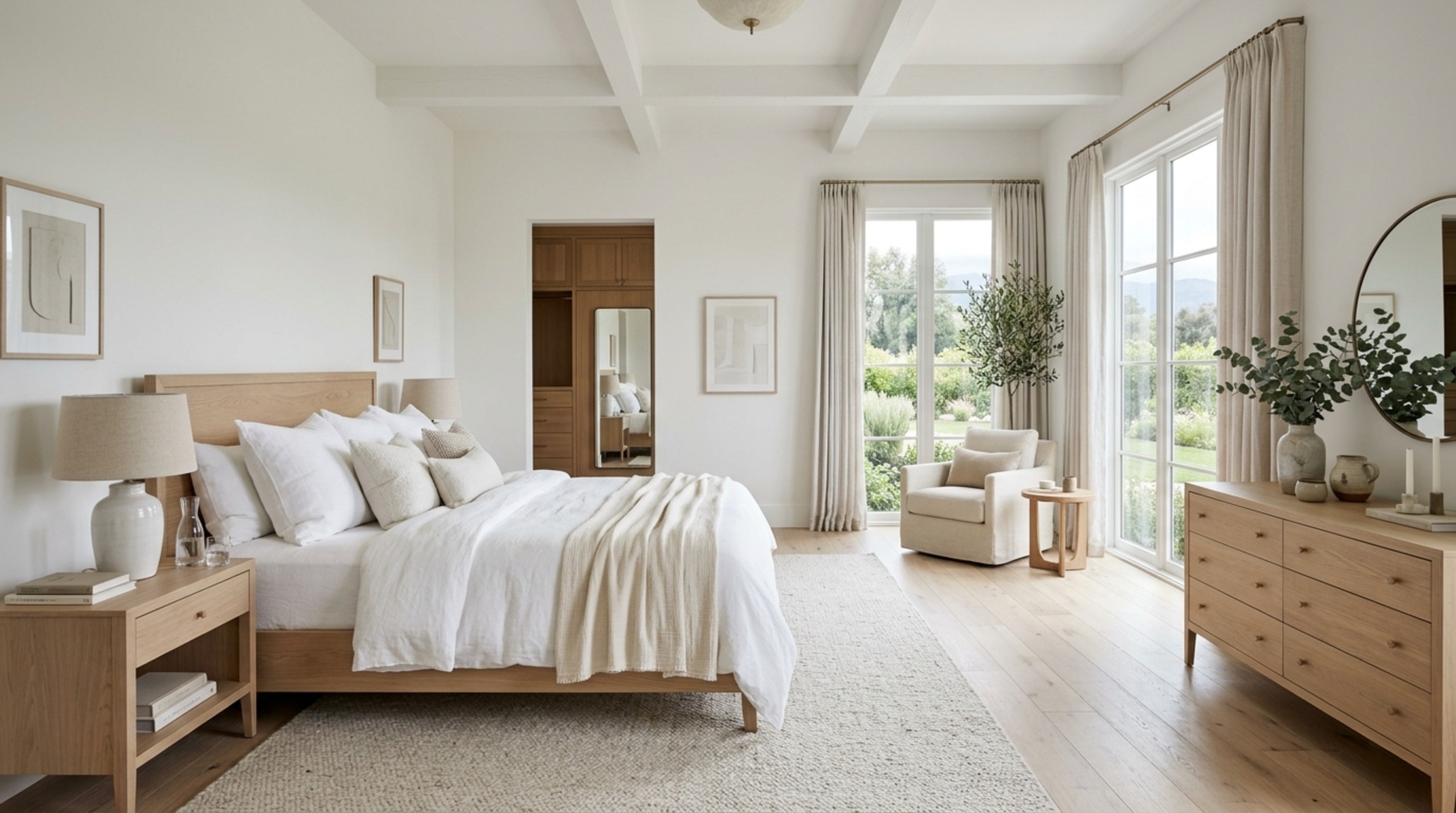
Spatial Perspectives & Material Curation
To truly master the luminance blueprint, we must treat the ceiling as the ‘fifth wall.’ A common mistake is painting the ceiling a flat, ‘ceiling white’ out of a generic can. This creates a hard visual break where the wall ends. To maximize height, use a color that is 50% lighter than your wall color, or better yet, use the exact same color in a flat finish. This softens the transition at the cornice line, tricking the eye into seeing an endless vertical plane.
Modern Airy Bedroom Palettes: Beyond the White Box
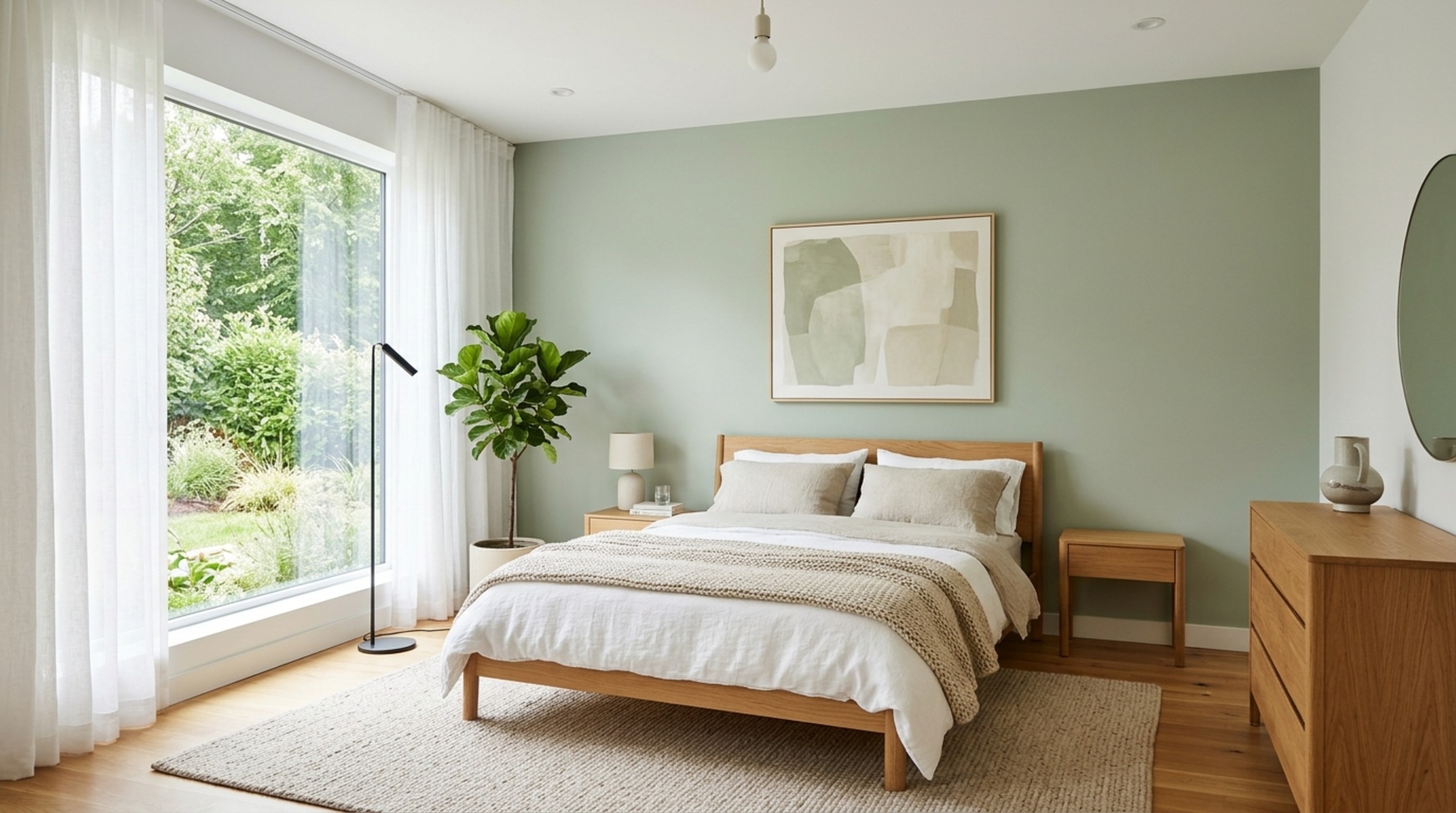
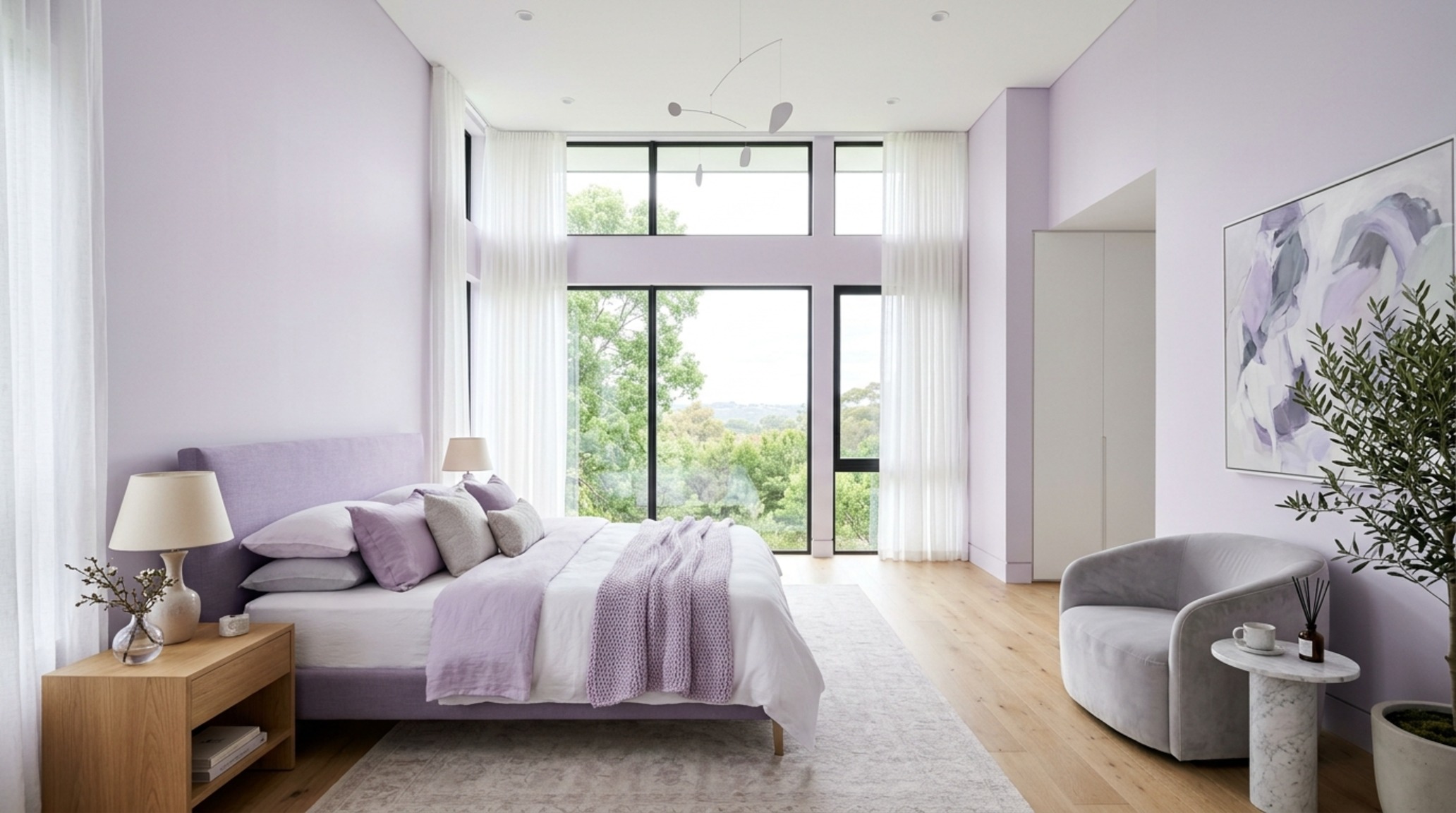
The 2025 forecast highlights a shift toward ‘colored neutrals’—hues that possess the lightness of off-white but the soul of a saturated color. Modern airy bedroom palettes are leaning into desaturated sages, whisper-thin lavenders, and ‘plaster’ pinks like Farrow & Ball’s Setting Plaster. These tones have a unique ability to recede; cool-toned blues and greens are particularly effective at this, as they mimic the sky and horizon, naturally expanding the visual field.
When we integrate these colors, we focus on the ‘spatial cadence’—the rhythm of light and dark throughout the room. By keeping the floor plane light—perhaps a bleached oak or a pale wool carpet—you create a foundation that reflects light upward, illuminating the undersides of furniture and eliminating the ‘heavy’ shadows that often make a room feel smaller and more cluttered.
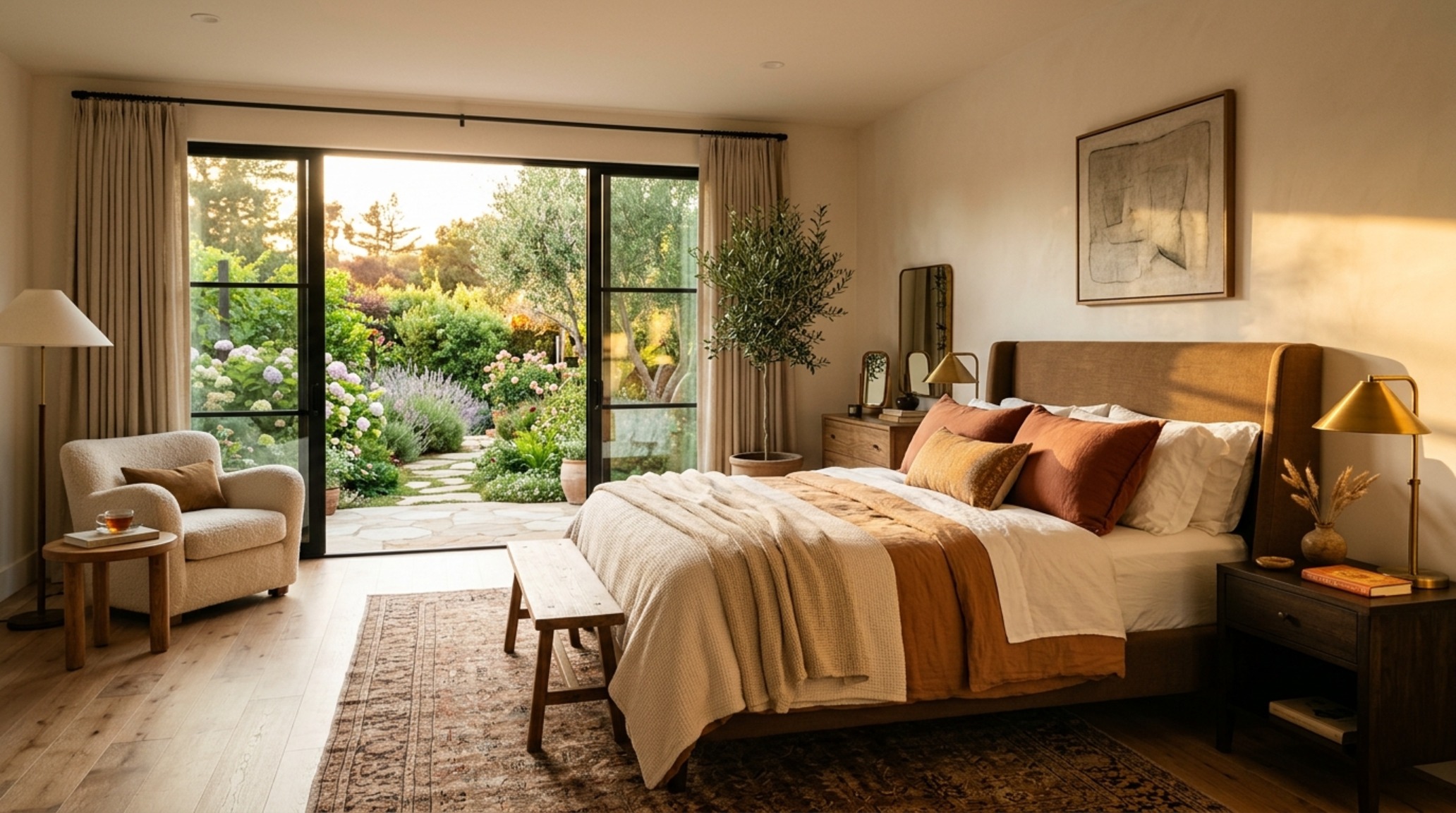
Sun-Drenched Bedroom Aesthetic: Capturing the Golden Hour
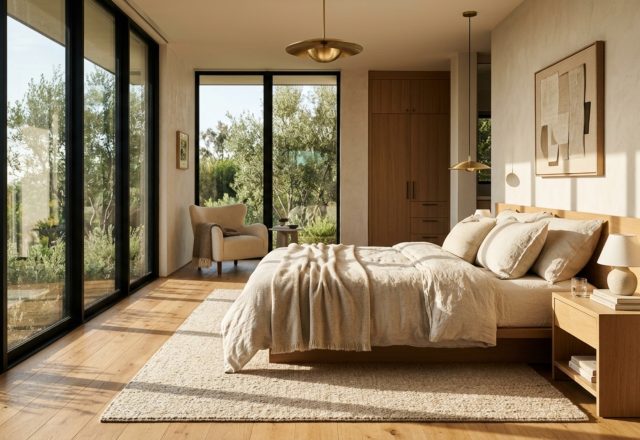
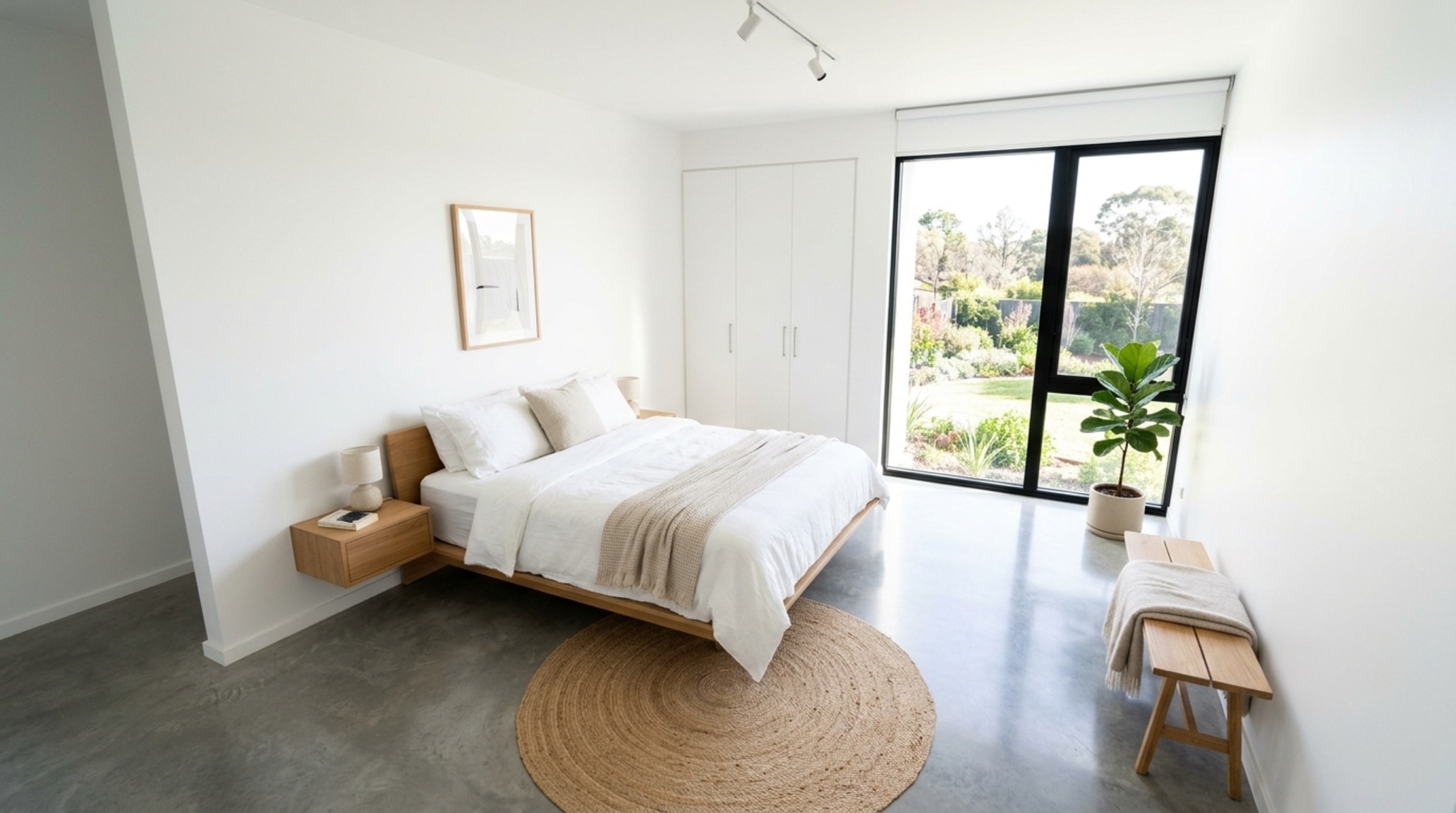
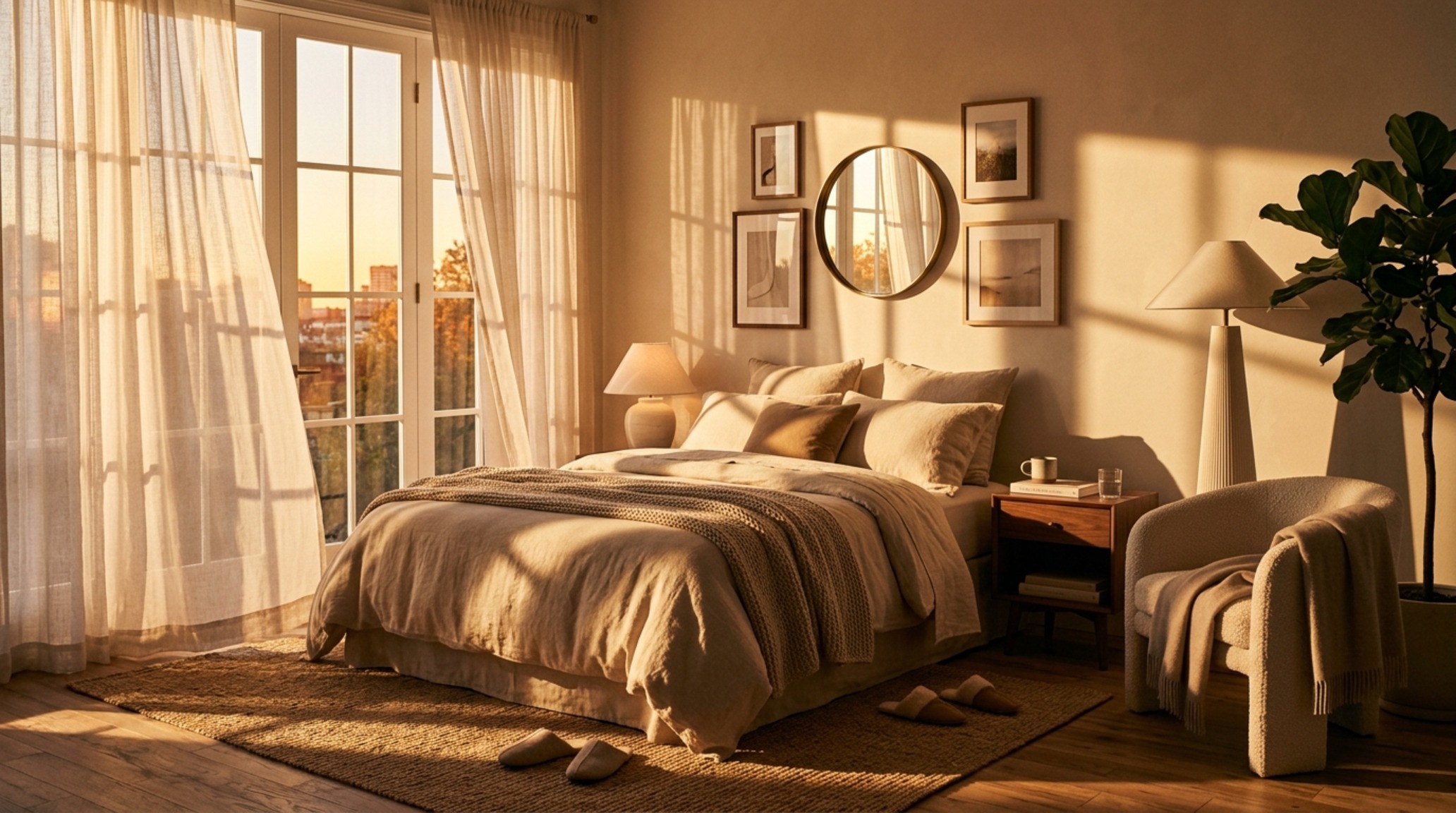
For those fortunate enough to have south-facing windows, the challenge isn’t finding light, but managing its intensity. A sun-drenched bedroom aesthetic isn’t just about brightness; it’s about the quality of that light. High-CRI (Color Rendering Index) lighting is essential here to match the 90+ quality of natural sunlight. We often use sheer motorized shades that allow for a ‘glow’ even when privacy is required.
In these high-exposure rooms, we can experiment with more ‘active’ brights. A soft ochre or a pale terracotta can catch the afternoon sun and turn the entire room into a warm, glowing amber. The key is to keep the furniture silhouettes minimal. A 36-inch primary circulation path around the bed ensures that the physical space feels as open as the visual space. Negative space isn’t just ’empty’ space; it’s the breathing room that allows the color and light to perform.
Vibrant Bedroom Accent Wall Trends 2025: Strategic Saturation
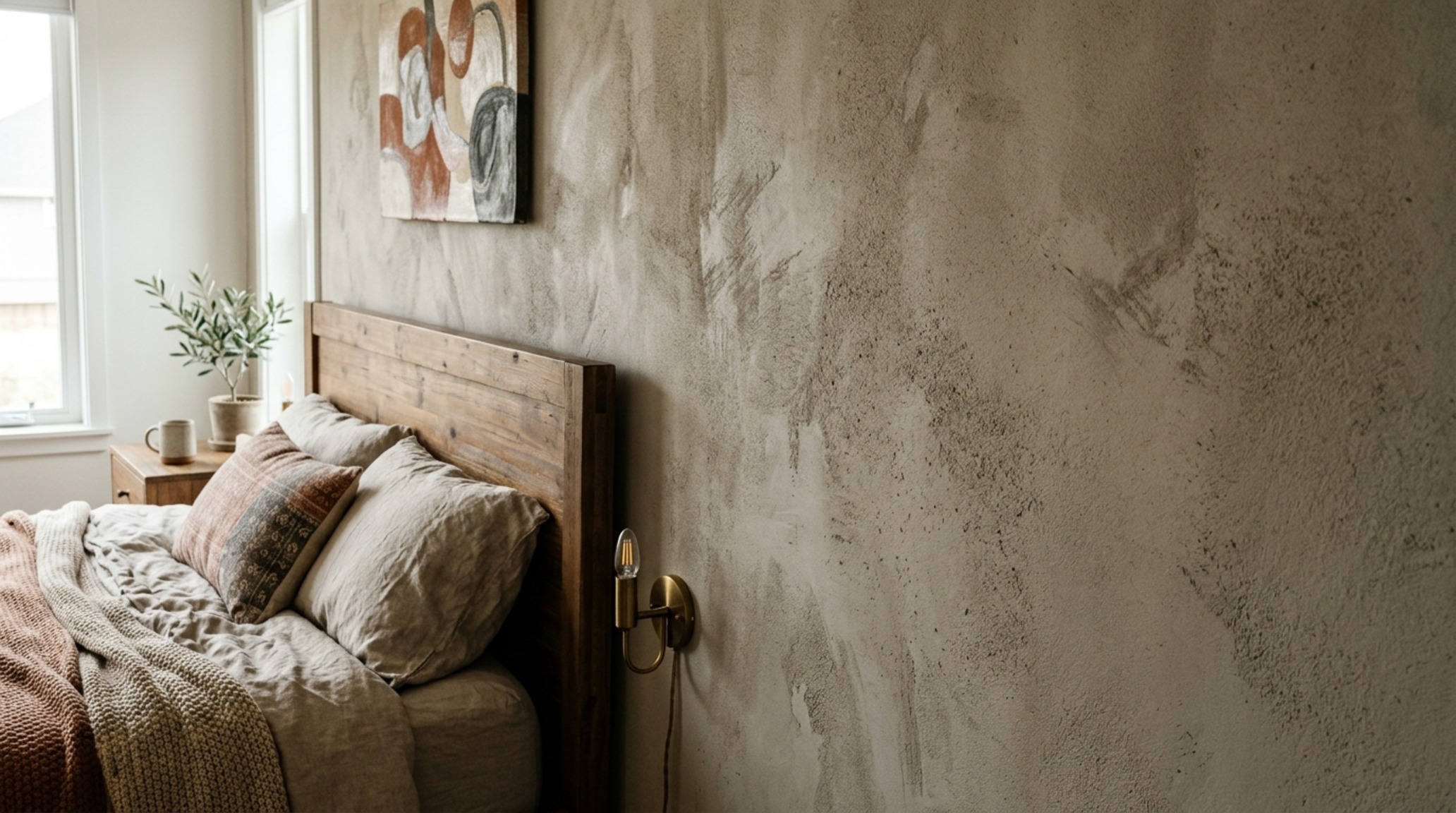
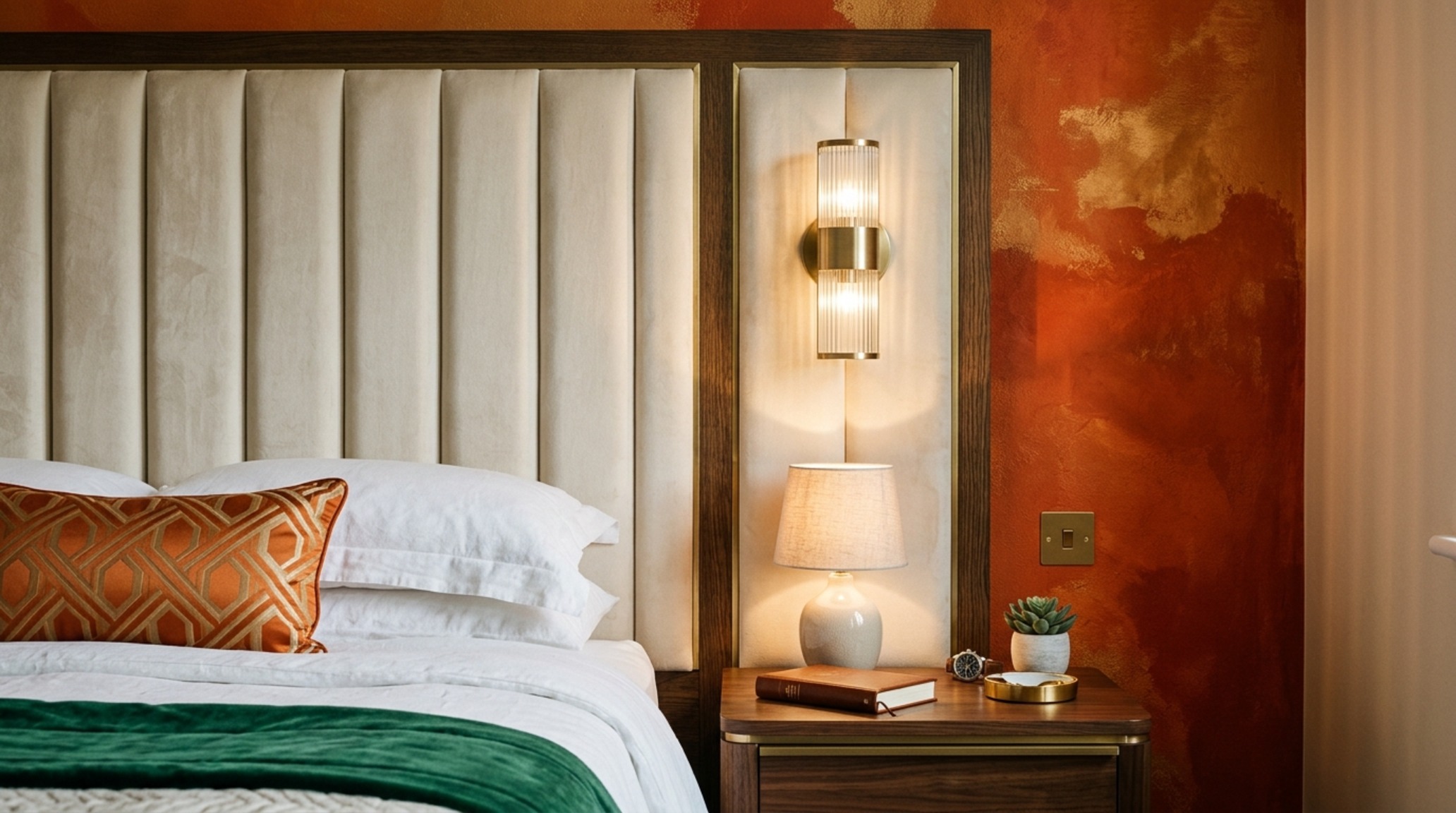
While the trend has moved away from the high-contrast accent walls of the early 2000s, vibrant bedroom accent wall trends 2025 focus on monochromatic depth. Instead of a jarringly different color, we are seeing the use of texture—fluted wood panels painted in a high-gloss version of the wall color, or a subtle limewash finish that adds movement without breaking the room’s chromatic flow.
This ‘tonal layering’ creates interest through shadow play rather than color contrast. When light hits a fluted surface, it creates a series of micro-shadows and highlights that add architectural ‘muscle’ to a room. It makes a wall feel like a structural element rather than just a boundary. This is particularly effective behind the headboard, providing a sense of enclosure and security while the rest of the room remains open and light.
Light-Reflecting Paint for Bedrooms: The Technical Edge
Selecting light-reflecting paint for bedrooms involves more than just looking at the swatch. You must consider the substrate. A perfectly smooth, skim-coated wall will reflect light far more efficiently than an orange-peel texture. If you are renovating, the investment in a Level 5 drywall finish is often more impactful for ‘brightness’ than the paint itself. This creates a mirror-like surface (even in matte finishes) that allows light to glide across the room without being trapped in the ‘micro-valleys’ of texture.
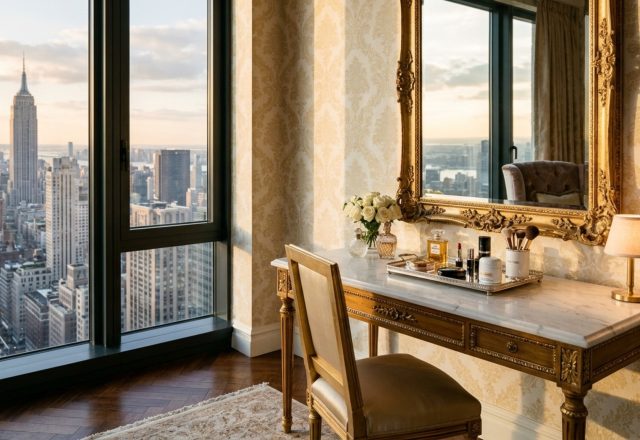
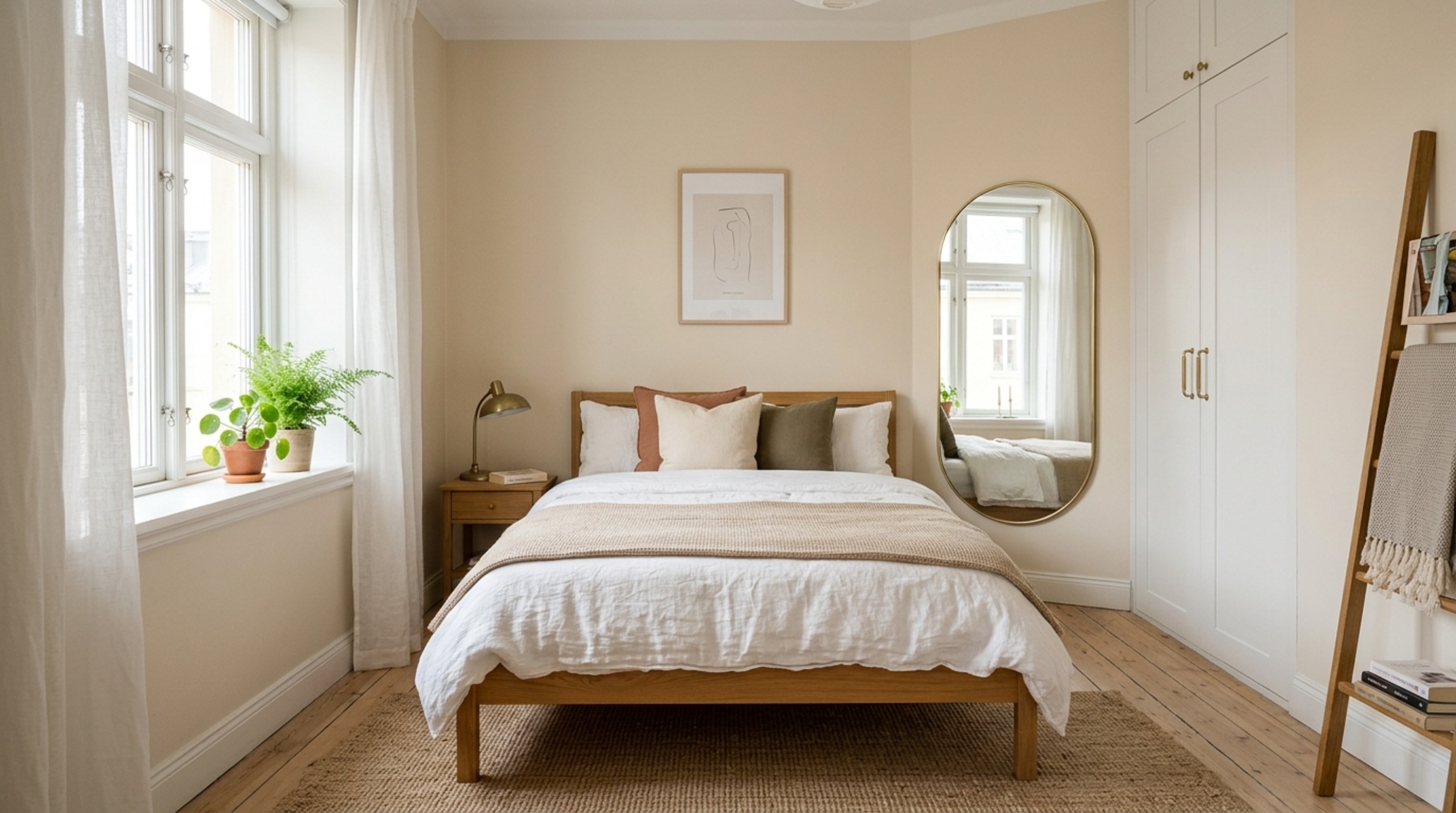
Furthermore, consider the placement of mirrors. A mirror placed directly opposite a window doesn’t just double the light; it doubles the ‘depth’ of the room. By reflecting the sky or the garden, you pull the outdoors in, effectively erasing the physical limit of the wall. This is the ultimate tool in the luminance blueprint: using reflection to create the illusion of infinite spatial volume.
Design Anatomy: Surfaces, Swatches & Clearances
Bespoke specification schedule outlining tactile textures, lighting ambiance, and ergonomic proportions.
Designing with light is an iterative process of observation. It is about watching how a shadow falls across a corner at 3 PM and deciding that a specific shade of ‘receding’ blue could soften that edge. When we master the luminance blueprint, we stop seeing walls as boundaries and start seeing them as canvases for light. The bedroom ceases to be just a room for sleep; it becomes a sanctuary of airy, breathable volume, where color serves the architecture and the architecture serves the soul.
Editorial Silo • Recommended Architecture Studies
- The Tactile Aesthetic of Scandinavian Design Bed: Materials, Moods & Lighting Kelvin — Archival Design Case Study
- The Sovereign’s Workspace: Blair Waldorf Bedroom Decor & Ergonomic Luxury and Organization Lessons from the Waldorf Penthouse — Archival Design Case Study
Editorial Photo Collection
Documenting spatial cadence through authentic materials, intentional voids, and sculpted architectural illumination.
Curated Visual Lookbook
Design Gallery & Spatial Studies
A visual curation of architectural arrangements, lighting concepts, and material palettes featured in this space.