The Living Partition: Engineering Spatial Flow with Structural Indoor Plant Decoration Ideas
There is a specific, quiet magic that happens when the late afternoon sun hits a limewashed wall at a shallow angle, revealing the subtle undulations of the plaster. In these moments of high architectural clarity, the presence of a singular, well-placed botanical element can transform a room from a static box into a breathing ecosystem. Integrating indoor plant decoration ideas into a contemporary floor plan is no longer about the occasional potted fern on a side table; it is about utilizing living tissue as a structural material to negotiate the tension between open-flow transparency and the human need for enclosure.
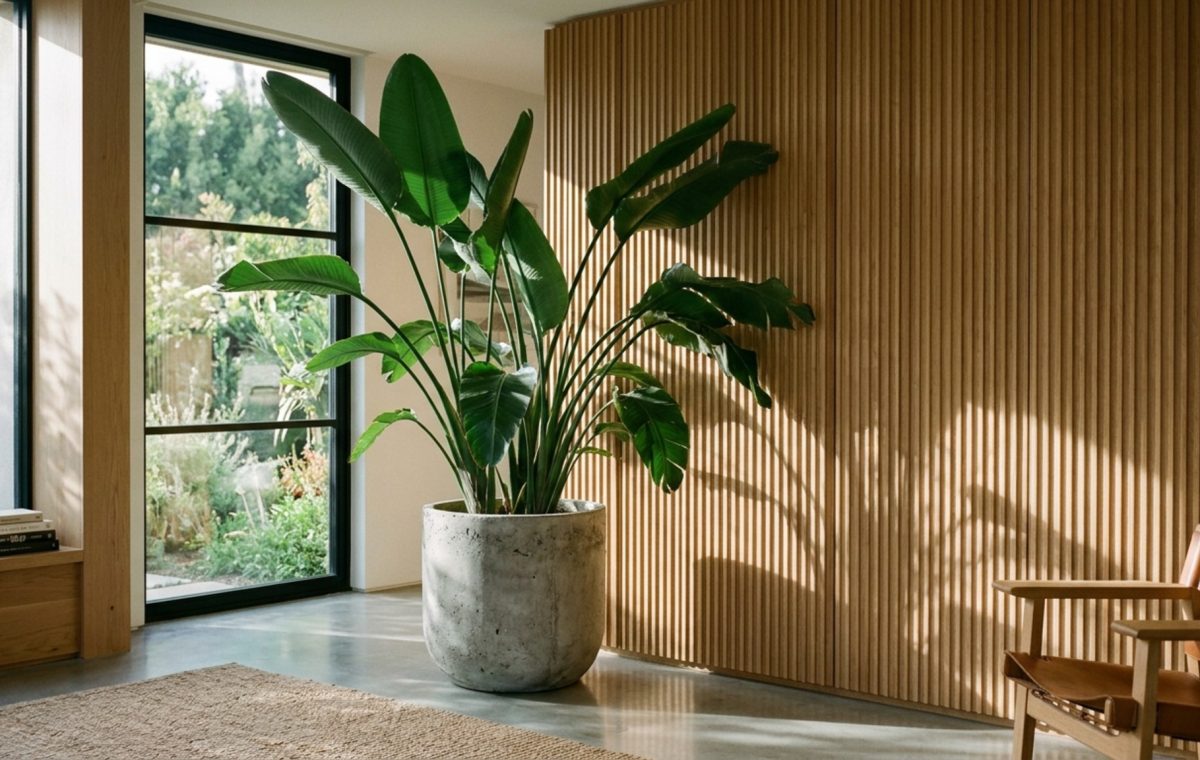
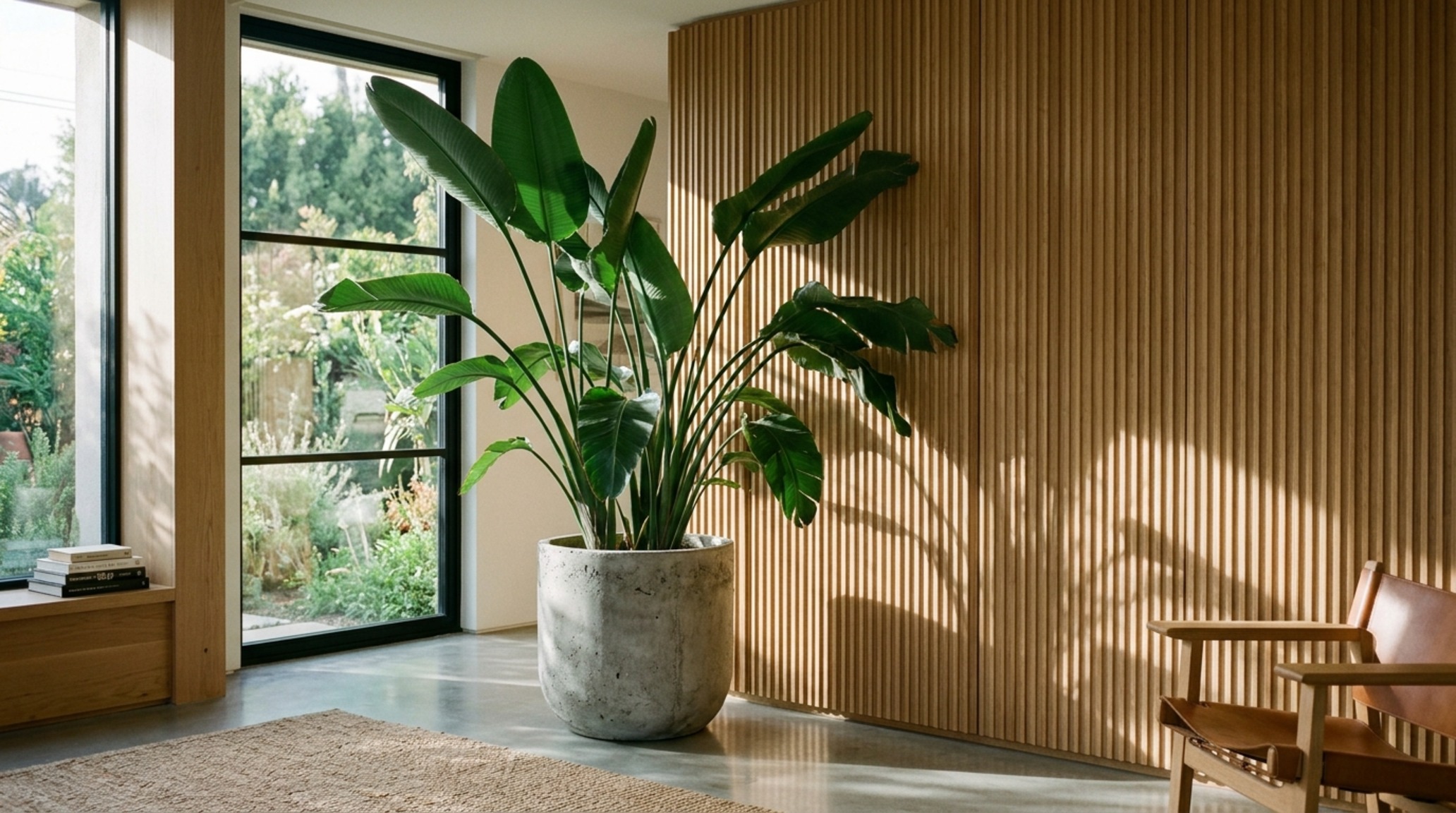
When we approach greenery as living architecture, we begin to see the Fiddle Leaf Fig (Ficus lyrata) not as a trend, but as a vertical column that can anchor the corner of a primary suite. We see the Strelitzia nicolai not just as foliage, but as a dynamic screen that provides a soft threshold between a dining area and a sunken lounge. By understanding the geometry and light requirements of these specimens, we can engineer a spatial cadence that feels both intentional and profoundly grounded in the tactile world.
Large Floor Plant Placement Tips: Anchoring the Architectural Line
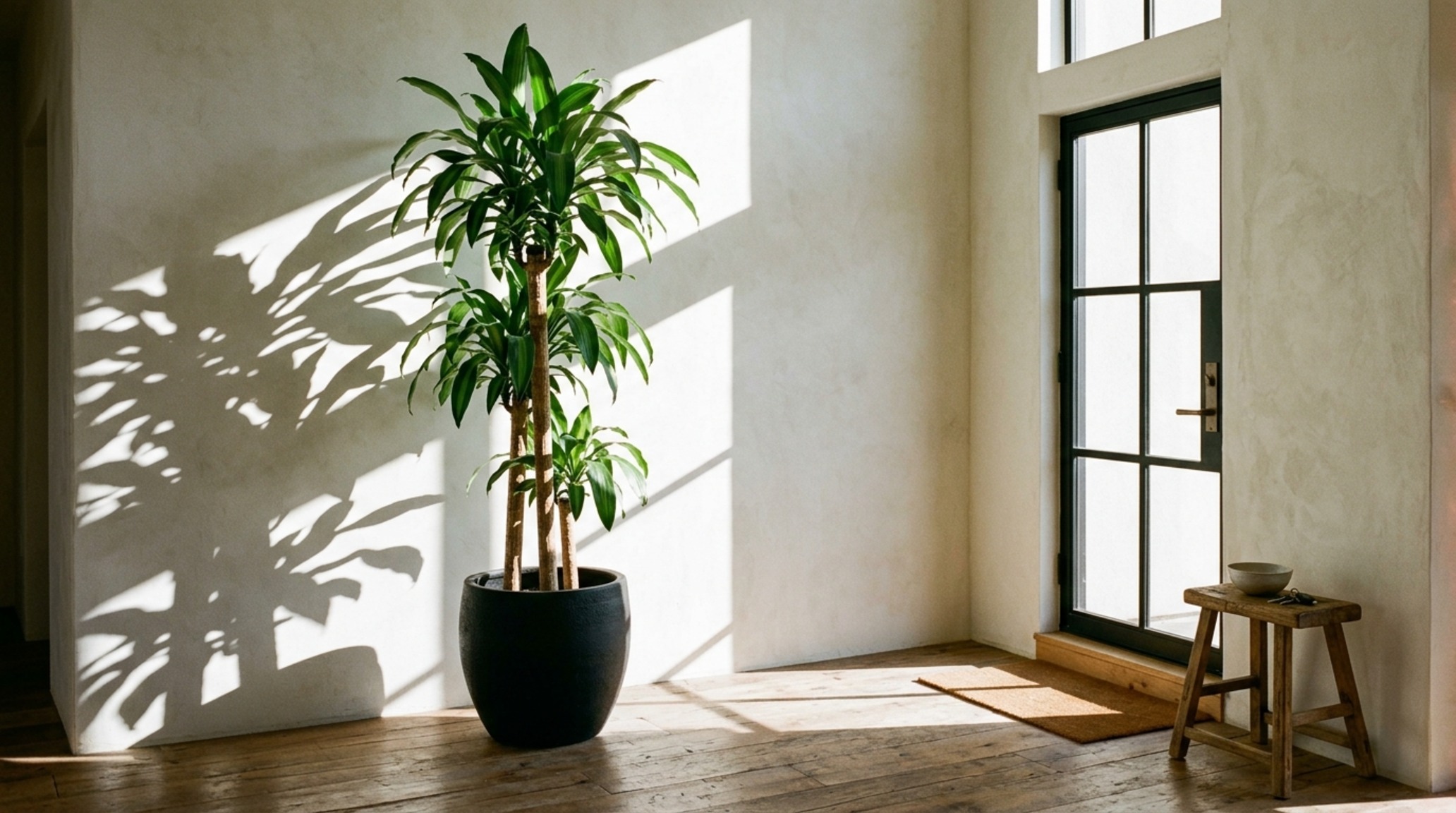
In the discipline of interior architecture, the concept of ‘negative space’ is just as vital as the furniture itself. When implementing large floor plant placement tips, the goal is to respect the 36-inch standard walkway clearance while using the plant’s volume to define the ‘turn’ in a room. A massive Dracaena or a branched Monstera deliciosa serves as a visual full stop at the end of a long hallway, drawing the eye toward a light source and preventing the space from feeling like an endless corridor.
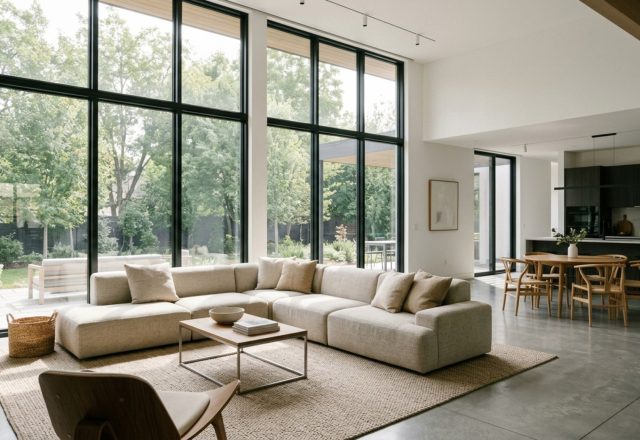
Consider the placement of a specimen plant adjacent to a low-slung modular sofa. If the sofa is upholstered in a heavy tactile fabric like an oatmeal bouclé or a deep charcoal velvet, the broad, waxy leaves of a Rubber Tree (Ficus elastica) offer a necessary textural contrast. The key is to maintain an 18-inch ‘breathing zone’ between the foliage and the edge of the seating. This prevents the greenery from encroaching on the user’s personal space while still allowing it to serve as a lush, protective backdrop that enhances the sense of cozy enclosure.
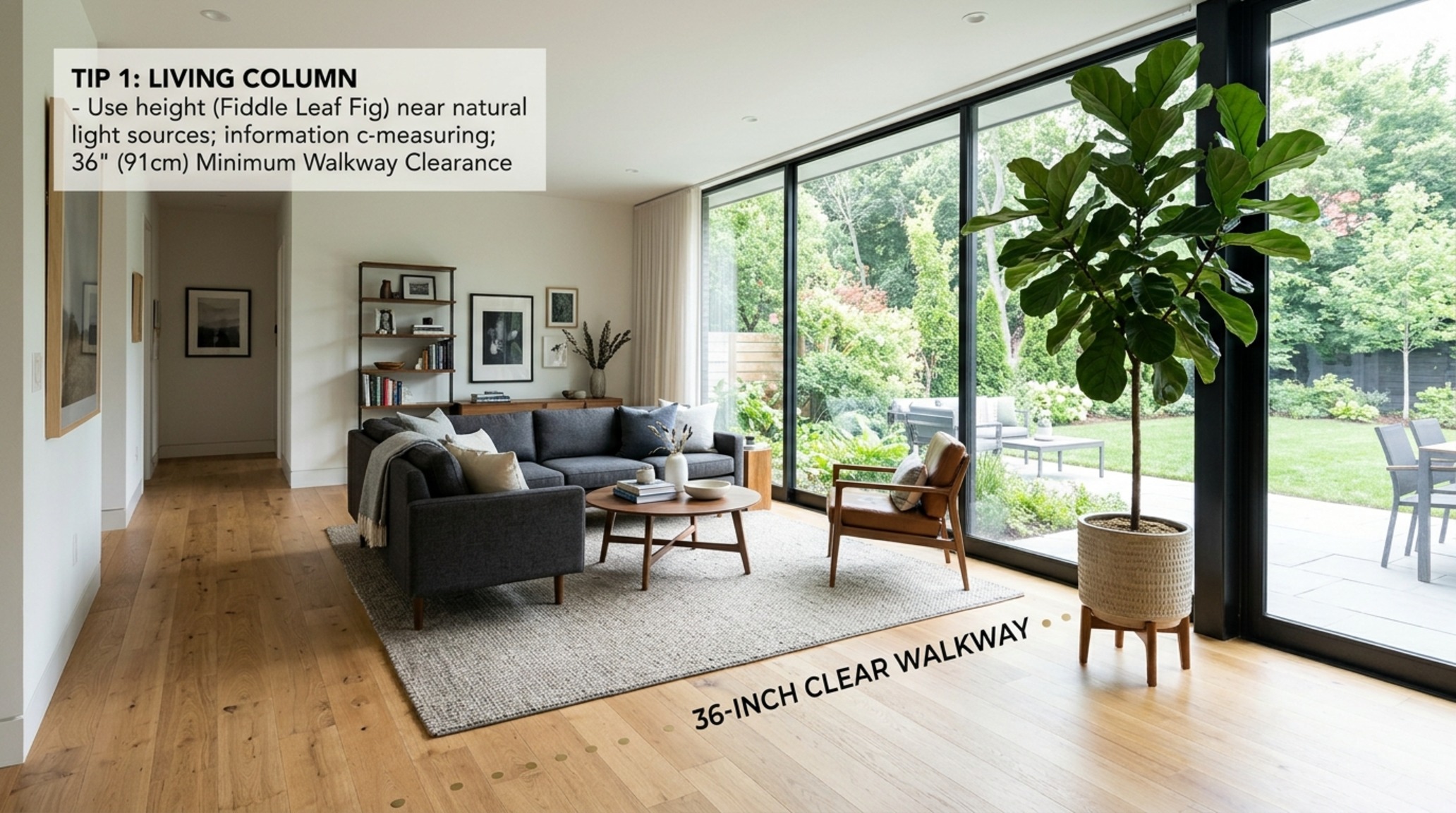
Sculptural Houseplant Arrangements as Living Partitions
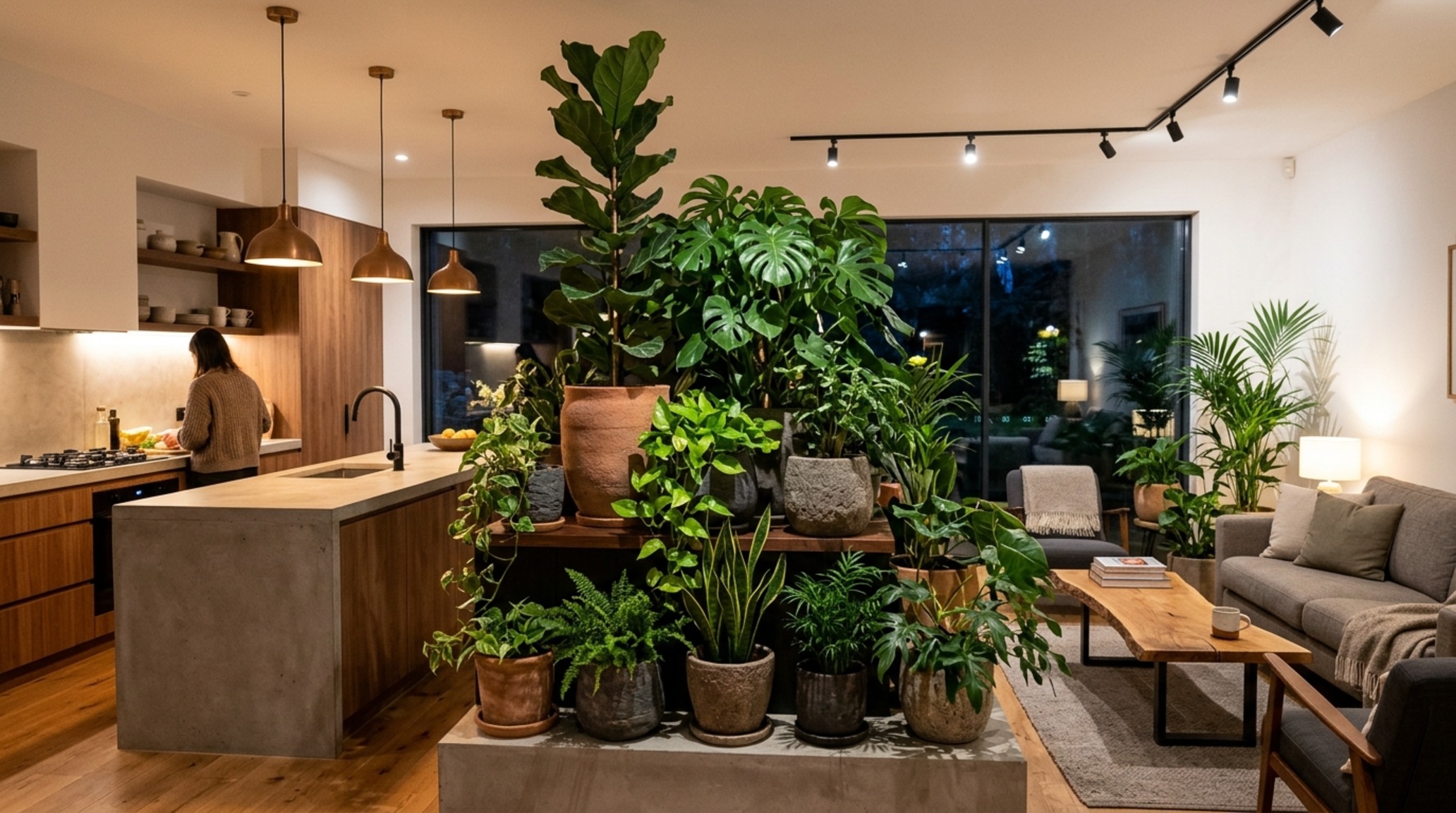
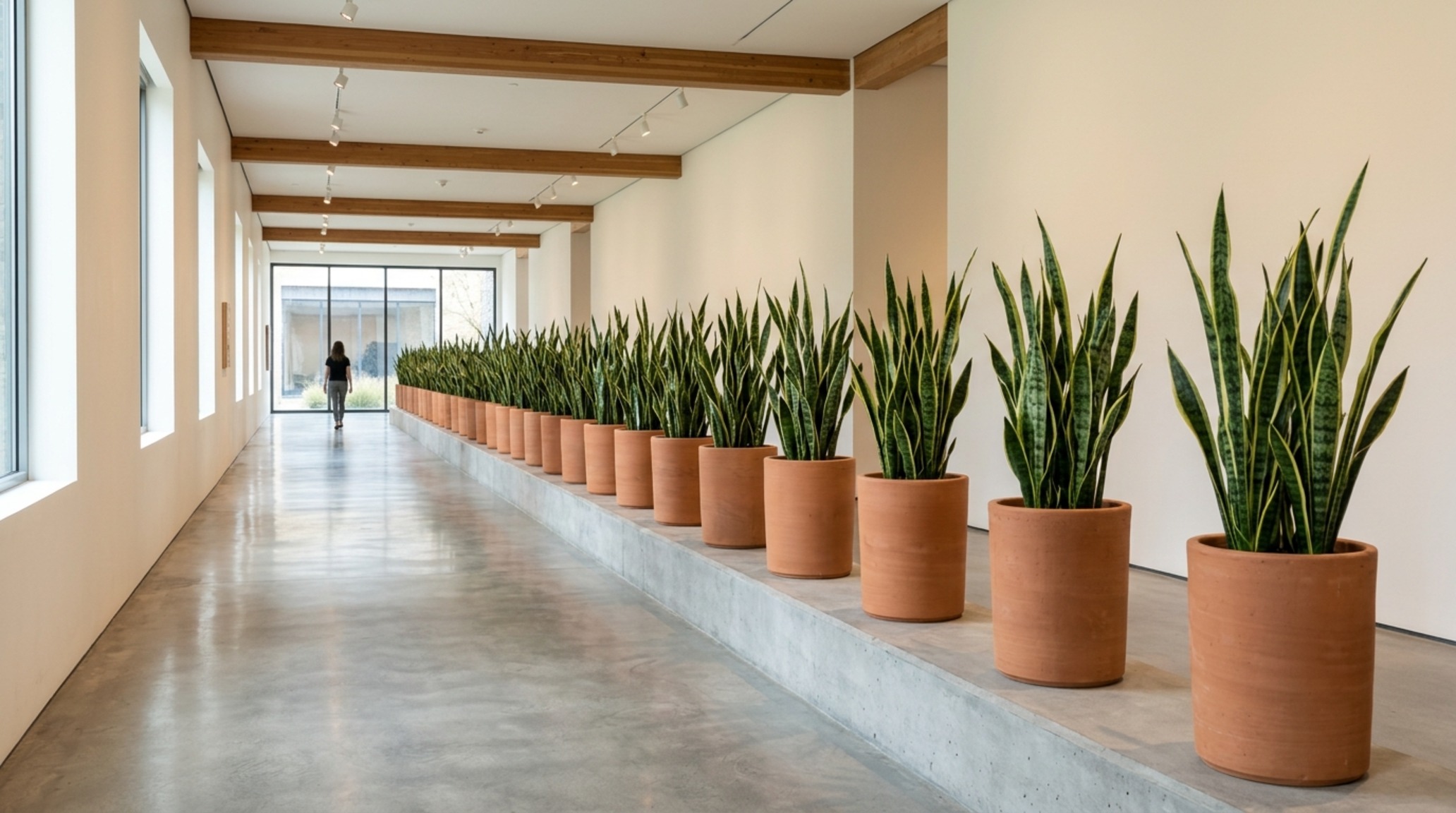
Open-plan living often suffers from a lack of hierarchy. Without physical walls, the transition from a high-activity kitchen to a restorative living area can feel abrupt. This is where sculptural houseplant arrangements become functional tools. By grouping plants of varying heights—perhaps a 6-foot Sansevieria trifasciata for height and a mid-level Philodendron for density—you create a ‘soft wall’ that filters light and sound without severing the visual connection between zones.
Architecturally, this functions similarly to a slat-wood screen or a fluted glass partition. However, the organic irregularity of the leaves breaks up the rigid lines of modern cabinetry and steel window frames. To execute this effectively, use planters that share a common materiality—honed travertine, matte terracotta, or fiber-reinforced concrete—to ensure the ‘partition’ feels like a cohesive design intervention rather than a scattered collection of pots. This approach to indoor plant decoration ideas relies on the repetition of form to create a sense of structural permanence.
Biophilic Home Office Design: Calibrating Focus & Light
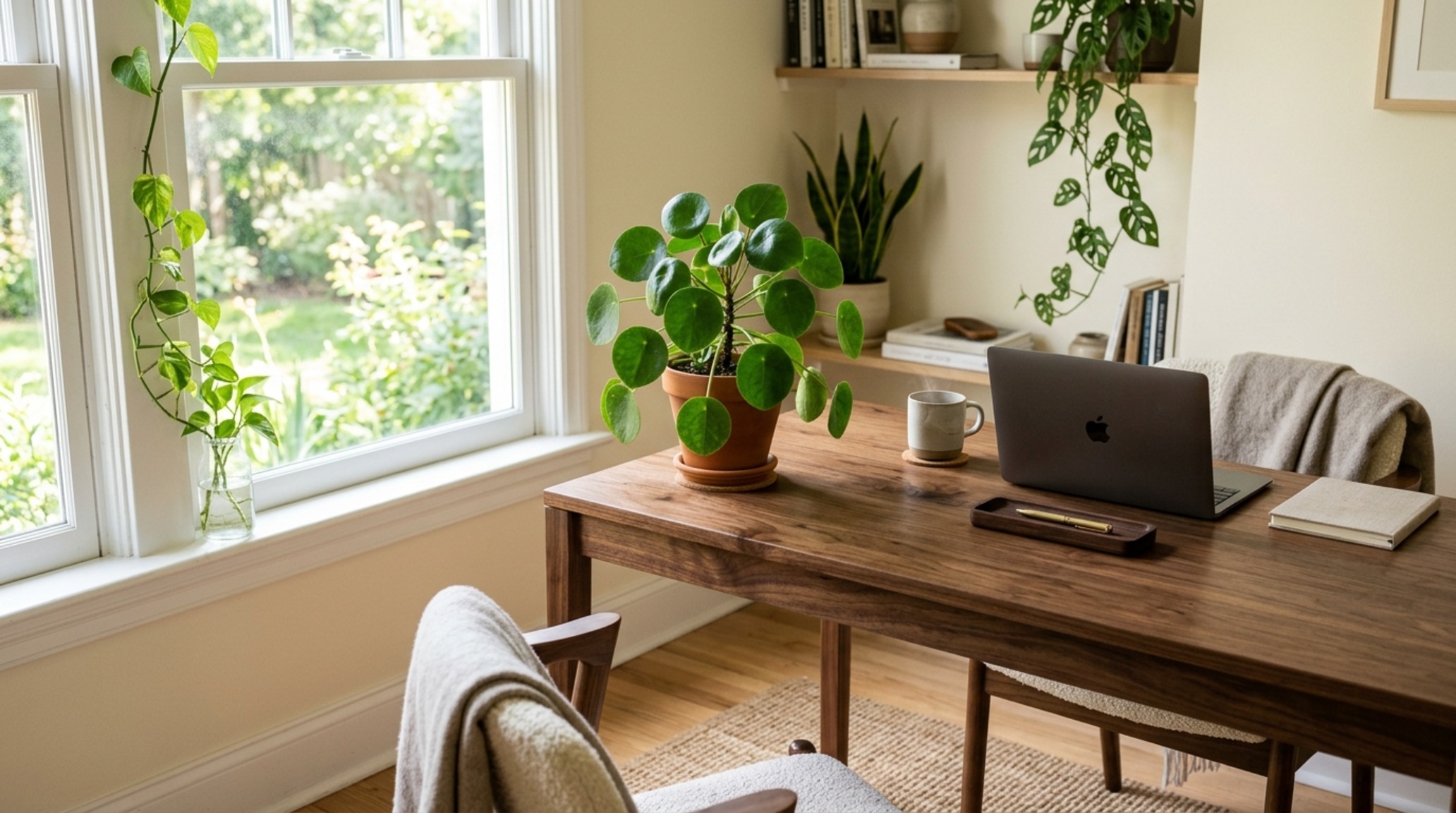
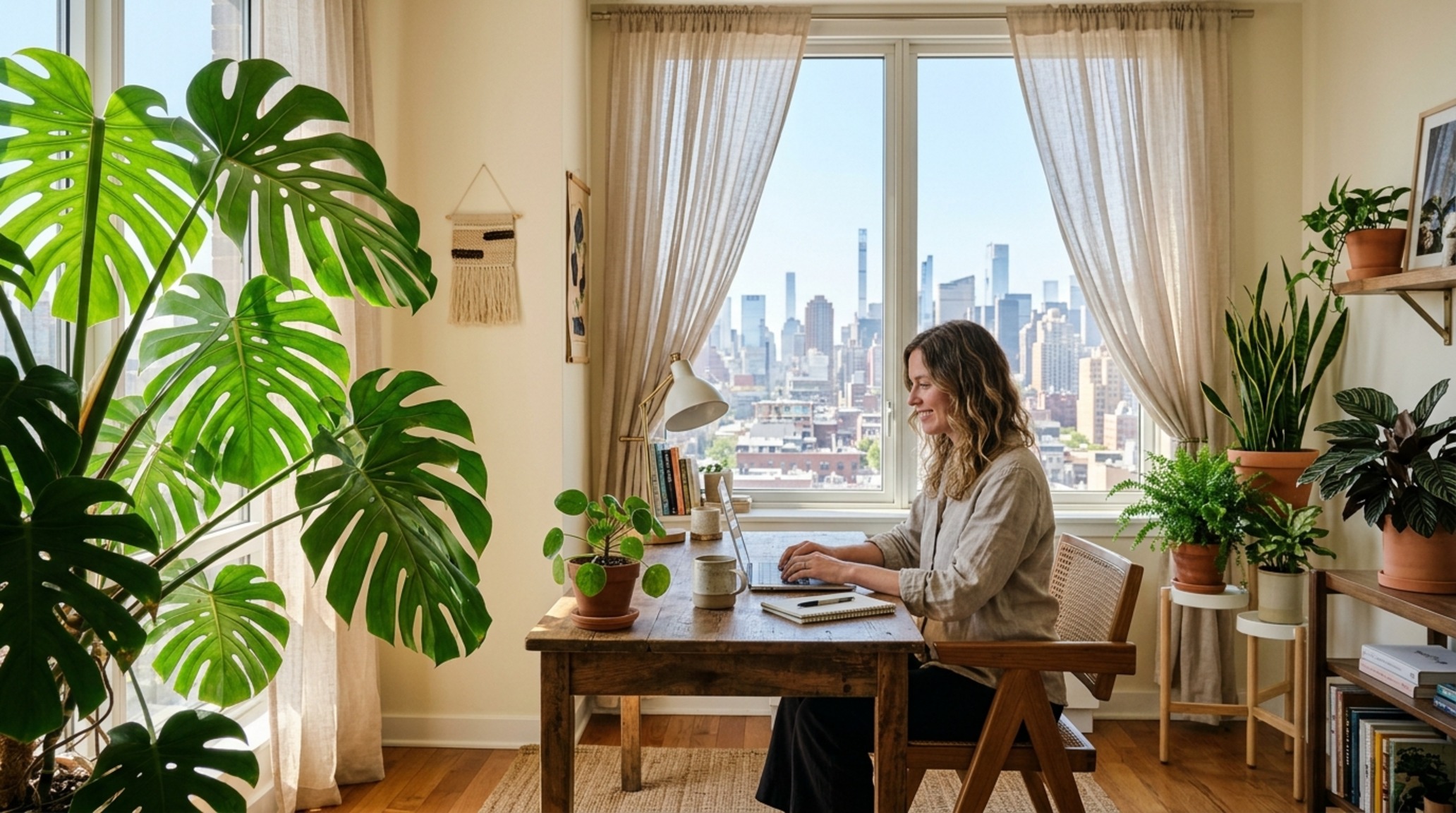
The modern workspace demands a delicate balance of ergonomic precision and psychological softness. Biophilic home office design isn’t just about placing a succulent on a desk; it’s about the strategic alignment of greenery with sightlines. Positioning a lush, leafy plant within the peripheral vision of a workstation has been shown to reduce visual fatigue. However, from a design perspective, the plant must also harmonize with the lighting profile of the room.
For a focused environment, we often utilize 3000K task lighting to ensure clarity at the desk surface. To prevent the plants from looking sickly under artificial light, ensure they are situated near a window with a North or East exposure for gentle, consistent brightness. If the natural light is insufficient, integrating high-CRI (90+) grow bulbs into architectural tracks or pendant lights allows the plants to thrive while maintaining a warm, 2700K ambient glow throughout the rest of the room. This ensures that the deep greens of a ZZ Plant or a Snake Plant remain vibrant against walls painted in soft neutrals like Benjamin Moore Swiss Coffee or Farrow & Ball Setting Plaster.
Modern Living Room Plant Shelfies: The Vertical Narrative
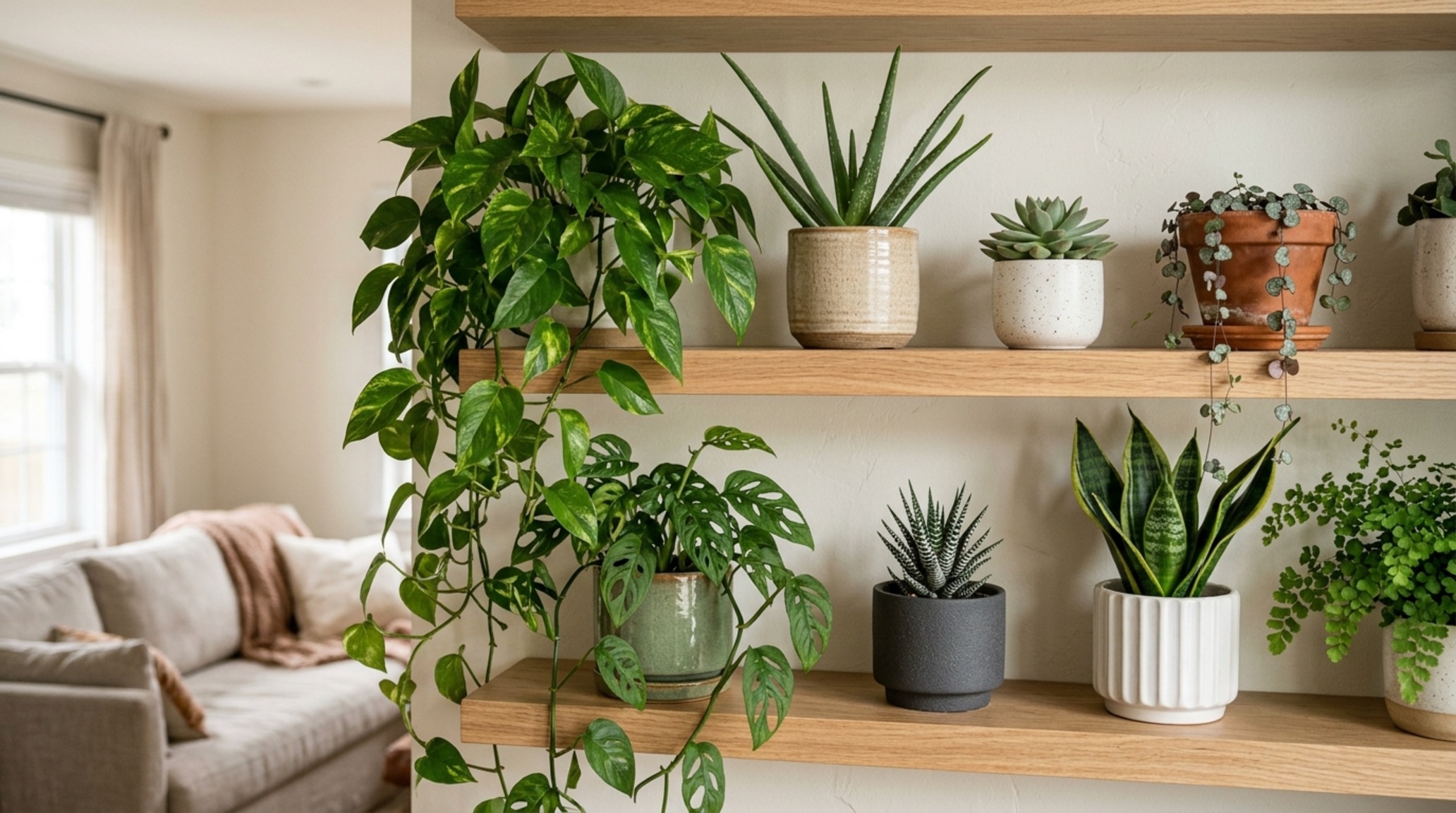
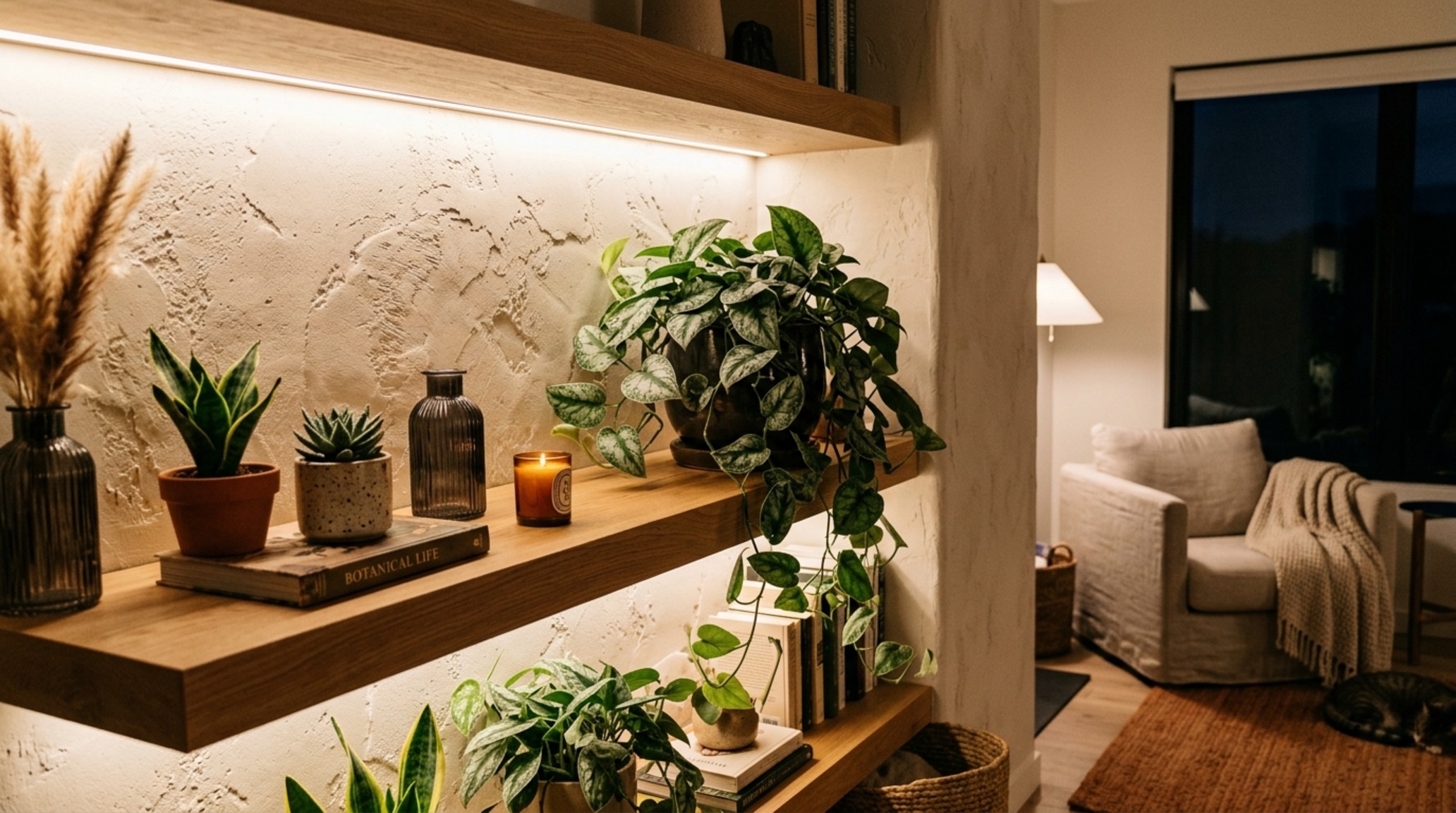
Verticality is often the missing dimension in residential design. When we speak of modern living room plant shelfies, we are discussing the curation of height and depth on built-in millwork or floating oak shelves. The mistake many make is over-crowding. Instead, treat each shelf as a vignette, applying the ‘rule of thirds’ to the arrangement. A trailing Aeschynanthus (Lipstick Plant) provides a vertical line that draws the eye down, while a structural Pilea peperomioides offers a focal point of circular geometry.
To maintain a sophisticated aesthetic, consider the shadow play. When plants are backlit by subtle LED strip lighting (concealed within the shelf’s joinery), their silhouettes become part of the room’s evening architecture. This creates a layered depth that makes a small living room feel significantly more expansive. By alternating plants with art objects and tactile ceramics, you prevent the ‘greenhouse effect’ and maintain the room’s status as a curated living space.
Hanging Vines for Minimalist Interiors: Softening the Ceiling Plane
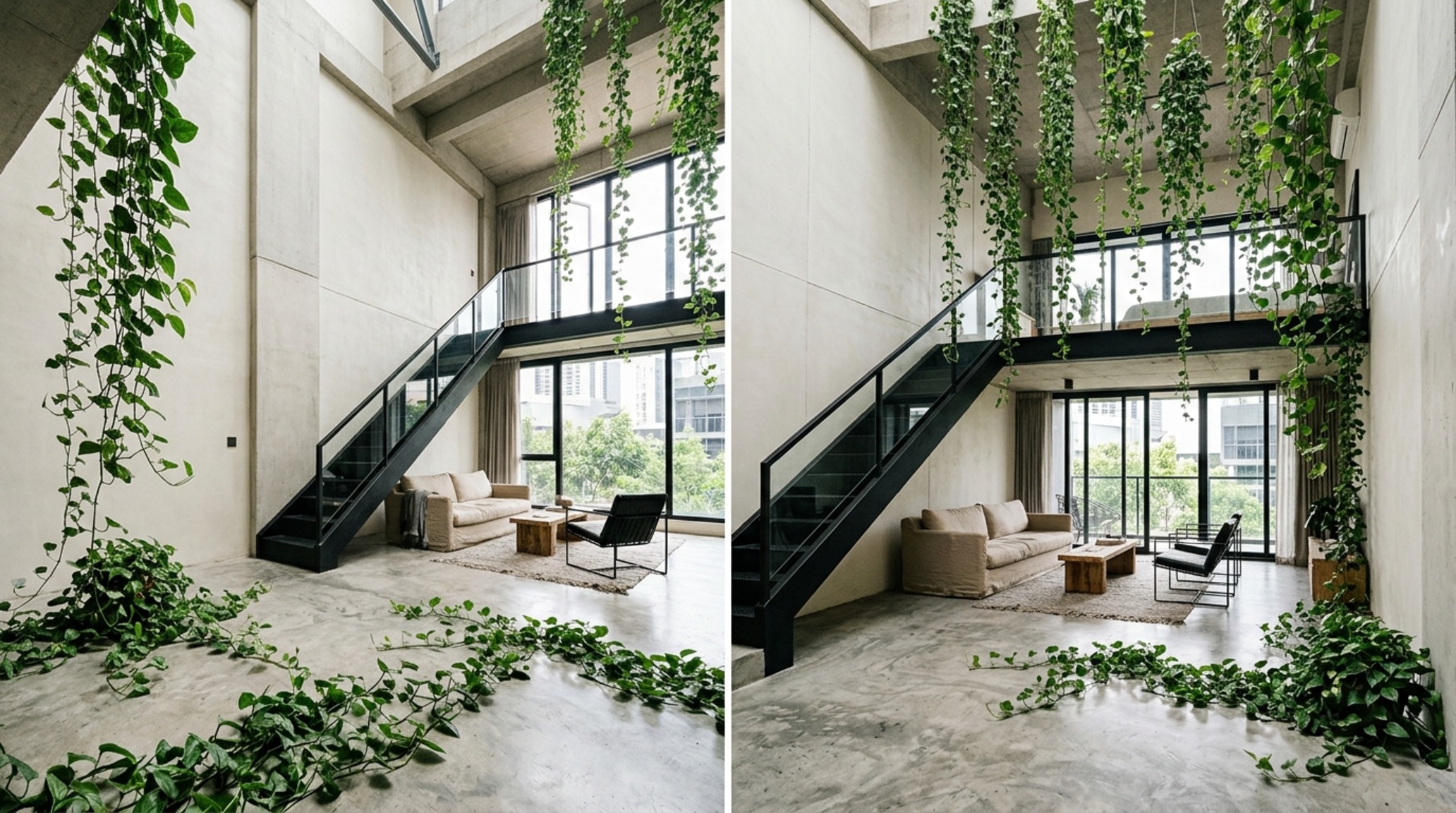
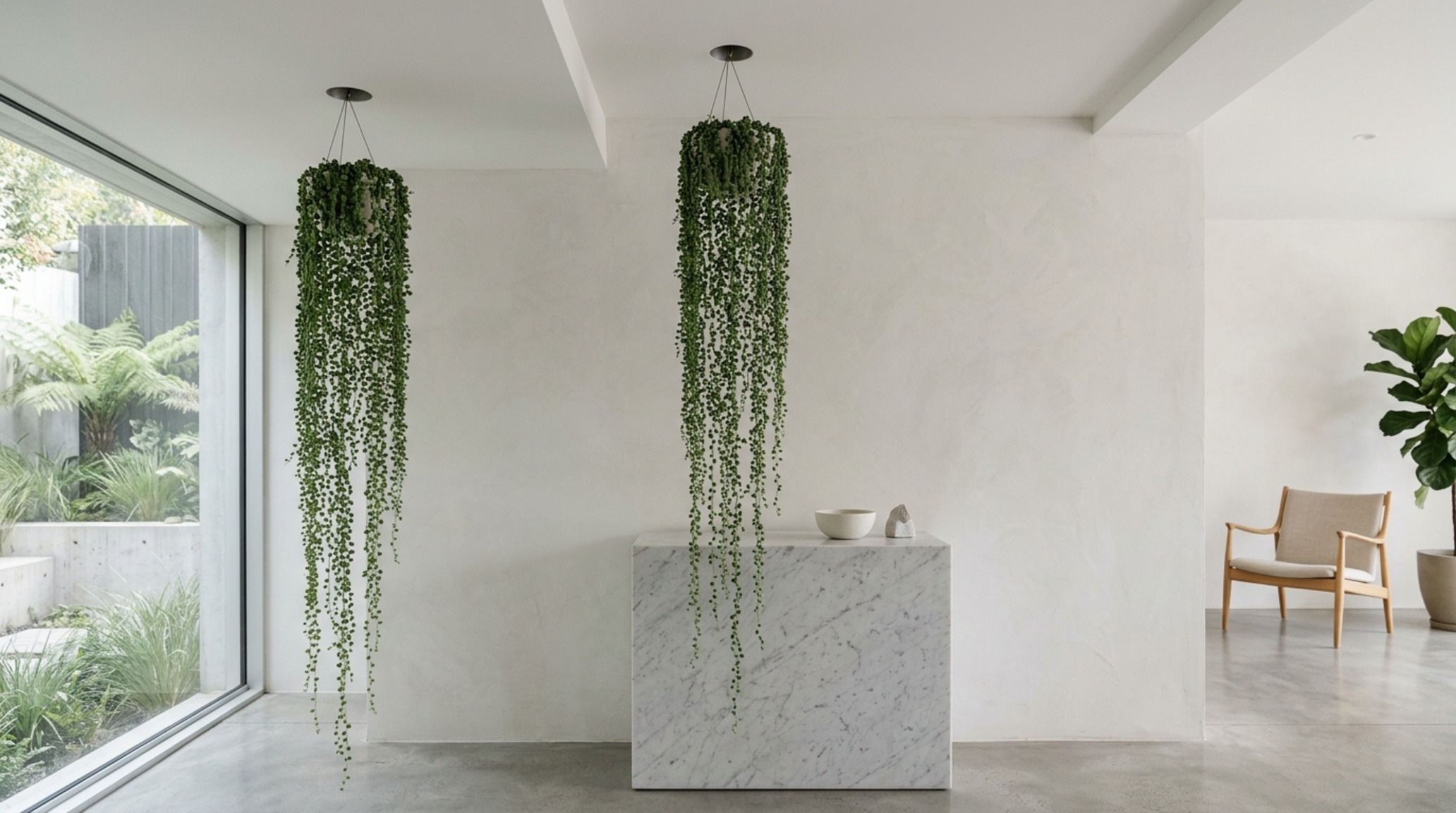
Minimalism can sometimes feel sterile if the ceiling plane is left entirely unaddressed. Hanging vines for minimalist interiors offer a way to introduce movement and softness into high-ceilinged lofts or stark, monochromatic rooms. Using architectural hardware—think blackened steel brackets or recessed ceiling hooks—allows the vines to drape naturally, mimicking the way ivy might colonize a stone wall.
Plants like the Hoya carnosa or the Scindapsus pictus (Satin Pothos) are ideal for this application due to their relatively low maintenance and high visual impact. When hung at varying heights, they create a rhythmic canopy that lowers the perceived ceiling height, making a cavernous room feel more intimate. It is a masterclass in indoor plant decoration ideas: using nature to manipulate the volume of the space itself.
Low-Light Apartment Greenery: Solving the Dark Corner Dilemma
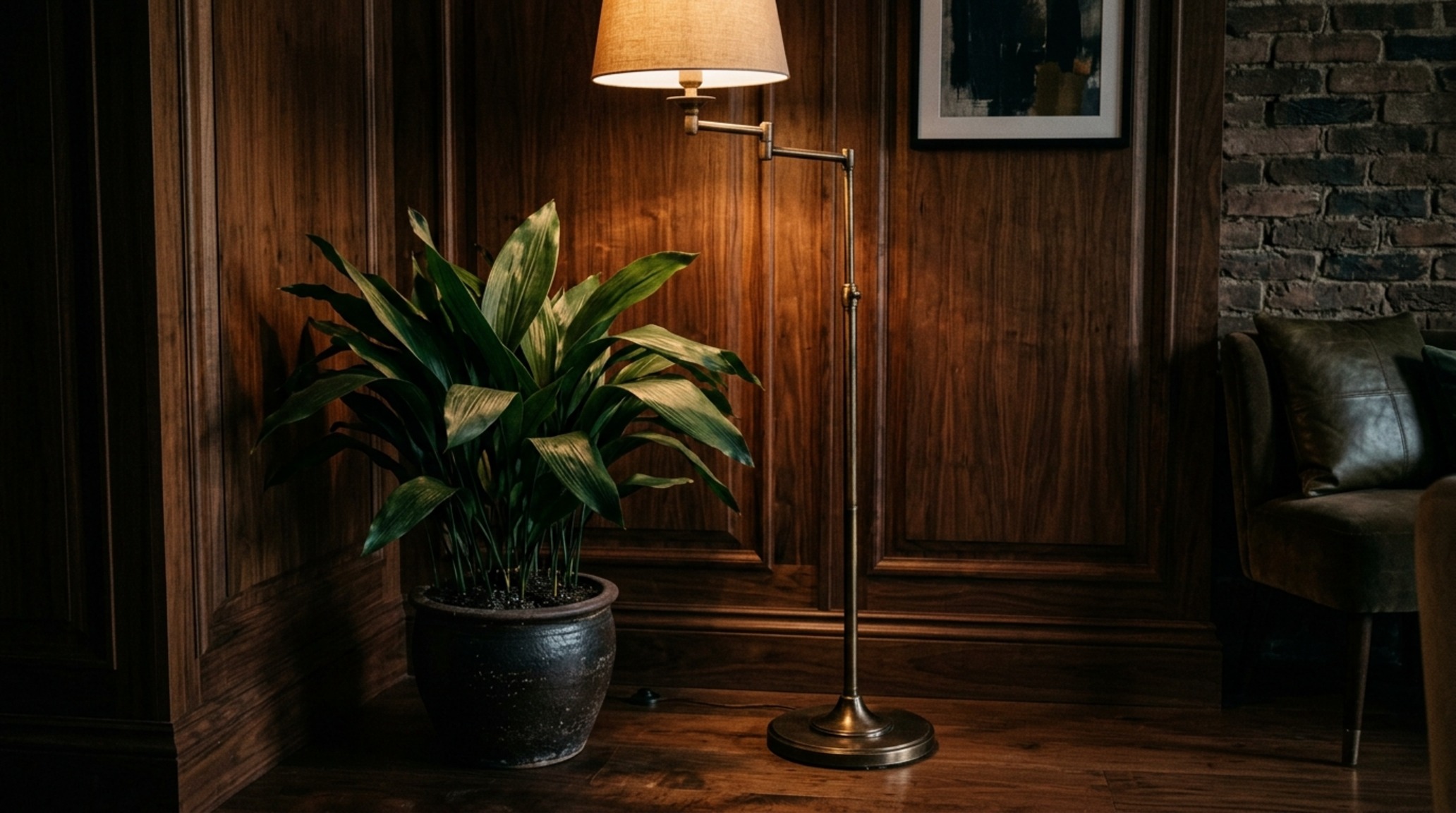
Not every home is blessed with floor-to-ceiling windows, but low-light apartment greenery has its own specific architectural charm. In darker corners, plants with deep, dark green foliage—like the Aspidistra elatior (Cast Iron Plant)—actually thrive. These plants offer a matte, moody texture that pairs beautifully with walnut furniture and bronze accents. By placing a low-light specimen on a mirrored pedestal or a polished stone plinth, you can reflect what little light is available, creating a luminous focal point in a previously forgotten alcove.
The secret to successful low-light integration is the ‘less is more’ approach. One substantial, healthy plant in a beautifully crafted vessel will always have more design impact than three struggling plants. Use the dark corner as an opportunity to showcase a unique silhouette, perhaps a sculptural Aspidistra that echoes the curves of a nearby lounge chair.
Material Schedule & Specification Sheet
A concise technical ledger of paint hex codes, architectural finishes, and dimensional standards.
Architecture is, at its heart, an attempt to reconcile our inner world with the outer landscape. By treating our indoor plant decoration ideas as integral structural components—as living partitions that breathe and grow—we create homes that do not just shelter us, but actively sustain our sensory connection to the natural world. The most successful spaces are those where the boundary between the built environment and the botanical one becomes a soft, blurred line of green, light, and shadow.
Editorial Silo • Recommended Architecture Studies
- New Interior Designs: The Architectural Blueprint & Spatial Flow Guide — Archival Design Case Study
- Ergonomic Mastery: Functional & Space-Saving Hacks for Taking Care Of Leather Furniture — Archival Design Case Study
Interior Form & Detail Lookbook
An intimate visual portfolio documenting the intersection of ergonomic utility and bespoke aesthetic warmth.
Curated Visual Lookbook
Design Gallery & Spatial Studies
A visual curation of architectural arrangements, lighting concepts, and material palettes featured in this space.