CURATORIAL CRITIQUE & DESIGN ANTHOLOGY
Observe the contemporary residential sanctuary and you will notice a fundamental shift in how we define architectural luxury. We are moving away from the loud, performative displays of the past and toward a quiet, high-performance precision. In this curated landscape of modern living, the wall is no longer a static boundary but a kinetic participant. This evolution is most visible in the rise of unique cabinets that function as the central nervous system of the home. These aren’t merely boxes for storage; they are masterpieces of joinery that conceal the machinery of daily life while providing a tactile grounding that makes a house feel like a home. When we analyze these structures, we see a marriage of rigorous engineering and a sensory aesthetic that prioritizes the internal life of the objects we inhabit.
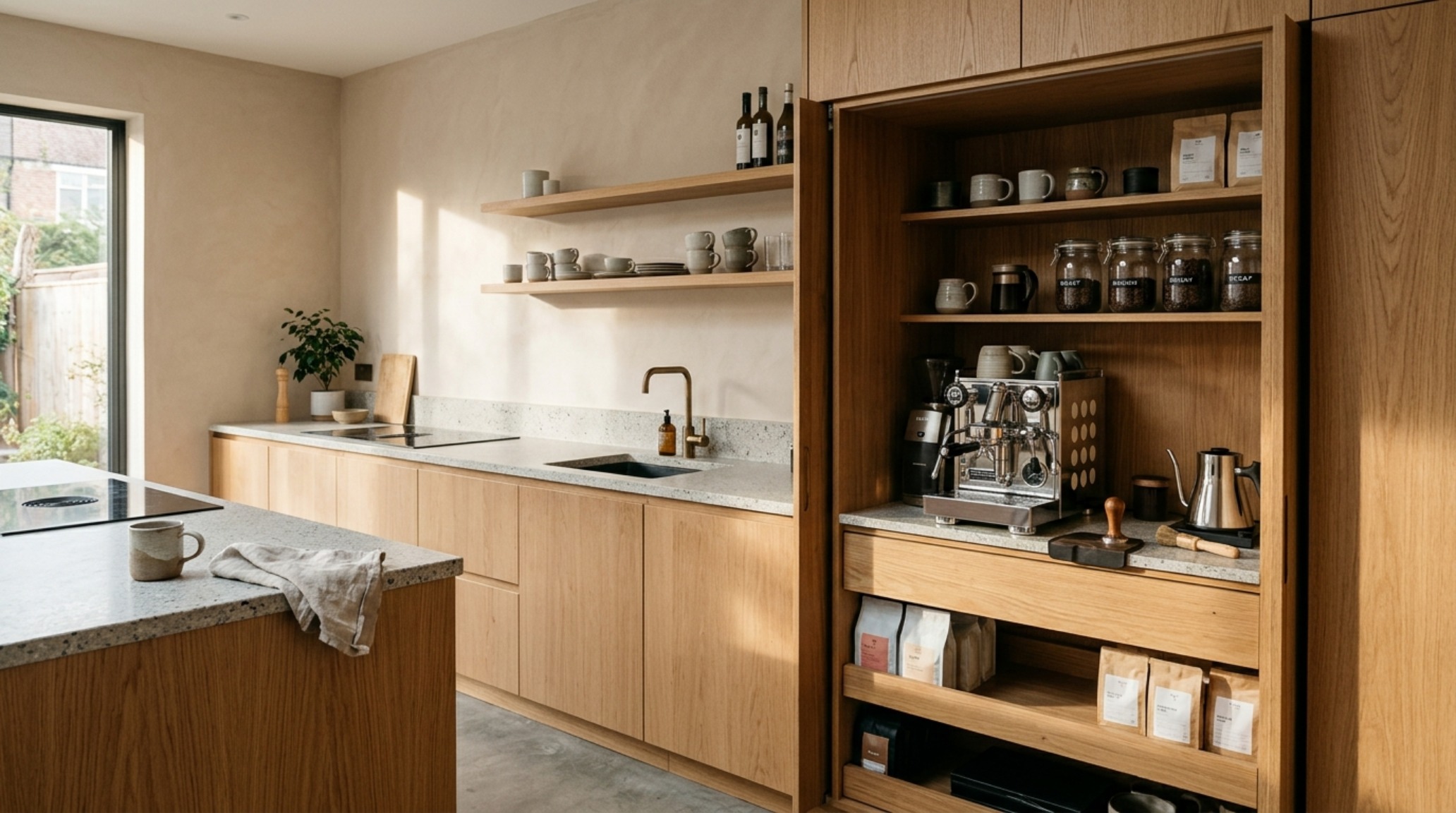
Bespoke Storage Solutions: Engineering the Modern Pantry
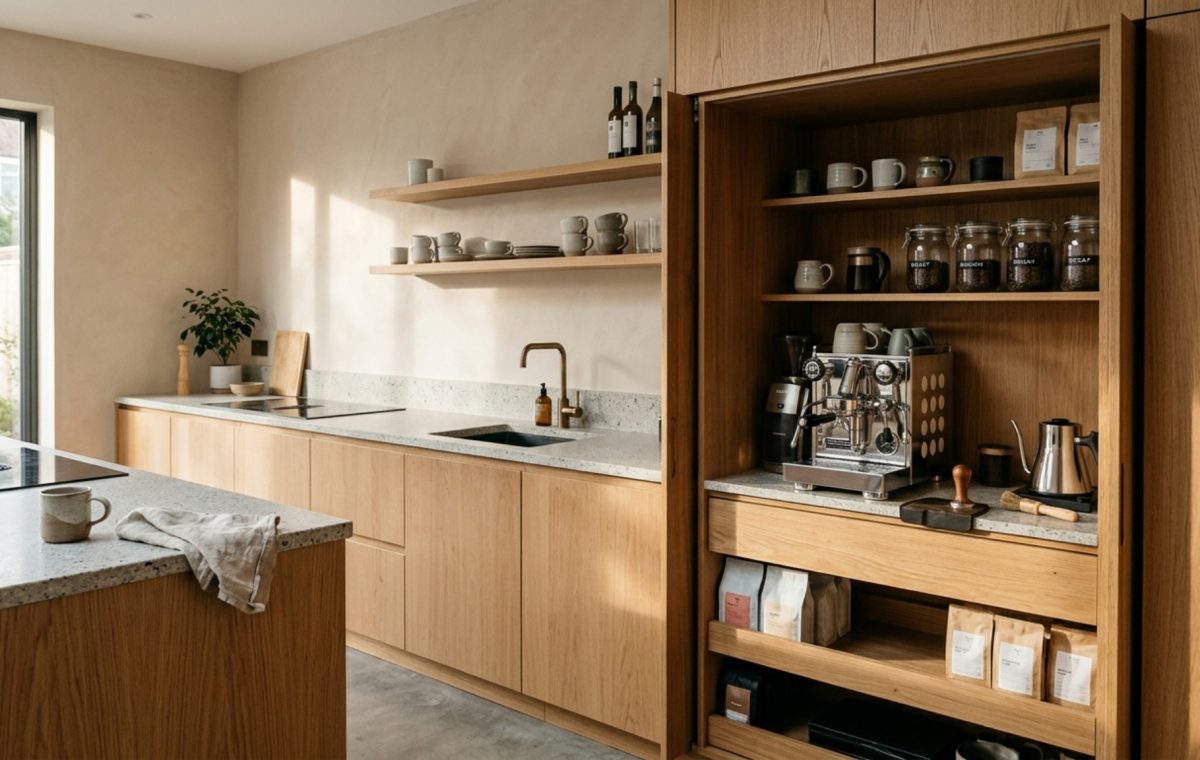
The modern pantry has undergone a radical transformation, shedding its utilitarian roots to become a study in ergonomic mastery. Utilizing bespoke storage solutions, architects are now designing kitchen environments that anticipate human movement with the grace of a well-choreographed dance. We see this in the integration of ‘pocket door’ systems that glide with a weighted, dampened silence, disappearing into the millwork to reveal a coffee station or a prep zone. The spatial cadence here is vital. Designers are moving away from the standard 24-inch depth in favor of varied tiers—shallower 12-inch shelves for dry goods positioned at eye level, paired with deep, motorized drawers at the base for heavy ceramic cookware.
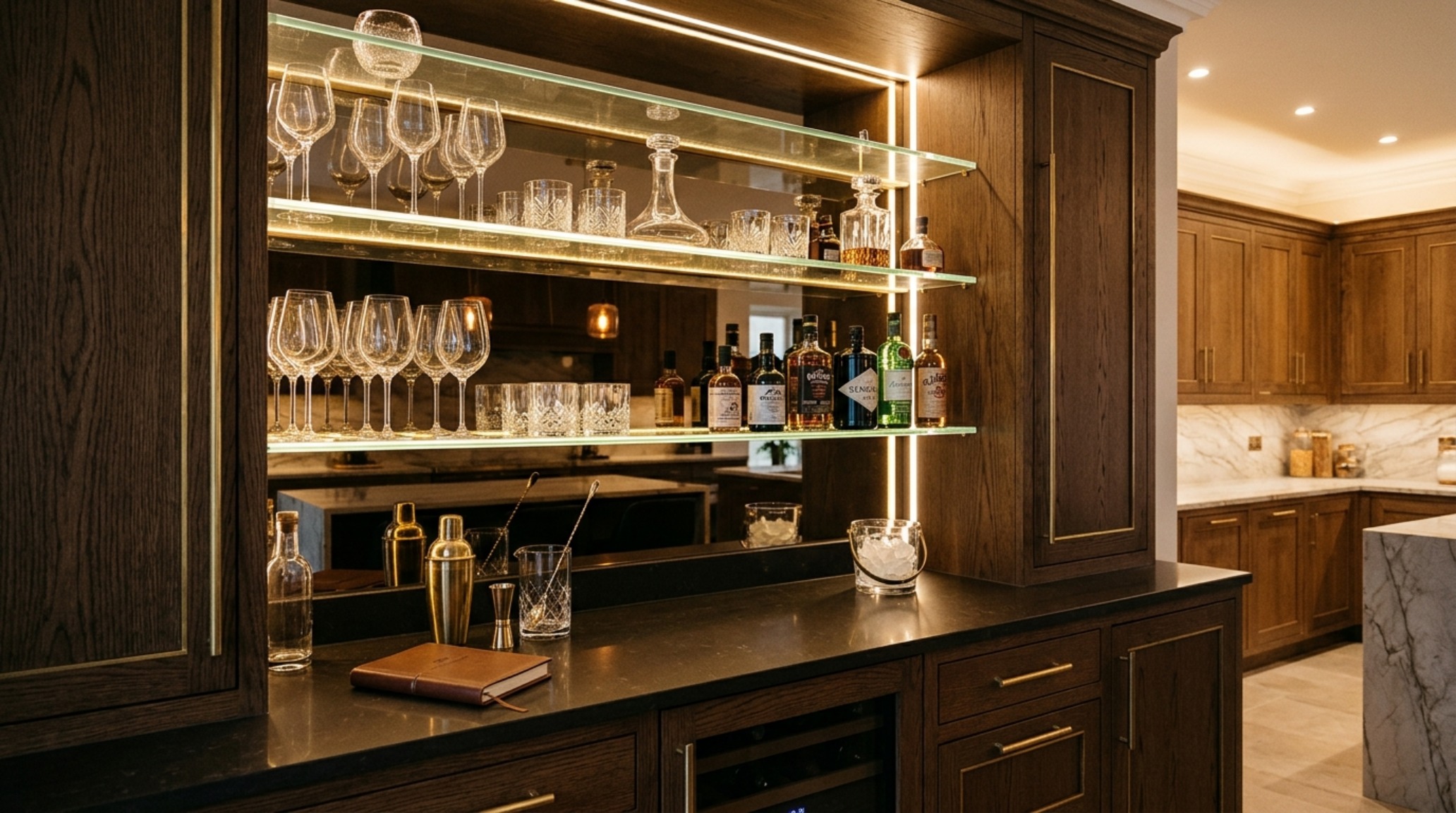
Consider the interplay of shadow and light within these internal volumes. By integrating recessed 2700K LED tape lighting with a high CRI of 92+, the interior of a cabinet ceases to be a dark void. Instead, it becomes a glowing vitrine where every spice jar and artisanal oil is illuminated without harsh glare. This is where unique cabinets prove their worth; they solve the friction of the everyday through ‘stealth luxury’—the idea that the most sophisticated design is the one that works perfectly without ever demanding your attention. Using a palette like Benjamin Moore Swiss Coffee for the interiors provides a soft, reflective surface that enhances visibility while maintaining a warm, residential feel.
Visual Narrative & Detail Studies
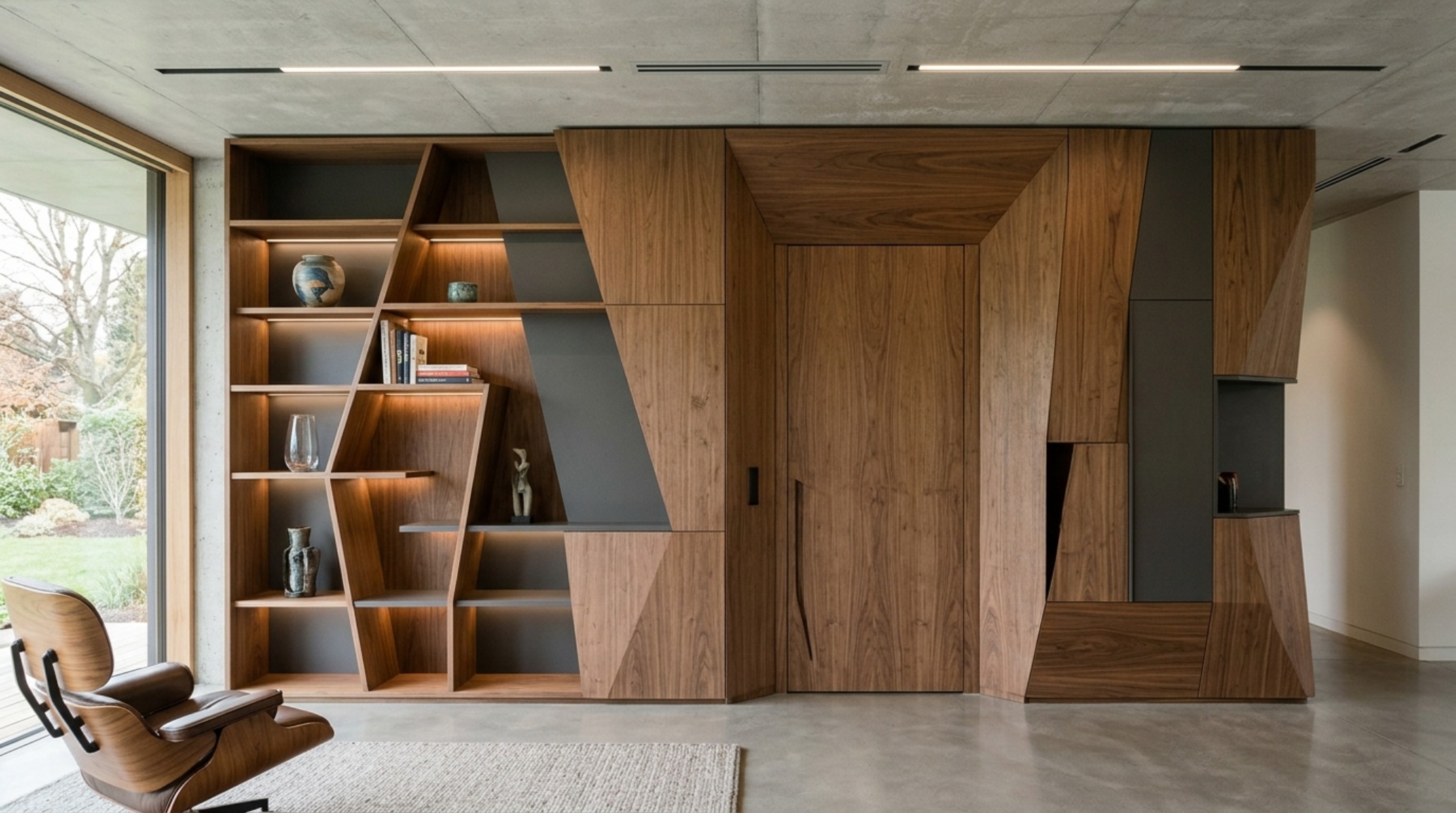
In the realm of high-end millwork, the transition between materials defines the narrative of the space. We are seeing a bold departure from monochromatic wood blocks toward mixed material cabinetry. This approach treats the cabinet as a sculptural assembly, blending the coolness of Honed Travertine or Nero Marquina marble with the organic warmth of rift-sawn oak. The intersection of a 2cm stone countertop with a mitered wood edge requires a level of precision that only true master craftsmen can achieve. It’s about the ‘negative space breathing room’—that 3mm shadow gap (or ‘reveal’) that allows different materials to sit side-by-side without clashing.
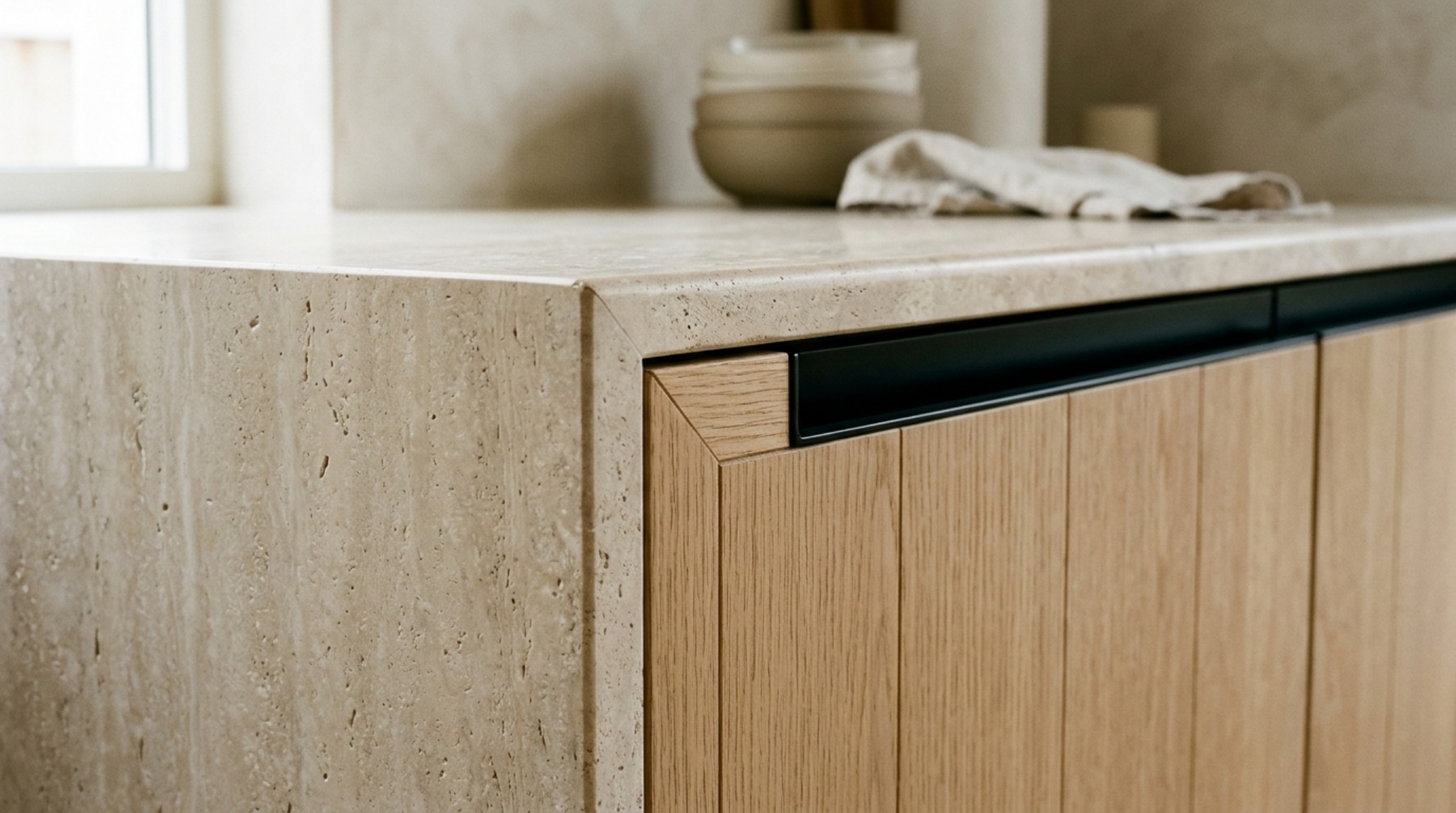
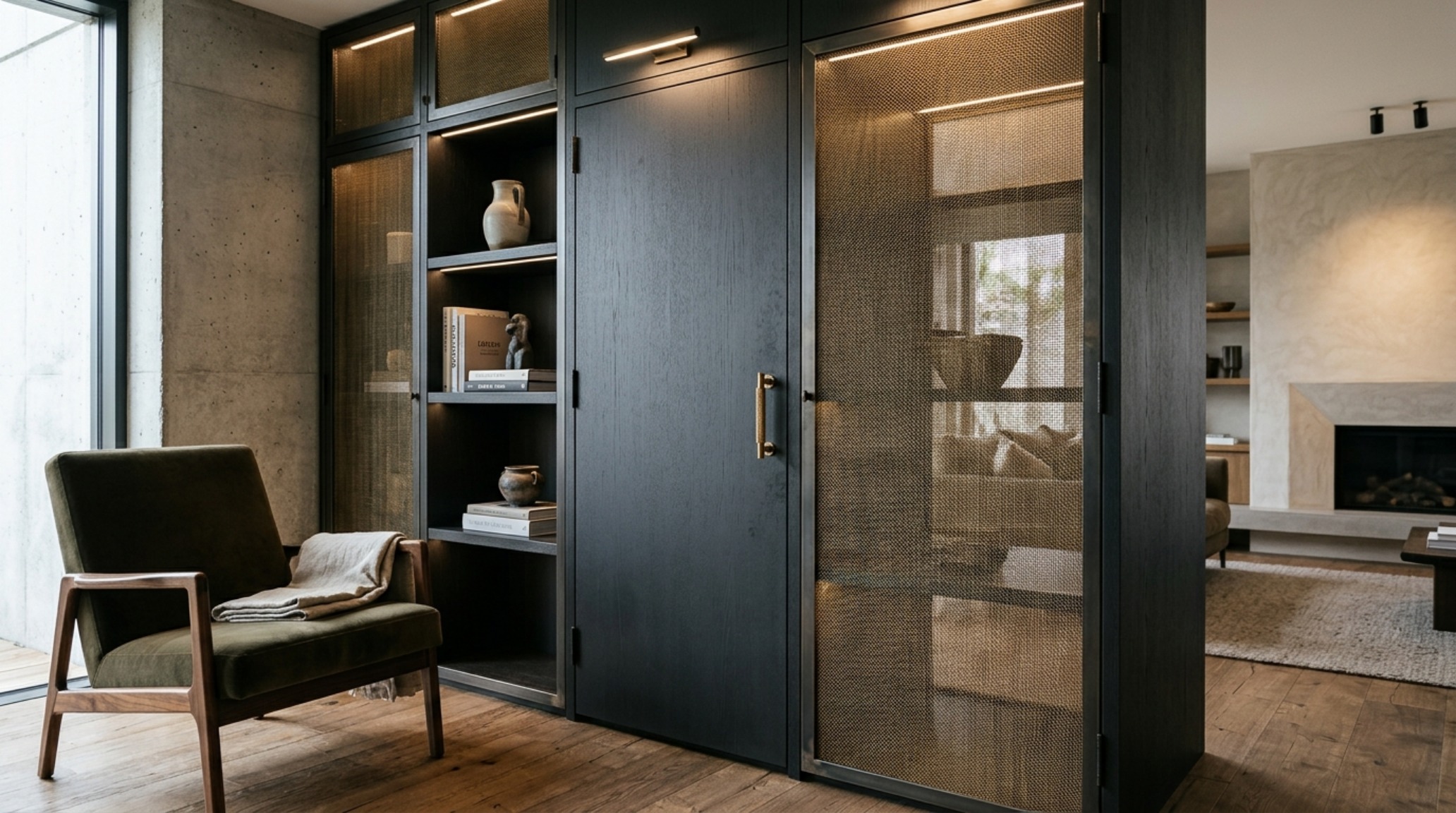
This materiality extends to the hardware, or rather, the absence of it. The shift toward ‘touch-to-open’ technology and integrated finger pulls creates a seamless facade that allows the grain of the wood to flow uninterrupted across the room. When unique cabinets are treated as furniture-as-narrative, they can wrap around a corner, transitioning from a kitchen storage unit into a media console or a hidden bar. This fluidity is essential in open-plan living where the visual weight must be balanced. A massive block of dark walnut might feel oppressive, but when broken up by a vertical sliver of fluted glass or a bronze-mesh insert, it gains a rhythmic transparency that lightens the entire room’s atmosphere.
Fluted Wood Joinery: Tactile Rhythm in Vertical Planes
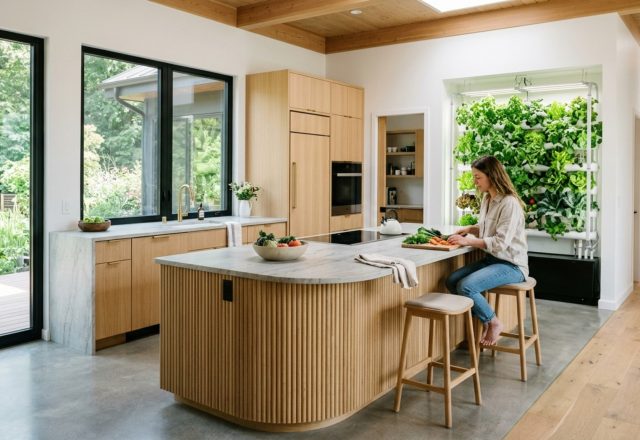
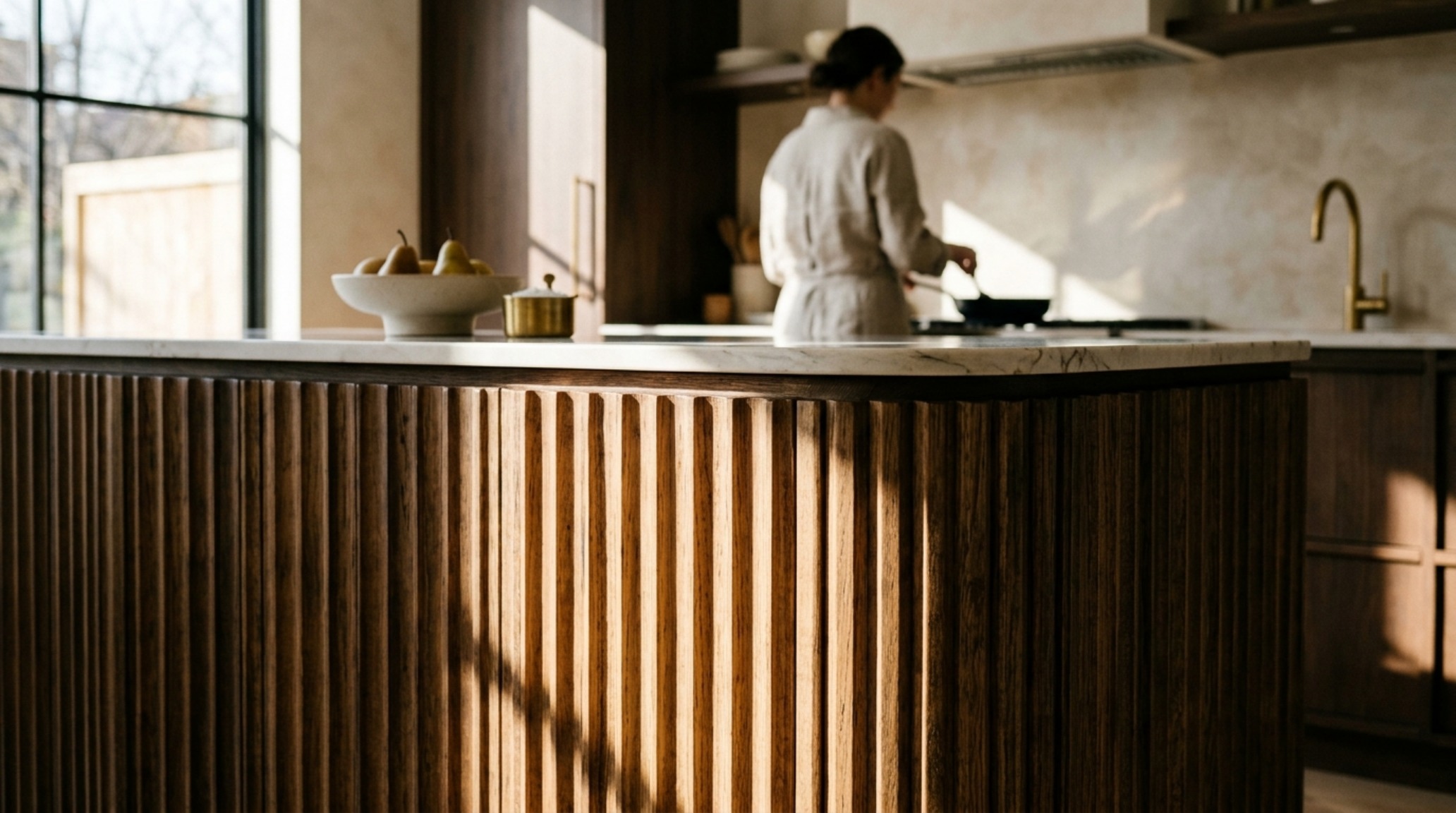
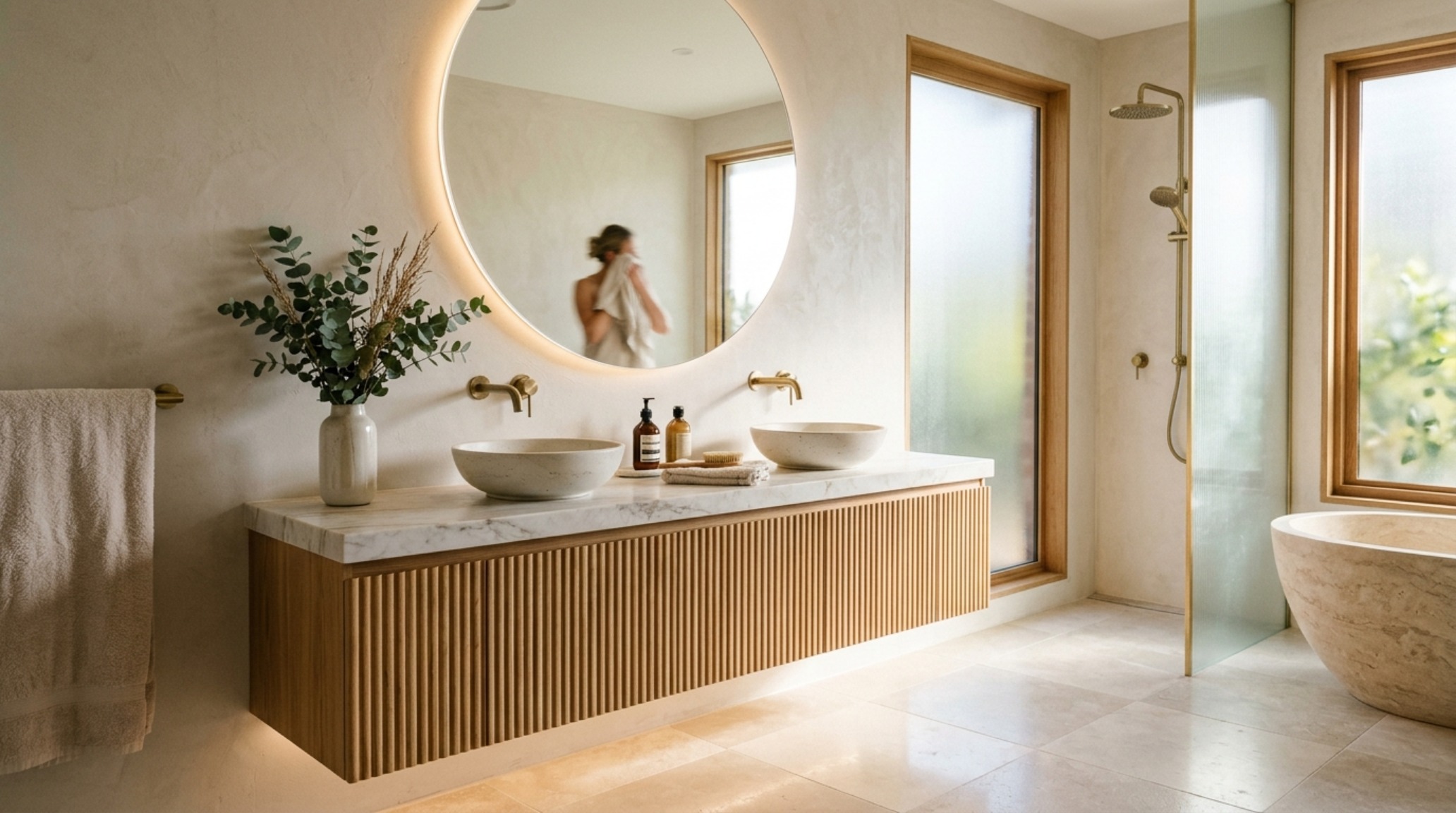
One of the most enduring trends on Pinterest and in the pages of Architectural Digest is the return of texture through fluted wood joinery. This technique, which involves milling repetitive semi-circular grooves into the cabinet faces, creates a play of light and shadow that changes throughout the day. In the morning, low-angled sunlight catches the ridges, creating sharp highlights; by evening, the shadows deepen, giving the millwork a soft, velvet-like appearance. It is a tactile grounding that invites the hand to touch, breaking the sterility of modern flat-panel design.
From a technical perspective, fluting requires exceptional stability in the substrate to prevent warping. Often, designers will use a high-density fiberboard core veneered with white oak or walnut to ensure the lines remain perfectly plumb. When applied to unique cabinets in a primary suite or a formal dining room, this texture provides an architectural ‘beat’ that anchors the furniture. Pairing fluted surfaces with a muted, earthy tone like Farrow & Ball Setting Plaster adds a sophisticated, plaster-like depth that feels both historic and avant-garde.
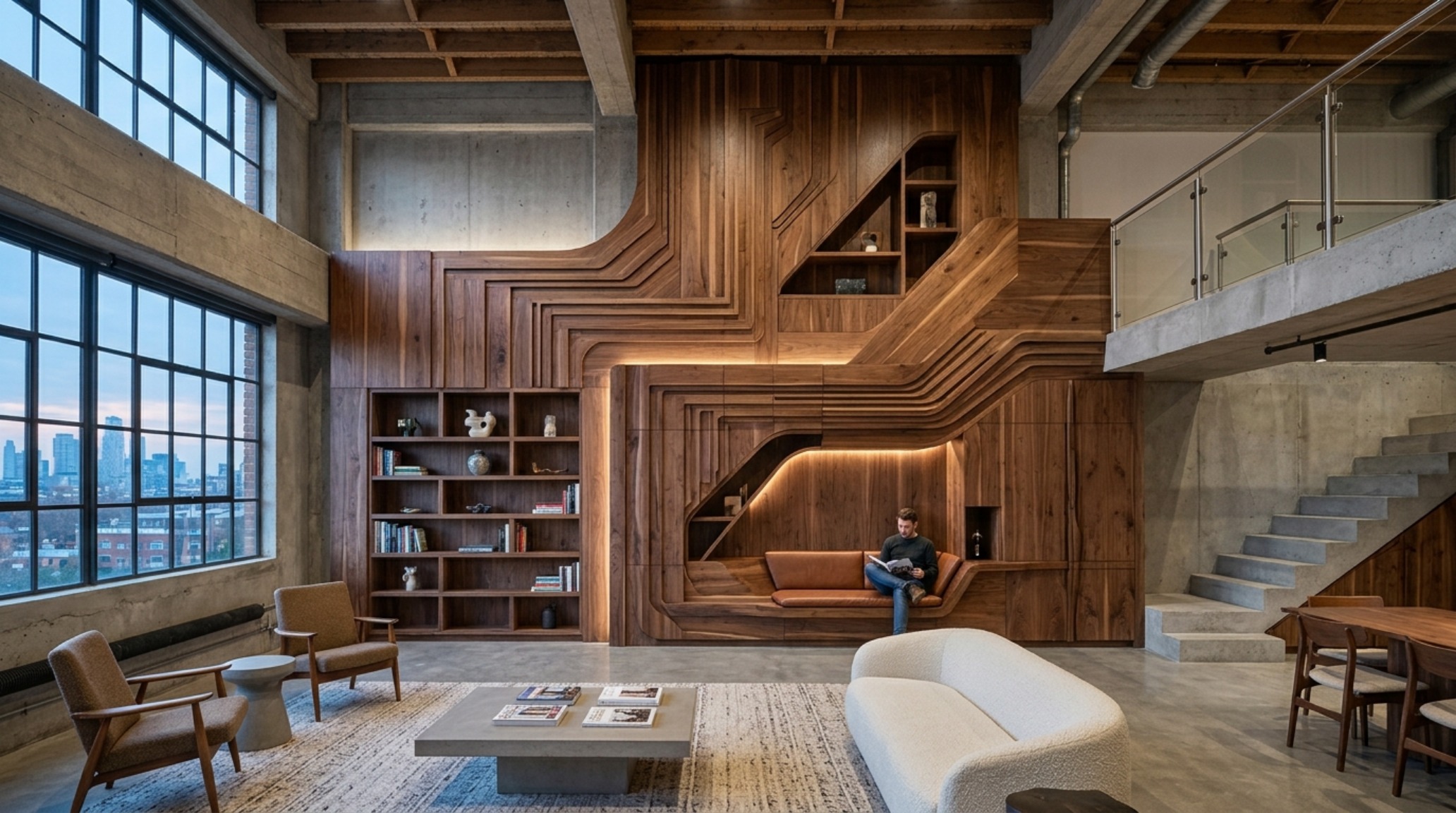
Unique Cabinets as the Structural Anchor
In high-performance homes, the cabinetry often steps out of its role as a peripheral element to become a structural anchor. We are seeing designers use floor-to-ceiling millwork to define zones within a large room, effectively using the furniture to build the architecture. This is particularly effective when implementing avant-garde millwork that ignores traditional cabinetry rules. Imagine a central ‘monolith’ in a loft—a singular, massive unit that houses the refrigerator, a hidden coat closet, a powder room door, and a climate-controlled wine cellar. This is not just storage; it is a spatial engine.
The engineering required for these large-scale unique cabinets is significant. Weight distribution, ventilation for integrated electronics, and the structural integrity of large-format doors (sometimes reaching 10 feet in height) must be calculated with the same rigor as a bridge. For wine refrigeration, the millwork must provide a thermal break and vibration dampening to ensure the longevity of the collection while the exterior remains flush with the surrounding panels. This level of customization ensures that the home functions at a professional grade while maintaining the aesthetic of a private gallery.
Custom Furniture Storage: Where Heirloom Meets High-Tech
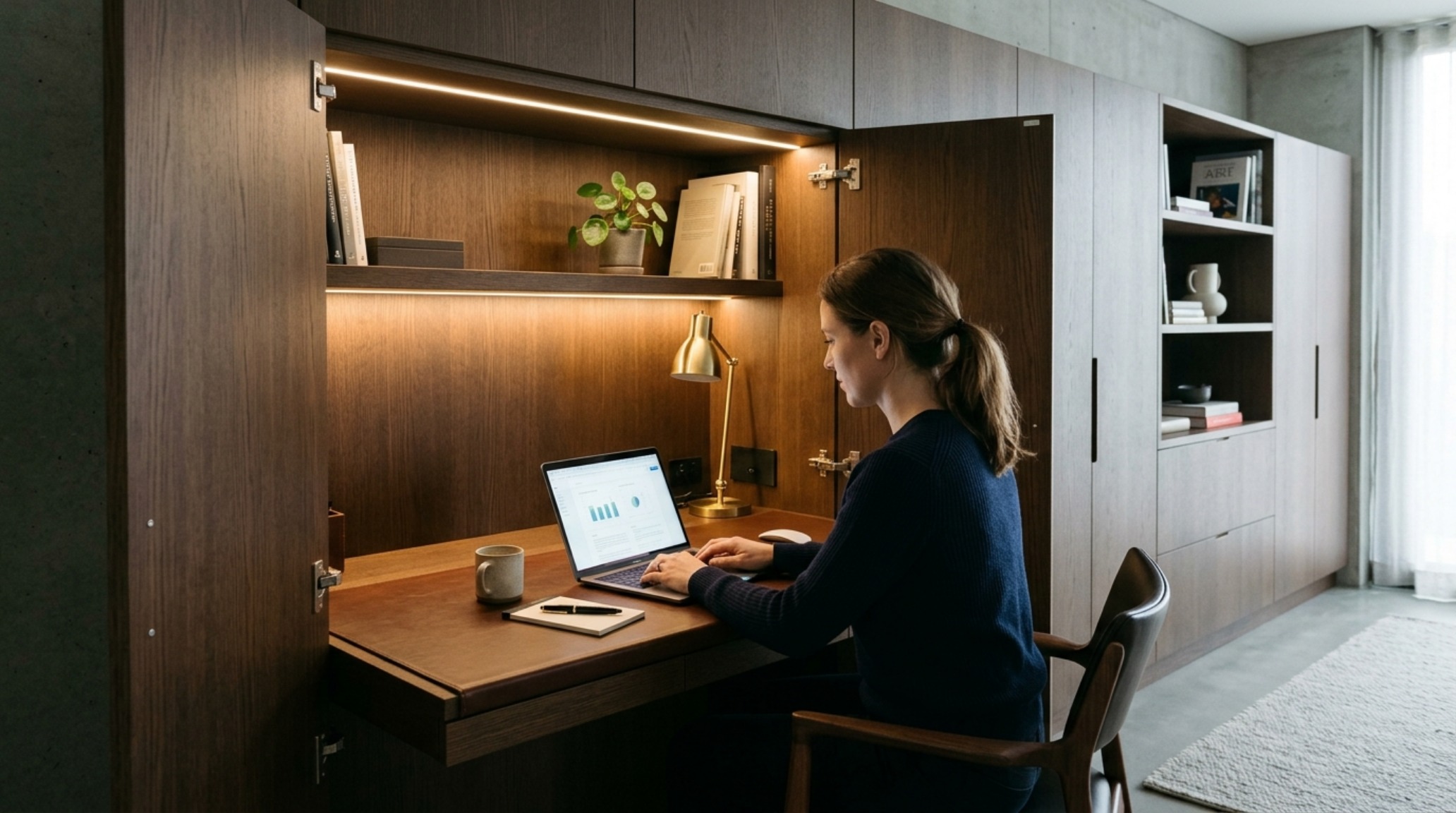
The final layer of this intelligent millwork movement is the concept of custom furniture storage that serves a dual purpose. As remote work becomes a permanent fixture of luxury living, the ‘cloffice’ (closet-office) has evolved into a sophisticated hidden workstation. These units are designed to be entirely invisible when closed, appearing as a series of beautiful paneled walls. When opened, they reveal a fully ergonomic environment with integrated cable management, leather-lined desk surfaces, and 3000K task lighting designed to reduce eye strain during long hours of focus.
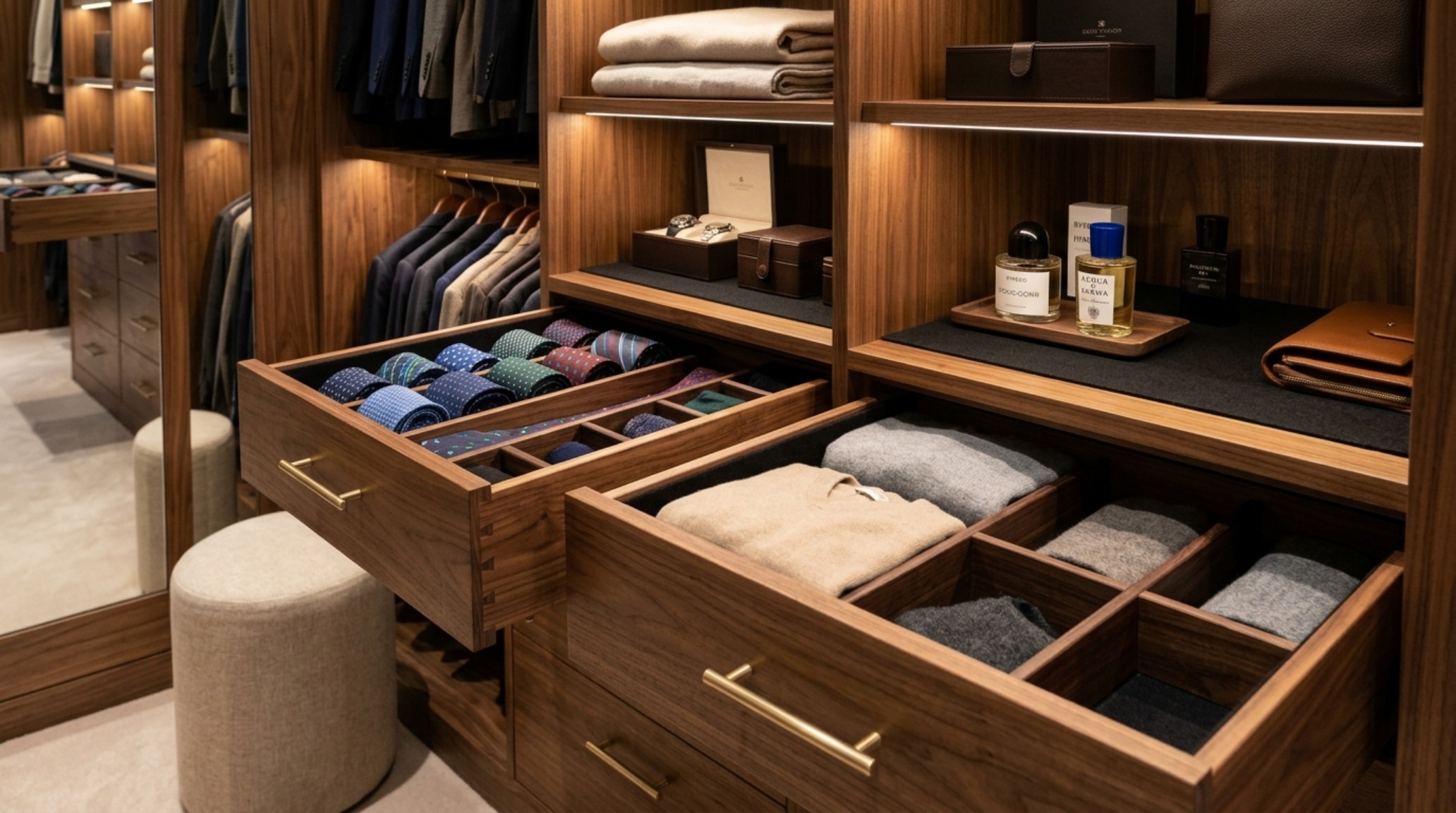
Tactile luxury in these spaces is found in the details—the solid brass hinges, the suede lining of a watch drawer, or the scent of cedar in a tailored wardrobe. The unique cabinets of today are designed to be the heirlooms of tomorrow. They are built with the understanding that while technology changes, our need for beauty, order, and a sense of place remains constant. By utilizing real architectural clearances—ensuring 36 inches of primary circulation around an island and 18 inches of reach for a low-slung console—we create spaces that are not only visually stunning but intuitively usable. Design is, after all, an act of service to the human experience.
Spatial Specifications & Finishes Breakdown
Architectural summary of tactile material selections, lighting specifications, and spatial ergonomics.
As we look toward the future of residential architecture, it becomes clear that the distinction between furniture and structure is dissolving. The most successful homes are those where the millwork is deeply integrated into the spatial logic, providing both the functional backbone and the aesthetic soul of the house. Through the thoughtful application of unique cabinets, we transform the domestic interior into a high-performance landscape that respects the rituals of the everyday while elevating them to an art form. The quiet hum of a perfectly balanced drawer, the warmth of sun-drenched oak, and the hidden convenience of a concealed workstation—these are the elements that define the new intelligent luxury.
Editorial Silo • Recommended Architecture Studies
- Beds That Save Space: The Architectural Blueprint & Spatial Flow Guide — Archival Design Case Study
- The Closed-Loop Life: Mastering the Functional Ergonomics of Self Sustaining Homes — Archival Design Case Study
Interior Perspective Lookbook
A curated lens on enduring residential architecture, tactile finishes, and serene volume.
Curated Visual Lookbook
Design Gallery & Spatial Studies
A visual curation of architectural arrangements, lighting concepts, and material palettes featured in this space.