We have all experienced that awkward, one-legged hop—the frantic struggle to pull off a Chelsea boot while balancing against a cold wall. It is a friction point that breaks the rhythm of coming home. In the choreography of modern living, the threshold deserves more than a discarded pile of sneakers. The solution lies in the perfect entryway bench with storage—a piece that serves as both a tactile landing pad and a silent organizational powerhouse. By treating the foyer as a high-performance zone rather than a spatial afterthought, we can transform the transition from the chaotic outside world into a curated domestic experience.
The Geometry of the Threshold: Why 18 Inches Matters
In architectural design, the ergonomics of sitting are surprisingly precise. The standard seat height for a functional bench is 18 inches. This is not an arbitrary number; it is the height that allows the average adult to sit with their feet flat on the floor, providing the necessary leverage to tie laces or adjust footwear without straining the lower back. When selecting entryway furniture, this vertical measurement is your primary benchmark for comfort. Anything lower feels like a squat; anything higher leaves your legs dangling, which is hardly ideal when you are juggling a heavy coat and a set of keys.
Equally critical is the depth of the unit. In a narrow hallway, every inch is a precious commodity. A standard 18-inch depth provides ample seating surface, but for those navigating particularly tight corridors, a 14-inch shallow-profile bench can still offer sufficient support while maintaining the essential 36-inch standard walkway clearance. This clearance is the golden rule of residential flow; it ensures that two people can pass each other without a collision, maintaining the spatial cadence of the home.
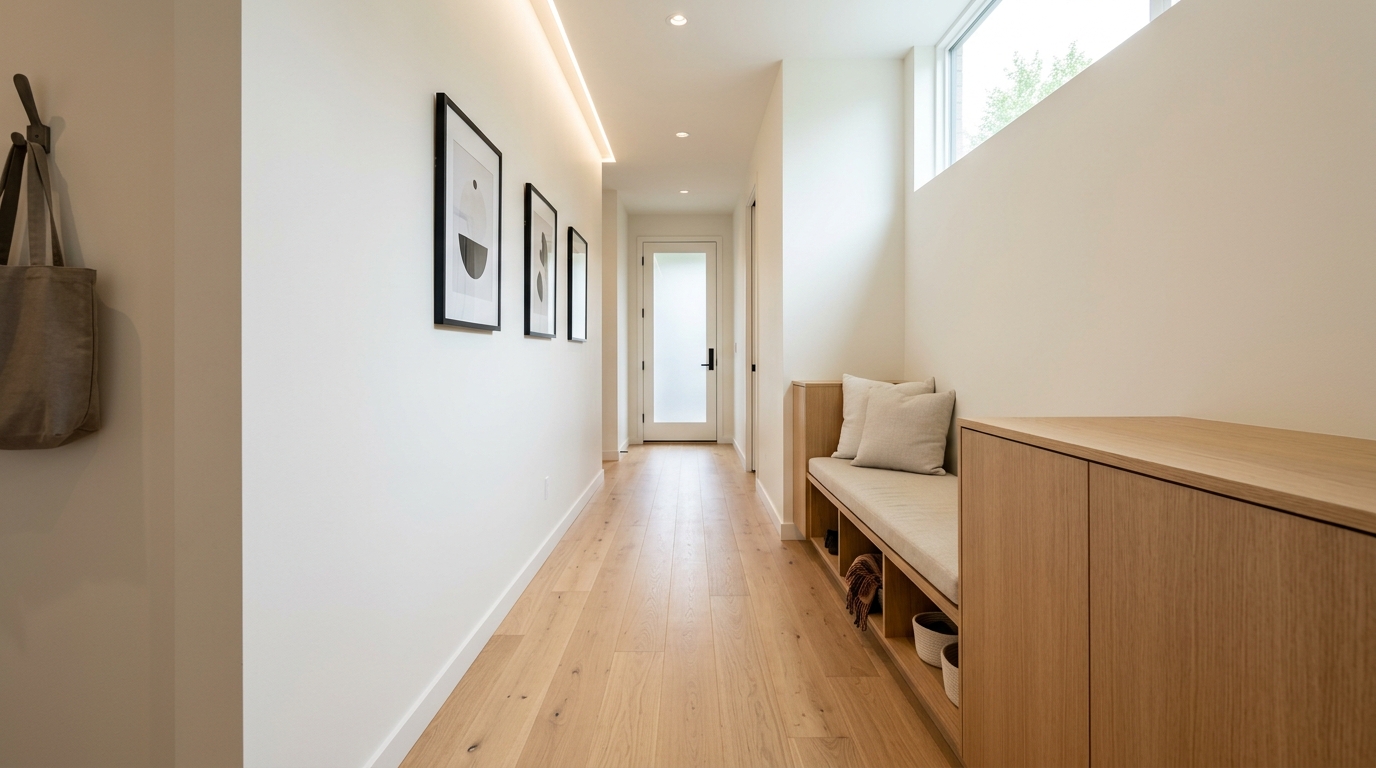
Small-Footprint Luxury and the 36-inch Clearance Rule
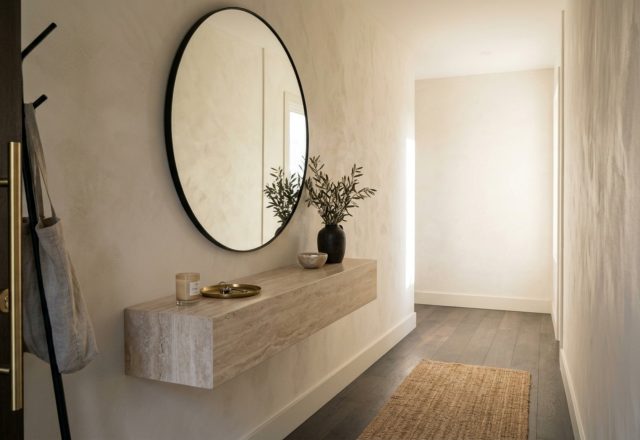
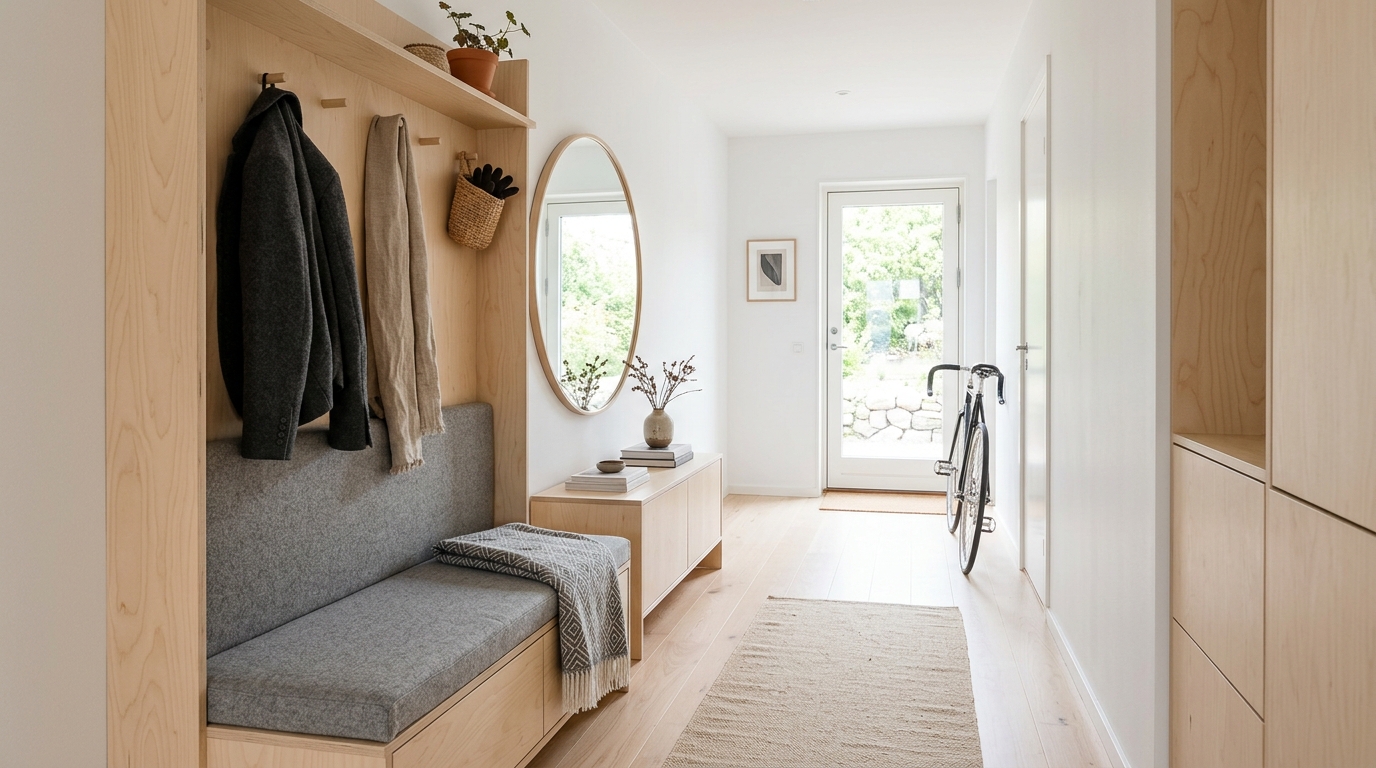
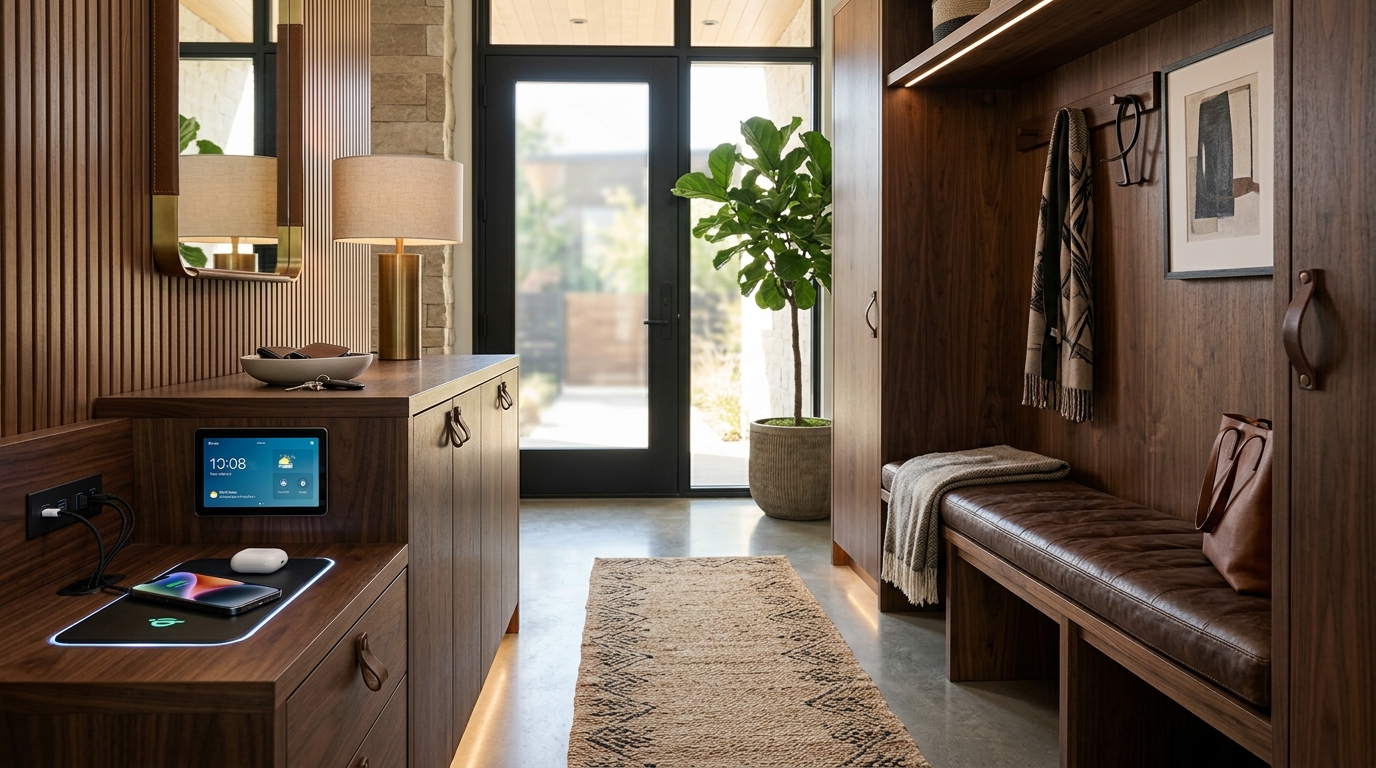
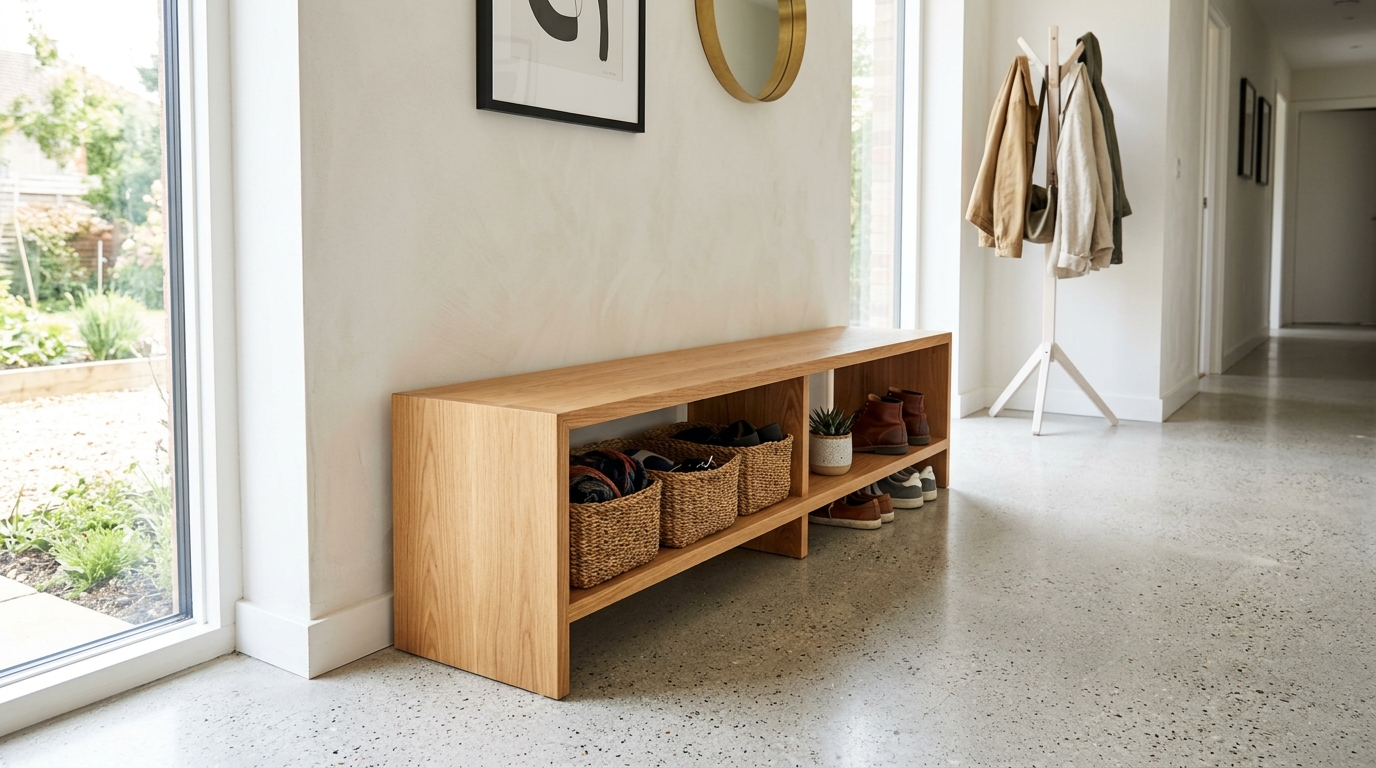
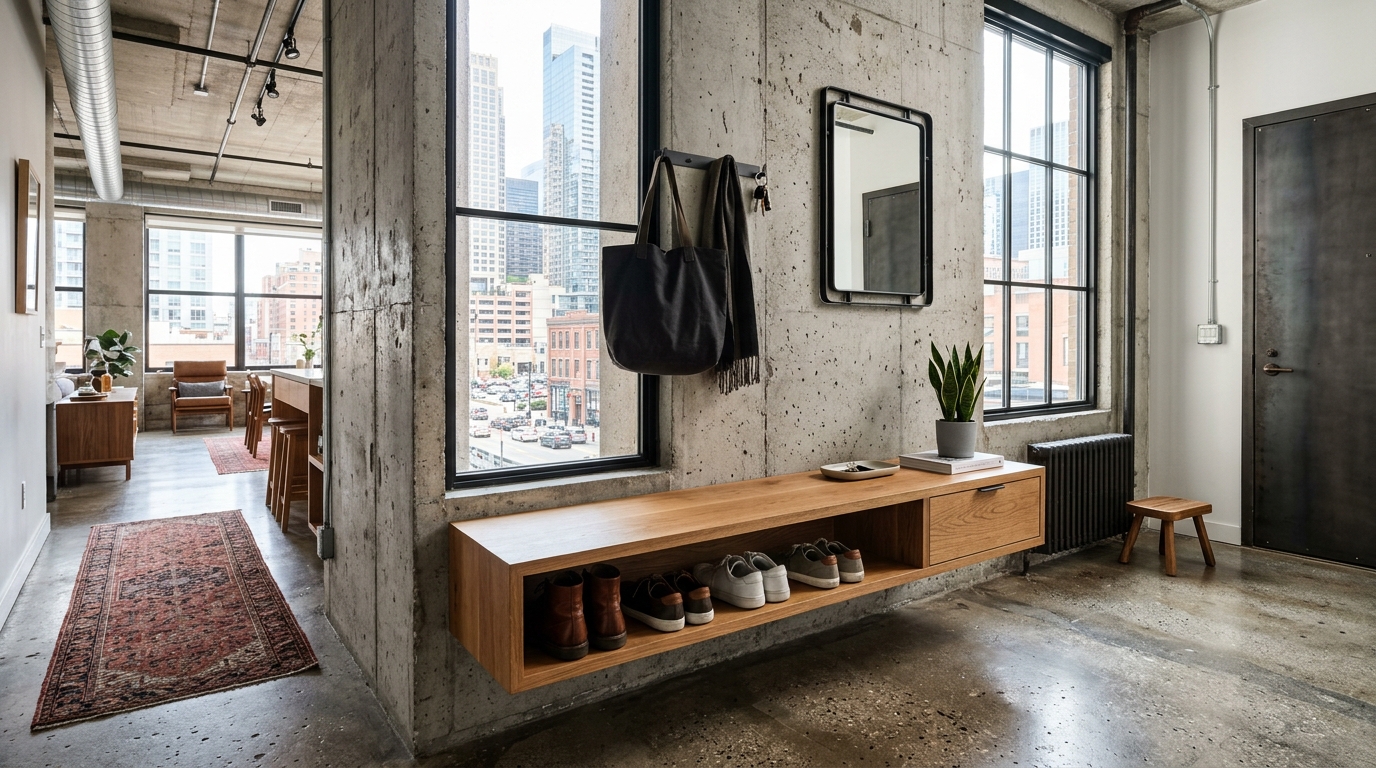
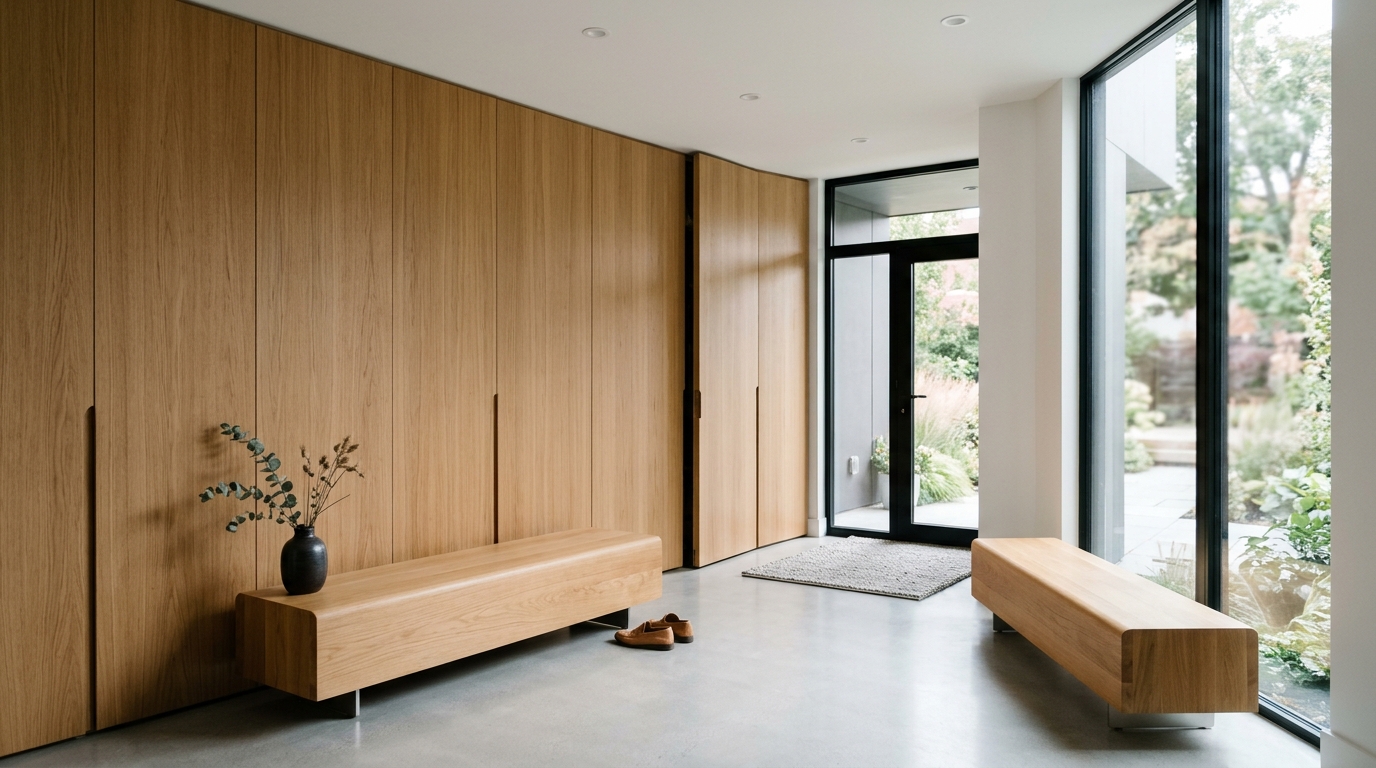
When working with a small entryway drop zone, the challenge is to provide utility without creating a visual blockade. A floating bench—wall-mounted with open space beneath—is a masterstroke of spatial theory. By exposing the floorboards all the way to the baseboard, you trick the eye into perceiving more square footage. This ‘negative space breathing room’ prevents the foyer from feeling claustrophobic. If you require more robust mudroom storage, consider a built-in unit that utilizes vertical height. Tall, slender cubbies or hooks placed exactly 65 inches above the floor (the standard eye-level for coat hanging) allow the bench to remain the grounded focal point while seasonal gear is sequestered upward.
Anatomy of an Effective Entryway Bench with Storage
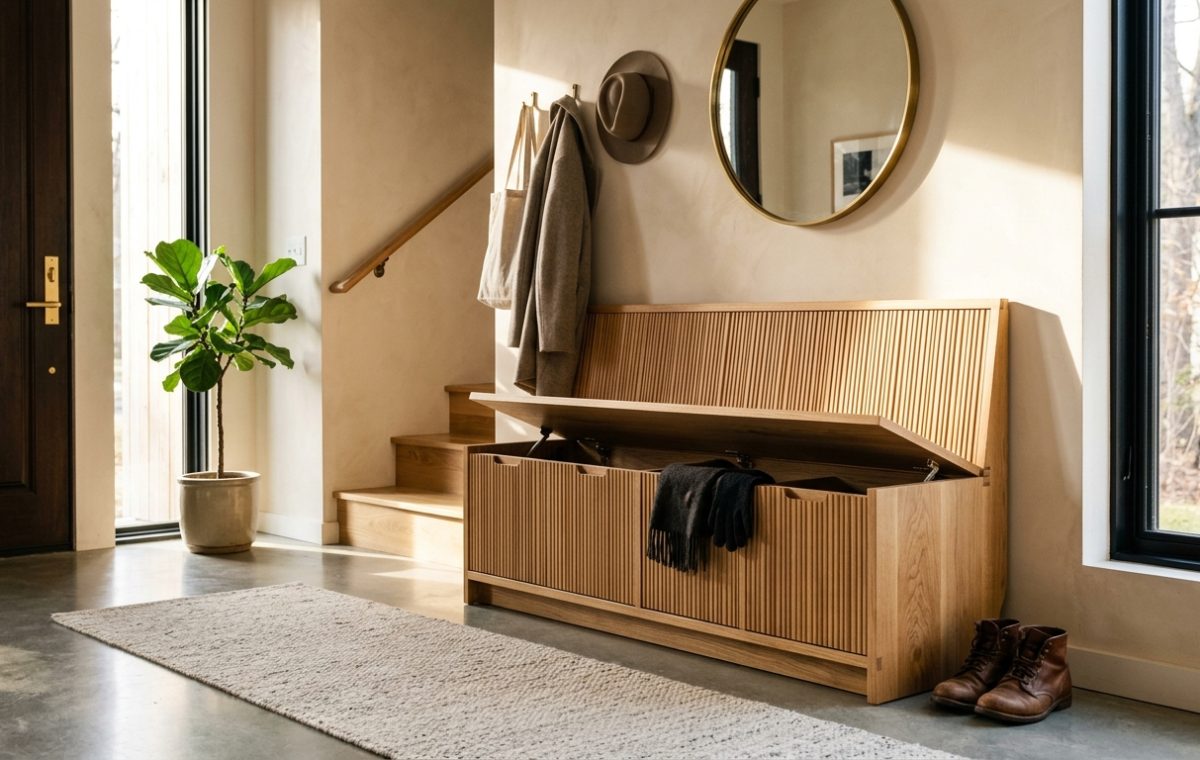
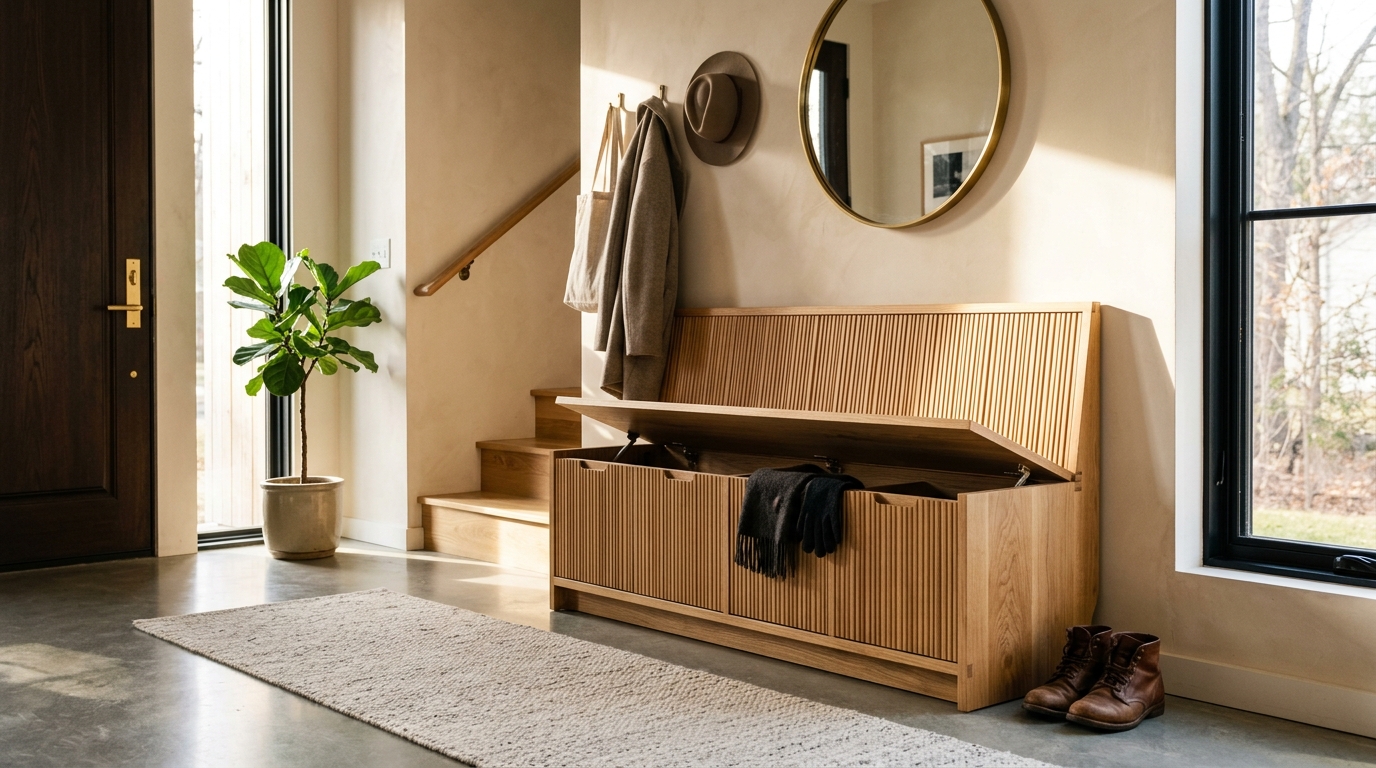
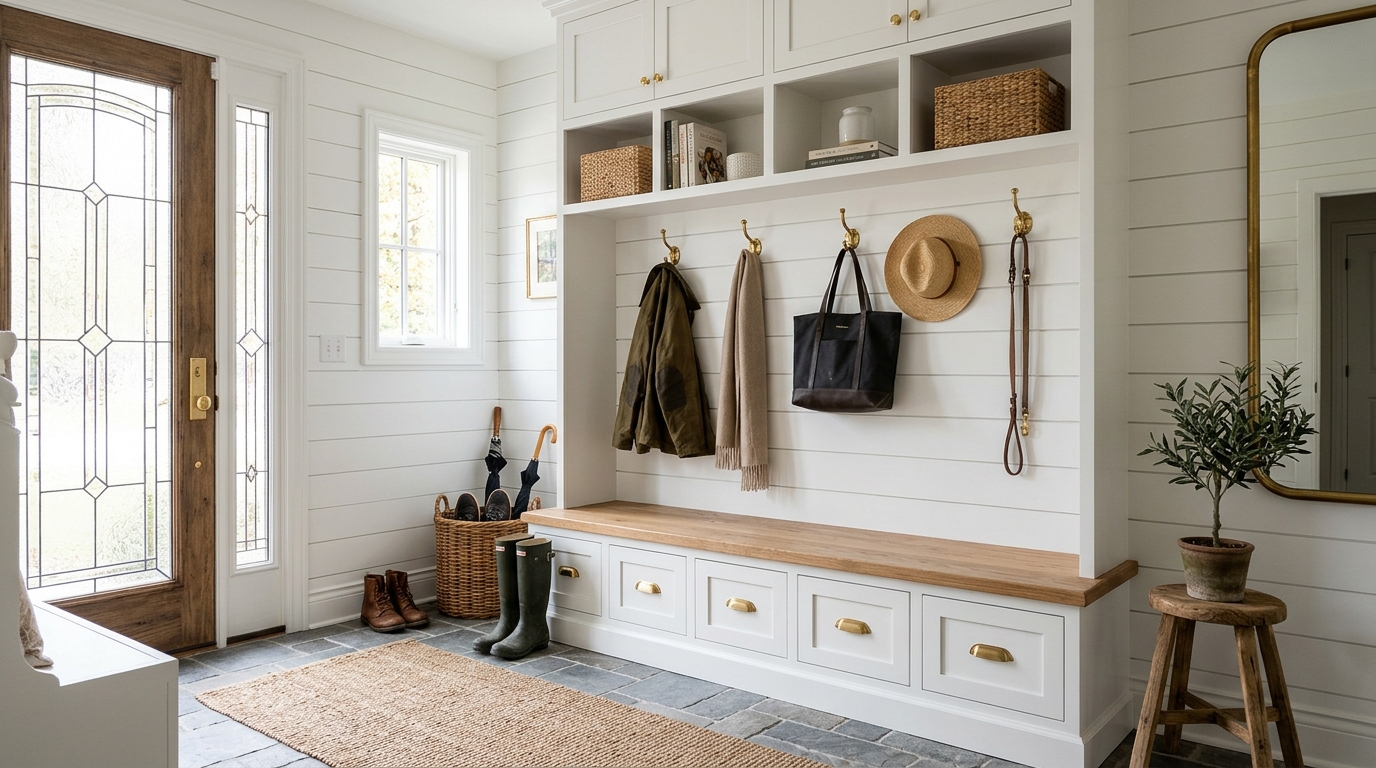
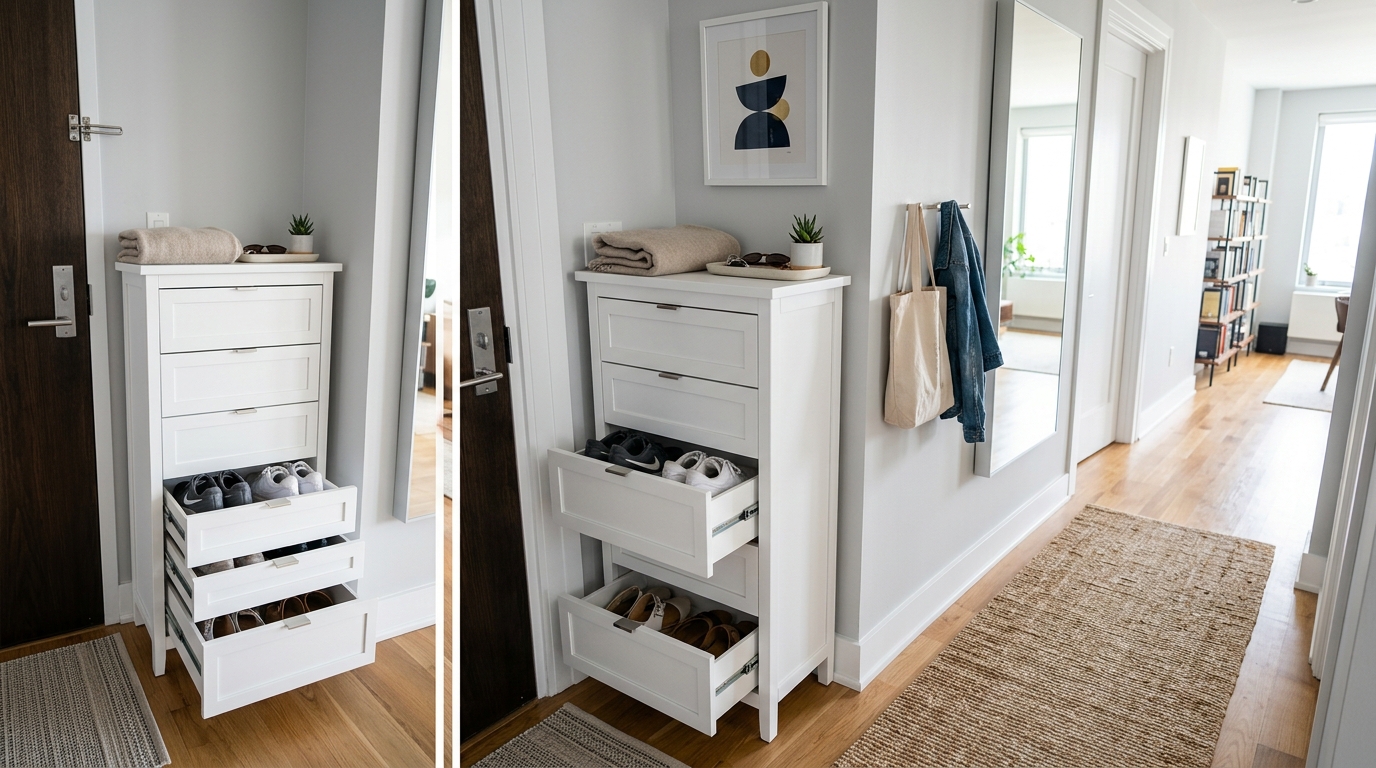
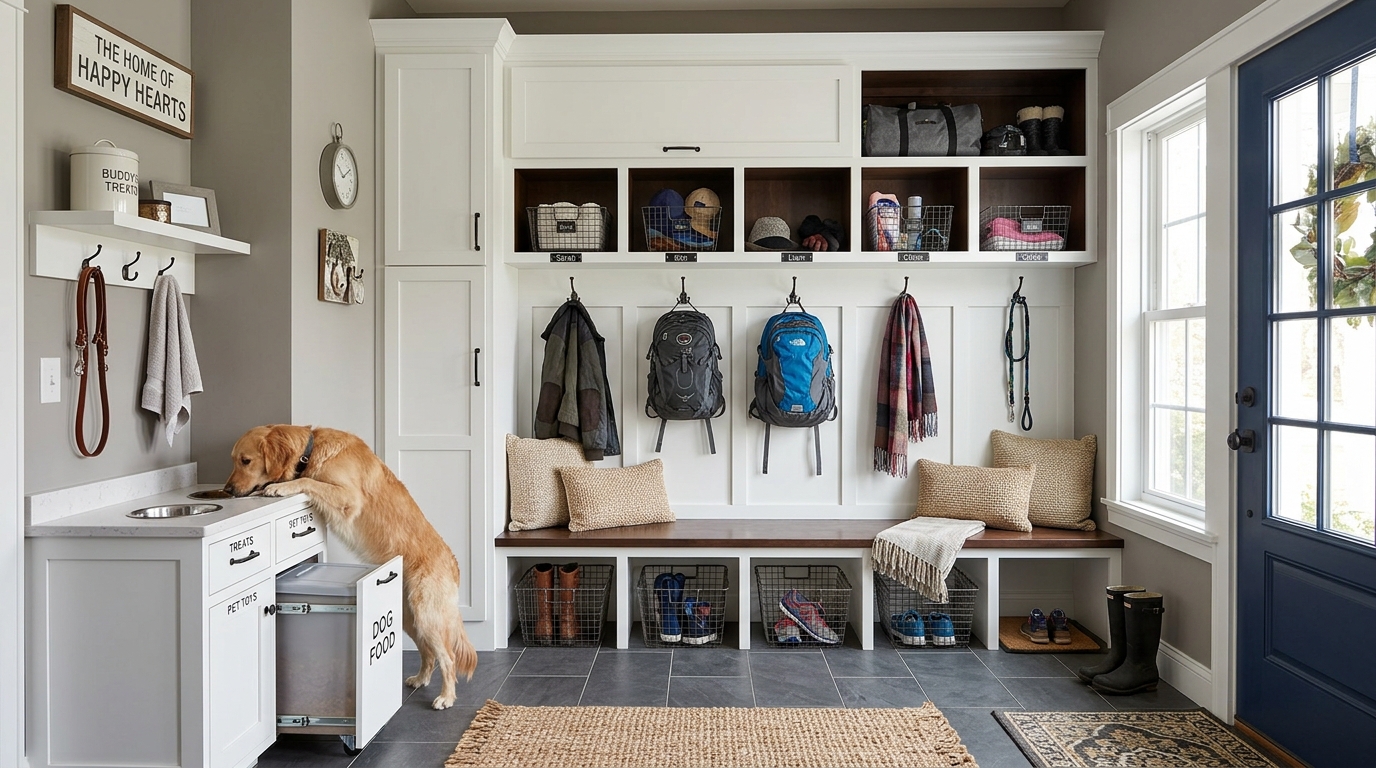
Functionality in a foyer is defined by how well it hides the ‘ugly’ necessities of daily life. The most successful designs employ a hierarchy of storage. Flip-top compartments are the heavy hitters of drop zone organization. They offer a deep, cavernous space for bulky items like winter scarves, dog leashes, or yoga mats that don’t fit into neat categories. However, the flip-top requires you to stand up to access the contents. For high-frequency items, a narrow entryway shoe storage bench with drop-front drawers or sliding doors is often the superior ergonomic choice, allowing access to footwear while you remain seated.
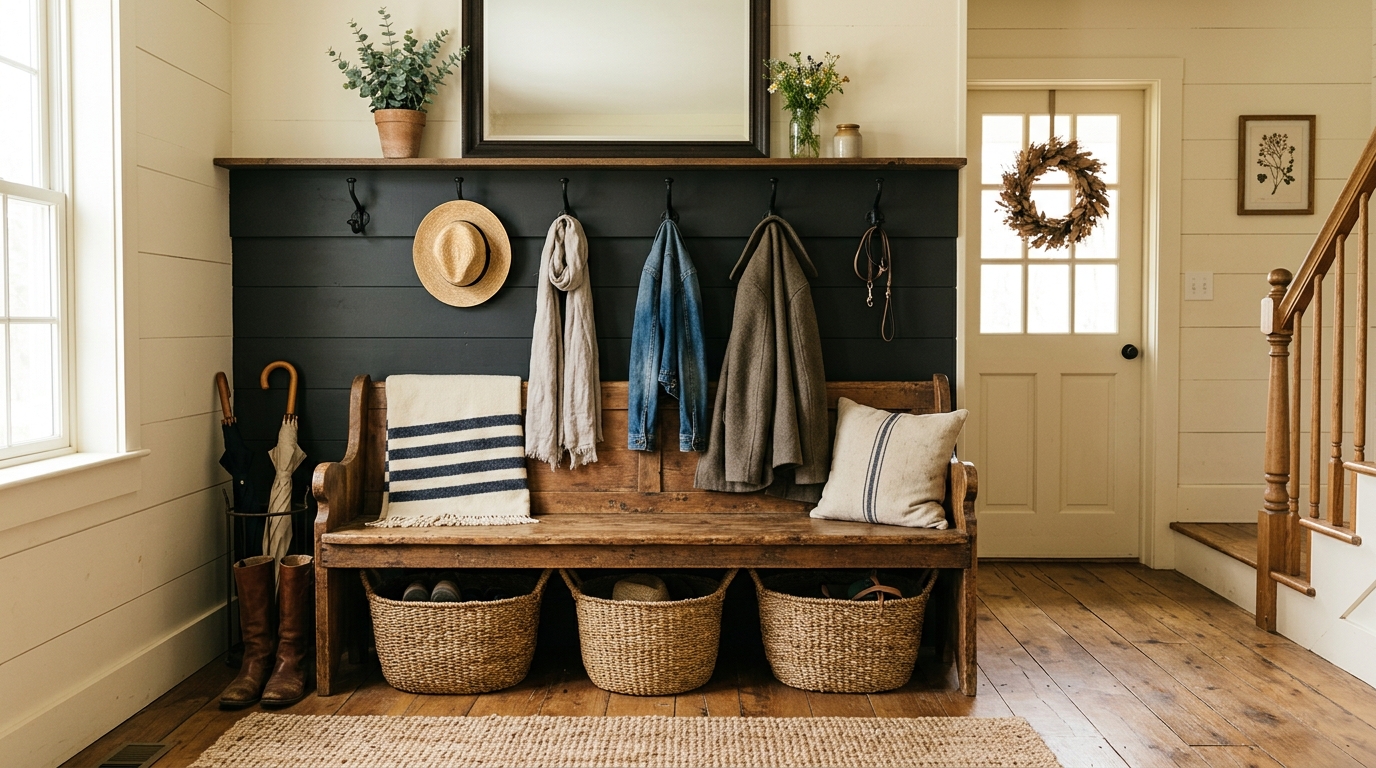
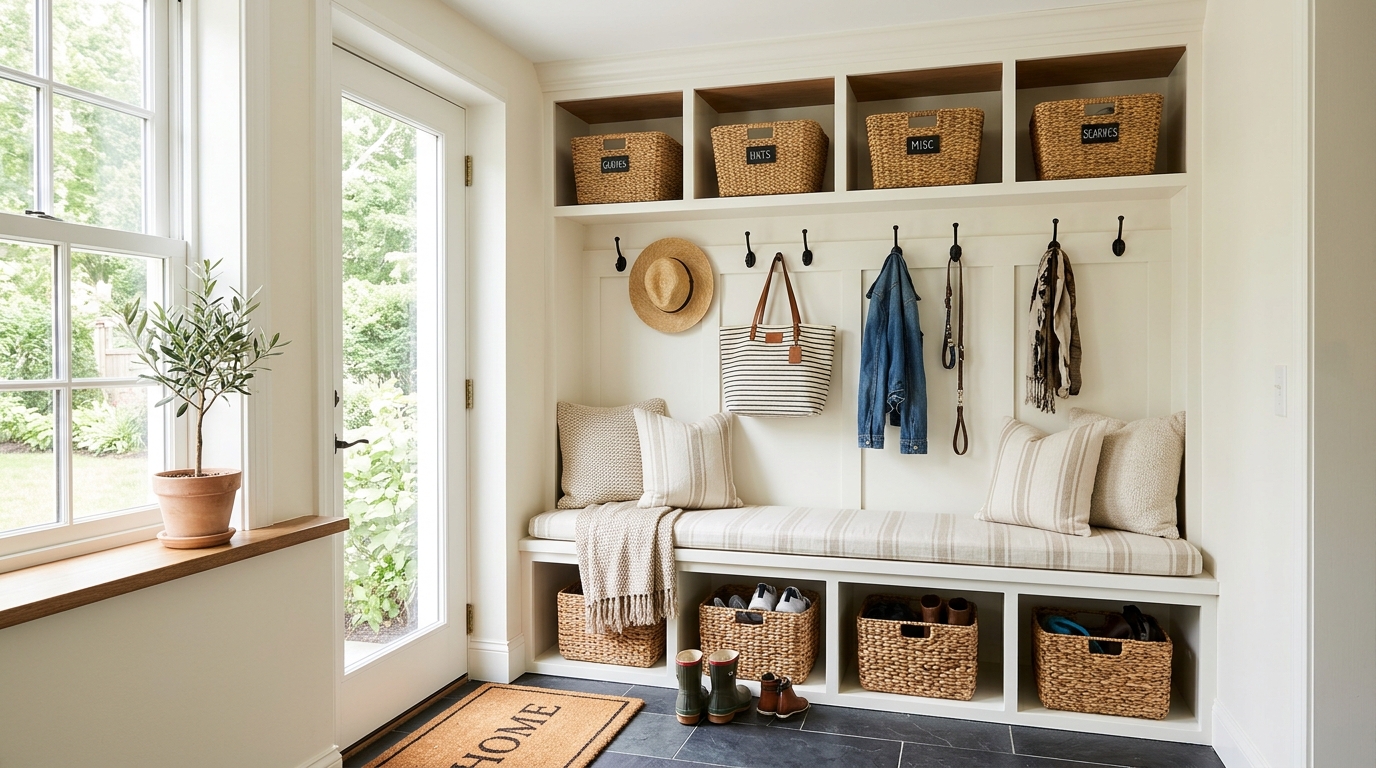
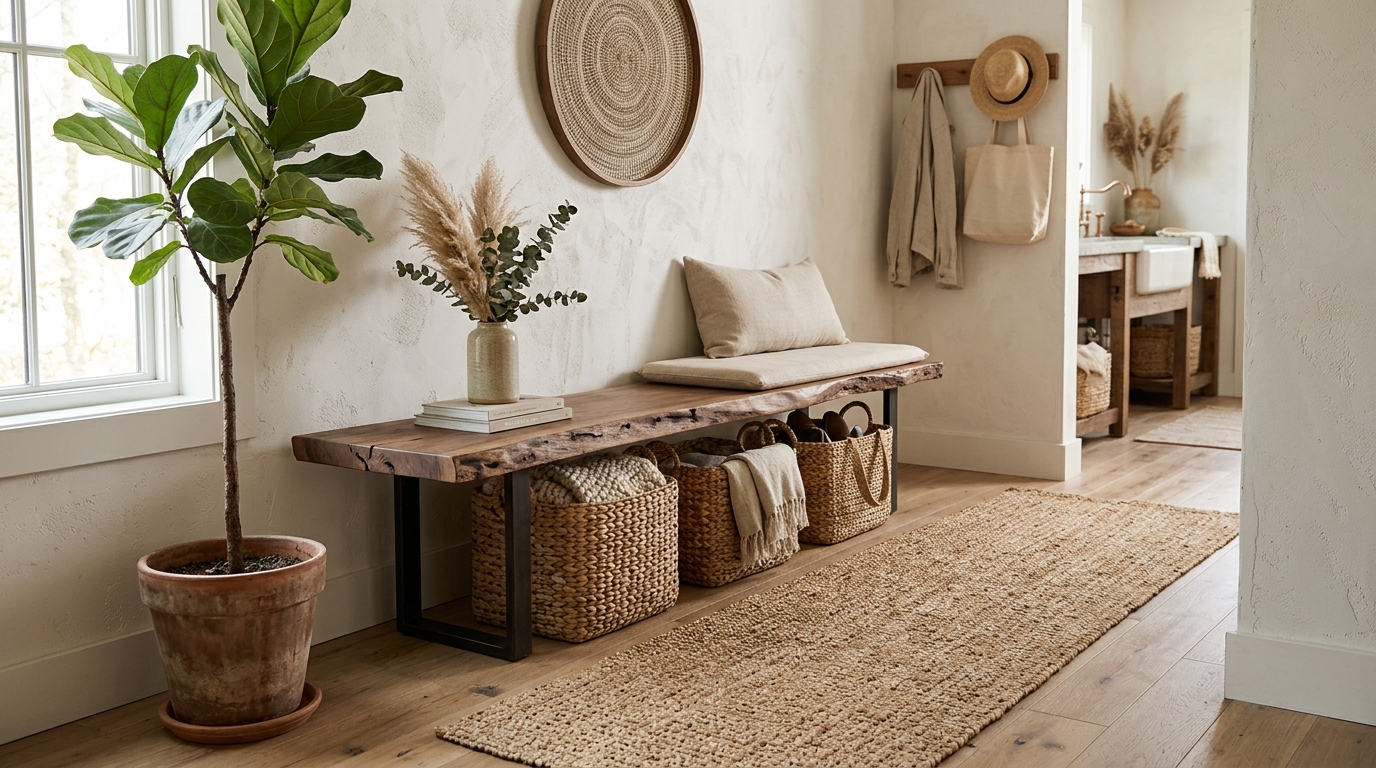
For those who prefer a more organic modern aesthetic, a rustic bench with baskets offers a softer, more textural approach. Woven seagrass or rattan bins provide ‘breathable’ storage—essential for athletic footwear that needs airflow—while adding a layer of tactile grounding to the space. The key is consistency; matching the baskets to the wood tone of the bench creates a cohesive, intentional look that aligns with the ‘Quiet Luxury’ trend currently dominating high-end interiors.
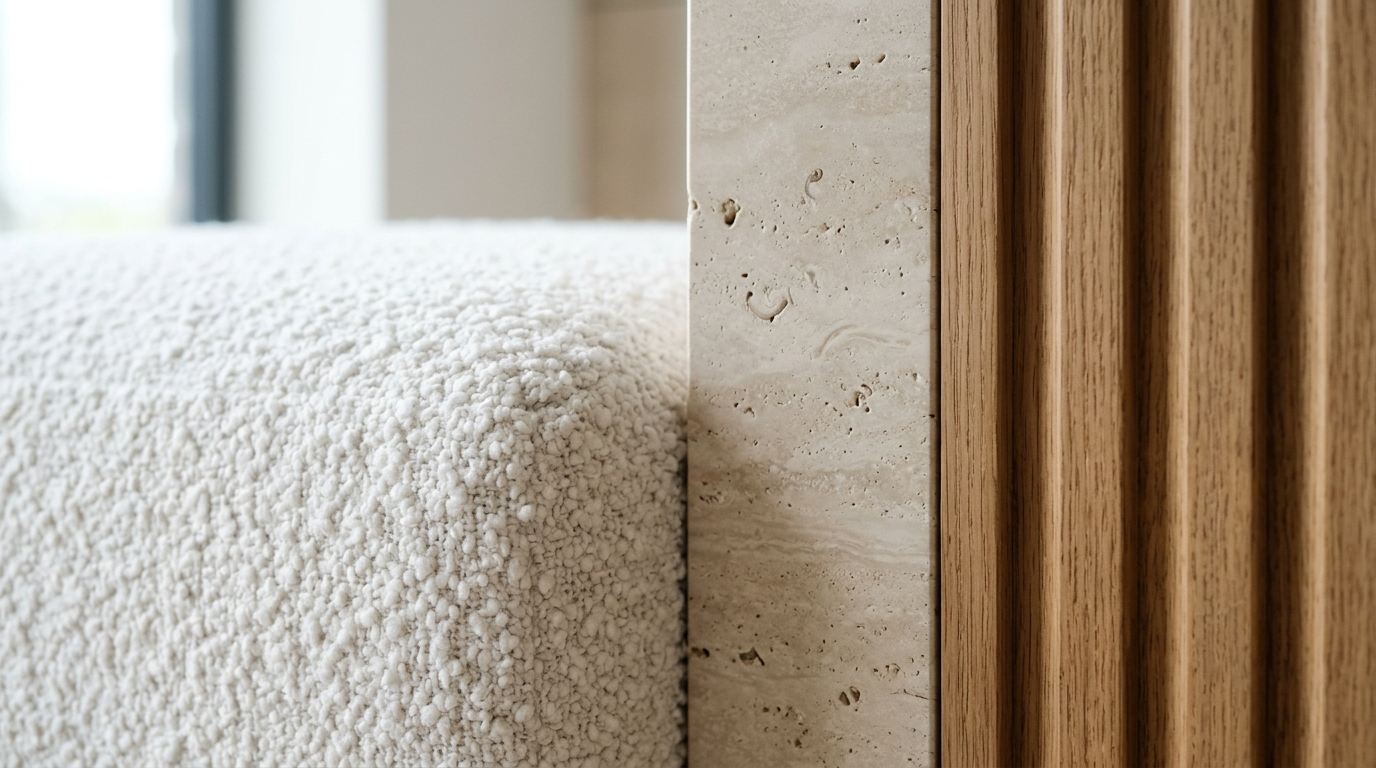
Materiality: Fluted Oak, Honed Travertine, and Performance Velvets
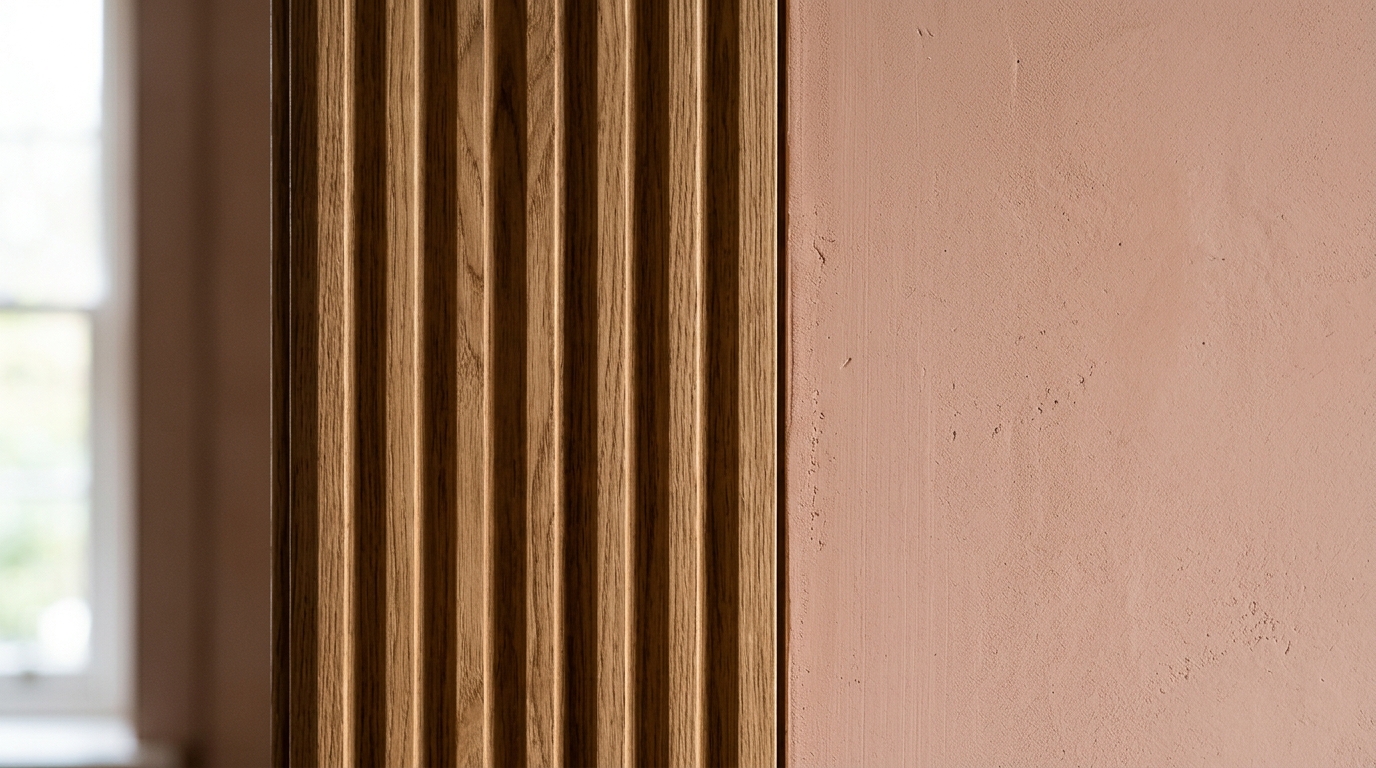
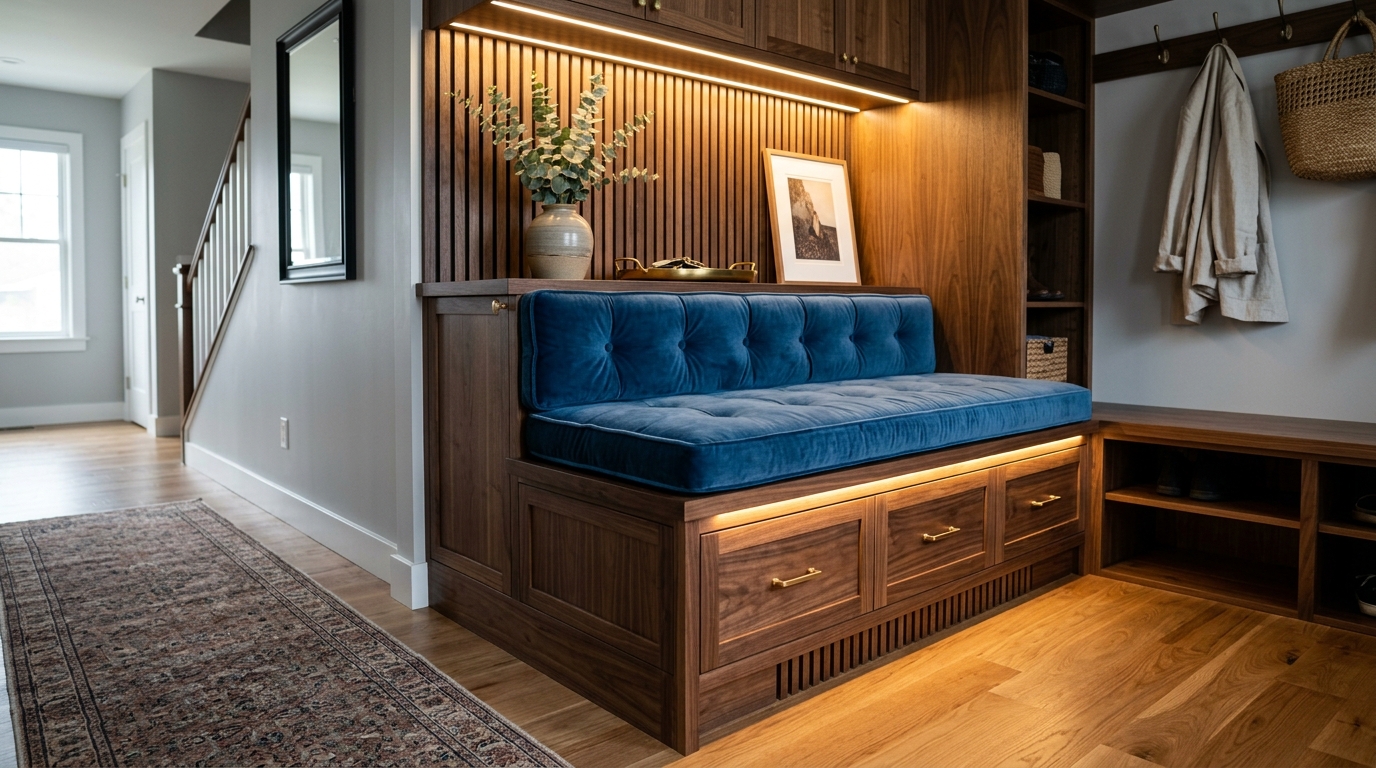
The foyer is a high-traffic environment subjected to moisture, grit, and constant friction. Consequently, material choice is not just about aesthetics—it is about resilience. We are seeing a massive shift toward fluted oak and tambour detailing, which adds architectural rhythm to the bench facade. When finished with a high-quality matte sealer, these woods hold up beautifully against the occasional damp umbrella. For a more opulent touch, a bench topped with honed travertine or Belgian bluestone offers an indestructible surface that feels cool to the touch and incredibly sophisticated.
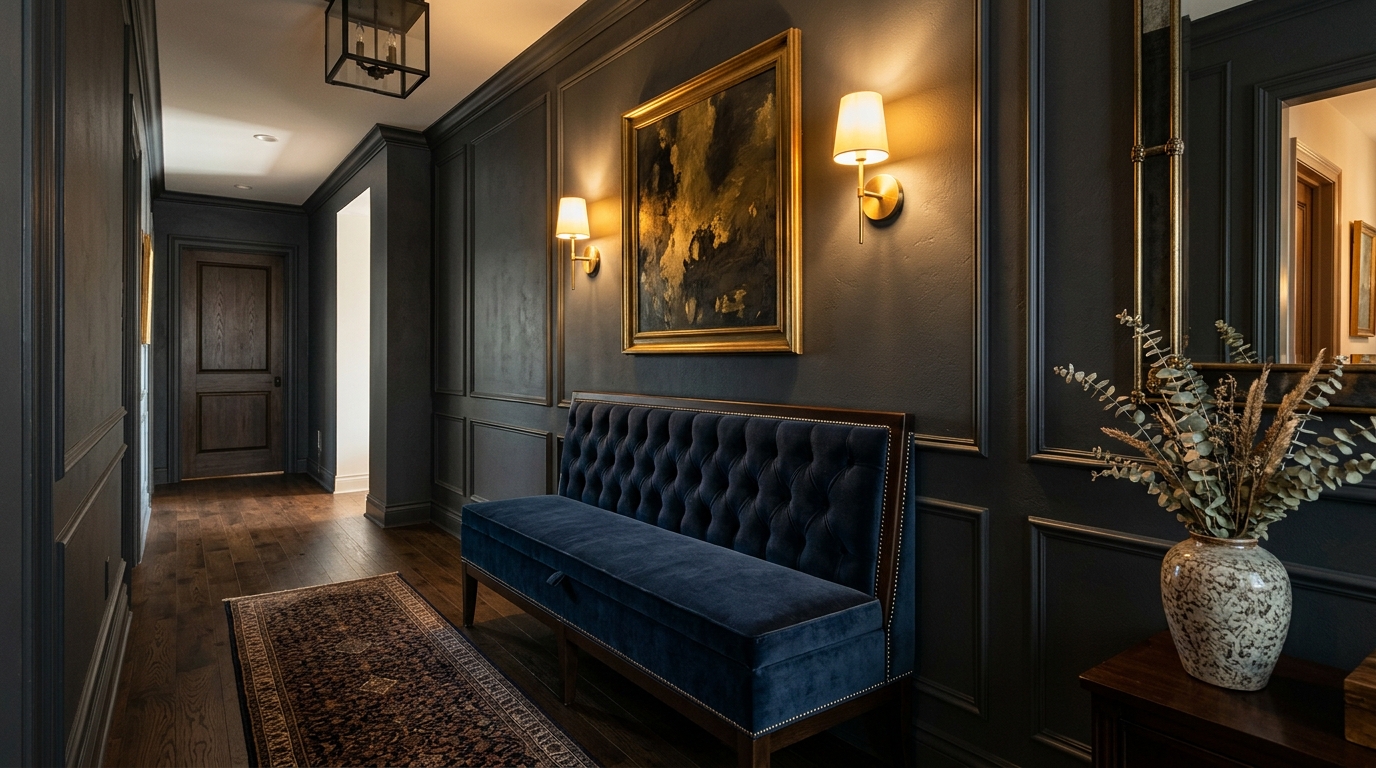
If comfort is your priority, an upholstered bench with hidden shoe rack capabilities is the way to go. Use performance fabrics—look for high Martindale rub counts (30,000+) and Oeko-Tex certifications. Colors like Benjamin Moore’s Swiss Coffee or a soft, earthy clay provide a neutral canvas that doesn’t show every speck of dust. These textiles bring a softness to the ‘hard’ surfaces of the entryway, dampening the acoustics of a ringing doorbell or clattering keys.
The Psychology of the Drop Zone: Designing for Mental Clarity
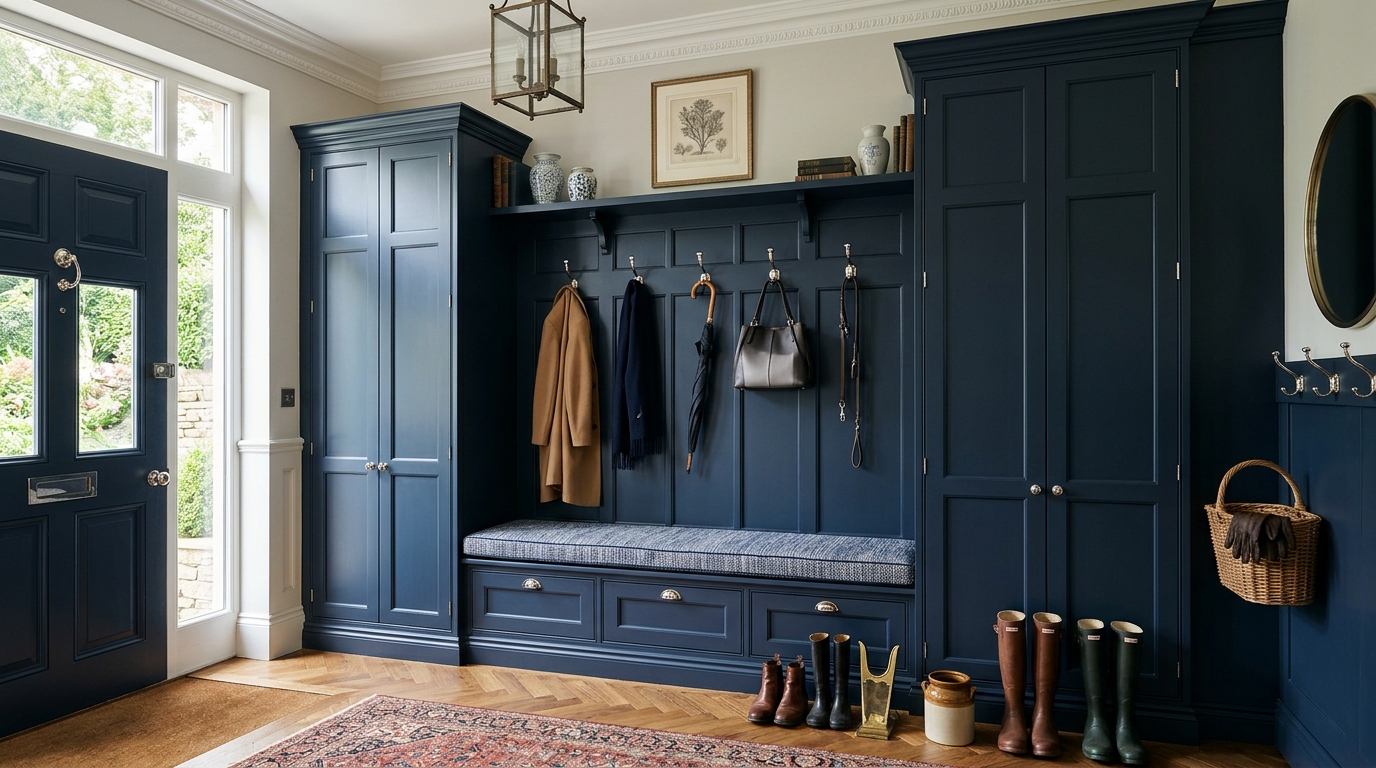
There is a profound psychological benefit to a well-ordered entry. When you walk through the door and immediately have a designated place to sit and stow your belongings, your cortisol levels drop. This is the ‘decompression’ phase of the home. A disorganized hallway creates visual noise that follows you into the living room. By integrating a dedicated mudroom bench with cubbies, you create a physical boundary for the ‘outside world.’ Each family member should ideally have their own ‘zone’—a specific cubby or hook—which fosters a sense of ownership and accountability for the clutter.
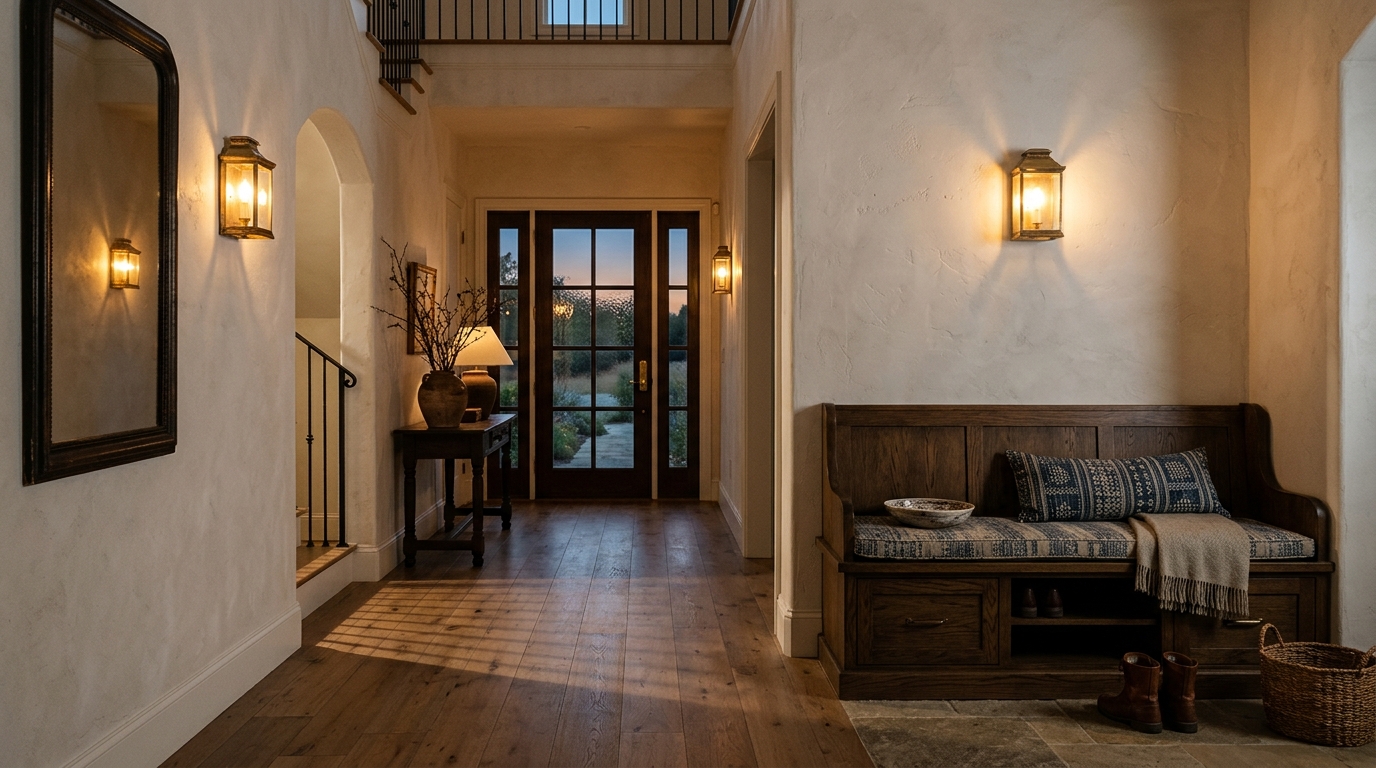
Lighting the Threshold: Setting the Atmospheric Mood
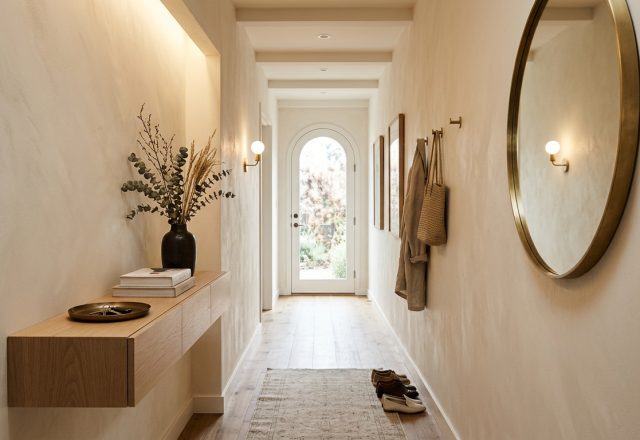
Lighting is often the missing ingredient in foyer design. To achieve that Architectural Digest-level glow, you must move beyond the basic overhead flush-mount. Layered lighting is essential. A pair of wall sconces flanking the bench, positioned at roughly 60 inches from the floor, creates a soft, eye-level wash of light that is incredibly welcoming. For the bulb temperature, 2700K (warm ambient) is the gold standard for residential entries. It mimics the warmth of a sunset and makes the natural wood grains of your furniture pop.
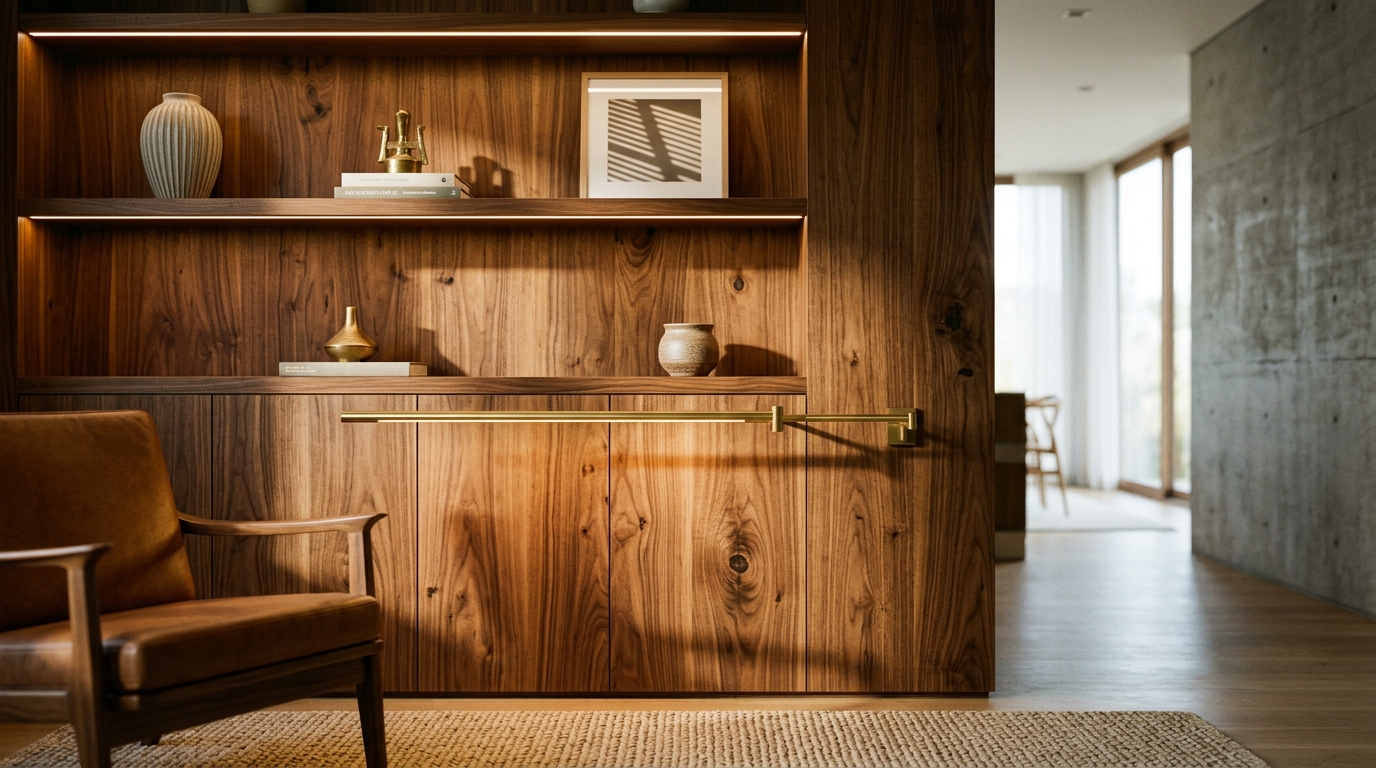
If you have integrated shelving above your seating, consider a recessed LED strip with a high CRI (Color Rendering Index) of 90+. This ensures that the colors of your coats and bags look true to life and provides a helpful task light for finding that lost set of keys at the bottom of a tote bag. This ‘shadow play’ adds depth to the entryway, making even a tiny apartment foyer feel like a grand gallery.
Refined Transitions: The Final Polish
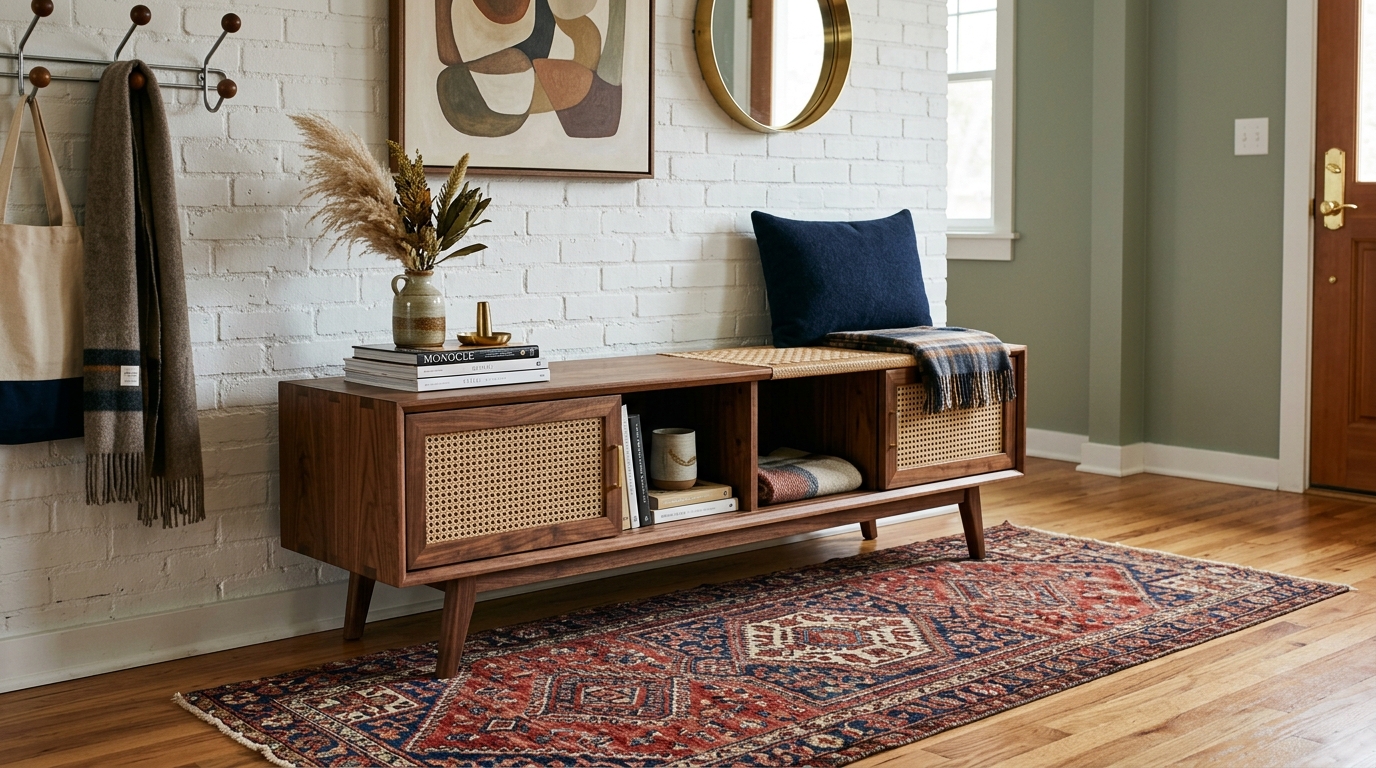
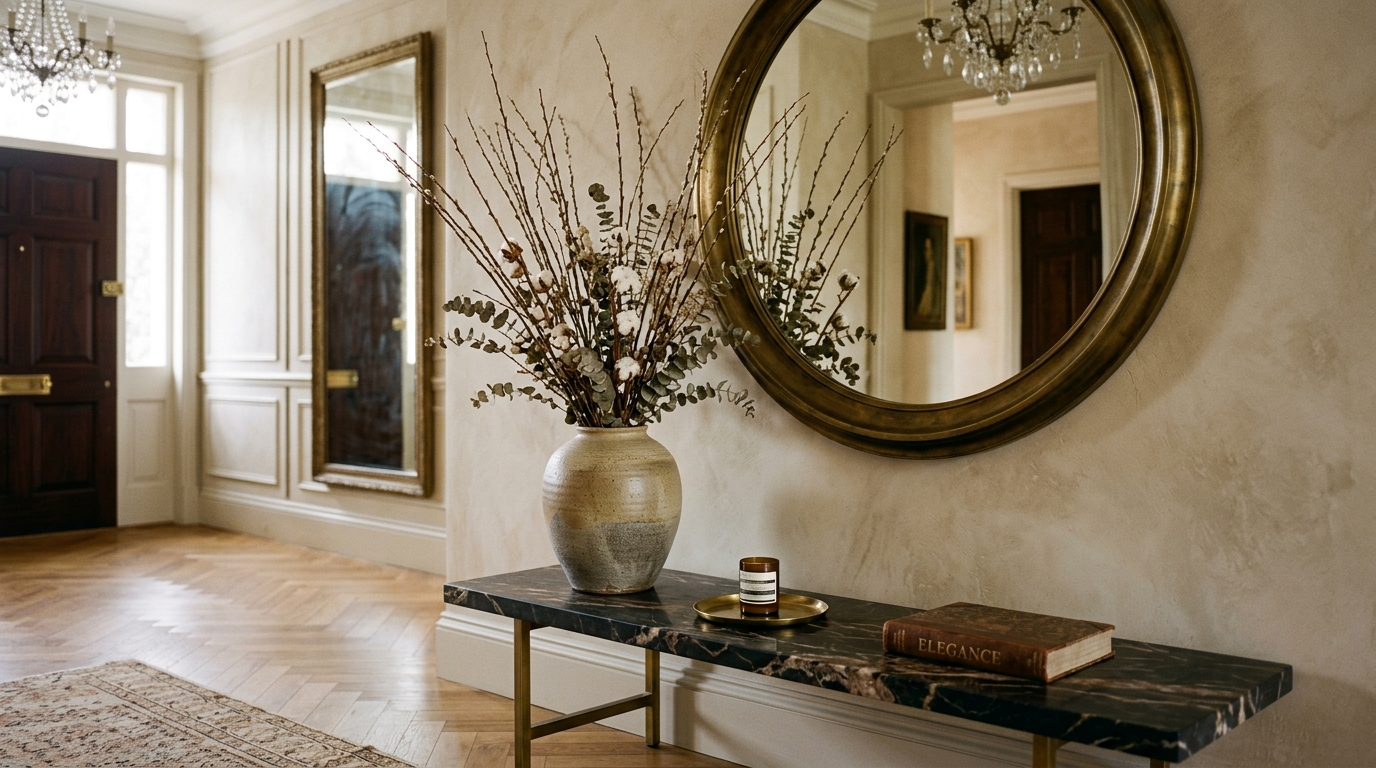
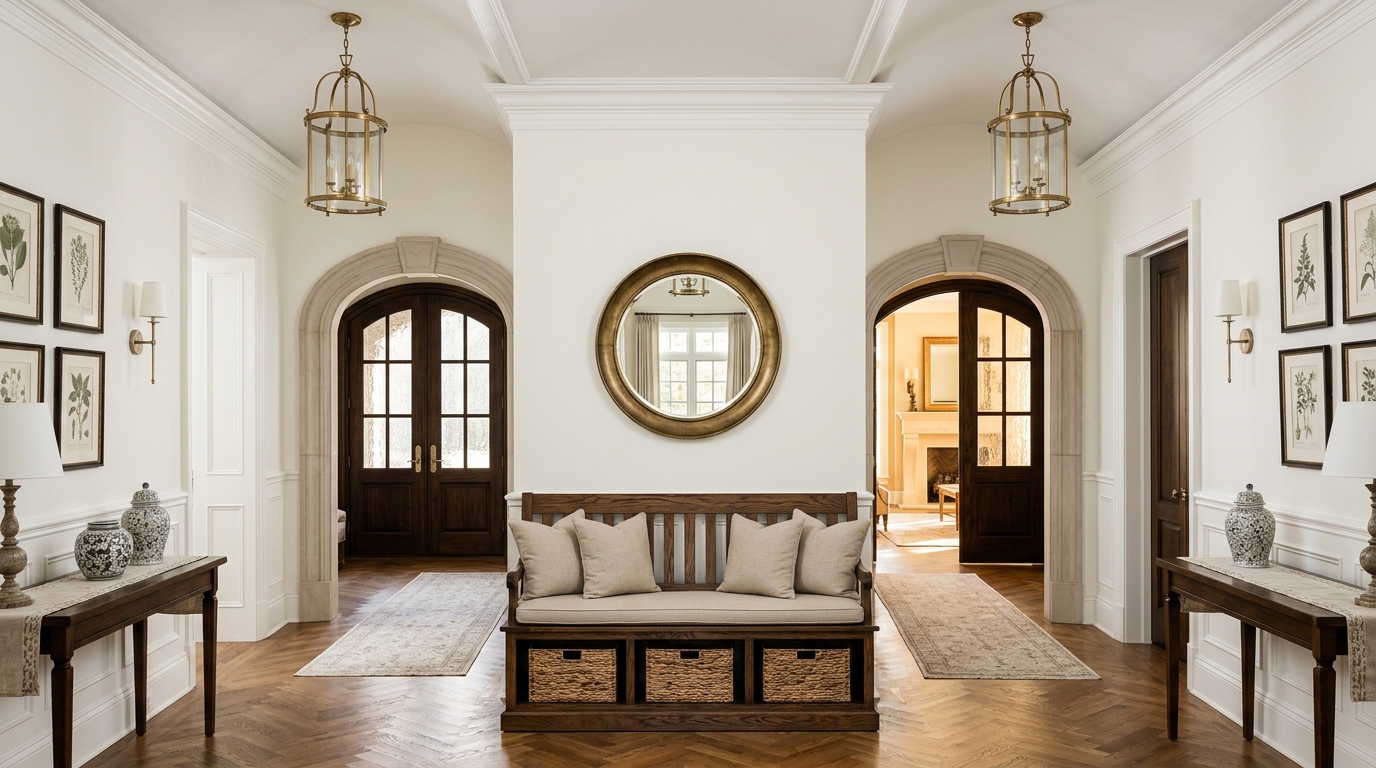
To truly elevate the space, look at the sightline alignment. When you stand in your living room and look toward the front door, what do you see? Your entryway bench with storage should serve as an anchor for a larger vignette. Perhaps it is paired with a large circular mirror to bounce light, or a single oversized ceramic vase with a structural branch. These elements provide the ‘height’ needed to balance the low horizontal line of the bench.

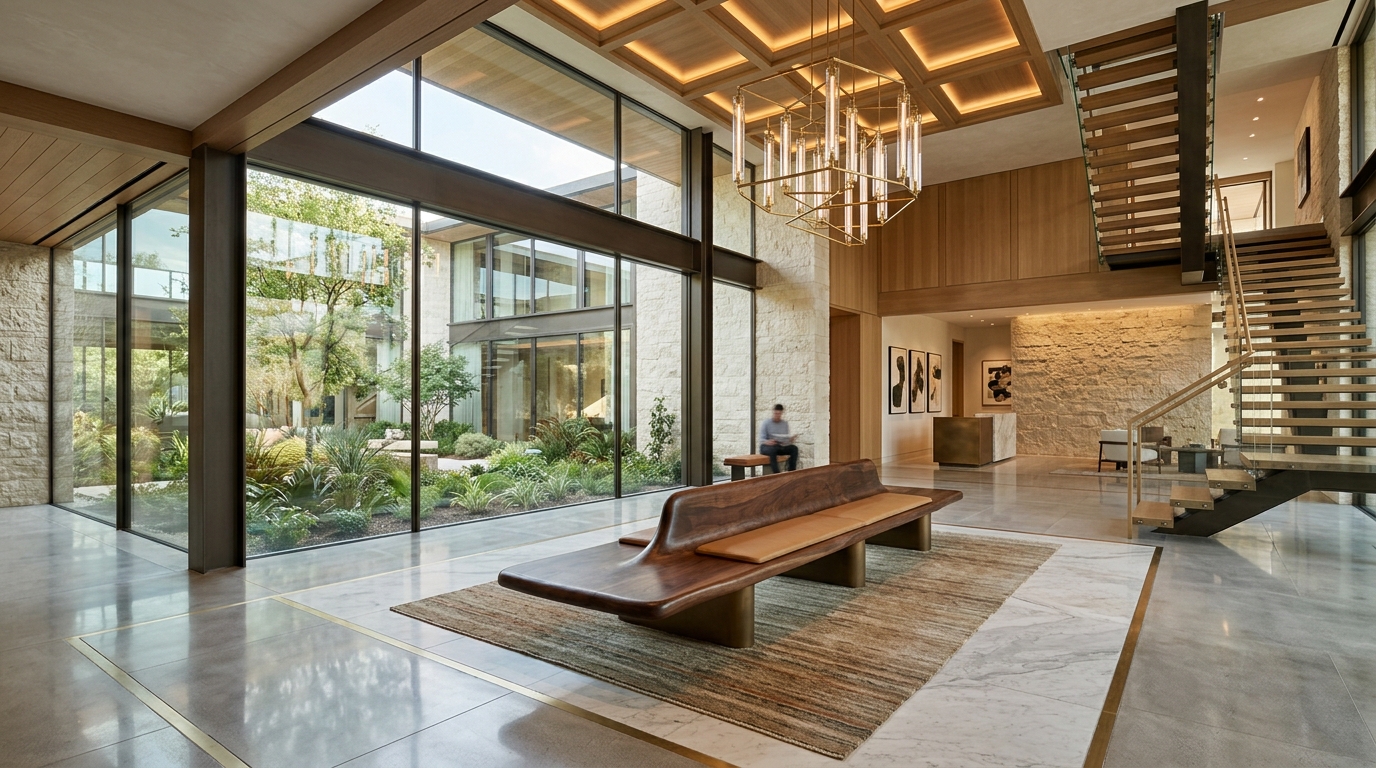
Think about the tactile experience of the floor beneath the bench. A low-profile jute rug or a vintage runner provides a non-slip surface and adds a final layer of texture. This is the ‘landing strip’ that defines the zone. By focusing on the intersection of ergonomics, materiality, and spatial flow, the foyer becomes more than just a passage; it becomes a curated experience that sets the tone for the rest of your sanctuary. As we move through our homes, these small moments of intentional design—the ease of a soft seat, the hidden drawer for a pair of slippers—remind us that luxury is not just about how a space looks, but how effortlessly it allows us to live. The humble entryway bench with storage is, in many ways, the most important piece of furniture you will ever own; it is the first thing that greets you and the last thing that supports you as you head out to face the world.
Editorial Silo • Recommended Architecture Studies
- Fabulous Designer Foyers: Masterful Narrow Entryway Ideas & Spatial Flow — Archival Design Case Study
- The Tactile Aesthetic of Narrow Entryway: Materials, Moods & Lighting Kelvin — Archival Design Case Study
Architectural Inspiration Lookbook
A high-resolution study in spatial proportions, tactile materiality, and light choreography curated for enduring modern living.
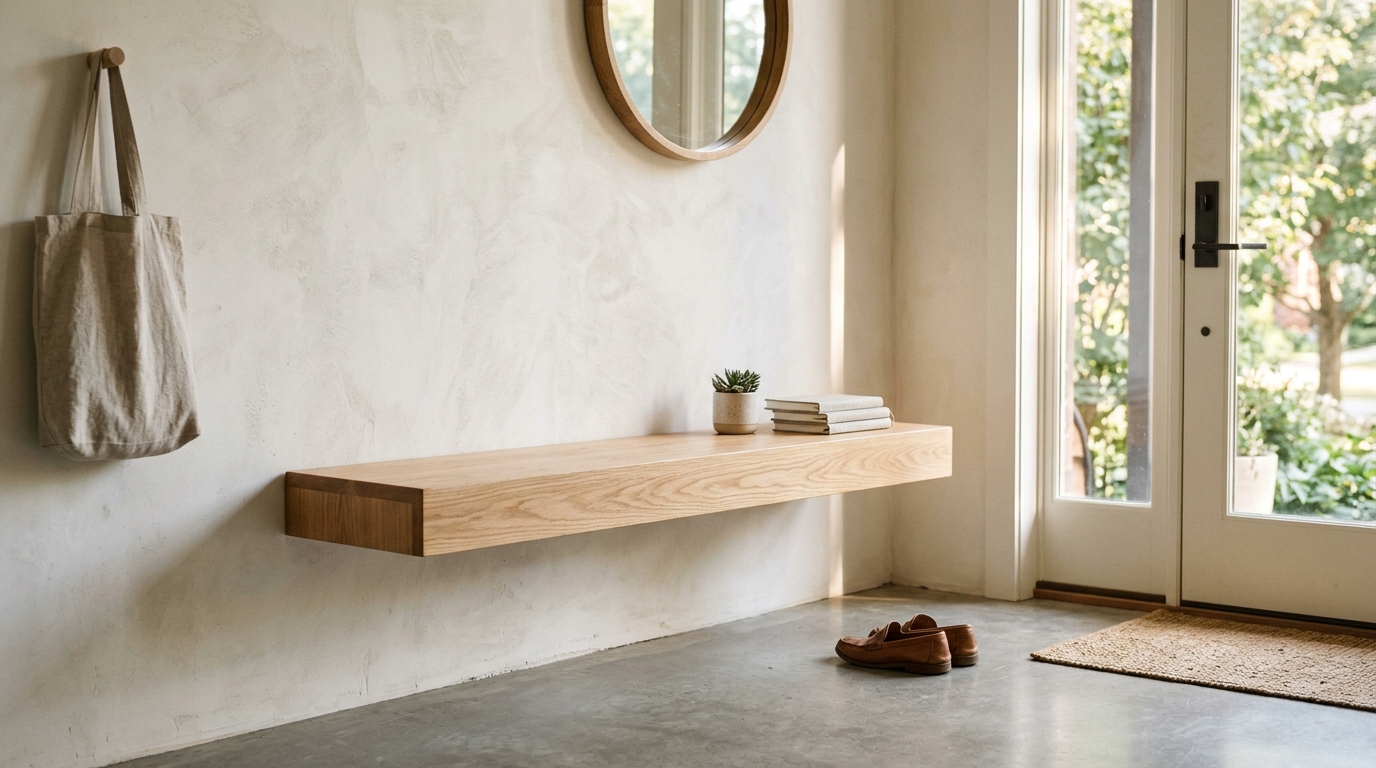

Curated Visual Lookbook
Design Gallery & Spatial Studies
A visual curation of architectural arrangements, lighting concepts, and material palettes featured in this space.