In the world of interior design, there is a pervasive myth that organization requires more objects. We are told that if we just find the right marble tray, the perfect ceramic canister, or a sleek three-piece set of vanity accessories, our bathrooms will finally achieve that elusive state of Zen. But let us be honest: a ‘hidden’ mess inside a pretty jar is still a mess on your counter. The true peak of bathroom counter organization is not the addition of smarter storage—it is the total eradication of the object itself. This is the philosophy of the ‘Invisible Bathroom,’ an architectural movement that prioritizes the purity of materials over the convenience of clutter.
The Fallacy of the Functional Accessory
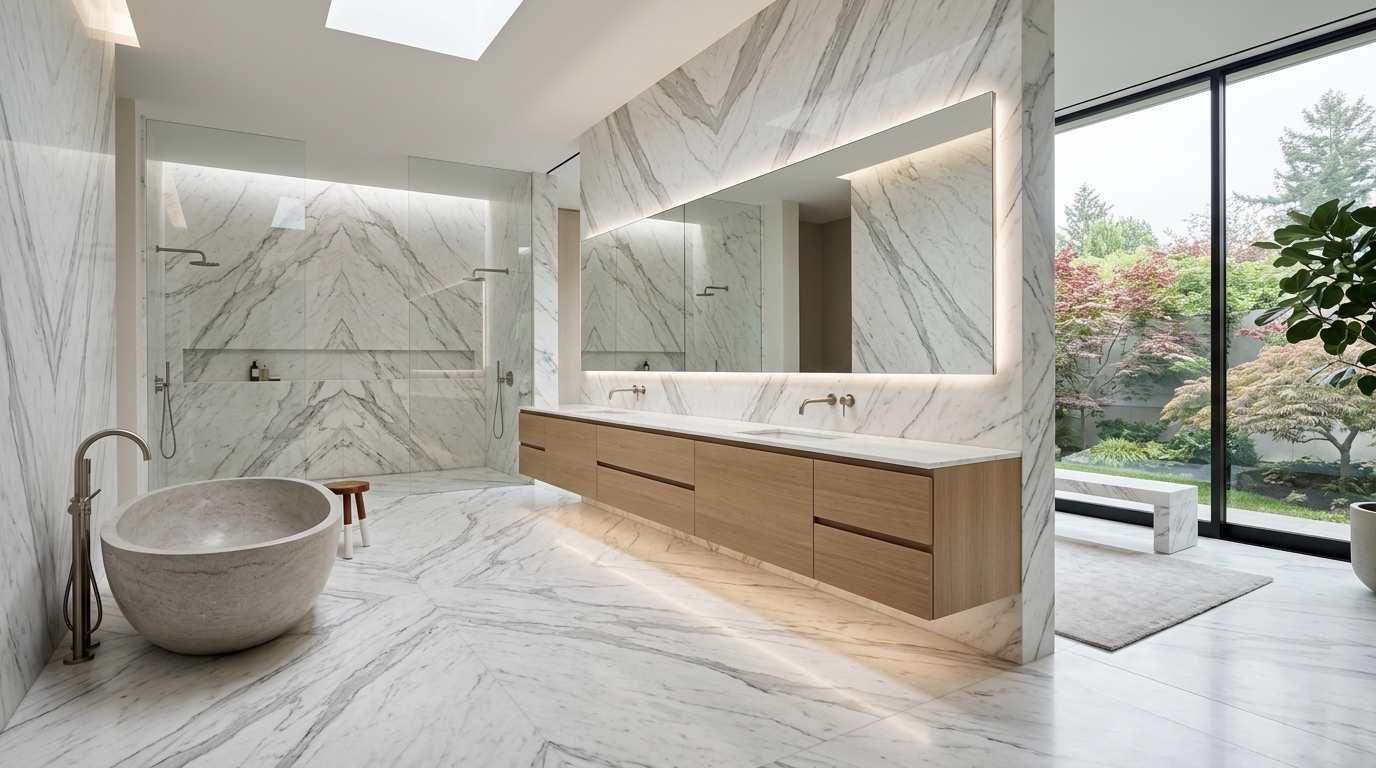
The traditional approach to bathroom design often treats the countertop as a staging area. We place our most frequently used items—soaps, lotions, toothbrushes—within arm’s reach. While articles often suggest ‘resetting’ the counter with curated pieces to hide the ‘ugly’ essentials, this approach ignores a fundamental psychological truth: visual noise is cumulative. Every object you add to a surface, no matter how beautiful, creates a silhouette that the eye must process. When you invest thousands of dollars in a hand-selected slab of Calacatta Borghini or honed Taj Mahal quartzite, you are paying for the movement of the veins and the soul of the stone. Why, then, would you obscure that artistry with a soap pump?
The Psychological Burden of Surface Clutter
Clutter isn’t just physical; it’s cognitive. In a space designed for rejuvenation—the bathroom—every unnecessary item acts as a micro-distraction. The ‘Counterless’ movement argues that by clearing the deck entirely, we allow the brain to focus on the sensory experience of the space: the temperature of the water, the texture of the stone, and the silence of the room. The goal is to move away from ‘organizing’ toward ‘omitting.’
The Architecture of Absence: Beyond the Vanity
So, where does the stuff go? The shift from countertop organization to the invisible bathroom requires a structural rethink. We are moving away from surface-level solutions and into the ‘stud-bay’—the literal bones of the walls. This is where the true revolution in bathroom counter organization happens.
Recessed Wall Storage and Stud-Bay Cabinets
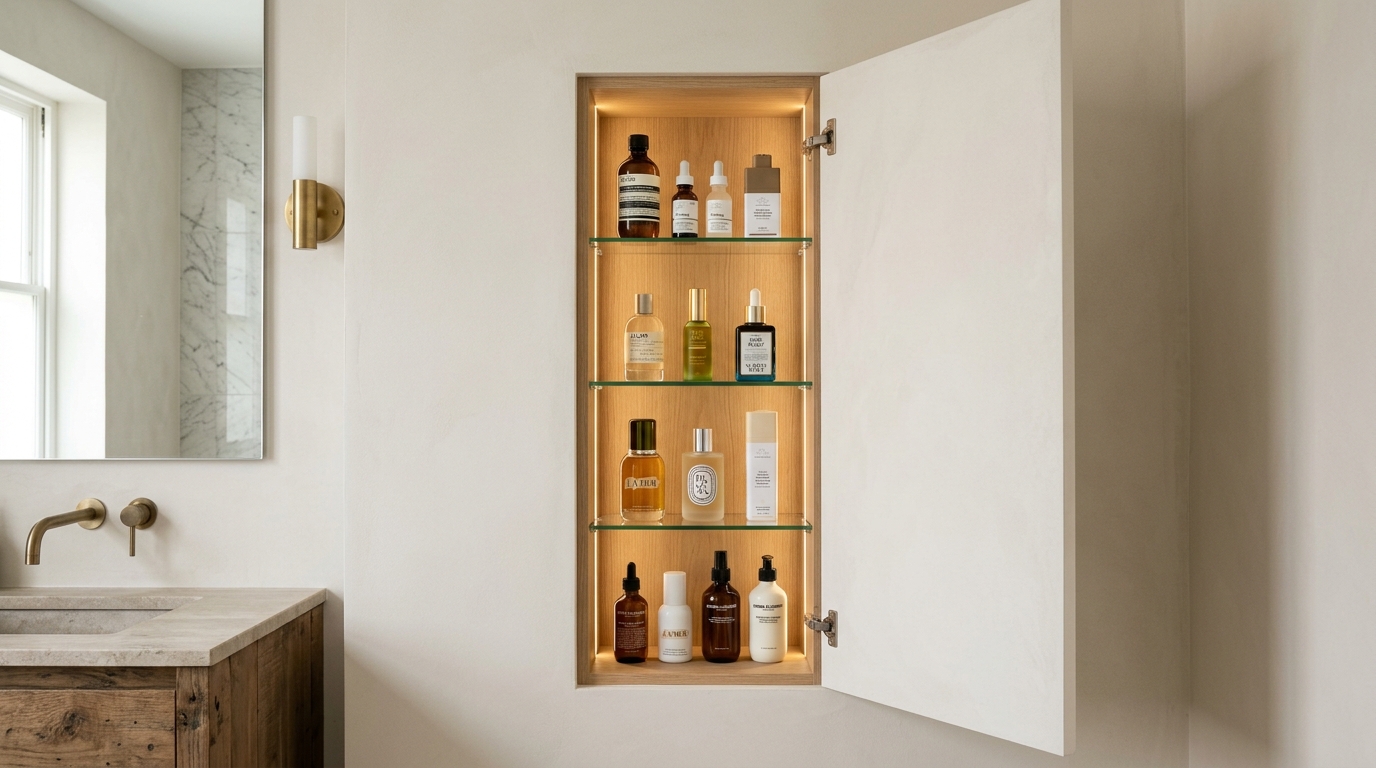
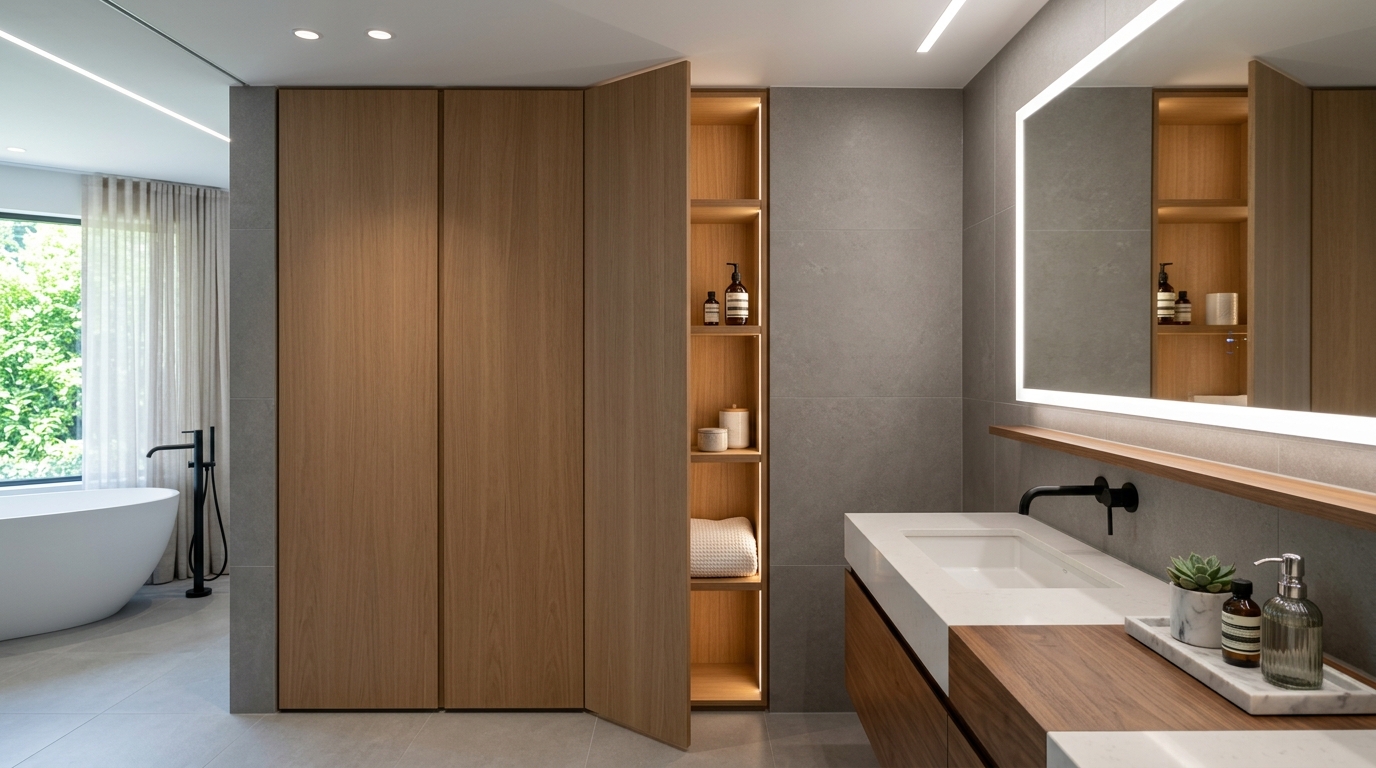
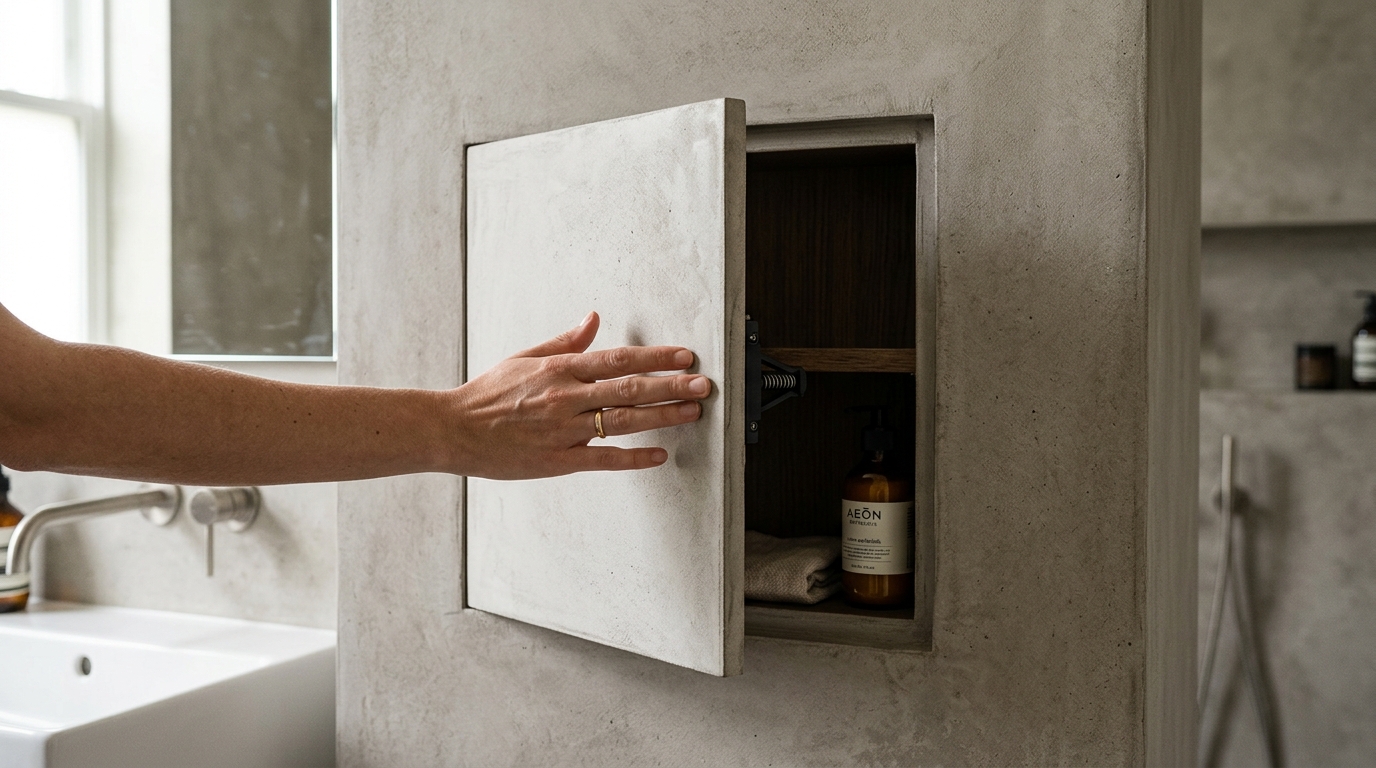
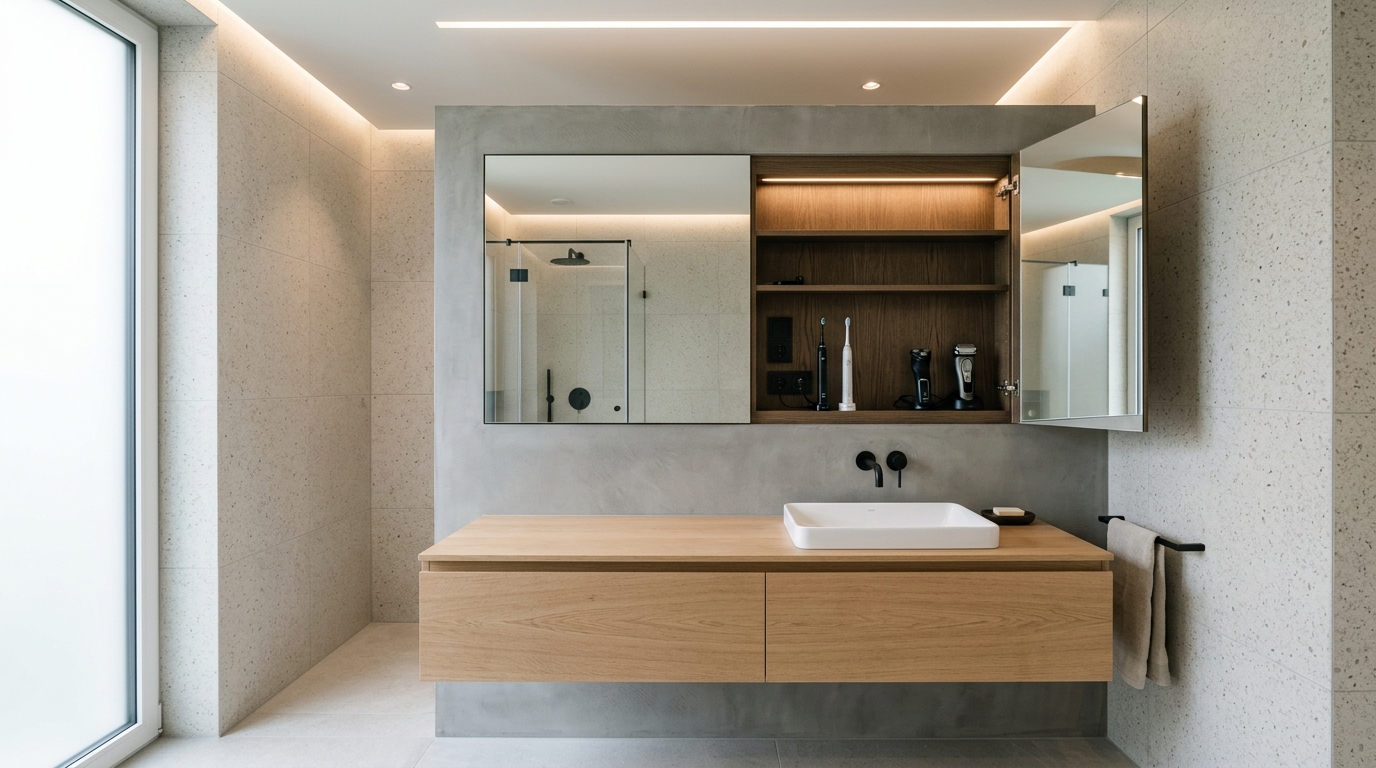
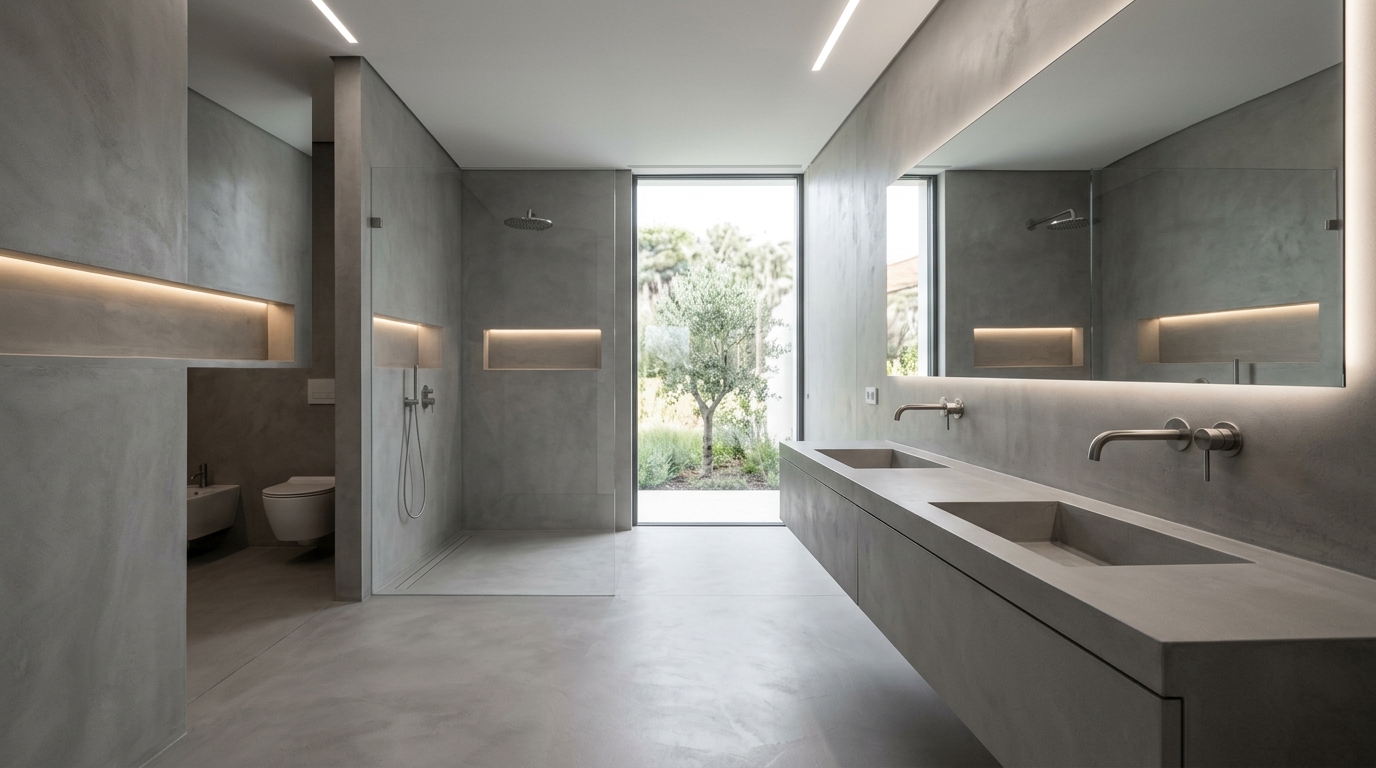
Instead of a bulky medicine cabinet that protrudes into your space, the modern minimalist utilizes the void between wall studs. A floor-to-ceiling recessed cabinet, finished with the same material as the walls, can vanish entirely when closed. These ‘invisible’ units offer ten times the storage of a countertop tray while keeping the visual field 100% clear. By using touch-latch or ‘handle-free’ technology, these storage hubs remain flush, maintaining the architectural integrity of the room.
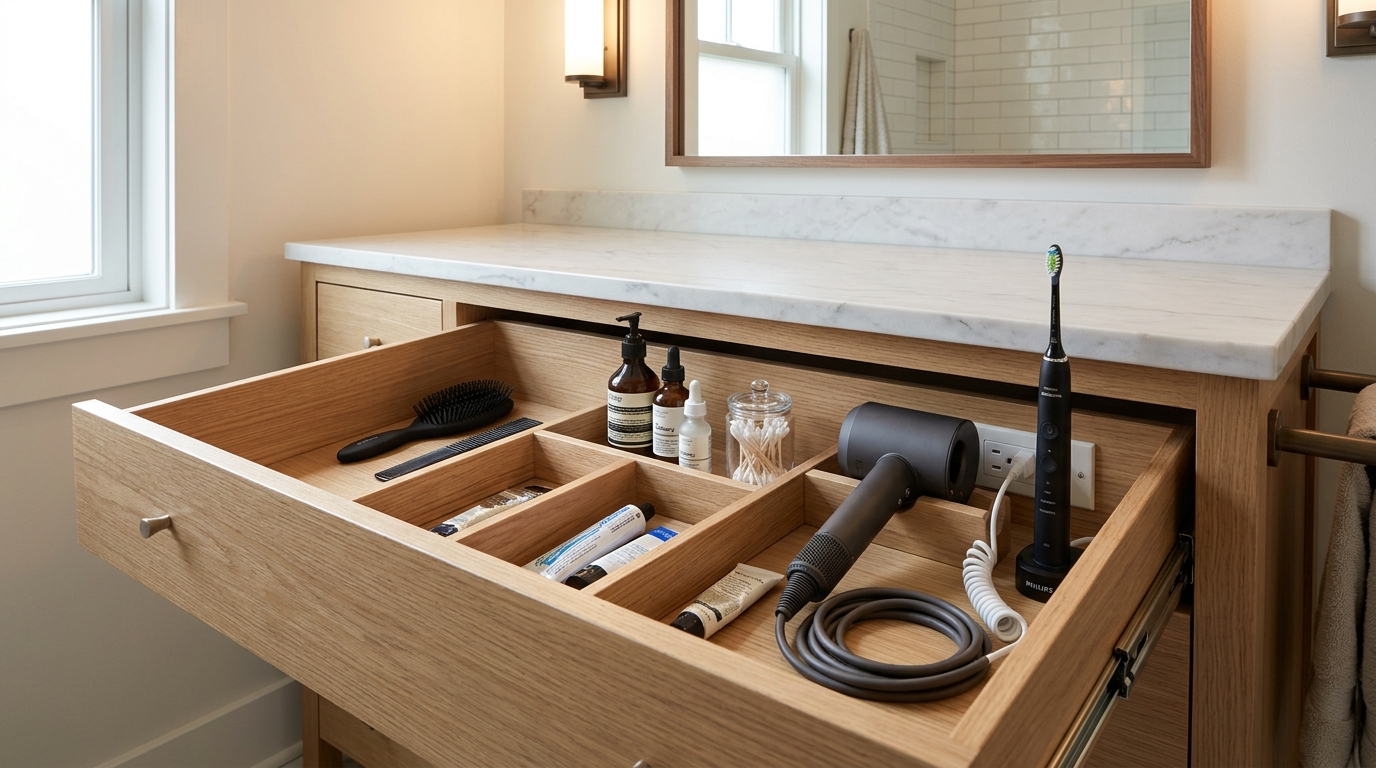
- Integrated Power Stations: A counterless bathroom requires outlets inside the cabinets. This allows electric toothbrushes and razors to charge out of sight, eliminating the dreaded ‘tangle of cords.’
- Adjustable Glass Shelving: Transparency inside the storage unit reduces visual weight and makes it easier to find items without digging.
- Internal Lighting: Motion-activated LED strips inside recessed niches ensure functionality without needing external lamps.
The Luxury of the Clear View
Consider the difference between a high-end spa and a residential master bath. The spa feels luxurious because there is nothing for the eye to snag on. This ‘hospitality-grade’ minimalism is now entering the home. When you remove the soap dish, the tissue box, and the perfume tray, the vanity becomes a piece of sculpture rather than a utility shelf. This is the ultimate expression of bathroom counter organization: the total absence of the mundane.
Showcasing High-End Materials
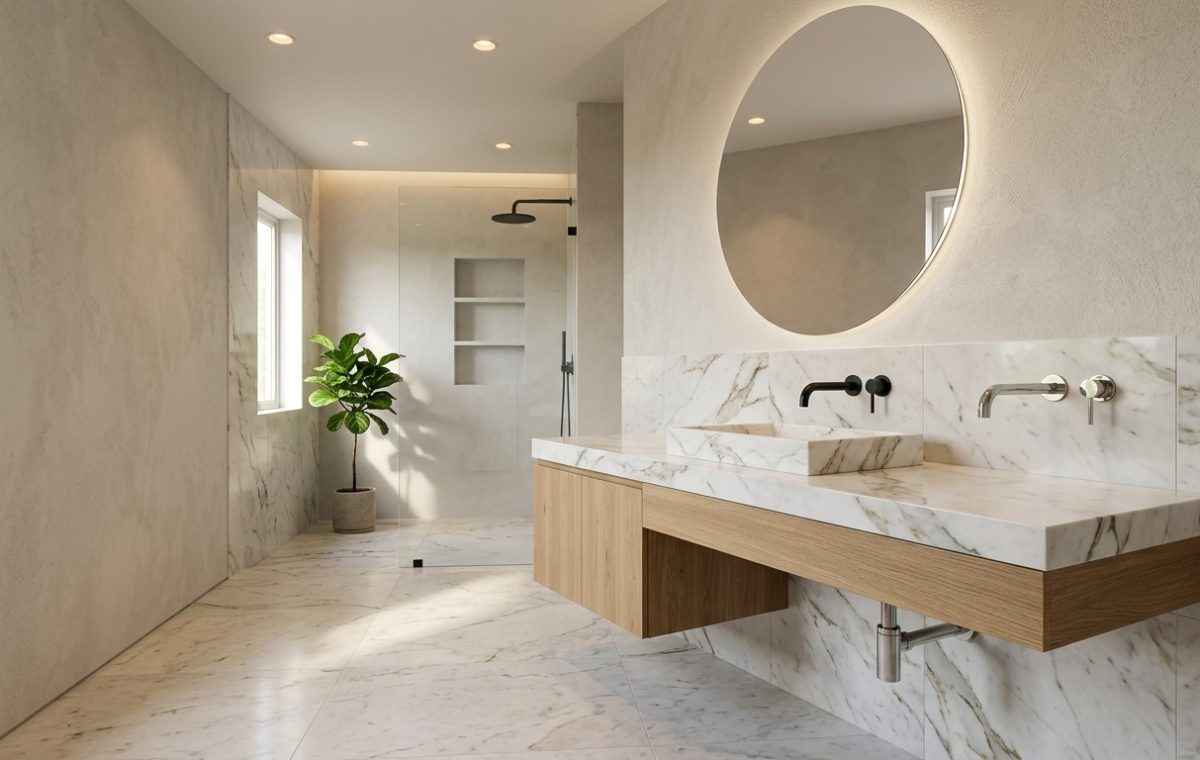
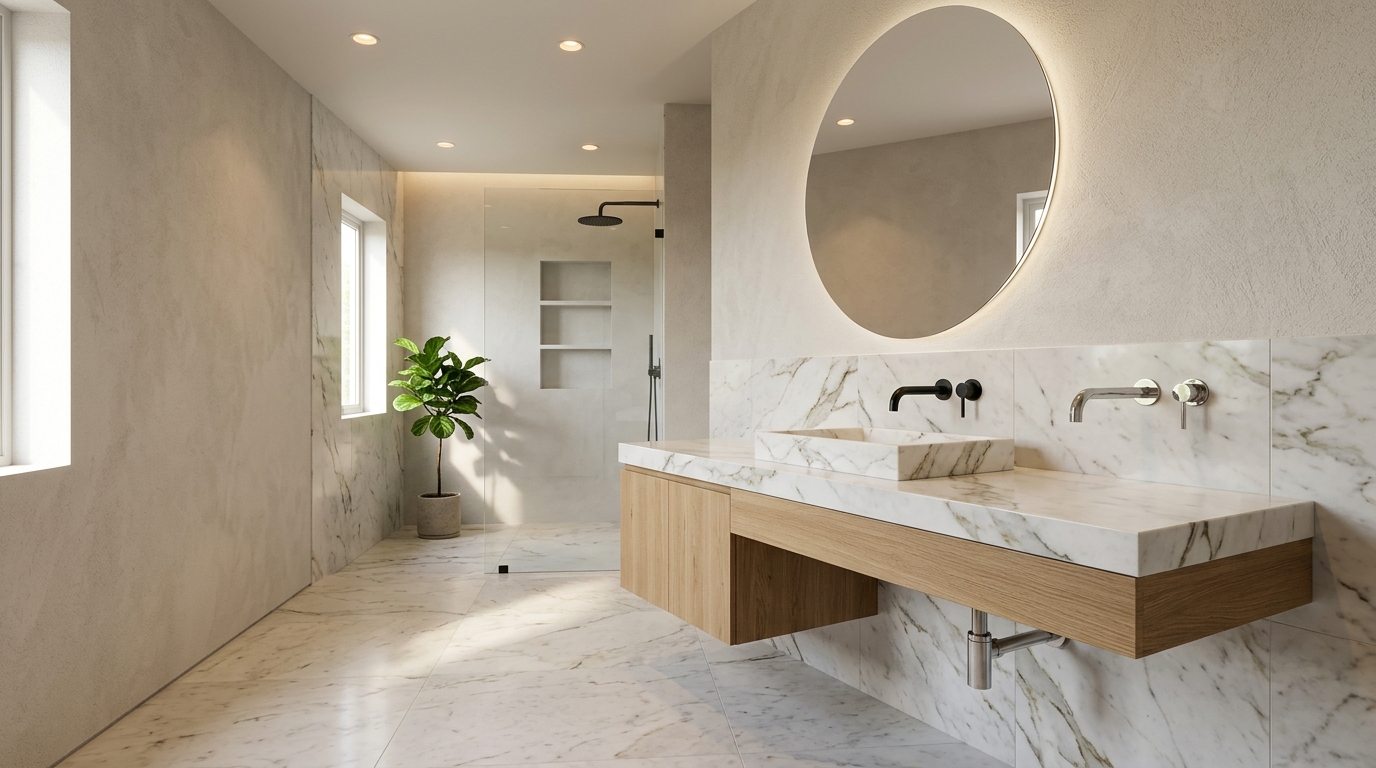
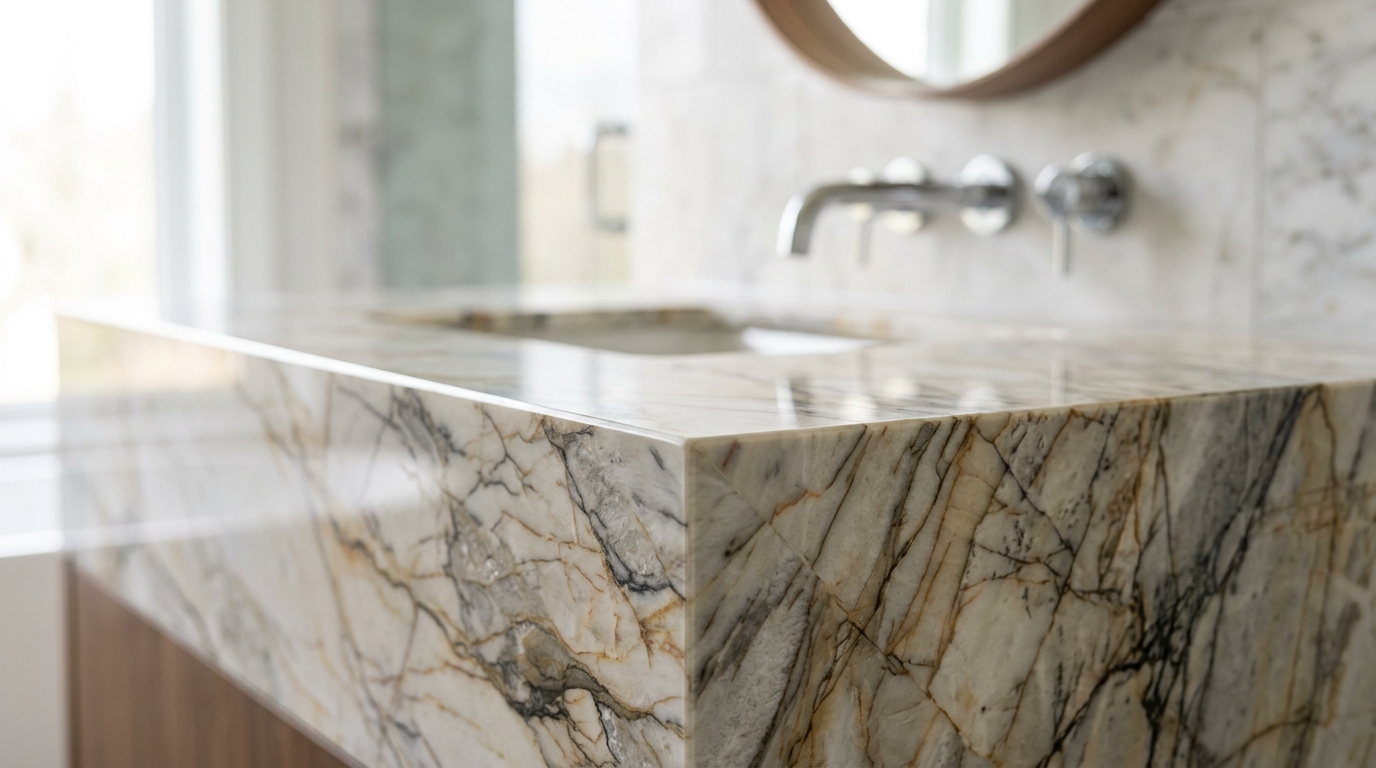
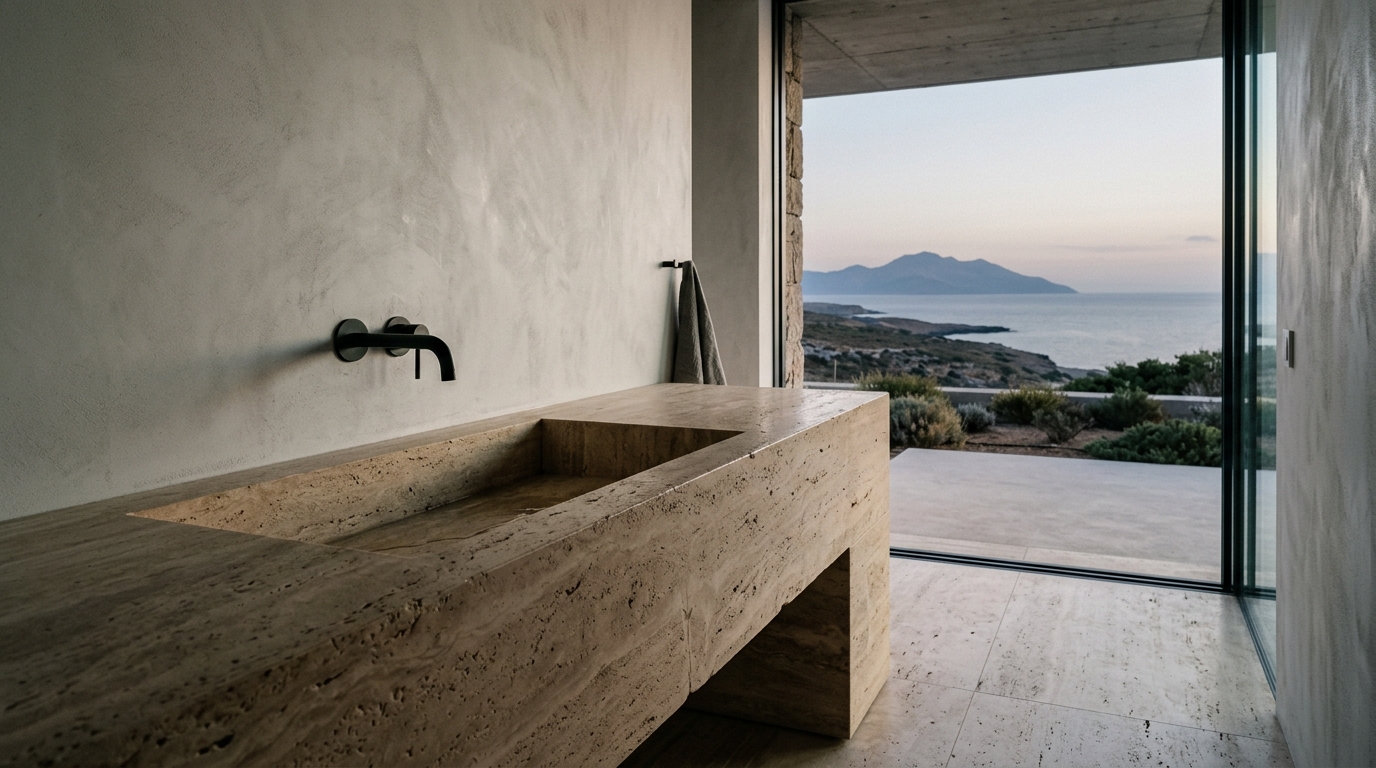
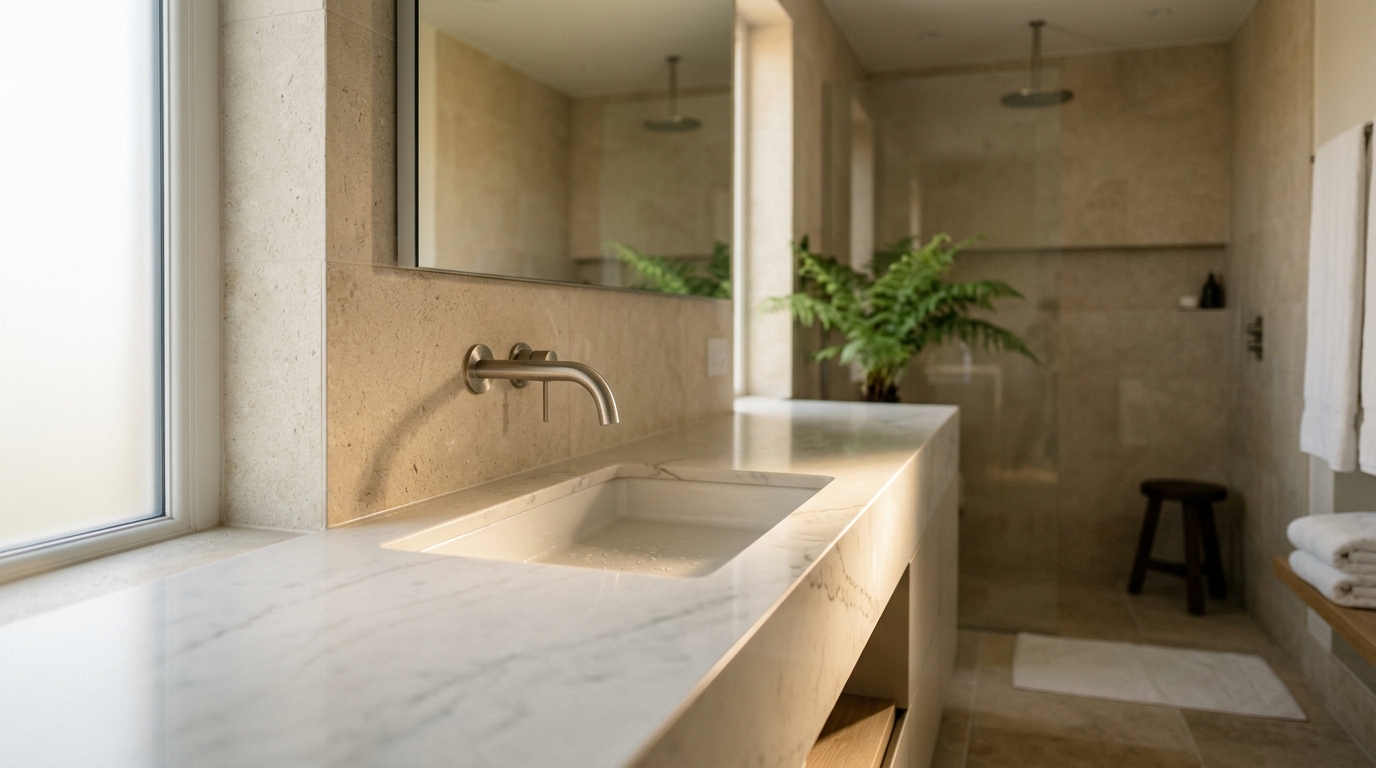
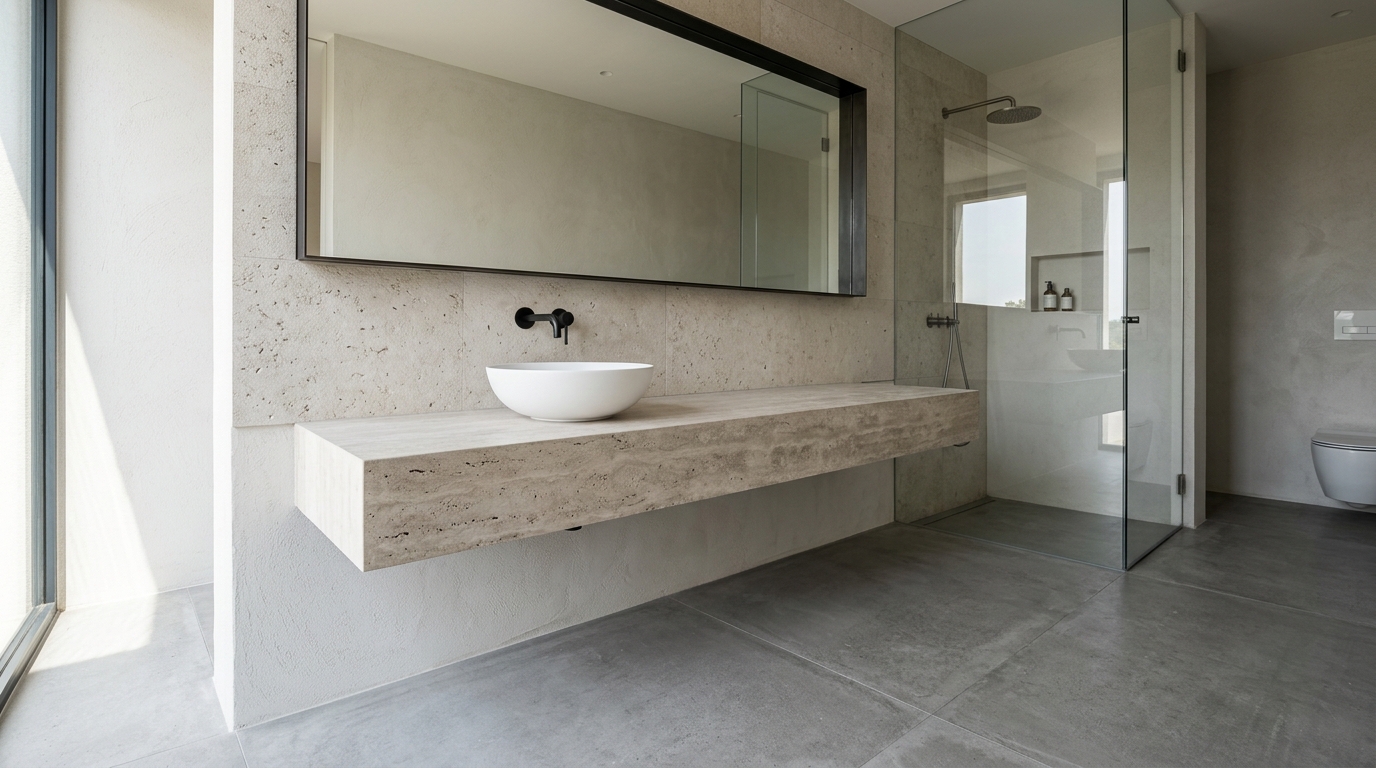
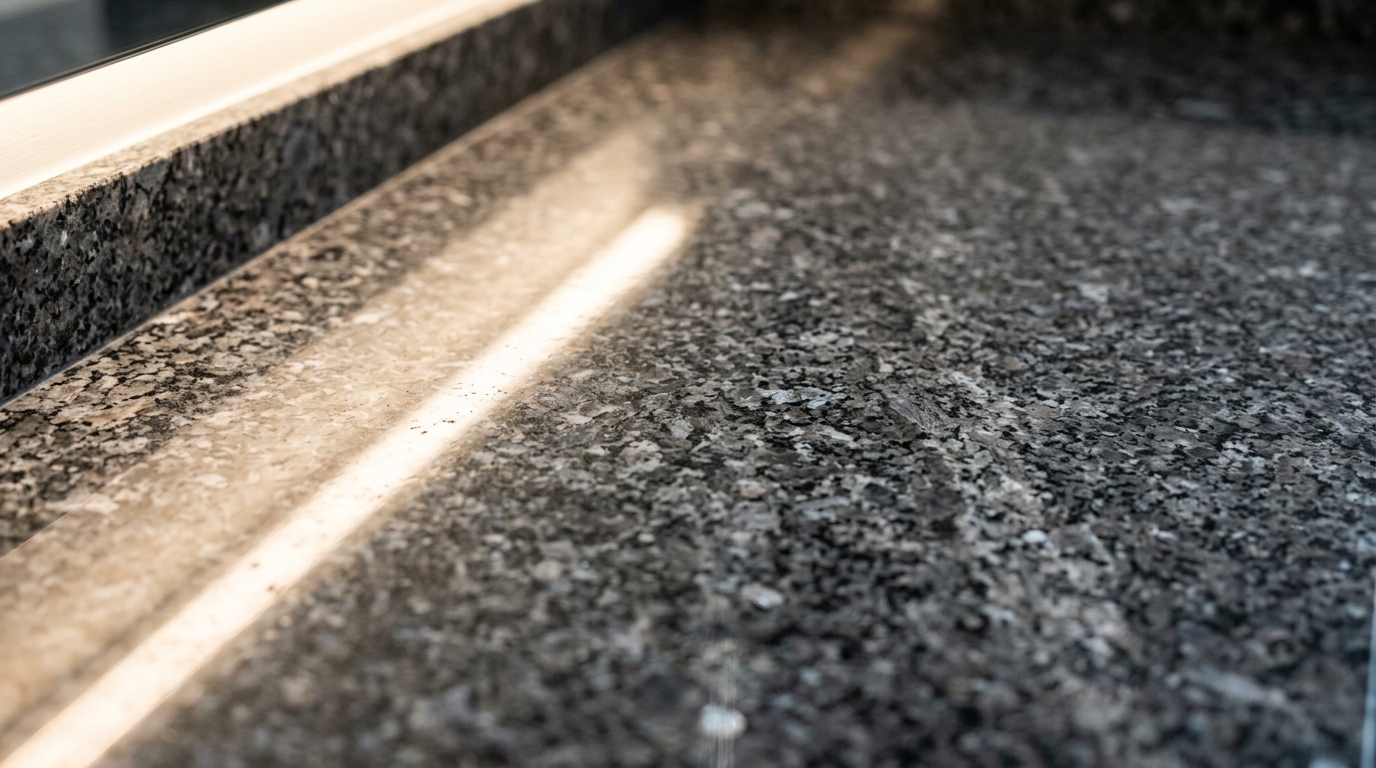
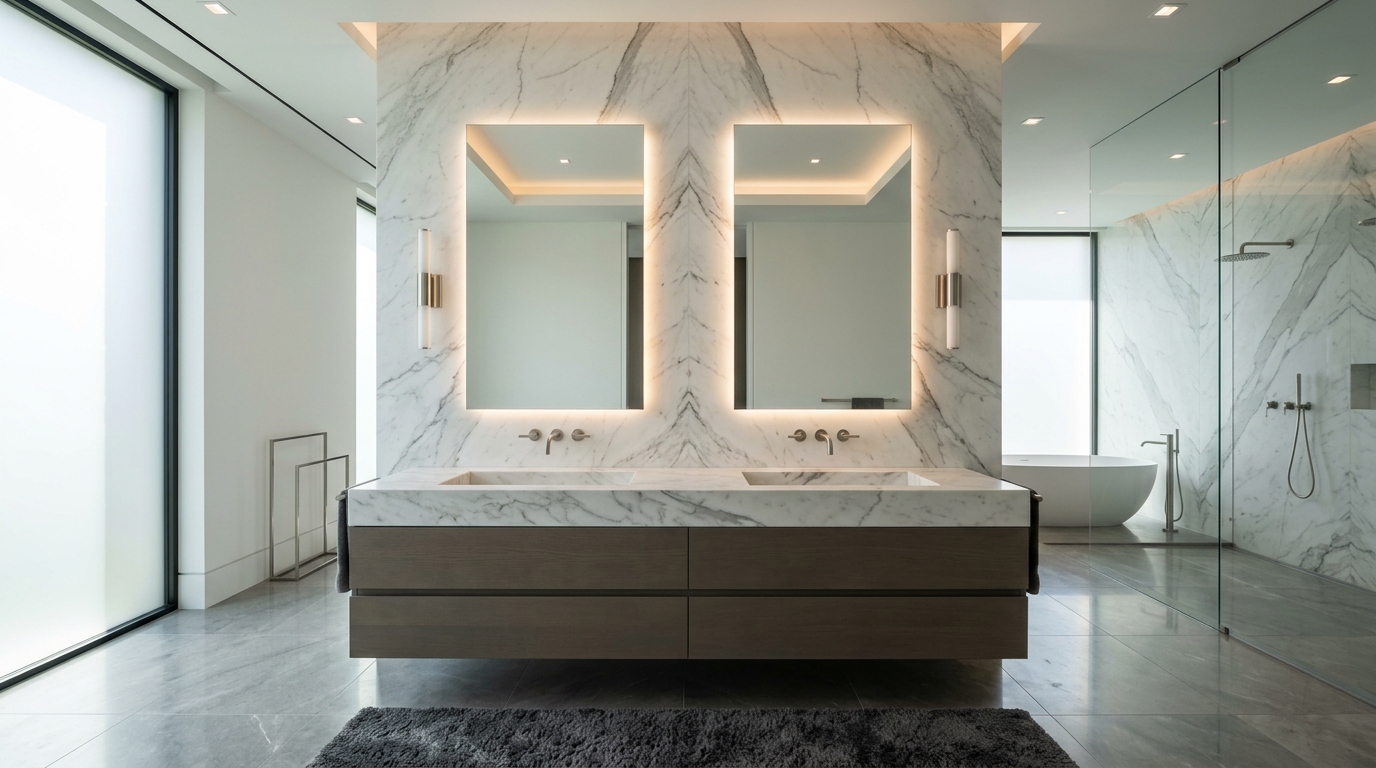
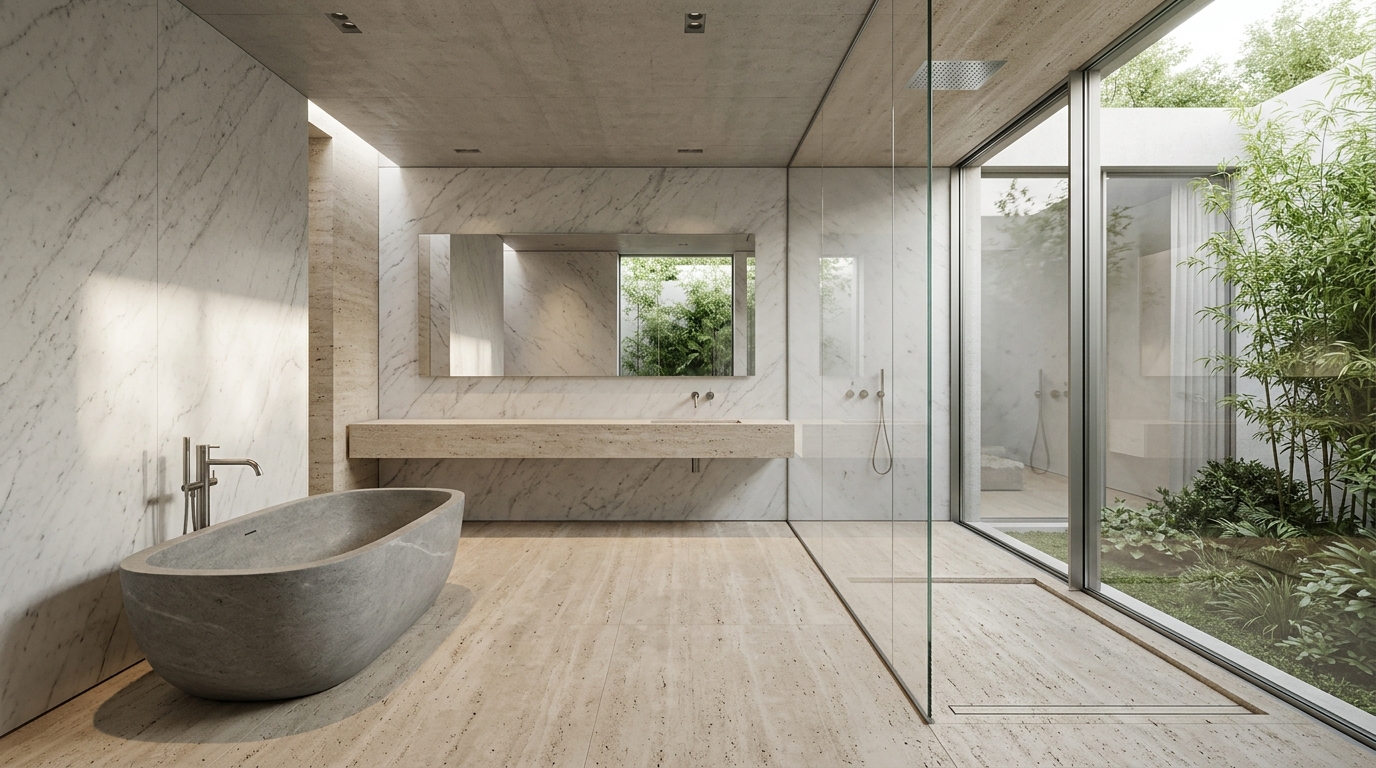
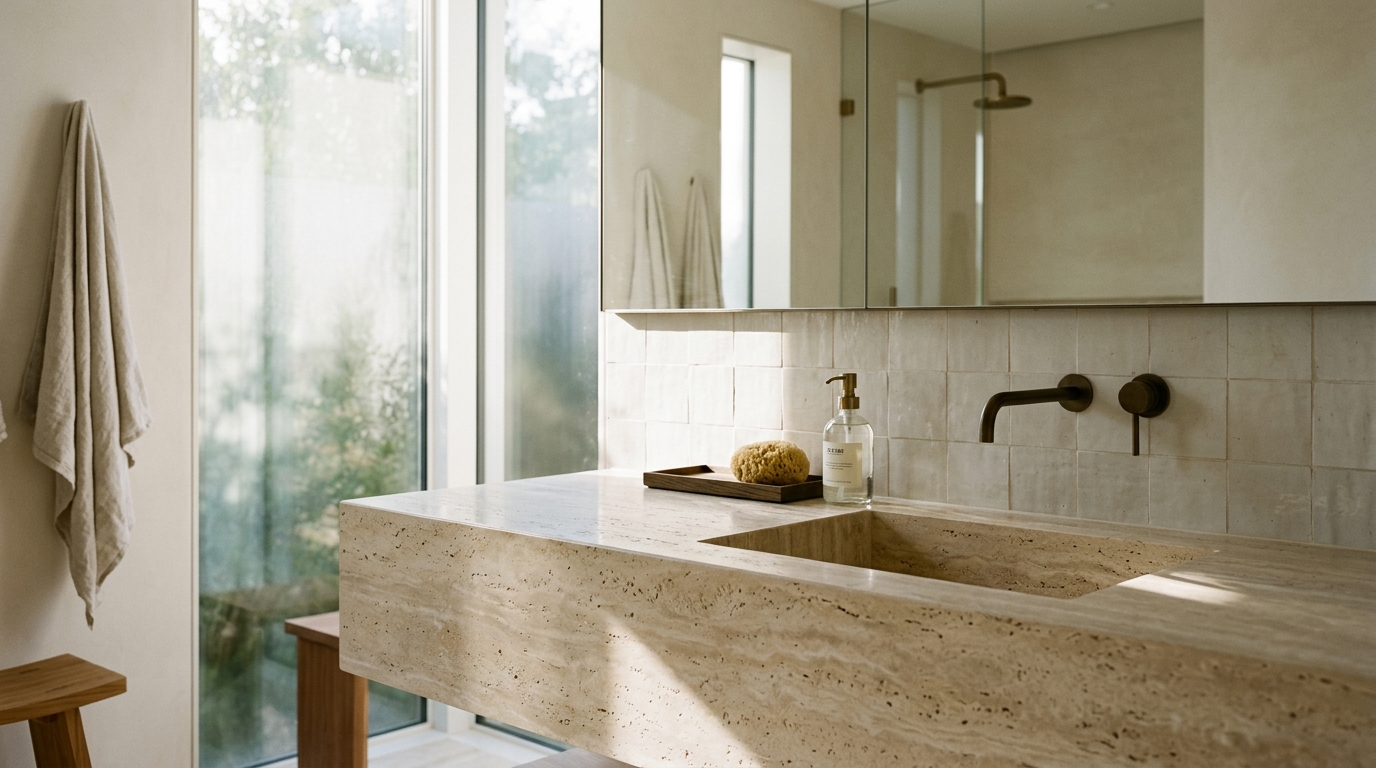
When the countertop is 100% clear, the material choices take center stage. A mitered-edge floating vanity becomes a monolithic statement. The light reflects off the polished surface without being broken up by shadows from clutter. If you have chosen a beautiful travertine or a rare soapstone, the ‘Counterless’ approach is the only way to honor that investment. The stone is no longer a backdrop; it is the protagonist.
The ‘In-Drawer’ Revolution
If you cannot go into the walls, you must go deep into the drawers. The modern vanity is no longer a hollow box under a sink. It is a highly engineered system of pull-outs and organizers. For a truly organized bathroom counter, the ‘Rule of Zero’ must apply: if it’s on the counter, it’s out of place.
Customized Drawer Inserts
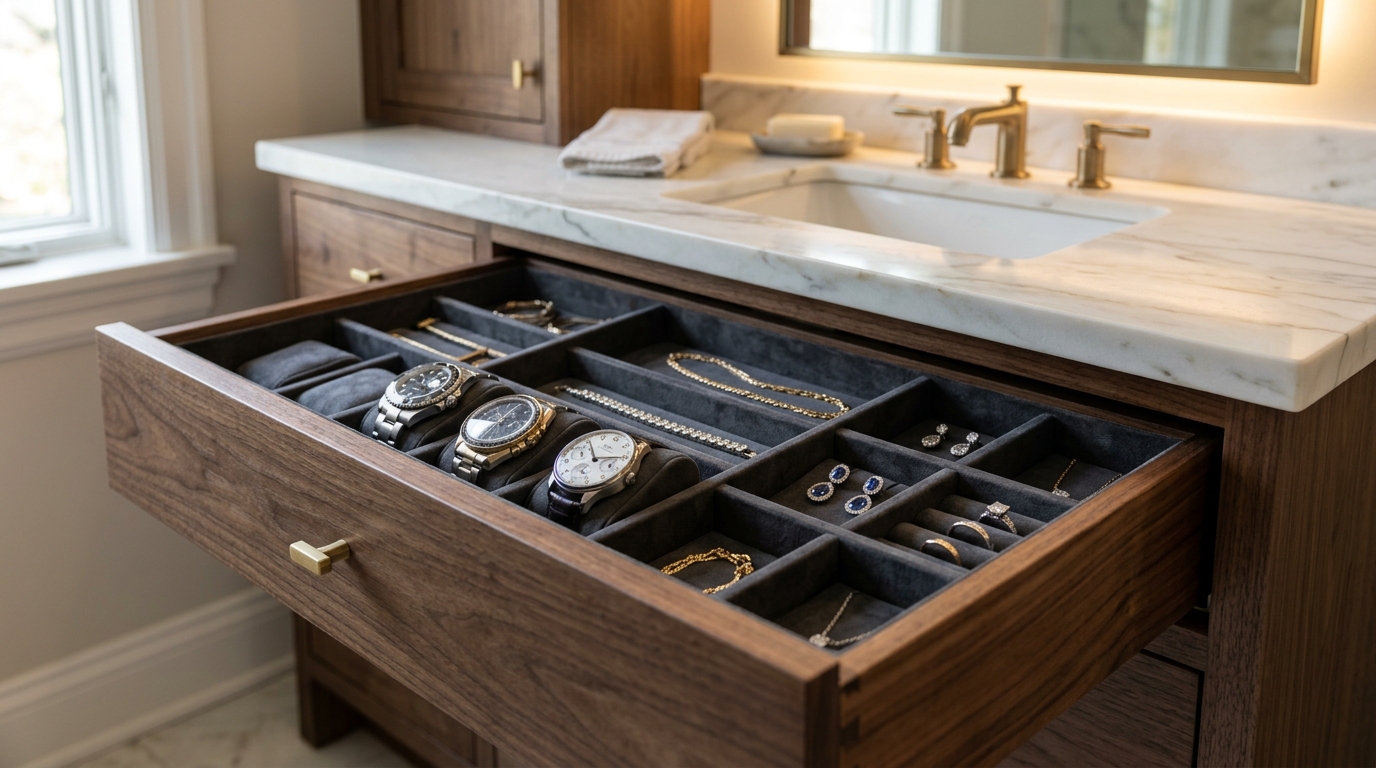
Instead of buying generic organizers for the top of the counter, invest in custom acrylic or wooden inserts for your drawers. This allows every item—from your smallest serum bottle to your hair dryer—to have a dedicated, recessed home. Professional organizers often suggest that the best way to keep a surface clear is to make the alternative (the drawer) more attractive and easier to use than the counter itself.
The Integrated Sink Advantage
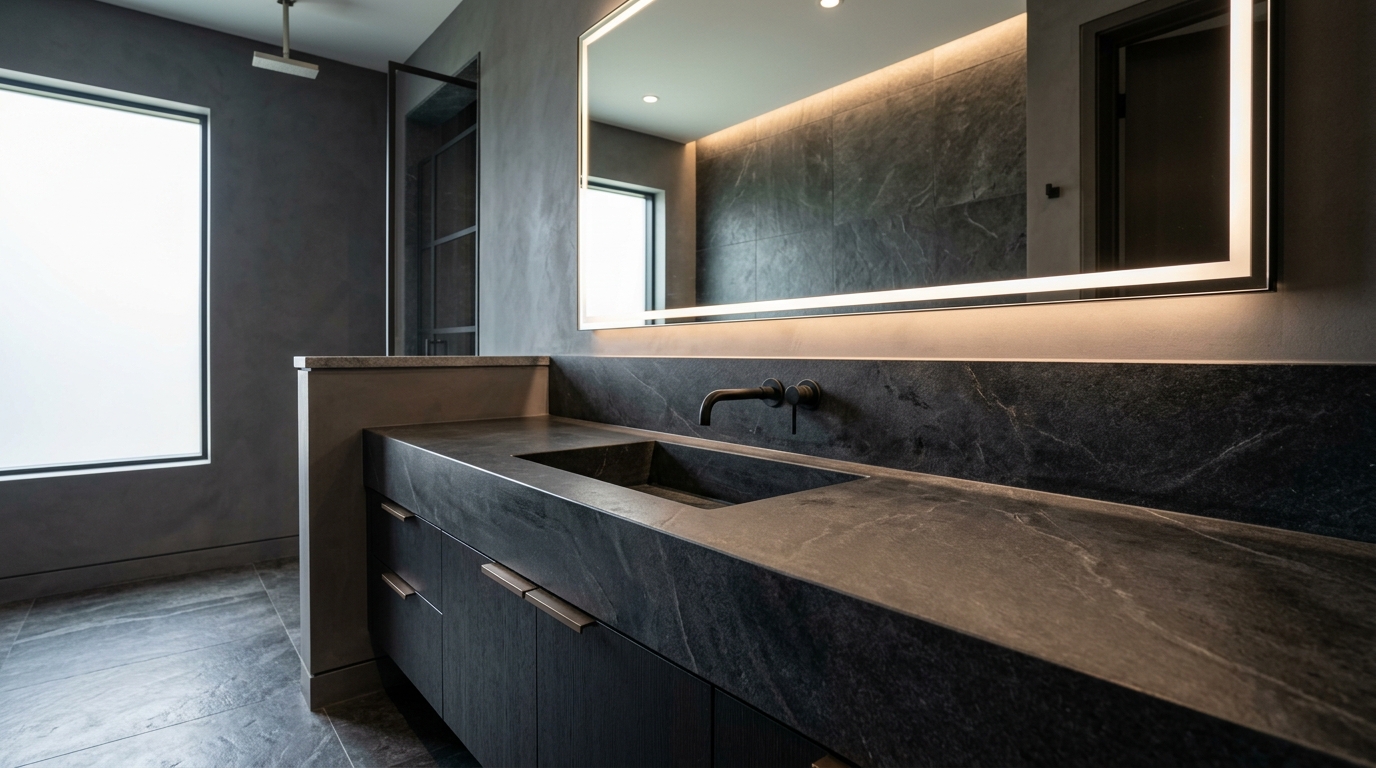
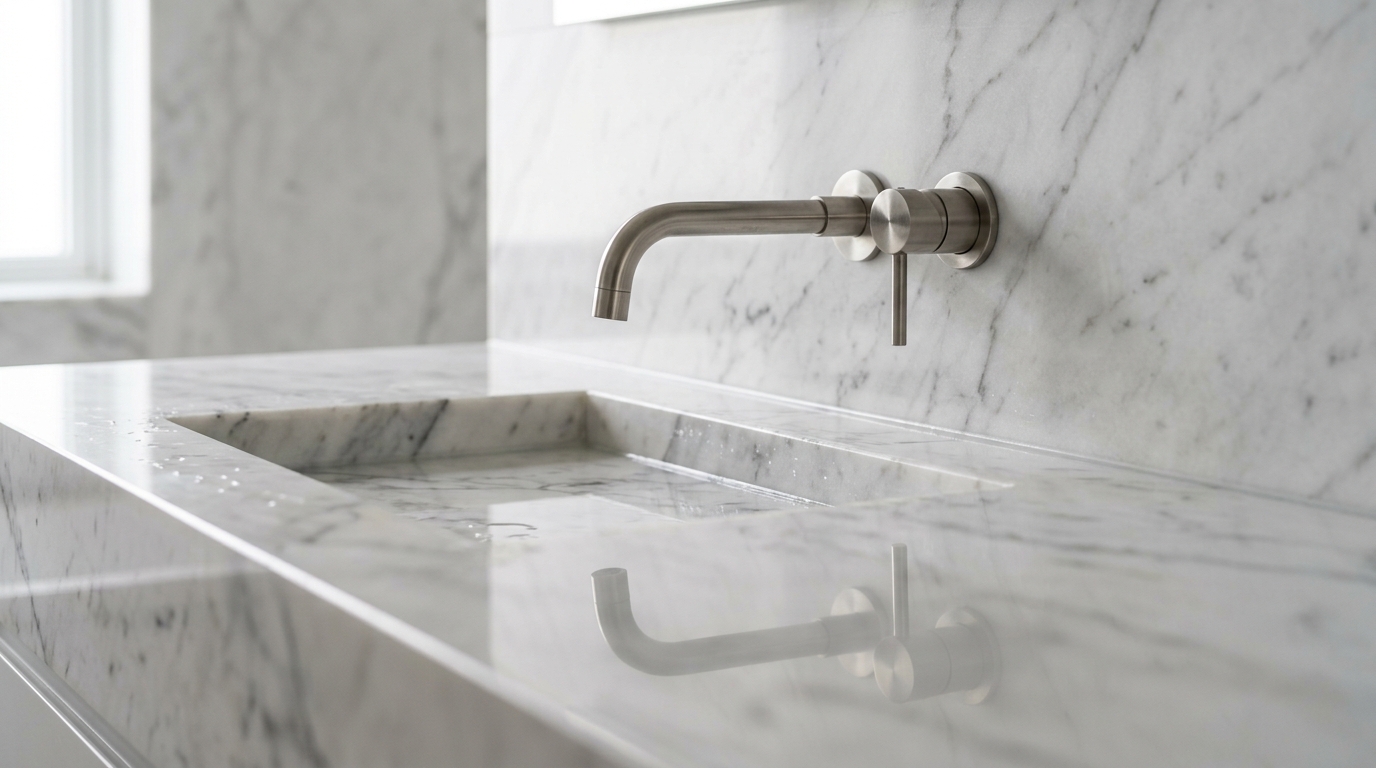
To further the ‘Counterless’ look, many designers are opting for integrated sinks—where the basin is carved from the same slab as the countertop. This removes the ‘lip’ of a traditional sink, creating a seamless, uninterrupted horizon of stone. Without the visual break of a sink rim, the urge to place objects on the surface naturally diminishes, as the surface itself feels more like a piece of art and less like a workspace.
Redefining Convenience: A Lifestyle Shift
The primary argument against the ‘Counterless’ countertop is convenience. People ask, ‘Isn’t it harder to open a drawer to get my toothbrush?’ The answer is a matter of perspective. Is the three seconds saved worth the perpetual visual clutter? In a high-end home, luxury is defined by the luxury of space and the absence of noise. The ritual of opening a beautifully crafted, soft-close drawer to retrieve a hidden item is, in itself, a more mindful and intentional act than grabbing a plastic bottle off a crowded surface.
The Zero-Object Protocol
Adopting the ‘Counterless’ lifestyle involves a few simple rules: 1. If it’s used daily, it lives in a top drawer. 2. If it’s used weekly, it lives in a recessed wall cabinet. 3. If it’s for guests, it lives in a lower cabinet. 4. The countertop is reserved exclusively for the play of light and the beauty of the stone. By adhering to this protocol, you transform the bathroom from a storage locker into a sanctuary.
Conclusion: The Ultimate Form of Organization
In conclusion, while the ‘three-piece set’ or the ‘decorative tray’ might offer a temporary fix for a messy counter, they are ultimately just more ‘stuff.’ True bathroom counter organization isn’t about finding a better way to display your clutter; it’s about having the courage to remove it entirely. By utilizing recessed storage, internal power stations, and the hidden potential of your vanity drawers, you can reclaim the architectural beauty of your bathroom. The best organizer isn’t a tray—it’s a vision that values the space more than the things that fill it. Clear the counter, and you clear the mind.
Inspiration Gallery
Editorial Lookbook & Photo Collection