CURATORIAL CRITIQUE & DESIGN ANTHOLOGY
To observe the modern residential sanctuary is to witness a profound negotiation between the static nature of architecture and the fluid demands of human habit. We crave the permanence of a well-placed hearth but demand the agility of a workspace that breathes. Within this tension, the adjustable height side table emerges not merely as a convenience, but as a crucial architectural pivot. It is the connective tissue between the rigid geometry of a floor plan and the spontaneous choreography of our daily lives—a structural interjection that acknowledges the body is rarely at rest in a single, fixed posture.
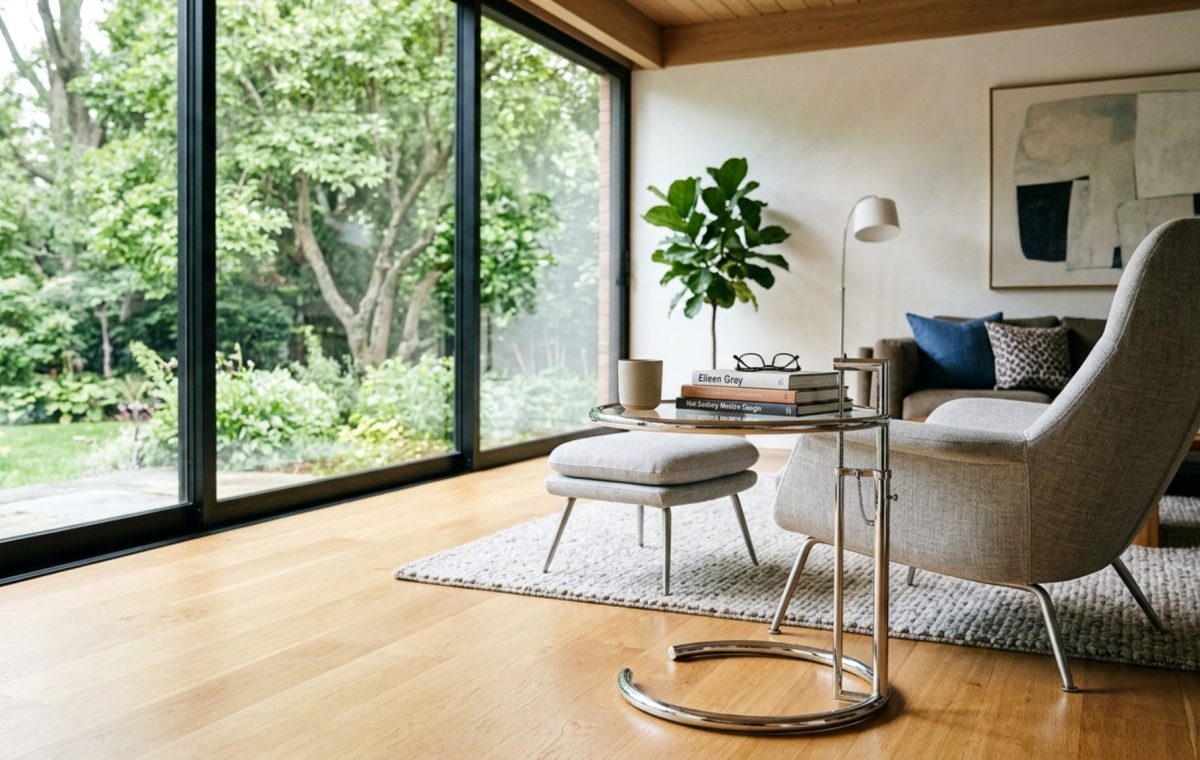
The lineage of this piece is inextricably linked to the E1027 table, conceived by Eileen Gray in 1927 for her villa in Roquebrune-Cap-Martin. Gray, an architect who understood that furniture was the ‘extension of the human organ,’ engineered a tubular steel frame that defied the heavy, grounded Victorian silhouettes of the past. By utilizing a cantilevered ‘C’ frame, she solved a spatial riddle: how to bring a surface to the user without the interference of four obstructive legs. This geometry allowed the base to slide beneath a bed or sofa, creating a seamless visual flow that we still strive to replicate in contemporary urban environments.
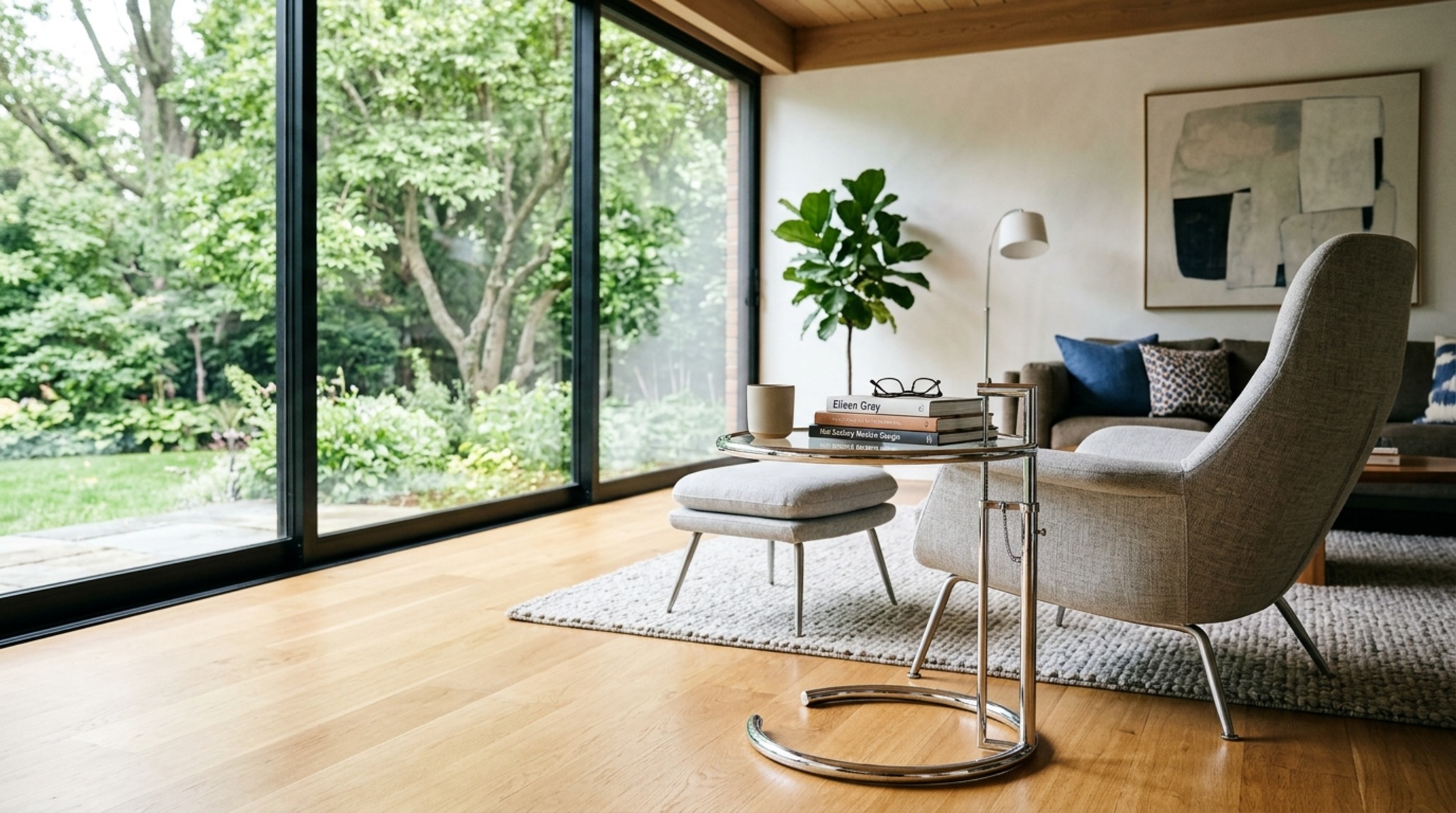
When we analyze the structural integrity of a telescoping side table, we are looking at the mathematics of balance. The cantilever requires a weighted base or a specific distribution of mass to prevent tipping when a laptop or a stack of art monographs is placed on the edge. In modernist interiors, where negative space is as vital as the furniture itself, the transparency of the chrome and glass E1027 archetype allows the eye to travel through the piece, maintaining the sightline alignment of the room. This ‘breathing room’ is what separates a cluttered space from a curated environment.
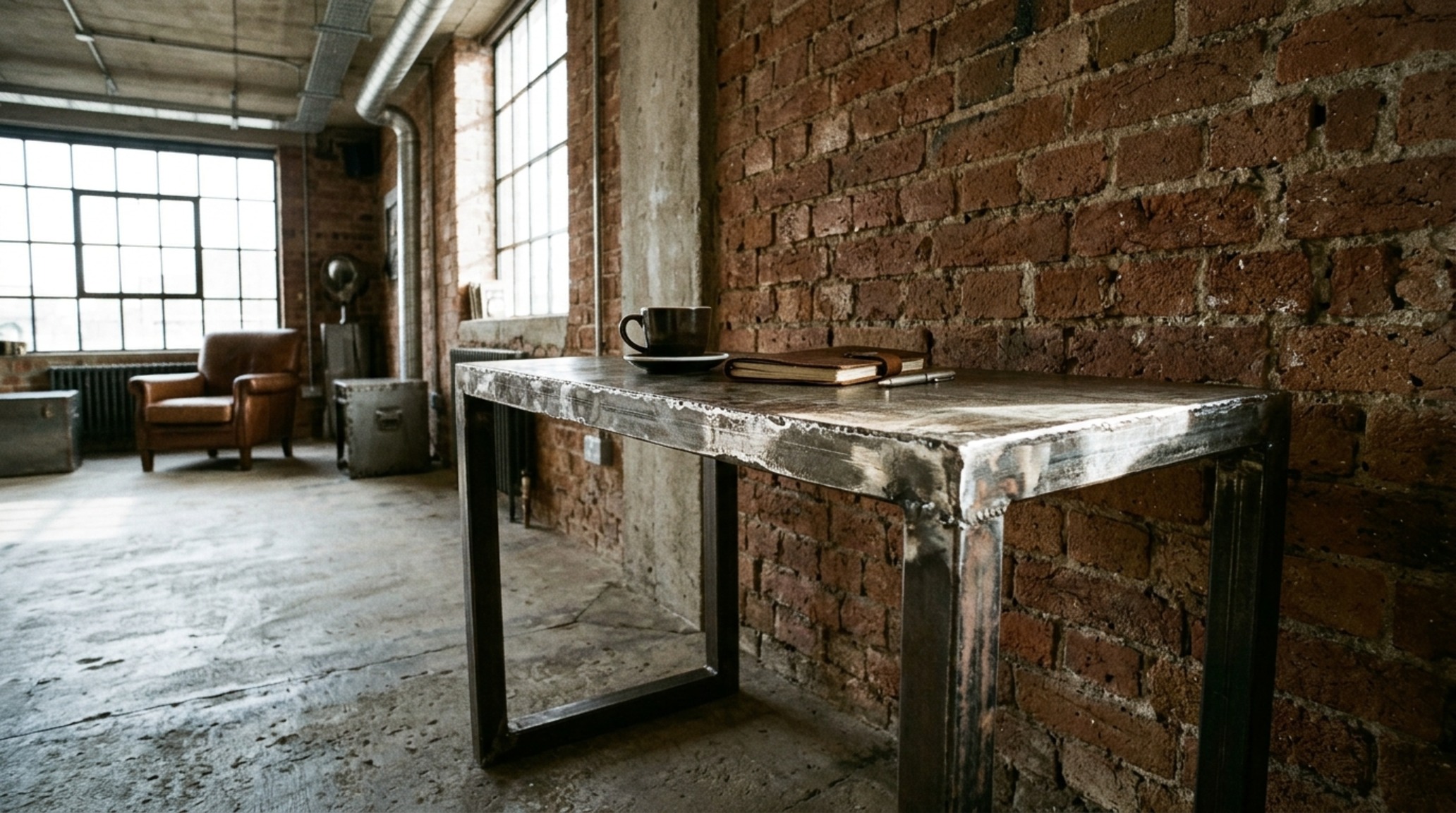
Industrial Metal C-Table: The Brutalist Edge in Contemporary Lofts
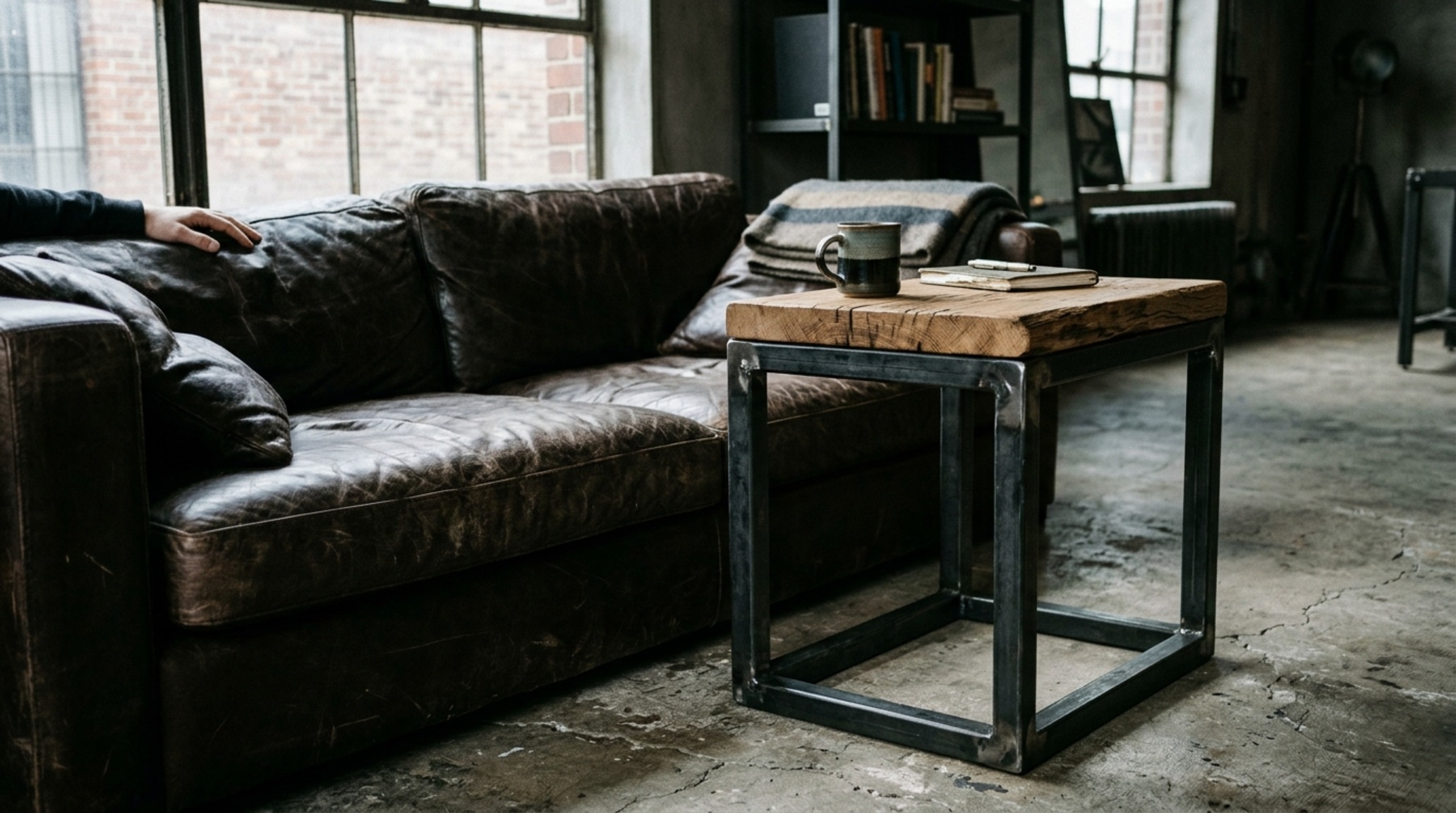
While Gray’s original was polished and ethereal, the modern evolution often leans into a more tactile, grounded materiality. The industrial metal c-table has become a staple for those seeking a sturdier, more textural presence. Imagine a blackened steel frame, perhaps hand-rubbed with linseed oil to reveal the blue-grey scale of the raw metal, paired with a reclaimed oak top or a slab of honed Pietra Grey marble. This iteration brings a sense of gravity and ‘tactile grounding’ to a room, especially when placed against a backdrop of Benjamin Moore’s ‘Swiss Coffee’ (OC-45)—a warm, creamy white that softens the hard edges of the metal.
In a spatial context, these tables serve as the ‘shadow play’ of the living area. When the sun hits the thin profile of the steel frame at a low angle, it casts long, architectural shadows that accentuate the height of the ceiling. For a 36-inch standard walkway clearance, these slim profiles are indispensable. They provide the utility of a surface without encroaching on the primary circulation paths, allowing the room to maintain its spatial cadence.
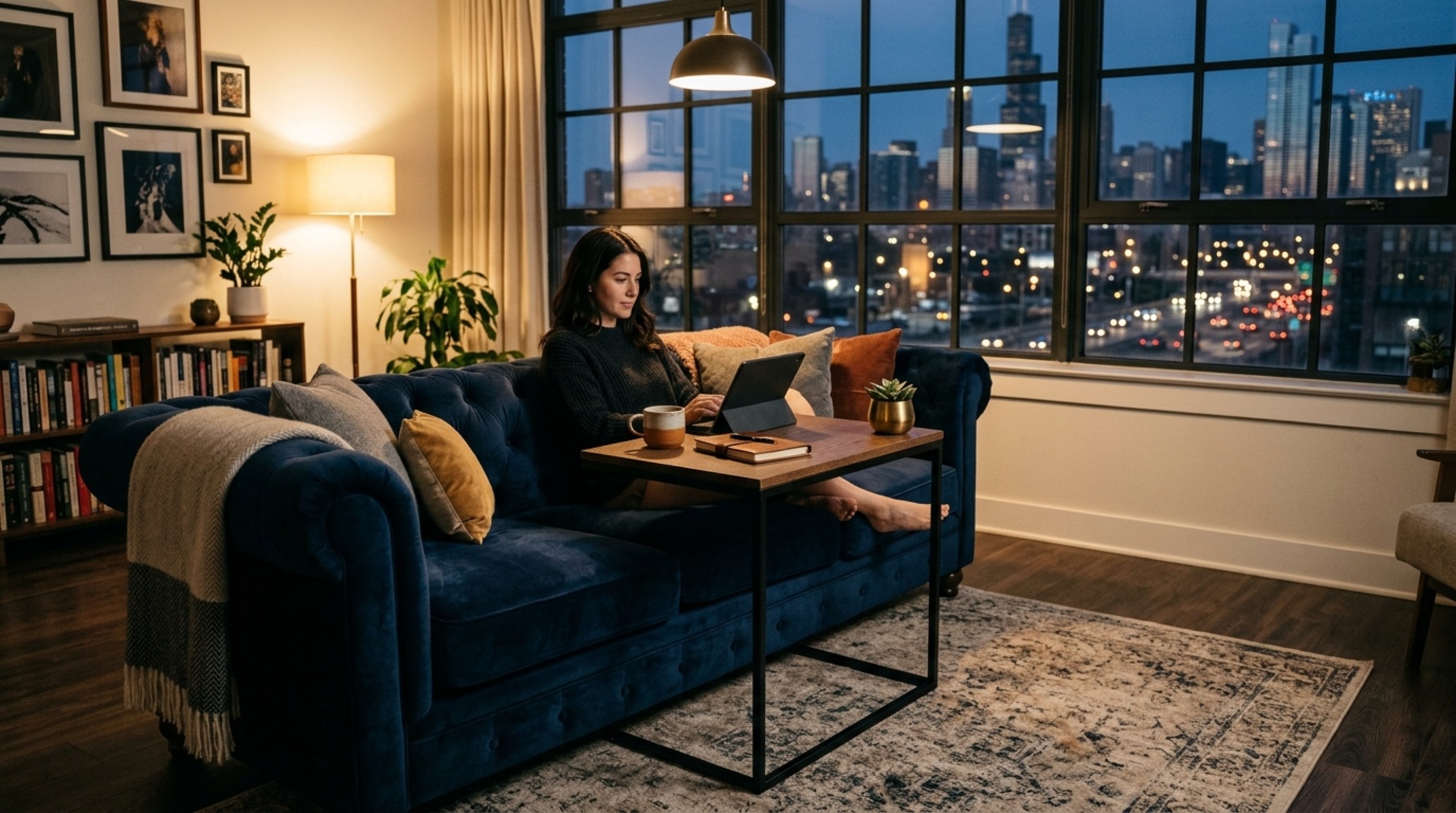
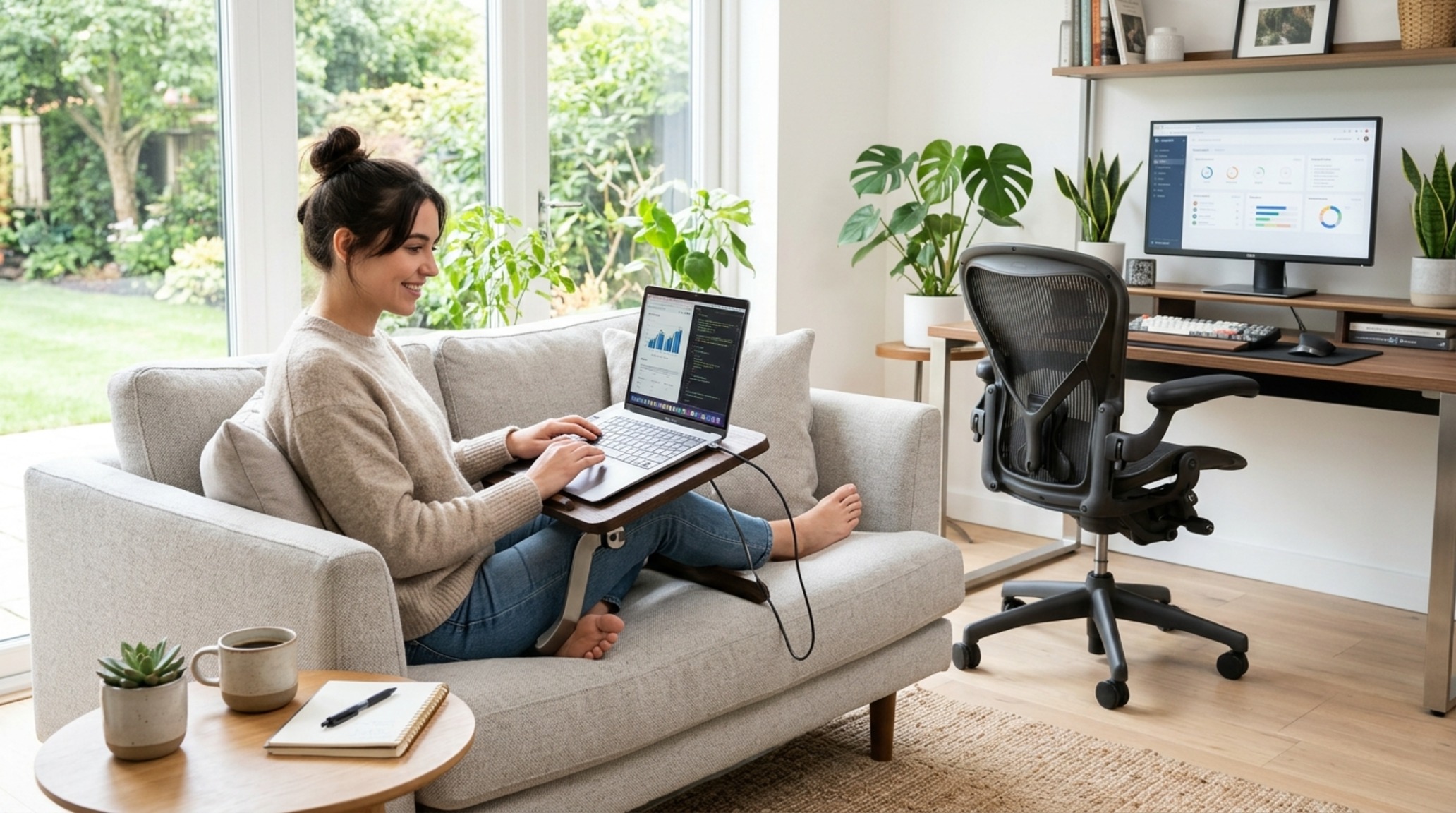
Sofa Laptop Stand: Ergonomics and the Hybrid Work Cadence
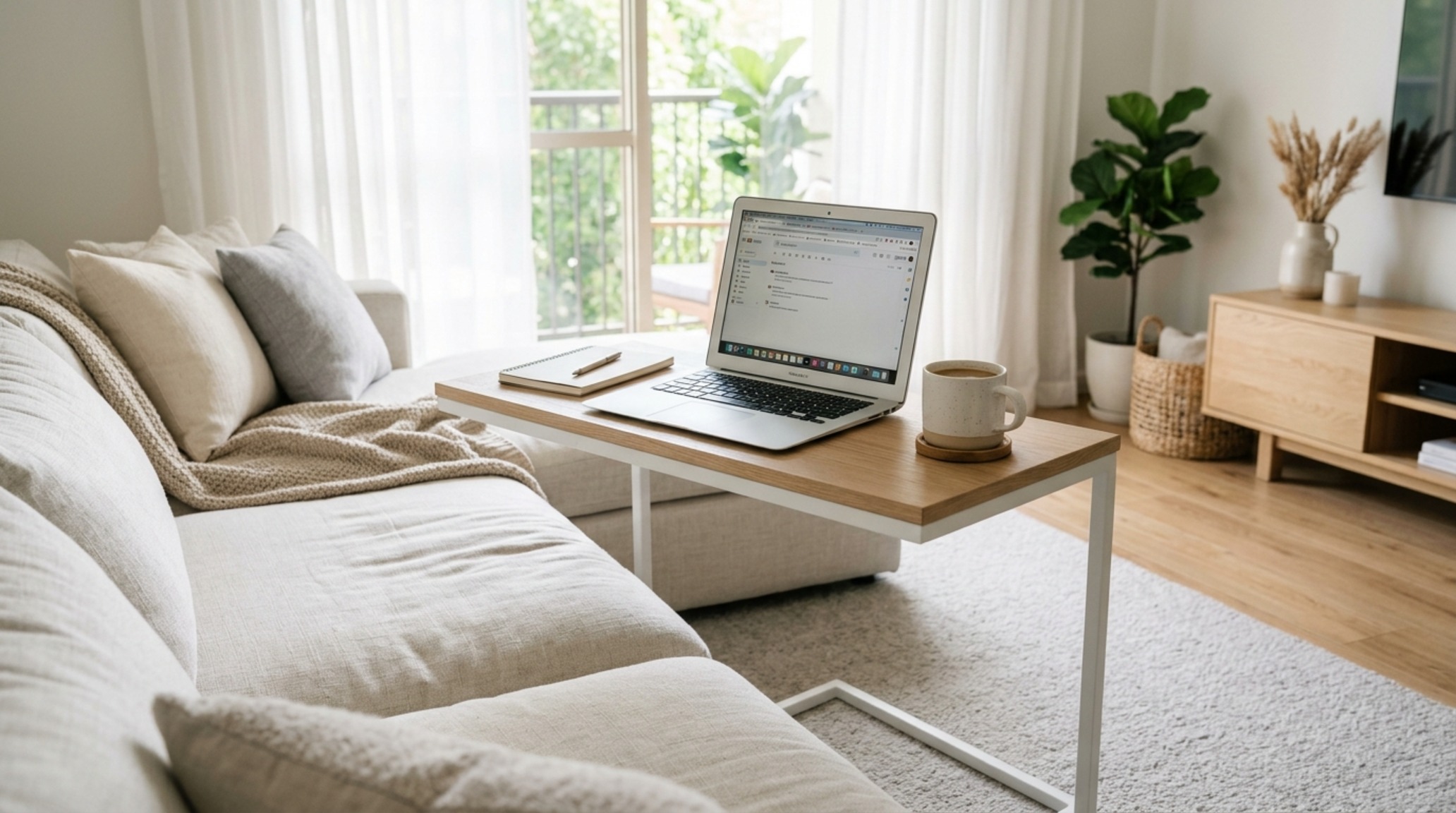
The shift toward remote work has transformed our living rooms into multi-functional zones, demanding furniture that can pivot as quickly as our schedules. The sofa laptop stand is the ergonomic hero of this transition. Unlike a traditional coffee table, which usually sits at a height of 16 to 18 inches—forcing a hunched posture—the adjustable height side table can be raised to the exact 24 to 28 inches required for comfortable typing from a seated position.
From an architectural perspective, this is about the ‘pivot’ mentioned earlier. By adjusting the height, you are literally changing the function of the room. At 18 inches, it is a place for a Negroni and a small ceramic tray; at 26 inches, it is a high-performance workstation. This flexibility is vital in urban apartments where square footage is at a premium. We look for pieces that don’t just occupy space, but actively work to expand the utility of the existing architecture. Integrating high CRI 90+ lighting nearby—perhaps a sleek floor lamp with a 2700K warm ambient glow—ensures that this micro-workspace remains inviting even after the sun sets.
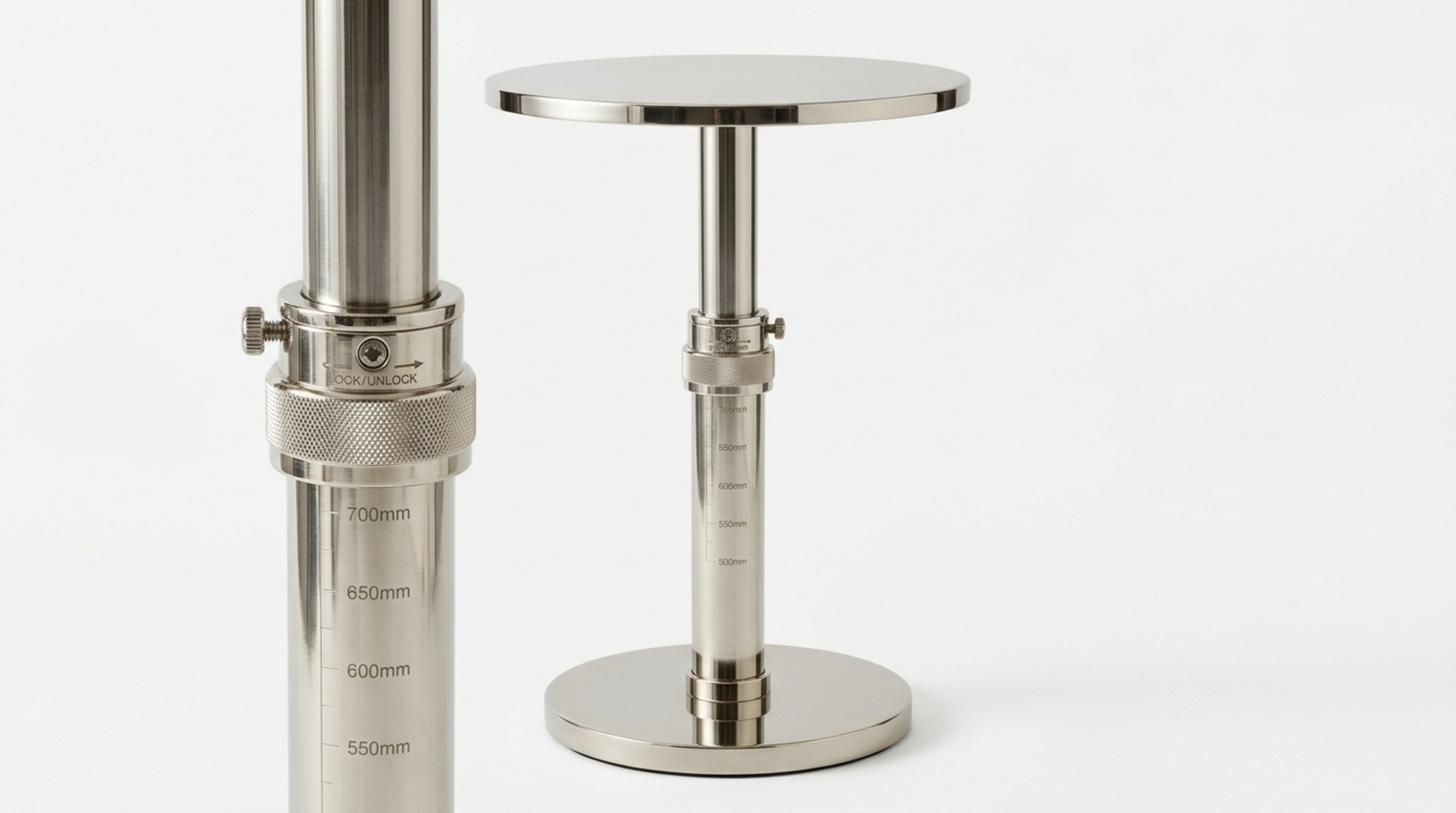
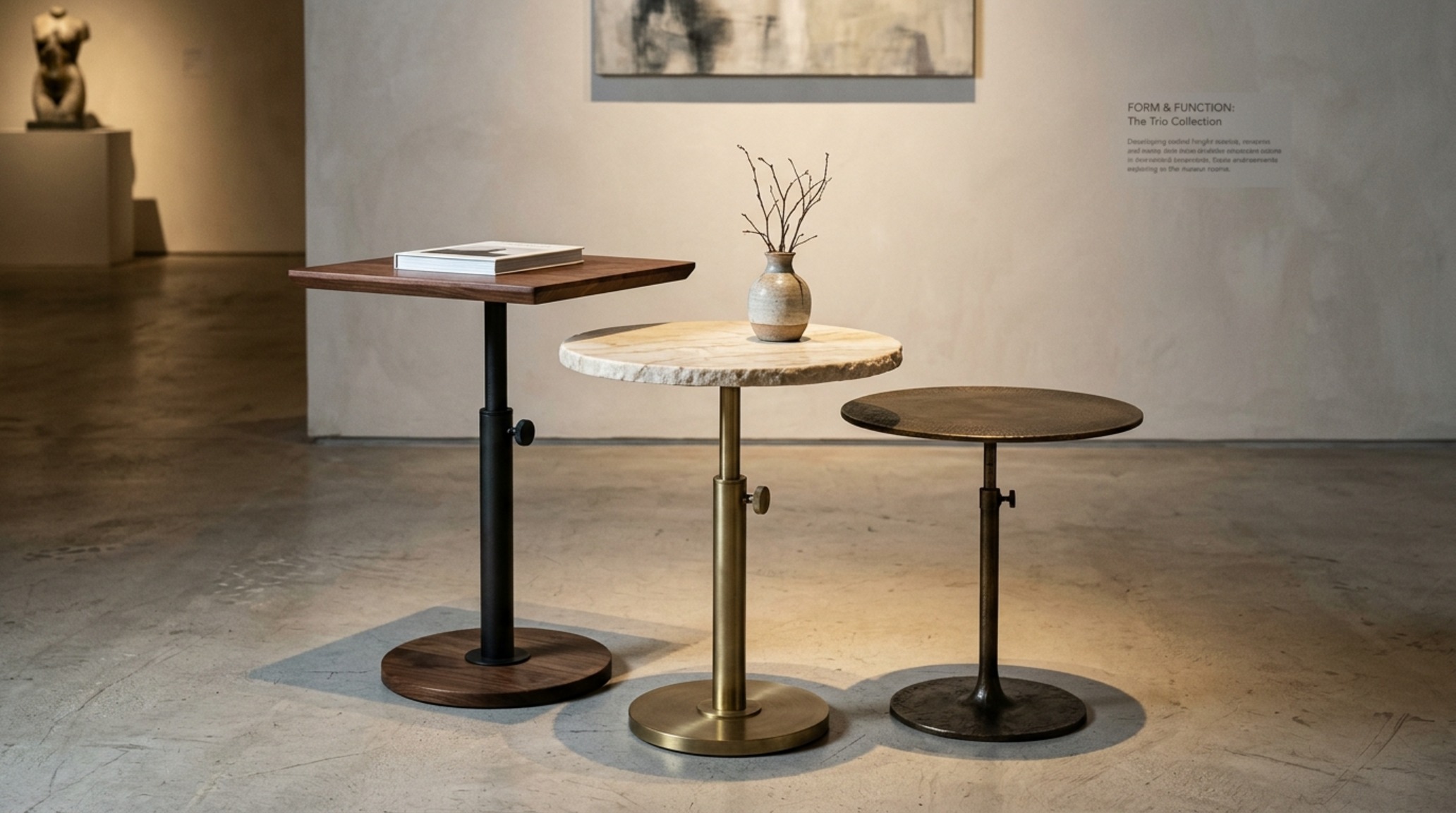
Telescoping Side Table: Mechanical Precision and Materiality
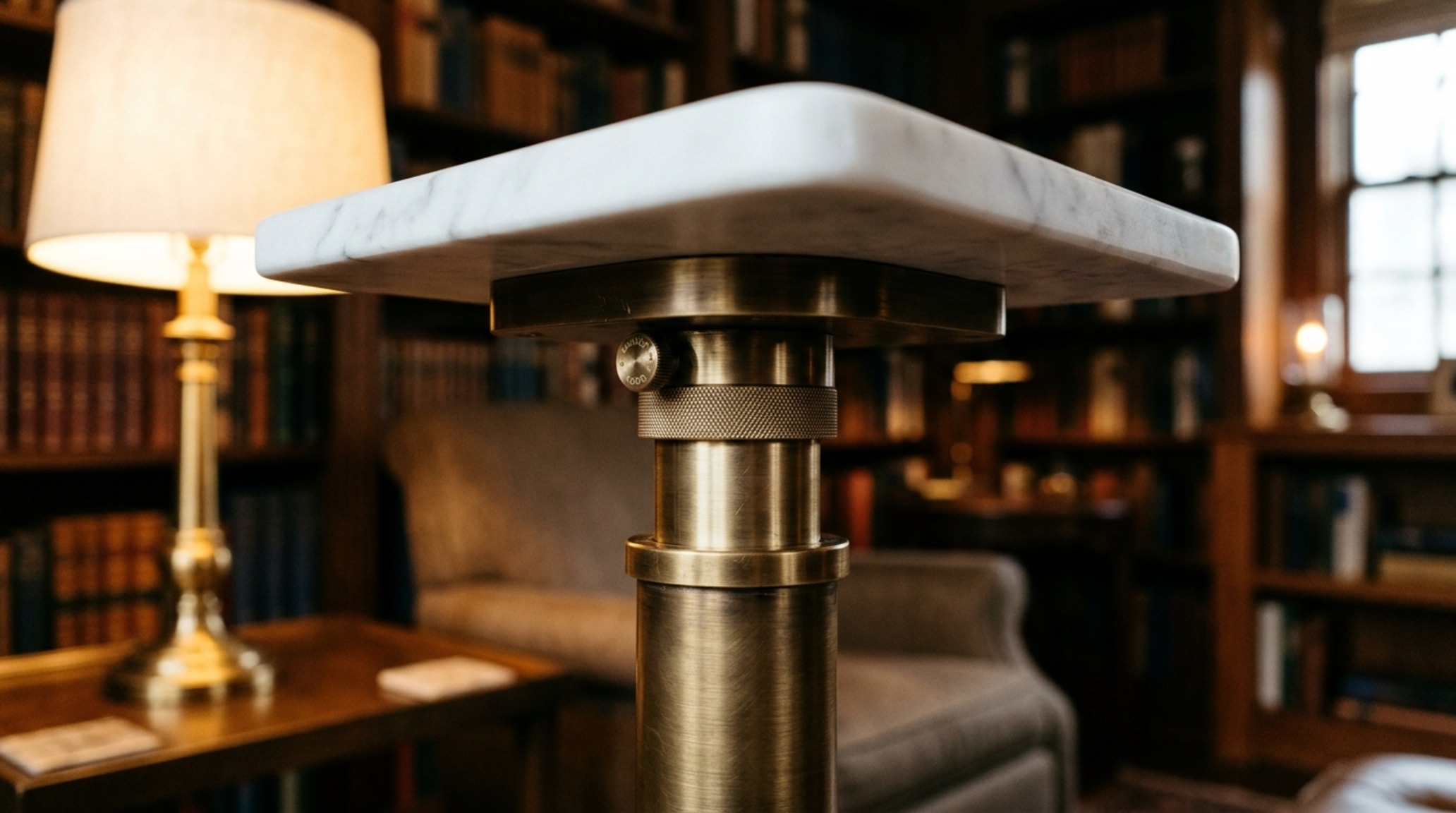
There is an inherent beauty in the mechanical detail of a telescoping side table. Whether it’s a simple pin-and-hole mechanism or a sophisticated gas-lift riser, the ‘click’ of the height adjustment provides a satisfying tactile feedback. It speaks to a level of engineering that treats furniture as an instrument. In high-end design, we see these mechanisms rendered in brushed brass or matte gunmetal, turning a functional necessity into a decorative highlight.
Materiality plays a significant role in how these pieces harmonize with the rest of the decor. A fluted white oak top paired with a champagne gold frame creates a soft, organic feel that aligns with the ‘Warm Minimalism’ trend. Conversely, a clear tempered glass top on a polished chrome frame remains the ultimate ‘invisible’ furniture choice, ideal for small rooms where you want to maximize the floor plane visibility. This transparency maintains the visual flow, ensuring the eye isn’t snagged on heavy blocks of wood or dark upholstery.
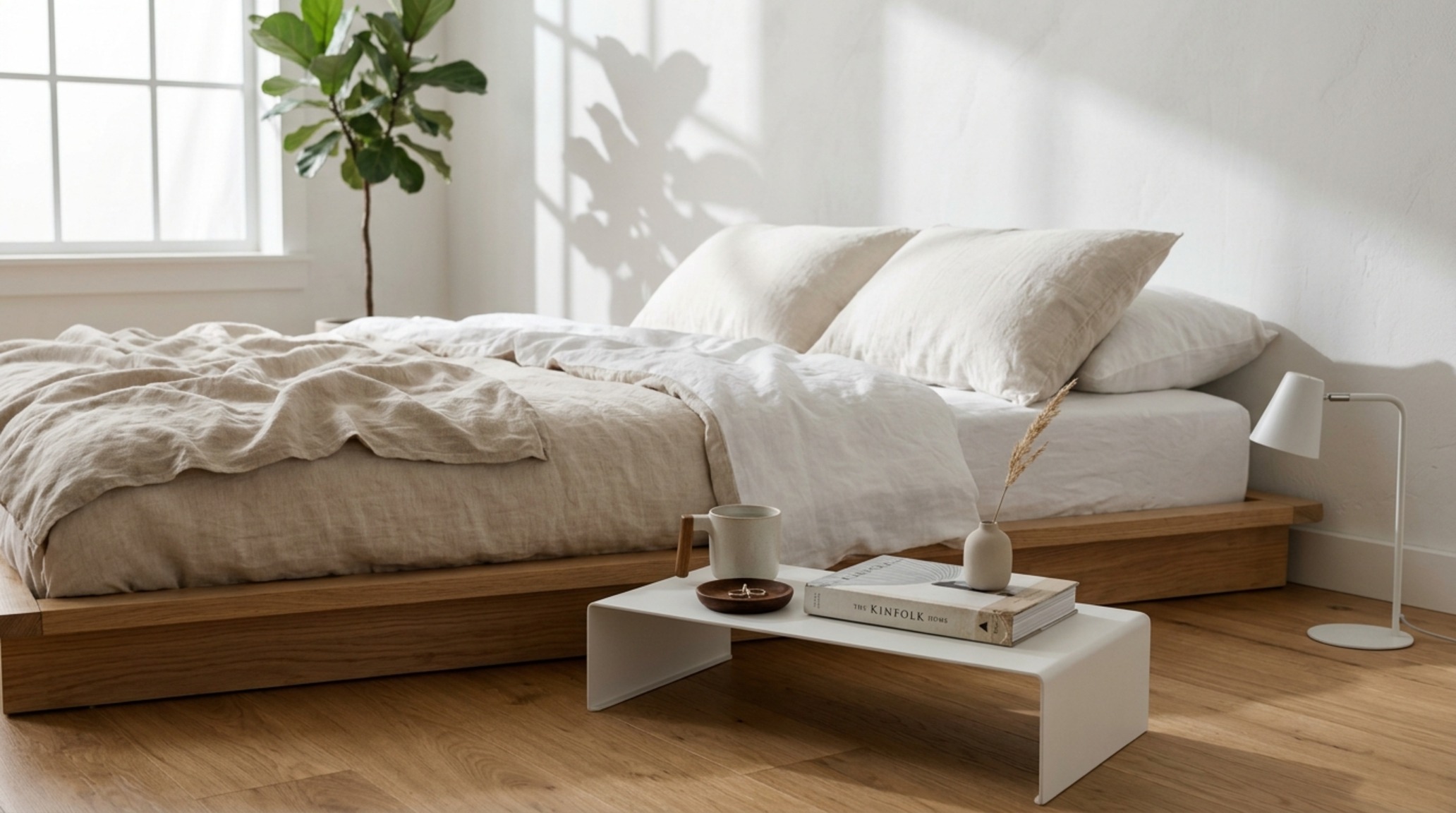
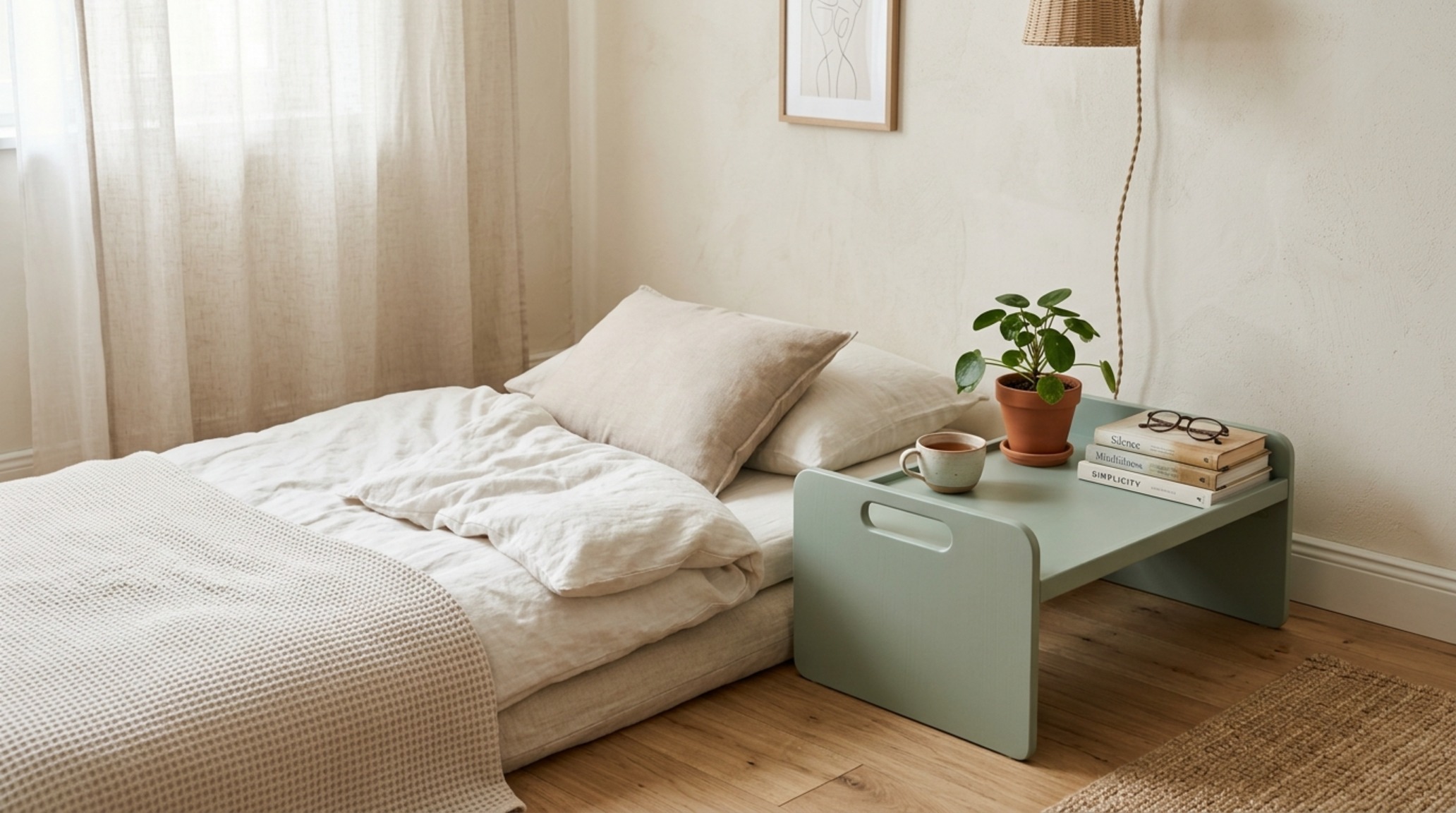
Minimalist Bedside Tray: The Low-Profile Sleep Sanctuary
In the bedroom, the minimalist bedside tray offers a departure from the traditional, bulky nightstand. Modern beds are often lower to the ground, reflecting a Japanese-inspired aesthetic. A side table that can drop to a 15-inch height is essential for these low-profile frames. It provides just enough surface for a carafe of water and a single book, adhering to the ‘less is more’ philosophy while maintaining the necessary 30-inch clearance for bedside movement.
Consider the color palette of your sanctuary. A table finished in Farrow & Ball’s ‘Setting Plaster’—a dusty, sophisticated pink—can add a layer of warmth without being saccharine. When paired with neutral linens and a soft 3000K task light for reading, the adjustable table becomes part of a cohesive, restful vignette. It’s about creating a ‘spatial narrative’ where every piece, regardless of its size, contributes to the overall sense of calm and order.
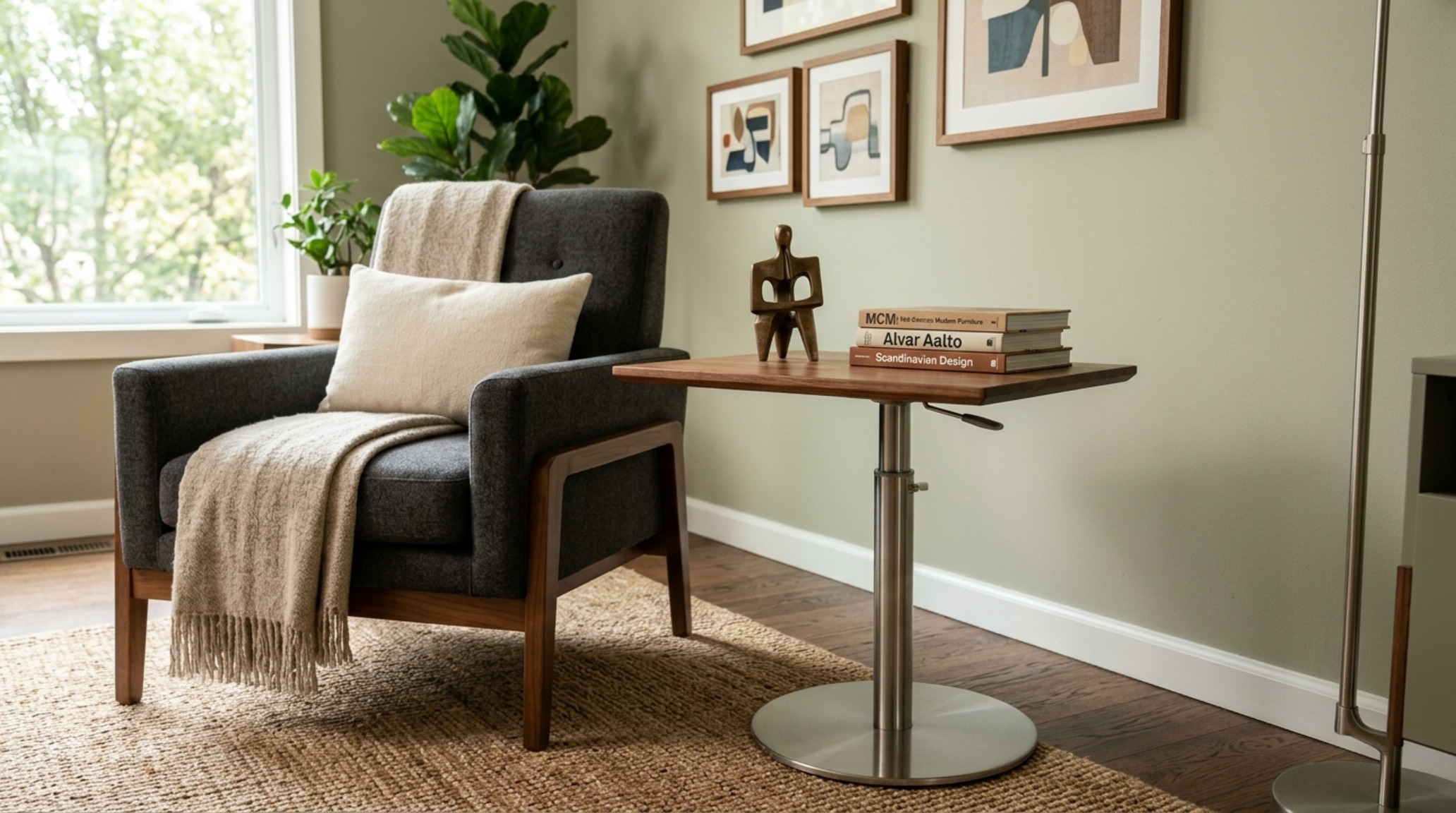
Height Adjustable End Table: Bridging the Gap in Transitional Spaces
The versatility of the height adjustable end table extends beyond the sofa or bed. Think of the awkward corners, the narrow hallways, or the reading nooks that feel just slightly ‘off.’ By manipulating the height, you can align the table’s surface with the armrest of a vintage Eames chair or the windowsill, creating a tiered visual effect that adds depth to the room’s composition. This alignment is what architectural journalists often refer to as ‘sightline harmony’—the way various heights in a room speak to one another to create a balanced horizon line.
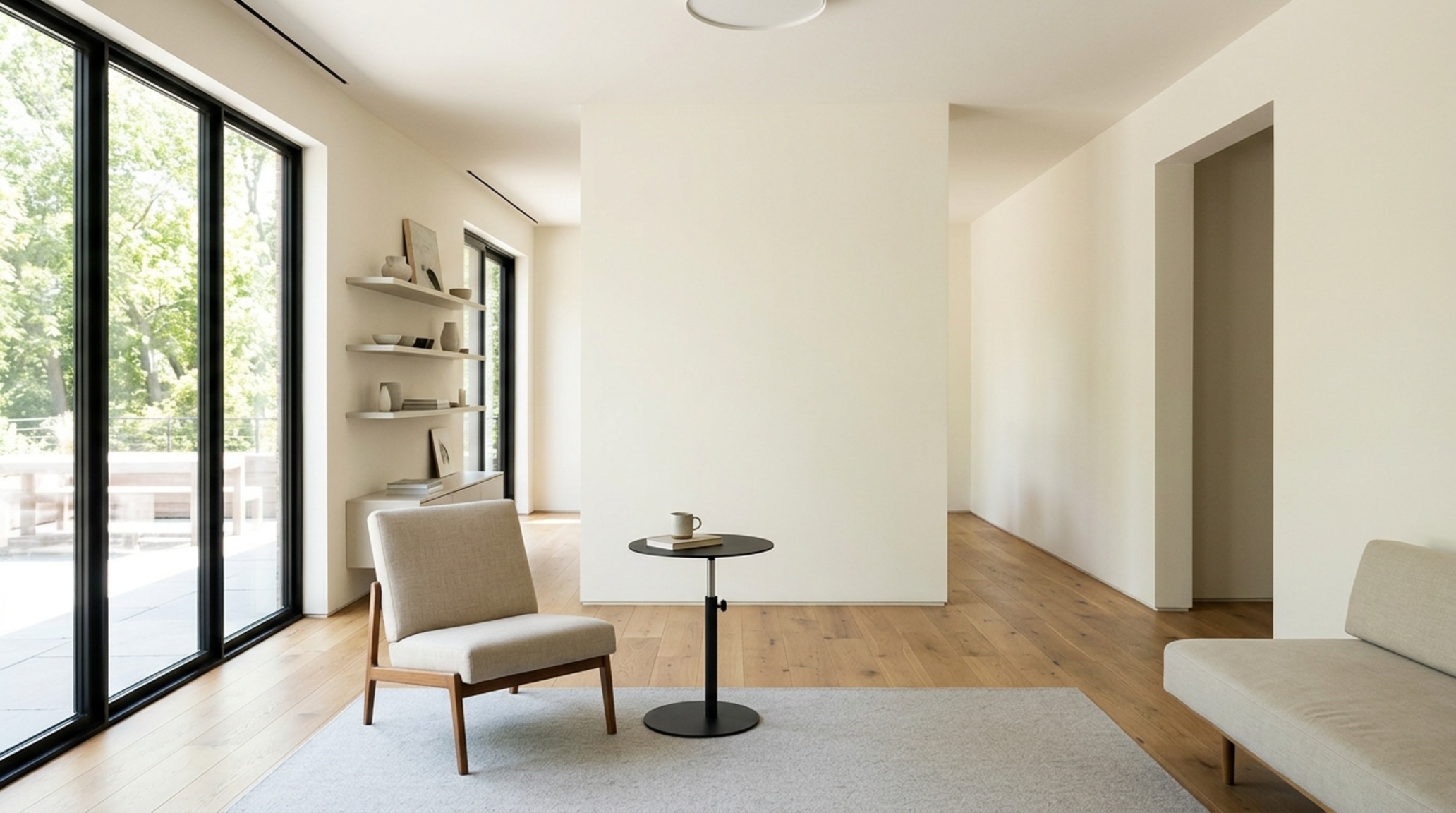
When selecting a piece, pay attention to the base design. A heavy circular disc base provides the most stability but can feel visually ‘heavy.’ A tripod or a low-profile flat square base is often preferred for a cleaner look. These subtle choices in structural geometry dictate how the furniture interacts with the architectural shell of the home. The goal is always to enhance the flow, never to interrupt it.
Architectural Finishes, Swatches & Matrix
Summary of authentic finishes, designer paint selections, and standard architectural clearances.
Ultimately, the choice of an adjustable height side table is a commitment to a living space that evolves alongside its inhabitants. It is an acknowledgement that the static room is a relic of the past. As we move toward more integrated, flexible lifestyles, our furniture must mirror that dynamism. By looking back at the architectural purity of Gray’s modernist vision, we find the blueprint for a future where design is not just something we look at, but something we move with. The pivot is more than just a mechanical function; it is a philosophy of living that prioritizes adaptability, visual clarity, and the quiet beauty of a perfectly engineered line.
Editorial Silo • Recommended Architecture Studies
- Chromatic Immersion: Flower Landscape Designs & Curating Sensory Palettes and Tactile Textures in Modern Flower Landscapes — Archival Design Case Study
- The Light-Science Blueprint: Cool Colors To Paint A Room & Balancing Exposure and Tone with Cool Room Colors — Archival Design Case Study
The Architectural Gallery
Documenting spatial cadence through authentic materials, intentional voids, and sculpted architectural illumination.
Curated Visual Lookbook
Design Gallery & Spatial Studies
A visual curation of architectural arrangements, lighting concepts, and material palettes featured in this space.