The Best Kitchen Countertop Material: A Study in Tactile Architecture
Identifying the best kitchen countertop material is an exercise in balancing the metabolic rhythm of a home with the unforgiving physics of daily use. We often approach surface selection through the narrow lens of durability, yet the most successful kitchens are those where the stone, glass, or composite serves as a tactile anchor, grounding the visual energy of the room. When you run your hand across a leathered granite or feel the cool, matte depth of a honed marble, you aren’t just touching a utility surface; you are engaging with the architectural soul of the space. The modern kitchen has evolved beyond a mere site of production into a sensory sanctuary where the interplay of light, shadow, and texture dictates the emotional temperature of the morning coffee or the evening pour.
The Sensory Language of Finishes: Beyond the Polish
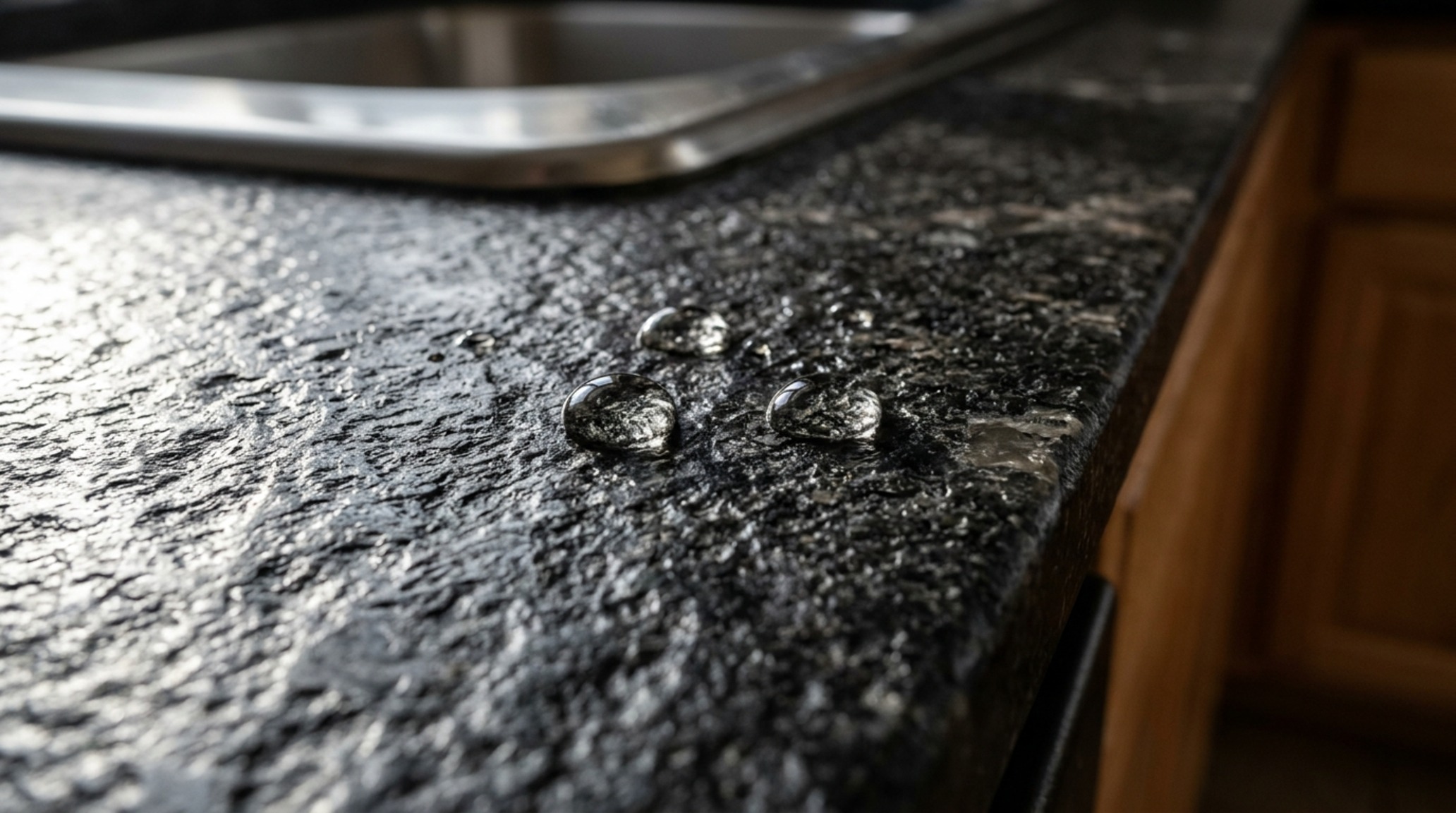
For decades, the high-gloss polished slab was the industry default. While its reflective quality can brighten a North-facing kitchen, designers are increasingly turning toward ‘honed’ and ‘leathered’ finishes to create a more sophisticated, understated luxury. A honed surface is ground to a flat, matte finish, removing the glare and allowing the natural veining of the stone to speak without interruption. Leathered finishes go a step further, adding a subtle, dimpled texture that hides fingerprints and water spots with remarkable efficiency. This tactile transcendence is where the best kitchen countertop material truly reveals itself—not in the showroom under fluorescent lights, but at 4:00 PM when the low-hanging sun hits a matte soapstone slab, revealing a velvety patina that feels soft to the touch despite its geological hardness.
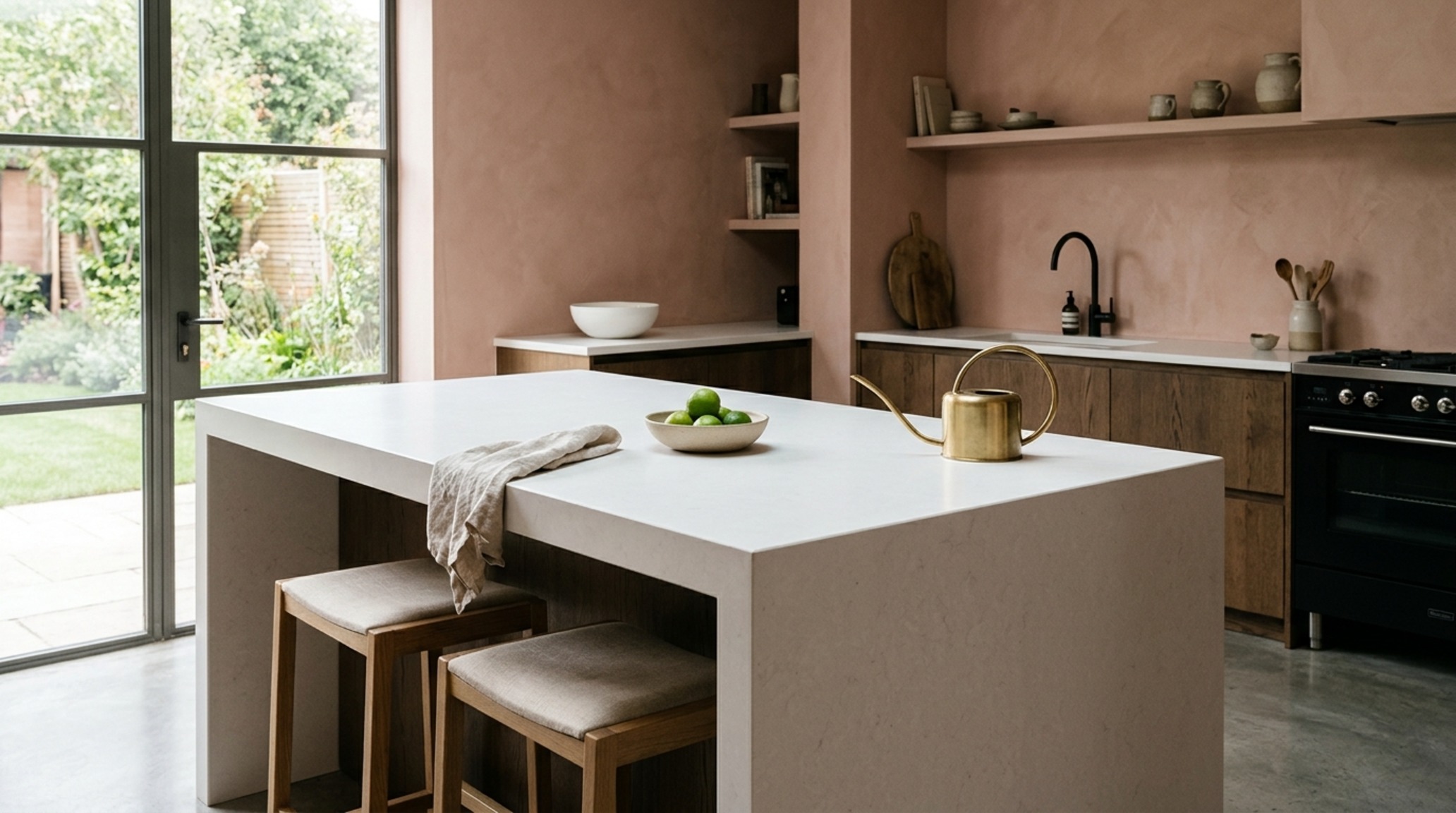
Low-Maintenance Kitchen Slabs: The Rise of Engineered Intelligence
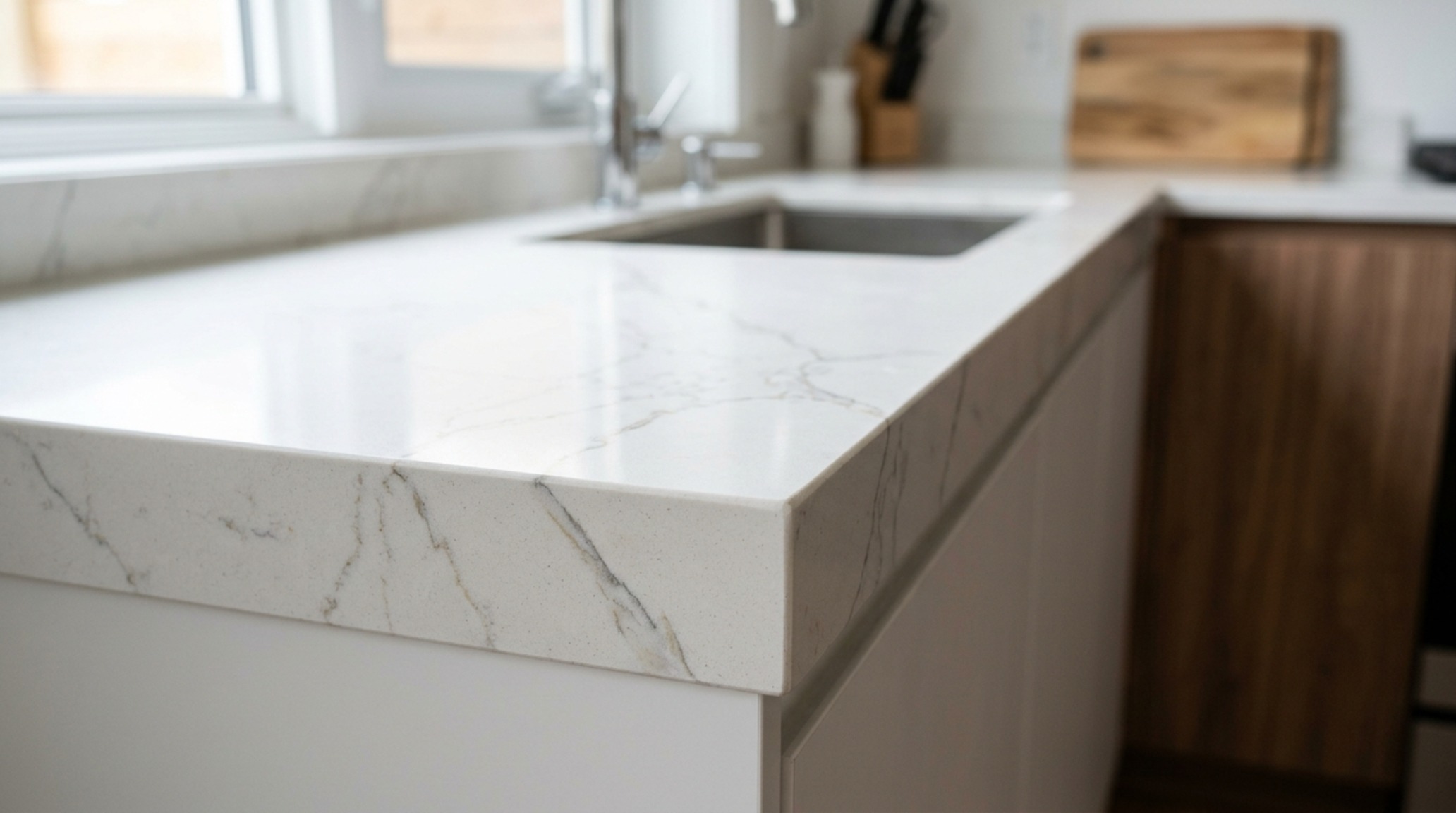
While the allure of natural stone is undeniable, the logistical reality of a busy household often points toward low-maintenance kitchen slabs that mimic the organic beauty of the earth without its inherent vulnerabilities. Engineered quartz has dominated this category for good reason. By suspending crushed stone in a resin binder, manufacturers have created a non-porous surface that resists the primary enemies of the kitchen: lemon juice, red wine, and oil. However, the true innovation in 2026 lies in the aesthetic refinement of these materials. We are seeing quartz slabs with ‘through-body’ veining that doesn’t just sit on the surface but penetrates the entire thickness of the material, allowing for authentic-looking mitered edges and undermount sinks.
For those who find quartz too uniform, large-format porcelain slabs have emerged as a formidable contender. Porcelain is essentially a sintered stone, fired at extreme temperatures to create a surface that is nearly indestructible. It allows for incredibly thin profiles—sometimes as slim as 12mm—which look stunning in minimalist, contemporary designs where the weight of a traditional 3cm granite slab would feel too heavy. These low-maintenance kitchen slabs provide a canvas that remains pristine over decades, ensuring that the kitchen’s visual integrity doesn’t degrade with the first spilled glass of Cabernet.
Quartz vs Granite Durability Comparison: The Engineering Debate
When clients ask for a quartz vs granite durability comparison, they are usually looking for a definitive winner. The truth is more nuanced. Granite is a volcanic rock, a testament to the raw power of the earth. It is naturally heat-resistant and can handle a hot pan straight from the oven—a feat most quartz cannot claim without risking a resin burn. However, granite is porous. It requires periodic sealing to maintain its resistance to bacteria and staining. Quartz, being engineered, is factory-sealed for life, making it the ‘set it and forget it’ choice for high-traffic families. In terms of impact resistance, both are remarkably hard, but quartz tends to be slightly more flexible, making it marginally less prone to chipping on sharp corners than the more brittle, crystalline structure of natural granite.
Heat-Resistant Kitchen Surfaces and the Physics of the Pro-Chef Kitchen
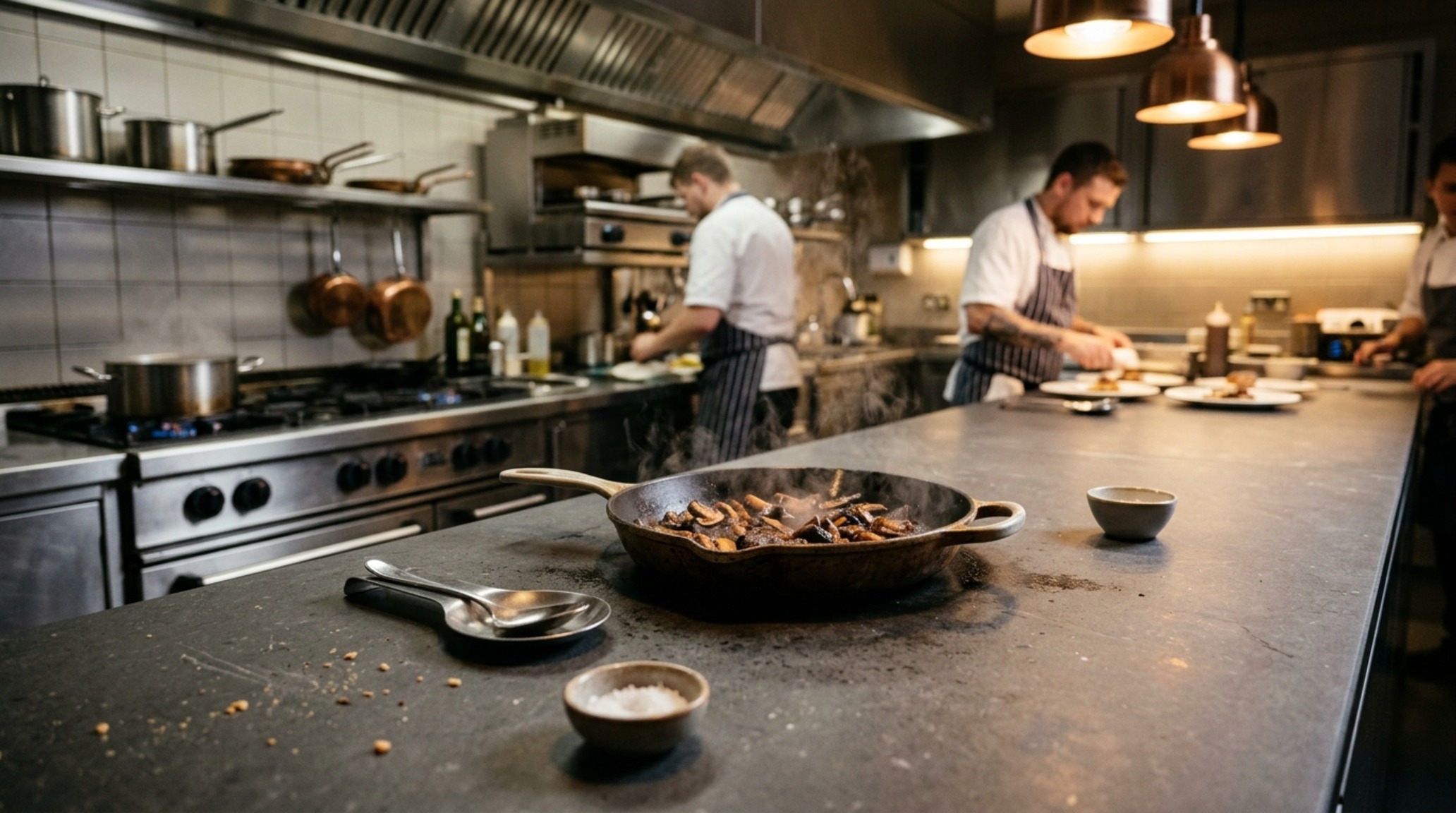
For those who treat cooking as a high-stakes performance art, heat-resistant kitchen surfaces are non-negotiable. This is where sintered stones like Dekton or high-grade natural granites pull ahead of the pack. Imagine a kitchen where the boundary between the cooking surface and the preparation area is blurred. Sintered stone allows for integrated induction burners placed directly beneath the slab, turning the entire countertop into a seamless, multifunctional plane. Because these materials are born in fire, they laugh at the heat that would crack a cheaper laminate or discolor a wood block.
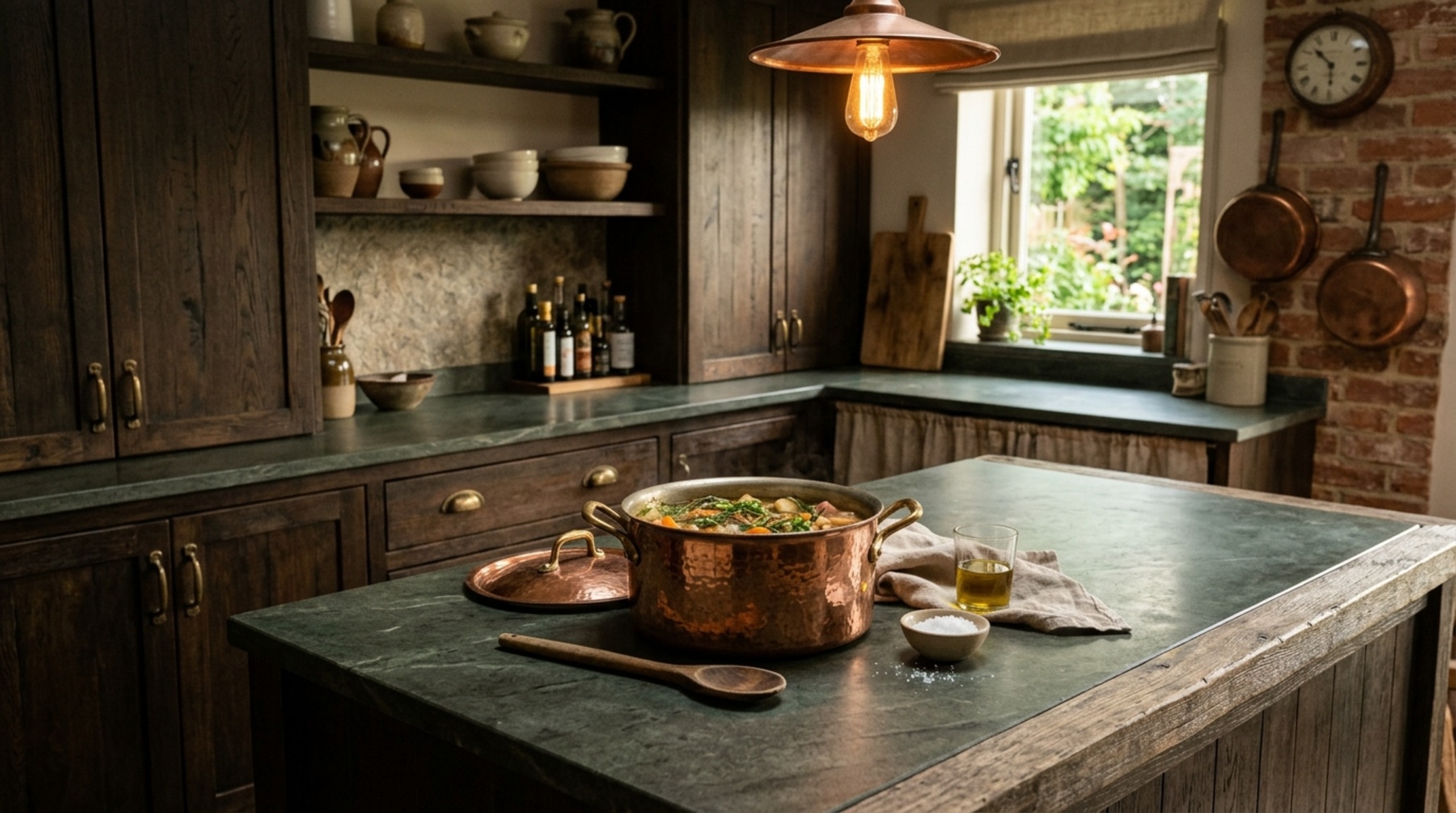
Natural soapstone also deserves a seat at this table. Historically used in laboratory settings, soapstone is chemically inert and thermally stable. It won’t react to acids or heat, and while it is soft enough to scratch, these marks can be sanded out or simply embraced as part of the material’s ‘living finish.’ The choice of heat-resistant kitchen surfaces isn’t just about safety; it’s about the freedom to move through the kitchen with a fluidity that isn’t hampered by the constant search for a trivet or a heat pad.
Eco-Friendly Kitchen Stone Options: The New Sustainability Paradigm
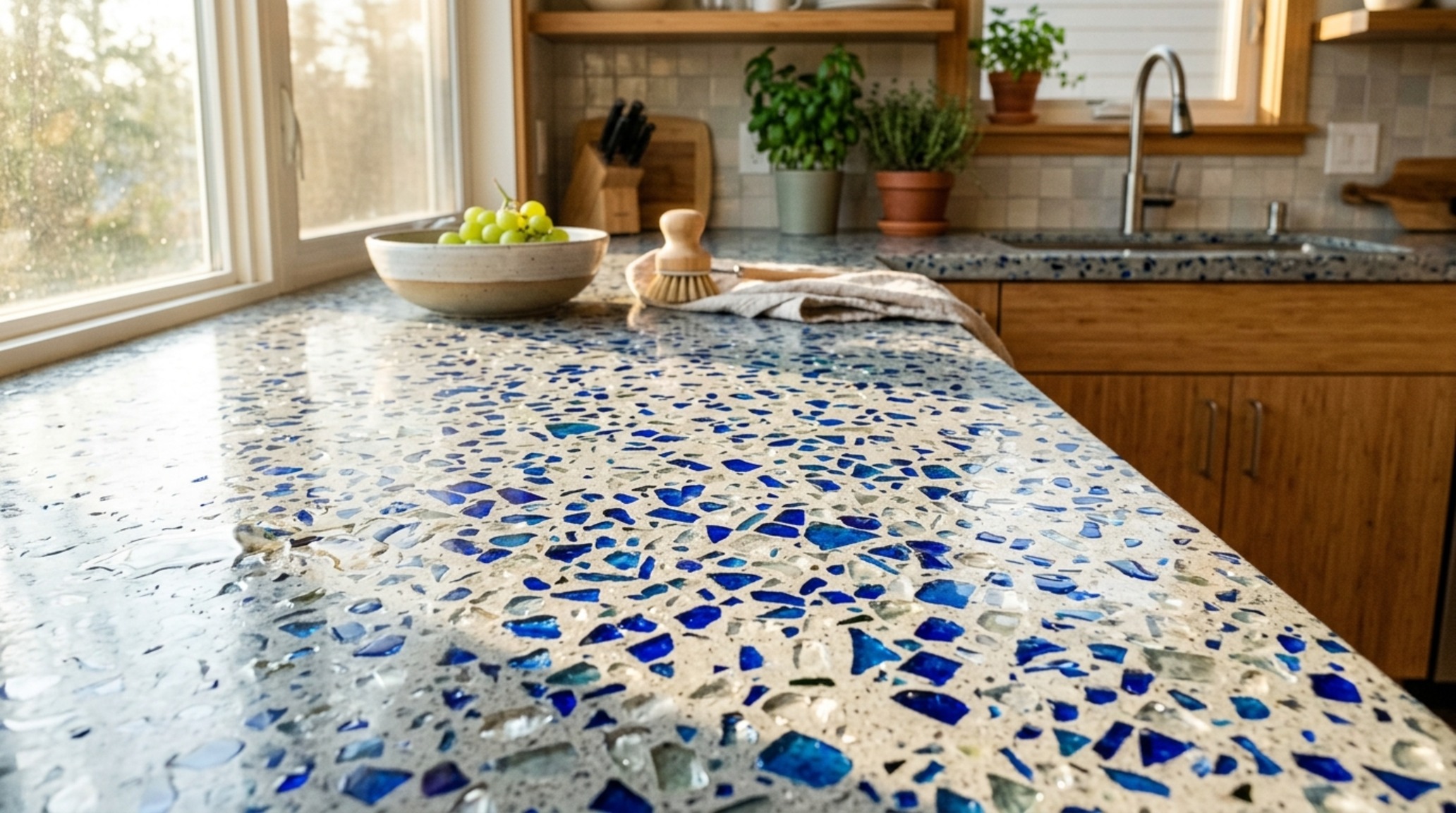
Sustainability in the kitchen is no longer a niche concern; it is a primary driver of the ‘quiet luxury’ movement. Eco-friendly kitchen stone options focus on reducing the carbon footprint of quarrying and transport. Recycled glass countertops, such as those by Vetrazzo, turn post-consumer glass into shimmering, artisanal slabs that look like underwater mosaics. These surfaces offer a depth of color that natural stone can’t match, capturing and refracting light in ways that change throughout the day.
Beyond glass, we are seeing the rise of ‘upcycled marble’—slabs created from the dust and fragments of Italian marble quarries, bound with bio-resins. This approach honors the heritage of the world’s most famous stones while ensuring that nothing goes to waste. When selecting eco-friendly kitchen stone options, consider the ‘miles per slab.’ Sourcing a local granite or a regional limestone often has a lower environmental impact than shipping a heavy piece of exotic quartz from across the globe. It is this intentionality—this conscious curation—that elevates a kitchen from a simple room to a masterpiece of responsible design.
Waterfall Island Design Cost: Investing in Architectural Drama
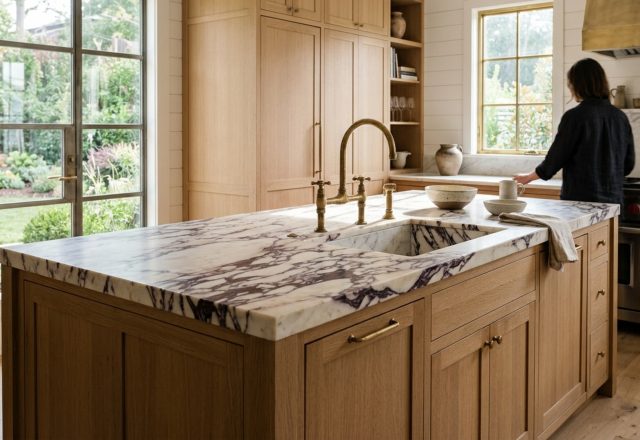
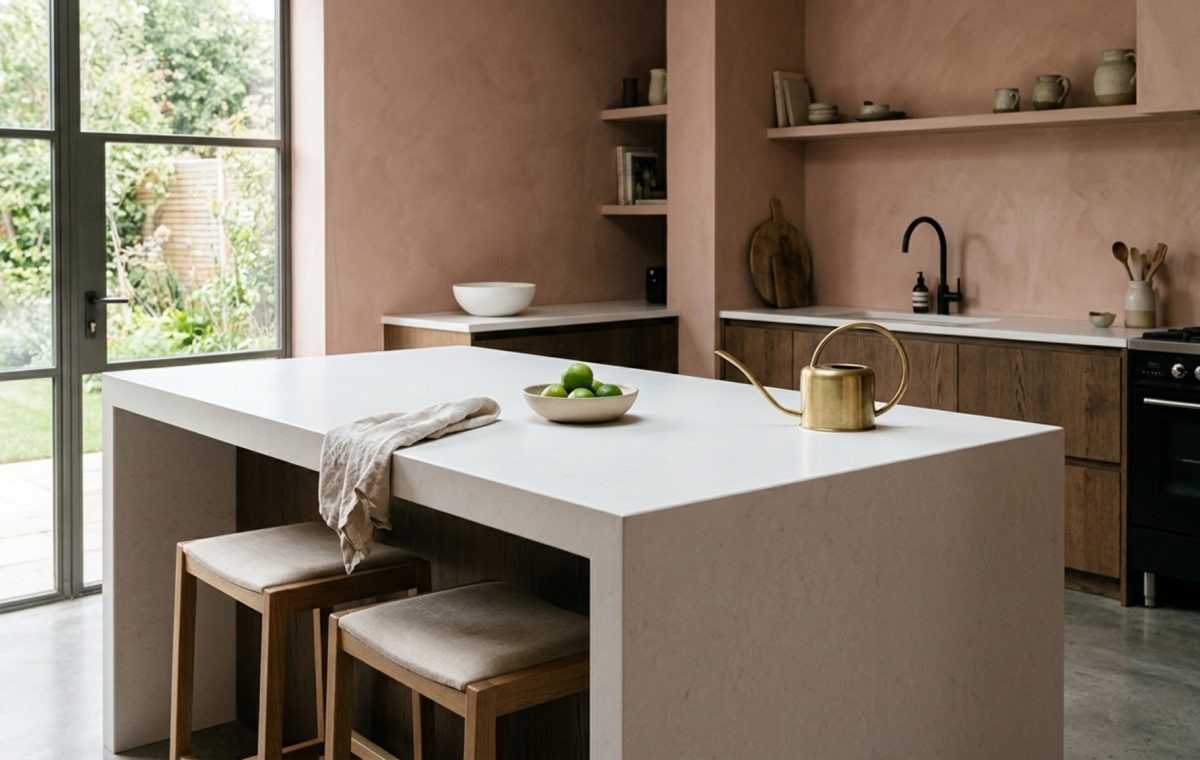
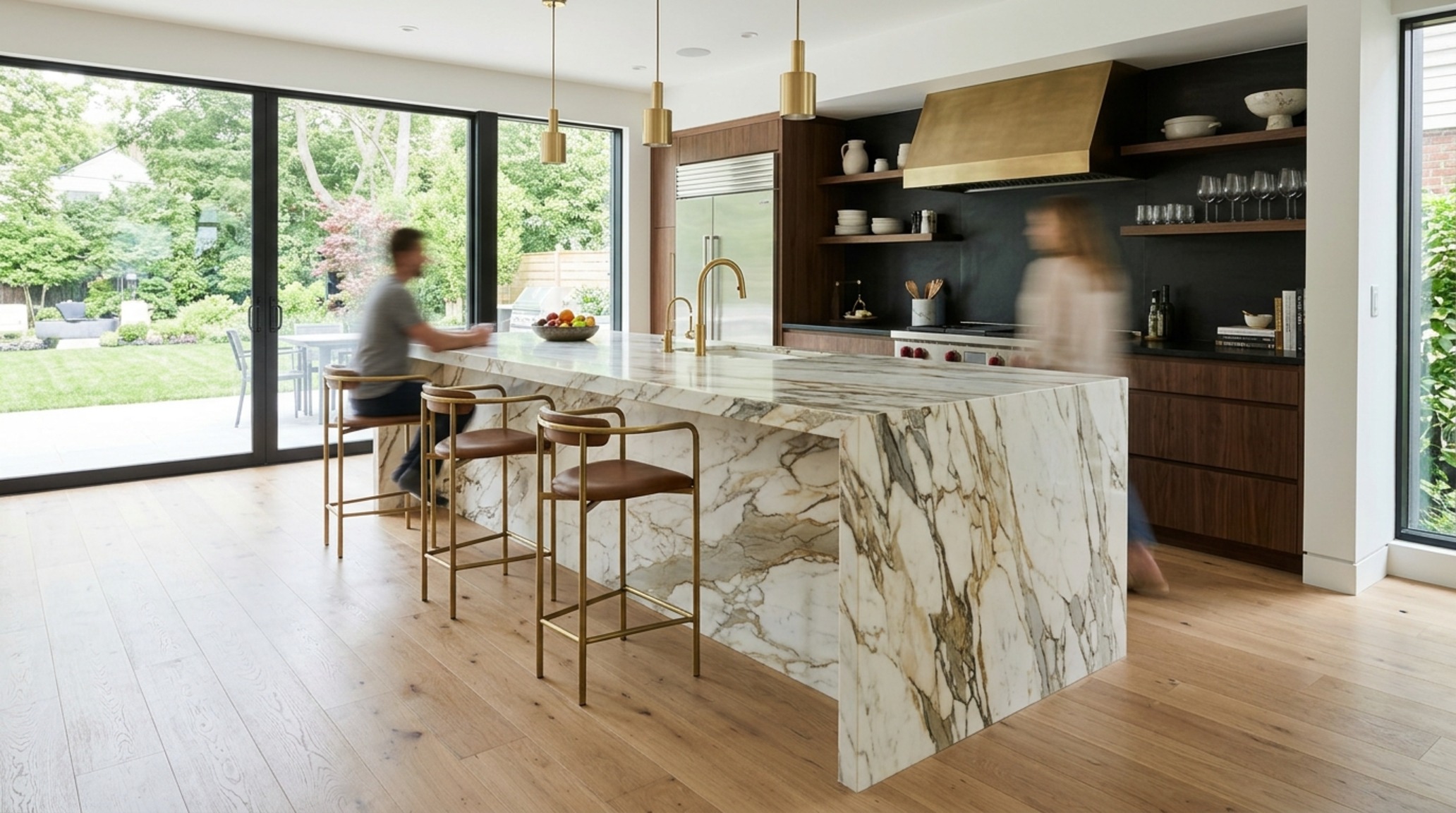
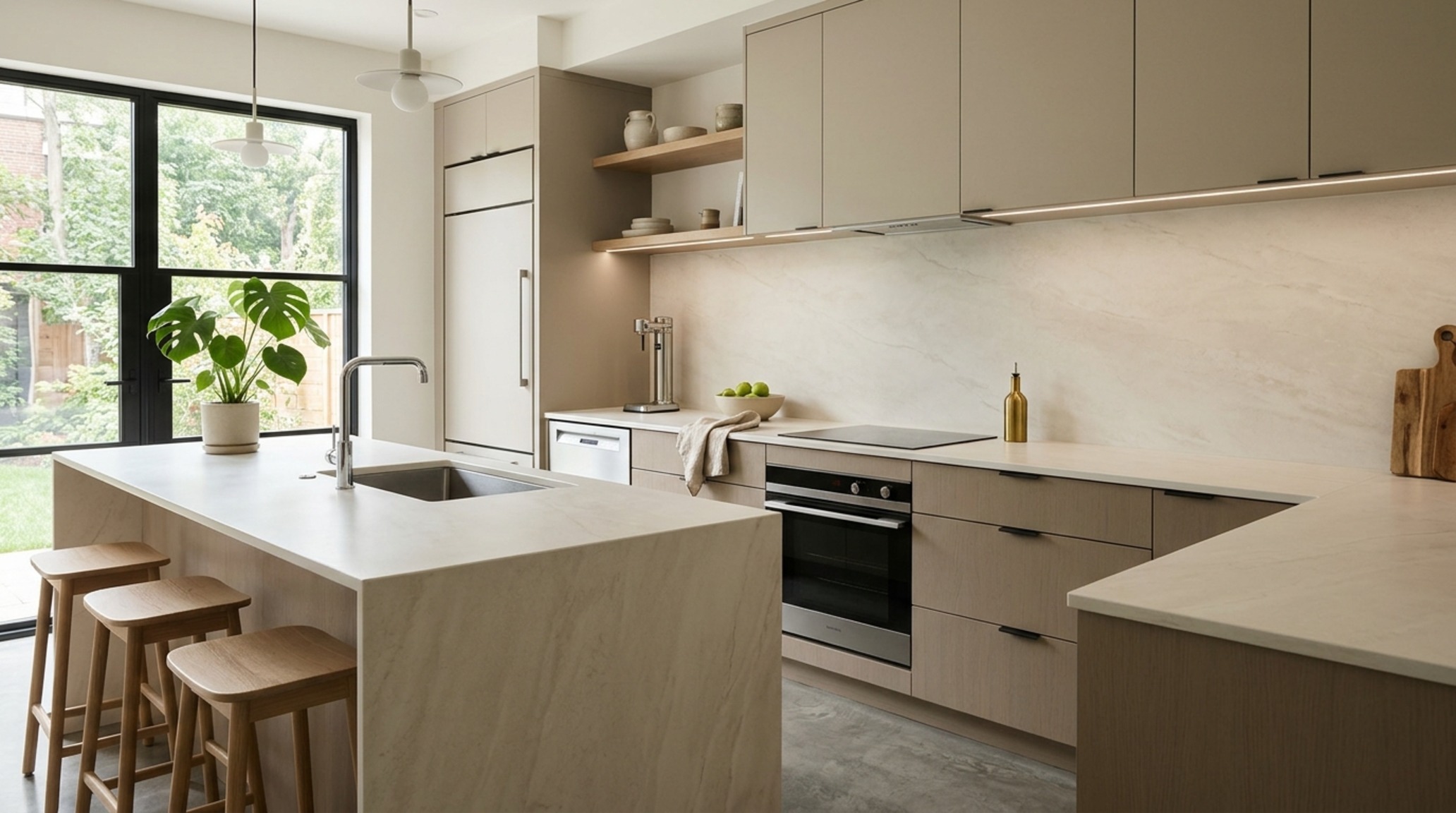
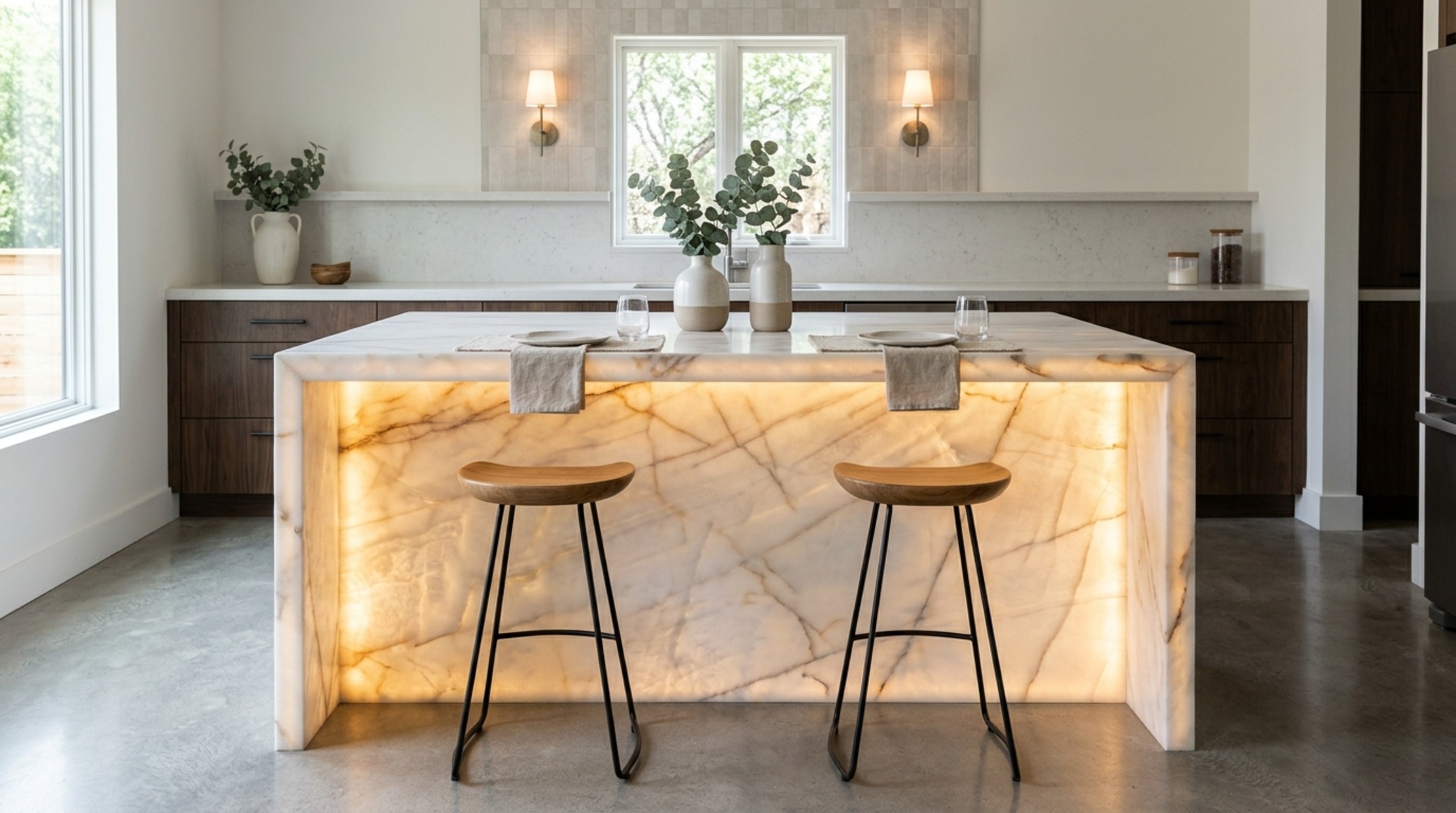
The waterfall island—where the countertop material continues vertically down the sides to the floor—has become the ultimate symbol of the modern luxury kitchen. It creates a monolithic block of color and texture that serves as the room’s sculptural centerpiece. However, calculating the waterfall island design cost involves more than just doubling the square footage of the stone. The true cost lies in the craftsmanship. A ‘bookmatched’ waterfall, where the veining flows seamlessly from the horizontal plane to the vertical drop, requires precision CNC cutting and expert installation. If the veins don’t line up, the entire architectural illusion is shattered.
Typically, a waterfall edge adds 30% to 50% to the total countertop budget due to the extra material and the labor-intensive mitered joints. Despite the price tag, many homeowners find the investment worth it for the way it hides cabinetry ends and creates a clean, continuous line. It’s a design move that works best with materials that have strong, linear veining, like Calacatta marble or certain adventurous quartzites. When the best kitchen countertop material is allowed to spill over the edge in a waterfall, it transforms the island into a piece of permanent furniture rather than just a storage box with a lid.
Curated Visual Narrative & Material Curation
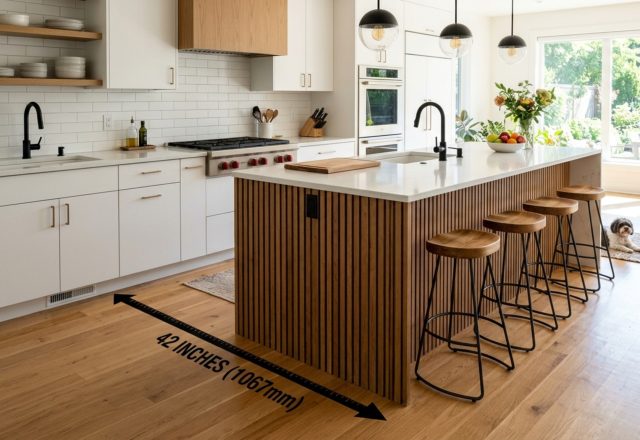
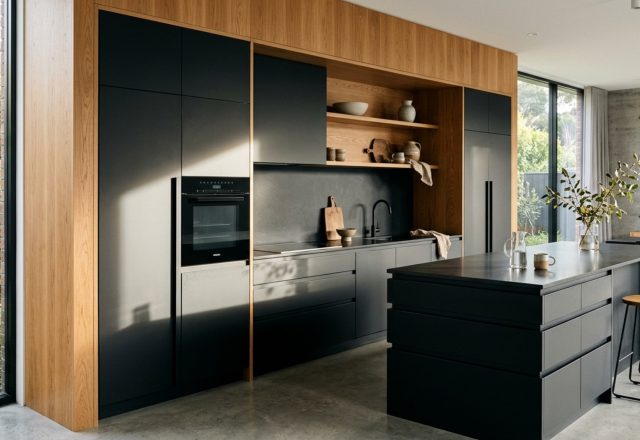
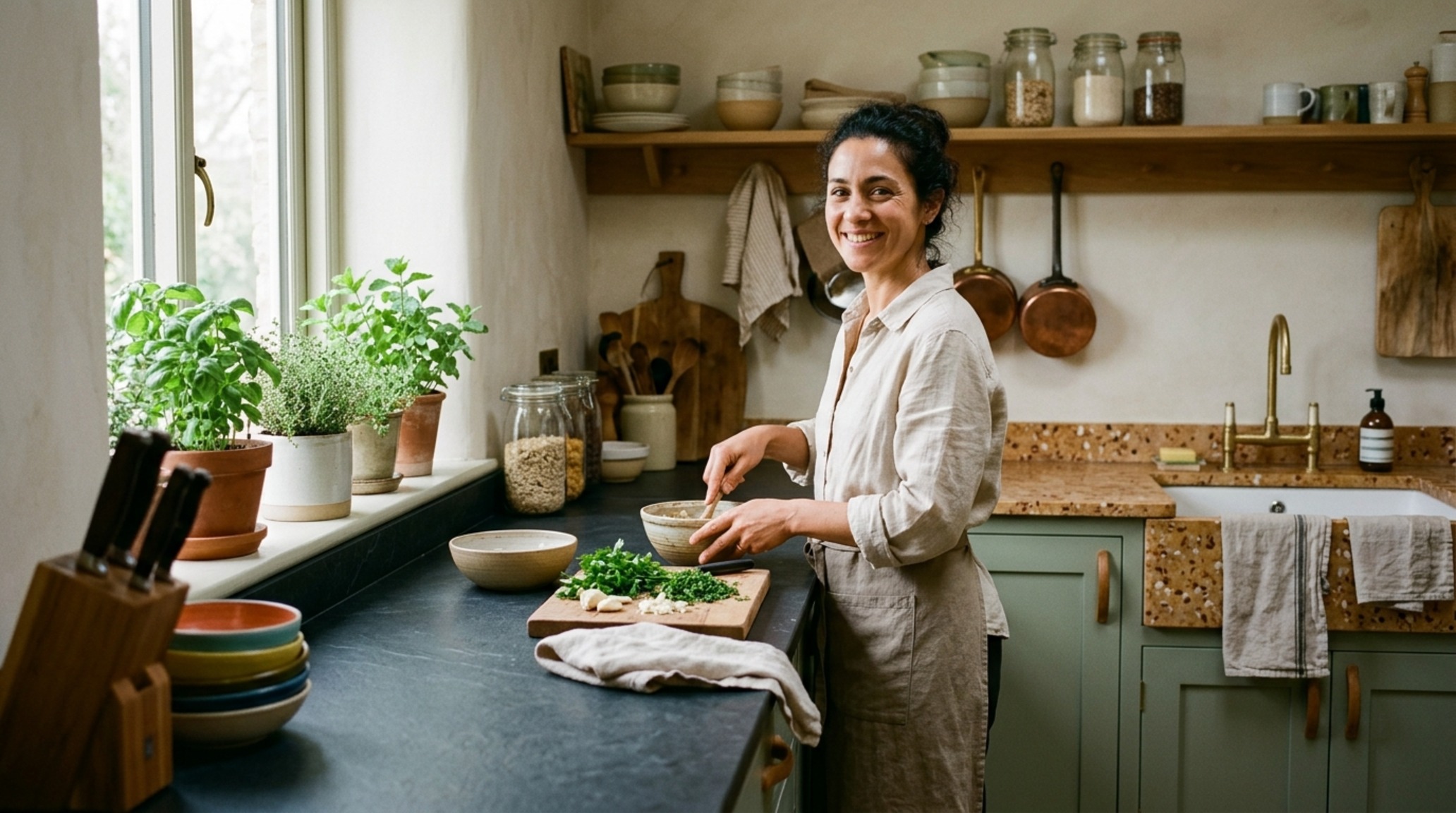
Visualizing these elements in a cohesive space requires an understanding of ‘spatial cadence.’ You want the eye to move smoothly across the room, landing on the island as the hero piece, while the perimeter countertops play a supporting role. Using a high-contrast palette—perhaps a deep charcoal soapstone on the perimeter paired with a bright, dramatic marble island—creates a sense of hierarchy. Lighting is the final, crucial ingredient. To truly appreciate the texture of your surfaces, use a mix of 2700K warm ambient lighting for mood and 3000K task lighting with a high CRI (90+) to ensure the colors of your food and the stone are rendered accurately.
Material Schedule & Architectural Clearances
Comprehensive material guide featuring exact paint swatches, authentic finishes, and spatial clearances.
Ultimately, the search for the best kitchen countertop material is a journey toward personal resonance. It is about choosing the surface that will witness your life’s messiest and most beautiful moments—the spilled flour of a Saturday baking session, the condensation from a cold glass on a summer night, and the quiet glow of the early morning light. By prioritizing the sensory experience and the architectural integrity of the material, you create a kitchen that doesn’t just look expensive but feels deeply, authentically like home. In the end, the most premium surface is the one that invites a touch, encourages a conversation, and ages with a grace that mirrors the life lived around it.
Editorial Silo • Recommended Architecture Studies
- The High-Performance Engine: Mastering Ergonomics and Invisible Utility in Kitchen Islands Design — Archival Design Case Study
- Curation of Touch: Merging Materiality and Atmosphere in Modern Kitchen Cabinet Styles — Archival Design Case Study
Curated Interior Perspectives
A sensory design chronicle exploring materiality, natural illumination thresholds, and spatial ease.
Curated Visual Lookbook
Design Gallery & Spatial Studies
A visual curation of architectural arrangements, lighting concepts, and material palettes featured in this space.