The Real Job of a Corridor
Long corridors trick the eye. They look endless, yet they choke up the moment someone drops a work bag on the floor. Most homeowners view them merely as wasted space, turning them into cluttered storage zones. That is a mistake. A transit path must breathe. When you balance passage clearance with purposeful drop zones, narrow hallway design shifts from an awkward architectural handicap into one of the most serene corners of your home.
Keep the central walking path clear to preserve natural movement and allow light to travel unhindered.
Ditching Bulky Storage for Shallow Ledges
Depth is your primary enemy here. Standard cabinets measure anywhere from sixteen to twenty inches deep—far too wide for an older apartment or a traditional pre-war passage. Walk past that every morning and you will inevitably bruise a hip.
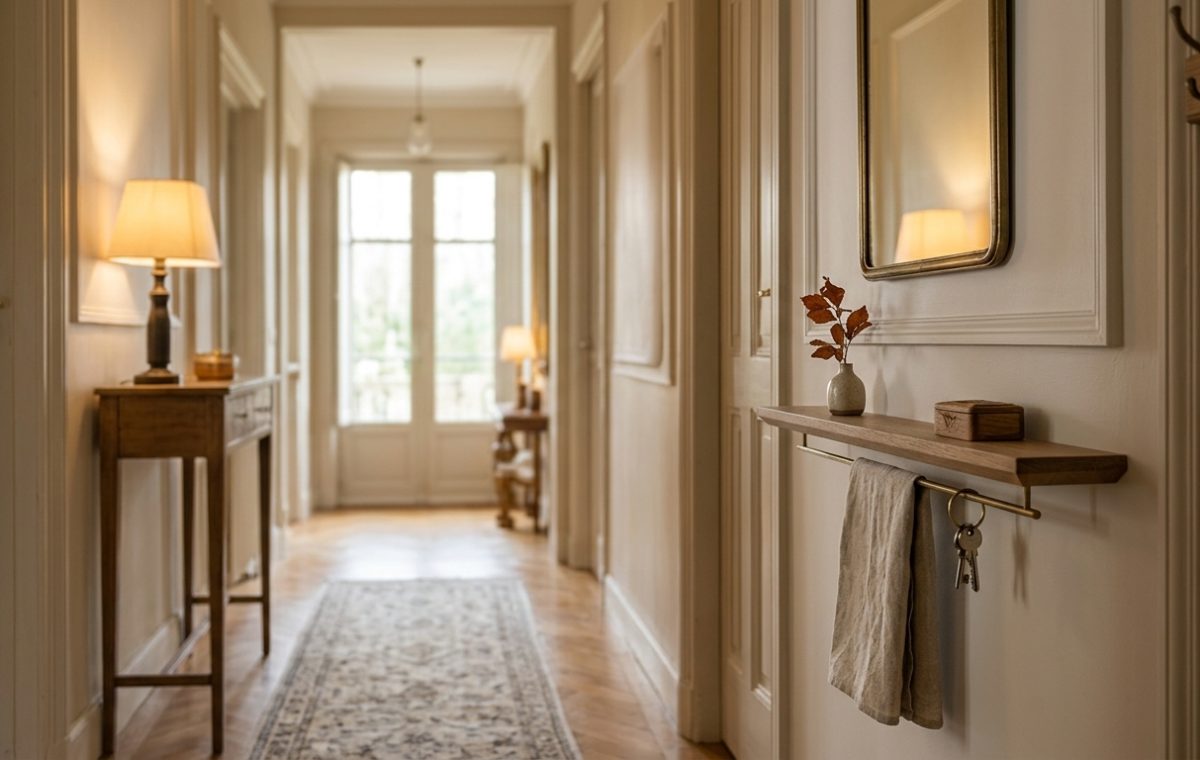
Look at the floating timber ledge featured on the wall. It barely projects five inches. Yet, with a slim brass rail underneath, it handles keys and a linen towel without protruding into your walking radius. Is it going to hold three winter parkas? Absolutely not. Be realistic about what actually needs to live by the front door. Daily essentials stay; seasonal overflow belongs behind a closed closet door elsewhere.
Guiding the Stride with Runners and Sightlines
A bare, echoing passageway feels clinical. It bounces every footstep across the house. A properly scaled hallway runner rug instantly softens footsteps while grounding the entire corridor. Make sure you leave at least four to five inches of bare floor visible on either side of the weave. Showing the underlying floorboards—especially herringbone parquet—preserves visual width.
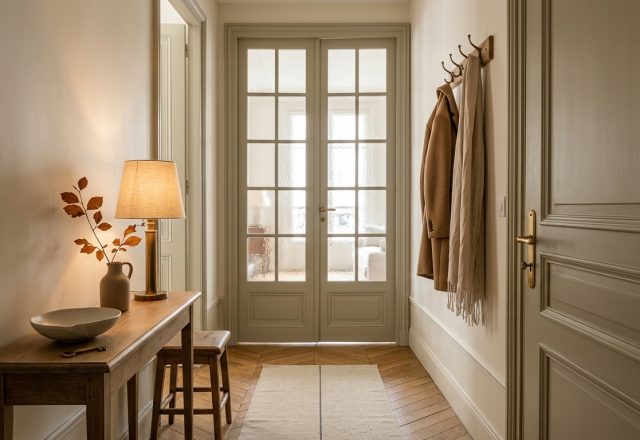
Notice what happens at the far end of this layout. Tall glass doors draw your eyes forward toward outdoor greenery. If your hall terminates at a blank drywall partition, hang a single framed sketch or place a slim, tall mirror to capture bounce light. Give the eye a destination.
Corridor Lighting That Calms Rather Than Blinds
Recessed downlights often turn corridors into sterile office pathways. Overhead spotlights cast harsh shadows downward, making ceilings feel lower than they are. Ambient fixtures change everything.
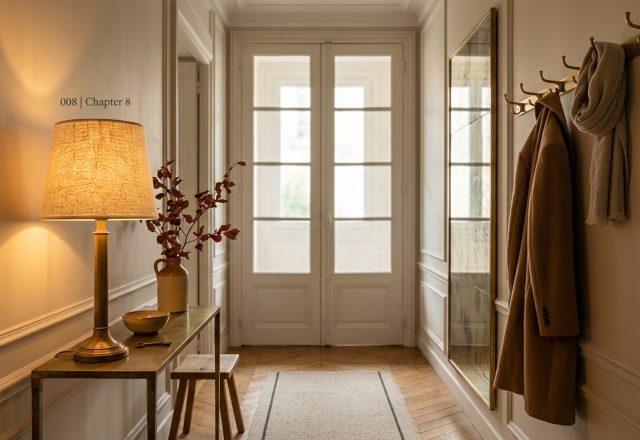
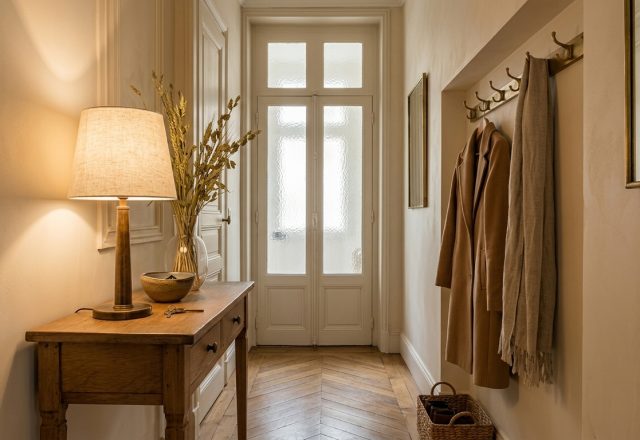
- Shaded table lamps: Placing a delicate lamp on a slender side table provides a soft, warm pool of light right at eye level.
- Wall sconces: Mount them slightly above head height to prevent glare while washing the upper mouldings in amber light.
- Natural light filtration: Keep drapery sheer at the end of the hall so midday sunlight flows straight through into darker interior rooms.
A hallway should never feel like an afterthought. When you strip back the heavy furniture and give daily habits dedicated micro-surfaces, moving through your home becomes remarkably fluid. How much usable walking width are you currently sacrificing to furniture you rarely even open?
Editorial Lookbook & Photo Collection