The Architectural Friction of Utility: Reclaiming the Entryway
Why do we so often permit the most transitional spaces in our homes to become the most aesthetically neglected? There is a persistent design tension between the rigorous demands of daily organization and the desire for a serene, curated atmosphere. Integrating a fold up clothes hanger transforms this friction into a moment of intentionality, turning a utilitarian necessity into a sculptural accent that commands attention without demanding permanent floor space. When we stop viewing hardware as a ‘fix’ and start viewing it as a ‘finish,’ the spatial narrative of a mudroom or walk-in closet shifts from cluttered to choreographed.
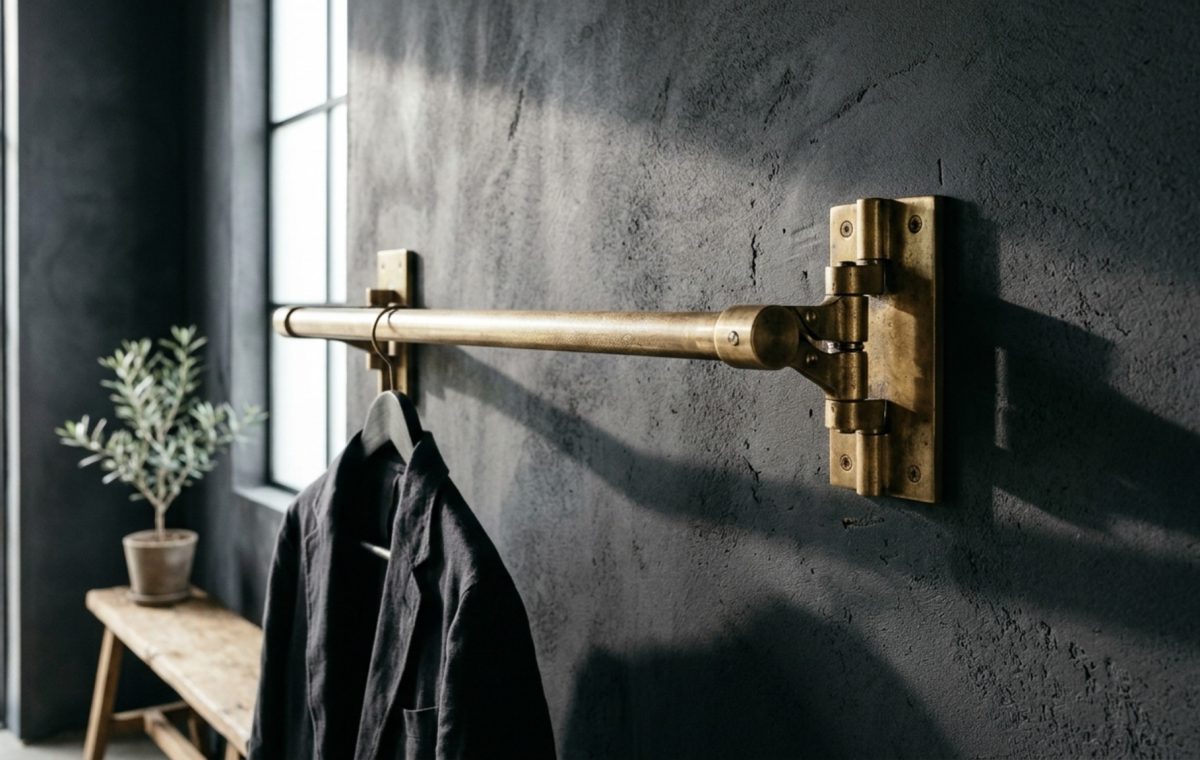
In high-end residential architecture, the luxury of space is often less about square footage and more about the intelligence of the layout. We look for ‘breathing room’—that elusive negative space that allows a room to feel expansive. Traditional bulky wardrobes or permanent standing racks consume this oxygen. By contrast, a wall-mounted sculptural element offers a lean, architectural profile. It is about the shadow play created by a hand-rubbed brass arm against a backdrop of Farrow & Ball Setting Plaster, or the satisfying tactile ‘click’ of obsidian powder-coated steel meeting a magnetic catch. These are the details that define a home’s tactile grounding.
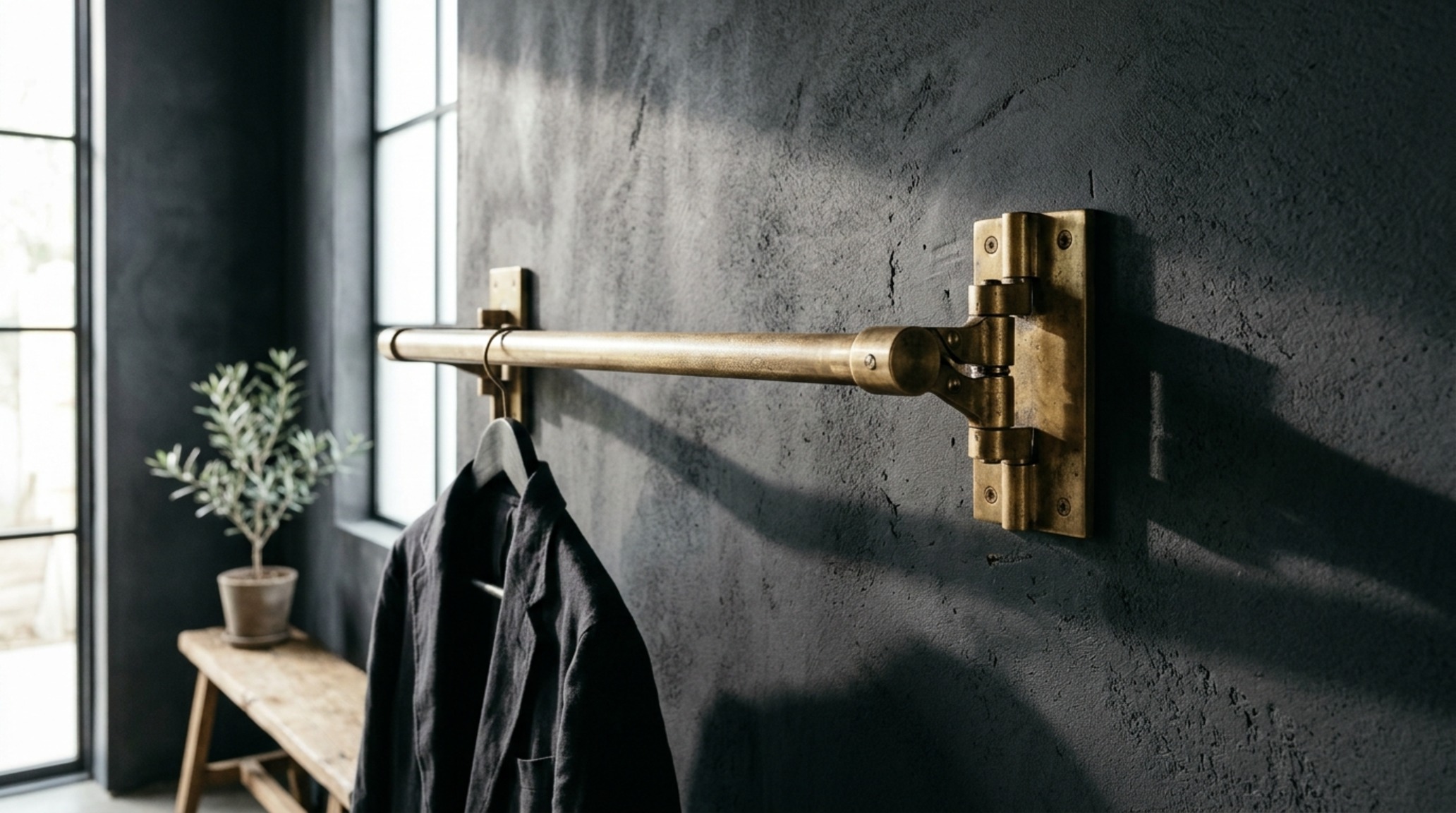
Notice how the light catches the burnished edges of the hardware in the study above. This isn’t merely a place to hook a trench coat; it is a metallic punctuation mark. When the hanger is retracted, it sits flush, mimicking the clean verticality of custom millwork. When deployed, its cantilevered form creates a temporary architectural projection that is as functional as it is visually compelling. This duality is the hallmark of sophisticated hardware selection.
Minimalist Valet Bar: Defining the Morning Ritual
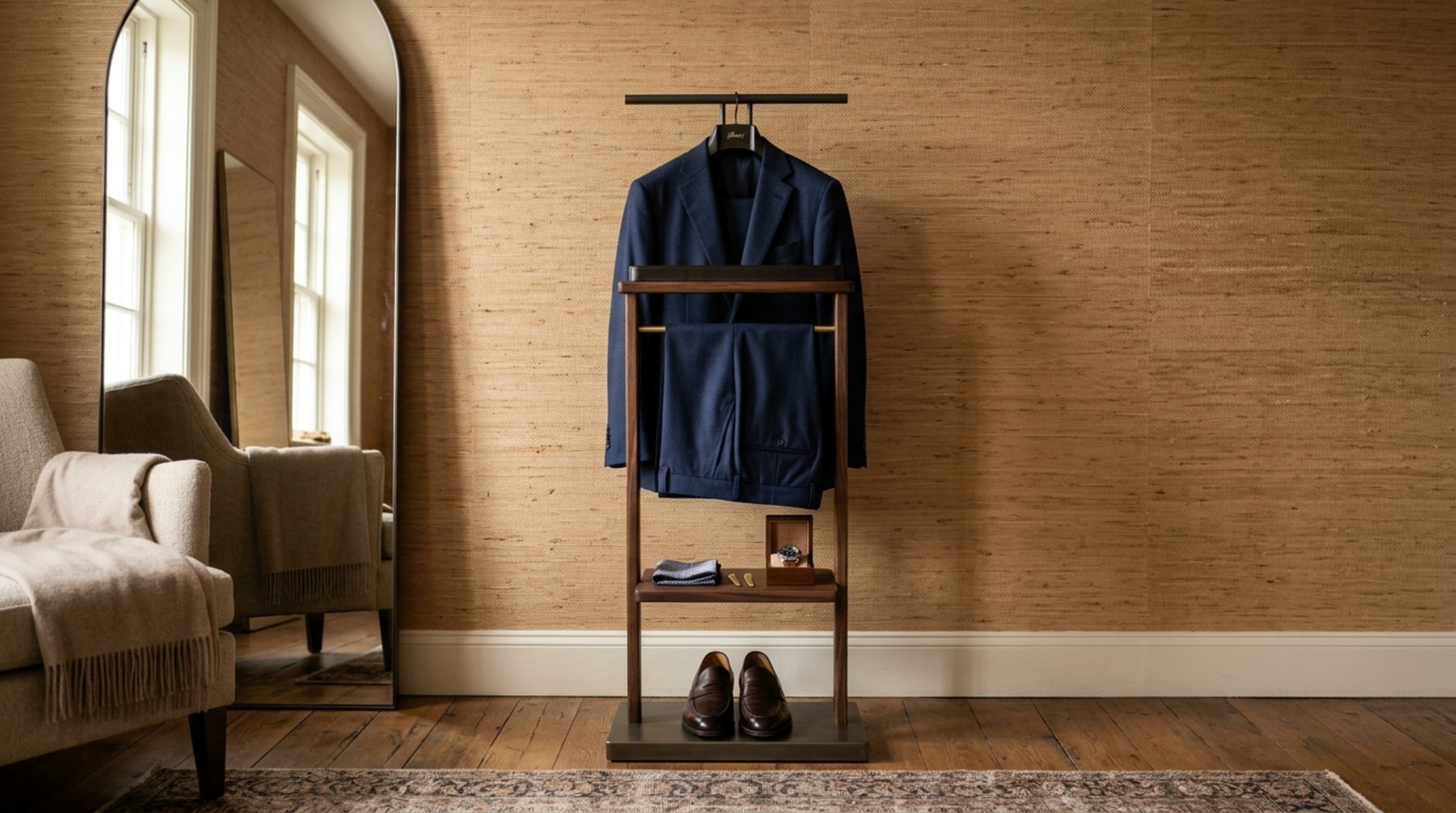
The primary suite deserves a sense of ceremony. We often talk about ‘spatial cadence’—the rhythm of how we move through a room from the moment we wake. A minimalist valet bar acts as a silent assistant in this ritual. Positioned strategically near a full-length mirror or adjacent to a bespoke vanity, it provides a dedicated stage for the next day’s attire. This prevents the ‘chair-drobe’ phenomenon, where beautiful furniture is obscured by discarded layers, and instead elevates the garment to an object of display.
When specifying a valet bar, materiality is paramount. Consider the warmth of reclaimed walnut paired with cold-rolled steel. The juxtaposition of organic wood grain against industrial textures creates a sophisticated visual tension. In a room bathed in 2700K warm ambient lighting, the soft glow on a walnut finish provides a sense of hearth-like comfort, even in a modern minimalist setting. This is where the hardware transcends its mechanical purpose to become a piece of micro-furniture.
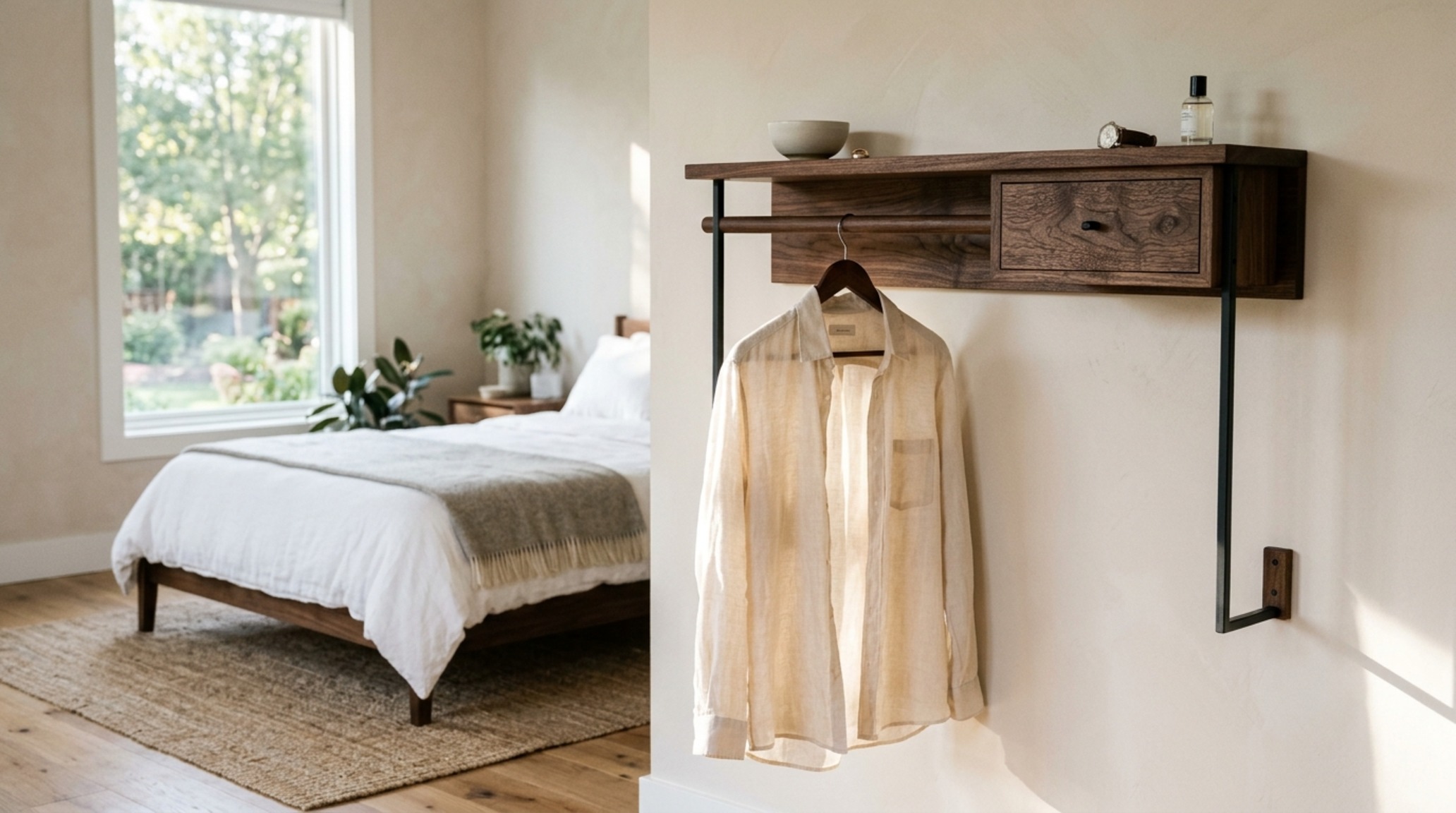
As seen in the visual study, the placement of the hardware aligns perfectly with the room’s sightlines. By maintaining a 36-inch primary circulation path, the retractable element never feels like an intrusion. It respects the floor plane while utilizing the vertical plane, a crucial strategy for maintaining the ‘airy’ quality of a well-designed walk-in closet. This is architectural efficiency disguised as luxury.
Retractable Garment Rod: Engineering the Invisible Closet
In the world of high-density urban living or the meticulously planned mudroom, the retractable garment rod is an exercise in ‘stealth design.’ The goal is to provide maximum utility with a zero-gravity footprint. Engineering these pieces requires a focus on load-bearing integrity without the visual weight. High-grade aluminum or reinforced stainless steel allows for a slender profile that can easily support the weight of heavy winter wools or damp linens.
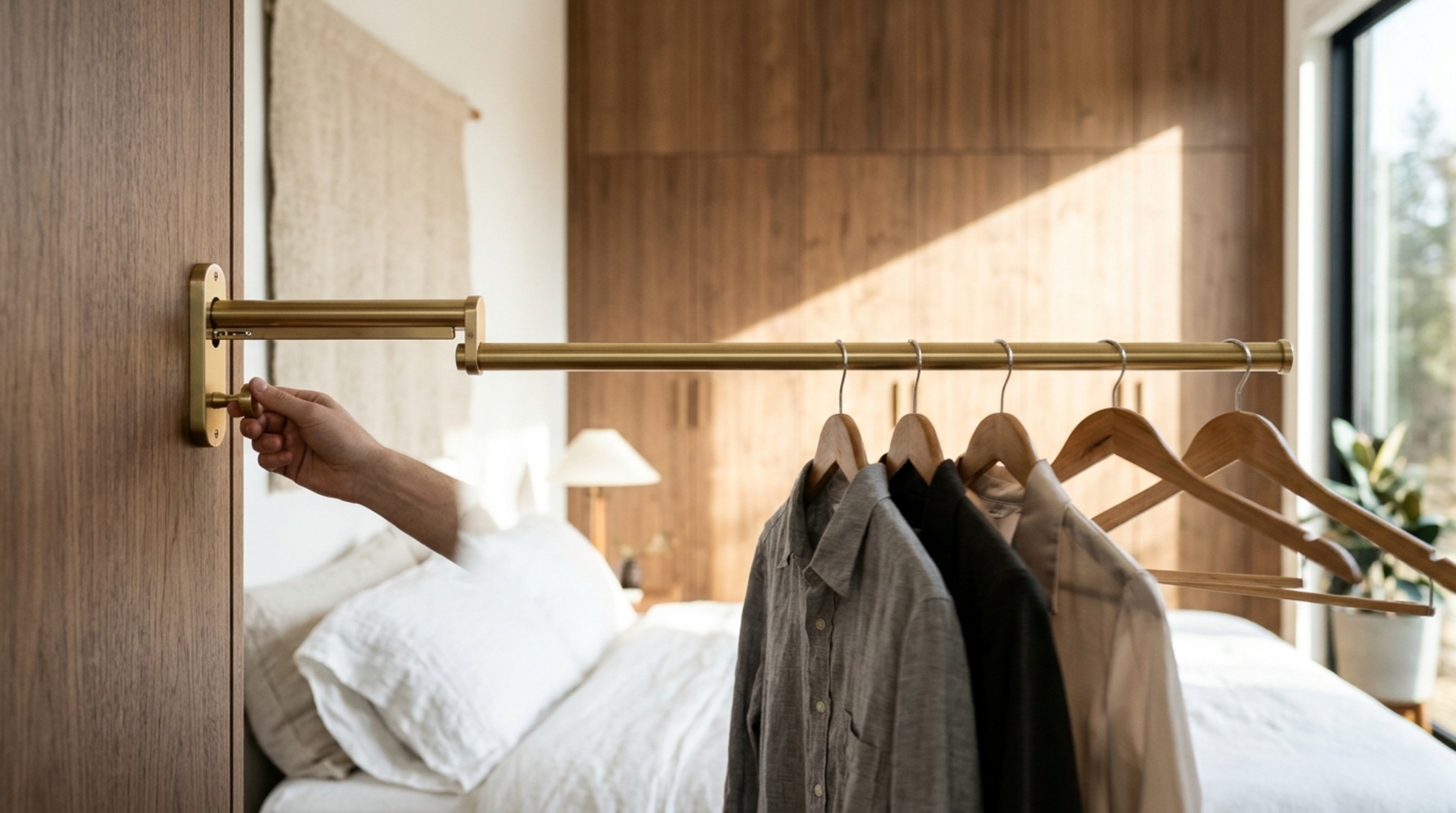
Color theory plays a vital role here. For a seamless look, one might match the hardware to the wall color—obsidian on a Slate Charcoal wall creates a moody, monochromatic depth. Alternatively, using a contrasting finish like brushed gold against a backdrop of Benjamin Moore Swiss Coffee creates a focal point that draws the eye upward, celebrating the hardware as a deliberate design choice rather than a hidden utility.
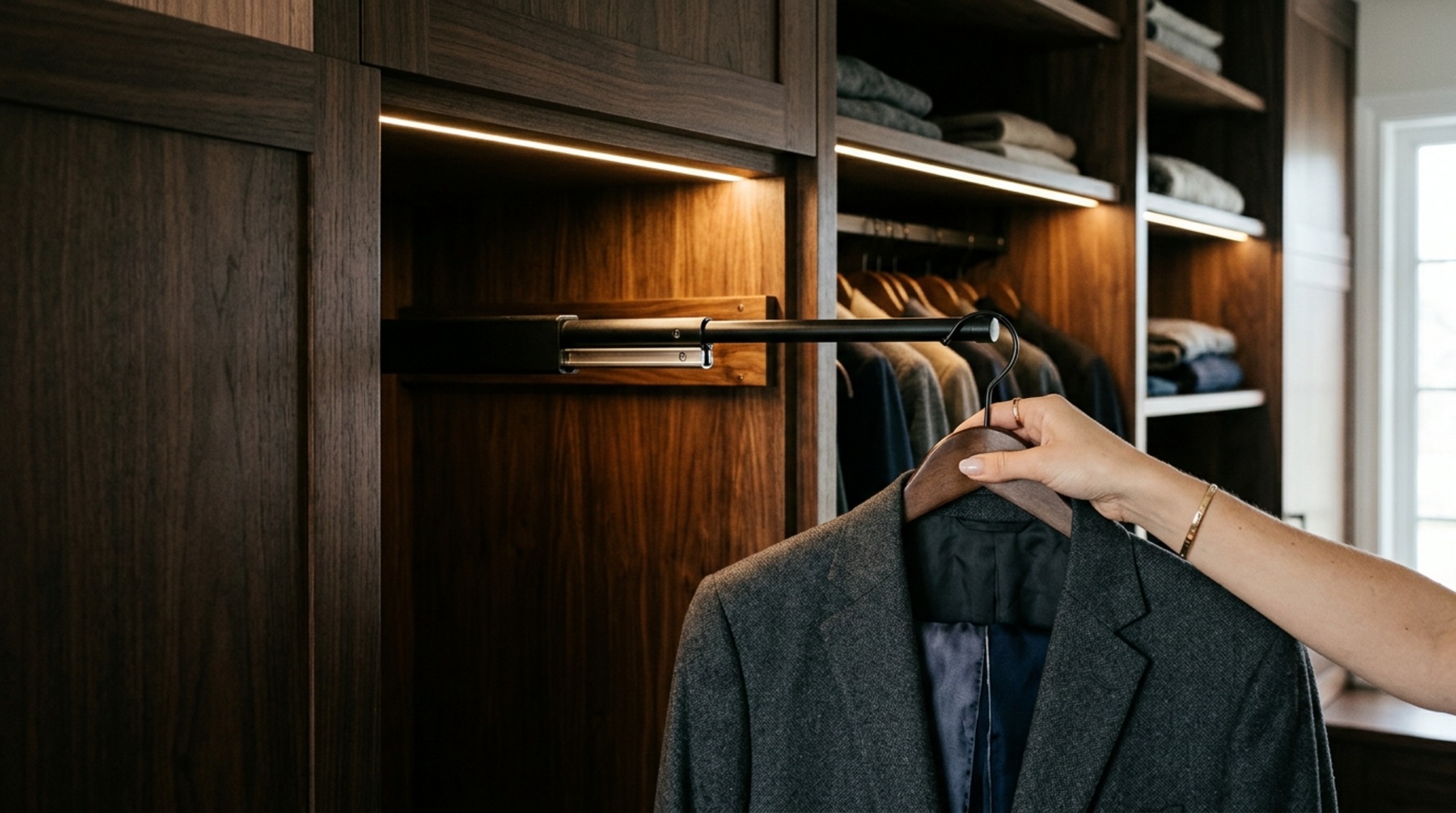
The transition between the cabinetry and the retractable rod in this vignette demonstrates the importance of ‘shadow lines.’ A small gap between the hardware flange and the millwork adds a sense of depth and professional craftsmanship. It is these millimeter-level decisions that separate a DIY installation from an architecturally integrated solution.
Spatial Perspectives & Material Curation
Beyond the primary suites, the functional zones of a home—the laundry room, the back entry, the utility closet—require a different kind of architectural rigor. Here, the hardware must stand up to high-traffic use while maintaining the home’s overall design language. There is no reason a laundry room shouldn’t feel as considered as a kitchen. By applying the same finish palette—perhaps unlacquered brass that will patina over time—you create a cohesive thread that runs through the entire property.
In this curated gallery, we see how the hardware interacts with tactile wallpaper textures and fluted wood panels. The play of light across the different surfaces emphasizes the ‘sculptural’ aspect of the fold up mechanism. It’s not just a hanger; it’s a study in geometry. The sharp angles of the arm when extended contrast beautifully with the soft, organic drapes of fabric it holds.
Heavy-Duty Wall Mounted Clothes Rack: Strength Meets Silhouette
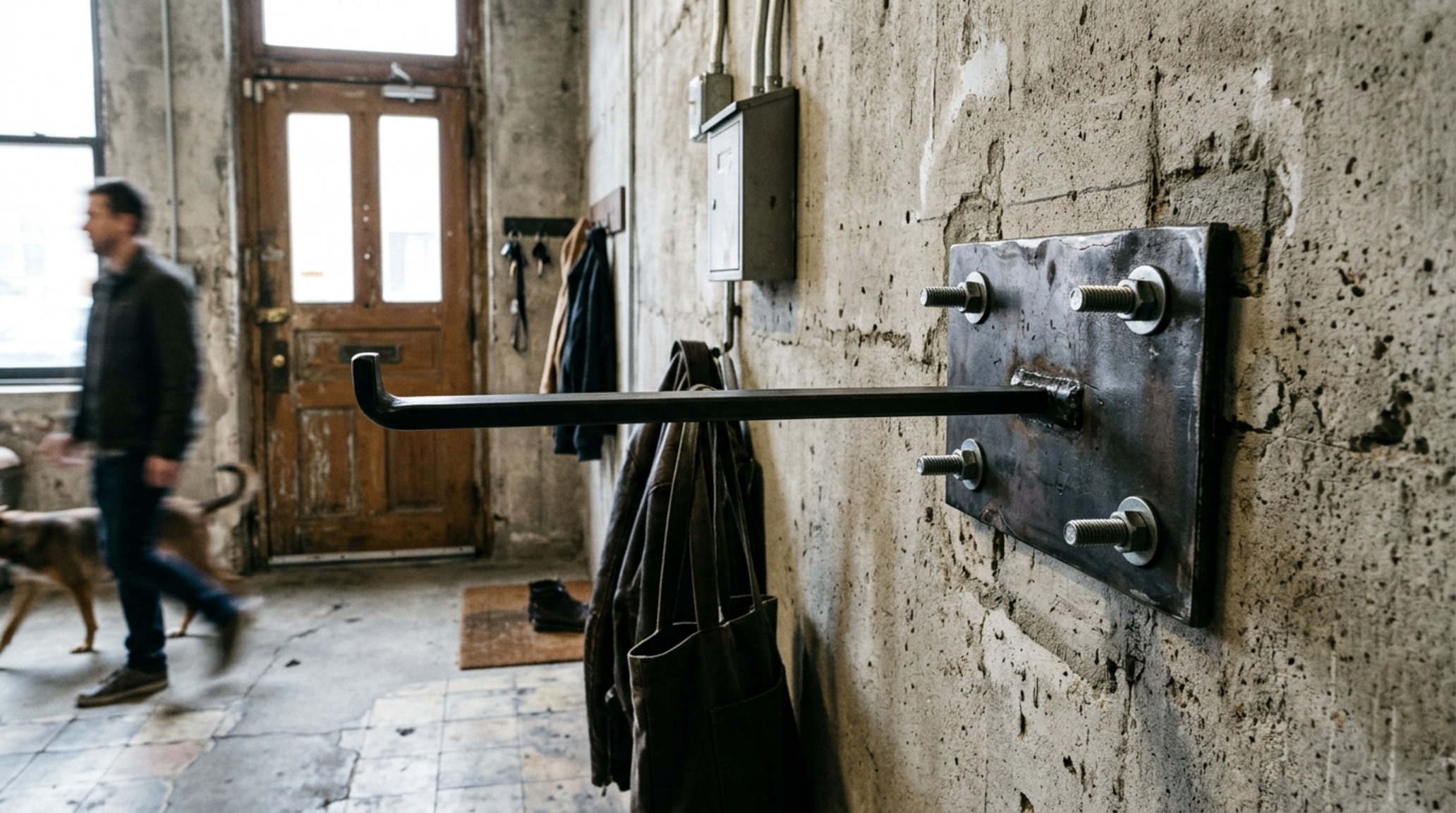
For the active household, a heavy-duty wall mounted clothes rack is non-negotiable. Whether it’s drying delicate athletic wear or staging gear for a weekend excursion, the hardware must be ‘over-engineered’ in the best sense. We look for solid-core metals and mounting plates that distribute weight across multiple studs. However, ‘heavy-duty’ doesn’t have to mean ‘clunky.’ Modern designers are creating high-capacity racks that maintain a slim, razor-thin silhouette.
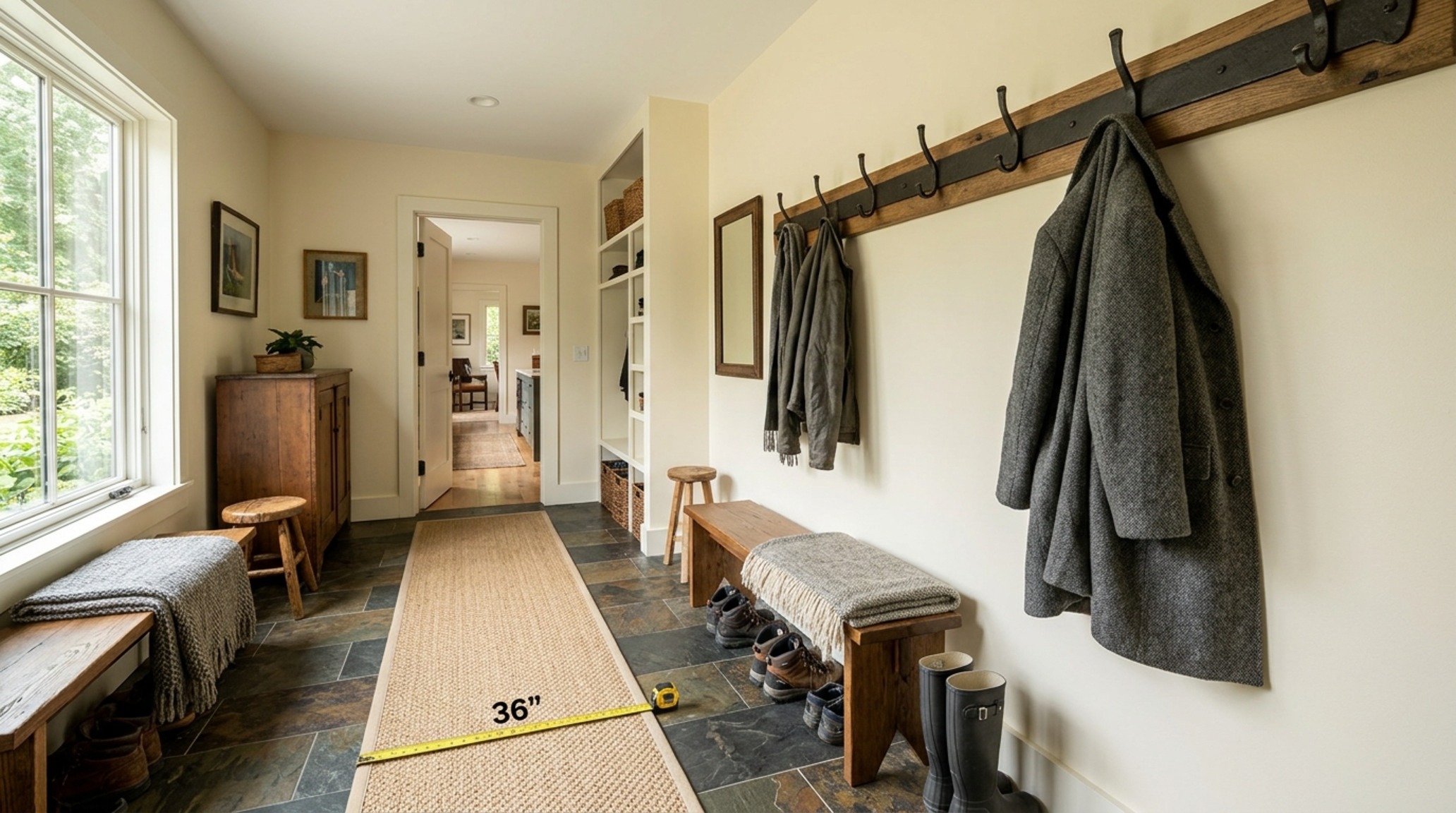
Consider the ergonomics of height. Mounting these pieces at a 66-inch ‘high-hang’ position or a 40-inch ‘low-hang’ position allows for versatility. In a mudroom, a staggered installation of three or four fold up units at varying heights creates a dynamic wall installation that adapts to the changing needs of a family, from long raincoats to short children’s jackets.
Compact Laundry Drying Solutions: Elevating Functional Zones
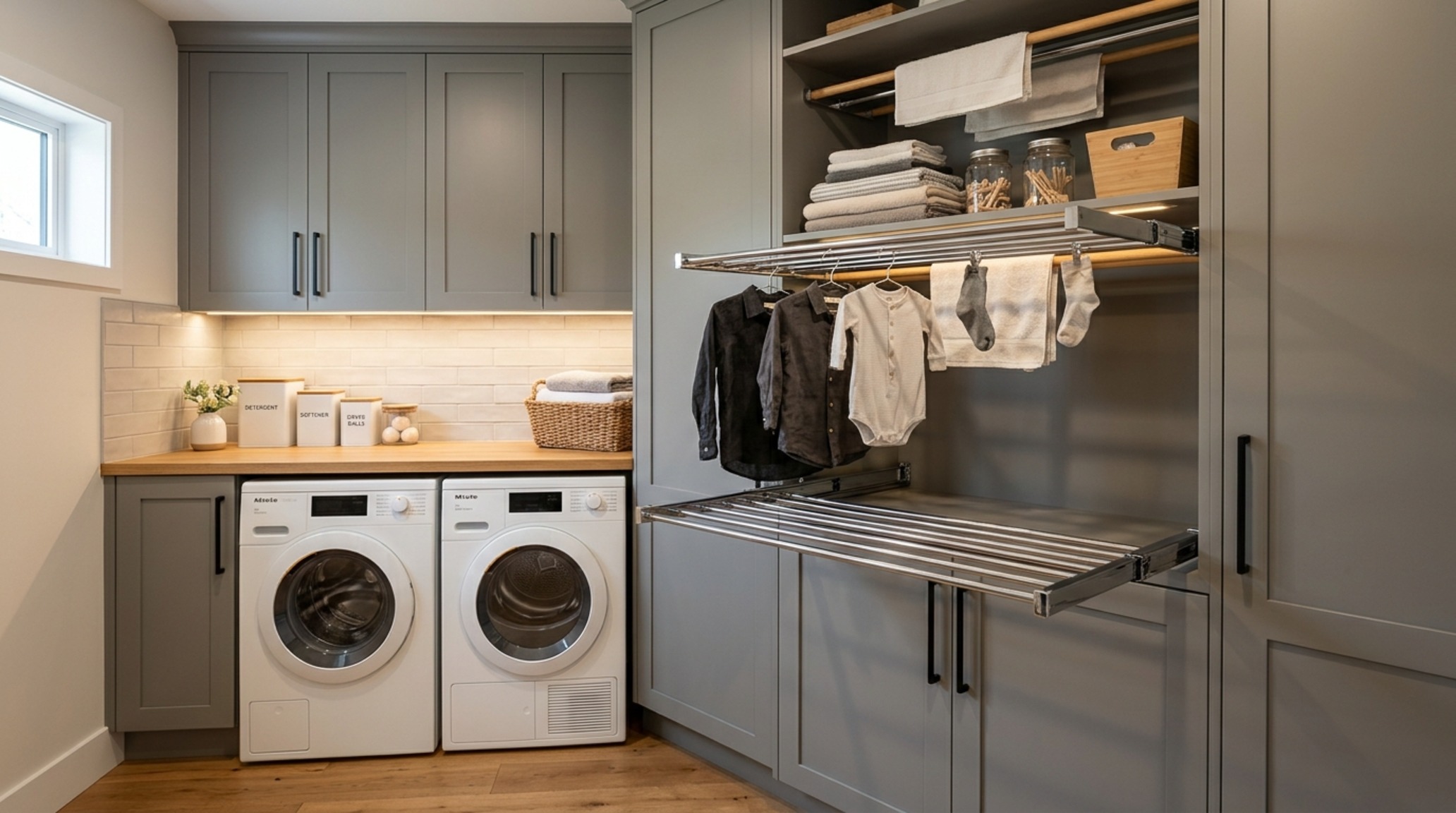
The laundry room is often the most cramped space in the house, making compact laundry drying solutions essential for maintaining sanity. Instead of a collapsible floor rack that blocks the 30-inch clearance needed for a washing machine door, a series of wall-mounted fold up hangers allows for vertical drying. When the laundry is done, they disappear back into the wall, restoring the room’s visual order.
Lighting in these spaces should be functional yet flattering. A high CRI (90+) rating is essential for color accuracy when doing laundry, but moving to a 3000K task lighting prevents the space from feeling clinical. When this light hits a polished chrome or nickel hanger, it adds a crisp, clean sparkle to the room that reinforces the feeling of a fresh, organized home.
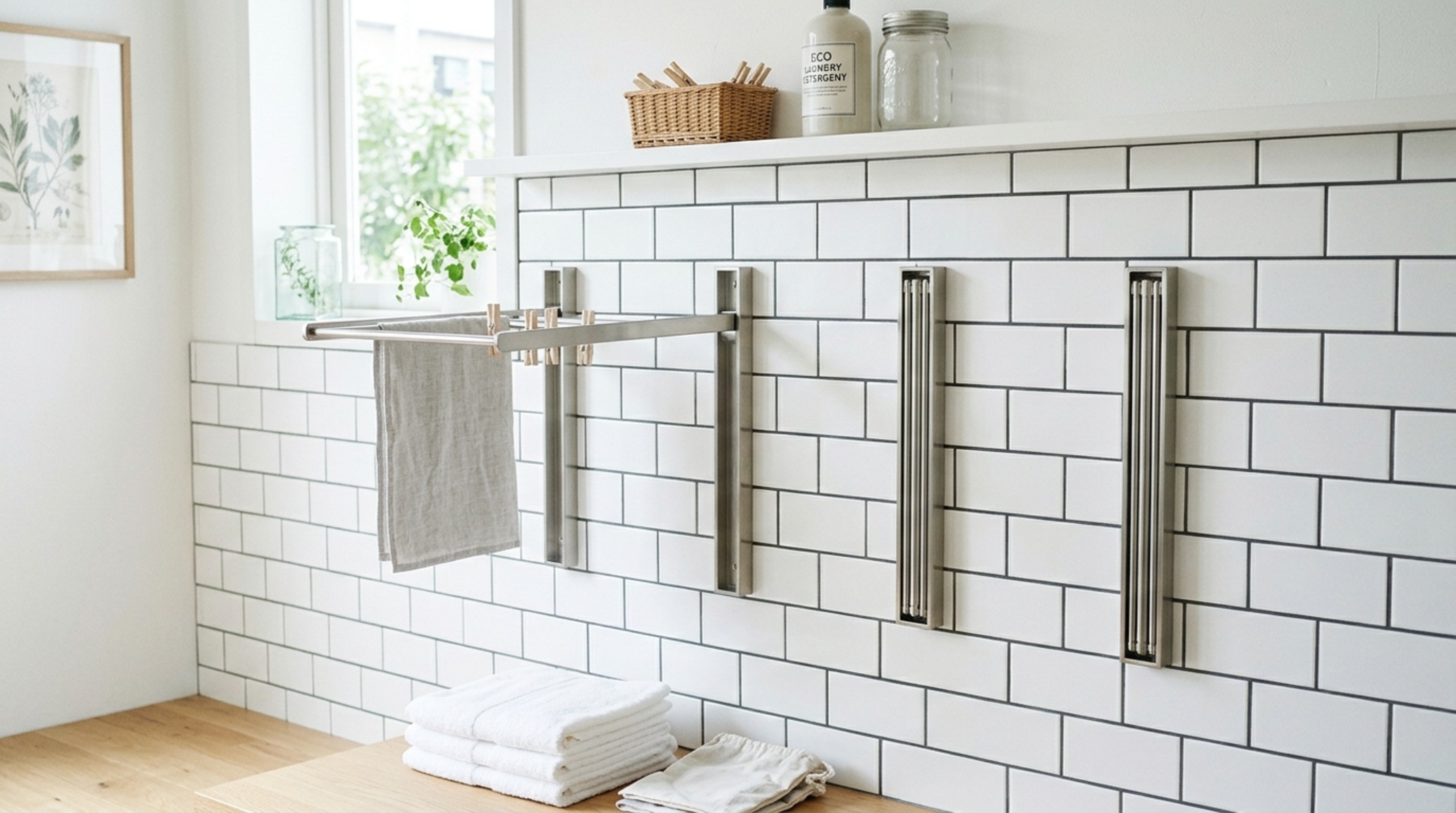
In the preceding image, the integration of the hardware within a tiled backsplash shows how even hard surfaces can accommodate these sculptural elements. The contrast between the cool ceramic tiles and the metallic sheen of the hanger adds a layer of material sophistication often missing from utility spaces.
Collapsible Clothing Arm: Versatility in Narrow Passages
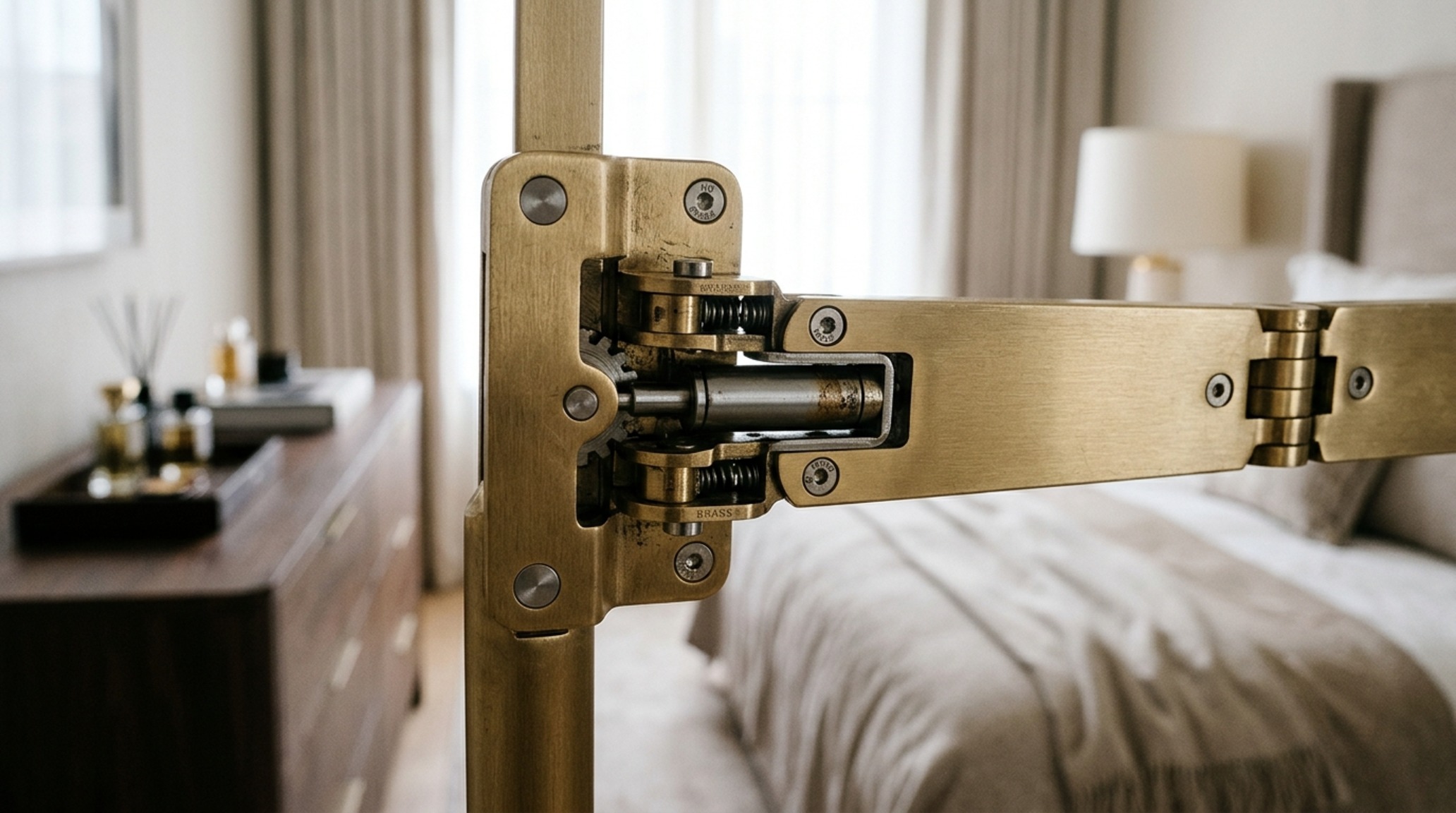
Narrow hallways and transitional corridors often represent ‘dead space.’ A collapsible clothing arm can turn these 36-inch wide passages into temporary staging areas. Whether it’s for steaming a dress before an event or simply hanging a guest’s coat, the arm provides utility only when needed. The key is to select hardware with a ‘soft-close’ or dampened hinge mechanism, which adds a sense of luxury to the movement—a quiet, controlled transition from ‘stored’ to ‘active.’
Hidden Closet Hardware: The Art of the Reveal
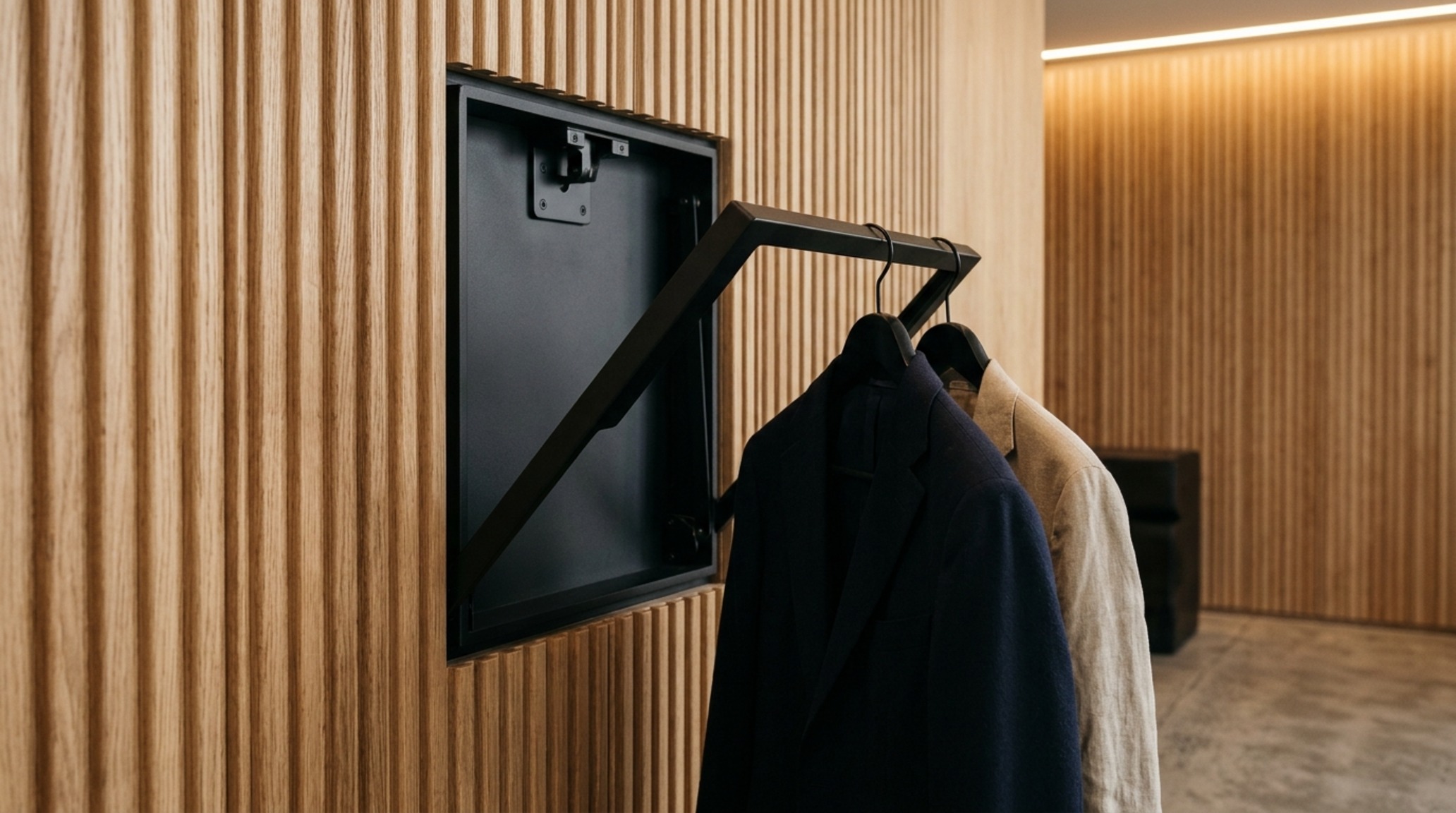
The ultimate expression of luxury is the ‘reveal.’ Hidden closet hardware that is recessed into the architecture itself represents the pinnacle of bespoke design. By creating a routed channel in a walnut-lined closet, the fold up hanger sits perfectly flush with the wood. It becomes a secret feature, known only to the homeowner. This level of detail speaks to a commitment to ‘total design,’ where every element, no matter how small, has been considered within the context of the whole.
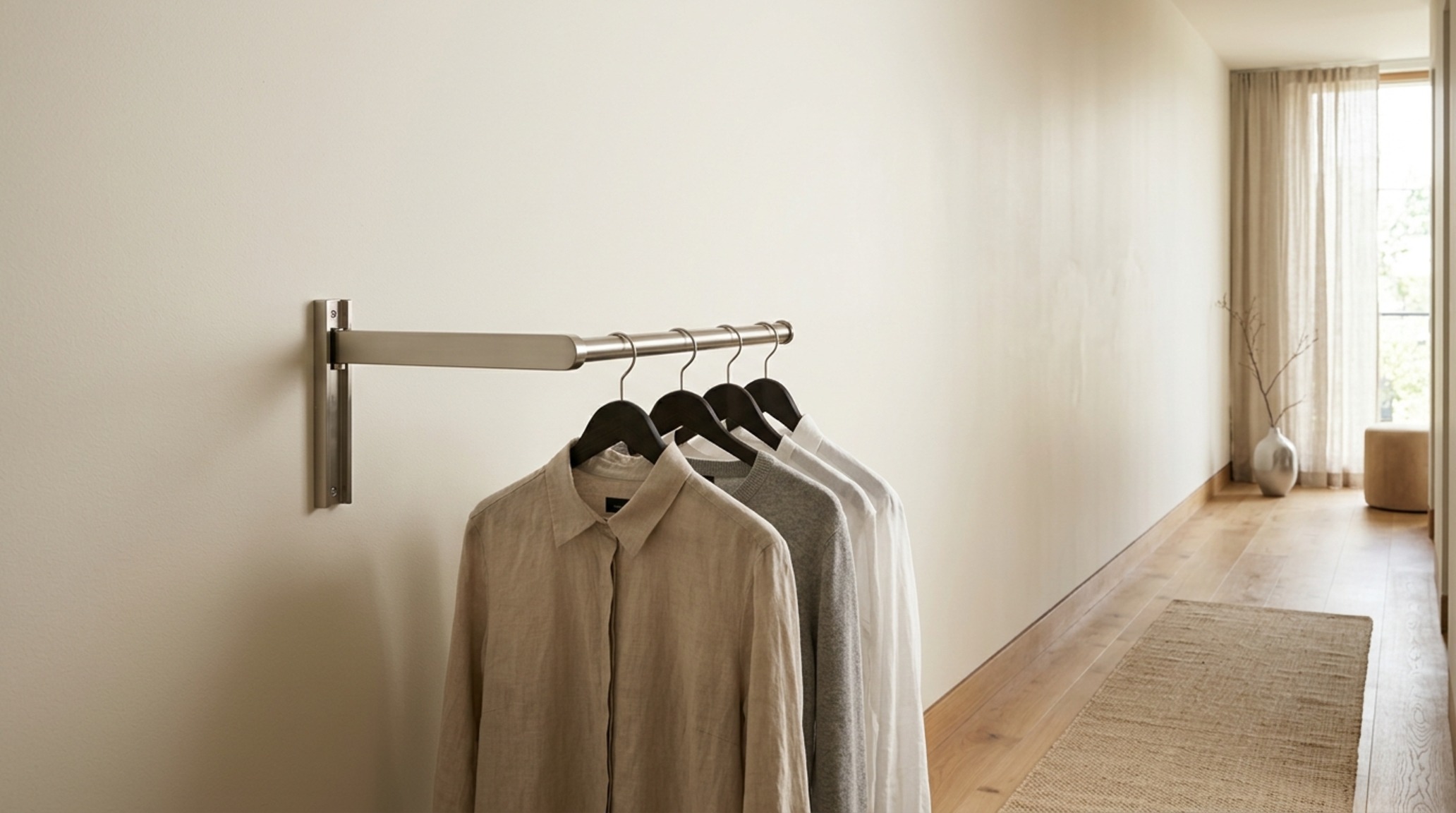
The final vignette showcases this ‘hidden’ approach. The hardware is nearly invisible until it is needed, preserving the monolithic beauty of the cabinetry. This is the essence of modern luxury: the power of choice. The choice to have utility when you need it, and beautiful, uninterrupted space when you don’t.
Material Schedule & Specification Sheet
Detailed finish schedule outlining authentic architectural surfaces, color values, and clearances.
Architecture is ultimately the art of solving problems beautifully. When we approach the humble fold up clothes hanger not as a gadget, but as a sculptural component of our interior landscape, we honor the functional reality of our lives while elevating our surroundings. It is a reminder that even the most mundane tasks—hanging a coat, drying a shirt, preparing for the morning—can be performed within a framework of elegance. As we move toward homes that are increasingly flexible and responsive to our needs, these small, thoughtful intersections of metal, wood, and light will continue to define the standard of modern living.
Editorial Silo • Recommended Architecture Studies
- The Geometry of Stillness: Architectural Directives for the Traditional Japanese Water Fountain — Archival Design Case Study
- The Luminous Gallery: Layering Materiality and Sensory Mood through Curated Mirror Decor Ideas — Archival Design Case Study
Sensory Space & Material Gallery
An evocative photographic exploration balancing structural discipline with inviting tactile softness.
Curated Visual Lookbook
Design Gallery & Spatial Studies
A visual curation of architectural arrangements, lighting concepts, and material palettes featured in this space.