The Problem with Tight Transitional Spaces
Most hallways get treated like discarded corridors rather than actual rooms. People slap up a coat hook, drop a random shoe basket on the floor, and call it a day. But tight spaces demand better geometry. When square footage is scarce, every single inch matters. You cannot crowd a narrow path with bulky cabinets or oversized furniture unless you enjoy bruised shins.
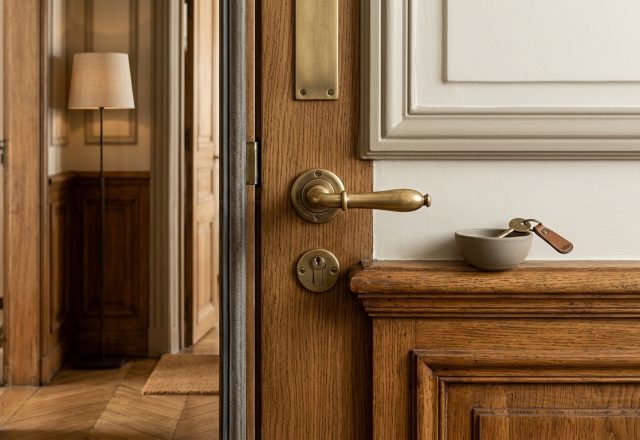
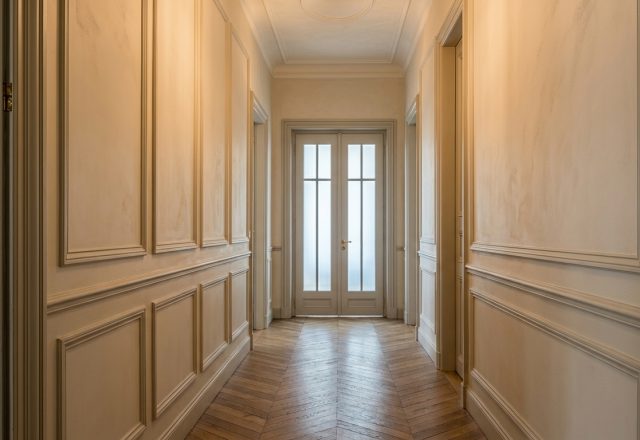
Instead, look at the vertical plane. Wall paneling or wainscoting changes the visual proportions of a long corridor immediately. It adds texture without stealing floor space. Paired with a warm, neutral wall wash, traditional moldings trick the eye into seeing more architectural weight and character. Your walls stop feeling like boring drywall barriers.
Choosing the Right Furniture Proportions
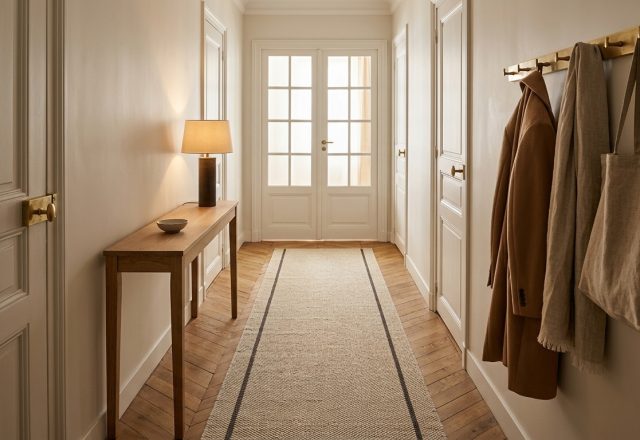
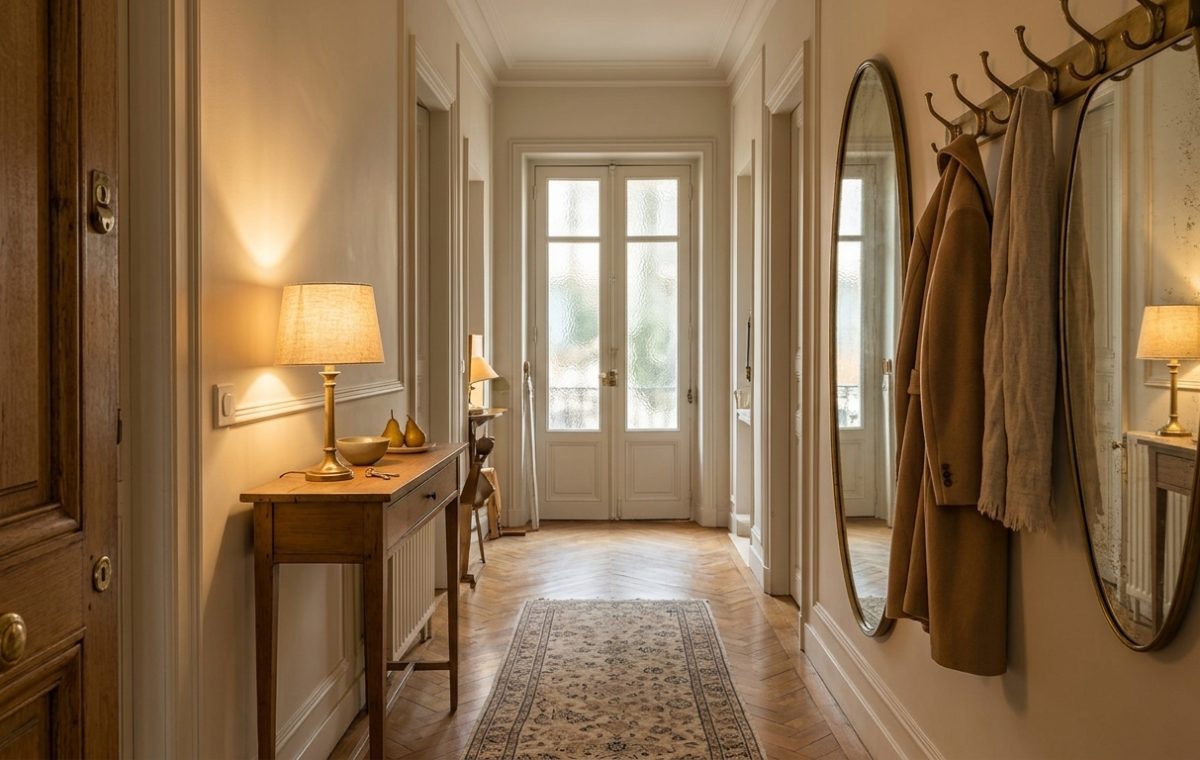
Console tables built for tight corridors need to be shockingly shallow. If a piece sticks out past twelve inches, traffic flow jams up instantly. The console acts as a drop zone for keys and a anchor for a soft table lamp. Direct overhead lighting in narrow paths usually casts harsh, unflattering shadows. A low-wattage ceramic lamp creates a warm, welcoming pool of light that makes the entire entryway feel lived-in and calm.
Hanging a vertical mirror above that table serves a dual purpose. It bounces natural light from adjacent rooms back into the darker corners of the hall. Keep hardware functional and intentional. Brass wall hooks keep heavy coats off the floor while adding a subtle metallic sheen. A woven basket tucked neatly beneath a coat rack handles daily shoe clutter without looking messy.
Flooring and Material Choices
Wood flooring laid in a chevron pattern directs the eye forward, elongating the visual span of the room. Wood brings organic warmth, but it requires upkeep if wet winter boots get dumped directly onto the planks. That is where small design compromises happen in real homes. Perfection does not last past the first rainy Tuesday. A simple woven basket catches the immediate mess, balancing aesthetics with raw daily utility.
Do not over-accessorize. Empty space is a design element in its own right, especially in narrow homes. Let the clean lines of paneled doors and polished hardware speak for themselves.
Editorial Lookbook & Photo Collection