The Transit Zone Mistake
Most hallways fail because owners treat them like storage lockers. They shove deep shoe cabinets against narrow walls, instantly turning an entrance into an obstacle course. Look at how older Parisian flats handle the squeeze. They accept physical limits. A corridor is fundamentally a route of passage, not an overflow closet. When space is scarce, depth becomes your mortal enemy.
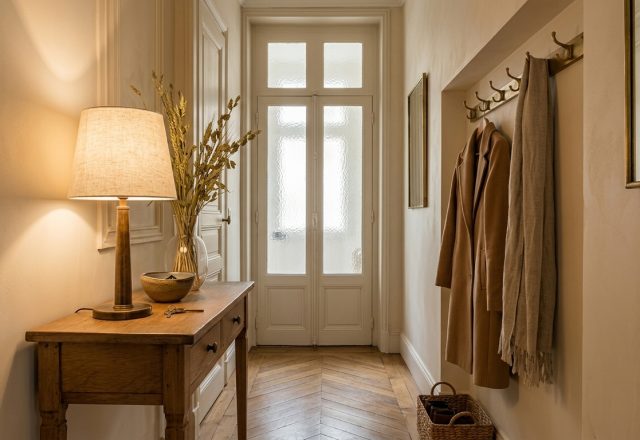
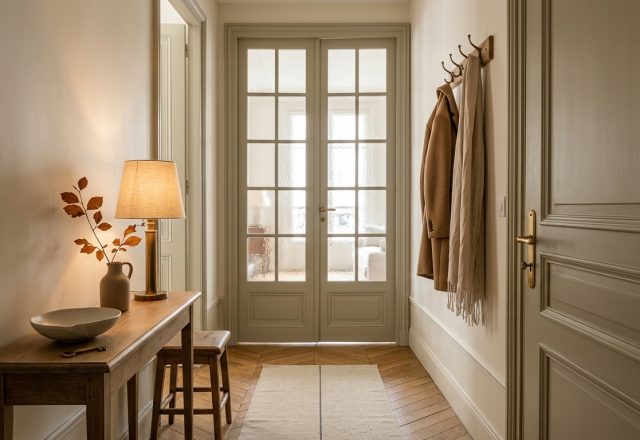
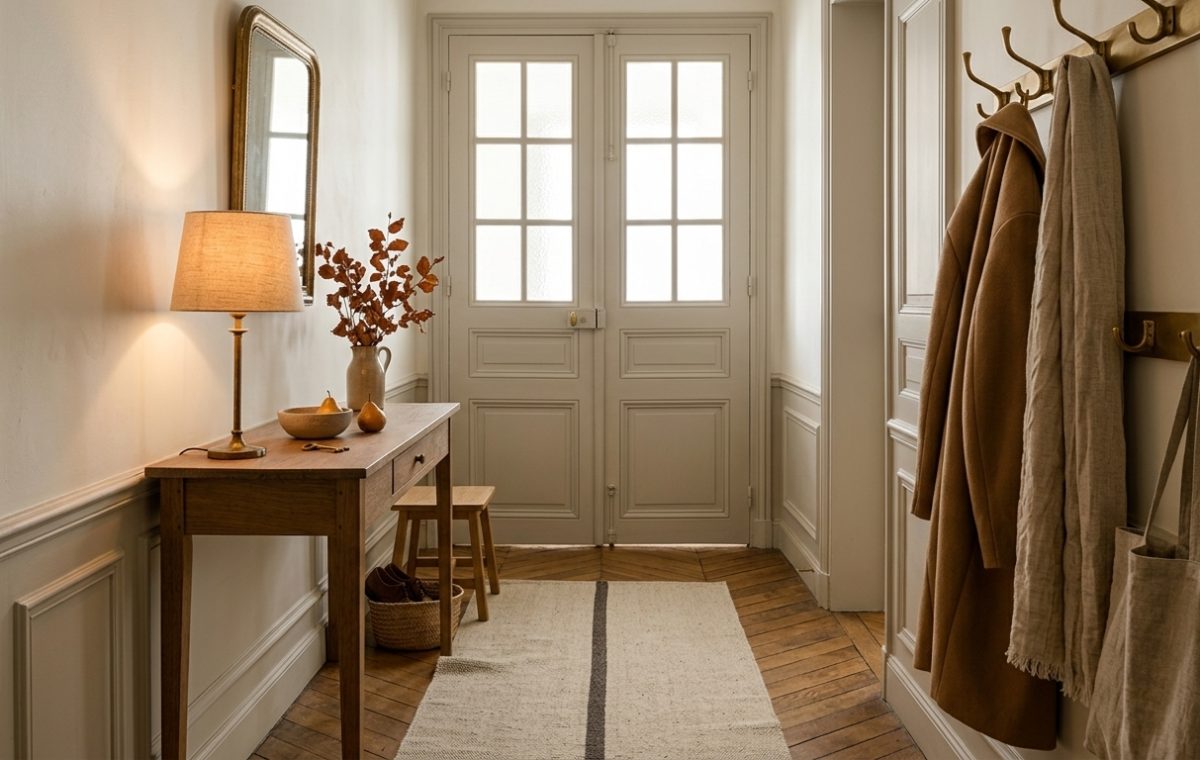
Notice the proportions here. The entry corridor works because the furniture respects traffic flow. A slender wooden table, barely twelve inches deep, provides an essential drop zone without choking movement. Below it, an unobtrusive stool and a woven catchall basket hold daily footwear. Keep furniture off the floor on leggy frames; seeing the floor stretch wall-to-wall fools the human eye into registering real volume.
The Geometry of a Slim Drop Zone
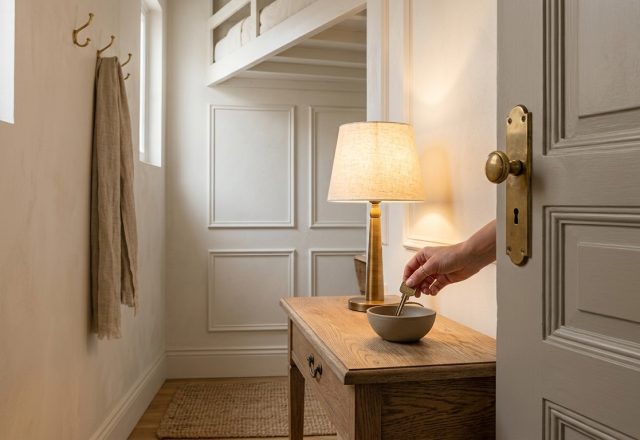
A good foyer table needs to do two jobs well: hold your keys and get out of the way. If your hips brush against wood every evening, your console is too wide. Paring back hurts, yet lean profiles save rooms.
Material balance prevents a tight hall from reading clinical. Painted wainscoting panels establish structure and clean shadows, anchoring tall walls. Pairing pale millwork with a warm wood console table creates grounding contrast. A table lamp with a linen shade introduces low-level ambient light at dusk, which matters far more than an aggressive ceiling fixture. Overhead recessed spots flatten corridors; side lamps introduce necessary shadow and depth.
Vertical Utility Without Heavy Wardrobes
Bulky wardrobes kill narrow foyers instantly. Unless your hallway spans six feet across, skip enclosed armoires. Wall-mounted brass entryway wall hooks carry heavier loads with zero floor footprint. Hang an overcoat, an everyday linen tote, and a wool scarf. That is the limit. A hook rail is not permission to store every seasonal jacket you own. It is an active roster for what you wore today and what you will wear tomorrow.
Keep the drop point disciplined. If an item does not leave the house within forty-eight hours, move it into a proper bedroom closet.
Guiding the Eye Down the Hall
Notice the floor geometry. While original herringbone parquet flooring brings undeniable architectural weight, the orientation of a hallway runner rug does the real heavy lifting. A long, flat-weave runner with a dark centerline acts as a visual runway. It directs the eye forward toward natural light while muffling footsteps in what would otherwise be a hollow echo chamber.
The mirror placement serves an honest function too. Positioned opposite open doorways or light-filled transoms, an arched brass mirror bounces daylight deep into the interior core. It also lets you check your collar before stepping out the front door. Function and vanity can coexist peacefully when framed in unlacquered brass.
Maintaining an entrance like this requires daily habit over occasional spring cleaning. How do you handle the reality of wet umbrellas, salt-stained boots, and overflowing mail when working with such narrow clearance?
Editorial Lookbook & Photo Collection