The Reality of Vertical Living
Working with awkward architectural angles tests any decorator. Sloped walls and tight footprints demand more than standard furniture arrangements. You have to think in vertical layers. When floor space vanishes, corners and high walls become your primary tools for creating function without visual clutter.
Take a look at how utility items hang right by the door in this compact layout. Electrical boxes and wall phones are neatly consolidated, freeing up precious floor area. Small compromises allow the main seating zone to breathe. Instead of fighting the quirky geometry, the design embraces the compact nature of overhead living.
Zoning Without Walls
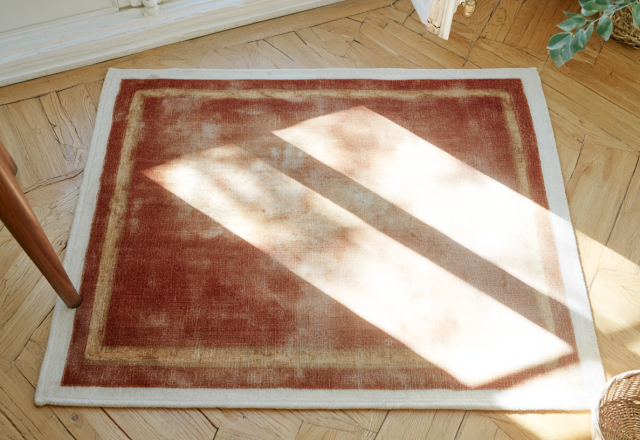
Open layouts in small homes need subtle boundaries. Rugs define functional pockets instantly. Notice the rich red patterned rug anchoring the seating nook beneath the eaves. It physically separates the relaxing sofa zone from the transitional entryway and workspace below.
- Use low-profile furniture to preserve headroom under sloped ceilings.
- Keep everyday items off the floor using wall-mounted shelves and hooks.
- Layer rugs to separate distinct functional zones in open layouts.
Lighting and color temperature also play massive roles. Skylights flood the upper level with daylight, making a narrow room feel airy rather than claustrophobic. Heavy drapes would ruin this openness. Keep window treatments minimal to let natural light bounce off white walls and wooden floors.
Balancing Storage and Style
Clutter kills tiny apartments faster than bad paint choices. Floating wooden ledges hold bags and daily essentials right where you need them, keeping drop zones tidy. Meanwhile, a dedicated workspace sits tucked away against the railing, proving that multiple functions can coexist peacefully in tight quarters.
How do you usually handle awkward dead zones in your own home? Do you try to hide them with furniture, or do you leave them open to maintain traffic flow?
Editorial Lookbook & Photo Collection