A standard 36-inch clearance between your island and perimeter cabinets is the unspoken heartbeat of a functional kitchen, dictating whether a space feels like a cramped workshop or a breathing architectural sanctuary. When we select a kitchen countertops material, we aren’t just choosing a surface; we are defining the tactile anchor that harmonizes light, ergonomics, and the friction of daily life. The modern culinary landscape has shifted away from the high-maintenance anxieties of the past, leaning instead into a sophisticated era of engineered integrity and sensory softness.
In this deep dive into high-performance living, we explore how non-porous engineered surfaces and thoughtful edge profiles are revolutionizing the way we interact with our homes. By prioritizing materials that resist the daily assault of citrus acids and heat, we reclaim the kitchen as a place of relaxation rather than a gallery of fragile artifacts.
1. Non-Porous Kitchen Slabs: The Foundation of Maintenance-Free Luxury
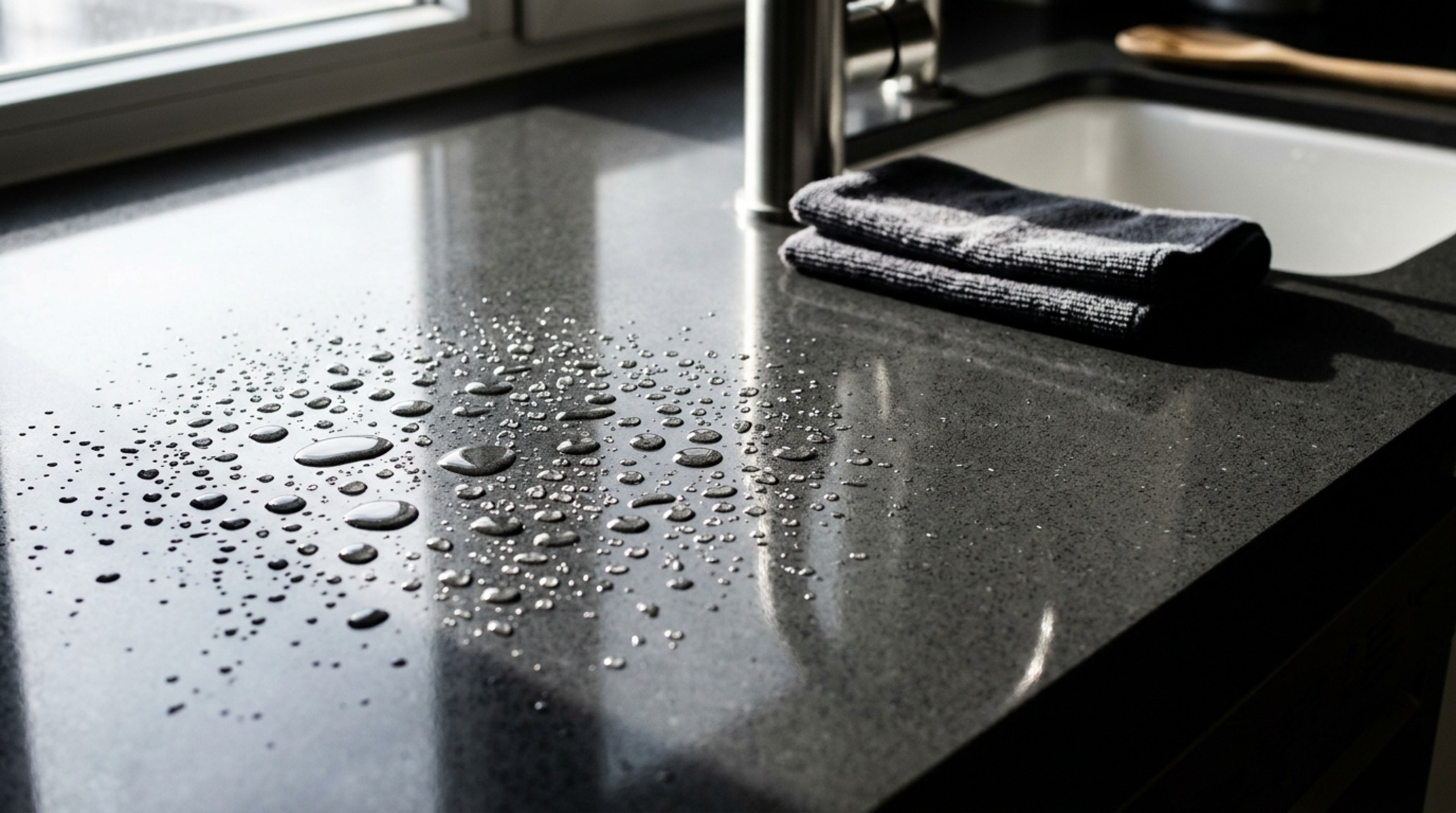
The transition toward non-porous kitchen slabs represents a fundamental pivot in residential design philosophy. Historically, the ‘natural stone or nothing’ dogma forced homeowners into a cycle of sealing, scrubbing, and stressing over red wine spills. Today, the rise of sintered stones and high-grade engineered quartz has introduced a level of durability that was once unthinkable. These materials are forged under intense pressure and heat, resulting in a surface that is virtually impenetrable to bacteria and stains.
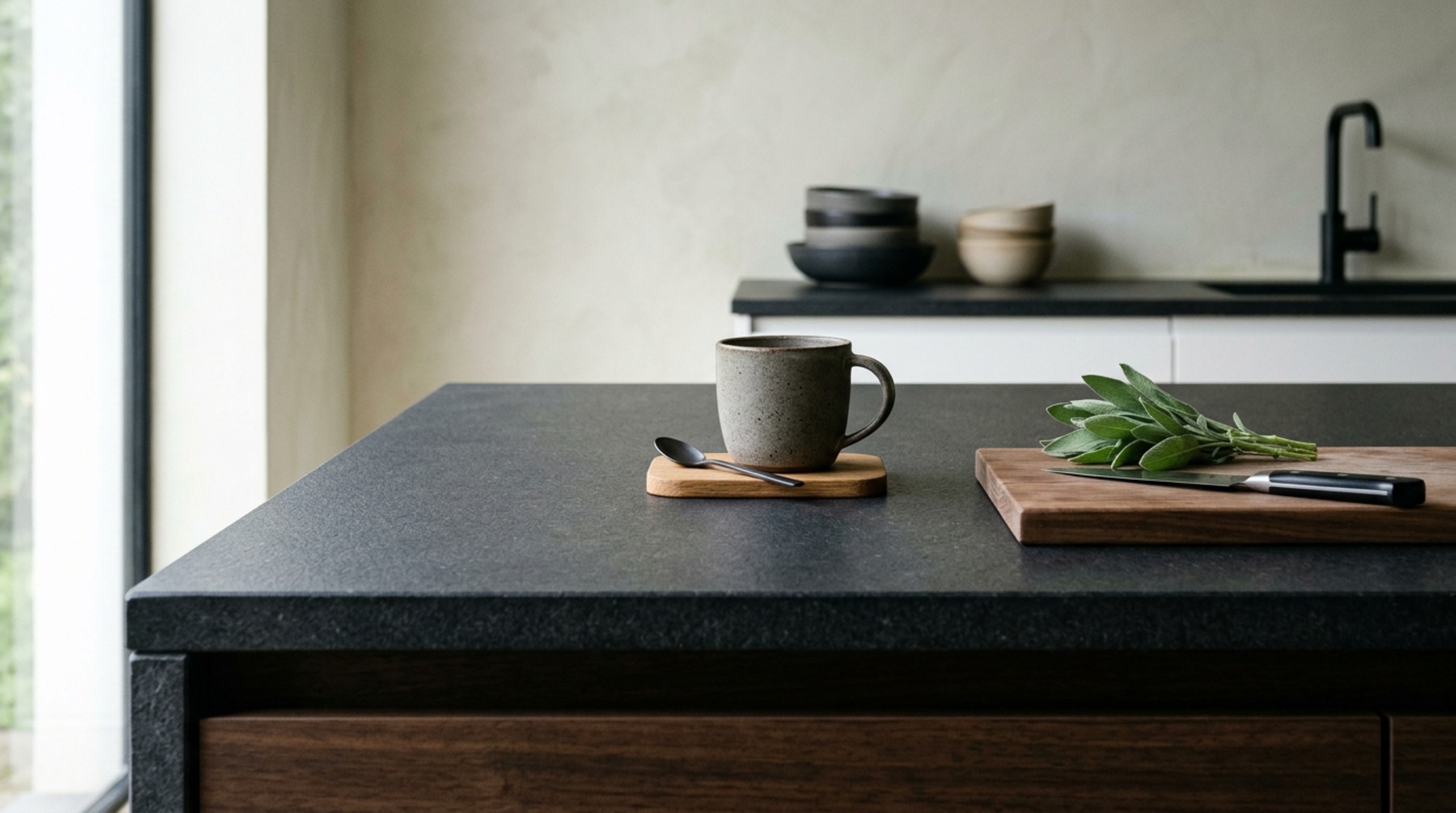
When you run your hand across a honed sintered stone surface, the sensation is one of cool, velvet-like permanence. Unlike traditional marble, which ‘breathes’ and therefore absorbs the history of every meal, these non-porous slabs offer a clean slate every morning. Designers are increasingly specifying Benjamin Moore Swiss Coffee for cabinetry to complement these slabs, creating a warm neutral palette that feels grounded and intentional. The lack of microscopic pores means you can skip the harsh chemical sealants, opting instead for the simple luxury of a damp cloth and a moment of quiet.
2. Waterfall Edge Island Design: Sculpting Spatial Flow
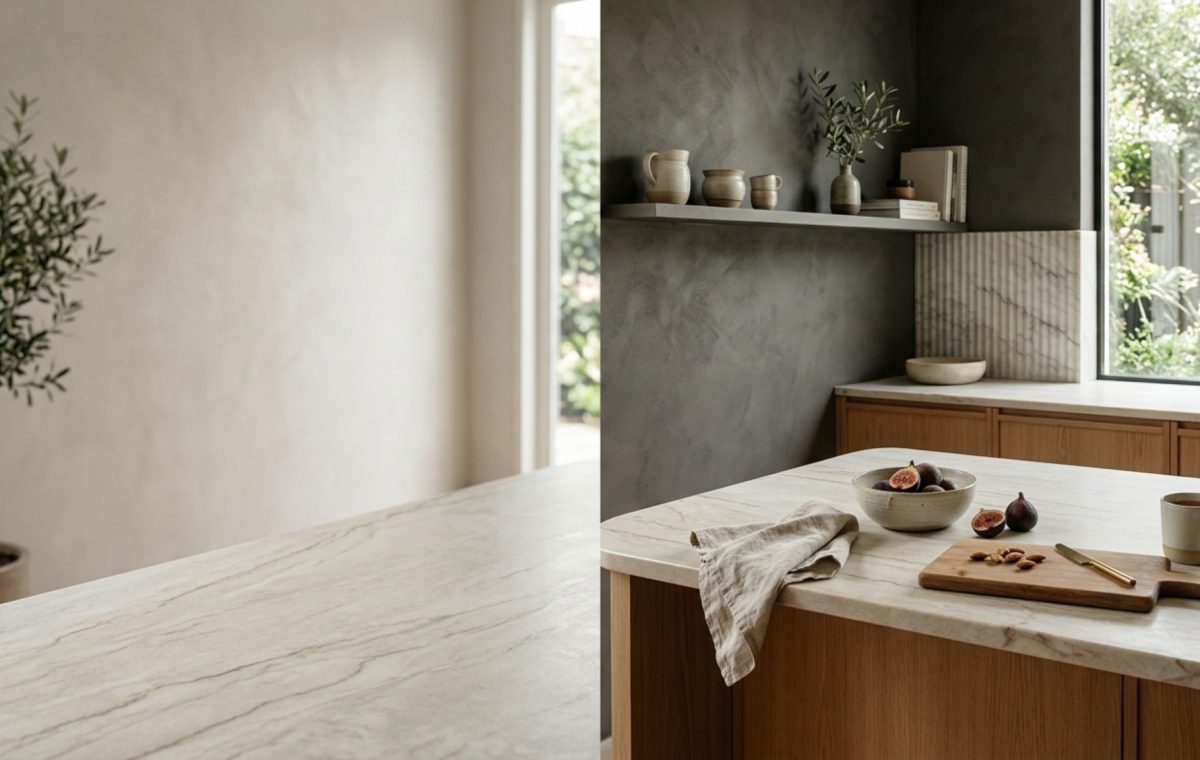
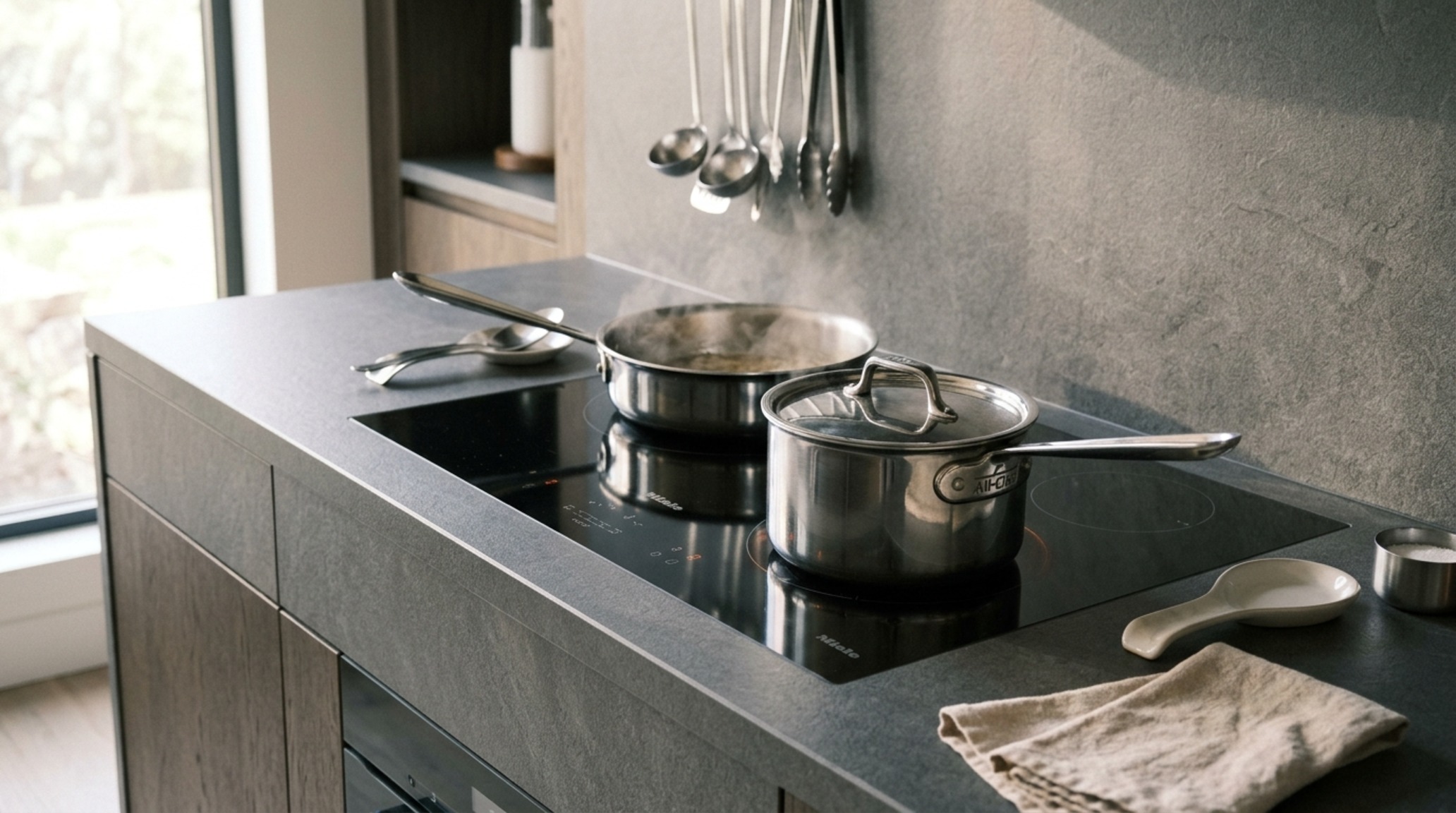
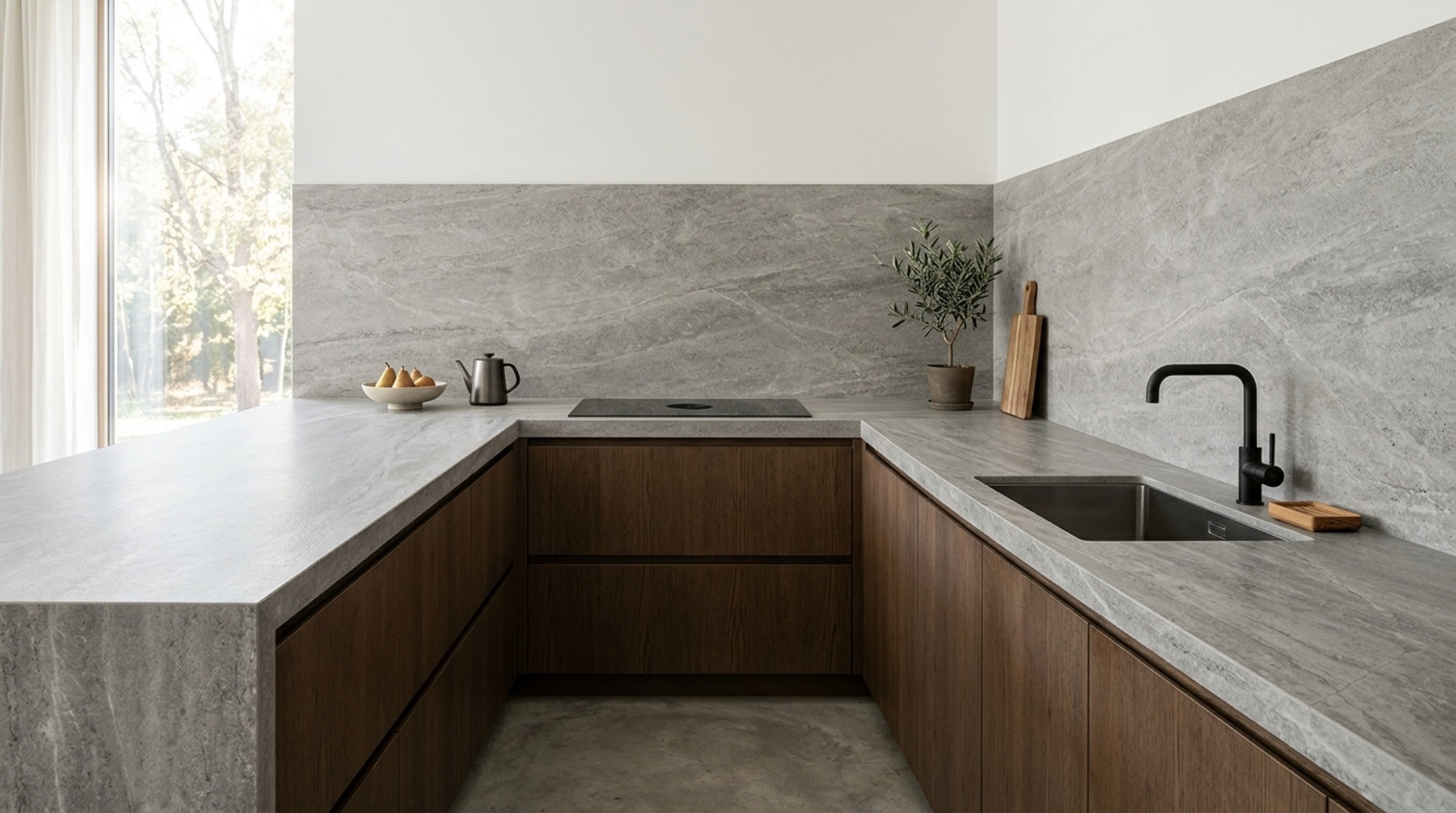
One of the most impactful ways to utilize a modern kitchen countertops material is through the implementation of a waterfall edge island design. This technique, where the countertop material continues vertically down the side of the cabinetry to the floor, creates a monolithic sculpture that anchors the entire open-plan living area. It eliminates the visual noise of cabinet end-panels and provides a continuous flow of texture.
From a spatial cadence perspective, the waterfall edge acts as a structural boundary, subtly separating the high-energy prep zone from the surrounding relaxation areas. In a 2024 Houzz data study, the demand for these integrated stone features surged as homeowners looked for ways to make their kitchens feel more like architectural furniture. When executing this look, the alignment of the veining is paramount; a master fabricator will ensure the pattern cascades seamlessly, mimicking the natural flow of a cliffside. This level of detail-oriented craft transforms a functional surface into a focal point of material integrity.
3. Heat Resistant Kitchen Surfaces and the Safety of Sintered Stone
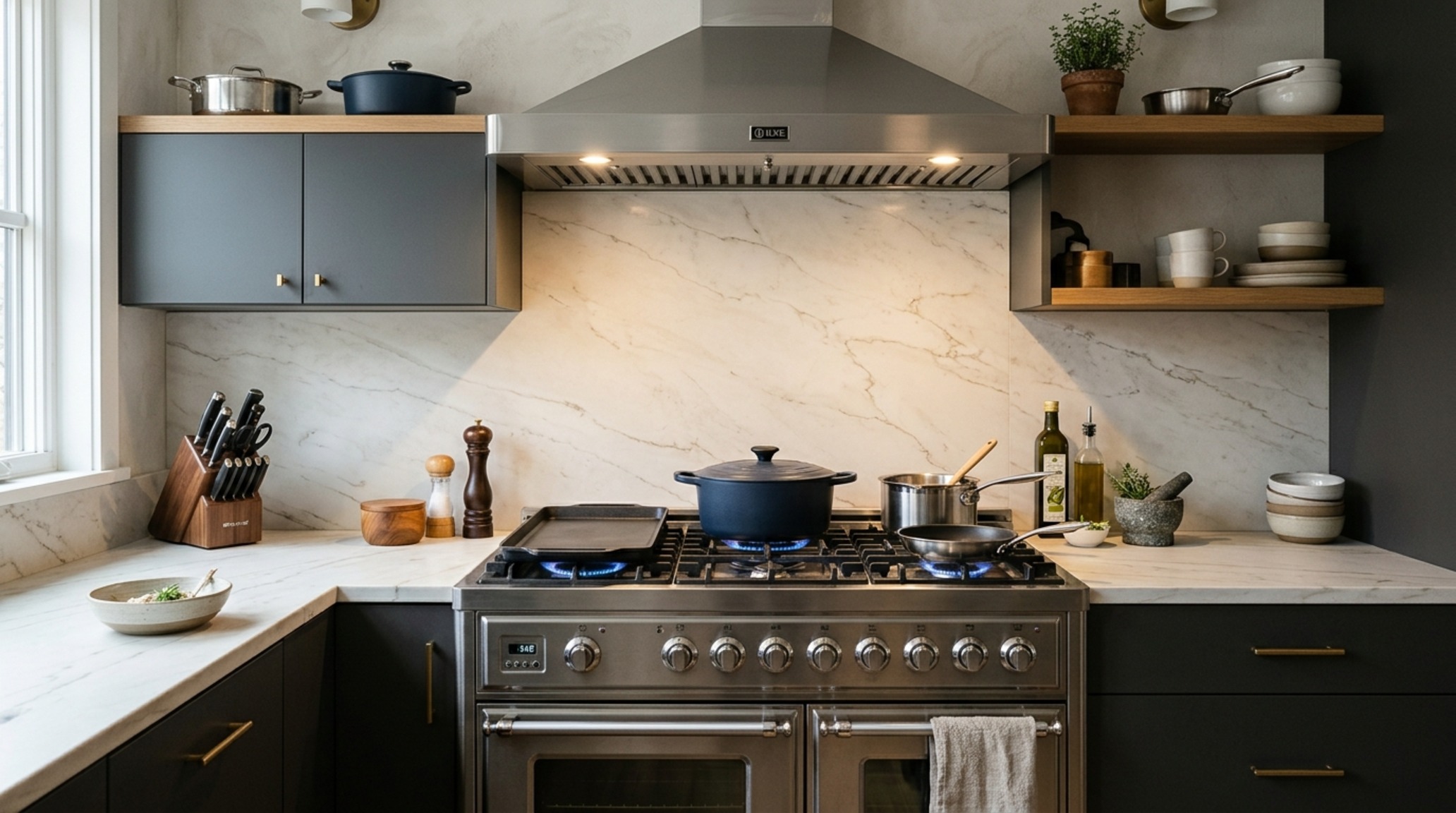
For the serious home chef, the vulnerability of a countertop to thermal shock is a constant source of friction. Integrating heat resistant kitchen surfaces into the layout—particularly near the range or cooktop—is a strategic move that enhances both performance and peace of mind. Sintered stones, such as those produced by Lapitec or Dekton, are essentially fireproof, allowing you to move a cast-iron pan directly from the oven to the counter without the frantic search for a trivet.
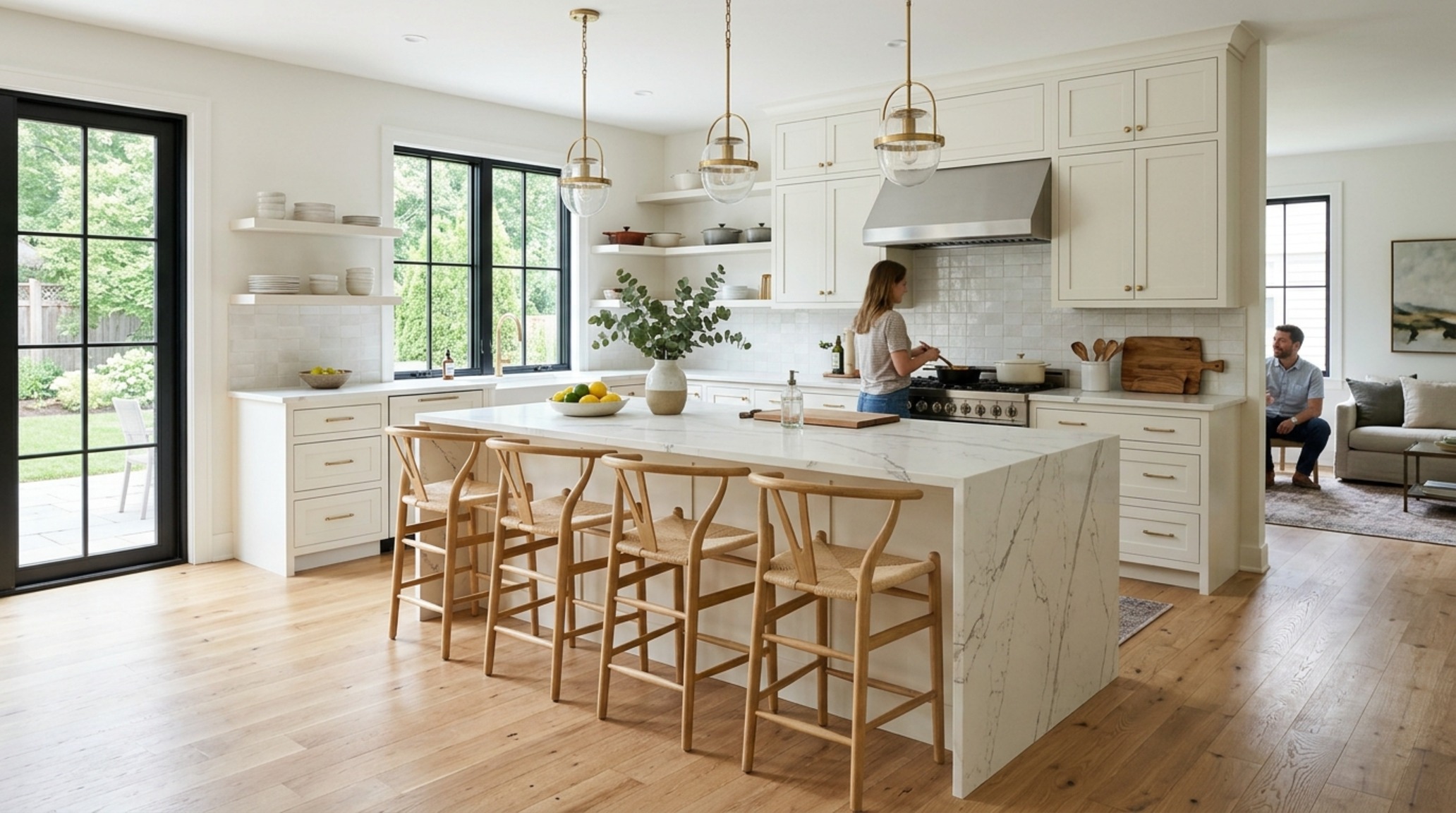
This thermal resilience is a byproduct of the manufacturing process, which mimics the metamorphic changes that occur deep within the earth over millennia, but at an accelerated, controlled pace. By choosing a material that can withstand extreme temperature fluctuations, you remove a significant layer of ‘countertop anxiety.’ This allows the kitchen to function as a truly relaxing environment where the focus remains on the culinary process rather than the preservation of the furniture.
4. Eco-Friendly Countertop Options: Sustainability Meets High Design
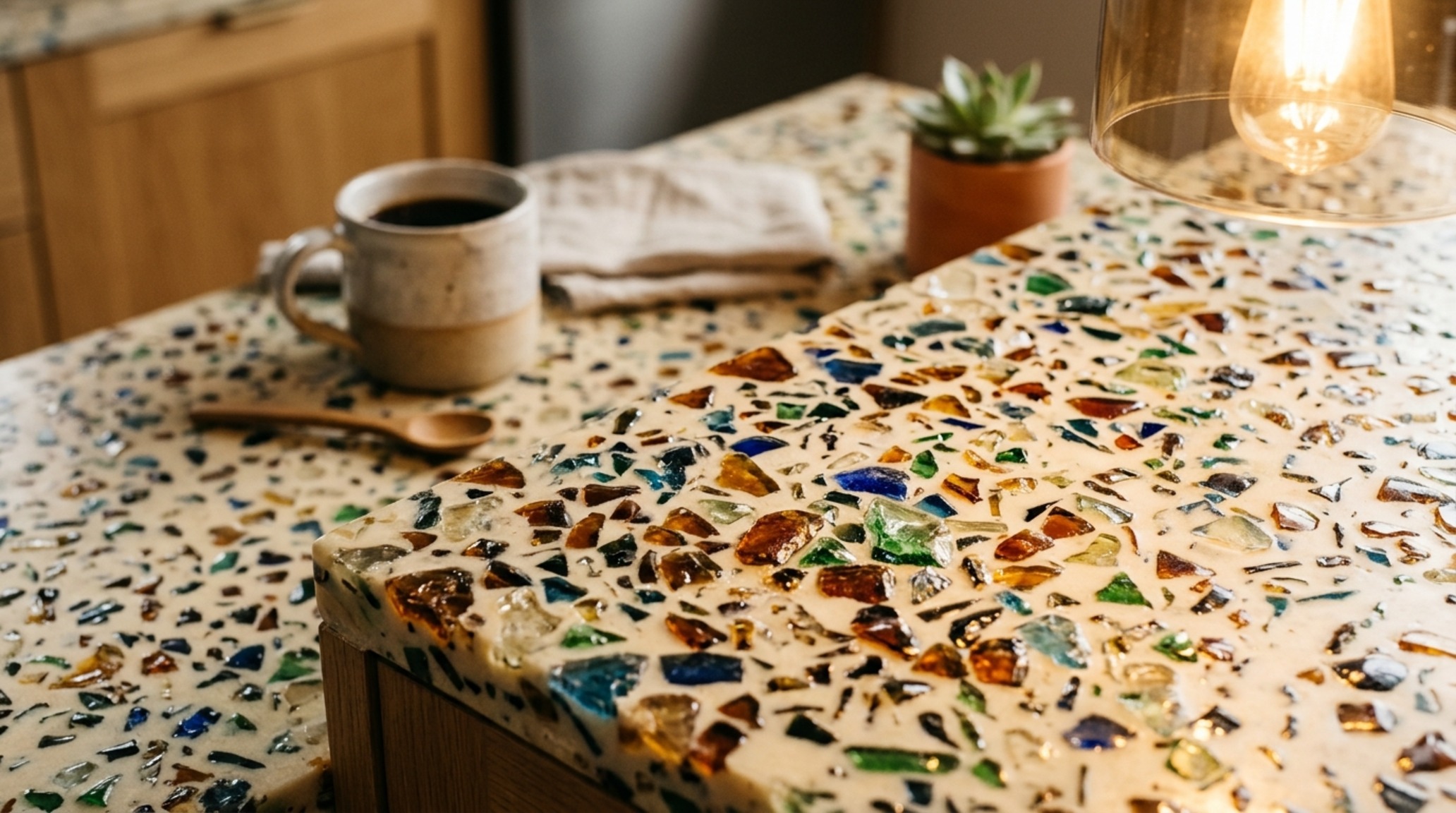
As we navigate the requirements of 21st-century living, the environmental footprint of our materials has moved from an afterthought to a primary design driver. The latest wave of eco-friendly countertop options includes surfaces made from recycled glass, bio-based resins, and even compressed paper composites that achieve a slate-like density. These materials prove that high-performance doesn’t have to come at the cost of the planet.
Many designers are now looking toward ‘cradle-to-cradle’ certified materials that utilize post-consumer waste without sacrificing the tactile grounding we crave. These surfaces often possess a unique depth and character, with subtle flecks of color that react beautifully under 2700K warm ambient lighting. Integrating these sustainable choices into a kitchen layout reflects a commitment to longevity and thoughtful consumption, aligning the home’s aesthetics with its inhabitant’s values.
5. Soapstone Patina Guide: Embracing the Beauty of Time
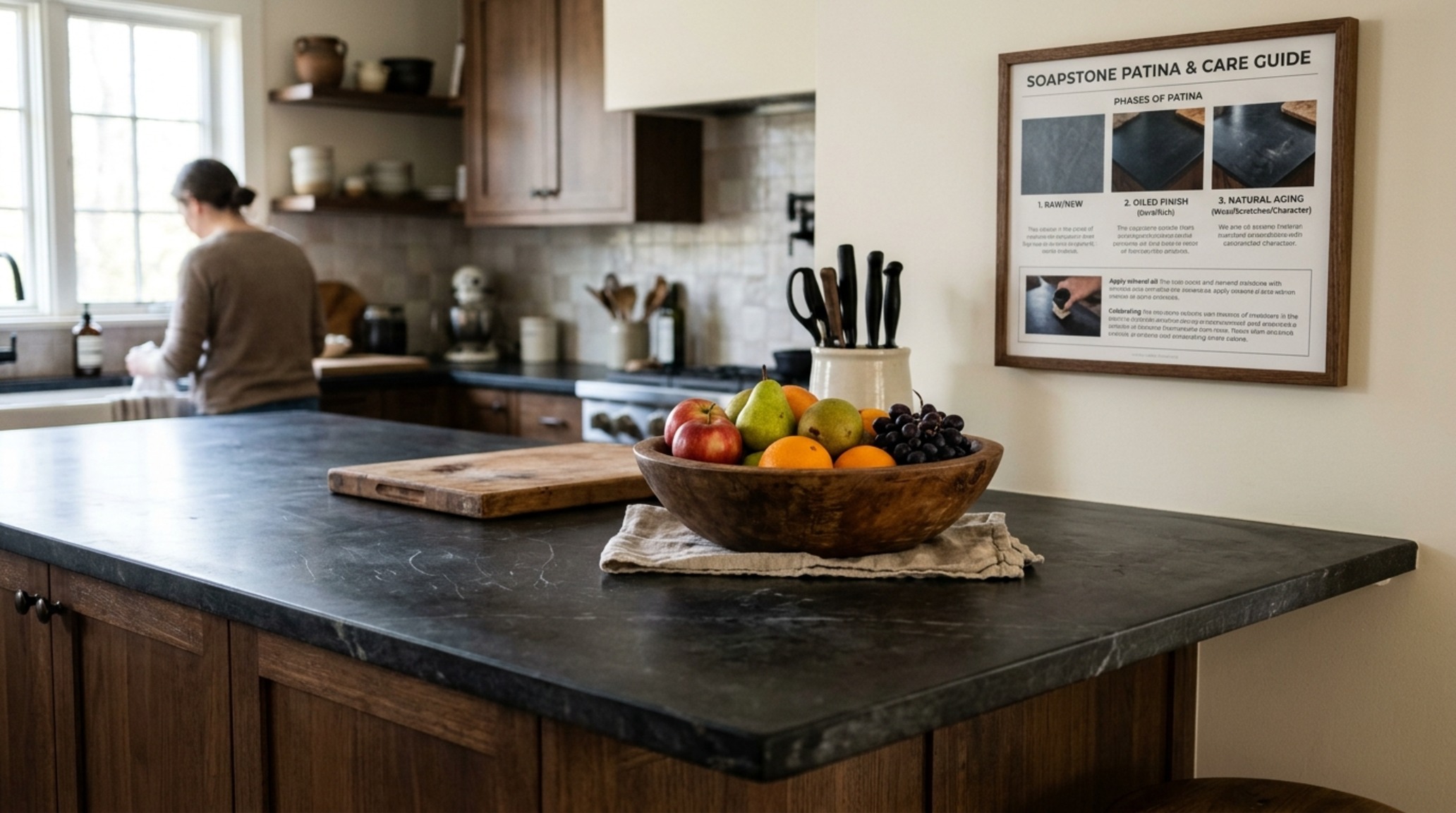
While engineered surfaces dominate the low-maintenance conversation, there is a distinct, soulful niche occupied by soapstone. Understanding a soapstone patina guide is essential for those who find relaxation in the organic evolution of a home. Soapstone is naturally non-porous and chemically inert, but it is softer than quartz, meaning it will develop small nicks and a deepening of color over time. This ‘living finish’ is a hallmark of Architectural Digest’s most celebrated kitchens.
Rather than seeing a scratch as a flaw, the soapstone enthusiast sees it as a record of a life well-lived. To manage the patina, many choose to apply food-grade mineral oil, which darkens the stone to a rich, charcoal hue. This tactile interaction—the act of oiling the stone—can be a meditative ritual, grounding the homeowner in the physical reality of their space. It is a material for those who value the authenticity of ‘wabi-sabi’ over the sterile perfection of a showroom.
6. Quartz vs Granite Cost Comparison: Strategic Investment
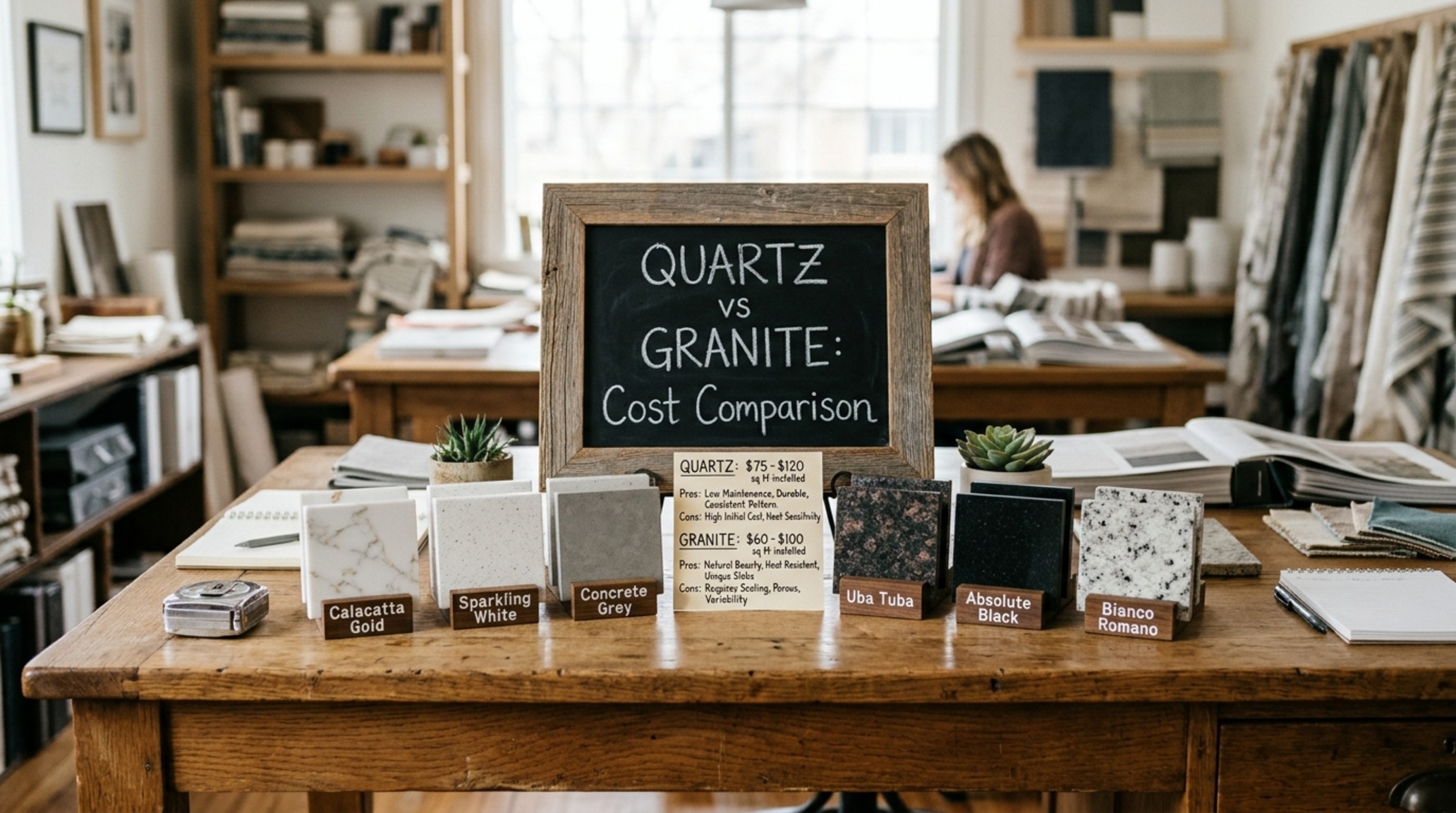
When planning a renovation, a quartz vs granite cost comparison is often the first hurdle. While granite was once the gold standard, high-quality engineered quartz has caught up in both price and popularity. Generally, basic granite can be found at a lower entry point, but premium, exotic granites can easily outstrip the cost of top-tier quartz. Quartz offers a predictable price structure because it is a manufactured product, whereas granite costs fluctuate based on quarry availability and shipping distances.
The real value, however, lies in the long-term maintenance. Granite requires periodic resealing (approximately every 12-24 months) to maintain its resistance to stains, whereas quartz is a ‘fit and forget’ material. For a high-performance kitchen intended for relaxation, the slightly higher upfront cost of quartz or sintered stone often pays for itself in the reduction of labor and the elimination of specialized cleaning products.
7. Ergonomics and Safety: The Power of the Eased Edge
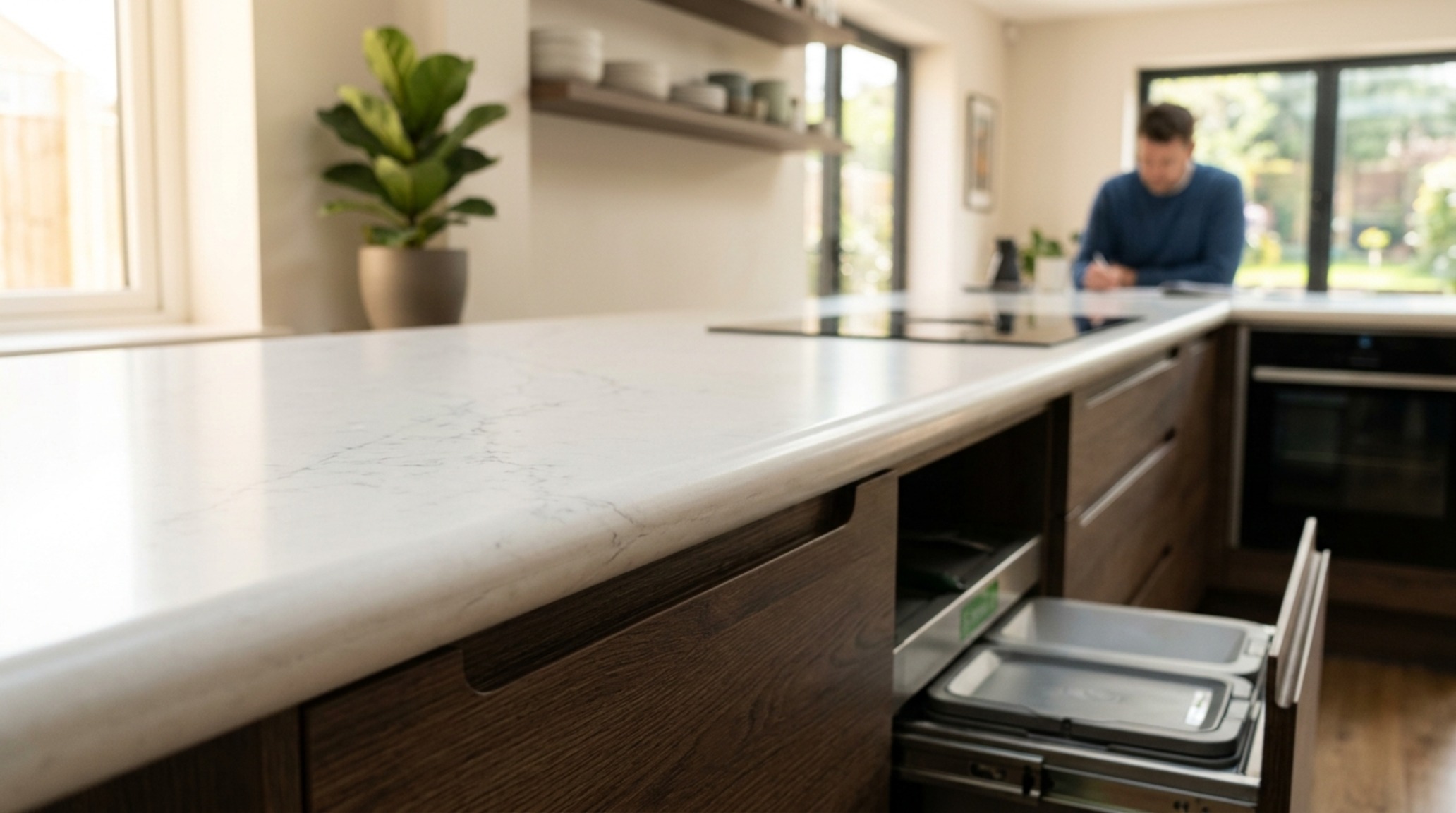
Spatial flow is significantly impacted by the physical profile of the kitchen countertops material. In a high-traffic kitchen, sharp, 90-degree corners are more than just a visual choice; they are a safety hazard. High-performance layouts now prioritize ‘eased’ or ‘bullnose’ edges. A 1/8-inch radius edge might seem like a minor detail, but it softens the entire room’s silhouette and prevents the painful hip-bruises that occur in tight 36-inch walkways.
These rounded profiles also protect the material itself. Impact on a sharp corner is the most common cause of chipping in both natural and engineered stone. By softening the edge, you distribute the force of an impact and significantly extend the life of your counters. This is where Houzz’s focus on safety ergonomics meets high-end aesthetics—creating a kitchen that feels gentle to the touch and resilient against the chaos of family life.
8. Curated Concept Gallery & Spatial Vignettes
The visual narrative of a kitchen is told through the interplay of light and texture. Imagine a kitchen where the morning sun hits a matte-finished engineered surface at a low angle, revealing a subtle, leathered texture that invites the touch. This is the goal of a performance-driven layout: to create a space that feels as good as it looks.
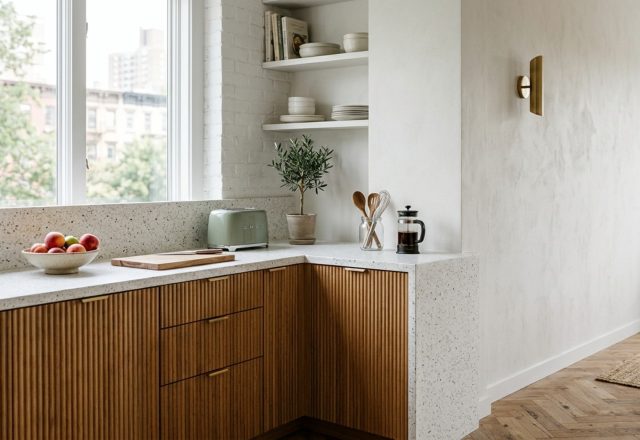
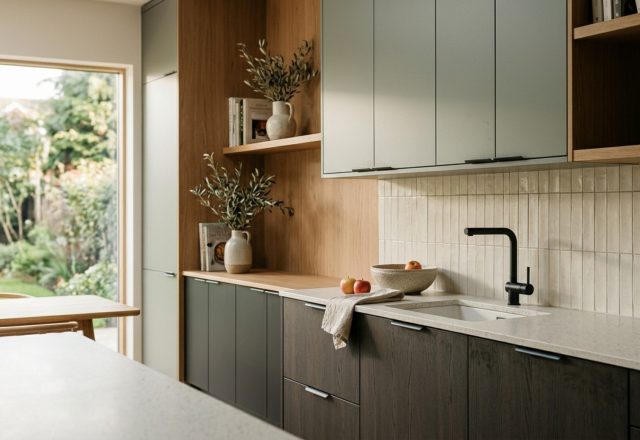
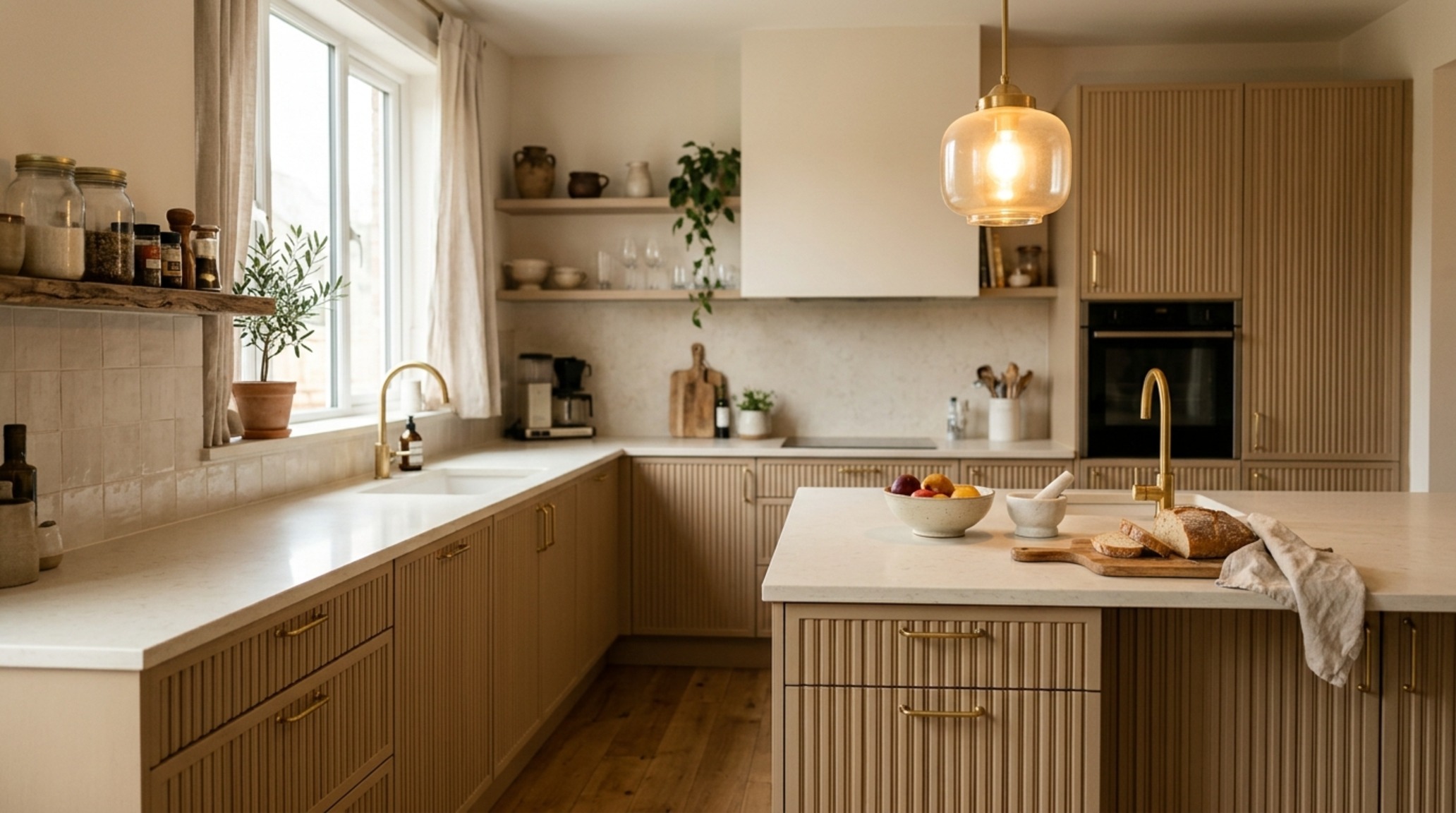
Pairing these high-performance materials with warm, natural wood tones—like a fluted white oak island base—creates a balance between the industrial strength of the stone and the organic warmth of the timber. Lighting should be layered, with high CRI 90+ ratings to ensure the colors of your food and your surfaces are rendered accurately. A well-placed pendant light, hanging 30 inches above the counter, creates a pool of intimacy that transforms a prep station into a social hub during the evening hours.
Structural Finishes & Design Anatomy
Comprehensive material guide featuring exact paint swatches, authentic finishes, and spatial clearances.
Designing a kitchen that feels genuinely relaxing requires a shift from viewing surfaces as mere utility to seeing them as the tectonic plates of your domestic life. By choosing a high-performance kitchen countertops material, you aren’t just buying durability; you are investing in the sensory quality of every morning cup of coffee and every shared evening meal.
Before finalizing your layout, consider this essential three-point checklist for a performance-driven kitchen:
- Verify the material’s non-porous rating to ensure long-term resistance to staining and bacterial growth without chemical sealants.
- Specify a minimum 1/8-inch eased edge on all corners to enhance ergonomic safety and material longevity.
- Plan for a 36-inch minimum circulation path to allow for natural spatial flow around high-performance surfaces.
The most successful kitchens are those that age with grace, not through perfection, but through the thoughtful selection of materials that handle the weight of life with effortless composure. When we align material integrity with ergonomic safety, the kitchen ceases to be a room of chores and becomes a temple of well-being.
Editorial Silo • Recommended Architecture Studies
- Apartment Kitchen Renovation Ideas Smart — Archival Design Case Study
- Kitchen Bay Window Ideas: Festive (2026) — Archival Design Case Study
The Architectural Gallery
High-resolution photography exploring proportions, organic textures, and spatial harmony.
Curated Visual Lookbook
Design Gallery & Spatial Studies
A visual curation of architectural arrangements, lighting concepts, and material palettes featured in this space.