The Structural Poetry of Storage: Defining Modern Space
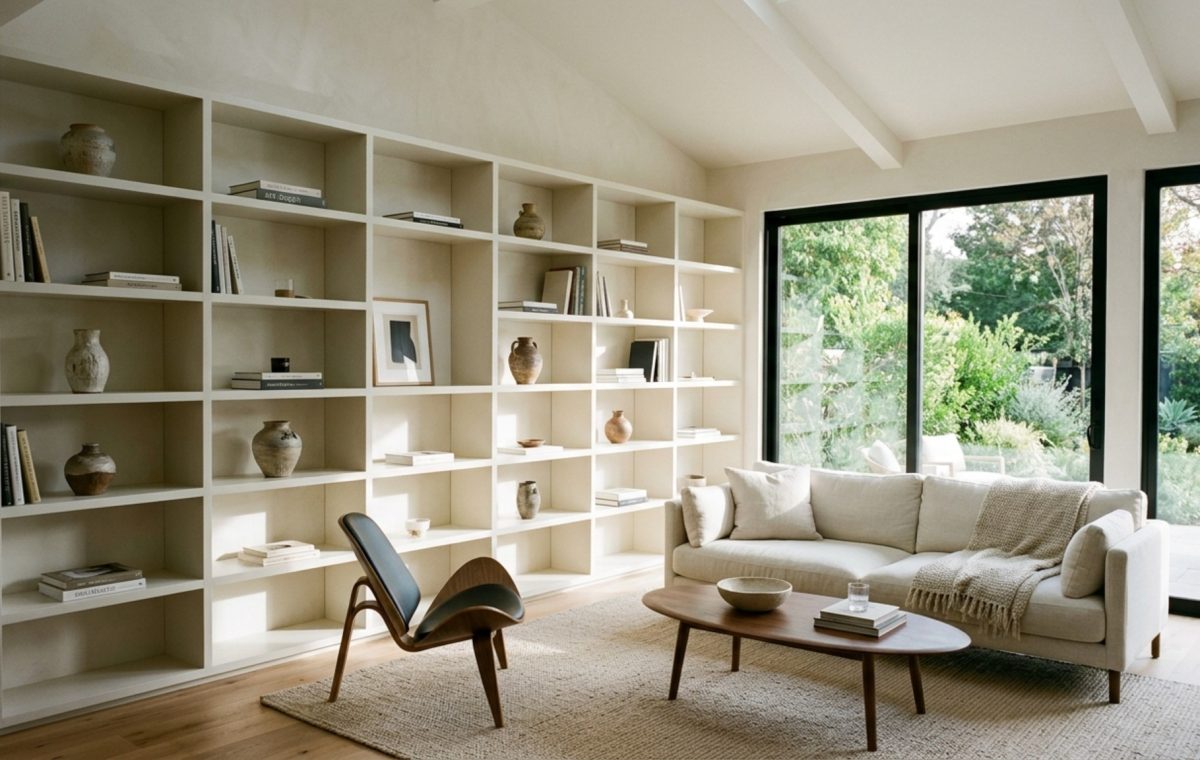
Innovative ideas for shelving dictate the rhythm of a residence, acting as both structural anchors and fluid vessels for personal narrative. In contemporary architecture, a shelf is rarely just a horizontal plane; it is an extension of the wall’s anatomy, a tool for manipulating sightlines, and a medium for tactile expression. When we approach shelving through the lens of a blueprint, we move beyond simple organization and into the realm of spatial choreography. We must consider the weight of the material against the lightness of the void, ensuring that every bracket and beam serves a dual purpose of utility and aesthetic grace.
To master the art of the built-in or the floating ledge, one must first respect the architectural clearances that govern human movement. A shelf placed too low in a high-traffic corridor disrupts the 36-inch standard walkway clearance, creating a physical and visual bottleneck. Conversely, a shelf that stops abruptly before a ceiling line misses the opportunity to draw the eye upward, failing to capitalize on the vertical volume of the room. By grounding our ideas for shelving in these rigid mathematical realities, we create interiors that feel effortless because they are fundamentally functional.
Integrating Modern Ideas for Shelving Ideas into Minimalist Envelopes
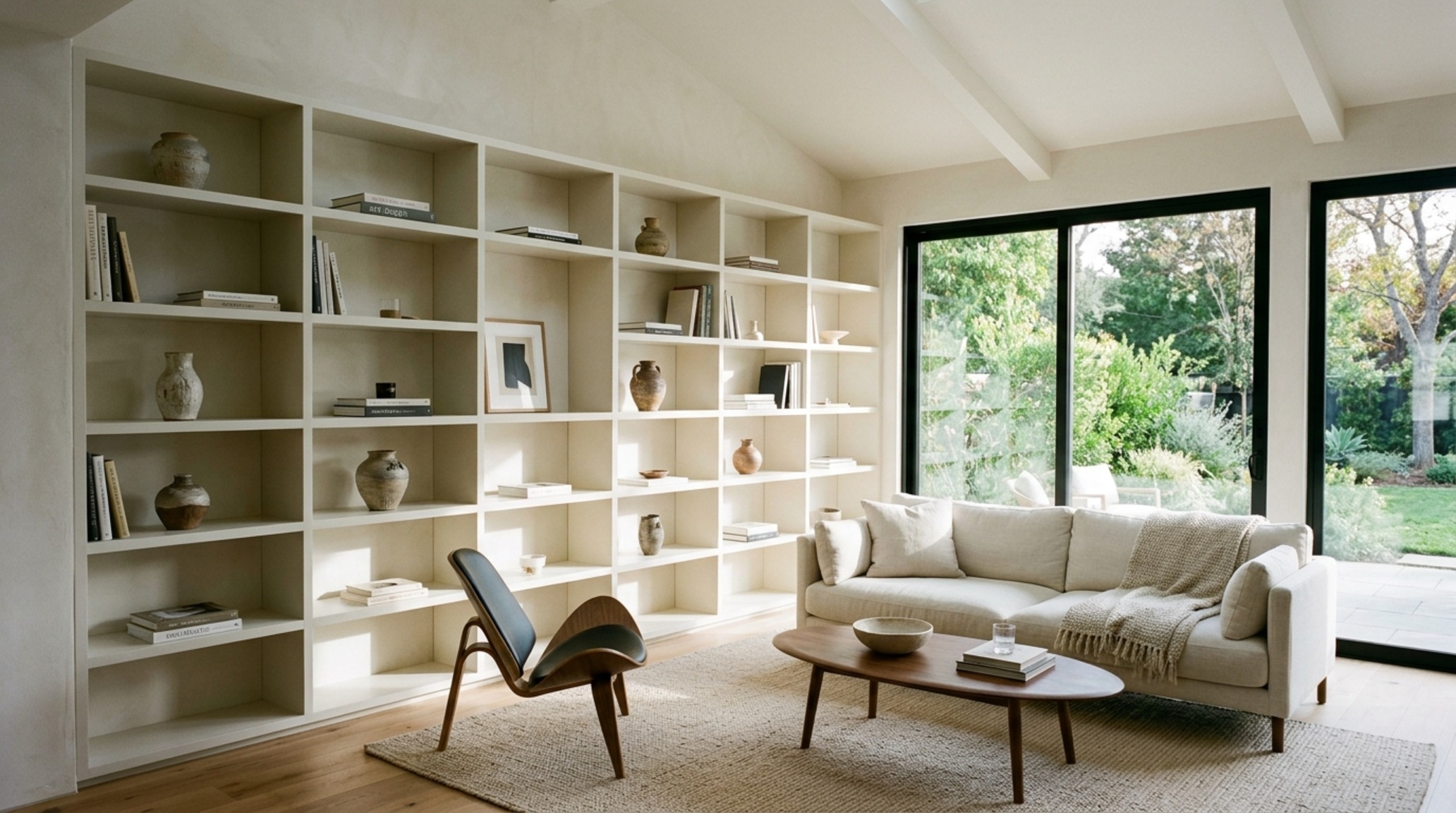
Minimalism is often misunderstood as an absence of things, but in the context of shelving, it is the presence of intention. Modern ideas for shelving ideas often center on the concept of ‘the disappearing act’—shelves that are mitered directly into the drywall or finished in the exact pigment of the envelope, such as Benjamin Moore Swiss Coffee. This technique, known as monochromatic integration, allows the objects displayed to hover in space, unburdened by visible hardware or heavy supports.
In a minimalist study, the use of a continuous ‘horizon line’ can expand the perception of width. By running a single, thick-slab shelf across the entire length of a room—perhaps in a matte-finished White Oak—you create a grounding datum line. This line organizes the chaos of daily life. Below this line, one might incorporate closed cabinetry to hide the visual noise of technology and cables; above it, the wall is left to breathe, utilizing negative space as a design element in its own right. The ratio should typically follow the golden mean: one-third solid to two-thirds open space to maintain a sense of airy sophistication.
Architectural Vignettes & Spatial Flow: The Small Space Strategy
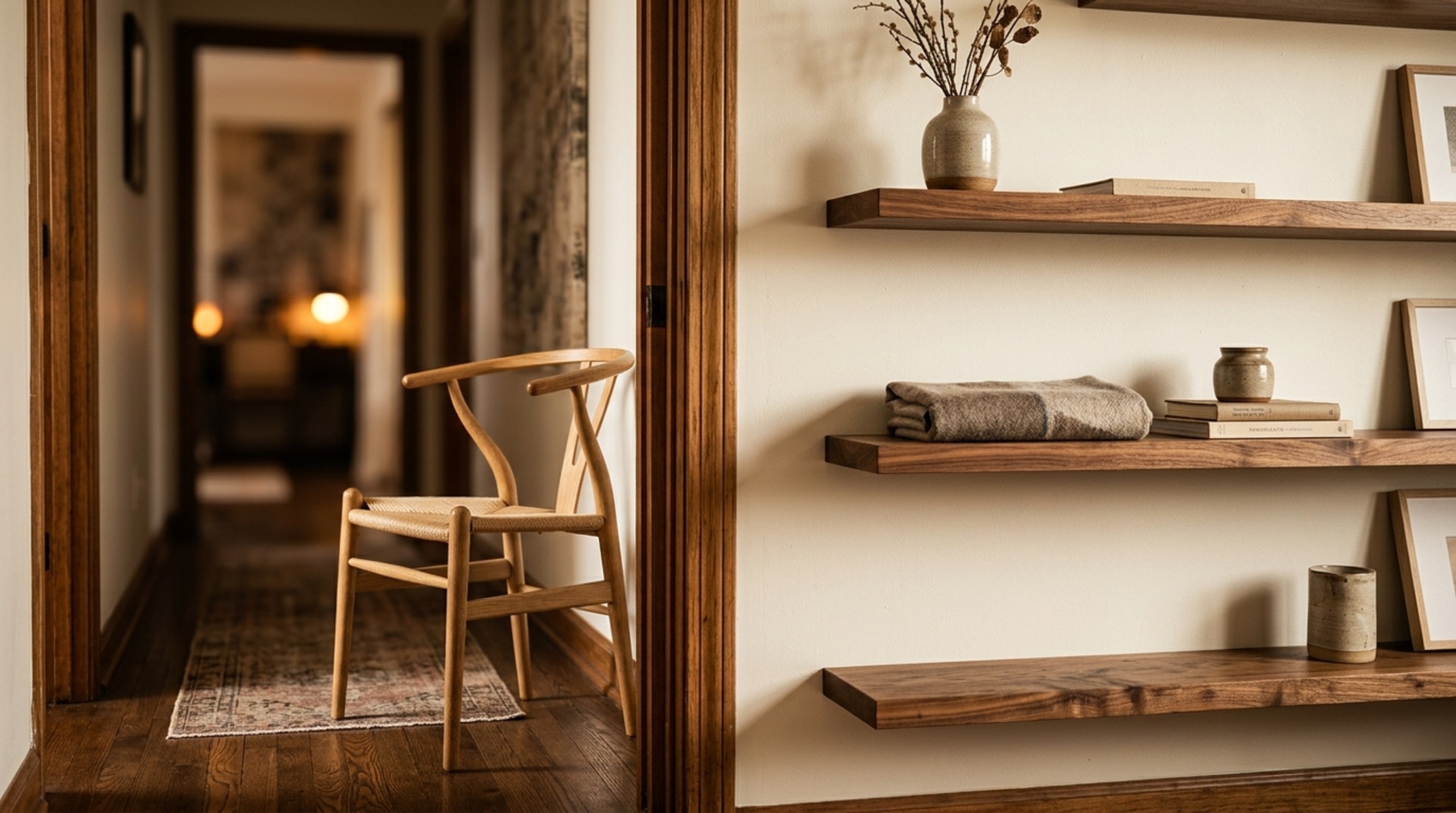
When floor area is at a premium, the wall becomes your most valuable real estate. Small space ideas for shelving require a shift from depth to height. Instead of deep, 12-inch shelves that can encroached upon a 30-inch dining chair clearance, consider 6-inch or 8-inch shallow ledges. These are ideal for displaying curated ceramics or books ‘face-out,’ a technique borrowed from high-end boutiques that treats objects as two-dimensional art. This reduces the physical footprint while maximizing the visual impact.
In tight transitional zones like entryways or hallways, the use of ‘portal shelving’ can define a threshold without the need for a door. By framing a doorway with recessed shelving, you create a sense of compression and release. As one moves through the shelving-lined ‘portal’ into a larger room, the transition feels intentional and grand. To keep these small interventions from feeling cluttered, lean into the ‘tonal layering’ approach. Use materials that share a similar reflectance value—perhaps a soft Farrow & Ball Setting Plaster backdrop paired with raw terracotta and light ash wood. The lack of high-contrast transitions keeps the eye moving smoothly, preventing the ‘caged-in’ feeling often associated with over-furnished small rooms.
“Shelving is the bridge between architecture and decor. It is where the fixed bones of a building meet the fluid soul of the inhabitant.”
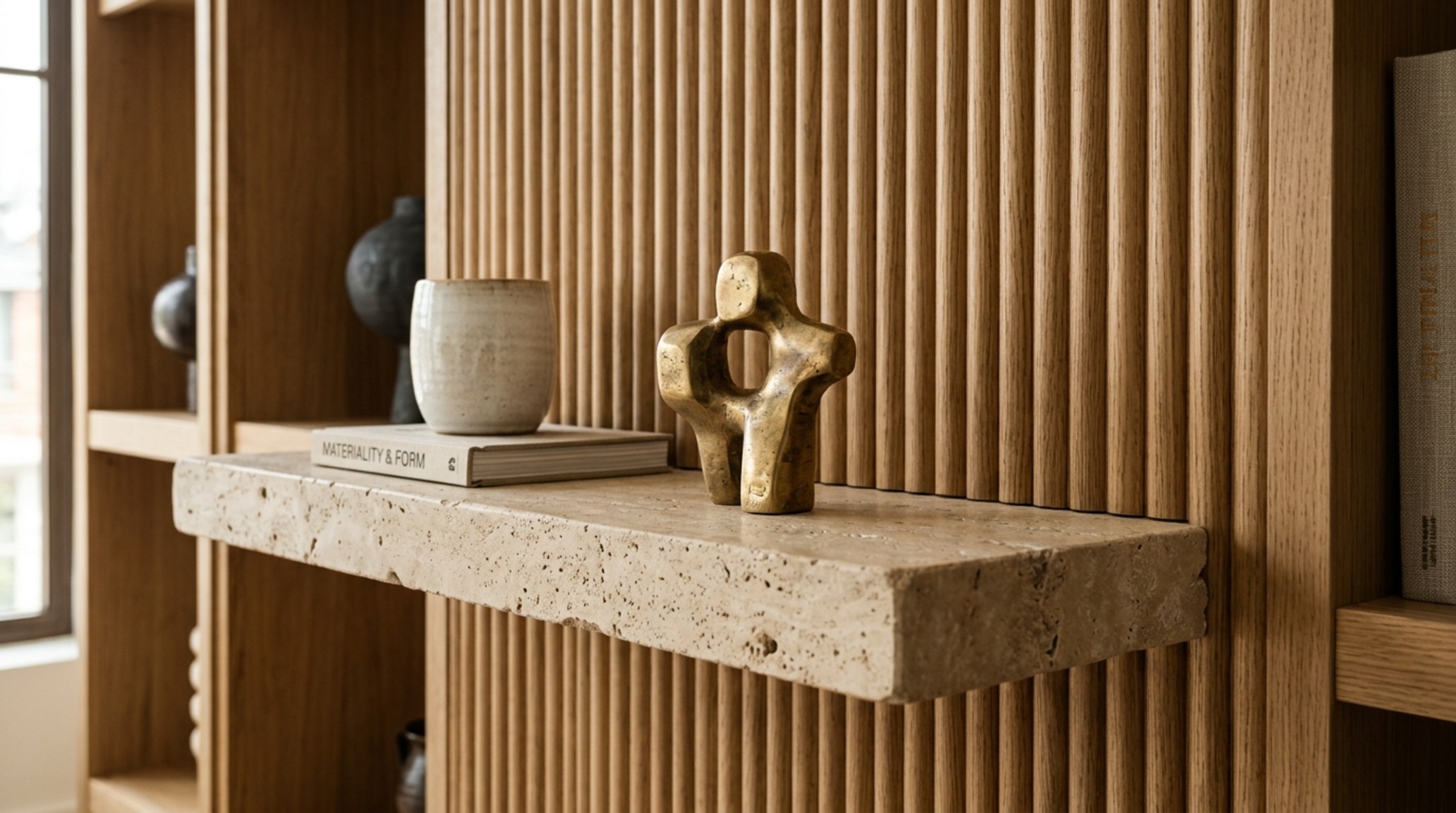
Luxury Ideas for Shelving Textures: A Study in Tactility
Luxury is defined by the nuance of the finish. Luxury ideas for shelving textures often move away from flat surfaces toward fluted, reeded, or sandblasted materials that catch the light in complex ways. Imagine a library wall where the upright supports are wrapped in hand-stitched cognac leather, or shelves crafted from 2-inch thick honed Travertine with a ‘broken edge’ detail. These materials provide a tactile grounding that feels permanent and inherited rather than transient.
Shadow gaps—small 1/2-inch reveals between the shelf and the wall—are the hallmark of high-end architectural joinery. These gaps create a crisp, dark line that defines the geometry of the installation. When combined with unlacquered brass hardware, which develops a living patina over time, the shelving becomes a piece of fine furniture. The interplay between the cool, hard surface of stone and the warm, organic grain of wood creates a sensory dialogue. To achieve this, one might pair a Dark Walnut shelf with a back panel of silk wallpaper or a hand-applied lime wash. This layering ensures that even when the shelf is empty, it remains a compelling architectural feature.

The Ideas for Shelving Lighting Guide: Illuminating the Void
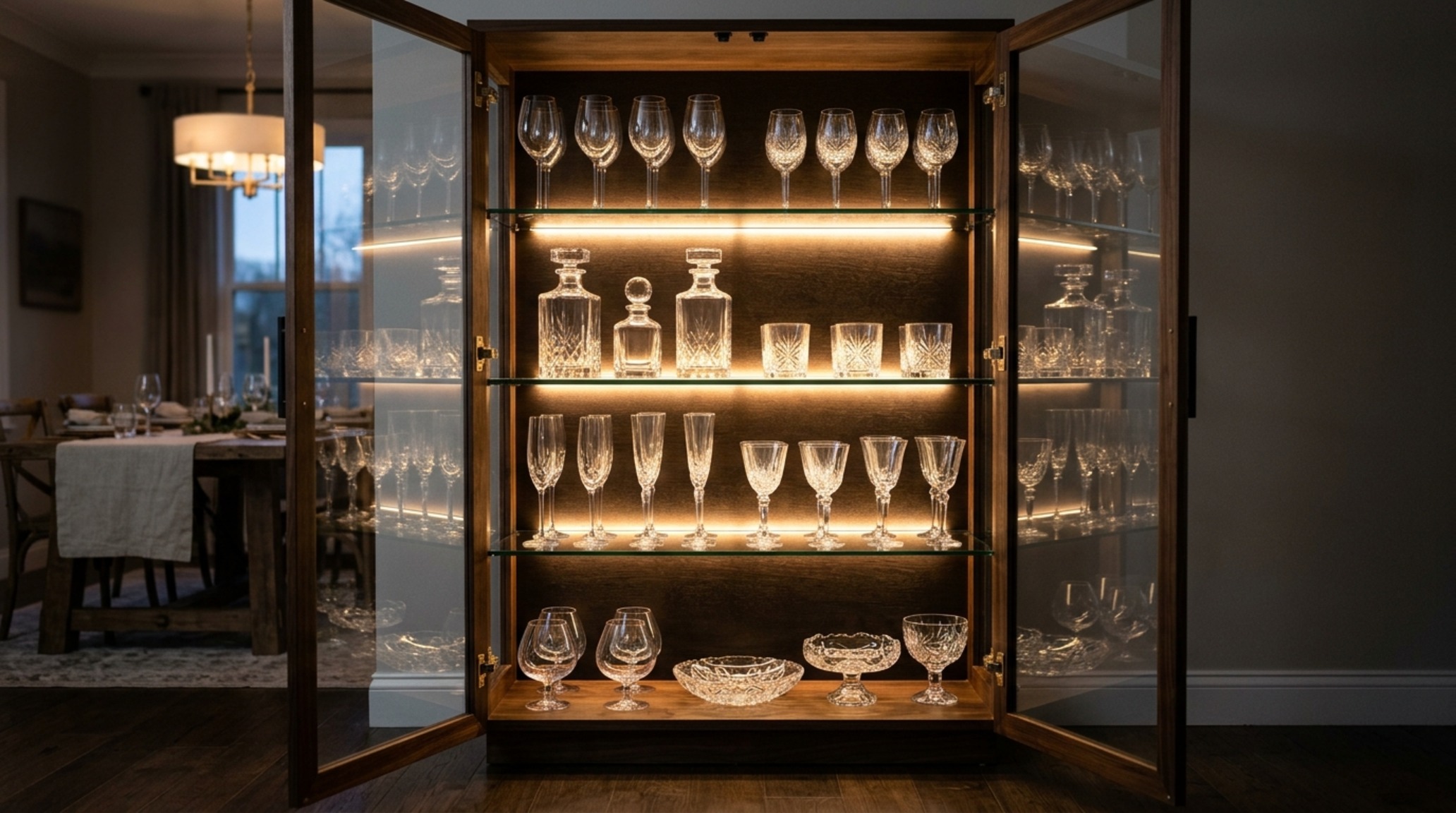
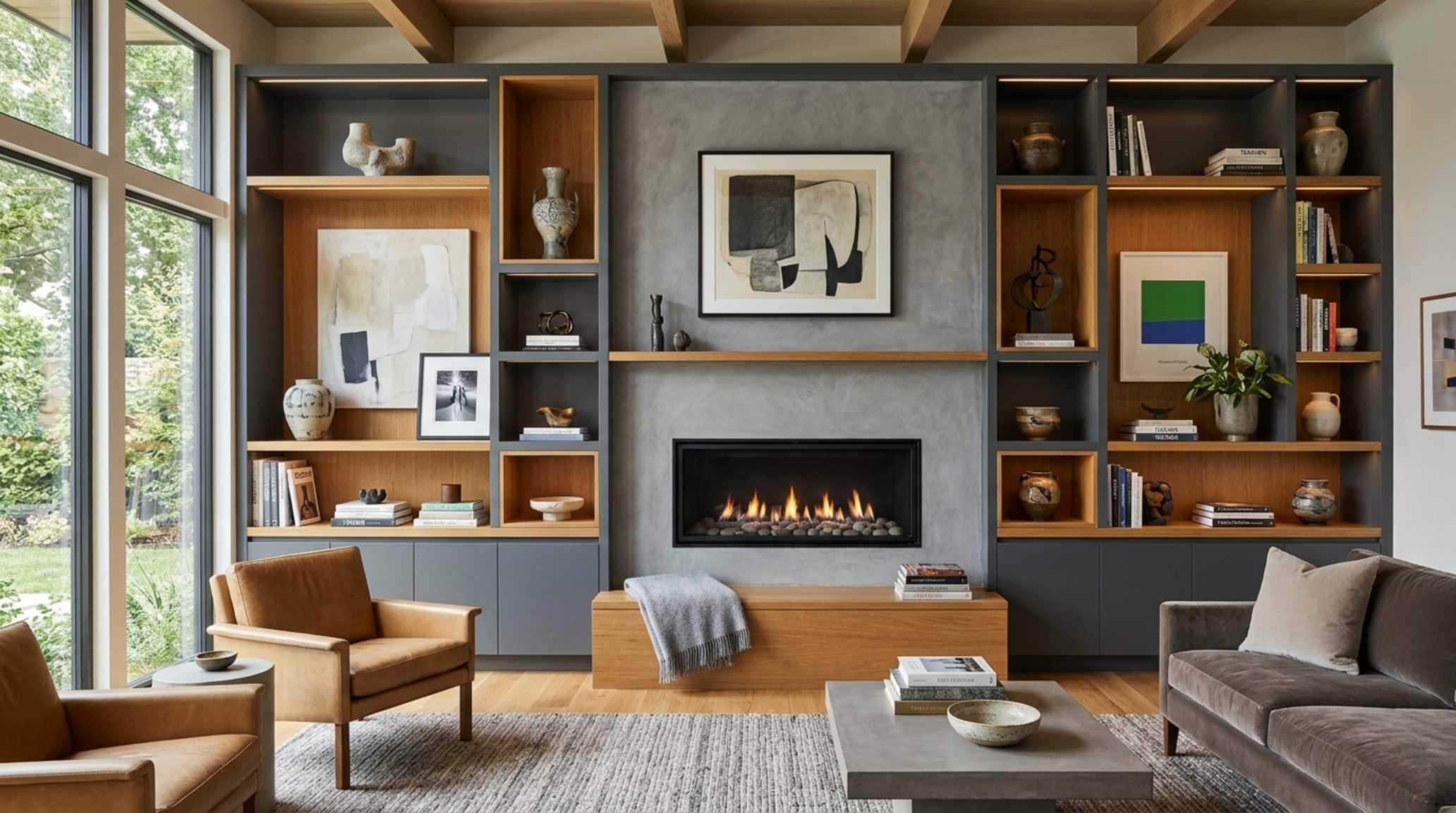
Lighting is the invisible architecture of a shelving unit. Without a dedicated ideas for shelving lighting guide, even the most expensive materials will fall flat. The goal is to move away from the ‘hot spots’ of traditional puck lights and toward the seamless glow of integrated LED extrusions. These should be recessed into the underside of each shelf, positioned about two inches back from the front edge to avoid glare. A high Color Rendering Index (CRI) of 90+ is non-negotiable; it ensures that the spines of your books and the glazes of your pottery appear in their true, vibrant hues.
Temperature choice is equally critical. For residential environments, a 2700K warm ambient glow mimics the softness of golden hour, creating an inviting atmosphere. In a more contemporary or clinical space, 3000K provides a crisper, gallery-like feel. Advanced designers are now utilizing ‘wash lighting’—placing LED strips at the back of the shelf to graze the rear wall. This creates a silhouette effect for the objects on display, adding a sense of depth and mystery. When controlled by a smart dimmer, the shelving can transition from a functional task-oriented zone during the day to a soft, sculptural light source in the evening, effectively becoming the room’s primary mood lamp.
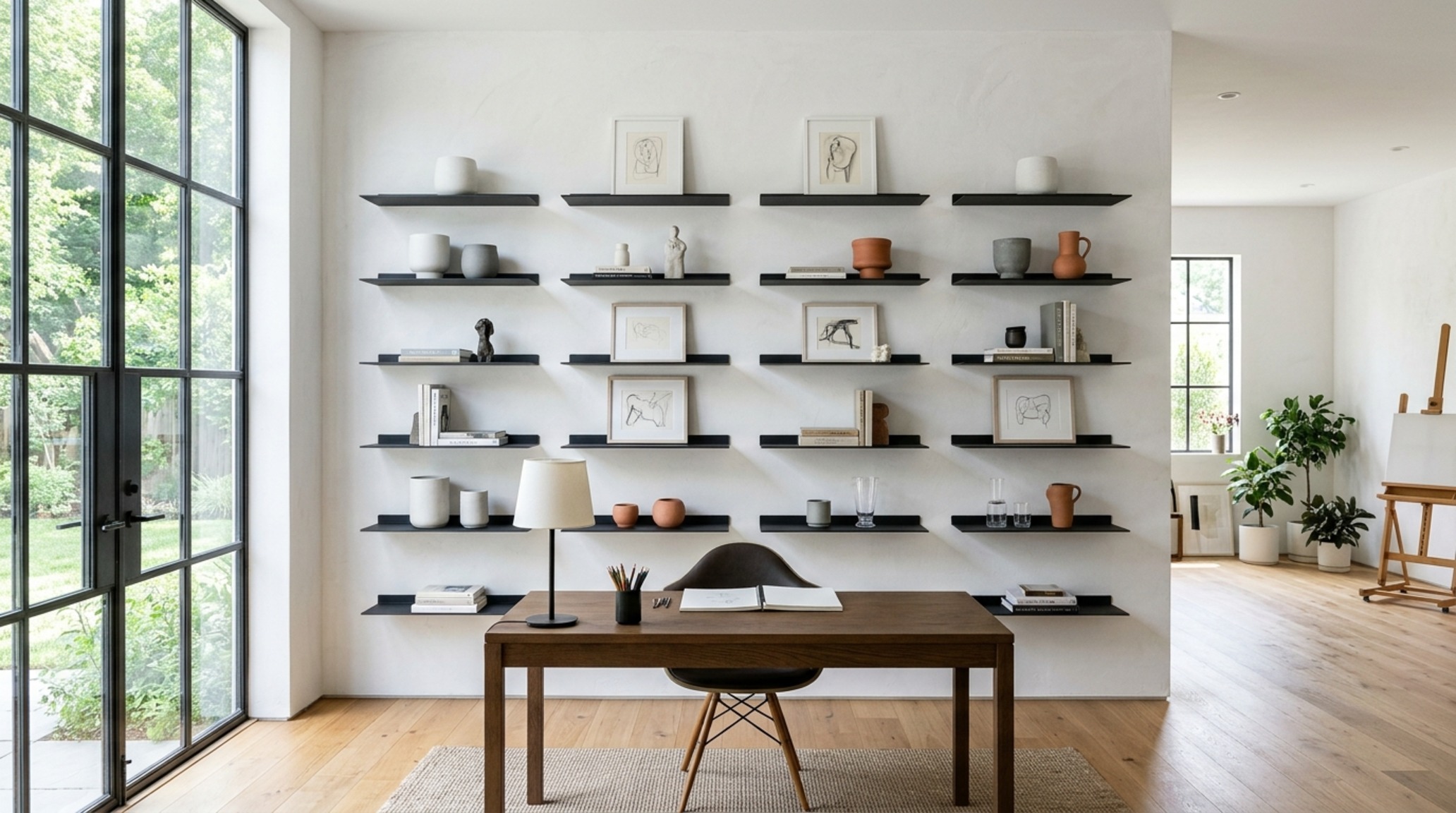
Curated Visual Anthology: The Art of the Narrative Vignette
Styling a shelf is an exercise in composition, much like painting a still life. The most successful vignettes utilize varying heights and ‘clusters’ to guide the eye. Avoid the ‘soldier’ look—books lined up perfectly from tallest to shortest. Instead, stack some horizontally to act as pedestals for small sculptures or found objects. This creates a tiered landscape within the shelf itself. Incorporating ‘breathing room’—segments of the shelf left entirely empty—is what separates a professional installation from mere storage. This negative space allows the eye to rest and emphasizes the importance of the items that *are* present.
Consider the ‘triangle rule’ for color and texture: if you place a brass object on the top left shelf, place another on the middle right, and a third on the bottom center. This creates a visual path that moves the viewer’s gaze across the entire installation. Natural elements are essential for softening the hard lines of the shelving. A trailing Aeschynanthus (Lipstick Plant) or a singular, sculptural branch provides an organic counterpoint to the rigid geometry of the wood and stone. This juxtaposition between the built environment and the natural world is what gives a room its ‘living’ quality.
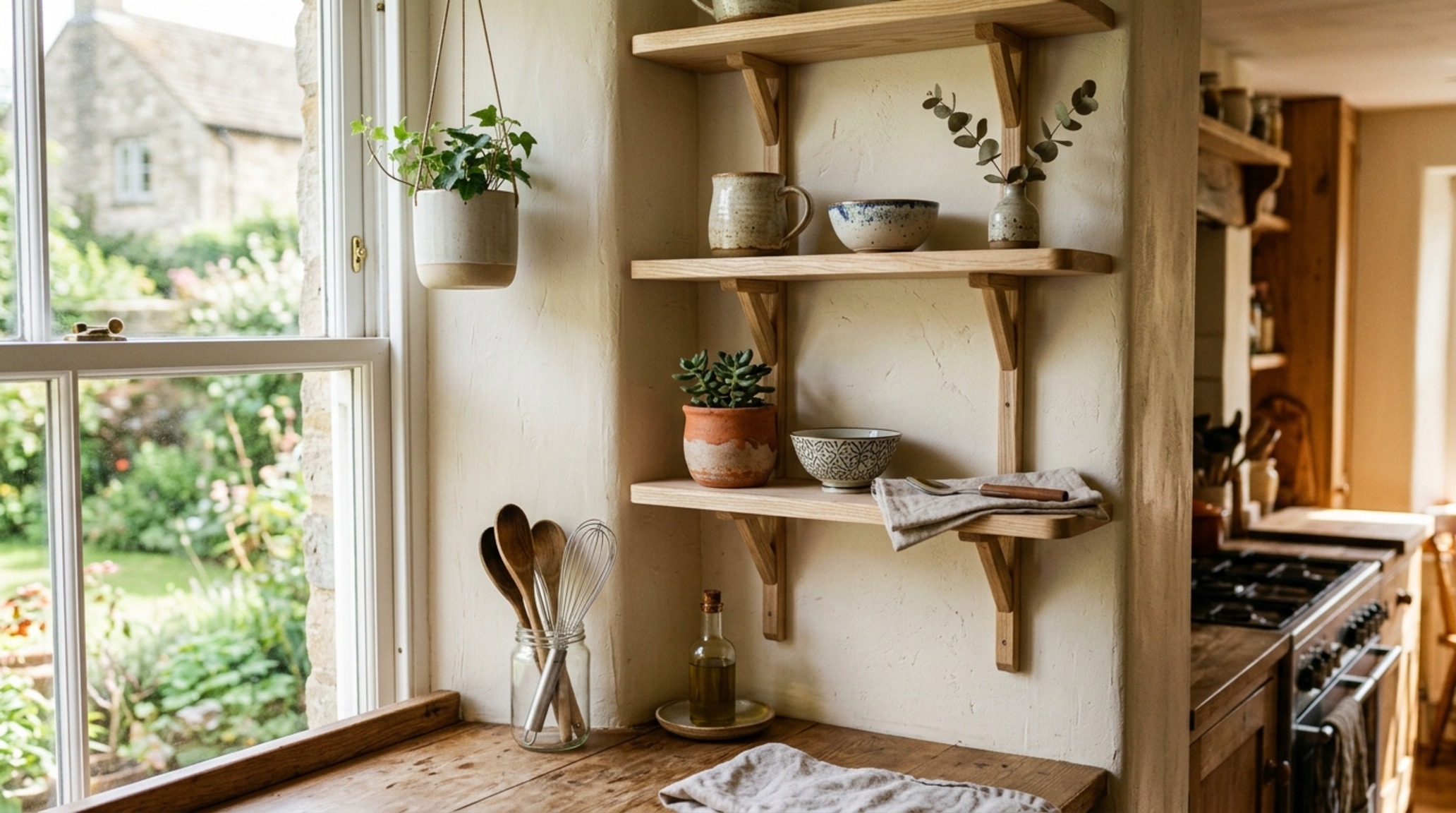
Materiality, Palette & Dimension Blueprint
Summary of authentic finishes, designer paint selections, and standard architectural clearances.
Ultimately, the most resonant ideas for shelving are those that respect the passage of time. As the light shifts throughout the day, the shadows cast by a well-designed shelf should evolve, painting new geometries across the floor. By prioritizing the structural integrity of the design and the honest expression of materials, we create more than just storage; we create a framework for living. Whether it is a floor-to-ceiling library or a singular, floating kitchen ledge, let the design be a quiet celebration of order, light, and the enduring beauty of the architectural line.
Editorial Silo • Recommended Architecture Studies
- The Alchemy of Texture: Sculpting Atmospheric Depth in Contemporary Home Interiors Designs — Archival Design Case Study
- The Architecture of Joy: Christmas Decorating Ideas For The Office & Mapping the Holiday Flow in High-Performance Workspaces — Archival Design Case Study
The Visual Moodboard
A high-resolution study in spatial proportions, tactile materiality, and light choreography curated for enduring modern living.


Curated Visual Lookbook
Design Gallery & Spatial Studies
A visual curation of architectural arrangements, lighting concepts, and material palettes featured in this space.