The Evolution of the Vertical Archive
For centuries, the concept of home libraries was tethered to the heavy, dark mahogany monoliths of the Victorian era—static, imposing structures that demanded massive floor footprints and prioritized preservation over accessibility. These historical conventions often felt like furniture that fought against the room rather than with it. In contrast, today’s architectural shift toward vertical intelligence embraces a more fluid philosophy. We are seeing a move toward high-density book shelving that functions as a structural spine within the home, utilizing the vertical plane to reclaim precious square footage. This modern standard isn’t just about storage; it’s about engineering a seamless integration of physical media into the lean, light-filled environments of contemporary urban living.
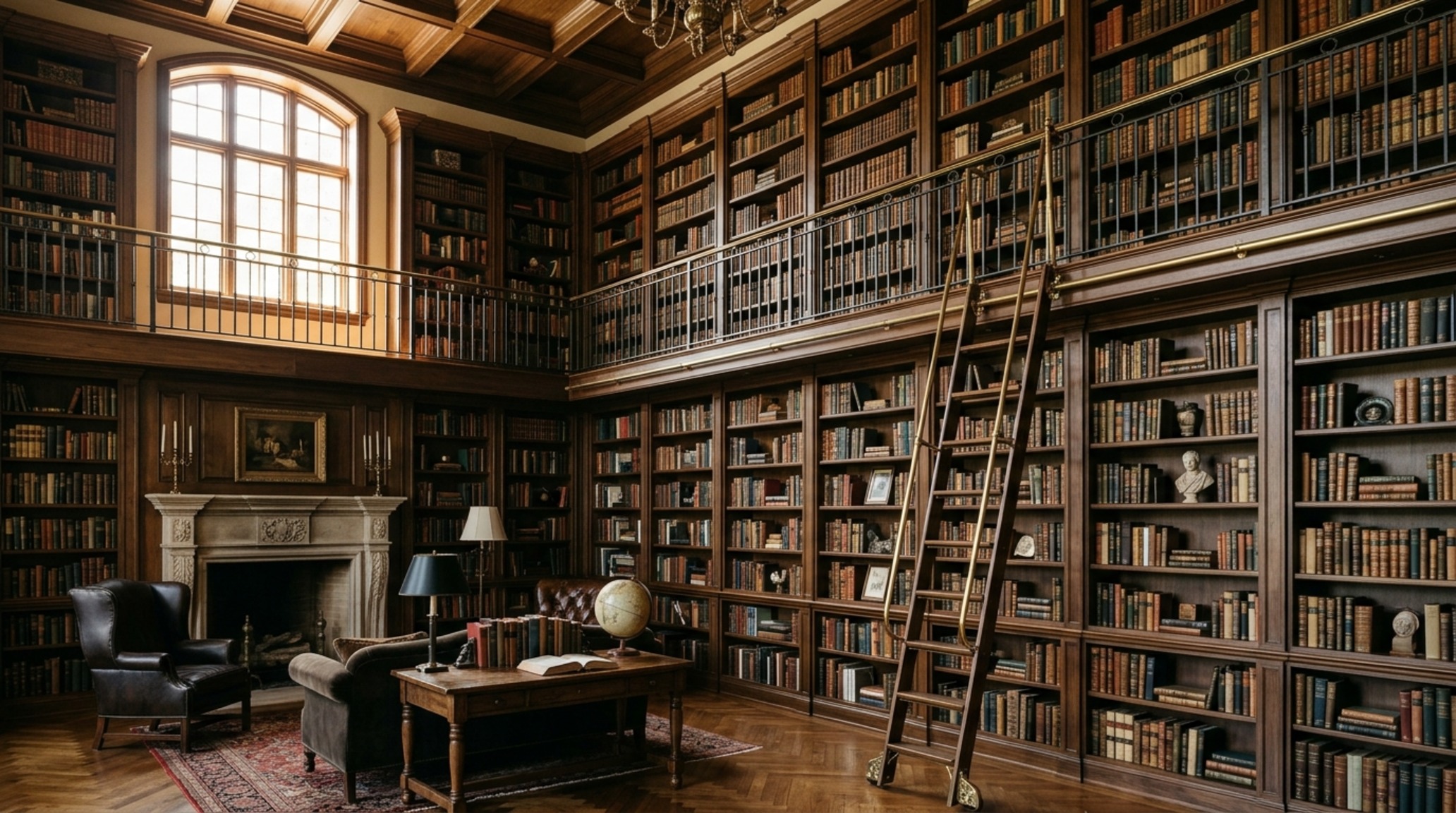
When we talk about vertical intelligence, we are moving beyond the simple bookshelf. We are discussing the architectural manipulation of space. In a compact loft or a modern townhouse, every inch of horizontal floor space is a premium asset. By lifting the weight of a collection off the floor and onto the walls, we create sightline alignment that makes a room feel expansive. This shift requires a technical understanding of load-bearing capacities and the spatial cadence of a room. A library shouldn’t just sit in a room; it should breathe with it, using negative space to provide a sense of relief between dense volumes of text.
Structural Physics: Engineering Heavy Duty Shelving for Books Without the Sag
The most common failure in amateur library design is the ‘sag’—the unsightly bowing of shelves under the relentless pressure of hardbound weight. To prevent this, we must look at the structural physics of the span. Standard 3/4-inch plywood or MDF shelving begins to deflect when the span exceeds 30 to 36 inches without intermediate support. If you are curating a collection of heavy art monographs or law volumes, engineering heavy duty shelving for books becomes a necessity rather than an option. This involves utilizing stiffening cleats, thicker 1-inch substrates, or even concealed steel reinforcements embedded within the wood grain.
Material selection plays a pivotal role in this structural narrative. Solid hardwoods like White Oak or Walnut offer superior tensile strength compared to composite materials. For those seeking a more industrial or minimalist profile, cold-rolled steel shelving provides an ultra-slim silhouette while maintaining incredible load capacities. When these systems are anchored directly into the wall studs using heavy-duty L-brackets or integrated French cleat systems, the library becomes an immovable part of the home’s skeleton, capable of supporting hundreds of pounds without a millimeter of deflection.
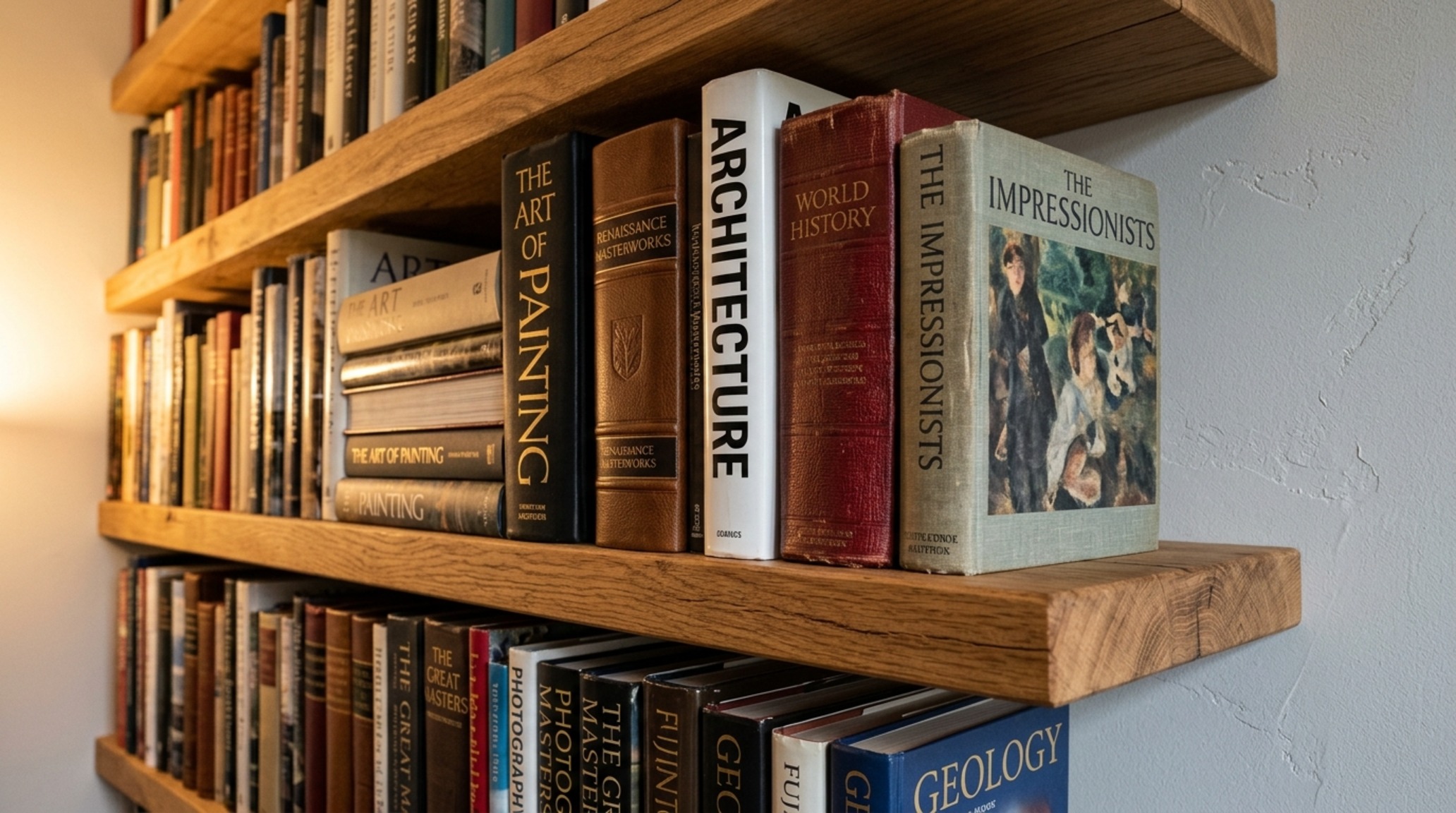
Beyond the materials, consider the spacing. High-density storage thrives on adjustable standards. Life is rarely static, and a collection of pocket-sized paperbacks may eventually give way to oversized architectural folios. Using recessed K&V (Knape & Vogt) standards or modular pilasters allows the vertical intelligence of the system to adapt. It prevents the waste of ‘air’ space, ensuring that each shelf sits just an inch or two above the tallest spine, maximizing the number of tiers you can fit into a standard 8-foot or 10-foot ceiling height.
Utilizing the Periphery: Space-saving Book Shelving in the Urban Margin
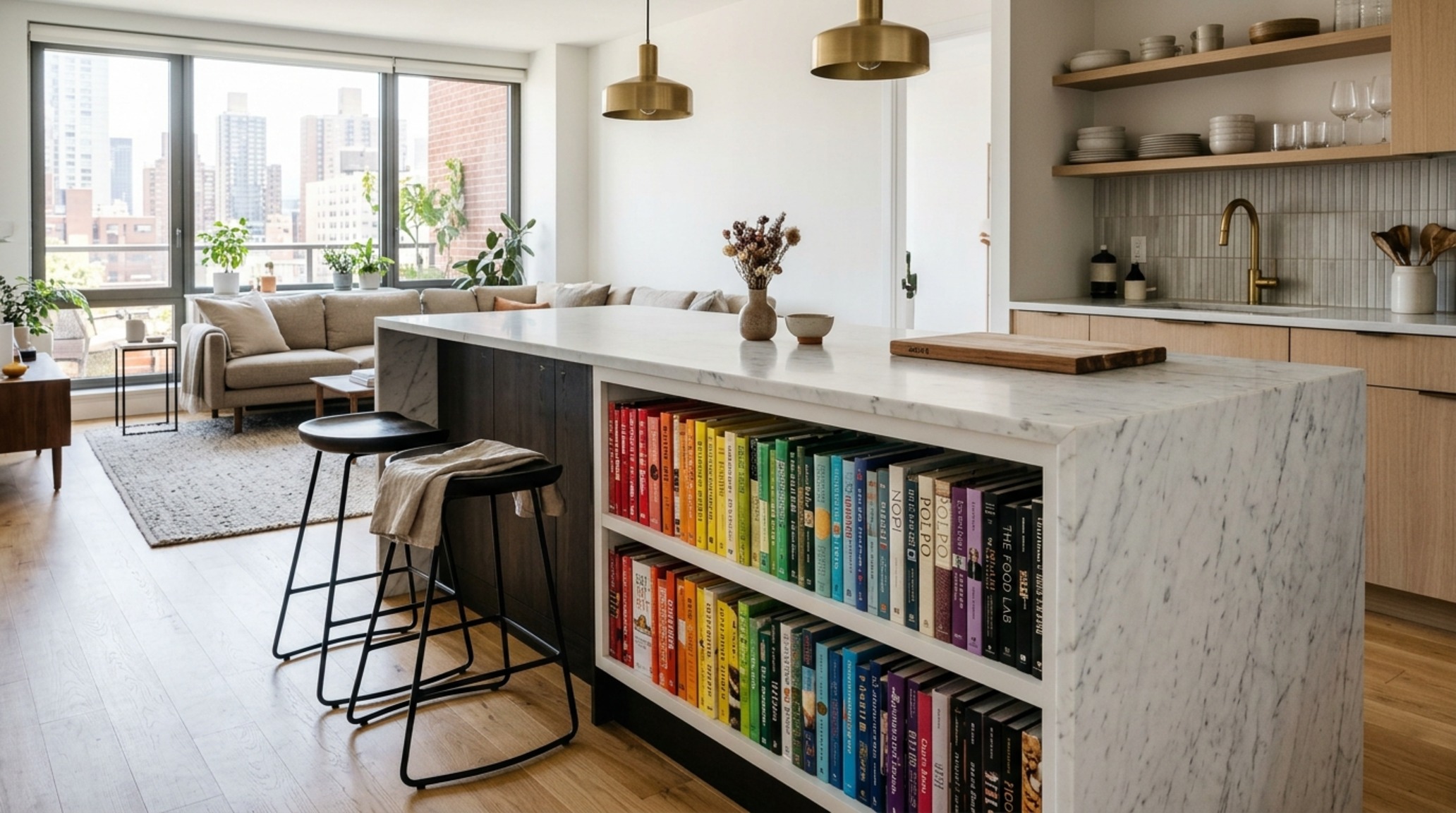
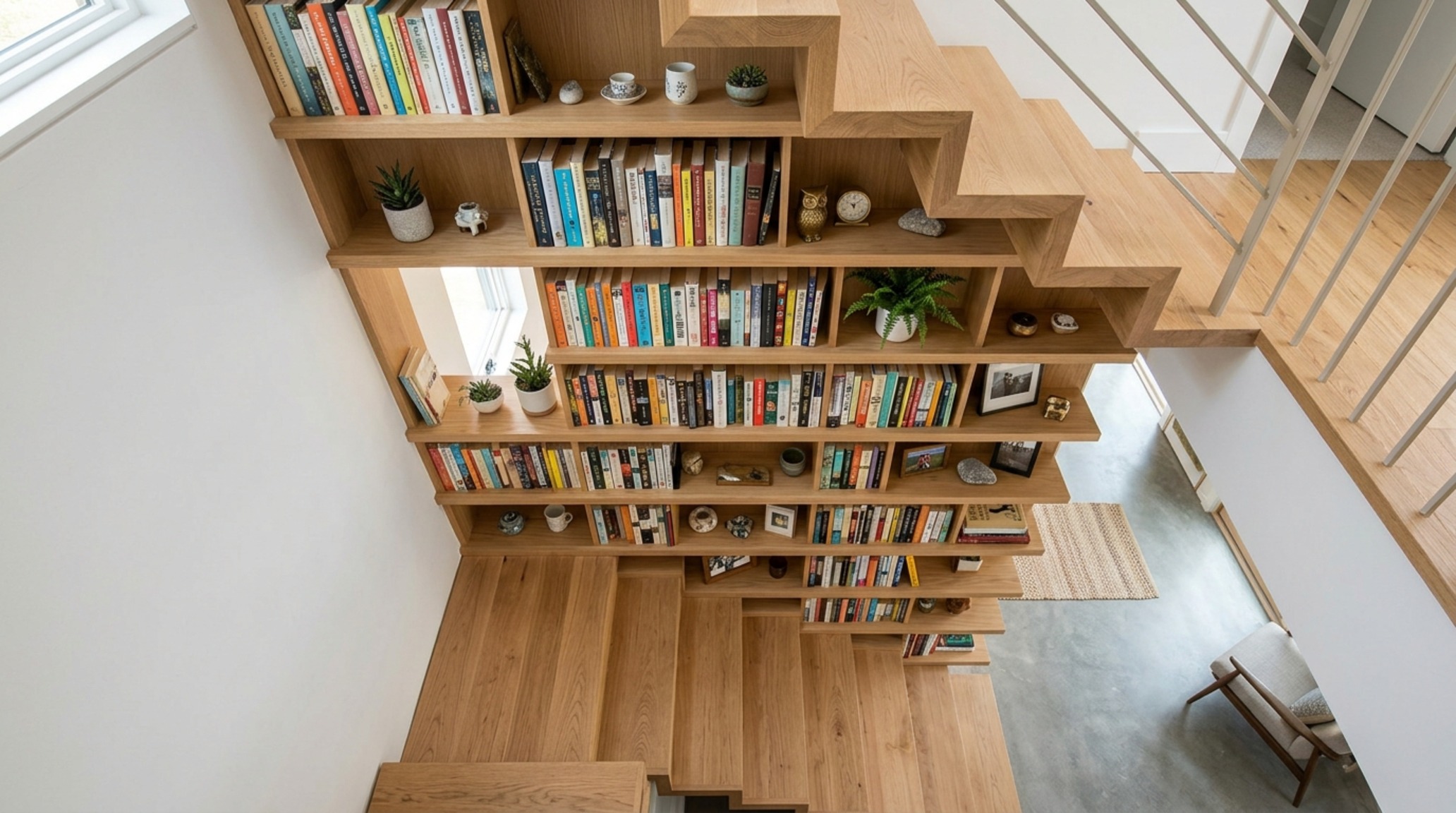
The true genius of modern storage lies in capturing ‘dead zones’—those overlooked architectural niches that offer untapped potential. Implementing space-saving book shelving in the urban margin means looking at the areas above door frames, the awkward triangles under staircases, or the shallow depths of a kitchen island. An over-the-door library, for instance, utilizes the top 12 to 18 inches of a room that are otherwise useless, creating a ‘halo’ of literature that feels cozy and protective rather than cluttered.
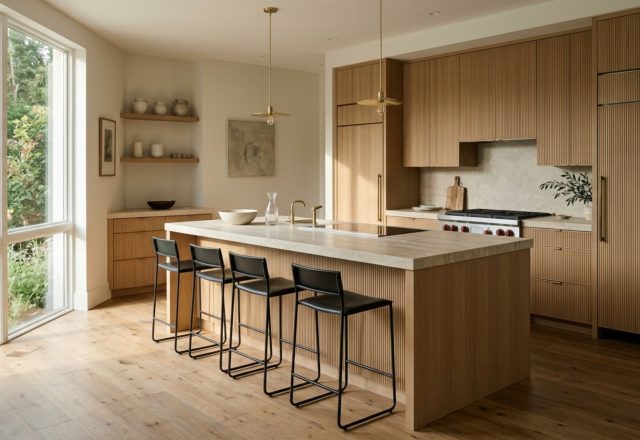
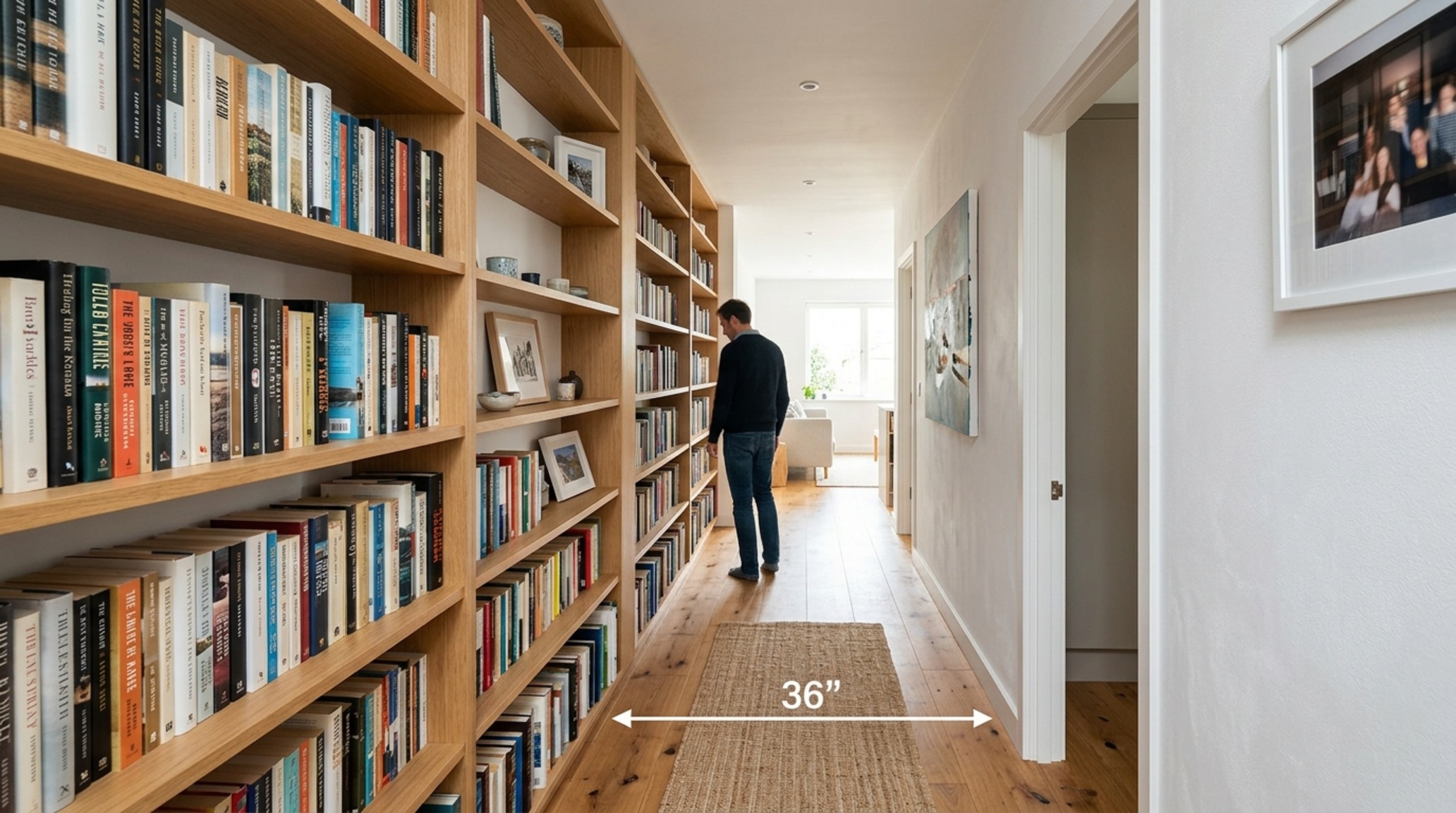
In the kitchen, we often find 12 inches of unused depth on the ‘back’ of a waterfall island. By carving out narrow niches for cookbooks, we ground the kitchen in a tactile, lived-in warmth. These shallow-depth solutions are particularly effective for paperbacks, which only require 6 to 7 inches of depth. By reducing the shelf depth to match the media, you preserve 36-inch standard walkway clearances, ensuring that the movement through the home remains fluid and unencumbered. It’s about the ergonomics of reach and the geometry of the path.
The New Maximalism: Mastering the Bookshelf Wealth Aesthetic
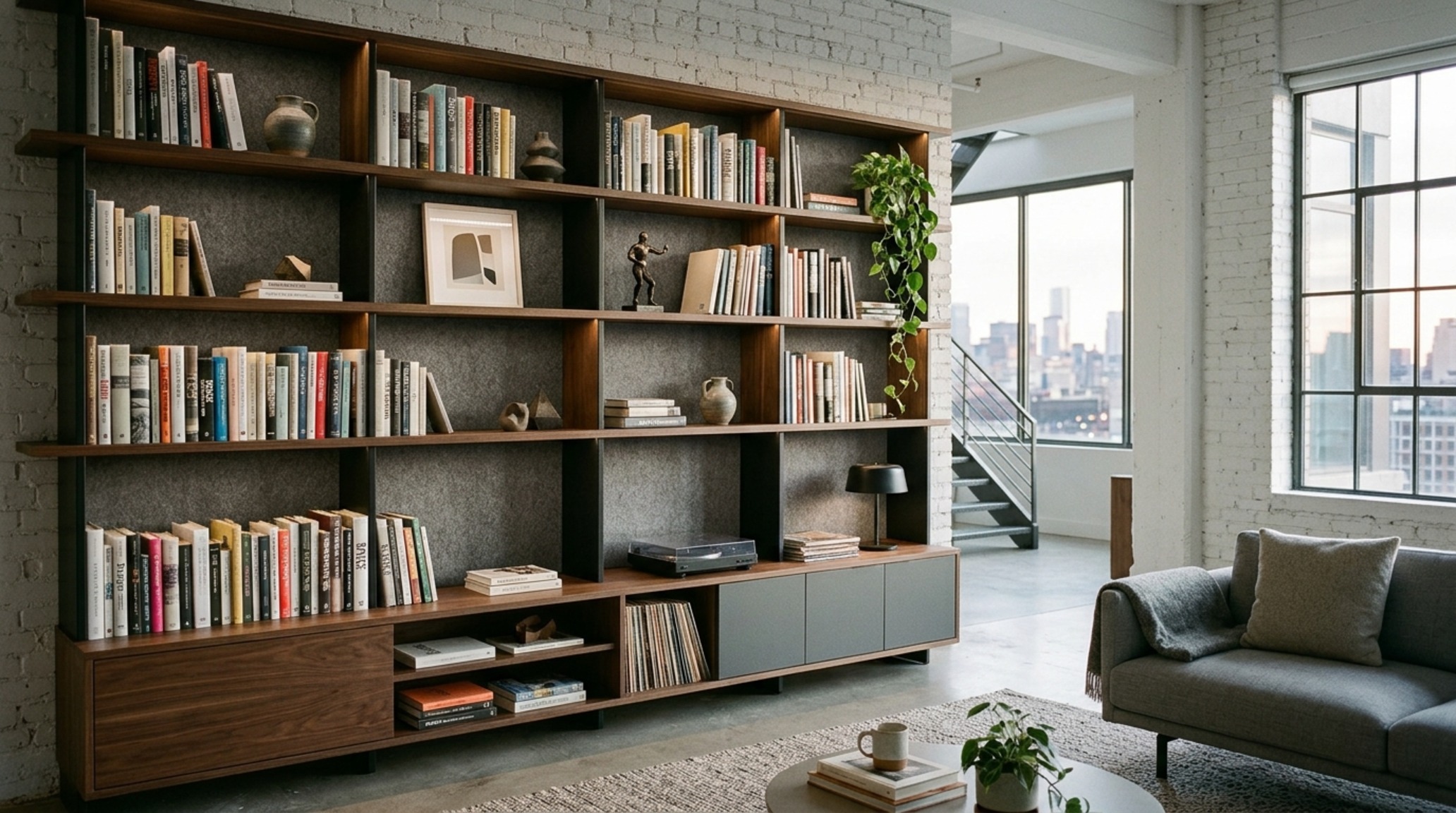
The design world has recently pivoted toward what is being called ‘Bookshelf Wealth.’ Unlike the sterile, color-coordinated spines of the early 2010s, the bookshelf wealth aesthetic celebrates the authentic, the messy, and the deeply personal. It’s about a collection that looks lived-in—where books are interspersed with inherited ceramics, framed sketches, and objects of travel. However, achieving this ‘curated chaos’ requires a disciplined eye for balance and shadow play.
The Visual Rhythm: Styling Book Shelving for Curated Depth
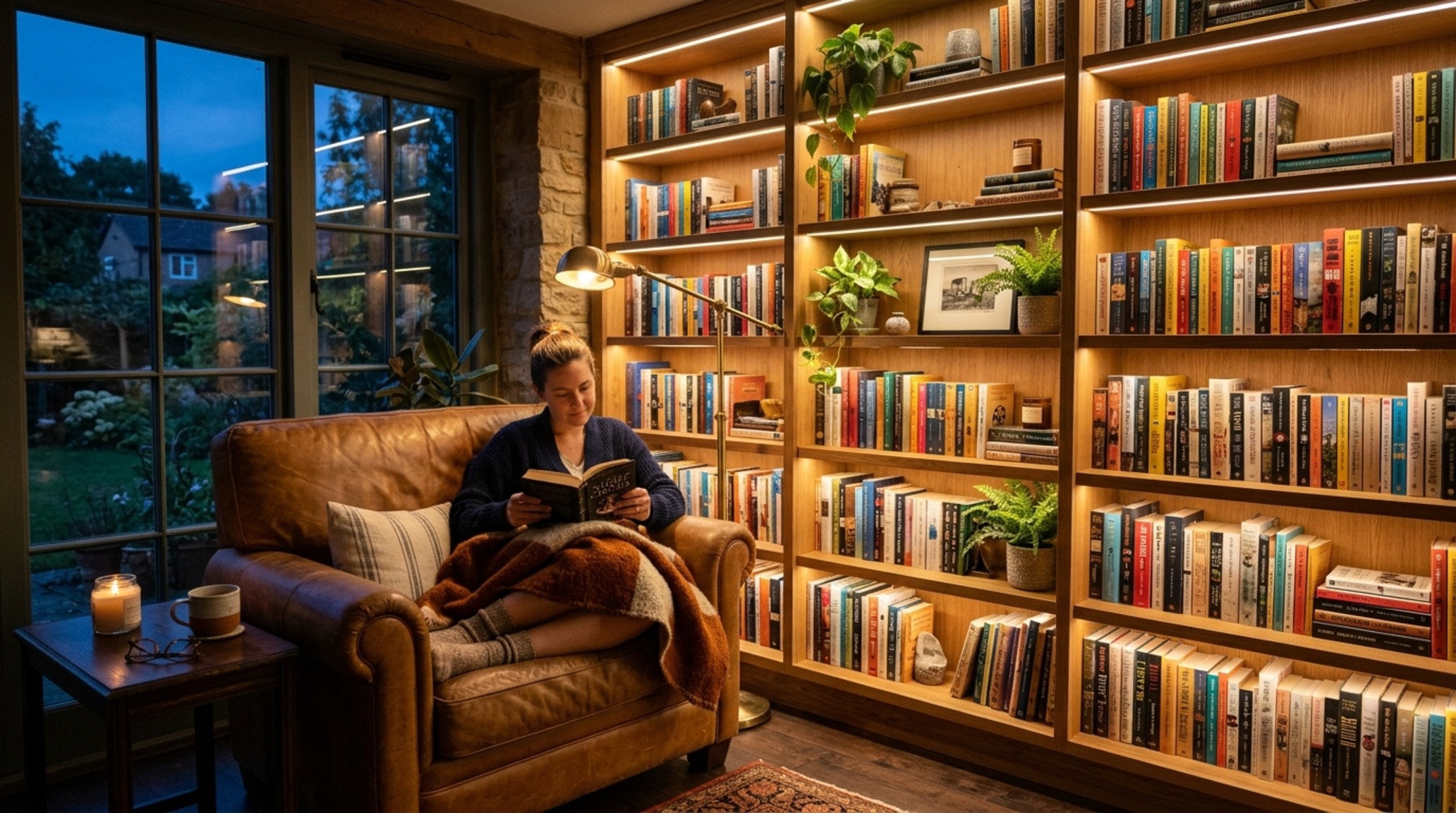
When styling book shelving, I often follow the ‘rule of thirds’ applied to three-dimensional space. One-third of the shelf should be dedicated to vertical volumes, one-third to horizontal stacks (which act as pedestals for smaller objects), and one-third to negative space or decorative ‘breathing room.’ This prevents the wall from becoming a monolithic block of paper. Lighting is the final, essential layer. Using 2700K warm ambient lighting—perhaps through slim LED tape recessed into the front lip of the shelf—creates a glow that highlights the texture of the paper and the patina of the bindings without causing glare. High CRI (90+) ratings are crucial here to ensure the colors of the book spines are rendered with the same richness they possess in natural sunlight.
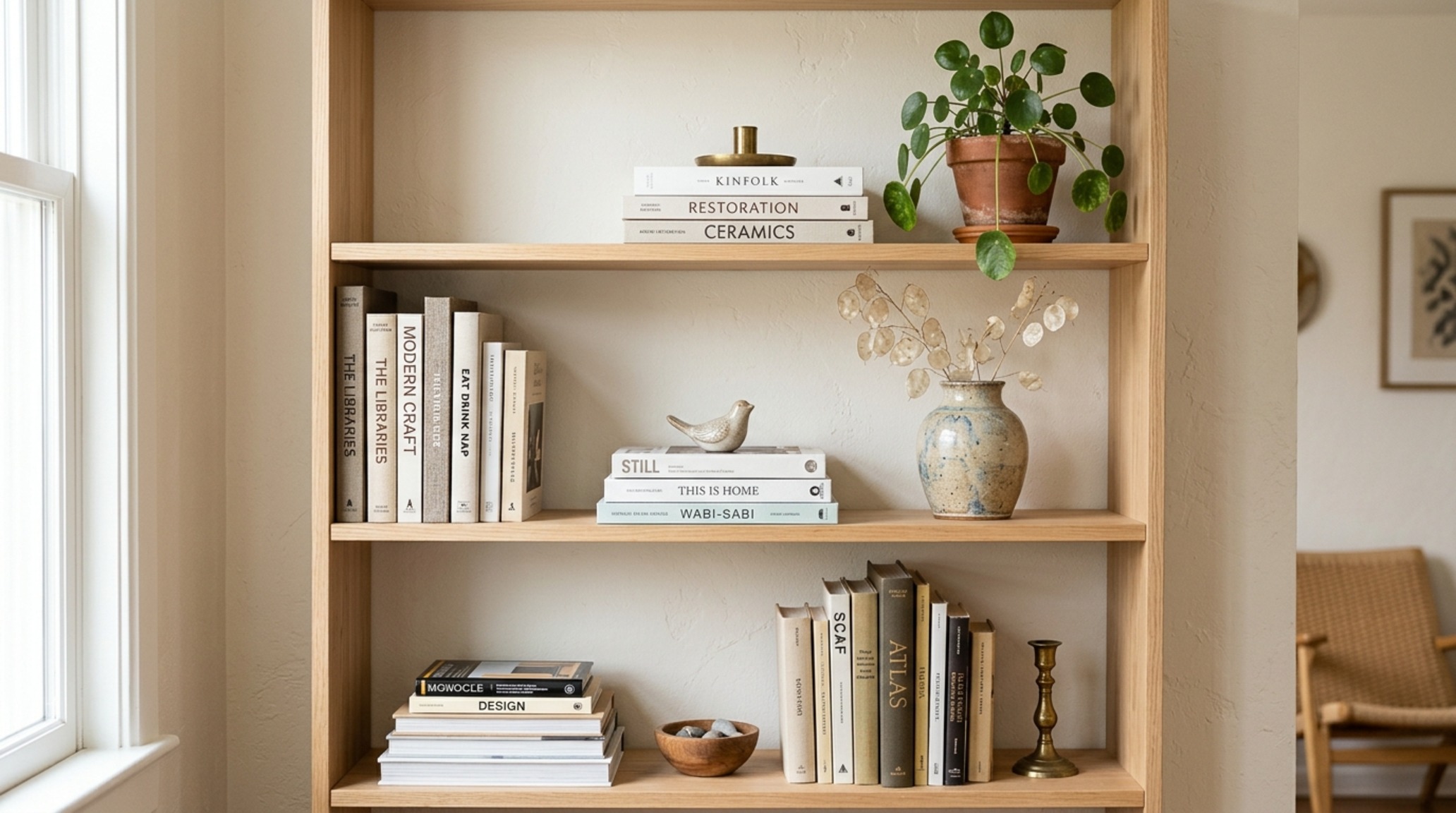
Consider the interplay of color. While I discourage the ‘rainbow’ look, grouping books by tone—creams, ochres, and deep indigos—can create a sense of cohesion. Introduce tactile grounding through materials like leather-bound journals or linen-wrapped portfolios. These elements absorb light differently than the glossy sheen of modern dust jackets, adding a sophisticated layering to the visual narrative.
Designing for Human Scale: Ergonomics and Flow
Engineering a library is as much about human biology as it is about architecture. The ergonomics of reach dictate that the most frequently used items should reside between 24 and 60 inches from the floor—the ‘golden zone.’ Anything above 84 inches requires a rolling library ladder or a sturdy step-stool, turning the act of retrieving a book into a deliberate, almost ceremonial event. For renters, modular systems that can be disassembled and reconfigured in a new space are the ultimate high-utility blueprint.
Walkway clearances are non-negotiable. In a library corridor, you need a minimum of 36 inches to allow for comfortable passage and the ability to crouch and browse the lower tiers. If the shelving is located behind a dining area or a desk, allow for a 30-inch chair clearance plus an additional 18 inches for someone to walk behind. These measurements are the silent guardians of a well-functioning home; ignore them, and the most beautiful library becomes a source of daily friction.
Curated Concept Gallery: Modern Book Shelving Ideas for 2026
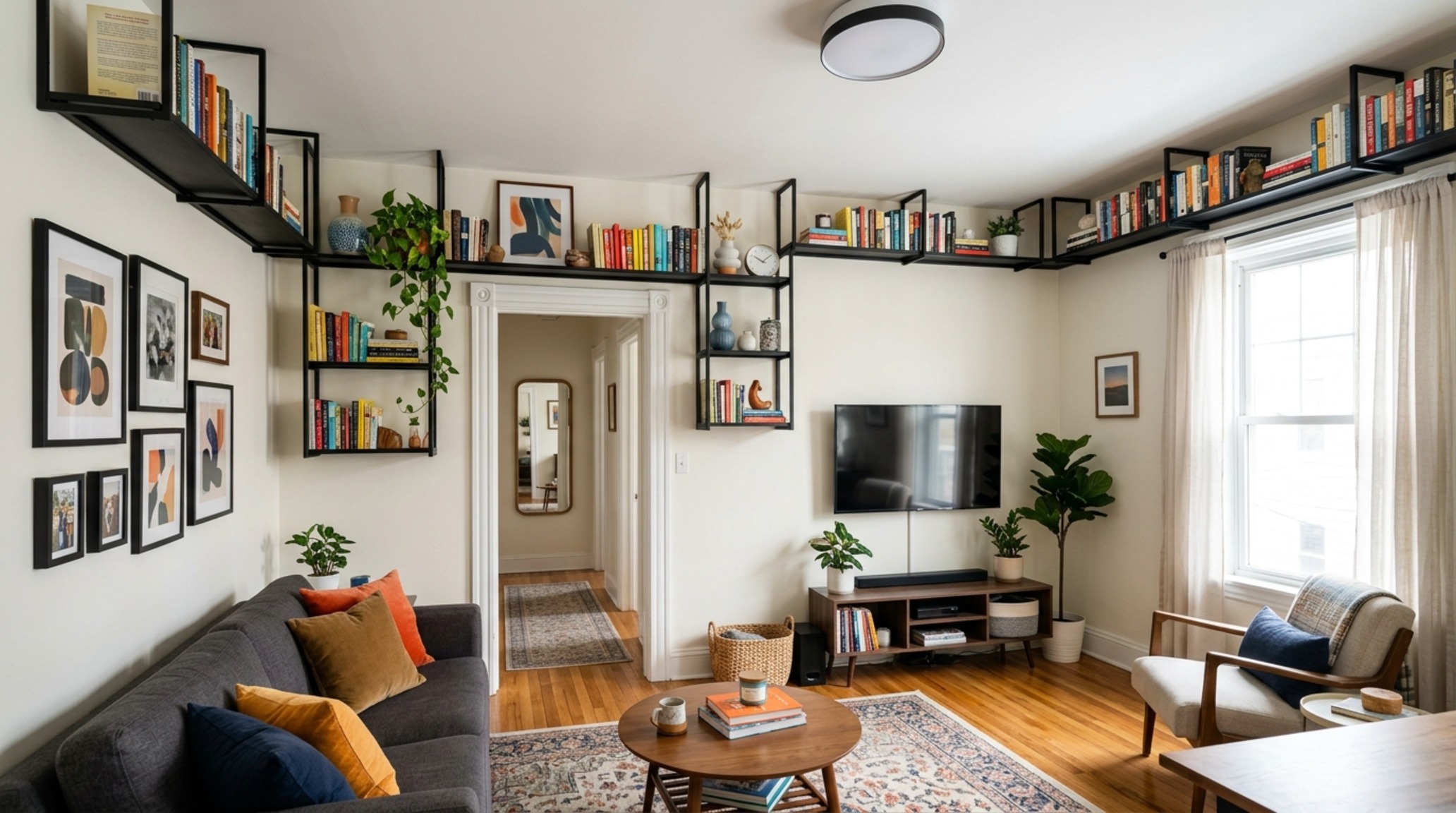
As we look toward the future of interior architecture, modern book shelving ideas are increasingly focused on biophilic integration and multi-sensory experiences. We are seeing shelves with integrated planters that allow trailing ivy to soften the hard lines of the wood, and acoustic felt backings that help dampen sound in open-plan apartments. The library is evolving from a storage unit into a sensory sanctuary.
Tailored Verticals: Custom Book Storage Solutions for Awkward Alcoves
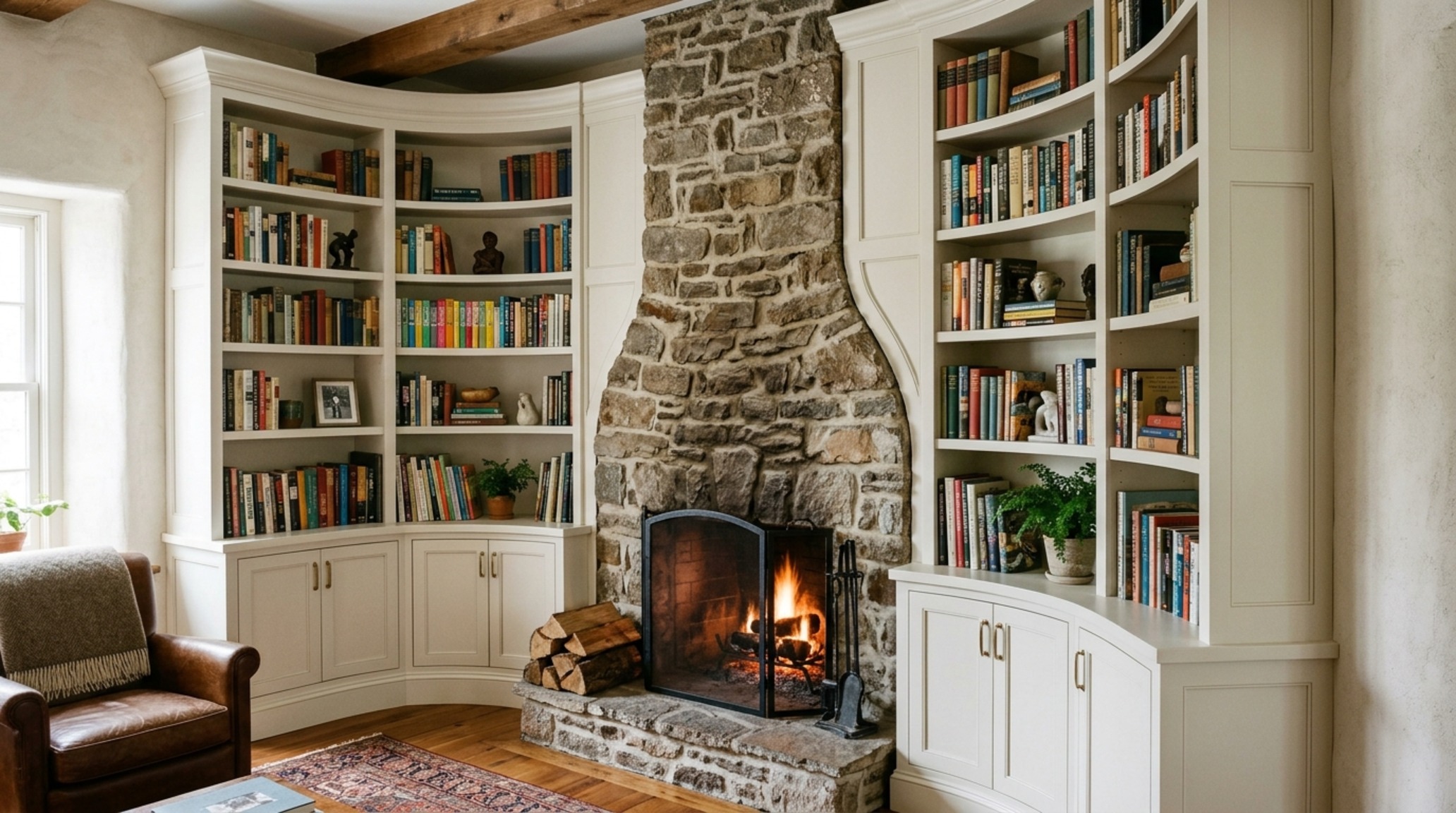
Every home has that one ‘difficult’ corner—a chimney breast offset by six inches or a window placed just slightly off-center. These are the perfect opportunities for custom book storage solutions. By wrapping shelves around a corner or into a window jamb, you create an architectural feature that feels like it was always meant to be there. Using a paint swatch like Benjamin Moore Swiss Coffee on the shelves can help them recede into the wall, while a bolder choice like Farrow & Ball Setting Plaster can turn the alcove into a focal point that catches the afternoon sun.
Technical Specification & Material Matrix
Curated tactile palette, spatial dimensions, and atmospheric lighting index for this design scheme.
Ultimately, the successful engineering of a library is a quiet dialogue between the user and the architecture. It is the realization that book shelving is not a static destination but a living, breathing component of a well-ordered life. When we prioritize vertical intelligence, we do more than just store paper and ink; we create a structural framework for curiosity, providing a place where the weight of knowledge is held with grace and the ease of modern lifestyle is never compromised. It is an investment in the spatial cadence of the home—a promise that even in the densest urban environments, there is always room to grow upward.
Editorial Silo • Recommended Architecture Studies
- Garden Decoration Ideas: The Architectural Blueprint & Spatial Flow Guide — Archival Design Case Study
- Ergonomic Mastery: Functional & Space-Saving Hacks for Wall Panels Interior Design — Archival Design Case Study
Editorial Living Space Catalog
Photographic compositions framing clean architectural sightlines and layered sensory textures.


Curated Visual Lookbook
Design Gallery & Spatial Studies
A visual curation of architectural arrangements, lighting concepts, and material palettes featured in this space.